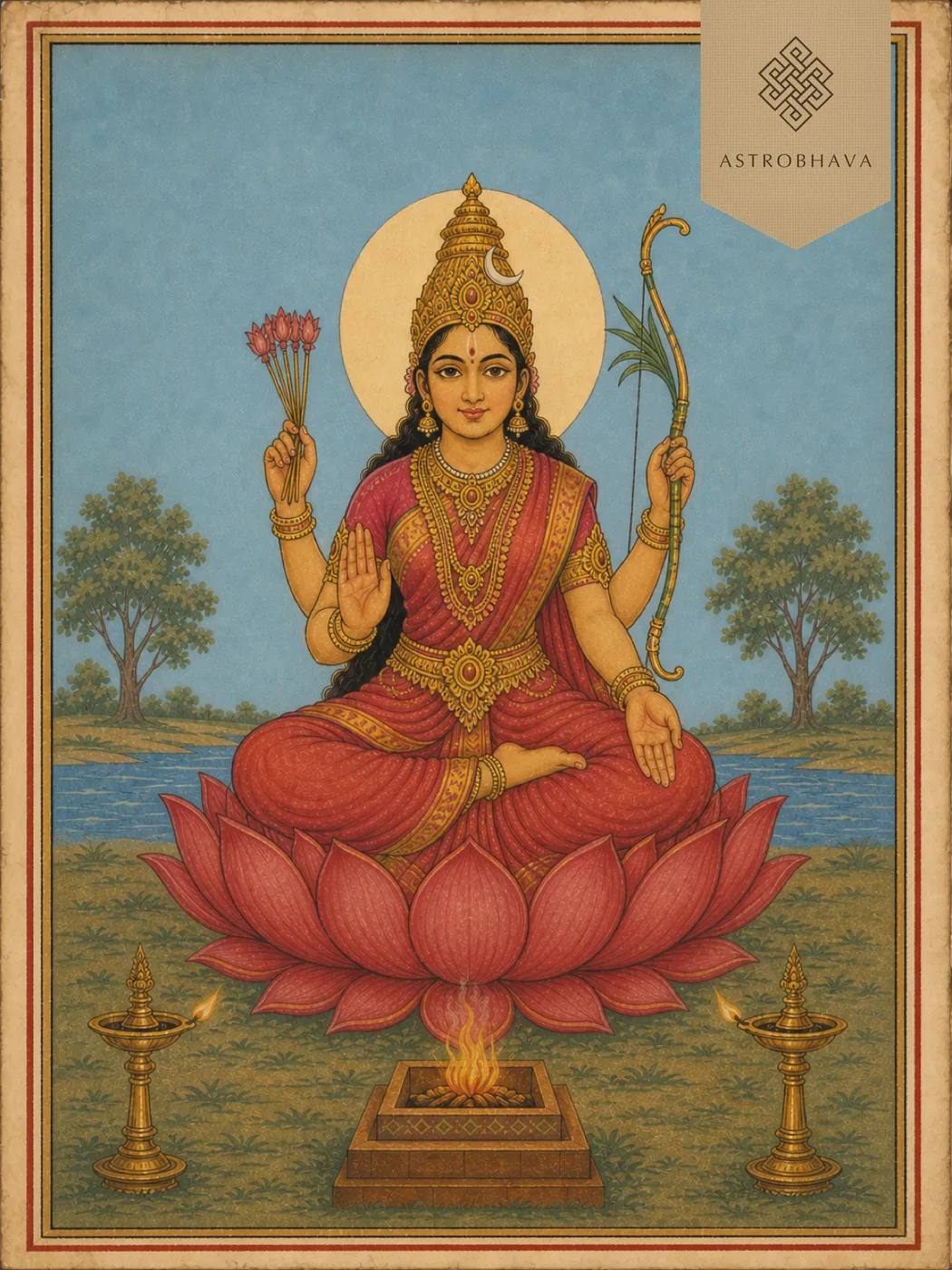
Baneshi Homa
Also spelled Baneshi Homam
बनेशी होमA quiet fire lit for the union still waiting to happen — for the partner unmet, the wedding postponed, the home that wants peace.
- Performed for you alone — never a group ceremony
- Muhurta fixed from your own birth chart, confirmed within 24–48 working hours
- Free energised Baneshi Yantra, sealed in a silver amulet, shipped worldwide at no charge
The Ritual and Its Weight
The Baneshi Homa belongs to the family of marriage rites in the Vedic fire tradition. Where a horoscope shows the seventh house pressed upon, where proposals arrive and dissolve, where a household has grown weary of waiting — this is the homa the tradition turns to. Ghee, grains, sesame and fragrant woods are offered into the consecrated fire while the sankalpa carries your name, your star and your intention into the flame.
Marriage in our tradition is never treated as a private arrangement alone. It is a knot tied in the presence of Agni, and Agni is asked first. The Baneshi Homam is that asking. Priests seat the fire, invoke Baneshi, and place each offering with mantra so that obstruction loosens, tempers cool, and the path to a suitable alliance is prayed clear. Devotees also book the baneshi homa for an existing marriage that has turned brittle — for the return of patience and warmth between two people.
Why Devotees Book This
The Baneshi Homam is prescribed in the Love & Marriage tradition for these intentions. What follows is what the rite is offered for, in the words of the tradition.
For a suitable life partner
Offered when the search for a match has gone on long — a prayer for the right alliance to appear and hold.
For delays that keep repeating
Traditionally taken up when talks advance and then stall again and again, to pray such obstruction away.
For harmony between husband and wife
Sought by couples living with friction, coldness or constant argument, asking for patience and affection to return.
For the strength of the seventh house
Performed on the counsel of an astrologer when marriage-related placements in the chart are seen as needing propitiation.
For peace in the wider household
Marriage joins two families. The homa is offered so that goodwill, not suspicion, surrounds a new alliance.
For a family carrying the worry
Parents and siblings often book the baneshi homam on behalf of an unmarried son or daughter, wherever in the world they live.
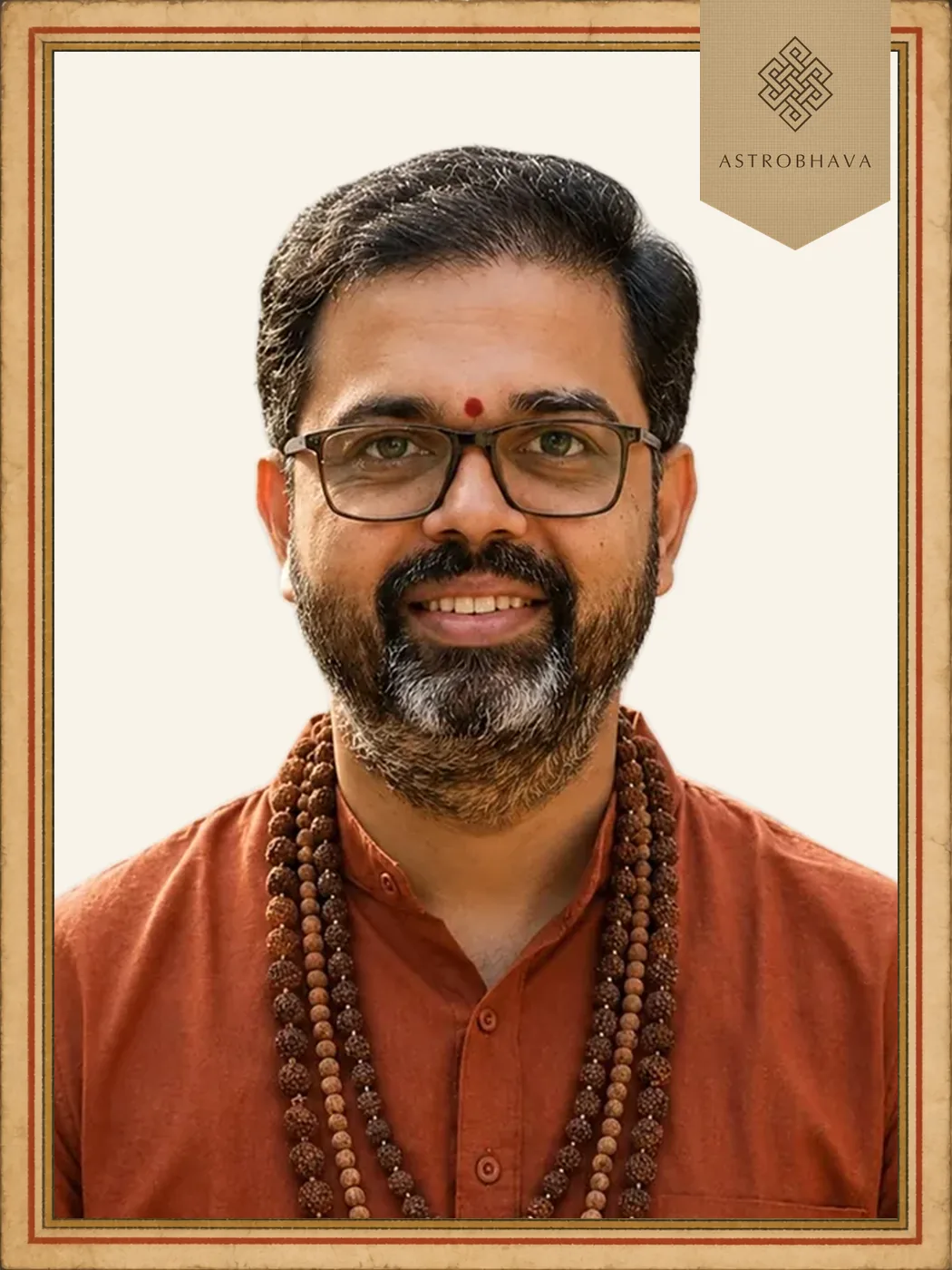
Under the guidance of Brahmashree Shivaaya
Every priest who performs your Baneshi Homa is trained in a traditional Padashala and personally recruited by Brahmashree Shivaaya — Chief Operating Officer & Head of Astrological & Spiritual Solutions at AstroBhava. Your ritual is conducted at our own Yagna Ashram — never a rented venue — with Yantra Pujas inside our consecrated sanctum.
Meet our priests →- Certified Vedic priests — trained in traditional Padashalas
- 100% Agama Vidhi — as prescribed in the scriptures
- Individual, never group — one ritual, one devotee's sankalpa
- Muhurta from your chart — date fixed to your birth details
- Free worldwide delivery — prasadam & energised Baneshi Yantra
Choose your homa in two steps
* Your Baneshi Yantra is a copper plate approx. 1–2 inches, rolled and sealed inside a silver amulet approx. 2–4 inches. Sizes are approximate and the amulet's design varies between supplier batches — shape, metal and consecration remain the same.
All prices are all-inclusive — no shipping charges, no additions at checkout. See everything included →
You book — and add birth details on the next page, straight after payment.
Within 24–48 working hours — your muhurta is confirmed by email.
The day before — your telecast link arrives by email.
After the homa — tracking email with how and when to wear the Baneshi Yantra.
The most auspicious days for a Baneshi Homa
Marriage rites are timed with care.
Fridays, and the waxing fortnight generally, are held auspicious for rites of union and increase — a favoured day for this homa.
The nakshatras long counted as vivaha-friendly. Where the calendar allows, the homa is set on one of these.
The classical marriage season in the Hindu calendar, when alliances are traditionally begun and blessed.
Many devotees have the homa performed in the days before an engagement, a horoscope match or the wedding itself.
You do not need to wait for one of these days. Whenever you book, our astrologers calculate the muhurta from your own birth chart — a date chosen for you personally, which tradition regards as more precise than a calendar date chosen for everyone. If you would like the homa on one of the days above, tell us at checkout and we will fix the muhurta within it.
What you receive
The sealing of the Baneshi Yantra
When your homa concludes, the yantra that stood in the fire is rolled and locked inside its silver amulet according to Agama vidhi — the practice by which the energies raised in a ritual are held within a consecrated object rather than dispersing. It is why a homa performed at our ashram can still reach a devotee ten thousand miles away: what the fire raised travels to you, sealed.
Personal sankalpa
Your name, gotra & nakshatra — for you and up to five family members.
Live telecast
Watch your own homa in real time from the ashram. Streamed openly on our YouTube channel by default — or request an unlisted telecast at checkout.
Free energised Baneshi Yantra, sealed in a silver amulet
Consecrated over three days — Jala (holy-water consecration with mantras), Prana (life force through pranayama & chants) and Jeeva Pratishta (awakened with 108 recitations & offerings) — then present through your homa, receiving the energies raised in the fire. Immediately afterwards it is rolled and sealed inside a silver amulet by Agamic rite, locking those energies within, and shipped to you with your prasadam.
Prasadam, shipped free
Sacred vibhuti, sandalwood powder & kumkum from your fire — delivered to any country.
Yantra Pujas inside our consecrated sanctum
48-Day Anushthan (optional) — daily pujas for 48 days — the 27 Nakshatras + 12 Rashis + 9 Planets — then sealed in a silver amulet of approximately 2–4 inches. Performed in our consecrated sanctum at the Yagna Ashram.
A note on sacred tradition
As per strict Agama vidhi, no videography is permitted inside the temple sanctum — this preserves the pure sacred energies and undisturbed divine focus of the ritual. The main homa is respectfully telecast live from outside the sanctum.
Homas are telecast openly on our YouTube channel so that devotees everywhere may witness the rituals — and because we believe you should be able to see our work before you trust us with yours. Your sankalpa names you and your family, so if you would rather your ceremony were not public, choose the private telecast option at checkout and it is streamed as an unlisted link, which does not appear on our channel or in search, though anyone who has the link can watch it and share it.
We state this plainly — transparency about what tradition forbids filming, and about what is public, is part of performing these rituals honestly.
How to wear your energised Baneshi Yantra
The energised yantra is carefully rolled and sealed inside a sacred silver amulet before shipping. Wearing it is itself a small ritual.
Your auspicious time to wear it
Wear it for the first time on a Friday, between 6.30 and 7.30 in the morning. Bathe first, place the yantra on your pooja altar and offer your prayers, then wear it around your neck or your waist, on a red or black thread or a silver chain.
At a funeral
Take the yantra off before you attend a funeral.
Purify the amulet
Whenever the yantra has been taken off, or if it was worn at a funeral, dip it in raw milk or Ganga jal, show it incense, dhoop or attar (perfume), and then wear it again.
Keep the energy intact
You may repeat this energising once a week or once a month.
How your Baneshi Homa is performed
Sankalpa
The priest states your name, gotra and nakshatra — and those of up to five family members — with the intention this homa is performed for.
Ganapati Puja
The customary invocation to Ganapati, clearing obstacles before the deity is approached.
Agni Pratishtha
The fire is consecrated in the homa kunda and Agni invoked as the carrier of every offering that follows.
Baneshi Avahana
The mula mantra of Baneshi Devi is chanted, inviting the deity's presence into the fire — by one, three or five priests as your package sets.
Ahuti
Ghee and akshata, with the flowers, grains and dravyas proper to this deity, are offered in sequence with mantra.
Purnahuti
The final complete offering seals the sankalpa stated at the opening.
Aarti & Dispatch
Aarti is performed live on your telecast. Vibhuti, sandalwood powder, kumkum and your energised Baneshi Yantra are then packed and shipped free to your door.
Baneshi Devi
Baneshi Devi is the Goddess this homa is named for — a regional form of Devi, received by her own name in the ashram's tradition. Hers is the fire devotees light for the union still waiting to happen: the partner unmet, the wedding postponed, the home that wants peace.
In the homa she is honoured as Devi is honoured. Agni is kindled as witness and carrier, her mula mantra is chanted, and each offering rises with her name spoken over it — in the name, gotra and nakshatra of the devotee for whom this fire alone burns.
In this homa that grace is invoked through fire, with your own name and birth details spoken in the sankalpa.
Ask before you book
Nirnaya, our free ritual guide, recommends the traditional ritual for your situation instantly. For a full reading of your chart, book a live session with our astrologers.
Frequently asked
Other rituals devotees book alongside this one
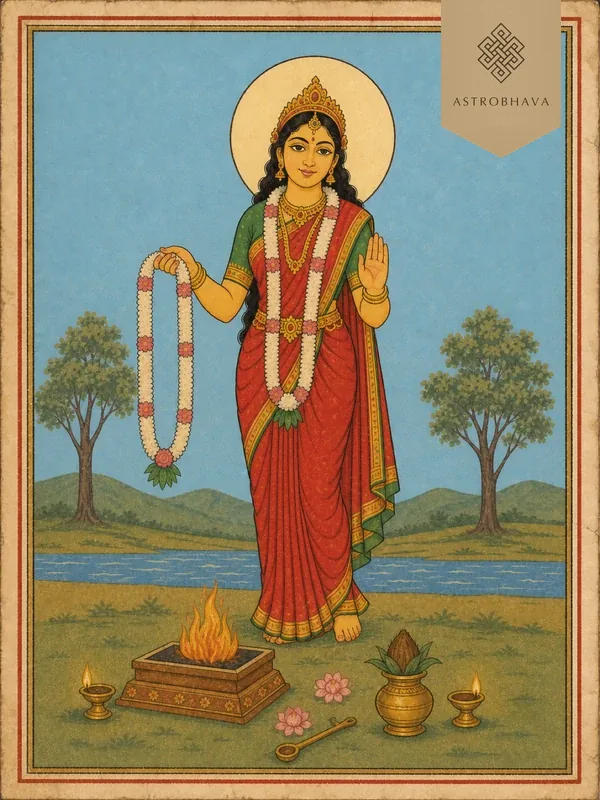
Swayamvara Kala Parvathi Homa
Booked for finding a life partner, marital harmony and easing delays in marriage.
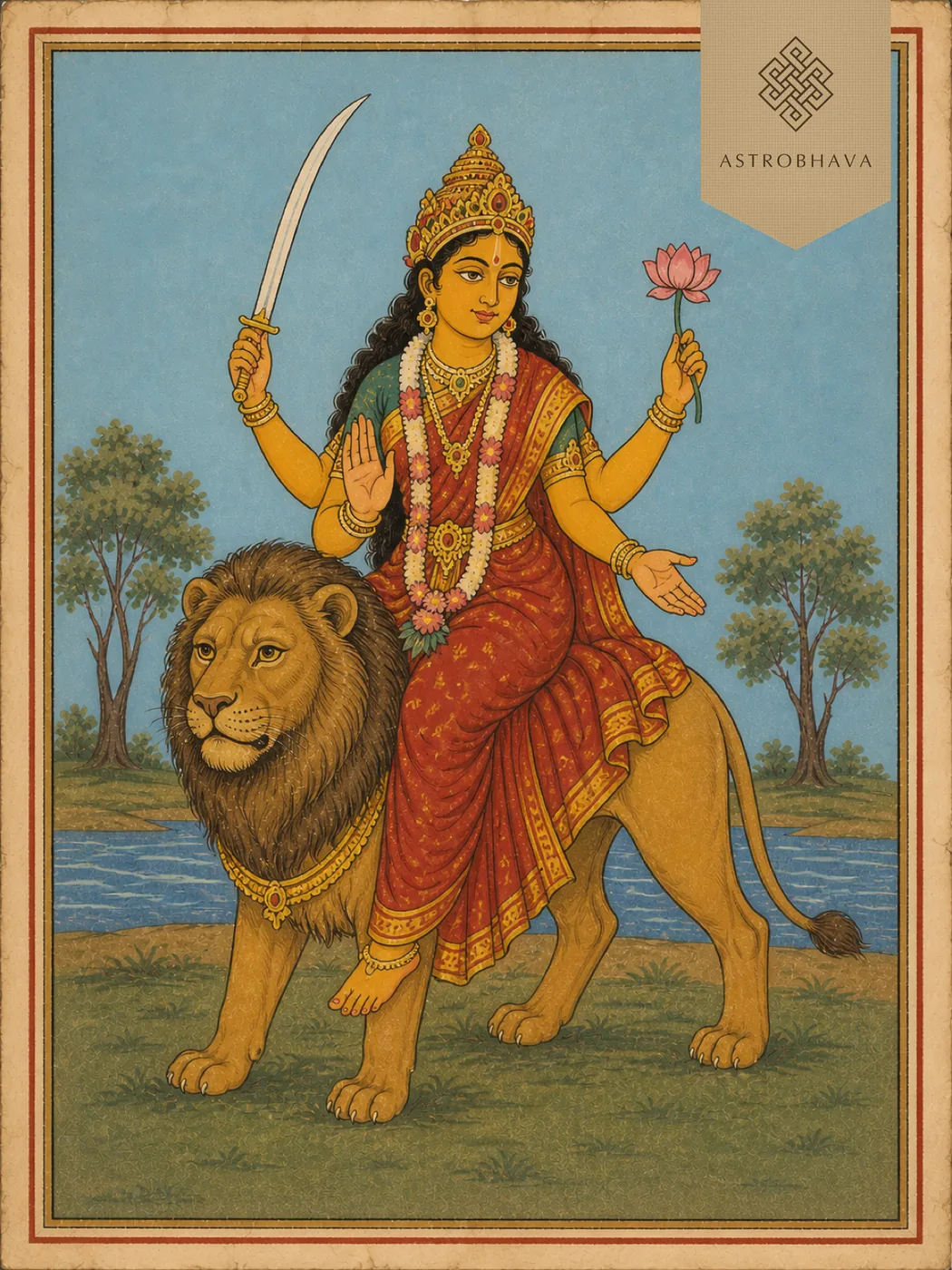
Katyayani Homa
Booked for finding a life partner, marital harmony and easing long delays in marriage.

Aikyamatha Sooktha Homa
Booked for harmony of heart and mind — unity at home, steadiness within, and divine grace.
Maha HomaLet Baneshi Devi's name be spoken with yours
Book your Baneshi Homa, watch it performed live from our Yagna Ashram, and receive your energised Baneshi Yantra anywhere in the world.
Choose Your Package