There are days in the Vedic calendar that quietly carry the weight of entire lifetimes — days when the gap between the world of the living and the realm of the ancestors becomes almost paper-thin. Jyeshtha Amavasya is one of those rare days. And in 2026, it arrives with a force unlike most years.
If you’ve been experiencing unexplained obstacles in life — delayed marriages, financial struggles that persist despite hard work, health issues that return without clear cause, or a general feeling that something ancestral is holding your family back — this day deserves your full attention.
Jyeshtha Amavasya 2026 falls on Saturday, May 16, 2026. The Amavasya tithi begins at 5:11 AM IST on May 16 and ends at 1:30 AM IST on May 17. And this year, it coincides with Shani Jayanti, making it a Shani Amavasya — an extraordinarily potent convergence that amplifies every spiritual act performed on this day.
Let’s explore exactly why this day is considered the ideal window for Pitru Dosh removal, what specific homas and rituals to perform, and how devotees in the USA, UK, Canada, Australia, and across the NRI community can participate fully — without needing to travel to India.
What Is Jyeshtha Amavasya? The Vedic Context You Need to Know
Amavasya — the new moon day — is observed every lunar month. But not all Amavasyas carry the same spiritual weight. The Amavasya falling in the Jyeshtha month (roughly May–June in the Gregorian calendar) is known as Jyeshtha Amavasya, and it holds a deeply special place in Hindu tradition.
The word “Jyeshtha” itself means “the eldest” or “the most senior” — and there’s a profound symbolic resonance here. This is the month where the sun blazes at its fiercest, a time the scriptures associate with tapas (penance), restraint, and selfless service. The Jyeshtha month is also governed by strong ancestral energies. When the moon disappears completely on Amavasya within this month, it creates what ancient Vedic sages described as the most accessible gateway between the world of the living and the Pitru Loka — the realm of ancestors.
According to Vedic cosmology, the veil between the two worlds grows thinnest during every Amavasya. On Jyeshtha Amavasya, that thinning is considered especially profound. Prayers, oblations, fire rituals, and tarpan offered on this day are believed to reach ancestral souls with far greater clarity and force than on ordinary days.
Why Is Jyeshtha Amavasya 2026 Extra Special? The Shani Jayanti Factor
This year, Jyeshtha Amavasya 2026 is not just any new moon. It falls on a Saturday, which automatically makes it a Shani Amavasya. But more significantly, Saturday, May 16, 2026 is also Shani Jayanti — the birth anniversary of Lord Shani, the son of Lord Surya and Devi Chhaya.
According to Puranic tradition, Lord Shani was born precisely on Jyeshtha Amavasya. He is the cosmic guardian of karma, the one who ensures every soul receives the exact fruits of its actions across lifetimes. When Shani Jayanti and Jyeshtha Amavasya converge — which does not happen every year — the spiritual significance multiplies dramatically.
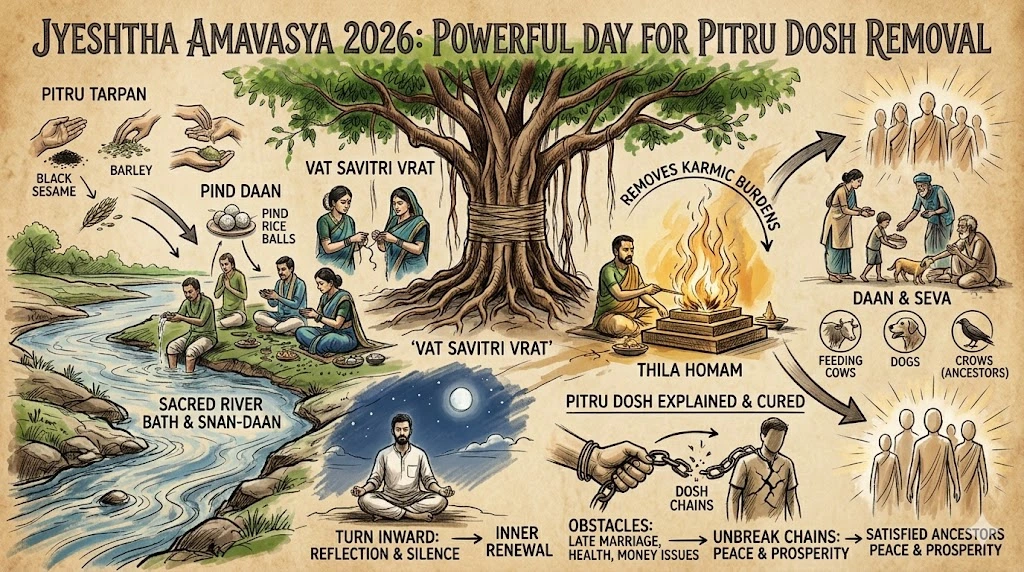 What this means practically: rituals performed on this day not only reach the Pitru Loka but are also reinforced by Lord Shani’s karmic oversight. For those carrying Pitru Dosh in their horoscope, this convergence is a rare divine opening — a day when the accumulated karmic weight of ancestral lineage can be addressed most effectively.
The Jyeshtha month also carries the legend of Savitri and Satyavan, the devoted wife who reclaimed her husband’s life from Yama, the Lord of Death himself. This story, celebrated as Vat Savitri Vrat on the same day, adds yet another layer of ancestral and karmic significance to Jyeshtha Amavasya 2026.
Understanding Pitru Dosh: Is Ancestral Karma Really Affecting Your Life?
Before diving into the remedies, it’s worth pausing to understand what Pitru Dosh actually is — because there is a great deal of misconception surrounding it.
Pitru Dosh is not a curse. It is not a punishment. At its core, it represents unresolved ancestral karma — an energetic debt carried across generations when ancestors departed with unfulfilled wishes, unfinished karmic obligations, or without proper last rites being performed for them. When their souls are not at peace, their unsettled energy can subtly influence the lives of their descendants.
In your birth chart (Jatakam), Pitru Dosh is typically indicated by the placement of the Sun and Saturn in the same house, or afflictions involving Rahu in relation to the 9th house, 9th lord, or the Sun. However, even without a formal astrological confirmation, certain patterns in life can be symptomatic of ancestral imbalance:
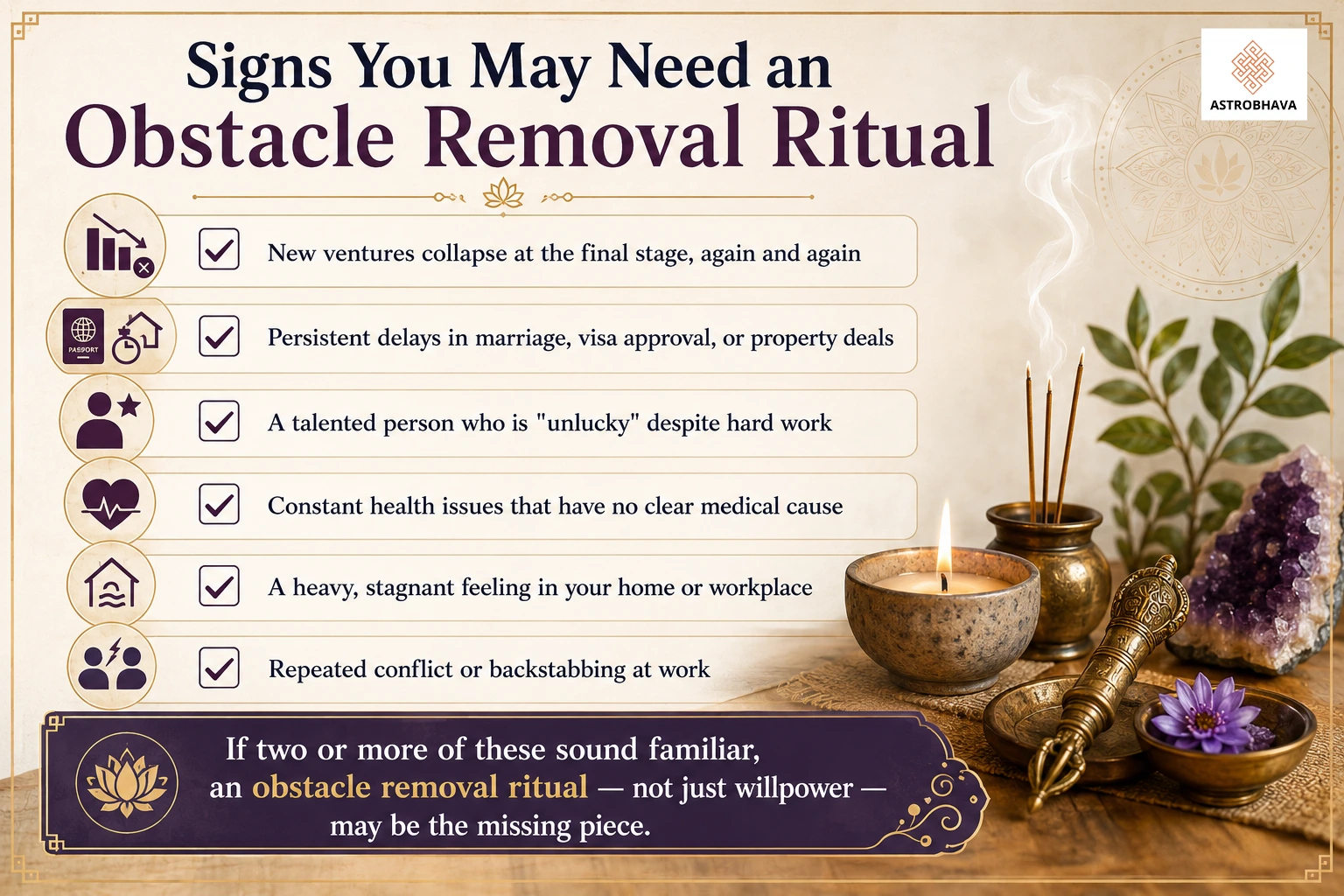
Recurring obstacles in life despite sincere effort. Unexplained financial losses or inability to retain wealth. Persistent delays in marriage or childbirth issues. Chronic health conditions that resist treatment — particularly among male family members. Frequent conflict within the family without apparent cause. Disturbing dreams involving deceased ancestors. A persistent sense of heaviness or stagnation across the family lineage.
If any of these resonate with you or your family, Jyeshtha Amavasya 2026 is your most powerful opportunity of the year to take decisive spiritual action.
 The Most Powerful Homas to Perform on Jyeshtha Amavasya 2026
1. Pitru Dosh Nivaran Homa — The Core Ancestral Fire Ritual
The Pitru Dosh Nivaran Homa is specifically designed to address ancestral imbalances at their deepest karmic root. Performed by trained Vedic priests following strict Agama Shastra guidelines, this homa involves the sacred fire (Agni) acting as a divine messenger — carrying offerings of ghee, sesame seeds, herbs, grains, and specially prescribed ritual materials directly to the ancestral realm.
During the ritual, the priest chants Pitru Gayatri mantras and Pitru Paksha slokas, invoking the departed souls of up to three generations of ancestors. The Sankalpa — the sacred intention — is set specifically in your name, gotra, nakshatra, and rasi, ensuring the ritual is entirely personalised to your lineage. This is not a generic group ceremony. Every invocation, every oblation, every mantra is directed specifically to your ancestral energies.
The benefits of performing this homa on Jyeshtha Amavasya 2026 include pacification of restless ancestral souls, removal of karmic debts accumulated across generations, opening of life pathways that have been blocked by ancestral interference, improved fertility and resolution of childbirth-related challenges, and the restoration of financial and relational harmony within the family.
 2. Thila Homa — The Sacred Sesame Seed Fire Ritual
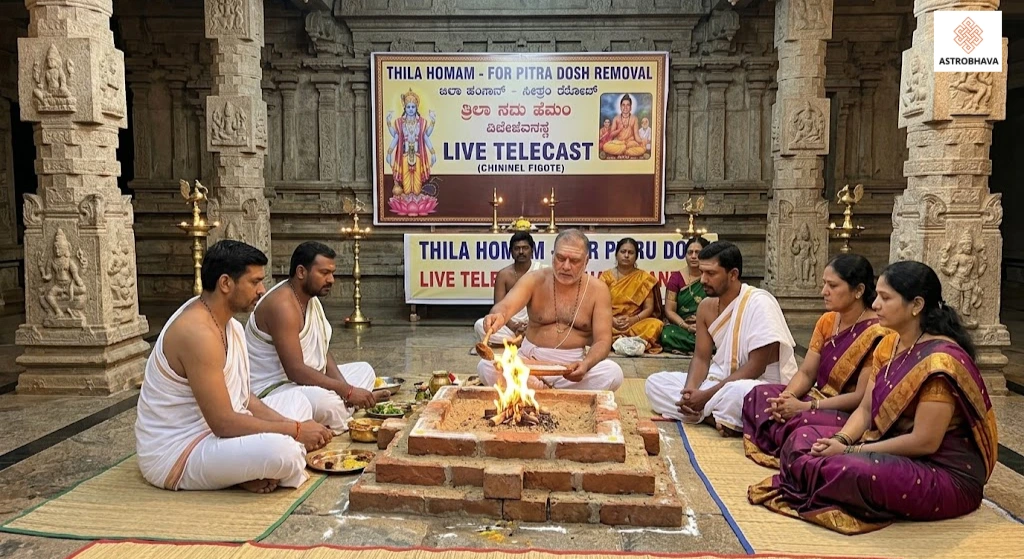
The Thila Homa (also called Tila Homam) is one of the oldest and most potent ancestral rituals in the Vedic tradition. “Thila” refers to sesame seeds — specifically black sesame — which carry a deeply purifying Saturnine energy and are considered supremely sacred for ancestral rites.
The Vedic literature, including the Baudhayana Dharmasutra and the Garuda Purana, prescribes Thila Homa as the primary remedy for souls who departed through unnatural deaths — accidents, sudden illness, or untimely passing — as well as for families who were unable to regularly perform Shraddha and Tarpan rituals for their ancestors.
During the Thila Homa, Lord Surya (the Sun) is worshipped in the Kalasha, Gayatri mantras and Pitru Dosha Parihara mantras are chanted, and offerings including sesame, ghee, and sacred grains are poured into the fire. The ritual proceeds with Kalasha daana, Yama Raja Puja, and concludes with Pinda Pradanam — the offering of rice balls to appease ancestral souls.
Jyeshtha Amavasya 2026 is considered one of the most auspicious days of the entire year to perform Thila Homa. The convergence of the new moon, the Jyeshtha month energy, and Shani Jayanti creates an alignment where the Thila offerings are believed to penetrate the ancestral realm with extraordinary clarity.
This homa is especially recommended if your family has experienced sudden or unnatural losses, if Shraddha rituals have been missed over years or decades (as is common for NRIs and diaspora families who grew up away from India), or if Pitru Dosh is prominently placed in your horoscope.
3. Jyeshtha Nakshatra Homa — Invoking Lord Indra for Protection and Power
There is another dimension to Jyeshtha Amavasya that many spiritual seekers overlook. The word “Jyeshtha” also refers to the 18th Nakshatra in Vedic astrology — Jyeshtha Nakshatra, ruled by Lord Indra, the King of the Gods. This lunar mansion is associated with authority, leadership, protection from adversaries, and the removal of hidden obstacles.
When Amavasya falls in the Jyeshtha month, performing a Jyeshtha Nakshatra Homa on or around this day is considered deeply auspicious — especially for those born under Jyeshtha Nakshatra, or those facing persistent opposition, professional setbacks, legal challenges, or a sense of powerlessness in life.
The Jyeshtha Nakshatra Homa at AstroBhava invokes the blessings of Lord Indra through specific nakshatra mantras, oblations of sacred herbs associated with the star, and personalised prayers aligned to your birth chart. The Jyeshtha Nakshatra Yantra, energised during the ritual, is shipped to you worldwide as a tangible channel of continued protection.
This homa, performed in the context of Jyeshtha Amavasya 2026, becomes doubly powerful — you are invoking the ancestral realm through the Amavasya while simultaneously calling upon the cosmic protection of Lord Indra through the nakshatra energy. For those with persistent obstacles in career, relationships, or personal authority, this combination is exceptionally potent.
4. Jyeshtha Nakshatra Puja and Japa — The Gentler, Deeply Personal Path
Not everyone requires a full homa. For devotees who want to honour Jyeshtha Amavasya 2026 through a focused personal ritual, the Jyeshtha Nakshatra Puja and dedicated Japa programme at AstroBhava offer a meaningful and powerful alternative.
The Puja is performed by AstroBhava’s certified priests directly within the sacred temple sanctum — never as a group ceremony. It follows full Agamic procedure, using your specific birth details, name, and gotra to direct all mantras and vibrations exclusively toward your intentions. While the sanctum’s sacred nature means this cannot be live telecasted (to preserve its spiritual integrity as per centuries-old temple tradition), you receive full confirmation, prasad, and blessings sent worldwide.
The Japa service offers personalised mantra recitation — typically involving Pitru Gayatri, specific Jyeshtha Nakshatra mantras, or Maha Mrityunjaya Japa — performed on your behalf. Japa, or repetitive mantra chanting, works on a subtler but deeply penetrating level, creating sustained vibrational healing across the karmic field rather than the concentrated fire-burst of a homa.
For NRIs and diaspora devotees in the USA, UK, Australia, Canada, Singapore, the UAE, and across Europe, these remote services mean Jyeshtha Amavasya 2026 is fully within reach — regardless of where in the world you are.
Step-by-Step Rituals for Jyeshtha Amavasya 2026: What to Do at Home
Even if you are booking a professional homa or puja service, there are meaningful personal practices you can observe on May 16, 2026 to align yourself with the day’s powerful energies.
Wake before sunrise and take a purifying bath. If you have Gangajal at home, add a few drops to your bath water — this is especially significant on Amavasya. As the sun rises, offer Arghya (water from cupped palms) toward the sun while reciting the Gayatri Mantra or simply holding your ancestors in your heart with gratitude.
Perform Tarpan — the offering of water mixed with black sesame seeds (til). Face south, the direction of the ancestors, and offer the water three times while reciting the names of your departed family members, asking for their peace and blessings. Even a simple, sincere offering carries deep spiritual merit on this day.
Light a sesame oil lamp in the evening and place it near your main entrance or at the base of a Peepal or Banyan tree if one is accessible. These trees are considered channels between the human and ancestral realms in Vedic tradition.
Observe charity (Daan) — donate food, grains, clothing, or essentials to those in need. The Jyeshtha month scriptures particularly emphasise donating water and food during the summer heat. This act of Daan not only pacifies ancestral souls but also, given the Shani Jayanti convergence, helps reduce the impact of Saturn-related karmic patterns in your horoscope.
Avoid starting new ventures, making major purchases, or engaging in arguments on this day. Maintain a sattvic diet — simple, vegetarian food. Spend time in silence, meditation, or reading sacred texts related to ancestral reverence such as selected passages from the Garuda Purana.
Why AstroBhava’s Live Online Homa Service Is Different
One question that comes up frequently among overseas devotees is: “Is a remote or online homa truly effective?” This is an entirely fair question, and the answer lies in understanding how Vedic ritual energy actually operates.
In Vedic cosmology, the power of a ritual does not reside in physical proximity — it resides in the precision of the Sankalpa (intention), the qualifications of the priest, adherence to Agama Shastra, and the purity of the ritual space. When all these conditions are met, the benefits of the homa transcend geography.
AstroBhava’s Yagna Ashram in Coimbatore, Tamil Nadu is a consecrated, permanently maintained ritual space — not a makeshift venue. Every homa is performed by priests who trained in traditional Padashalas and follow strict Agamic procedures. The ritual is entirely individual — your name, gotra, nakshatra, rasi, and specific Sankalpa are used from beginning to end. Up to five family members can be included in a single ritual.
For homas, AstroBhava provides real-time live telecast directly from the Ashram, so you can watch every oblation, every mantra, and every sacred step as it happens from the comfort of your home in New York, London, Toronto, Melbourne, or anywhere else. Prasad and energised yantras are shipped worldwide, free of charge, directly to your doorstep.
For devotees who have spent years or decades away from India, this is more than a service — it is a spiritual bridge that allows the traditions of your lineage to remain alive and active, no matter where life has taken you.
Dos and Don’ts on Jyeshtha Amavasya 2026
Jyeshtha Amavasya calls for mindful conduct throughout the day. Here is what to observe and what to avoid:
Do: Wake before sunrise, bathe, and offer Tarpan. Perform charity generously — water, food, and clothing hold special merit this day. Visit or offer water at a Peepal or Banyan tree. Light sesame oil lamps at home. Fast or eat a simple sattvic diet. Chant the Maha Mrityunjaya Mantra or Pitru Gayatri Mantra. Spend time in quiet prayer and remembrance of departed family members.
Avoid: Starting new ventures or signing important agreements. Purchasing black sesame seeds, oil, or salt on this day (these are ritual items, not ordinary purchases). Wearing black clothing during ritual practices. Consuming non-vegetarian food, alcohol, or tamasic substances. Plucking Tulsi leaves. Engaging in arguments or emotional conflict. Staying out unnecessarily late at night.
Signs That You Must Not Delay This Ritual
Sometimes, the ancestors themselves signal that they are waiting to be remembered. If you or your family has been experiencing three or more of the following, do not let Jyeshtha Amavasya 2026 pass without performing the appropriate ritual:
Persistent financial difficulty despite sincere effort. Recurring delays or obstacles in career, marriage, or childbirth. Frequent inexplicable health issues among male members of the family. A pattern of sudden or unnatural deaths in the family lineage. Repeated disturbing dreams involving deceased family members. A general sense of spiritual heaviness or a feeling of being watched or followed.
These are not reasons for fear — they are invitations. Your ancestors are not enemies; they are your origin. When they are at peace, their blessings flow downward through the lineage like a sacred river, nourishing every generation that follows.
Conclusion: Let Jyeshtha Amavasya 2026 Be Your Turning Point
Jyeshtha Amavasya 2026 — falling on Saturday, May 16 — is not an ordinary day. The convergence of the Jyeshtha month’s potent ancestral energy, the no-moon portal of Amavasya, and the karmic authority of Shani Jayanti creates a moment that the Vedic tradition reserves for the most meaningful spiritual work of the year.
If Pitru Dosh has been casting a quiet shadow over your family’s well-being — if delayed marriages, financial struggles, health challenges, or inexplicable obstacles have become recurring patterns — this is the day to act. A properly performed Pitru Dosh Nivaran Homa, Thila Homa, or Jyeshtha Nakshatra Homa on this day carries the force of years of Shraddha and Tarpan combined.
You don’t need to be in India. You don’t need to travel to a sacred river. Through AstroBhava’s live online homa services — performed exclusively by Padashala-trained priests in a consecrated Yagna Ashram, live-streamed to your device in real time — the blessings of this sacred day are fully accessible to you, wherever in the world you are.
Your ancestors are waiting. Jyeshtha Amavasya 2026 is the doorway. Let the sacred fire carry your love, your gratitude, and your prayers across all realms — and receive the ancestral blessings your family deserves.
Frequently Asked Questions (FAQs)
Q1: When exactly is Jyeshtha Amavasya 2026?
Jyeshtha Amavasya 2026 falls on Saturday, May 16, 2026. The Amavasya tithi begins at 5:11 AM IST on May 16 and ends at 1:30 AM IST on May 17, 2026. The Udaya tithi (the tithi observed at sunrise) confirms that May 16 is the primary day for all rituals.
Q2: Why is Jyeshtha Amavasya 2026 considered extra auspicious?
This year, Jyeshtha Amavasya coincides with Shani Jayanti — the birth anniversary of Lord Shani, the cosmic judge of karma. This convergence happens on Saturday, making it a Shani Amavasya. This rare triple confluence of Jyeshtha Amavasya, Shani Amavasya, and Shani Jayanti amplifies the spiritual potency of every ritual performed on this day, particularly those addressing karmic and ancestral imbalances.
Q3: What is the best homa to perform for Pitru Dosh removal on Jyeshtha Amavasya?
The Pitru Dosh Nivaran Homa is the most directly targeted ritual for ancestral karma removal. The Thila Homa is especially recommended when family members have passed through unnatural deaths or when Shraddha rituals have been skipped for years. For those born under Jyeshtha Nakshatra or facing persistent opposition and obstacles, the Jyeshtha Nakshatra Homa is highly recommended. An experienced priest or astrologer at AstroBhava can guide you on the most suitable option based on your specific horoscope.
Q4: Can I perform Pitru Dosh rituals from the USA, UK, or other countries?
Absolutely. AstroBhava specialises in serving the global Hindu and NRI community. All homas are performed in AstroBhava’s dedicated Yagna Ashram in India by certified priests, live-streamed in real time so you can participate from anywhere in the world. Your personalised Sankalpa, name, gotra, and nakshatra are used throughout the ritual. Prasad and energised yantras are shipped free worldwide.
Q5: What is the difference between Pitru Dosh Nivaran Homa and Thila Homa?
The Pitru Dosh Nivaran Homa is a broad ancestral purification ritual that addresses all forms of ancestral karmic debt, improving the overall wellbeing, relationships, and life flow for the family. The Thila Homa is more specifically prescribed for situations involving souls who departed through unnatural or untimely death, or families who have regularly missed performing annual Shraddha. Both are highly recommended on Jyeshtha Amavasya, and in some cases, performing both in sequence offers comprehensive ancestral healing.
Q6: Is Jyeshtha Amavasya good for Tarpan if I have no Pitru Dosh?
Yes. Tarpan — the offering of water mixed with black sesame to ancestors — is a sacred duty for all Hindus on every Amavasya, not just those with Pitru Dosh. Performing Tarpan on Jyeshtha Amavasya 2026 honours your ancestors, maintains the energetic health of your family lineage, and generates considerable spiritual merit (Punya) for both the living and the departed.
Q7: What should I offer during Tarpan on Jyeshtha Amavasya 2026?
Take clean water in a copper vessel and add black sesame seeds (kala til). Stand facing south — the direction associated with the Pitru Loka. Pour the water from your cupped palms three times, speaking the names of your departed family members and asking for their peace and blessings. You may also add a few drops of Gangajal if available. This simple act, done with sincerity, carries immense spiritual value on Amavasya.
Q8: Can women perform Pitru rituals on Jyeshtha Amavasya?
Yes. Women can and should participate in ancestral remembrance on Jyeshtha Amavasya 2026. On this particular day, married women also observe Vat Savitri Vrat — the fast and prayers associated with the Savitri-Satyavan legend — which is itself a powerful ancestral and karmic ritual centred on marital devotion and the transcendence of death.
Q9: How do I book a homa at AstroBhava for Jyeshtha Amavasya 2026?
Visit astrobhava.com, select the homa of your choice (Pitru Dosh Nivaran Homa, Thila Homa, or Jyeshtha Nakshatra Homa), choose your package based on the number of priests, provide your name, gotra, nakshatra, rasi, and specific Sankalpa during checkout. You will receive your Muhurta confirmation by email within 24–48 hours. Live telecast access, free energised yantra, and worldwide prasad shipping are all included. For personalised guidance at no charge, you can also WhatsApp or call the AstroBhava team directly.
Q10: What if I missed performing rituals for my ancestors for many years?
This is more common than most people realise — especially for NRI families who grew up or settled abroad. The Thila Homa is specifically designed for exactly this situation. It is a comprehensive ancestral remedy that addresses years of unmade Shraddha offerings in a single, powerful ritual. Jyeshtha Amavasya 2026, with its extraordinary spiritual potency, is one of the finest days of the entire year to perform this catch-up offering and restore peace to your ancestral lineage.