By Guruji Venkatesh Iyer, Senior Vedic Priest & Ritual Specialist, AstroBhava
Baglamukhi Japa is the disciplined, repeated recitation of the Bagalamukhi mantra — “Om Hreen Bagalaamukhee Sarv Dushtaanaan Vaacham Mukham Padam Stambhay Stambhay Jeevahaan Keelok Keelok Vinaashay Hreen Om Svaaha“ — performed under specific Vedic protocols to invoke the eighth Mahavidya, Goddess Bagalamukhi (also called Pitambara Devi), who governs the power of stambhana (paralysis of opposition) and vak siddhi (mastery over speech and argument).
It is specifically sought by those facing active enmity, litigation, defamation, professional sabotage, or competitive defeat — and by those whose birth charts show afflictions to the 6th house (enemies), 3rd house (courage and communication), or the Lagna (self) from malefic planets, particularly Rahu, Saturn, or a debilitated Mars. A minimum japa count of 108,000 repetitions is considered the threshold for full ritual efficacy. This practice should be performed by a qualified priest under a proper Sankalpa on behalf of the devotee.
Introduction
You are facing something that is wearing you down — not just professionally or legally, but emotionally. Perhaps a rival is spreading false information about you at work. Perhaps a court case has been dragging for years with no resolution. Perhaps someone in your family or business circle is working actively against your interests, and despite your best efforts, you cannot seem to get ahead of it. You have likely tried conventional approaches. You may now be asking whether there is a deeper, older remedy — one that addresses the root of the problem at the karmic and energetic level.
Vedic tradition offers exactly this. Among all the rituals prescribed for enemy victory, none is more specific, more powerful, or more precisely targeted than Baglamukhi Japa. Unlike generic prosperity rituals or broad protective homas, this Japa is structured entirely around a single, unambiguous purpose: neutralising opposition. It does not ask the Goddess for vague blessings. It invokes a precise Shakti whose entire domain, as established in the Shakta Agamas and the Tantraraja Tantra, is the arrest of destructive forces directed at you.
At AstroBhava, this Japa is performed by Padashala-certified priests who have been trained in the Shakta Agama tradition for over three decades. Every aspect — from muhurta selection to the number of japa repetitions to the oblation materials — follows Vedic Vidhi precisely. What you will find in this guide is not a generic overview of the Goddess. It is a practitioner’s account of exactly how this ritual works, who it is astrologically suited for, and what the complete process involves.
 What Is Baglamukhi Japa?
Baglamukhi Japa is the structured, counted recitation of the moola mantra of Goddess Bagalamukhi, performed within a ritually consecrated space by a qualified priest who takes a formal Sankalpa (sacred vow) on behalf of the devotee. The word “Japa” comes from the Sanskrit root jap, meaning to utter quietly or to repeat. Unlike a homa (fire ritual), Japa is mantra-based at its core — the fire of transformation here is the sound vibration itself, accumulated through repeated, precise recitation.
Goddess Bagalamukhi is the eighth of the Dasha Mahavidyas — the ten tantric forms of the Divine Mother described in the Shakta Mahapurana and elaborated in the Tantraraja Tantra and the Bagalamukhi Stotra of the Devi Upasana tradition. Her name breaks down as follows: Bagala is a variant of Valga, meaning bridle or restraint, and Mukhi means faced or headed.
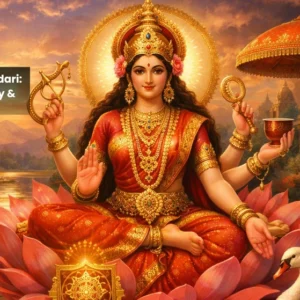
She is literally “She who seizes by the mouth” — the Goddess who paralyses the tongue, the intellect, and the actions of those who oppose you. Her iconography is precise and intentional: she is depicted in yellow (pitambara), seated on a golden throne, pulling the tongue of a demon with her left hand and striking him with a club held in her right. Yellow is the colour of restraint and knowledge; turmeric and yellow flowers are her primary offerings.
The scriptural basis for this Japa is rooted primarily in the Tantraraja Tantra, the Devi Bhagavata Purana, and the Pitambara Peeth Upasana Paddhati followed at sacred centres such as Datia and Nalkheda in Madhya Pradesh, which are the most historically significant Bagalamukhi Shaktipeethas in India. The Shakta Agamas classify her as a Stambhana Devata — a deity whose primary function is arrest, freezing, and immobilisation of negative forces. This makes her Japa structurally different from, say, a Sudarshana Homa (which destroys evil) or a Durga Saptashati recitation (which provides broad protection). Bagalamukhi Japa targets one thing with surgical precision: stopping the enemy’s capacity to harm you.
Who Should Perform Baglamukhi Japa?
Vedic astrology identifies specific chart conditions that indicate a need for this ritual. If your horoscope shows one or more of the following, any qualified Jyotishi would typically recommend Bagalamukhi Japa as a primary remedy:
6th House Afflictions: The 6th house governs enemies, litigation, debt, and disease. When malefic planets — particularly Rahu, Saturn, Mars, or Ketu — occupy or aspect the 6th house without benefic intervention, they create chronic, escalating enemy conflict. A 6th house Rahu in particular is a classical indicator of hidden enemies and prolonged legal disputes.
12th House Mars (Shayana/Shayya Dosha): Mars in the 12th house in a fiery sign (Aries, Scorpio, or Leo) creates persistent losses through enemies and secret opposition. This placement also weakens the native’s ability to counter attacks effectively.
Lagna Lord in the 6th, 8th, or 12th House: When the lord of your ascendant sits in a dusthana (houses 6, 8, or 12), it weakens your capacity to fight back against adversaries. Baglamukhi Japa is prescribed to restore the Lagna lord’s capacity.
Saturn–Mars Mutual Aspect or Conjunction: This combination, especially in Kendra or Trikona houses, creates prolonged conflict, court cases that stall, and enemies who are persistent and organised.
Rahu Mahadasha or Rahu Antardasha: Rahu’s dasha periods are classically associated with the rise of hidden enemies, defamation, and circumstances that seem impossible to escape through logic alone. Bagalamukhi Japa during Rahu dasha is recommended in the Brihat Parashara Hora Shastra tradition as a Rahu pacification measure that simultaneously invokes Stambhana Shakti.
Ardra, Ashlesha, or Jyeshtha Nakshatra Rising or Moon: Natives born under these nakshatras, particularly when afflicted by malefics in the D-9 (Navamsha) chart, face recurring cycles of enmity and need Stambhana-based remedies.
Kala Sarpa Yoga with 6th–12th Axis: When all planets fall between Rahu and Ketu on the 6th–12th house axis, the native experiences chronic enemy pressure and litigation. This is one of the clearest astrological triggers for recommending Bagalamukhi Japa.
If you are uncertain whether your chart carries these indicators, AstroBhava offers a pre-ritual Jyotish consultation where your horoscope is assessed before the Sankalpa is set.
Awaken the full power of Maa Bagalamukhi within you.
Begin your Mahashakti Sanskar today and step into a higher level of spiritual strength and control.
Key Benefits of Baglamukhi Japa
- Stambhana of Active Enemies: Vedic tradition holds that regular recitation of the Bagalamukhi moola mantra at the prescribed count (minimum 108,000 repetitions) creates a vibratory field that disrupts the capacity of specific adversaries to act against you — particularly through speech, legal filings, and organised opposition.
- Victory in Court Cases and Legal Disputes: The ritual has been prescribed for centuries in the Shakta tradition specifically for those involved in litigation. It is said to silence false witnesses, cause delays in the opponent’s legal strategy, and strengthen your own counsel’s arguments.
- Removal of 6th House Rahu Afflictions: When Rahu sits in the 6th house and generates chronic, recurring enemies, Bagalamukhi Japa is one of the few rituals that directly targets the Rahu–enemy nexus. The Goddess’s stambhana power is considered capable of arresting Rahu’s destabilising influence in this house.
- Protection from Defamation and False Accusations: Bagalamukhi governs vak (speech). Japa performed at the correct count is traditionally believed to return false speech to its source — causing confusion or contradiction in the words of those who speak falsely against you.
- Strengthening of the 3rd House for Competitive Situations: The 3rd house governs competition, courage, and communication. When the 3rd house is weak due to Saturn’s aspect or a debilitated Mars, Bagalamukhi Japa is prescribed to restore competitive strength, particularly for those in professional rivalries, business competition, or public debates.
- Resolution of Workplace Sabotage: For devotees experiencing professional undermining — colleagues working against promotions, managers receiving misinformation about their performance — this Japa is specifically cited in Shakta remedial texts as a corrective for such conditions.
- Restraint of Those Who Cause Physical Threat: Vedic tradition holds that this Japa, when performed by a ritually qualified priest at full count, creates protective boundaries around the devotee that traditionally believed to inhibit those who intend physical harm.
- Clarity and Precision in Arguments: The Goddess’s association with vak siddhi means that her sustained invocation is traditionally believed to sharpen the devotee’s own speech, recall, and argumentative capacity — particularly relevant in legal hearings, business negotiations, or official proceedings.
- Breaking Cycles of Repeated Defeats: For those who experience patterns of losing despite apparent preparation — losing tenders, court rounds, or business negotiations repeatedly — Baglamukhi Japa addresses the karmic momentum behind these patterns at the Shakti level.
- Pacification of Saturn–Mars Conflict Yoga: When Saturn and Mars form a difficult yoga in the chart and generate persistent conflict, the ritual’s invocation of Pitambara Devi is believed to act as a karmic interrupter — aligning planetary energies toward resolution rather than continued confrontation.
- Protection During Rahu or Ketu Mahadasha: Bagalamukhi’s stambhana power is specifically invoked to provide a remedial umbrella during Rahu or Ketu dasha periods when enemies tend to be hidden, numerous, and difficult to confront through ordinary means.
- Recovery of Blocked Resources Due to Opponents: For situations where enemies have caused financial blockages — frozen assets, withheld payments, or legal injunctions on property — this Japa is traditionally prescribed in Shakta Agama texts as a Stambhana remedy to arrest the blockage and restore flow.
Explore powerful japa for the different problems and difficulties you are facing in your life.
The Ritual Process at AstroBhava
Stage 1: Muhurta Selection
Before any ritual element begins, AstroBhava’s priests determine the precise auspicious timing for the Japa. For Baglamukhi Japa, Tuesday (Mangalvara) is the primary vara of choice, as Mars governs conflict and victory, aligning well with the Goddess’s stambhana purpose. The Japa ideally begins on a Shukla Ashtami (8th day of the bright lunar fortnight), as 8 is Bagalamukhi’s sacred number and the Ashtami tithi connects to Shakti’s fierce forms. The muhurta is confirmed against your Janma Nakshatra and the ruling nakshatra of the day to ensure zero conflict between the devotee’s chart and the initiation moment.
Stage 2: Sankalpa
The priest takes a formal Sankalpa — a sacred declaration of intent — naming the devotee by their full name, gotra (lineage), and Janma Nakshatra. The Sankalpa specifies the exact number of japa repetitions (typically 108,000 for a standard ritual or 125,000 for a Purnahuti-level completion), the deity being invoked, and the devotee’s specific purpose. This step is critical because it binds the ritual’s energy to the individual devotee’s life circumstance and astrological condition.
Stage 3: Kalasha Sthapana and Devi Avahana
A sacred Kalasha (copper or brass pot) is established and purified with Panchagavya (five products of the sacred cow). Turmeric paste — Bagalamukhi’s primary material — is used to draw the Yantra on a yellow cloth. The priest then performs the Avahana (invocation), calling the Goddess from her abode into the ritual space using the specific Dhyana shloka from the Tantraraja Tantra: “Sauvarnaasana sansteethaam…” This is not a general invocation — it is the precise iconographic meditation on the Goddess in her yellow form, seated on the golden throne, in the act of restraining her opponent.
Stage 4: Japa
The priest performs Japa of the Bagalamukhi moola mantra on a turmeric-bead mala (Haldi mala), which is the traditional counting rosary for this Goddess. Haldi mala is used specifically because turmeric represents Pitambara’s yellow energy and the beads absorb the vibration of the mantra count. Each cycle of 108 repetitions is tracked. The recitation is done with antaranga shuddhi (internal purity) — meaning the priest maintains a specific mudra, pranayama cycle, and seated posture throughout. The japa is not background recitation; it is the central ritual act.
Stage 5: Abhisheka and Naivedya
Following the Japa count, the Yantra is bathed with turmeric water and honey (traditional offerings cited in the Bagalamukhi Upasana Paddhati). Naivedya (sacred food offering) consists of yellow items — turmeric rice, moong dal, yellow sweets — all placed on yellow cloth. Haldi kumkum and yellow marigolds complete the offering array.
Stage 6: Purnahuti and Conclusion
The ritual closes with a Purnahuti — a final offering that seals the Japa’s accumulated energy and directs it toward the devotee’s stated purpose in the Sankalpa. Vibhuti (sacred ash) from the ritual fire, a Prasad packet, and a consecrated Yantra are then dispatched to the devotee by courier, along with a Japa completion certificate carrying the priest’s signature and the exact mantra count completed.
 Auspicious Timings for Baglamukhi Japa
Best Vara (Day): Tuesday (Mars) is primary. Friday (Venus) is acceptable as a secondary option when Tuesday is unavailable due to an inauspicious yoga.
Best Tithi: Shukla Ashtami (8th day, bright fortnight) is ideal. Shukla Chaturdashi and Amavasya are also accepted in the Shakta tradition for fierce (ugra) Devi upasana.
Best Nakshatras for Initiation: Krittika, Bharani, and Ardra are classically cited in Shakta ritual manuals as appropriate nakshatras for initiating stambhana rituals, as they carry the fire and arrest qualities needed for this Goddess’s energy.
Yogas to Favour: Siddha Yoga and Amrita Yoga occurring on a Tuesday Ashtami create an exceptionally powerful window. These combinations are specifically noted in the Muhurta Chintamani for tantric ritual initiation.
Yogas to Avoid: Vishkambha, Vyaghata, and Parigha yogas are inauspicious for any Devi Japa initiation and are strictly avoided by AstroBhava’s priests.
Hora: The Mars hora within Tuesday is the preferred one-hour window within which the Sankalpa is taken, aligning the hourly planetary influence precisely with the ritual’s purpose.
Frequently Asked Questions
How many times must the Bagalamukhi mantra be chanted for the ritual to be effective?
The traditional minimum count is 108,000 repetitions (one lakh eight thousand), as established in the Shakta Agama texts and confirmed in the Pitambara Peeth upasana tradition. Below this count, the ritual is considered incomplete (akhand). For more severe situations — active court cases with multiple hearings, or hostile opponents with significant resources — priests typically perform 125,000 repetitions, followed by a Dashamsha homa (one-tenth fire ritual) to seal the count.
Can I perform Bagalamukhi Japa myself at home without a priest?
The moola mantra of Bagalamukhi is classified as an ugra (fierce) mantra in the Shakta Agama tradition and requires formal Diksha (initiation) from a qualified Guru before self-practice. Without Diksha, recitation of the moola mantra is traditionally considered ineffective and in some texts is said to potentially reverse its effect on the practitioner. For remote devotees, having the ritual performed by a Diksha-initiated priest under a properly worded Sankalpa on your behalf is both scriptural and effective.
How long does it take for the effects of Bagalamukhi Japa to manifest?
Vedic tradition holds that the first effects — typically a shift in the opponent’s position or an unexpected development in a legal case — become perceptible within 40 to 90 days of ritual completion. Full resolution may take longer depending on the severity of the 6th house affliction in your chart and the current planetary dasha cycle. Priests at AstroBhava assess the timeline based on your Janma Kundali before beginning the ritual.
Is Bagalamukhi Japa performed in the same way as Bagalamukhi Homa?
No — they are two distinct rituals with different mechanisms. Bagalamukhi Japa is mantra-based: the primary instrument of invocation is sound vibration accumulated over a precise count. Bagalamukhi Homa is fire-based: offerings are made into a consecrated fire to invoke the Goddess through Agni. Japa is prescribed for stambhana (arrest of enemies) while Homa is prescribed for more comprehensive purposes including Uchchatana (removal of deep-rooted obstacles). In serious enemy situations, both may be combined for a complete remedial approach.
Which planetary dasha period makes Bagalamukhi Japa most urgent?
Rahu Mahadasha, particularly when Rahu is placed in the 6th, 8th, or 12th house in the natal chart, is the most urgent trigger. Saturn Mahadasha combined with a Rahu or Mars Antardasha is also a strong indicator. During these periods, enemy activity typically intensifies and conventional efforts become insufficient. Bagalamukhi Japa is one of the primary Rahu-period remedies in the Shakta upasana system.
Can women commission or participate in Bagalamukhi Japa?
Yes. Bagalamukhi is a Shakti — a goddess — and her worship is fully accessible to devotees of all genders. Women facing litigation, professional sabotage, or domestic enmity are among the most traditional seekers of this ritual in the Pitambara Peeth tradition. There are no gender-based restrictions on commissioning this Japa.
What materials are used in the Bagalamukhi Japa ritual and why?
The primary ritual materials are turmeric (haldi) in powder and paste form, a haldi-bead mala, yellow flowers (particularly yellow marigold and yellow chrysanthemum), yellow cloth for the Yantra, honey, moong dal, and turmeric rice. All materials are yellow because yellow (pitambara) is the Goddess’s colour and is symbolically associated with restraint, knowledge, and the solar plexus — the energy centre governing will and conflict resolution in the tantric body map.
Will I need to fast or follow any restrictions during the ritual period?
The devotee is traditionally asked to observe sattvic diet (avoiding meat, alcohol, and onion-garlic) for at least three days before and three days after the ritual. If possible, a Tuesday fast (consuming only one yellow-coloured meal, such as turmeric rice or dal) on the day the Japa begins is recommended. AstroBhava sends a pre-ritual instruction sheet to all devotees covering these guidelines in detail after the booking is confirmed.
Can Bagalamukhi Japa be performed for protection against a specific named person?
The Sankalpa in Bagalamukhi Japa can be framed with specific intent — protection from named enemies, victory in a specific court case, or neutralisation of a specific adversarial party. This is precisely why the Sankalpa step is given such weight in the ritual: it focuses the accumulated Japa energy on a defined situation rather than leaving it as a generic prayer. Your case details are shared confidentially with the priest before the Sankalpa is finalised.
Is this ritual aligned with any specific Shakta lineage or tradition?
AstroBhava’s Bagalamukhi Japa follows the upasana paddhati of the Pitambara Peeth at Datia (Madhya Pradesh), which is the most authoritative Bagalamukhi tradition in northern India. The Datia tradition uses the Tantraraja Tantra as its primary source text and the priests at AstroBhava have been trained in this lineage. The ritual does not follow the southern Srichakra-based Shakta tradition for this particular Goddess, as Bagalamukhi’s upasana has its most complete and documented form in the northern Shakta Agama lineages.
Commission Bagalamukhi Japa Through AstroBhava
If your astrological situation or life circumstances align with what this guide describes, AstroBhava’s Bagalamukhi Japa service allows you to commission a complete ritual — from muhurta selection to Japa completion and Prasad dispatch — performed by priests trained in the Pitambara Peeth tradition. You can visit the Bagalamukhi Japa service page to review the ritual specifications, priest credentials, and the step-by-step process for placing your Sankalpa. If you are uncertain whether this is the right ritual for your specific situation, a Vedic astrology consultation is available first, during which your Janma Kundali is assessed, and the appropriate remedy is confirmed before any booking is made.