Hey there, friend! If you’re feeling that pull toward Lord Shiva’s divine energy right now, you’re not alone. Masik Shivaratri March is one of those special moments in the Hindu calendar that brings millions of devotees closer to Mahadev every single year. Whether you’ve been observing it for years or this is your first time exploring the Masik Shivaratri March vrat, this guide is here to walk you through everything in a simple, heartfelt way.
Imagine waking up with a sense of calm purpose, knowing that on this sacred night you can wash away worries, seek protection, and invite peace into your life. That’s exactly what Masik Shivaratri March 2026 offers. So let’s dive deep into the date, timings, vrat rules, puja vidhi, benefits, and everything else you need to make your Masik Shivaratri March celebration truly powerful.
Understanding Masik Shivaratri: The Monthly Night of Lord Shiva
Masik Shivaratri (also called Masa Shivaratri) is the monthly celebration of the night dedicated entirely to Lord Shiva. Unlike the grand annual Maha Shivaratri, Masik Shivaratri happens every Krishna Paksha Chaturdashi – the 14th day of the waning moon phase. It’s like a mini Shivaratri that gives you a regular chance to connect with Shiva’s energy throughout the year.
Why does it matter so much? Because Lord Shiva represents both destruction of negativity and creation of new beginnings. Observing Masik Shivaratri regularly is said to gradually dissolve karmic burdens, strengthen your inner peace, and bring you closer to moksha (liberation). And when Masik Shivaratri March falls on a Tuesday – as it does in 2026 – the auspiciousness multiplies! Tuesday is ruled by Mars, and Shiva’s calming energy beautifully balances any fiery influences.
Many devotees call Masik Shivaratri March their “monthly reset button.” Families observe it together, unmarried girls pray for a loving partner, married women seek harmony in their homes, and working professionals simply ask for strength to handle life’s challenges. It’s flexible, powerful, and deeply personal – exactly why so many people look forward to Masik Shivaratri March every year.
 When is Masik Shivaratri March 2026? Exact Date and Auspicious Timings
 When is Masik Shivaratri March 2026? Exact Date and Auspicious Timings
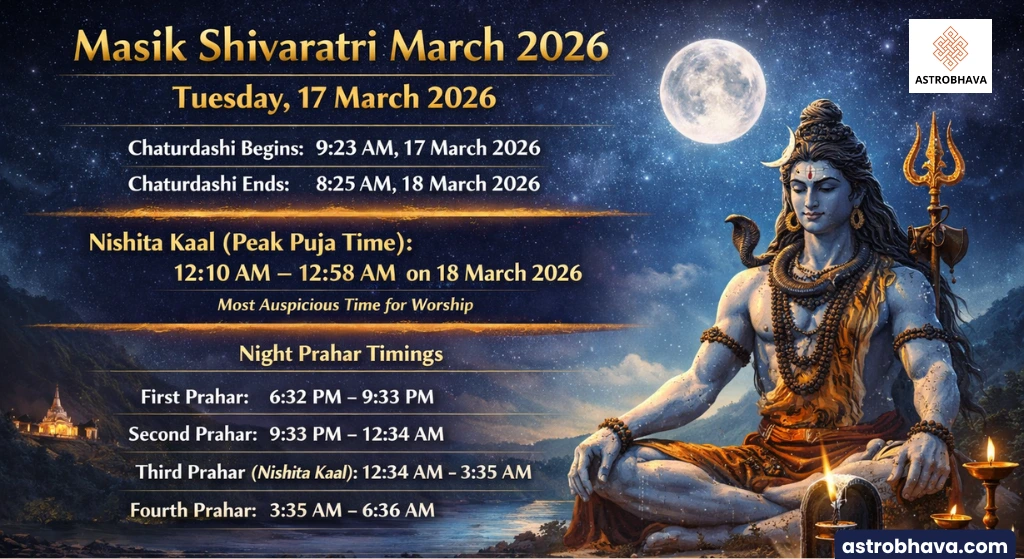
Mark your calendar right now: Masik Shivaratri March 2026 falls on Tuesday, 17 March 2026.
According to the Hindu panchang (using Ujjain standard timings, which apply across most of India with minor local adjustments):
- Chaturdashi Tithi begins: 9:23 AM on 17 March 2026
- Chaturdashi Tithi ends: 8:25 AM on 18 March 2026
The most powerful window for puja is the Nishita Kaal (midnight period) – from 12:10 AM to 12:58 AM on 18 March 2026. This is when Shiva’s energy is believed to be at its peak, making your prayers and abhishek incredibly potent.
Here are the four prahar timings so you can plan your night vigil perfectly:
- First Prahar (evening): 6:32 PM – 9:33 PM on 17 March
- Second Prahar: 9:33 PM on 17 March – 12:34 AM on 18 March
- Third Prahar (Nishita Kaal peak): 12:34 AM – 3:35 AM on 18 March
- Fourth Prahar: 3:35 AM – 6:36 AM on 18 March
Shivaratri Parana (time to break the fast): Between sunrise (around 6:37 AM) and 8:25 AM on 18 March.
Book Maha Mrityunjaya Homa and Receive Powerful Divine Protection
Why is Masik Shivaratri March So Special? Significance and Spiritual Importance
Every Masik Shivaratri March carries the same cosmic power as the bigger festival but in a more intimate way. According to ancient texts like the Skanda Purana and Vayu Purana, the 14th day of Krishna Paksha resonates with Shiva’s energy of dissolution and renewal. The waning moon symbolizes letting go of the old, while the all-night vigil keeps your mind sattvic and alert.
What makes Masik Shivaratri March 2026 extra special? It falls right after Maha Shivaratri (February 2026), so the divine momentum is still strong. Plus, being a Tuesday adds extra potency – many scriptures say Shiva especially listens to prayers offered on Mangalvar (Tuesday).
Spiritually, Masik Shivaratri March helps balance the three gunas (sattva, rajas, tamas). Your fasting weakens tamas (inertia), your chanting raises sattva (purity), and the midnight abhishek invites Shiva’s grace to dissolve rajas (restlessness). Over time, regular observance is believed to reduce fear of death, clear obstacles, and even help ancestors receive peace.
How to Observe the Masik Shivaratri March Vrat: Rules and Fasting Guidelines
Keeping the Masik Shivaratri March vrat is simpler than you might think – and the rules are flexible so everyone can participate.
Basic Vrat Rules:
- Wake up early on 17 March, take a bath (add a few black sesame seeds if possible), and make a sankalp (vow) in front of your Shiva photo or lingam.
- Avoid onion, garlic, non-veg, alcohol, and negative talk the entire day.
- Stay calm, chant “Om Namah Shivaya” whenever your mind wanders.
- Donate food, clothes, or money to the needy – it amplifies the punya.
Three Levels of Fasting (choose what suits your health):
- Nirjala – No food or water (only for experienced devotees).
- Falahar – Fruits, milk, nuts, sabudana, and water (most popular).
- Single meal – One light sattvic meal before sunset.
The golden rule? Break the fast on 18 March morning after Shiva puja and before 8:25 AM. Many families in Rajasthan and North India keep a light falahar during Masik Shivaratri March and feel lighter and more energetic the next day.
Step-by-Step Puja Vidhi for Masik Shivaratri March – Perform Like a Pro
You don’t need a temple visit for Masik Shivaratri March – home puja works beautifully. Here’s the exact step-by-step vidhi (adapted from traditional Shiva puja practices):
- Morning Preparation: Bathe, wear clean clothes, and set up your altar with a Shiva lingam (or photo), Gangajal, panchamrit ingredients, bilva leaves, flowers, dhoop, and diya.
- Sankalp: Sit facing north or east, hold water and akshat in your palm, and vow: “I observe this Masik Shivaratri March vrat for health, peace, and Shiva’s blessings.”
- Abhishek (the heart of the puja): Pour water, then milk, curd, honey, ghee, and sugar over the lingam while chanting “Om Namah Shivaya.” Do this multiple times – once in each prahar if possible.
- Offerings: Place fresh bilva leaves (three leaflets = one set), dhatura flowers (if available), white flowers, and sandalwood paste. Light a ghee lamp and incense.
- Evening & Night Worship: Repeat abhishek during each prahar. At Nishita Kaal (12:10–12:58 AM), spend extra time – this is when your prayers reach Shiva directly.
- Aarti & Bhajans: Sing “Om Jai Jagdish Hare” or Shiva aarti. End with Mahamrityunjaya mantra 108 times if possible.
- Next Morning: After parana, offer plain rice and yellow gram curry as naivedya, then distribute prasad.
Simple, right? Even 20 minutes of sincere abhishek during Masik Shivaratri March creates lifelong positive karma.
Powerful Mantras and Chants to Recite During Masik Shivaratri March
Mantras are the direct line to Shiva during Masik Shivaratri March. Repeat these with full focus:
- Mula Mantra: Om Namah Shivaya (108 times minimum – use a mala)
- Mahamrityunjaya Mantra: Om Tryambakam Yajamahe Sugandhim Pushtivardhanam Urvarukamiva Bandhanan Mrityor Mukshiya Maamritat
- Rudra Gayatri: Om Tatpurushaya Vidmahe Mahadevaya Dhimahi Tanno Rudrah Prachodayat
Chant loudly during the day and softly at night. Many devotees play Shiva bhajans on loop during Masik Shivaratri March – it keeps the entire home vibrating with positive energy.
Incredible Benefits of Keeping Masik Shivaratri Vrat
The blessings of Masik Shivaratri are both immediate and long-term:
- Removes sins of past lives and current obstacles
- Brings mental peace and reduces anxiety
- Improves health and protects from diseases
- Helps unmarried girls find suitable life partners
- Strengthens marital harmony for couples
- Grants career success and financial stability
- Protects from accidents and negative energies
- Brings overall prosperity and family happiness
Regular observers of Masik Shivaratri March often share stories of sudden job opportunities, healed relationships, or mysterious protection during tough times. That’s the magic of Shiva’s grace!
The Legendary Story Behind Masik Shivaratri Vrat
One beautiful vrat katha associated with Masik Shivaratri is that of hunter Chitrabhanu. On a Shivaratri day, he climbed a bilva tree to hunt but spent the night dropping leaves onto a Shiva lingam below while fasting unknowingly. By morning, Shiva appeared and granted him liberation despite his past sins. This story reminds us that even unintentional devotion during Masik Shivaratri brings immense punya.
Another legend is Lingodbhava – Shiva manifesting as an infinite pillar of light between Brahma and Vishnu – proving his supremacy. That’s why we worship the lingam form during every Masik Shivaratri March.
Reading or listening to these stories on the day itself multiplies the blessings.
Special Tips for Busy Devotees Observing Masik Shivaratri
- Working professionals? Keep a small Shiva photo at your desk and chant silently during lunch.
- Parents with kids? Involve children in offering bilva leaves – they love it!
- Health issues? Opt for falahar and do mental japa instead of strict nirjala.
Remember, Shiva sees your intention, not perfection.
Conclusion: Make Masik Shivaratri March 2026 Your Spiritual Turning Point
Masik Shivaratri March 2026 is just around the corner – your golden opportunity to reset, recharge, and reconnect with the divine. Whether you keep a simple fast at home or go all-in with night-long jagaran and puja, every sincere effort counts.
This Masik Shivaratri March, let go of worries, chant with love, and open your heart to Shiva’s infinite grace. The peace you’ll feel the next morning is something words can’t fully describe.
So, are you ready? Start planning your Masik Shivaratri celebration today!
Jai Shiv Shankar! Om Namah Shivaya!
FAQs About Masik Shivaratri March 2026
Q1: When exactly is Masik Shivaratri in March 2026?
A: Tuesday, 17 March 2026. The main worship time is Nishita Kaal on the night of 17th–18th March.
Q2: Can I observe Masik Shivaratri March vrat if I’m working?
A: Absolutely! Many professionals keep falahar and chant mantras at work. Even 15 minutes of puja at midnight works wonders.
Q3: What should I offer during Masik Shivaratri March puja?
A: Bilva leaves, milk, curd, honey, ghee, dhatura (if available), white flowers, and your pure devotion.
Q4: Is Masik Shivaratri March more powerful on Tuesday?
A: Yes! Tuesday Masik Shivaratri March carries extra blessings because Shiva’s energy balances Mars’s influence beautifully.
Q5: Can women observe the Masik Shivaratri March fast?
A: Yes, women (married and unmarried) observe it regularly for family happiness and good life partners.
Q6: What if I miss the exact Nishita Kaal during Masik Shivaratri March?
A: Any time during the four prahars is auspicious. Shiva accepts sincere prayers whenever you offer them with love.
Q7: How many times should I chant Om Namah Shivaya on Masik Shivaratri March?
A: At least 108 times, but more the better. Some devotees aim for 1,008 or continuous japa.
Q8: Can I book online puja for Masik Shivaratri March?
A: Yes! Visit astrobhava.com to book Shiva Homa, Rudrabhishek, or Laghu Rudra performed live on 17–18 March 2026.
Q9: Is there any story I should read during Masik Shivaratri March?
A: Yes – the hunter Chitrabhanu story or Lingodbhava katha from Shiva Purana.
Q10: How long should the fast last during Masik Shivaratri March?
A: From sunrise on 17 March till after puja on 18 March morning (before 8:25 AM).
There you have it – your complete, heartfelt guide to Masik Shivaratri March 2026. May Lord Shiva shower you with health, happiness, and endless blessings this Masik Shivaratri March and always.
Om Namah Shivaya!