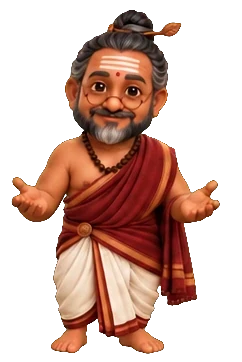
Parshuram Jayanti marks the birth anniversary of Lord Parshuram, the sixth avatar of Lord Vishnu. The day is observed on the Tritiya tithi of the Shukla Paksha in the month of Vaishakha — the same lunar date as Akshaya Tritiya — and is kept with bath, sankalpa, puja, mantra japa, homa where possible, and acts of dana.
Lord Parshuram stands apart among the avatars. He is a Brahmin by birth and a warrior by calling. The name itself means “Rama with the axe,” after the parashu gifted by Lord Shiva. Classical tradition counts him among the Chiranjivis, the immortals, so worship on this day is framed as connection with a living force rather than remembrance of a figure of the past.
The rites below follow the usual home and ashram sequence: purifying bath and sankalpa at Brahma Muhurta, a simple altar puja, optional fire offering, japa of the principal mantras, a sattvic fast, and charity. Confirm the exact Tritiya window for your city on the daily panchang before you begin.
When the Day Falls and Why It Is Observed
Parshuram Jayanti always falls on Vaishakha Shukla Tritiya. Because that tithi is also Akshaya Tritiya, the day carries a double classical weight: the birth observance of the avatar and the “never-diminishing” quality associated with Akshaya Tritiya. Dates shift each year with the lunar calendar; the festival calendar lists the civil date for the current year.
Spiritually, Parshuram is remembered as the force that cuts arrogance and restores dharma when rulers abandon their duty. Tradition therefore associates his worship with courage, discipline, the clearing of obstacles, and matters of justice. Culturally the day is marked with special fervour among Brahmin communities and in regions such as Maharashtra, Gujarat, Goa, Karnataka and Kerala, where temples dedicated to him draw large gatherings, though devotees of every background keep the vrata.
Astrologically, Tritiya in the bright fortnight of Vaishakha is treated as a favourable window for sankalpa-based rites. Many households time the main puja or japa to the tithi itself, or to Abhijit Muhurta around midday, once the local panchang has confirmed the hours.
Morning Preparations: Snana, Sankalpa and the Altar
The day begins in Brahma Muhurta, roughly the pre-dawn hour when the mind is still and sattvic. Rise, bathe, and keep the body and clothes clean before any offering.
Snana. Bathe with water mixed with a little sesame, turmeric and, if available, a few drops of Ganga jal. Offer the bath mentally to Lord Parshuram as purification before worship.
Sankalpa. After the bath, sit facing east or north. Take a little water in the right palm, state your intention clearly — devotion, courage, protection, or the removal of a named obstacle — and release the water. A ritual without sankalpa is incomplete; the intention is what directs the act.
Altar. Place an image or murti of Lord Parshuram on a clean cloth. A small symbolic axe may be kept nearby as a reminder of the parashu. Arrange yellow or red flowers, chandan, unbroken rice (akshat), incense, a ghee lamp, fruits such as banana or coconut, and a simple naivedya. Face the altar east or north for the puja that follows.
astrobhava.com
The Parshuram Jayanti Day
Snana, sankalpa, puja, japa, homa, dana
- TRITIYAVaishakha Shukla paksha
- 6th AVATARof Lord Vishnu
- 108minimum japa count
- 2–4 HRSusual homa sitting
Order of the day
- Snana at Brahma Muhurta with sesame and turmeric
- Sankalpa facing east or north
- Altar puja with lamp, flowers, naivedya
- Homa by trained priests where arranged
- One mala of japa after the morning puja
- Sattvic fast broken, then dana
Dana on this tithi
- Food, grain and cloth
- Books and dakshina to Brahmin scholars
- Feeding those in need
Fast diet
take after the offering
- Fresh fruit, milk, curd
- Coconut water
- Sabudana with sendha namak
- Til laddoo and sesame sweets
avoid through the day
- Non-vegetarian food
- Alcohol and tobacco
- Onion and garlic
- Heavy or pungent dishes
Confirm the Tritiya window and Abhijit Muhurta on your local panchang
Presence, not volume, is what the shastra asks
snana · sankalpa · dana
ASTROBHAVA.COMVedic rituals, never a group ceremony, telecast live
Parshuram Puja: Items and Step-by-Step Vidhi
A full shodashopachara can be done with a priest; a sincere shortened vidhi is entirely acceptable at home. Keep the following ready:
- Fresh flowers — marigold, lotus or red hibiscus
- Sandalwood paste (chandan)
- Akshat mixed with a pinch of turmeric
- Incense and camphor
- Ghee lamp
- Coconut, fruits and a simple sweet (kheer or modak)
- Panchamrit — milk, curd, honey, sugar and ghee
- Yellow or red mauli
Avahana. Light the lamp, ring the bell lightly, and invite the deity with the nama mantra Om Parashuramaya Namah, repeated with attention.
Abhisheka and alankara. If you are using a metal or stone murti, bathe it with panchamrit and then with clean water; wipe gently. Apply chandan on the forehead. Offer flowers one by one. Light dhoop and perform a short aarti with the ghee lamp, moving it clockwise three times.
Naivedya, stotra and pradakshina. Offer the fruits and sweet; sesame preparations are traditionally favoured. Recite the Parshuram aarti, a kavach, or, where you have the text, portions of the Sahasranama. Circumambulate the altar three times, or turn clockwise in place if space is tight, and close with a brief personal prayer. Distribute the prasad to the household.
When the need named in the sankalpa concerns open hostility, litigation or stubborn outer blocks, households sometimes pair the home puja with a fire rite from the success-over-enemies group of homas performed at the ashram and telecast live.
Parshuram Homa: Structure of the Fire Offering
Homa is the Vedic fire offering in which ghee, sesame, herbs and grain are given into Agni as the carrier. A Parshuram homa, when arranged, follows the standard shrauta-smarta outline and is best conducted by trained priests, because the kunda shape, wood, mantras and count of ahutis are fixed with precision.
The usual sequence is: preparation of the kunda; Agni sthapana with the fire mantras; a brief Ganapathi invocation so that the rite itself meets no obstruction; avahana of Parshuram into the fire; ahutis of ghee, til, samagri and rice with the moola mantra or prescribed rik; purnahuti — often a coconut in red cloth soaked in ghee — as the final surrender; and shanti patha with distribution of prasad.
Wood such as palash or peepal is preferred where available. A standard sitting runs roughly two to four hours; extended counts of 1,008 or more ahutis are reserved for heavier sankalpas. Tradition links this fire offering with courage, protection from hostile forces, ancestral peace where Pitru concern is indicated, and clarity in disputes — always as prescription, never as a promised result. Related ashram rites under protection and obstruction-removal are chosen when the chart or the situation points that way; guidance on fit is available through Ask Nirnaya.
Japa: Mantras and How to Keep Count
When a full puja or homa is not possible, japa is the most accessible observance. Sound is treated as a vehicle of the deity’s name; steady repetition on a mala steadies attention and completes the sankalpa.
Other mantras kept on this day include the Gayatri form Om Parashuramaya Vidmahe Kalpavrikshaya Dheemahi Tanno Parashuram Prachodayat, and the short nama Om Ram Parashuramaya Namah. A Vishnu-avatar verse such as Namo brahmanya-devaya… is sometimes added to close.
Sit facing east or north on a clean asana. Use a rudraksha or tulsi mala. Complete at least one mala of 108 after the morning puja; longer counts of eleven or more malas are taken only if the vow is realistic and can be finished without break. Keep silence during the japa. A short sitting in quiet after the last bead helps the mind absorb the rhythm. Method and posture are set out more fully in the guide on how to chant a mantra.
On Parshuram Jayanti the preferred windows are the Tritiya itself and Abhijit Muhurta near midday. Verify both on the panchang for your location rather than by clock alone.
Fast, Diet, Dana and Supporting Observances
The fast may be full-day or until the evening puja, according to health and capacity. After the offering, take simple sattvic food: fresh fruit, milk, curd, coconut water, sabudana preparations with sendha namak if you are on a vrat diet, and sesame sweets such as til laddoo. Avoid non-vegetarian food, alcohol, tobacco, onion, garlic, and heavy or overly pungent dishes. Do not eat the main meal before the morning puja is complete.
Dana is central to the day’s spirit. Lord Parshuram is remembered as upholding Brahmin dharma and protecting the vulnerable, so offering food, cloth, grain, books or dakshina to Brahmin scholars and priests, and feeding those in need, are classical acts on this tithi. Reading or listening to the Parshuram katha — his birth, training under Shiva, the story of Renuka, and the campaigns that restored dharma — is treated as meritorious in itself.
Temple visits, where a Parshuram kshetra is reachable, deepen the observance; where travel is not possible, the home altar and a live telecast of a rite performed at the ashram serve the same sankalpa. Keep the vow you actually took. An unfinished japa count or a casually broken fast is traditionally held to weaken the discipline of the day.
Common Mistakes to Avoid
Several errors recur even among sincere households. Skipping the sankalpa leaves the rite without direction. Wilted or previously used flowers are not offered; freshness matters. Rushing through the steps for the sake of finishing is less useful than a shorter vidhi done with attention. Beginning a japa vow and leaving the mala incomplete is discouraged. If a fast has been declared, honour it within the limits of health rather than breaking it lightly.
Finally, do not confuse the day’s mood. Parshuram’s energy in the tradition is fierce and exacting — the axe that cuts ego and injustice — yet the household rite itself should remain calm, clean and ordered. Presence, not volume, is what the shastra asks.
Questions devotees ask
Chidambaram Velayudham writes on the Nadi tradition and on the wider reading practices of the South, and fills in across the desk's other sections.