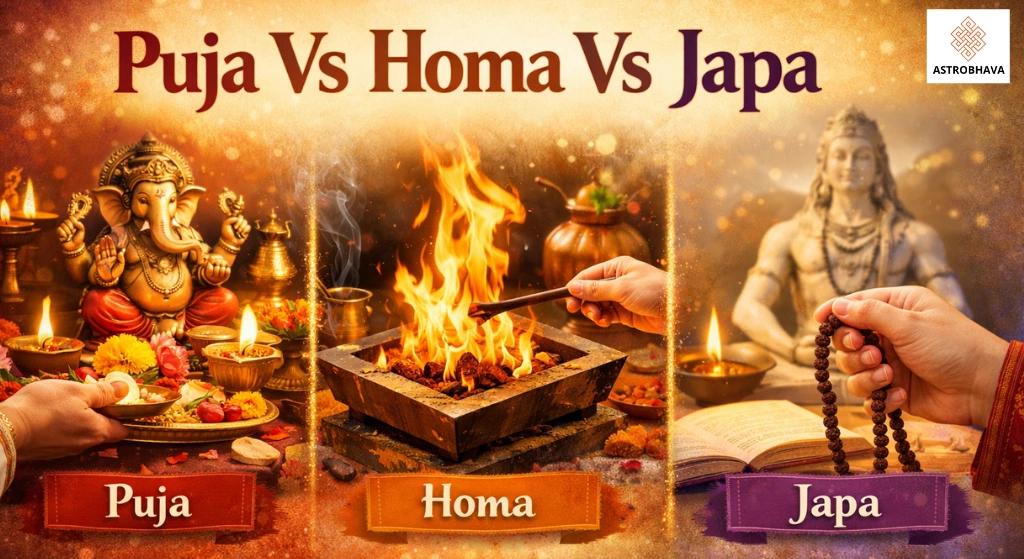
In the vast and rich tapestry of Hindu spiritual practice, rituals form the sacred bridge between the human and the divine. Whether you are a devout practitioner or someone newly exploring the world of Vedic traditions, you have likely encountered three powerful terms — Puja, Homa, and Japa. Understanding the difference between Puja Vs Homa Vs Japa is not merely an academic exercise — it is the key to choosing the right practice for your spiritual goals, life situations, and personal intentions.
Each of these rituals carries its own philosophy, methodology, energy, and purpose. While all three are paths that lead to divine connection, they do so in beautifully distinct ways. In this in-depth guide, we will walk you through everything you need to know about Puja Vs Homa Vs Japa — from their origins and procedures to their benefits and ideal use cases.
 What Is Puja? The Art of Divine Devotion
 What Is Puja? The Art of Divine Devotion
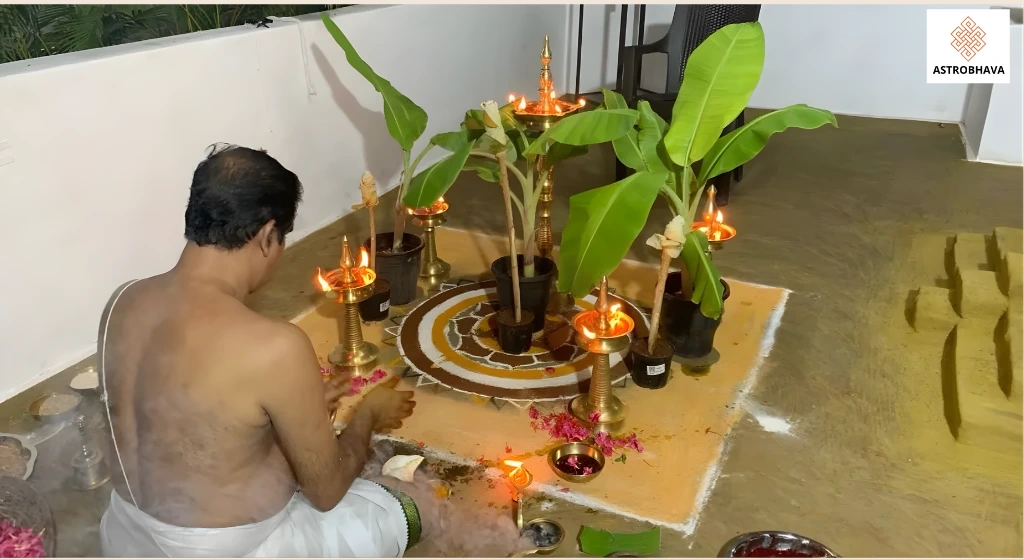
Puja is perhaps the most universally recognised of all Hindu rituals. Derived from the Sanskrit root “puj” meaning “to revere” or “to worship”, Puja is an act of showing reverence and love to a deity through a formal sequence of offerings and prayers. It is the cornerstone of daily Hindu worship and forms the heart of household devotion as well as grand temple ceremonies.
The Philosophy Behind Puja
Puja is rooted in the concept of treating the deity as an honoured guest — even as the divine presence itself. The worshipper prepares a sacred space, installs the deity (in an idol, image, or yantra), and then performs a series of sixteen services known as Shodashopachara, which include bathing, clothing, offering food, lighting lamps, and waving incense.
Common Types of Puja
Nakshatra Pujas — Pujas to calm the planetary influences
Special Pujas — Rituals performed on special occasions
Love and Marriage Puja — Puja performed for relationship harmony or overcoming delay in marriages
Satyanarayana Puja — One of the most popular community pujas
Puja for business and financial success: Lakshmi, Ganesh, and Navgraha Pujas
What Are the Benefits of Puja?
Puja creates a sanctified environment that invites divine grace. Regular Puja practice is believed to bring mental peace, removal of obstacles, blessings for health and prosperity, and the gradual purification of the mind and heart. For many devotees, the physical acts of Puja — ringing the bell, lighting the lamp, chanting mantras — act as a form of meditation that anchors the worshipper in the present moment.
Looking to perform a powerful Puja for a special occasion, a life milestone, or to seek divine blessings? AstroBhava connects you with experienced Vedic priests who perform authentic Pujas tailored to your goals — whether it’s health, love, wealth, or peace of mind.
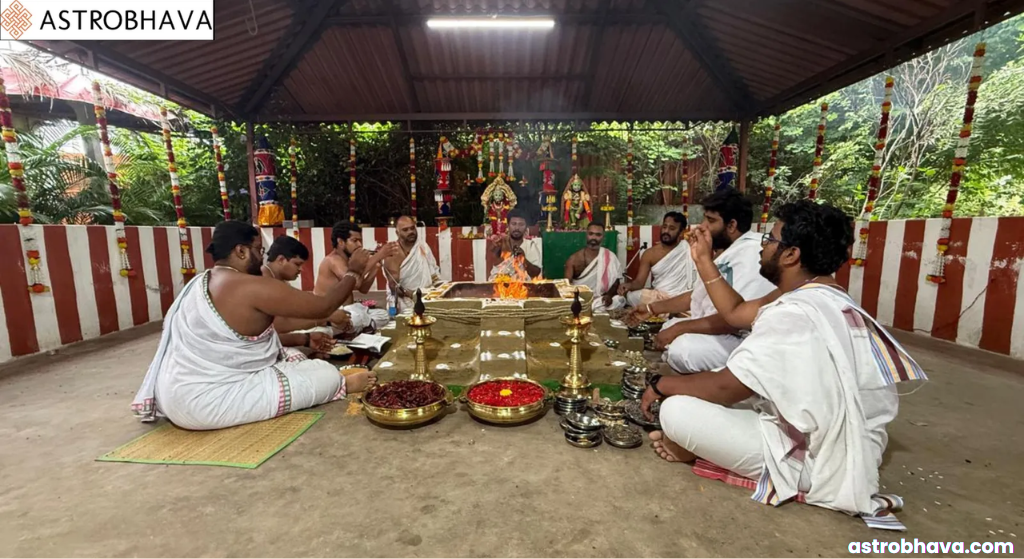
What Is Homa? The Sacred Fire Ritual
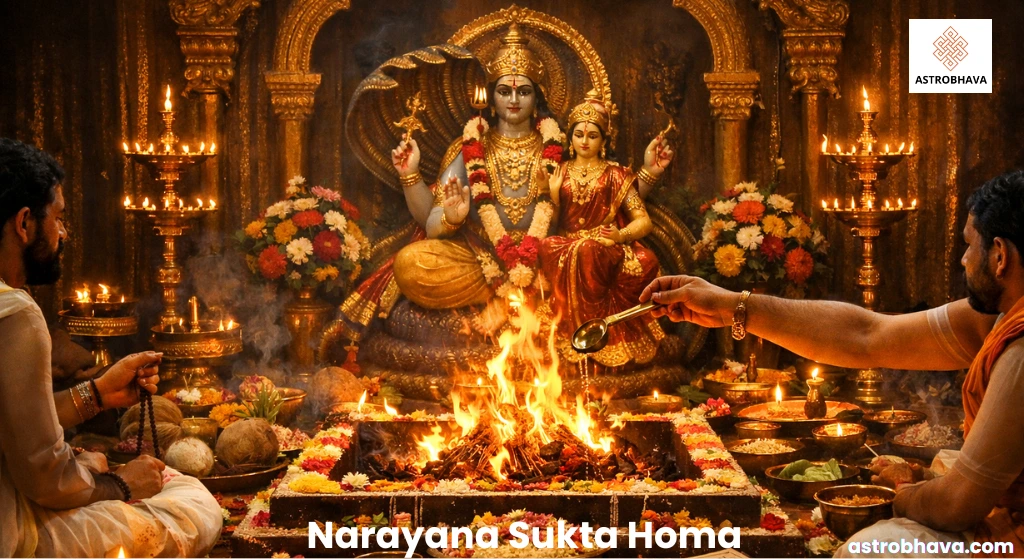
When we compare Puja Vs Homa Vs Japa, Homa (also called Yajna or Havana) stands out for its dramatic, elemental power. Homa is a fire ritual rooted in the oldest stratum of Vedic tradition — the Rigveda itself. In a Homa, the sacred fire (Agni) acts as the divine messenger who carries offerings — typically ghee, grains, herbs, and sacred wood — directly to the gods.
The Philosophy Behind Homa
In Vedic cosmology, Agni (fire) is not merely a physical element — he is a deity, a purifier, and a cosmic mediator. When oblations are offered into the fire with specific mantras, the fire transforms and transmits them to the intended deity or cosmic force. This is why Homa is considered one of the most potent and direct forms of ritual worship in the Vedic tradition.
Common Types of Homa
- Ganapati Homa — For removing obstacles and invoking Ganesha’s blessings
- Sudarshana Homa — For protection from evil and negative energies
- Mrityunjaya Homa — For health, healing, and overcoming the fear of death
- Lakshmi Kubera Homa — For wealth, abundance, and financial prosperity
- Navagraha Homa — To pacify the nine planets and reduce karmic afflictions
- Rudra Homa — For the blessings of Lord Shiva and relief from suffering
What Are the Benefits of Homa?
Homa is associated with deep purification — of the individual, the space, and even the atmosphere. The smoke from the sacred fire carries medicinal properties (especially when medicinal herbs are used), and the vibrations of the Vedic mantras chanted during the ritual are said to positively influence the environment at a subtle energy level. Homa is particularly recommended for planetary remedies, removing serious obstacles, healing, and fulfilling significant life desires.
🌟 Schedule a Homa Ritual with Expert Vedic Priests
AstroBhava offers a wide range of Homa ceremonies performed by trained Vedic scholars. From Navagraha Homa to Sudarshana Homa, our priests follow authentic Vedic procedures to deliver powerful results. Whether in-person or performed on your behalf remotely, every Homa is done with complete devotion.
What Is Japa? The Power of Sacred Repetition
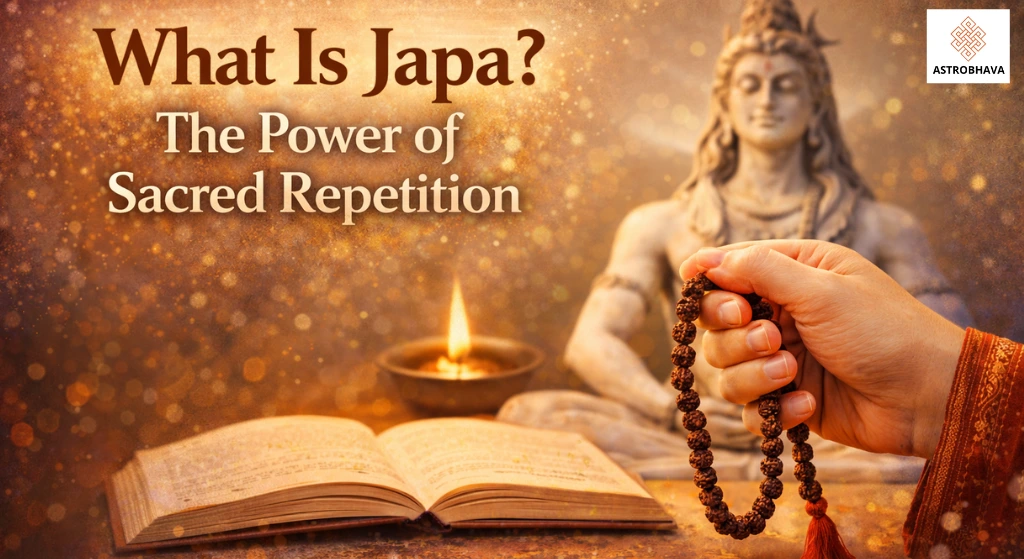
In the comparison of Puja Vs Homa Vs Japa, Japa is perhaps the most intimate and inward of the three practices. Japa refers to the meditative repetition of a mantra, divine name, or sacred syllable. The word comes from the Sanskrit root “jap”, meaning “to utter in a low voice” or “to mutter.” Japa is a practice that requires no elaborate setup — it can be performed anywhere, at any time, making it one of the most accessible Vedic spiritual disciplines.
The Philosophy Behind Japa
Japa is based on the profound Vedic understanding that sound is the fundamental building block of the universe. Mantras are not ordinary words — they are precise vibrational formulas that, when repeated with focus and intention, directly affect the mind, the nervous system, and the energetic field of the practitioner. Over time, Japa is said to purify the subconscious, dissolve karma, and lead to states of deep meditation and spiritual awakening.
Common Types of Japa based on Mantra Repetition
- 1001 Japa
- 10001 Japa
- 28001 Japa
- 51001 Japa
- 125001 Japa
Note:
- The 51001 and 125001 Japa options include a 1-Priest Homa, performed at the AstroBhava Yagna Ashram and live-streamed for your participation.
- The 10001 Japa is completed within 10 days.
- The 28001, 51001, and 125001 Japas are completed in 48 days, invoking the blessings of 27 Nakshatras, 12 Rashis, and 9 planets, providing enhanced spiritual support.
What Are the Benefits of Japa?
Regular Japa practice is associated with mental clarity, emotional resilience, reduction of stress and anxiety, heightened intuition, and deep spiritual progress. Many practitioners report that sustained Japa practice leads to a natural state of inner silence and expanded awareness. For astrological remedies, Japa of specific deity or planetary mantras is prescribed to reduce the malefic effects of planets in a horoscope.
🌟 Get a Personalised Japa Recommendation from AstroBhava
Not sure which mantra to chant or how many repetitions are right for you? AstroBhava’s expert astrologers and Vedic consultants analyse your birth chart to recommend the most effective Japa practice for your specific karmic patterns and life goals.
Puja Vs Homa Vs Japa: A Side-by-Side Comparison
Now that we have explored each practice in depth, let us place them side by side to clearly understand the key differences:
| Aspect | Puja | Homa | Japa |
| Core Element | Devotional offerings to the deity | Sacred fire (Agni) | Mantra repetition |
| Complexity | Moderate | High (usually requires a trained priest) | Low to Moderate |
| Setting | Home altar or temple | Open space or ritual hall | Can be performed anywhere |
| Duration | 30 minutes to several hours | 1 to 8+ hours | 15 minutes to several hours |
| Primary Purpose | Devotion and daily blessings | Powerful spiritual remedies and purification | Spiritual growth and karma reduction |
| Ideal For | Regular worship and special occasions | Planetary doshas and major life obstacles | Daily spiritual practice and mental peace |
| Requires Priest? | Optional | Strongly recommended | Not required |
| Key Element | Shodashopachara (16 ritual offerings) | Oblations into sacred fire (Agni) | Mala (rosary) and mantra counting |
How to Choose Between Puja, Homa, and Japa?
When thinking about Puja Vs Homa Vs Japa in practical terms, the right choice depends on several factors: your intention, your available time and resources, and the guidance of an experienced astrologer or spiritual guide.
Choose Puja If…
- You want to establish a regular devotional practice at home
- You are celebrating a festival, life event, or occasion
- You want to invite divine blessings into your daily life
- You seek a tangible, sensory form of worship
Choose Homa If…
- You are facing persistent problems despite other efforts
- Your horoscope shows strong planetary afflictions (doshas)
- You need rapid and powerful spiritual intervention
- You are beginning a major life venture and want cosmic support
Choose Japa If…
- You want a daily spiritual discipline that fits any schedule
- You are on a path of meditation and self-realisation
- You need a simple yet effective remedy for mental stress or karmic issues
- You want to deepen your connection with a specific deity or energy
Of course, many seasoned practitioners combine all three — daily Japa, periodic Puja, and occasional Homa — to create a comprehensive spiritual practice that works on multiple levels simultaneously. The beauty of Puja Vs Homa Vs Japa is that they are not competing paths but complementary dimensions of the same sacred journey.
🌟 Consult an AstroBhava Expert to Find Your Perfect Ritual
Not sure which ritual — Puja, Homa, or Japa — is right for your situation? Our expert Vedic astrologers and priests analyse your birth chart, current dasha period, and life circumstances to recommend the most effective spiritual remedy tailored just for you.
👉 Book a Free Consultation Today!
Can Puja, Homa, and Japa Be Combined?
Absolutely — and in fact, many elaborate rituals naturally incorporate all three elements. A traditional Satyanarayan Puja, for example, may include Japa of specific mantras as part of the ritual, while some Homa ceremonies begin and end with a Puja to the deity. Combining Puja Vs Homa Vs Japa in a structured ritual amplifies the overall spiritual power and ensures that the practitioner engages body, speech, and mind simultaneously.
In Vedic tradition, these three — body (action in Puja), speech (sound in Japa), and mind (intention throughout) — are considered the three instruments of karma. When all three are aligned in a sacred ritual, the results are exponentially more powerful than any single practice alone.
Common Misconceptions About Puja Vs Homa Vs Japa
Misconception 1: Homa Is More Powerful Than Puja
Not necessarily. Power lies in the sincerity of the devotee and the accuracy of the procedure. A heartfelt daily Puja performed with genuine devotion can be more transformative than a mechanically performed Homa. The comparison of Puja Vs Homa Vs Japa should never be about hierarchy but about suitability.
Misconception 2: Japa Is Just Chanting — Anyone Can Do It Randomly
Japa is a precise science. The mantra must be correctly received (ideally through initiation from a guru), the count must be maintained, and the practice must be consistent. Random repetition without understanding or consistency yields limited results.
Misconception 3: You Need to Be a Pandit to Perform These Rituals
While a trained priest is essential for complex Homas, Puja and Japa can absolutely be performed by anyone — man, woman, or child — who approaches the practice with sincerity, purity, and proper guidance. AstroBhava’s team can guide you through all three practices.
🌟 Explore AstroBhava’s Full Range of Ritual Services
From daily Puja kits and online Japa programmes to grand Homa ceremonies conducted by Vedic scholars, AstroBhava has everything you need to bring authentic Vedic ritual into your life. Explore our complete spiritual services.
Conclusion: The Sacred Trinity of Vedic Practice
In understanding Puja Vs Homa Vs Japa, what becomes clear is that Hindu spiritual tradition is not a monolith but a rich, nuanced ecosystem of practices designed to meet seekers at every level of their journey. Puja is the way of the devotee’s heart. Homa is the way of elemental transformation. Japa is the way of the inward seeker.
Together, Puja Vs Homa Vs Japa represent the complete spectrum of Vedic ritual life — from the outer world of offerings and fire to the inner world of mantra and silence. Whatever your spiritual goal, there is a practice within this trinity that speaks directly to your need.
At AstroBhava, our mission is to make authentic Vedic rituals — whether Puja, Homa, or Japa — accessible, meaningful, and genuinely transformative for every soul on the spiritual path. Take the first step today and let the ancient wisdom of Bharat guide your journey.
🌟 Begin Your Vedic Journey with AstroBhava
Frequently Asked Questions (FAQs)
Here are the most common questions people ask when learning about Puja Vs Homa Vs Japa:
Q: What is the main difference between Puja, Homa, and Japa?
A: Puja is a devotional offering ritual performed at a home altar or temple. Homa is a Vedic fire ritual where oblations are offered into sacred fire with mantras. Japa is the meditative repetition of a mantra or divine name. Each has a distinct method and purpose, though all three aim to connect the practitioner with divine energy.
Q: Which is more effective — Puja, Homa, or Japa?
A: Effectiveness depends on your intention and situation. Homa is generally recommended for serious karmic or planetary issues. Puja is ideal for regular devotional practice and celebrating auspicious occasions. Japa is best for daily spiritual discipline and mental purification. An experienced astrologer can guide you to the most suitable practice.
Q: Can I perform Puja, Homa, or Japa at home?
A: Puja and Japa can easily be performed at home by any sincere devotee. Homa typically requires a qualified Vedic priest, a sacred firepit (kund), and specific materials, so it is usually performed in a dedicated space or temple, or conducted by a priest on your behalf.
Q: How many times should Japa be done to see results?
A: Traditional prescriptions vary by mantra and purpose. Common counts are 108 repetitions per session (one full mala), with a 40-day or 90-day consistent practice for significant results. Some remedial Japas require 10,000 to 125,000 repetitions depending on the mantra. Consult an AstroBhava astrologer for a personalised recommendation.
Q: Can Puja, Homa, and Japa be performed online or remotely?
A: Yes. AstroBhava offers remote Puja and Homa services where our trained priests perform the ritual on your behalf at a sacred location, following all Vedic procedures. You receive prasad (sacred offerings) and a recording of the ceremony. Remote Japa guidance is also available through our consultation services.
Q: What is the best time to perform Puja, Homa, or Japa?
A: Brahma Muhurta (the period about 1.5 hours before sunrise) is considered the most auspicious time for all three practices. Puja is also traditionally performed at sunrise and sunset. Homas often follow the Muhurta (auspicious timing) prescribed by an astrologer. Japa can be performed at any time, though early morning and after sunset are preferred.
Q: How do I know which Puja, Homa, or Japa is right for my horoscope?
A: This is best determined through a detailed astrological consultation. AstroBhava’s Vedic astrologers analyse your birth chart, running planetary periods (dasha), and current life challenges to prescribe the most effective combination of Puja, Homa, and Japa for your unique situation.