Spring arrives differently in Tamil Nadu. While much of the world rings in the new year with fireworks and countdowns at midnight, Tamils welcome theirs with the scent of mango blossoms, the golden gleam of brass lamps, and a carefully arranged tray of symbolic foods called the Kani. It’s quieter, more rooted, and honestly — more meaningful. If you’ve been curious about Puthandu 2026 and what it’s all about, you’re in the right place. Let’s dive in.
What Is Puthandu?
Puthandu (புத்தாண்டு) literally translates to “New Year” in Tamil — Puthu meaning new, and Aandu meaning year. It marks the first day of the Tamil month of Chithirai and is celebrated with great joy across Tamil Nadu, Sri Lanka, and Tamil communities spread around the world.
Unlike the Gregorian New Year, Puthandu follows a solar calendar — the Tamil calendar, which is one of the oldest calendar systems still in active use. The day usually falls on April 14th each year, and yes, Puthandu 2026 will be celebrated on April 14, 2026 — a Tuesday.
It’s not just a cultural celebration. Puthandu is deeply intertwined with astrology, spirituality, and the agricultural rhythms of the land. When the Sun transitions into the zodiac sign of Aries (Mesha Rashi), the Tamil New Year begins. This moment is called Mesha Sankranti, and it’s considered astronomically auspicious.
When Is Puthandu 2026?
Date: Tuesday, April 14, 2026
The exact time of the Sun’s entry into Aries — called the Puthandu Nakshatra Muhurtham — determines when the new year officially begins. In 2026, this transition occurs in the early morning hours, making it an auspicious time to perform the Kani Darshan (the first auspicious sight of the new year).
Many families wake up before sunrise, close their eyes, and are led by their elders to the Kani — a ritual tray arranged the night before — so that the very first thing they see on Puthandu is beauty, abundance, and prosperity.
The Significance of Puthandu
Puthandu is far more than a date on a calendar. It represents a fresh beginning — not just for individuals, but for communities, farmers, and families.
Historically, Tamil kings would conduct grand court ceremonies on this day, announcing new decrees and policies. Merchants would open fresh ledger books (a practice that continues in some traditional businesses even today). For farmers, it marked the beginning of a new agricultural cycle.
Spiritually, Puthandu is a time to seek divine blessings for the year ahead. People visit temples early in the morning, offer prayers, and ask for health, wealth, and harmony. The Panchangam (Tamil almanac) for the new year is read aloud in homes and temples, giving families a sense of what the cosmic energies have in store.
Step into the new year with clarity and purpose.
This Puthandu, unlock your life’s divine blueprint through a personalized Nadi Astrology reading.
The Kani — First Sight of the New Year
If there’s one ritual that captures the soul of Puthandu, it’s the Kani.
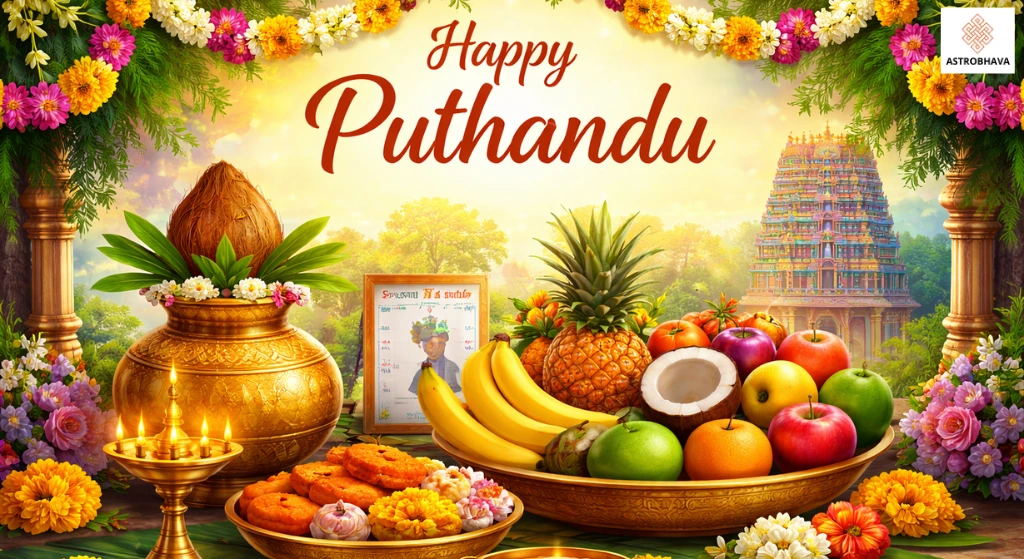
The word “Kani” means the first auspicious sight. On the eve of Puthandu, women in the household (traditionally the eldest woman) arrange a large plate or tray with specific items, each carrying deep symbolic meaning:
- Raw rice — abundance
- Coconut — prosperity
- Betel leaves and areca nuts — auspiciousness
- Fruits (especially mangoes and bananas) — sweetness of life
- Gold and silver ornaments — wealth
- Flowers — especially yellow konnai (Indian laburnum/Cassia fistula), which is the state flower of Tamil Nadu
- A mirror — so you see your own reflection amid all this goodness
- A small lamp — divine light
- Coins and currency — financial well-being
- Neem leaves with jaggery — the bittersweet balance of life
In the morning, family members close their eyes and are guided to the Kani. The belief is that what you first see on Puthandu shapes the energy of your entire year. Starting with these auspicious symbols is considered deeply blessed.
The Traditional Puthandu Feast
Food plays a central role in almost every Tamil celebration, and Puthandu is no exception. The traditional Puthandu meal is elaborate, balanced, and symbolic.
The highlight is the Maanga Pachadi — a dish made with raw mango, jaggery, neem flowers, and tamarind. This dish captures six tastes: sweet, sour, bitter, spicy, salty, and astringent. The philosophy behind it? Life itself is a blend of all these experiences, and you must welcome each one with equal grace.
Other typical dishes include:
- Vada (crispy lentil fritters)
- Payasam (sweet rice or vermicelli pudding)
- Sambar and rasam
- Kootu and poriyal (vegetable curries and stir-fries)
- Papad and pickles
- Rice served on banana leaf
Eating on a banana leaf is traditional — it adds to the festivity and is also considered hygienic and eco-friendly. Grand meals are shared with extended family, neighbors, and guests. No one is turned away hungry on Puthandu.
Explore the divine connection between nadi astrology and puthandu
Puthandu Across Tamil Communities
Puthandu 2026 won’t just be celebrated in Tamil Nadu. Tamil communities around the world — in Sri Lanka, Singapore, Malaysia, Canada, the UK, the USA, and beyond — will be marking this day with equal enthusiasm.
In Sri Lanka, Puthandu coincides with the Sinhala and Tamil New Year, called Aluth Avurudda. It’s a national holiday, and communities celebrate with games, sweets, and community gatherings.
In Malaysia and Singapore, Tamil temples host special poojas and cultural events. Tamil associations organize Puthandu functions with classical Bharatanatyam performances, carnatic music, and traditional games.
In Tamil diaspora communities globally, Puthandu has become a way to stay connected to roots. Schools, temples, and cultural organizations come together to ensure the younger generation understands and values this heritage.
What Is the Tamil Year Name for 2026?
The Tamil calendar follows a 60-year cycle, with each year carrying a unique name. For Puthandu 2026, the Tamil year is called Nandana — a name associated with joy, happiness, and celebration. Each year name is believed to carry distinct cosmic energies and characteristics that influence events and experiences throughout that year.
The Tamil year that ends just before Puthandu 2026 is Sarvajit (2025–2026), and Nandana begins fresh on April 14, 2026.
Astrological Significance of Puthandu 2026
Tamil astrology plays a huge role in Puthandu. The Panchangam — the traditional five-limb almanac — is consulted to understand what the new year holds.
The five elements of the Panchangam are:
- Tithi (lunar day)
- Vara (weekday)
- Nakshatra (star)
- Yoga (auspicious period)
- Karana (half of a lunar day)
On Puthandu, priests and astrologers read the Puthandu Panchangam aloud at temples, and families listen attentively to understand the auspicious timings for the year, favorable periods for marriage or business, and planetary influences on their zodiac signs.
Worried about what the stars say for your Rasi in 2026?
Get a personalized Tamil New Year Rasi Palan from
AstroBhava’s expert astrologers and start Nandana year with clarity.
Puthandu vs. Vishu — What’s the Difference?
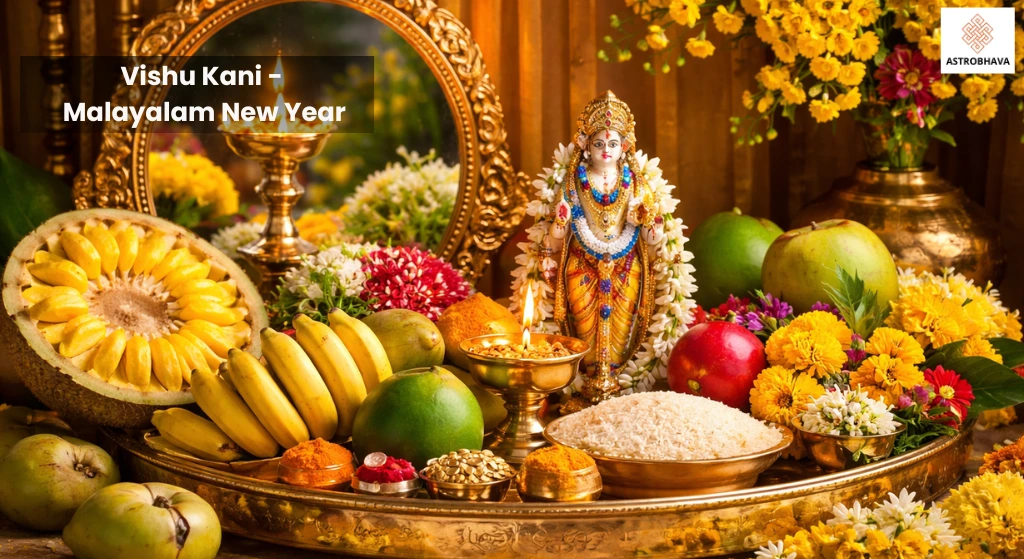
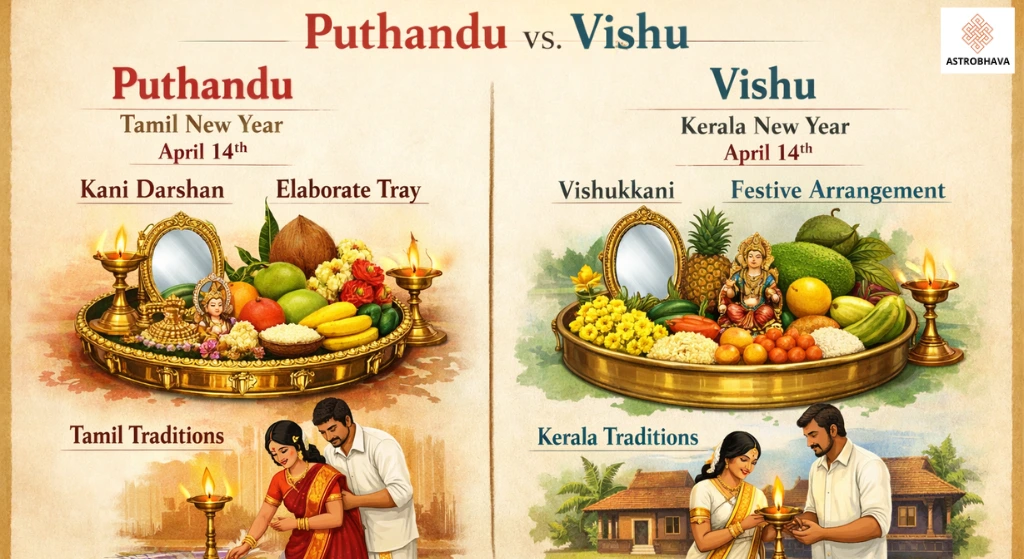
Many people confuse Puthandu with Vishu — the Kerala New Year — since both fall on April 14th and both involve an auspicious “first sight” ritual.
Here’s the quick difference:
- Puthandu is the Tamil New Year, celebrated by Tamil Hindus. The ritual is the Kani Darshan with the elaborate tray.
- Vishu is the Malayalam New Year (Kerala). The ritual is also called Kani, and it also involves the first auspicious sight — but the arrangements, foods, and traditions differ.
Both share the same solar astronomical basis (Sun entering Aries) but express it through distinct cultural lenses.
Puthandu 2026 Celebrations — What to Expect
As Puthandu 2026 falls on a Tuesday, many families will begin celebrations from the evening of Monday, April 13th — arranging the Kani tray, cleaning and decorating the home with kolam (rangoli), and lighting lamps.
On the day itself:
- Early morning Kani Darshan — first auspicious sight
- Temple visit — to seek blessings and hear the Panchangam
- Oil bath (Ganga Snanam) — a ritual bath considered purifying
- New clothes — especially white, green, or bright colors
- Grand feast — the banana leaf spread with all the traditional dishes
- Visiting elders — to seek their blessings and receive gifts
- Community events — cultural programs, music, and dance
Unsure which muhurtham to start new ventures on Puthandu 2026?
AstroBhava’s Muhurtha Calculator helps you find the most auspicious timing for your new beginnings.
Puthandu and the Environment
One beautiful aspect of Puthandu is its natural connect. The yellow konnai flowers blooming all over Tamil Nadu in April are seen as nature’s own way of welcoming the new year. Neem trees are in full bloom too — and the neem flowers used in rituals are both medicinal and symbolic.
The entire celebration is grounded in nature’s cycles — the harvest, the sun’s movement, the flowering of trees. It’s a reminder that human life and nature are not separate.
Conclusion
Puthandu 2026 is more than just April 14th on a calendar. It’s a moment where millions of Tamils across the world pause, look inward, and step into a new chapter with intention and gratitude. The rituals — the Kani, the feast, the Panchangam, the temple visits — are not just customs. They’re a living wisdom passed down through generations, connecting the cosmic to the everyday.
Whether you’re Tamil and reconnecting with your roots, or someone curious about one of the world’s richest living cultures, Puthandu invites everyone to welcome life with sweetness, accept its bitterness with courage, and celebrate the beautiful, bittersweet whole of it.
This Puthandu, don’t just celebrate—transform your destiny. Let Astrobhava guide you with personalized rituals and ancient Vedic wisdom for a truly powerful new year.
Iniya Puthandu Vazthukal! Wishing everyone a joyful, prosperous Nandana year! 🌼
Frequently Asked Questions (FAQs)
Q1. When is Puthandu 2026?
Puthandu 2026 falls on Tuesday, April 14, 2026. This is the first day of the Tamil month of Chithirai and marks the beginning of the Tamil New Year Nandana.
Q2. What is the Tamil year name for 2026?
The Tamil year beginning on Puthandu 2026 is called Nandana, which means joy and happiness. It is the 35th year in the 60-year cycle of the Tamil calendar.
Q3. How is Puthandu celebrated?
Puthandu is celebrated with the Kani ritual (first auspicious sight), temple visits, oil baths, wearing new clothes, preparing traditional foods like Maanga Pachadi, and gathering with family and elders.
Q4. Is Puthandu a public holiday?
Yes, Puthandu is a public holiday in Tamil Nadu, India, and in Sri Lanka (where it coincides with the Sinhala and Tamil New Year).
Q5. What is the significance of Maanga Pachadi?
Maanga Pachadi is a dish made on Puthandu from raw mango, neem flowers, jaggery, and tamarind — representing the six tastes of life. It symbolizes that life is a mix of sweetness, bitterness, joy, and challenges, and all must be accepted gracefully.
Q6. What is the Kani ritual?
The Kani is an auspicious arrangement of items (fruits, flowers, gold, rice, mirror, lamp) placed on a tray. On Puthandu morning, family members close their eyes and are led to see the Kani first — as the belief is that this auspicious first sight brings positivity for the year ahead.
Q7. What does Puthandu mean?
“Puthandu” comes from the Tamil words Puthu (new) and Aandu (year), simply meaning “New Year.”
Q8. How do you wish someone on Puthandu?
You can say “Iniya Tamil Puthandu Nalvaazhthukal!” or simply “Puthandu Vazthukal!” to wish someone a Happy Tamil New Year.
Q9. Is Puthandu the same as Vishu?
No. While both fall on April 14th and both involve a “first sight” ritual, Puthandu is the Tamil New Year and Vishu is the Kerala (Malayalam) New Year. They share the same astronomical basis but have distinct cultural traditions.
Q10. What is the Panchangam read on Puthandu?
The Panchangam is the Tamil almanac that covers the five elements of time — Tithi, Vara, Nakshatra, Yoga, and Karana. On Puthandu, it is read aloud at temples to forecast the events, auspicious periods, and planetary influences for the entire new year.