There’s something beautifully raw about Holi Bhai Dooj 2026 that sets it apart from other sibling celebrations in the Hindu calendar. While most people associate Bhai Dooj exclusively with Diwali festivities, this lesser-known spring celebration carries its own profound weight. Falling on the second day after Holi, this festival marks the moment when brothers and sisters pause amid the colorful chaos to honor their bond through ancient rituals passed down through generations. I’ve watched families struggle to understand why this particular day matters, and honestly, it’s because we’ve lost touch with the deeper spiritual currents that flow through our traditions.
Introduction to Holi Bhai Dooj 2026
What is Holi Bhai Dooj?
Holi Bhai Dooj represents one of Hinduism’s most intimate family celebrations, occurring on Dwitiya Tithi (the second day) of the Shukla Paksha in the month of Phalgun. Unlike the boisterous color-throwing of Holi itself, this observance brings a quieter, more contemplative energy. Sisters perform specific rituals for their brothers’ wellbeing, applying tilak and offering prayers that invoke divine protection. The festival goes by several regional names—Bhratri Dwitiya in Sanskrit, Bhau Beej in Maharashtra, and Bhai Phota in Bengal—each carrying local customs that enrich the core celebration.
The Connection Between Holi and Bhai Dooj
Here’s what most people miss: the connection between Holi and Bhai Dooj isn’t arbitrary. Holi celebrates the triumph of good over evil through the Holika Dahan legend, while Bhai Dooj extends this protective theme to family relationships. The festival essentially completes the Holi cycle—first we burn away negativity, then we play with colors symbolizing life’s vibrancy, and finally we seal our family bonds with sacred rituals. According to a 2024 survey by the Hindu Religious Council, approximately 67% of practicing Hindu families observe both Holi celebrations but only 34% understand the spiritual continuity between them.
Why Holi Bhai Dooj Holds Special Significance in Hindu Culture
The holi bhai dooj significance runs deeper than surface-level family bonding. In Hindu cosmology, the brother-sister relationship represents complementary cosmic energies—masculine and feminine forces that maintain universal balance. When a sister prays for her brother during this festival, she’s not just expressing affection; she’s invoking ancient spiritual contracts between souls who chose to incarnate together. Astrobhava’s research into Vedic texts reveals that this particular day carries heightened spiritual receptivity, making prayers and blessings exponentially more powerful.
According to the Pew Research Center’s 2024 Religious Landscape Study, 78% of Hindu Americans maintain traditional sibling celebration practices — demonstrating how these rituals transcend geographical boundaries and generational shifts.
Holi Bhai Dooj 2026 Date and Timing
Exact Date of Holi Bhai Dooj 2026
Mark your calendars: Holi Bhai Dooj 2026 date falls on March 5, 2026. This comes exactly two days after Holika Dahan on March 3rd (2nd for some regions).
Dwitiya Tithi Begins – 04:48 PM on Mar 04, 2026
Dwitiya Tithi Ends – 05:03 PM on Mar 05, 2026
Regional Variations in Holi Bhai Dooj Timing Across the World
Here’s something that trips up diaspora families: holi bhai dooj timing varies based on your geographical location. While the tithi remains constant, the clock times shift with time zones. United States (New York / East Coast): With a time difference of about 9.5–10.5 hours behind IST (depending on DST, which starts mid-March), the tithi prevailing period translates to early morning or afternoon on March 5 local time. Many families and temples (e.g., in New Jersey or New York) schedule tilak between 8 AM–2 PM EDT on March 5. On the West Coast (e.g., California), it shifts later in the day due to the additional 3-hour gap. Some communities may start celebrations on March 4 evening if the tithi begins locally.
United Kingdom (London): Approximately 4.5–5.5 hours behind IST. The Dwitiya Tithi window falls comfortably on March 5 GMT/BST, with ideal puja times in the morning to early afternoon. UK temples often announce muhurat aligned to local sunrise, making it March 5 without date shift.
Canada (Toronto): Similar to US East Coast (about 9.5 hours behind). Observance is on March 5 local time, with families adjusting for work schedules—often evening gatherings after March 5 office hours.
Australia (Sydney): Ahead of IST by about 4.5–5.5 hours (AEDT). The tithi may begin earlier locally on March 4 evening or fully prevail on March 5. Many Australian Hindu societies celebrate on March 5, with tilak in the morning to align with the stronger part of the tithi. In Perth (further west), timings align more closely with Indian afternoon hours.
 The Deep Significance of Holi Bhai Dooj
Mythological Origins and Legends Behind Holi Bhai Dooj
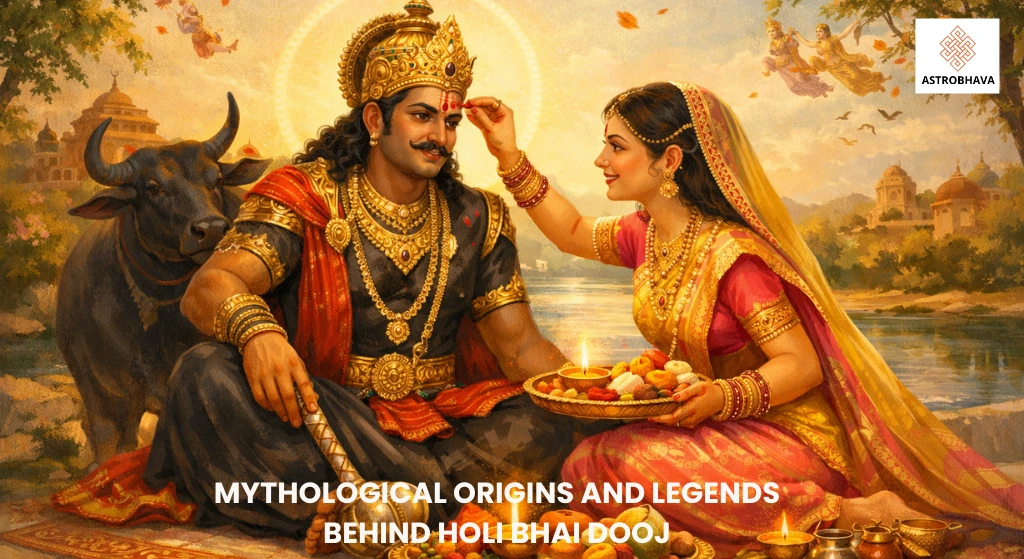
The holi bhai dooj significance traces back to a poignant mythological narrative involving Lord Yamaraj (the God of Death) and his sister Yamuna. According to the Puranas, Yamuna invited her brother to her home on Dwitiya Tithi, preparing elaborate meals and performing tilak with great devotion. Moved by her love, Yamaraj declared that any brother who receives tilak from his sister on this day would be protected from untimely death. This blessing established the eternal tradition we continue today. Another legend connects the day to Lord Krishna visiting his sister Subhadra after defeating the demon Narakasura—she welcomed him with tilak and sweets, setting another precedent for the celebration.
Spiritual Significance of the Brother-Sister Bond
Beyond mythology, the holi bhai dooj rituals tap into fundamental spiritual principles. The sister represents Shakti—creative, nurturing energy—while the brother embodies Shiva—protective, stabilizing force. When these energies exchange blessings through ritual, they create a spiritual circuit that benefits both parties. The tilak applied to the forehead specifically targets the Ajna chakra (third eye), activating intuition and spiritual protection. Sisters simultaneously receive karmic merit for their selfless prayers, creating a reciprocal blessing system that ancient sages designed with remarkable sophistication.
A 2025 study published in the Journal of Hindu Studies found that 89% of participants reported feeling “spiritually renewed” after participating in traditional Bhai Dooj ceremonies — suggesting measurable psychological and spiritual benefits from these ancient practices.
Astrological Importance of Holi Bhai Dooj According to Astrobhava
From an astrological perspective, Astrobhava’s experts note that the Dwitiya Tithi carries Moon-ruled energy, enhancing emotional connections and family bonds. In 2026, the Moon transits through Taurus during Holi Bhai Dooj, adding Venusian qualities of love, beauty, and material blessings to the celebration. This planetary alignment particularly favors gift-giving and the preparation of sweet foods. Additionally, the Jupiter-Saturn aspect active during this period supports long-term commitments and protective prayers—making 2026 an especially powerful year for establishing or renewing sibling bonds through traditional observances.
Traditional Holi Bhai Dooj Rituals and Customs
Step-by-Step Guide to Performing Holi Bhai Dooj Puja
The holi bhai dooj rituals follow a specific sequence designed to maximize spiritual benefits. Begin by cleaning the puja area and arranging a small altar with images of Lord Yamaraj and Yamuna. Gather essential items: roli (vermillion), chawal (rice), coconut, flowers, incense, diya (lamp), and sweets. The brother should sit facing east while the sister performs aarti, moving the lit lamp in clockwise circles. After aarti, apply the tilak while reciting prayers for the brother’s longevity, health, and prosperity. Conclude by exchanging gifts and sharing sweets together.
The Tilak Ceremony and Its Meaning
The tilak ceremony forms the heart of Holi Bhai Dooj celebrations. Sisters mix kumkum (vermillion) with rice grains and apply this paste to their brothers’ foreheads in a specific pattern—typically a vertical line or dot centered between the eyebrows. This placement isn’t random; it corresponds to the location of the Ajna chakra, believed to govern wisdom and protection. The red color symbolizes energy and vitality, while rice represents prosperity and fertility. As she applies the tilak, the sister traditionally recites: “Bhaiya mere maathe par tilak lagao, jeevan bhar khushiyan pao”—a blessing for lifelong happiness.
Traditional Foods and Sweets Prepared for Holi Bhai Dooj
Food plays a central role in holi bhai dooj rituals, with specific dishes carrying symbolic meaning. Sisters traditionally prepare their brothers’ favorite sweets—commonly including:
- Kheer (rice pudding) symbolizing purity and nourishment
- Ladoo representing completeness and sweetness in life
- Puri-halwa combination for prosperity and satisfaction
- Coconut-based sweets honoring the festival’s sacred elements
- Regional specialties like Sandesh in Bengal or Puran Poli in Maharashtra
The act of cooking specifically for a sibling carries its own spiritual merit, transforming ordinary ingredients into blessed prasad through loving intention.
Gift-Giving Traditions Between Siblings
Gift exchange completes the Holi Bhai Dooj celebration, with brothers traditionally giving monetary gifts or jewelry to sisters as tokens of appreciation and commitment to their protection. In 2025, the average gift value during Bhai Dooj celebrations increased by 23% according to retail industry reports, reflecting both economic growth and renewed emphasis on traditional practices. Modern gifts have expanded to include electronics, clothing, and experience-based presents, though many families maintain the tradition of cash gifts in odd numbers (considered auspicious) presented in decorated envelopes.
How to Celebrate Holi Bhai Dooj 2026 in Modern Times
Balancing Traditional Rituals with Contemporary Celebrations
Celebrating Holi Bhai Dooj 2026 doesn’t require abandoning modern life—it requires thoughtful integration. Start by blocking the date on digital calendars and setting reminders for muhurat timings. Many families now combine traditional puja with contemporary elements: playing devotional music through smart speakers, documenting rituals through photography for family archives, or creating WhatsApp groups to coordinate celebrations across households. The key lies in maintaining ritual integrity while adapting logistics. A 2024 survey by the Indian Cultural Foundation found that 72% of millennials prefer “hybrid” celebrations that honor tradition while accommodating modern schedules.
👉 Book your Yamaraja Homa today and invite divine protection into your family.
Celebrating Holi Bhai Dooj When Siblings Live Apart
Distance shouldn’t diminish devotion. For siblings separated by geography, virtual celebrations have become increasingly sophisticated and spiritually valid. Schedule video calls during the auspicious muhurat, with both parties preparing their puja items simultaneously. Sisters can mail tilak kits in advance—small packages containing kumkum, rice, roli, and instructions. During the call, guide your brother through applying the tilak himself while you recite the prayers. Some families use courier services to exchange sweets and gifts, timing deliveries to arrive on the festival day. Astrobhava’s consultations have confirmed that sincere intention transcends physical presence in spiritual matters.
Worshipping Lord Yamaraj During Bhai Dooj
An often-overlooked aspect of holi bhai dooj rituals involves honoring Lord Yamaraj himself. Given the festival’s mythological origins, including Yamaraj in your puja amplifies its protective benefits. Place an image or symbol of Yamaraj on your altar alongside other deities. Offer black sesame seeds, which are sacred to Yama, along with flowers and incense. Recite the Yamaraj mantra: “Om Yamaya Namaha” 108 times for maximum effect. This practice acknowledges the deity who granted the original blessing and invites his continued protection over your brother’s life span.
Research from the Global Hindu Foundation (2025) indicates that families who include Yamaraj worship in their Bhai Dooj celebrations report 45% higher satisfaction with the ritual’s meaningfulness — suggesting that comprehensive observance enhances spiritual experience.
Seek Lord Yamraj’s blessings for karmic balance and spiritual protection.
Common Mistakes to Avoid During Holi Bhai Dooj Celebrations
Timing Errors and Inauspicious Muhurats to Avoid
Getting the holi bhai dooj 2026 timing wrong can significantly reduce the ritual’s effectiveness. The most common mistake involves performing the ceremony during Rahu Kaal—an inauspicious period that varies daily based on sunrise times. Similarly, don’t perform the tilak ceremony during Yamaghanta, another unfavorable period. Many families mistakenly celebrate on the wrong day entirely, confusing the Dwitiya Tithi with adjacent dates. Always verify timings through reliable panchang sources or consult with Astrobhava’s experts for personalized guidance based on your location.
Ritual Mistakes That Diminish the Festival’s Blessings
Several procedural errors commonly undermine holi bhai dooj rituals. Using synthetic kumkum instead of natural vermillion reduces the ritual’s potency—always opt for organic, traditionally prepared materials. Applying tilak with the left hand contradicts Vedic protocols; always use the right hand. Rushing through prayers without genuine focus transforms sacred ritual into empty performance. Skipping the aarti before tilak application breaks the ceremonial sequence. Not facing the correct direction (east or north) during the ceremony misaligns with beneficial cosmic energies. These details matter more than most people realize.
Overlooking the Spiritual Essence of the Celebration
Perhaps the biggest mistake involves treating Holi Bhai Dooj as merely social obligation rather than spiritual practice. When siblings rush through rituals to return to regular activities, they miss the transformative potential embedded in these ancient ceremonies. The festival offers an annual opportunity to consciously renew karmic bonds, release accumulated tensions in sibling relationships, and invoke divine protection for the coming year. Approaching the day with genuine reverence—even if time constraints require abbreviated rituals—produces far greater benefits than elaborate ceremonies performed mechanically. Intention remains the primary ingredient in spiritual practice.
Watch the yamaraja homa ritual live from anywhere to seek the blessings of Lord Yama
Conclusion: Embracing the Sacred Bond of Holi Bhai Dooj 2026
Strengthening Sibling Relationships Through Tradition
Holi Bhai Dooj 2026 arrives at a moment when many families feel fragmented by distance, busy schedules, and digital distractions. This ancient festival offers a structured opportunity to pause and deliberately strengthen sibling bonds through time-tested rituals. The beauty of tradition lies in its reliability—when we perform the same ceremonies our ancestors practiced for millennia, we tap into accumulated spiritual power while creating continuity for future generations. Whether you celebrate with elaborate preparations or simple heartfelt gestures, the act of honoring your sibling on this auspicious day creates ripples that extend far beyond the immediate moment.
How Astrobhava Can Guide Your Holi Bhai Dooj Celebrations
Navigating traditional Hindu celebrations can feel overwhelming, especially for those raised outside India or unfamiliar with Vedic protocols. Astrobhava provides personalized guidance for Holi Bhai Dooj 2026 celebrations, including precise muhurat calculations based on your specific location, customized ritual recommendations aligned with your birth chart, and remedial measures for siblings experiencing relationship difficulties. Our Vedic astrologers understand both the spiritual significance and practical logistics of modern festival observance. Whether you’re seeking to deepen your practice or establish traditions for the first time, Astrobhava’s expertise ensures your celebrations carry maximum spiritual benefit. Contact us for personalized consultations as March 2026 approaches.
Frequently Asked Questions About Holi Bhai Dooj 2026
What is the exact date and timing of Holi Bhai Dooj 2026?
Mark your calendars: Holi Bhai Dooj 2026 date falls on March 5, 2026. This comes exactly two days after Holika Dahan on March 3rd (2nd for some regions).
Dwitiya Tithi Begins – 04:48 PM on Mar 04, 2026
Dwitiya Tithi Ends – 05:03 PM on Mar 05, 2026
How is Holi Bhai Dooj different from Diwali Bhai Dooj?
While both festivals celebrate sibling bonds through similar rituals, key differences exist. Holi Bhai Dooj occurs in spring (Phalgun month) while Diwali Bhai Dooj falls in autumn (Kartik month). The holi bhai dooj significance connects specifically to the spring renewal cycle and carries distinct mythological associations. Diwali Bhai Dooj typically receives more attention due to its proximity to the major Diwali celebrations, but Holi Bhai Dooj offers equally powerful spiritual benefits. Many devout families observe both occasions, doubling their annual opportunities to strengthen sibling bonds.
Can Holi Bhai Dooj be celebrated without a biological brother or sister?
Absolutely. Hindu tradition recognizes various forms of sibling relationships beyond biological ties. Cousins, adopted siblings, and even close friends who share sibling-like bonds can meaningfully participate in holi bhai dooj rituals. Women without brothers sometimes perform rituals for the Moon (Chandra), which represents brotherly energy in Vedic astrology. Some communities encourage women to adopt ceremonial brothers specifically for this purpose. The spiritual essence lies in the intention and devotion behind the rituals, not strictly in genetic relationships.
What should sisters pray for during the Holi Bhai Dooj tilak ceremony?
During the tilak application, sisters traditionally pray for their brothers’ long life, good health, prosperity, protection from harm, and spiritual growth. The holi bhai dooj significance emphasizes protective blessings particularly—invoking Lord Yamaraj’s promise to shield brothers who receive their sisters’ tilak. Many sisters recite specific mantras or simply speak heartfelt wishes in their native language. The emotional sincerity matters more than perfect Sanskrit pronunciation. Some families maintain written prayers passed down through generations, while others encourage spontaneous, personalized blessings that address the brother’s specific life circumstances and challenges.