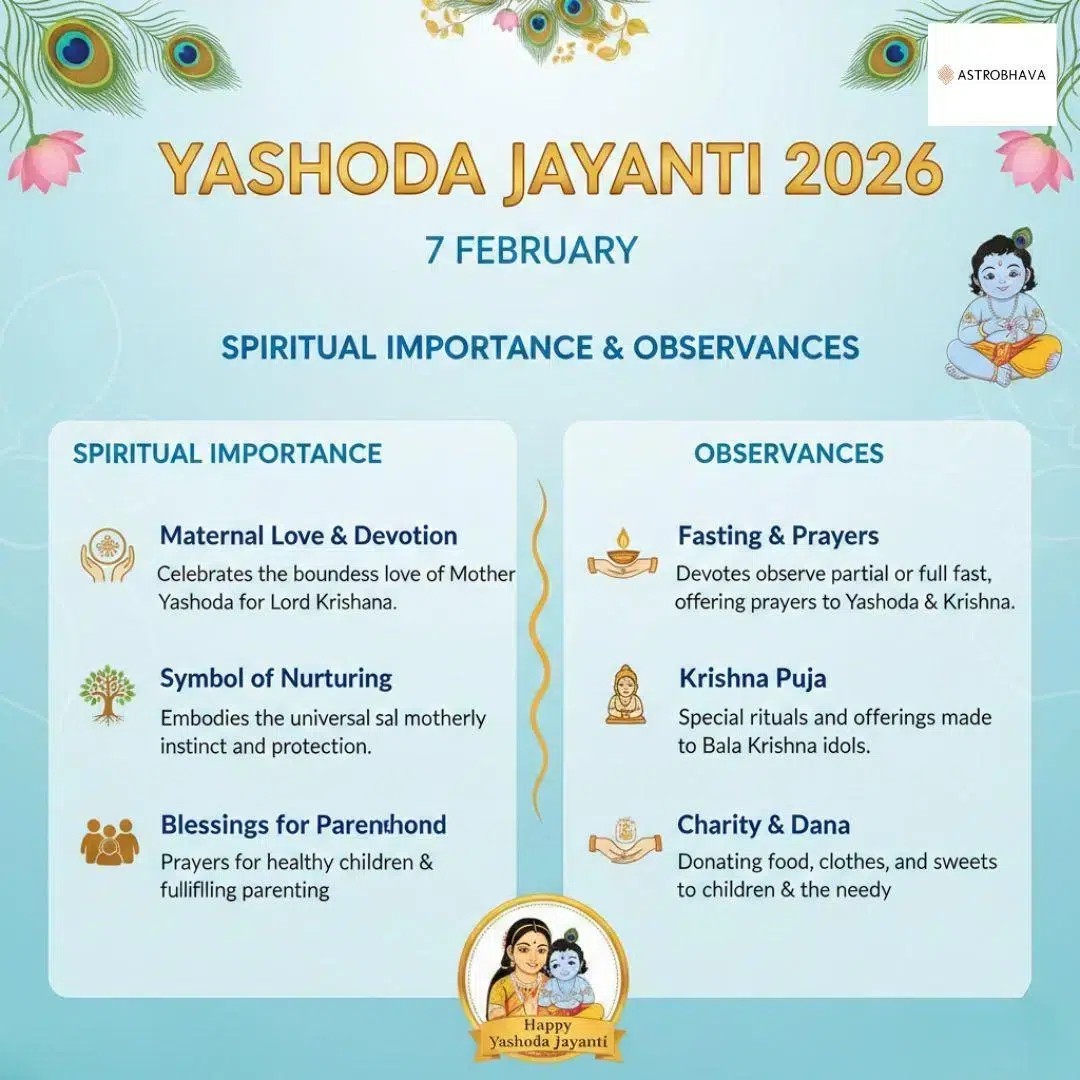
Yashoda Jayanti 2026 on February 7 is a Hindu observance dedicated to Mother Yashoda, celebrated during Krishna Paksha Shashthi to honour maternal devotion, emotional nourishment, and nurturing responsibility. In Vedic tradition, this day is not only devotional but also deeply symbolic from an astrological perspective, as it represents the nurturing, protective, and unconditional maternal energy governed primarily by the Moon.
In classical Vedic astrology, festivals connected to divine maternal figures are closely associated with lunar strength, emotional stability, and karmic nourishment. Yashoda Jayanti significance goes beyond mythology—it reflects how care, attachment, and responsibility shape both spiritual growth and worldly life.
As this Jayanti falls during a sensitive lunar phase in early February 2026, many astrologers consider it an auspicious time to work on emotional healing, family harmony, and inner security through simple observances.
Quick Summary: Key Takeaways
- Yashoda Jayanti 2026 falls on 7 February 2026
- Celebrates Krishna mother Yashoda, and the power of maternal devotion
- Astrologically linked to the Moon, mind, emotions, and nourishment
- Favorable for prayers related to children, parenting, emotional balance, and family peace
- Simple vrat, mantra, and charitable acts are traditionally recommended.
What Is Yashoda Jayanti?
Yashoda Jayanti marks the birth anniversary of Mother Yashoda, who raised Lord Krishna in Gokul. Unlike biological motherhood, Yashoda represents chosen responsibility and unconditional love, which is why her role holds a unique place in spiritual texts.
From an astrological perspective, this mirrors the Moon’s function in a horoscope. The Moon does not rule ambition or authority—it governs care, emotional bonding, intuition, and security, all qualities embodied by Krishna’s mother Yashoda.
In classical Vedic astrology, such observances are seen as opportunities to harmonise lunar imbalances rather than seek material gains.
Yashoda Jayanti 2026 Date and Astrological Timing
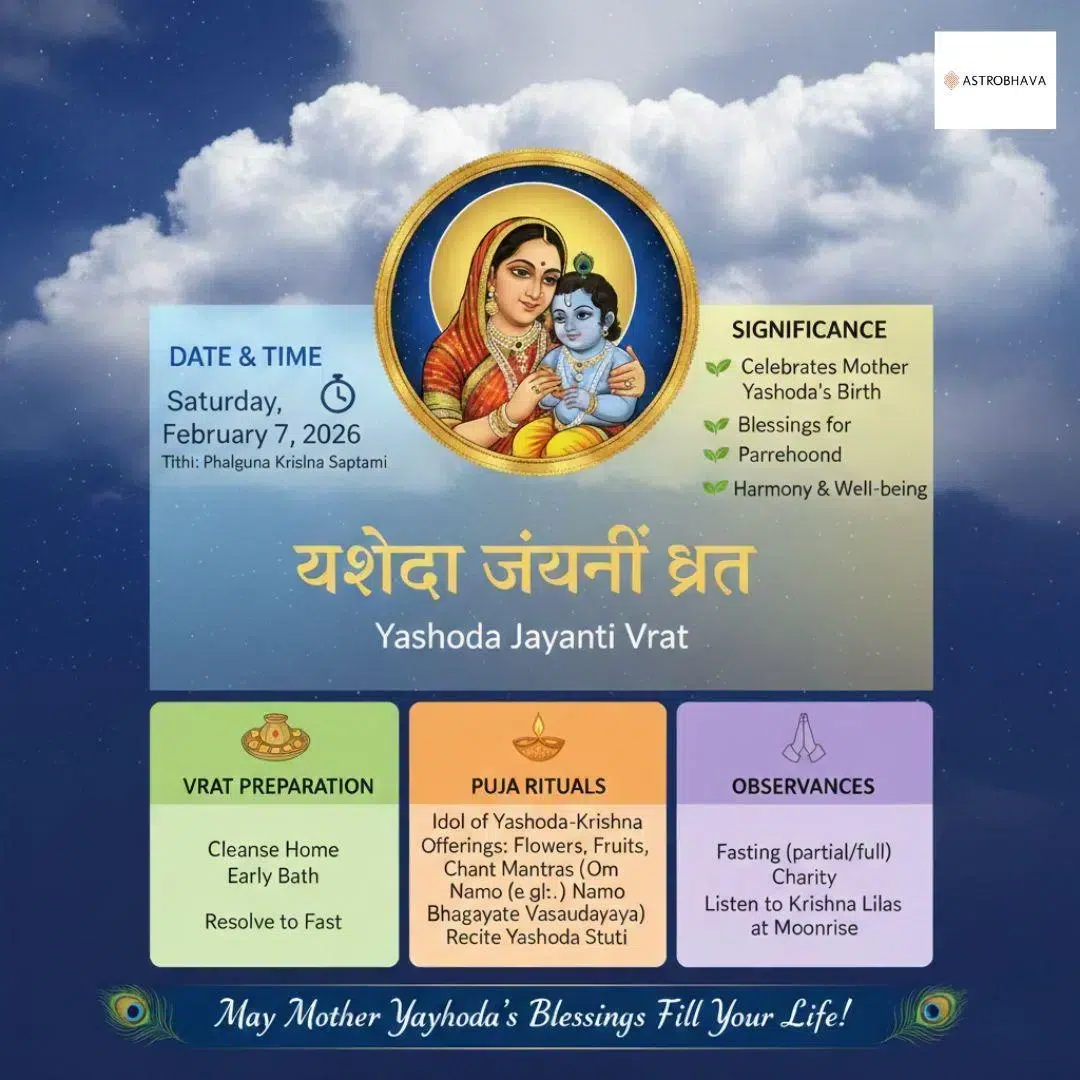
Yashoda Jayanti will be observed on Saturday, February 7, 2026.
- Tithi: Krishna Paksha Shashthi
- Shashthi Tithi Begins: 01:18 AM on February 7, 2026
- Shashthi Tithi Ends: 02:54 AM on February 8, 2026
According to traditional Panchang calculations, Yashoda Jayanti is observed during the Shashthi tithi. Devotees perform prayers, vrat, and remembrance of Mother Yashoda within this tithi period, with daytime observance on February 7 being considered appropriate.In Vedic astrology, Shashthi tithi is traditionally associated with care, protection, and the well-being of children. This aligns naturally with Mother Yashoda’s role as a nurturer and guardian, reinforcing the day’s focus on maternal responsibility, emotional bonding, and family-oriented karma.
Is Yashoda Jayanti 2026 Auspicious or Inauspicious?
From a Vedic astrology standpoint, Yashoda Jayanti 2026 is considered auspicious in a gentle, supportive sense, rather than in a materially expansive way.
This observance is favourable for:
-
Emotional healing and reconciliation
-
Strengthening parent–child relationships
-
Restoring inner calm and mental balance
It is not intended for ambition-driven goals, aggressive rituals, or expectation-based outcomes. The auspiciousness of Yashoda Jayanti lies in nurturing intention, emotional sincerity, and mindful conduct, which aligns naturally with the Moon’s soft, reflective energy.
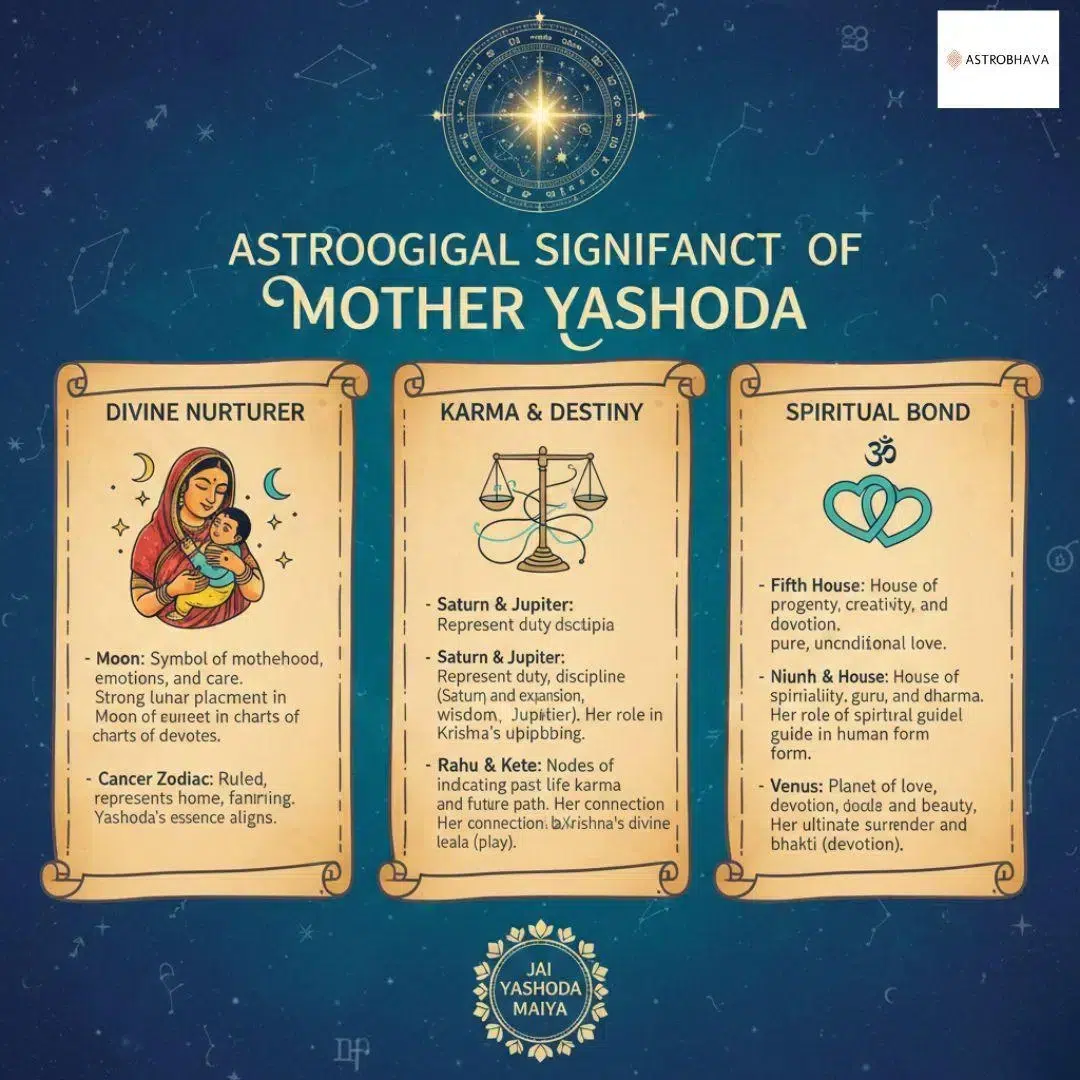
Astrological Significance of Mother Yashoda
Connection with the Moon
In Vedic astrology, the Moon (Chandra) represents:
- Motherhood and caregiving
- Emotional nourishment
- Childhood experiences
- Mental peace
Mother Yashoda’s life perfectly reflects a balanced Moon—protective, affectionate, yet disciplined. Astrologers often explain that worshipping maternal energies on this day helps calm an agitated or weak Moon in one’s birth chart.In classical Vedic practice, astrologers often interpret Shashthi-based observances as supportive for child welfare, emotional steadiness, and nurturing duties rather than material pursuits.
Symbolism of Krishna and Yashoda
The bond between Krishna and mother, Yashoda is astrologically interpreted as the relationship between the Soul (Atman) and Mind (Moon). Krishna’s playful nature tests Yashoda’s patience, just as life tests emotional maturity.
From an astrological perspective, Yashoda Jayanti reminds us that emotional strength comes from nurturing, not control.
Who Benefits Most from Observing Yashoda Jayanti?
Astrologers often observe that this day is especially supportive for:
- Parents are concerned about their children’s well-being
- Women seeking emotional stability or fertility support
- Individuals with Moon afflictions (Chandra dosha, Moon with Rahu/Ketu, weak Moon)
- Those facing family conflicts or emotional exhaustion
However, the observances are gentle and inclusive—anyone seeking inner balance can participate.
Why Yashoda Jayanti Is Considered a Gentle Karmic Observance
Unlike intense karmic festivals, Yashoda Jayanti works subtly.
The karmic lesson of this day is:
-
Responsibility without resentment
-
Care without attachment
-
Love without control
Astrologers often note that practising these qualities naturally aligns one’s emotional karma, especially in family-related matters.
Yashoda Jayanti Vrat and Observances
Traditional Vrat
Many devotees observe a simple vrat (fast) on Yashoda Jayanti 2026, focusing on sattvic food and calm behaviour.
From an astrological standpoint, fasting on Moon-related days helps reduce emotional heaviness and mental restlessness by encouraging discipline and mindfulness.
Who should observe vrat:
- People with emotional instability
- Those seeking family harmony
Who should avoid strict fasting:
- Pregnant women
- People with health issues
(Simple dietary restraint is enough.)
Mantras and Spiritual Practices
Recommended Mantra
“Om Namo Bhagavate Vasudevaya”
Chanting this mantra is traditionally advised because it harmonises lunar energy through devotion rather than force. Astrologers recommend chanting it 108 times during the morning or evening.
Why Mantras Help
In Vedic astrology, sound vibrations are believed to balance planetary frequencies. Since Yashoda Jayanti is Moon-influenced, gentle mantras are preferred over intense rituals.
Charitable Acts and Remedies (With Astrological Logic)
Simple Remedies
- Donate milk, white rice, or sweets
- Feed cows or children.
- Offer white flowers
These items are linked to the Moon and nourishment. From an astrological perspective, such donations symbolically strengthen emotional generosity, which reflects positively on the Moon’s functioning in one’s chart.
Behavioural Remedy (Often Overlooked)
Astrologers frequently emphasise that kind speech and patience, especially with children or family members, are the most effective remedy on Yashoda Jayanti.
Yashoda Jayanti and the Mother–Child Karma in Vedic Astrology
From an astrological perspective, the relationship between a mother and child is seen as past-life karma reflected through the Moon and the 4th house. In classical Vedic astrology, astrologers often observe that unresolved emotional patterns between parent and child surface during important lunar observances.
Yashoda Jayanti significance lies in reminding us that nurturing karma is not always biological. Krishna Mother Yashoda, chose responsibility, reflecting how certain souls take on caregiving roles due to unfinished karmic bonds. Observing this day mindfully is believed to soften rigid emotional patterns, especially for those who feel emotionally burdened by family duties.
Impact of Yashoda Jayanti on Emotional and Mental Well-being
The Moon governs the manas (mind), and its imbalance often shows up as anxiety, over-attachment, or emotional fatigue. Astrologers often note that festivals dedicated to maternal energies have a calming effect when observed with intention rather than ritual pressure.
Yashoda Jayanti 2026 offers a supportive window to:
- Reflect on emotional boundaries
- Heal inner-child patterns
- Cultivate patience and acceptance.
From an astrological standpoint, even simple acts like silence, prayer, or journaling on this day can help stabilise fluctuating lunar energy, especially for those sensitive to emotional environments.
Yashoda Jayanti as a Day for Strengthening Family Harmony
In Vedic astrology, family harmony is closely linked to the 4th house, Moon, and Venus. When these factors are disturbed, domestic peace often suffers. Yashoda Jayanti is traditionally seen as favourable for restoring balance in family dynamics through compassion rather than confrontation.
Astrologers often observe that consciously practising forgiveness, gratitude toward parents, or emotional availability on this day works as a behavioural remedy, which is considered more effective than material offerings alone.
Honouring the values embodied by Krishna mother Yashoda—patience, protection, and selfless care—aligns personal conduct with supportive planetary energies.
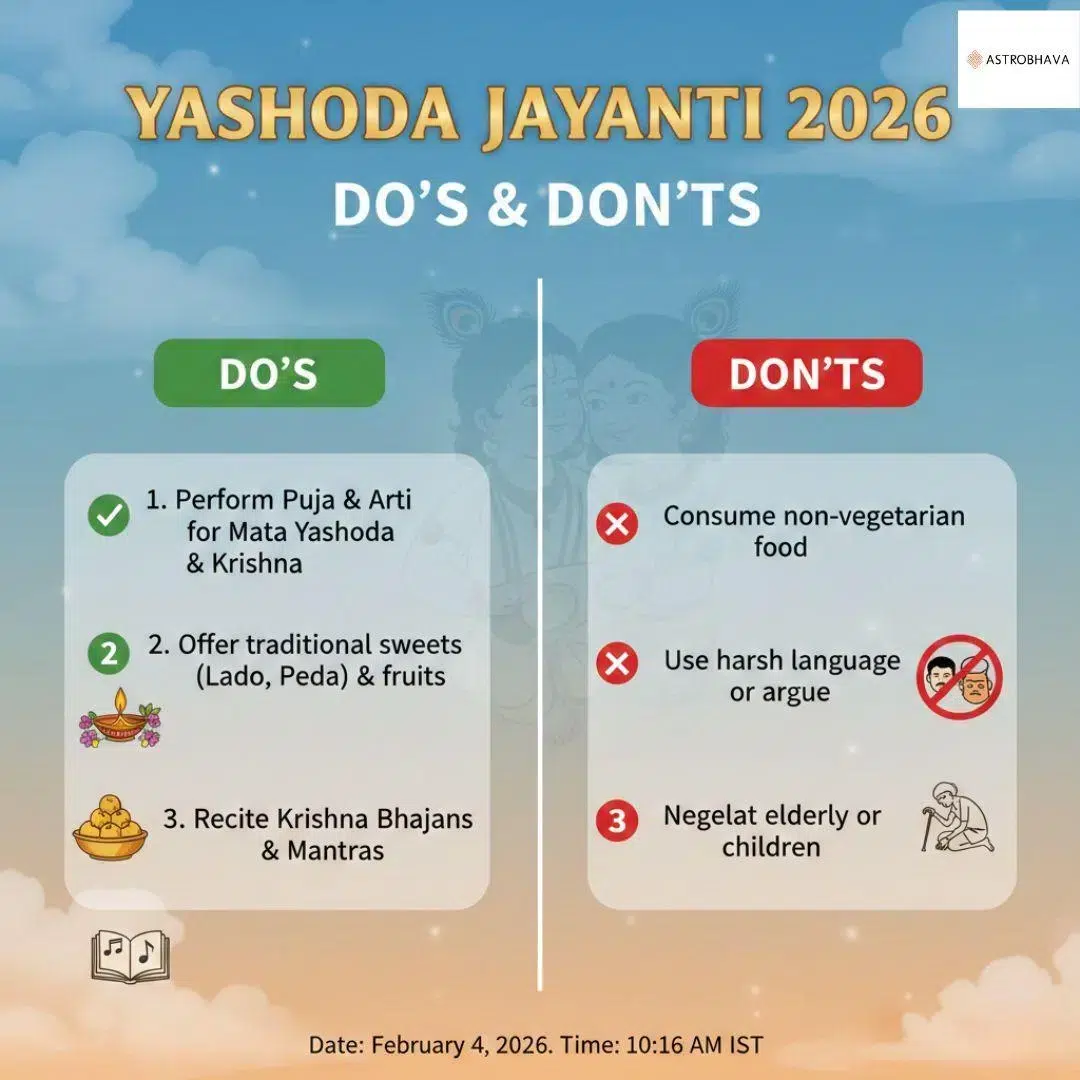
Do’s and Don’ts on Yashoda Jayanti 2026
Do’s
- Spend time with family
- Practice patience and compassion.
- Engage in prayer or quiet reflection.
Don’ts
- Avoid emotional confrontations
- Refrain from harsh speech
- Avoid excess indulgence
These guidelines align with maintaining lunar balance rather than imposing restrictions.
Frequently Asked Questions
1. Is Yashoda Jayanti 2026 good for child-related prayers?
Yes. From an astrological perspective, prayers related to children and parenting are considered appropriate due to the Moon’s maternal symbolism.
2. Can men observe Yashoda Jayanti?
Absolutely. The observance is about emotional responsibility and care, not gender.
3. Is fasting compulsory on Yashoda Jayanti?
No. A calm mind and sattvic routine are more important than strict fasting. Since the observance falls on Shashthi tithi, emphasis is placed more on mindful conduct and devotion than on strict fasting.
4. How is Yashoda Jayanti different from Janmashtami?
While Janmashtami celebrates Krishna’s divine birth, Yashoda Jayanti highlights the quieter spiritual lesson of motherhood, responsibility, and emotional karma, making it more introspective in nature.
Final Thoughts
Yashoda Jayanti 2026 is a gentle yet powerful reminder that spiritual growth often comes through care, responsibility, and emotional maturity. Unlike festivals driven by ambition or transformation, this day encourages softness—an often undervalued strength in both astrology and life.
If you’re experiencing similar planetary influences in your personal chart and want clarity beyond general predictions, Astrobhava offers personalised astrological guidance rooted in Vedic wisdom. A focused chart analysis can help you understand timing, remedies, and the deeper reason behind your current phase.
Author Bio: Astrobhava
Astrobhava is a premier global platform dedicated to preserving and providing access to authentic Vedic rituals and astrological remedies. Our team consists of highly learned Vedic priests and expert astrologers who specialize in ancient fire ceremonies and personalized planetary remedies.
AstroBhava is a premier Vedic astrology and remedial center based in Coimbatore, India. Specializing in Nadi Astrology, Homas, and Pujas, the platform has served over 400,000 seekers across 80 countries. Led by seasoned South Indian scholars and priests, AstroBhava bridges ancient Vedic wisdom with modern life to help individuals resolve karmic debts and achieve spiritual alignment.
Moon Homa/Chandra Homa for Stability & Peace of Mind
https://youtu.be/pJj3gotS7l0?si=kee5H6Hd_VgqHueQ