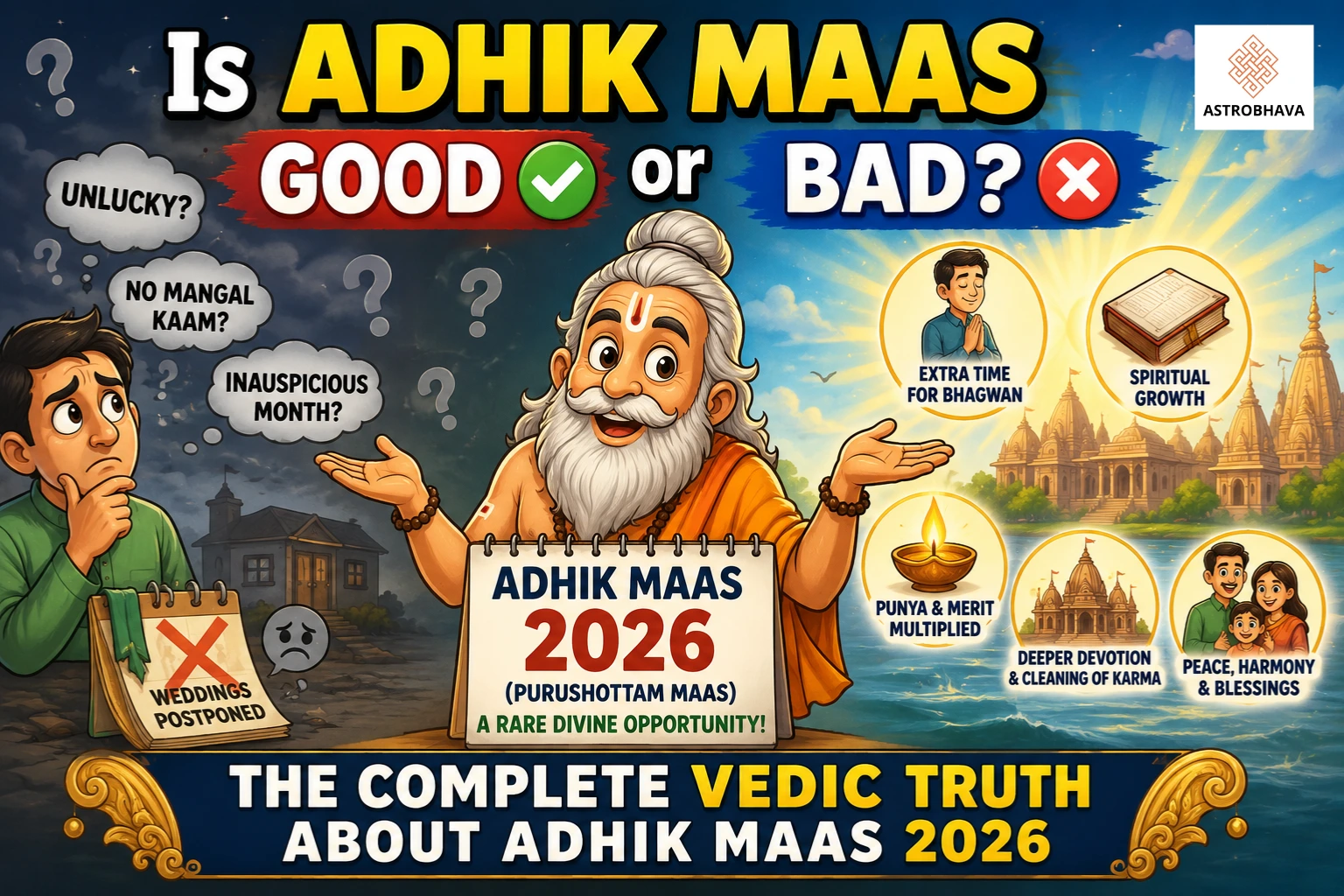
If you’ve been hearing the words Adhik Maas lately and wondering whether it’s something to fear or something to embrace — you’re not alone. Every few years, this extra lunar month rolls around on the Hindu calendar, and with it comes a flood of questions: Should I postpone my wedding? Is it safe to buy a house? Can my baby be born in this month? Is Adhik Maas actually bad, or have we just misunderstood it for generations?
Let’s clear the air once and for all — with authentic Vedic knowledge, not myths or fear.
What Is Adhik Maas? The Sacred Extra Month Explained
The Hindu lunar calendar is built on the cycles of the Moon and contains roughly 354 days in a year, while the solar year runs about 365 days. That gap of approximately 11 days accumulates over time. Every 32 months, 16 days, and 8 ghatis (about 24-minute intervals), the difference grows to nearly a full lunar month. To keep the calendar in harmony with the seasons and prevent festivals from drifting across seasons, our ancient Rishis introduced an elegant solution — an intercalary month called Adhik Maas, meaning “the extra month.”
Technically, a lunar month during which the Sun does not transit from one zodiac sign (Rashi) to another — meaning there is no Surya Sankranti — is identified as the Adhik month. This month takes the name of the lunar month it precedes, with the prefix Adhik added to it.
In terms that resonate in the modern world, it’s the Hindu calendar’s version of a leap year — except instead of one leap day, an entire extra month is added. And what a spiritually magnificent month it is.
Adhik Maas 2026: Dates, Name, and What Makes It Rare
Adhik Maas 2026 begins on Sunday, May 17, 2026, and ends on Monday, June 15, 2026.
This year’s Adhik Maas falls in the Jyeshtha lunar month, making it Adhik Jyeshtha Maas — also called Pratham Jyeshtha. The regular Jyeshtha month (Nij Jyeshtha) then follows immediately after, from June 15 to July 14, 2026.
What makes this particularly significant is that Adhik Jyeshtha Maas last occurred in 2018, and the next time it will repeat is not until 2037 — a gap of nearly 11 years. That alone should tell you how rare and precious Adhik Maas 2026 truly is.
Within this sacred month, a few dates carry exceptional spiritual weight:
- Adhika Ekadashis — the two Ekadashis within the month (Padmini Ekadashi and Paramaa Ekadashi) are considered far more potent than regular Ekadashis
- Adhika Purnima (Full Moon) — May 31, 2026, falls during Pradosh Kaal in the evening, making it the most powerful day for Satyanarayan Puja and Vishnu worship
- Adhika Amavasya (New Moon) — June 15, 2026, is highly auspicious for ancestral prayers and daan
- Mondays and Saturdays within the month — additionally meritorious for Shiva and Hanuman worship respectively
Adhik Maas Years: A Quick Historical Reference
For those who love context, here is a brief look at when Adhik Maas has occurred in recent history and when it is next expected:
- 2018 — Adhik Jyeshtha Maas
- 2020 — Adhik Ashwin Maas
- 2023 — Adhik Shravan Maas (July 18 – August 16, 2023)
- 2026 — Adhik Jyeshtha Maas (May 17 – June 15, 2026) ← We are here
- 2029 — Next Adhik Maas (expected around March–April 2029)
Note: Adhik Maas never occurs in Kartik Maas or Magh Maas — these two months are considered too sacred to be doubled.
So, Is Adhik Maas Good or Bad? The Vedic Answer
Here is the truth that many people don’t know: Adhik Maas is not inherently bad. The confusion arises from its older name — Mal Maas, meaning the “impure” or “dirty” month. But this name comes with a story, and the story has a beautiful ending.
According to the Padma Purana and Skanda Purana, when this extra month first appeared, it had no presiding deity to govern it. Every other month of the Hindu calendar was ruled by a specific god — and this orphaned month was left without divine patronage, earning it the label of Malmas. It was considered inauspicious not because it carries negative energy, but because no deity had accepted it as their own.
The extra month, feeling rejected and sorrowful, approached Lord Vishnu for refuge. Moved by its devotion and humility, Lord Vishnu embraced the month, declared it His own, and named it Purushottam Maas — Purushottam being one of the most exalted names of Vishnu, meaning “the Supreme Being among all.”
From that moment forward, the Skanda Purana records Vishnu’s own declaration: “Whoever worships me, fasts, performs japa, charity, and austerity during this month — I shall personally grant them liberation, prosperity, and freedom from past karma.”
So the answer is clear: Adhik Maas is not bad. It is, in fact, one of the most spiritually charged and divinely protected months in the entire Hindu calendar. It is simply a month misunderstood by those who only see its restriction on worldly activities, without understanding the profound spiritual opportunity it offers.
Adhika Masa 2026: The Rare Extra Month That Can Transform Your Spiritual Life
Things to Avoid During Adhik Maas (And Why)
This is where most people’s confusion begins. Yes, Adhik Maas does come with restrictions — but these are not signs of bad luck. They are divine guidelines meant to redirect your energy from the material to the spiritual.
The scriptural principle is straightforward: Adhik Maas is reserved for Nishkamya Karma — selfless, desire-free spiritual action. Activities driven by personal material desire (Kamya Karma) are set aside. Think of it as a sacred pause that the cosmos gifts you to reset your inner compass.
Ceremonies and Samskaras to Avoid:
- Vivah (weddings and engagements) — no auspicious muhurtas are considered valid during this period
- Griha Pravesh (housewarming) — entering a new home should be postponed
- Mundan Sanskar (a child’s first haircut ceremony)
- Namkaran (naming ceremony for a newborn)
- Upanayana (sacred thread ceremony)
- Anna Prashan (first solid food ceremony)
Material Decisions to Postpone:
- Purchasing a new home, land, or vehicle intended for ceremonial or auspicious purposes
- Signing major contracts, launching a new business, or starting construction of a home
- Large financial investments tied to new beginnings
Personal Habits to Refrain From:
- Consuming meat, fish, alcohol, onion, and garlic — the month calls for a sattvic lifestyle
- Excessive indulgence in entertainment, sensory pleasures, or tamasic activities
- Speaking harshly, engaging in gossip, or cultivating anger
What Adhik Maas Does NOT Restrict: Birthdays, wedding anniversaries, and routine temple visits can be observed normally. Emergency medical decisions or unavoidable life events are naturally exempt from these guidelines. The spirit of the restrictions is intention, not fear.
Childbirth During Adhik Maas: Is It Auspicious?
This is one of the most common questions asked by expectant parents, especially NRI families abroad planning their calendars. And the answer, rooted in classical Vedic texts, is deeply reassuring.
A child born during Adhik Maas is considered exceptionally blessed. The classical belief, echoed across traditional Jyotish knowledge, is that a soul taking birth during Purushottam Maas arrives under the direct blessings of Lord Vishnu himself. Such a child is said to be spiritually evolved, favored by fortune, and destined for a purposeful life.
The restrictions of Adhik Maas apply to voluntary, planned auspicious ceremonies — not to natural events like childbirth. Life does not pause for the calendar, and our scriptures wisely acknowledge this. The Namkaran (naming ceremony) for a child born during Adhik Maas may be delayed until the month concludes, but the birth itself is seen as a divine gift.
So if you or someone you know is expecting a baby during this period — there is no cause for worry. Offer a prayer of gratitude to Lord Vishnu, and consider it a rare blessing that your child enters the world in Purushottam Maas.
Facing Issues in conceiving a child?
Rituals to Perform During Adhik Maas 2026: A Complete Guide
This is where Adhik Maas truly shines. While the month restricts worldly celebrations, it amplifies spiritual merit by thousandfold. The Skanda Purana states that punya (merit) accumulated during Adhik Maas is equal to the merit of thousands of yagyas performed in ordinary months. Here is how to make every single day of this sacred window count:
1. Wake Up During Brahma Muhurta
Begin your day between 4:00 AM and 6:00 AM, the pre-dawn window considered most sacred in Vedic tradition. Bathe, wear clean yellow or white clothes (yellow being especially dear to Lord Vishnu), and enter your puja space with a clear, settled mind.
2. Perform Sodashopachara Puja to Radha-Krishna or Lakshmi-Narayana
Set up an altar with idols or images of Lord Vishnu and Goddess Lakshmi. Offer fresh yellow flowers (particularly yellow marigold and jasmine), yellow sandalwood paste, saffron, dhoop (incense), a ghee lamp, and bhog (food offering). Perform the Vishnu Aarti with full devotion. This daily puja, done consistently through the month, is said to remove financial blockages, restore family harmony, and grant divine protection.
3. Chant Vishnu Sahasranama Daily
The recitation of the thousand sacred names of Lord Vishnu is among the most meritorious acts prescribed for Adhik Maas. You can chant it yourself, or listen to it with full attention — both are considered equally effective. The vibration of these names resonates at a frequency that purifies the home, the mind, and the surrounding atmosphere.
The central mantra for the month: Om Namo Bhagavate Vasudevaya Chant this 108 times each morning, and as often as possible throughout the day.
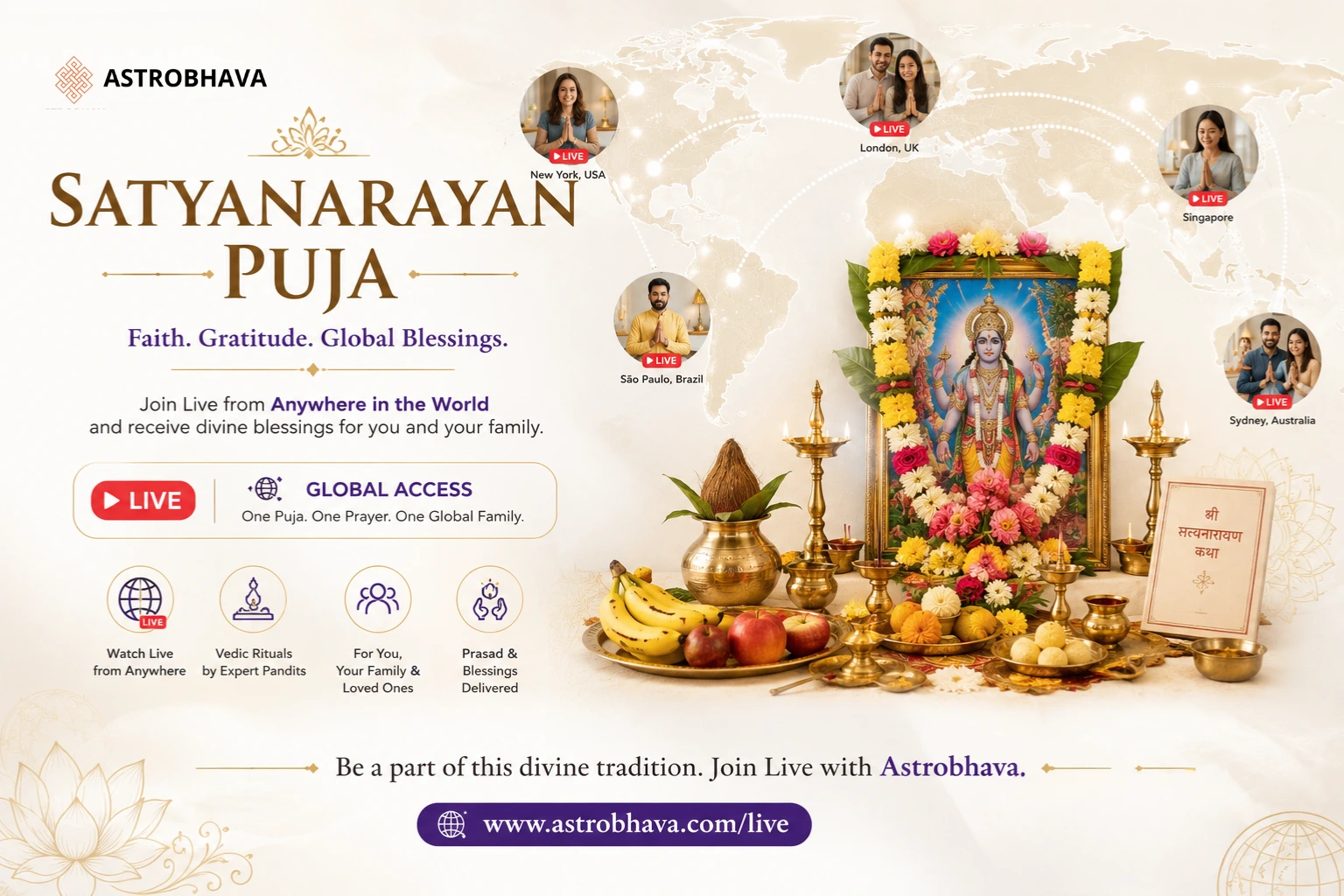 4. Satyanarayan Vrat and Katha
The Satyanarayan Puja holds a place of supreme importance during Adhik Maas. This ritual invokes Lord Vishnu in his Satyanarayan form — the embodiment of truth, abundance, and grace. For Adhik Maas 2026, the Purnima Tithi is active during the Pradosh Kaal (evening) of May 30–31, making Saturday evening, May 30, 2026, the most potent time to perform this puja. Devotees receive blessings for removing long-standing obstacles, prosperity, and peace in the family.
🌸 Can’t be in India? AstroBhava brings the temple to you.
5. Purush Sukta Homa — The Most Powerful Homa of Adhik Maas
The Purush Sukta, a hymn from the Rig Veda, is a cosmic invocation describing Lord Vishnu as the Supreme Cosmic Being from whom all creation emerges. Performing a Purush Sukta Homa during Adhik Maas is considered the highest fire ritual one can offer in this month. It purifies accumulated karma across lifetimes, invokes divine grace for health, wealth, and progeny, and aligns the devotee with the cosmic order (Rta). Given that this month is entirely under Vishnu’s patronage, the Purush Sukta Homa is particularly amplified in its effect during Adhik Maas 2026.
🔱 Elevate your Adhik Maas with the most sacred Vedic fire ritual.
6. Vishnu Homam
The Vishnu Homam is a fire ritual dedicated directly to the sustainer of the universe. It eliminates negativity, clears past karma, and invokes divine grace across all areas of life — health, career, and spiritual growth. For those going through instability, confusion, or obstacles that seem resistant to ordinary effort, a Vishnu Homam during Adhik Maas 2026 acts as a powerful cosmic reset.
7. Observe Ekadashi Fasts
There are two special Ekadashis within Adhik Maas — Padmini Ekadashi and Paramaa Ekadashi — and they are considered exceptionally rare and powerful. Fasting on these days (from sunrise to next sunrise, consuming only fruits and water) is said to bestow merit equal to observing all 24 regular Ekadashis in a year. In 2026, the presence of Adhik Maas also means there are 26 Ekadashis in the year instead of the usual 24, making this a particularly auspicious year for Ekadashi observers worldwide.
8. The 33 Malpua Daan — Adhik Maas’s Unique Ritual
Among all the prescribed rituals, this one is uniquely tied to Adhik Maas alone. Devotees donate 33 Malpuas (a sweet, round pancake-like offering made from flour, ghee, and sugar) placed in a bronze or copper vessel (Kansa patra) to a Brahmin priest. The 33 Malpuas symbolise the 33 Koti Devatas — all the divine beings worshipped across Hindu tradition. This act of daan is believed to remove Pitra Dosha (ancestral debts), bestow the blessings of all 33 divine energies simultaneously, and grant liberation to the souls of departed ancestors.
9. Tulsi Puja — Daily Without Fail
Lighting a deepam (lamp) near the Tulsi plant each morning and evening and chanting Vishnu mantras is a cornerstone Adhik Maas practice. Classical texts state that Tulsi worship in Adhik Maas carries the same merit as Lakshmi Puja. Offer a single Tulsi leaf to Lord Vishnu every day — this simple act is among the most dear offerings to Lord Purushottam.
10. Akhanda Deep — The Continuous Lamp
Many devoted families observe the Akhanda Deep Vrat during Adhik Maas — keeping a ghee or sesame oil lamp burning continuously in the puja room for the entire month, day and night. This unbroken light is a symbol of sustained devotion and is believed to fill the home with divine presence, dispel darkness and negativity, and attract the sustained grace of Lord Vishnu.
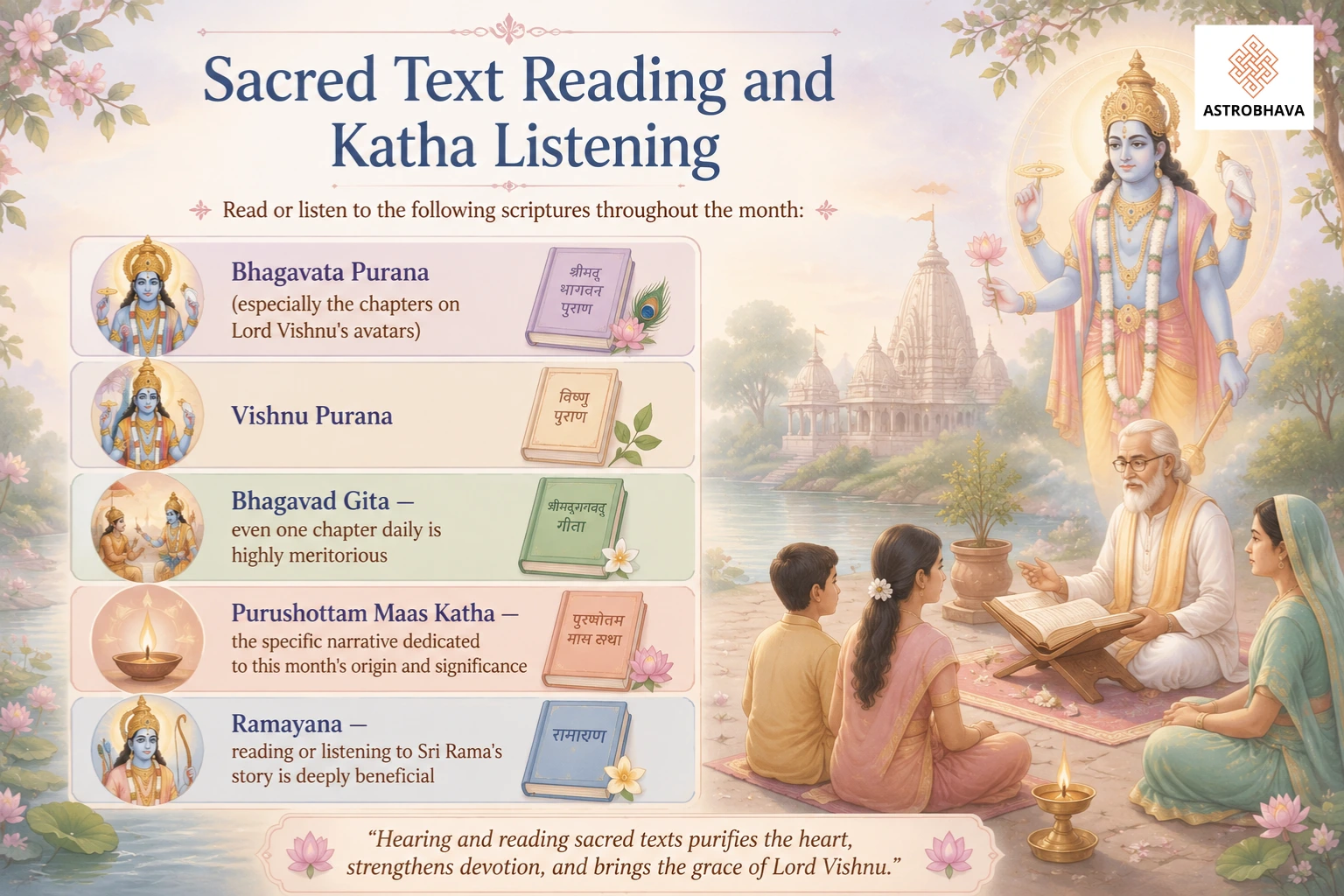 11. Sacred Text Reading and Katha Listening
Read or listen to the following scriptures throughout the month:
- Bhagavata Purana (especially the chapters on Lord Vishnu’s avatars)
- Vishnu Purana
- Bhagavad Gita — even one chapter daily is highly meritorious
- Purushottam Maas Katha — the specific narrative dedicated to this month’s origin and significance
- Ramayana — reading or listening to Sri Rama’s story is deeply beneficial
12. Charity and Daan — The Heart of the Month
Adhik Maas is fundamentally a month of giving. Perform the following acts of charity as your capacity permits:
- Anna Daan — donate food to the hungry, to temples, to Brahmins
- Vastra Daan — donate yellow clothes, especially on Thursdays
- Deep Daan — offer oil lamps at temples or to those in need
- Gau Seva — serving cows is especially meritorious
- Donate grains, ghee, jaggery, and money to worthy recipients
The scriptures are clear: charity in Adhik Maas returns to the giver multiplied many times over. Every act of giving, no matter how small, carries extraordinary weight when performed with pure intention.
The Power of an Energised Yantra During Adhik Maas
A Yantra is a sacred geometric instrument, energised through specific Vedic mantras, designed to attract and hold divine frequencies. During Adhik Maas — when spiritual vibrations are at their most potent — having an energised Yantra in your home or workspace creates a continuous field of divine protection and blessing. AstroBhava’s Yantras are energised directly within the fire ritual (Homa), locking in the sacred energy of the specific deity being invoked. They are then sealed in silver amulets and shipped worldwide, allowing devotees in the USA, UK, Canada, Australia, and across the globe to maintain an unbroken connection with the divine.
🛡️ Bring the divine home — wherever home is.
Get your energised Yantra from AstroBhava — complimentary with select Homa and Japa packages, shipped worldwide with free delivery. Your personal talisman of divine protection. ✨
Why Adhik Maas Matters Especially for NRIs and Devotees Abroad
If you are living in the USA, UK, Canada, Australia, or anywhere outside India, Adhik Maas 2026 carries a special message for you. Living away from temples, family traditions, and the spiritual rhythm of life in India often means sacred months like this can pass unnoticed. But the Vedic understanding is universal — the cosmic conditions of Adhik Maas are not confined to India’s geography. Lord Vishnu’s presence during Purushottam Maas extends to every corner of the earth where His name is sincerely invoked.
AstroBhava makes authentic participation possible regardless of where you are. Every Homa is live telecasted so you can join in real time. Every Puja is performed with your name, Gotra, and personal Sankalpa by certified priests trained in traditional Padashalas. Prasad and energised Yantras are shipped worldwide — to your doorstep in New York, London, Toronto, or Sydney. More than 400,000 individuals from over 40 countries have trusted AstroBhava for genuine, transparent, and deeply authentic spiritual experiences.
Conclusion: Adhik Maas Is a Divine Gift — Use It Wisely
The question “Is Adhik Maas good or bad?” has a simple answer when you look at it through the lens of Vedic wisdom: it is extraordinarily good, but only when engaged with the right intention.
It is not a month for weddings, not a month for new business ventures, and not a month for expanding material pursuits. But it is a month of unparalleled spiritual power. It is the month Lord Vishnu Himself claimed as His own. It is a month where a single act of sincere devotion carries the weight of a thousand yagyas. It is a month that cleanses accumulated karma, dissolves ancestral debts, and quietly rebuilds the inner architecture of your life.
Adhik Maas 2026 — running from May 17 to June 15 — is happening right now. You have this rare window, especially as Adhik Jyeshtha Maas, which won’t return until 2037. Don’t let it pass as just another month on the calendar.
Wake up at Brahma Muhurta. Light your ghee lamp. Chant the name of the Lord. Give generously. And if you want the full power of a Vedic ritual performed in your name, with ancient precision and complete transparency, AstroBhava’s priests are ready to do that for you — live, from the sanctity of a consecrated Yagna Ashram in India.
This month, do less for the world. Do more for the soul.
🙏 Om Namo Bhagavate Vasudevaya 🙏
Frequently Asked Questions About Adhik Maas 2026
Q1. When does Adhik Maas 2026 start and end?
Adhik Maas 2026 begins on Sunday, May 17, 2026, and ends on Monday, June 15, 2026. It is specifically called Adhik Jyeshtha Maas this year.
Q2. Is Adhik Maas good or bad for spiritual activities?
Adhik Maas is exceptionally good for spiritual activities. It is considered the most meritorious month for puja, japa, homa, fasting, charity, and scripture reading. The restrictions apply only to material and worldly auspicious ceremonies.
Q3. Why is marriage not allowed during Adhik Maas?
Weddings and other samskaras driven by personal desire (Kamya Karma) are traditionally avoided during Adhik Maas because the month is reserved for selfless, spiritually oriented action (Nishkamya Karma). No auspicious muhurtas are considered valid during this period. Wedding dates should be planned before May 17 or after June 15, 2026.
Q4. Is childbirth during Adhik Maas auspicious?
Yes. A child born during Adhik Maas (Purushottam Maas) is considered highly blessed and favoured by Lord Vishnu’s direct grace. Natural life events are not bound by the same restrictions as planned ceremonies.
Q5. What is the most important ritual during Adhik Maas?
Vishnu worship in all its forms — daily Sodashopachara Puja, Vishnu Sahasranama recitation, Satyanarayan Katha, Vishnu Homam, and Purush Sukta Homa — are the most important rituals. The unique 33 Malpua Daan is also specifically prescribed for this month.
Q6. Can I perform the Satyanarayan Puja during Adhik Maas?
Absolutely. The Satyanarayan Puja is not just permitted but highly recommended during Adhik Maas. The most powerful time in 2026 is the evening of May 30 (Purnima Pradosh Kaal).
Q7. How often does Adhik Maas occur?
Adhik Maas occurs approximately once every 32 months and 16 days — roughly every two to three years. The previous one was in 2023 (Adhik Shravan), and the next after 2026 is expected in 2029.
Q8. Can NRIs abroad participate in Adhik Maas rituals?
Yes, absolutely. AstroBhava offers live-streamed Homas and fully personalised Pujas and Japas performed in your name by certified Vedic priests, with prasad and energised Yantras shipped worldwide. Devotees from the USA, UK, Canada, Australia, and over 40 countries participate regularly.
Q9. What should I eat during Adhik Maas?
Follow a sattvic diet — vegetarian food without meat, fish, onion, garlic, or alcohol. On fasting days, consume only fruits, milk, and light sattvic foods. This purifies the body and aligns your energy with the elevated spiritual vibration of the month.
Q10. What is the difference between Adhik Maas, Mal Maas, and Purushottam Maas?
They are all names for the same extra lunar month. Mal Maas is the older name referring to its original status as an ownerless, unclaimed month. Purushottam Maas is the sacred name Lord Vishnu gave it after accepting it as His own. Adhik Maas simply means “extra month” and is the most commonly used descriptive term.