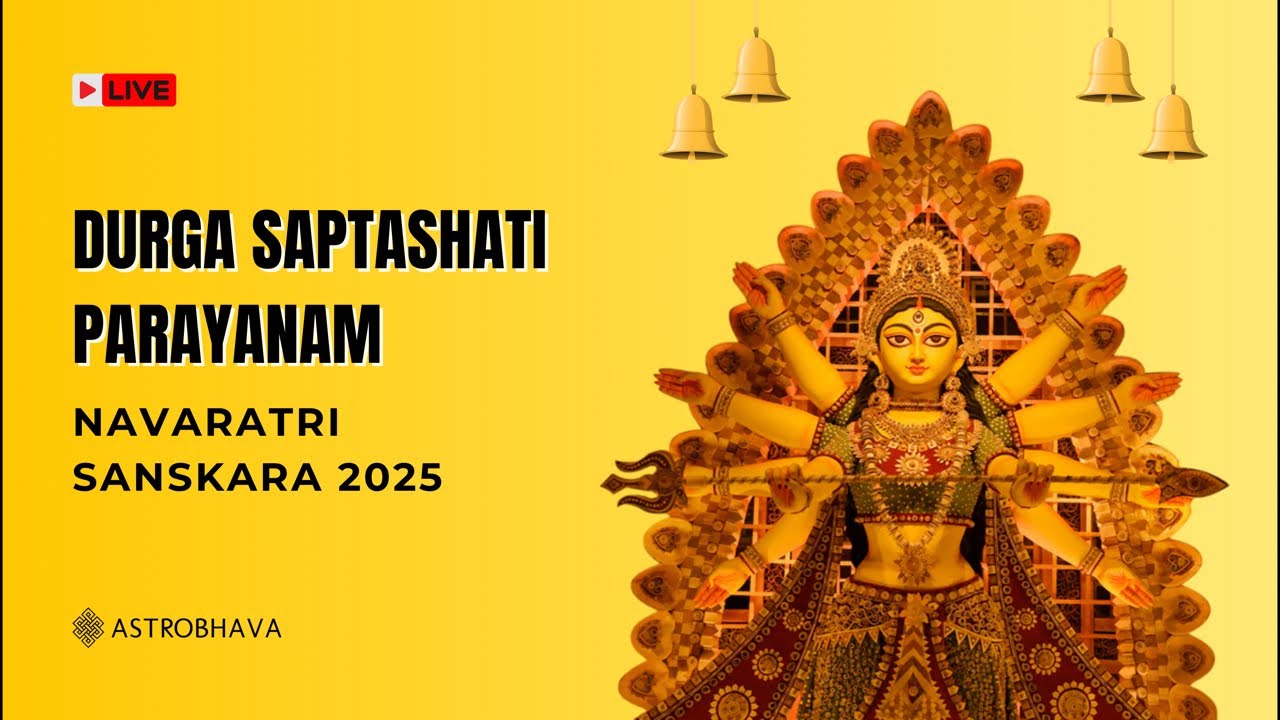
Chandi Homa
Nava Chandi · Sata Chandi · Sahasra Chandi — three scales of one rite
श्री चण्डी होमम्The seven hundred verses of the Durga Saptashati, recited complete and offered into consecrated fire. What changes between the three scales is one thing only: how many times those seven hundred verses are recited — nine, one hundred, or one thousand.
Three scales — free energised Sri Chakra Yantra with every one, free worldwide delivery, nothing added at checkout.
- Never a group ceremony, at any scale — only the names you give are spoken
- Muhurta fixed from your own birth chart, confirmed within 24–48 working hours
- Free energised Sri Chakra Yantra, sealed in a silver amulet, shipped worldwide at no charge
Why the Chandi Homa matters
A homa is not a prayer beside a fire. It is prayer through fire.
The Durga Saptashati — the Devi Mahatmyam — is seven hundred verses recounting the Devi's three great victories: over Madhu and Kaitabha, over Mahishasura, and over Shumbha and Nishumbha. It is not a hymn of praise but a narrative of destruction, and that is precisely why it is chanted into fire when something has to end rather than merely improve.
What distinguishes this rite is not the text but the count. One recitation is a devotional act. Nine, offered with homa at the close, is the Nava Chandi. One hundred across two days is the Sata Chandi, and one thousand across three is the Sahasra — and tradition holds that the accumulation is the method: the same verses returning again and again until the thing being addressed gives way.
या देवी सर्वभूतेषु शक्तिरूपेण संस्थिता — "The Devi who abides in all beings as power." (Devi Mahatmyam 5.32)How the count works
Three words do all the work on this page. Once they are clear, the difference between the three scales is arithmetic.
- Parayanam
- One complete recitation of the Durga Saptashati. All seven hundred verses, beginning to end — never an excerpt or a representative portion.
- Sitting
- All the priests present reciting together, once. A sitting therefore produces as many parayanams as there are priests — ten priests in one sitting is ten parayanams.
- Homa
- One complete fire offering. Counted separately from the parayanams, because the recitation and the offering are two distinct acts.
What a Maha Homa is
Not every fire ritual is performed at the same scale. A Maha Homa is our largest form. This is what that means.
Performed at full scale
More priests, and a fire that burns for as long as the rite itself requires rather than a shortened sitting.
Chanted complete
The whole sequence the rite calls for, in unison, never a representative portion of it and never chanted in rotation.
Telecast in full
Every minute, from the sankalpa in which your name is spoken to the final aarti. Where a rite contains something we do not film, this page names it and gives the reason — you will never find it out by its absence.
A Maha Homa is never a group ceremony, exactly like any homa we conduct. What the scale changes is the weight of the offering, and it is reserved for the intentions that warrant it.
Benefits of the Chandi Homa
Chandi is invoked where something has to be broken rather than negotiated — these are the situations devotees traditionally book this rite for.
Sustained or organised hostility
The classical rite when the difficulty has a source — a person, a faction, a campaign — rather than a circumstance.
Black magic & occult attack
Chandi is invoked as the Devi who destroys what cannot be confronted directly. The traditional recourse where abhichara is suspected.
Protection of the household
Not one person but a family under strain — the sankalpa covers you and up to four named members.
Litigation that will not resolve
Where a matter has gone on long past reason and ordinary remedies have been exhausted.
Recurring obstruction
Efforts that repeatedly fall short at the last step, with no visible cause in the chart or the circumstances.
Health that resists treatment
Performed alongside medical care, never in place of it — for conditions that have not responded as they should.
On her most auspicious days
Sharad and Vasant Navratri, Ashtami, Navami and Fridays — see the sacred timing →
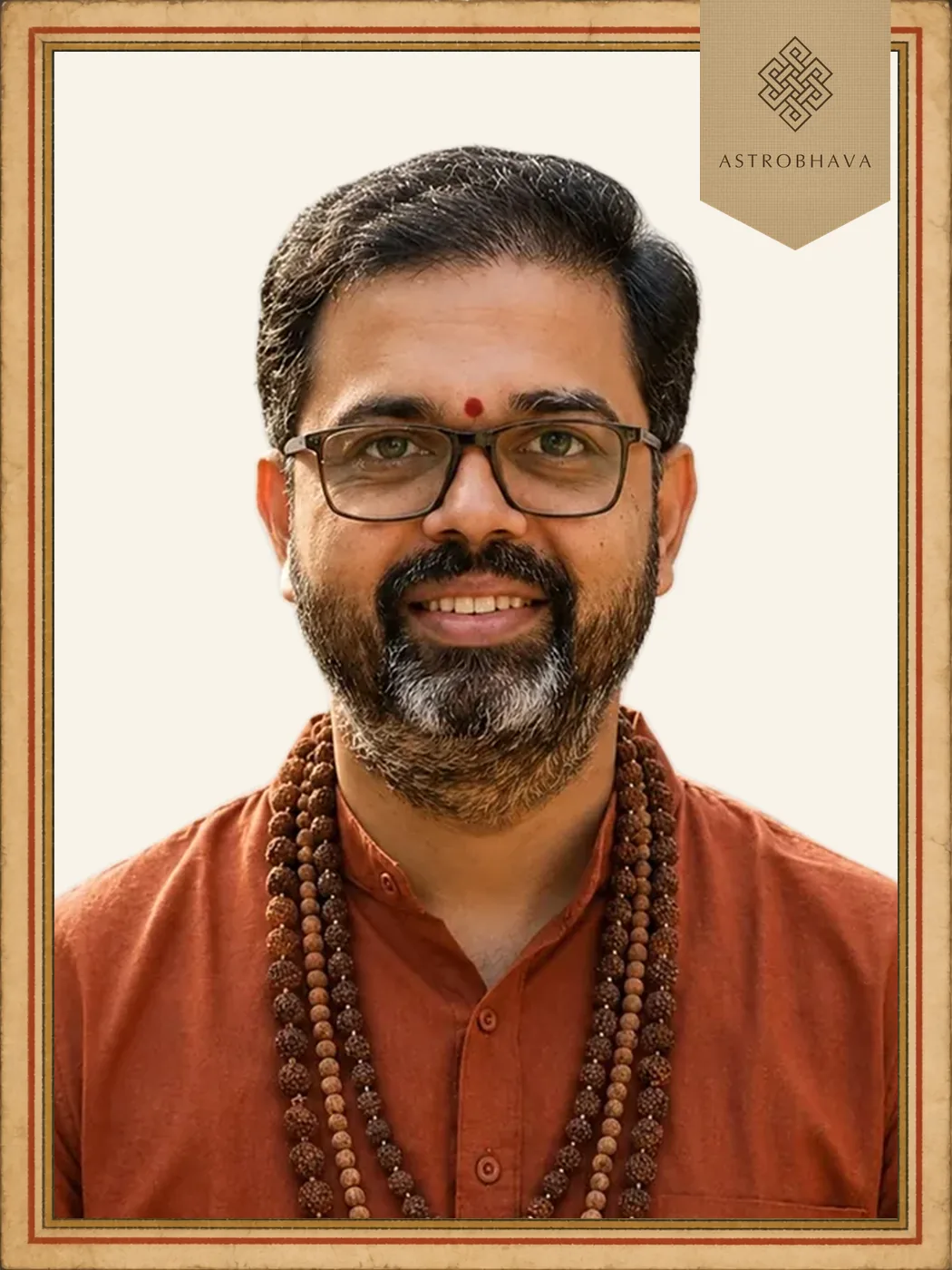
Under the guidance of Brahmashree Shivaaya
Every priest who performs your Chandi Homa is trained in a traditional Padashala and personally recruited by Brahmashree Shivaaya — Chief Operating Officer & Head of Astrological & Spiritual Solutions at AstroBhava. Holding a seven-hundred-verse text accurately across ten sittings and two days, without the count slipping, is not work that can be improvised. Assembling one hundred priests for the Sahasra is not something most organisations can do at all. Your ritual is conducted at our own Yagna Ashram — never a rented venue.
Meet our priests →- Certified Vedic priests — trained in traditional Padashalas
- 100% Agama Vidhi — as prescribed in the scriptures
- One chart, one sankalpa, one fire — never a group ceremony
- Muhurta from your chart — date fixed to your birth details
- Free worldwide delivery — prasadam & energised Sri Chakra Yantra
Choose your scale
Nava, Sata and Sahasra Chandi are one rite at three scales, which is why they share this page. The deity, the text, the priests and the offerings are the same. Only the number of complete recitations changes — and with it the number of priests, the number of homas and the number of days.
✓ Included with every package: the free energised Sri Chakra Yantra, sealed in a silver amulet
All-inclusive — no shipping charges, no additions at checkout. See everything included →
We do not publish a figure for this rite, and the reason is not coyness. At this scale the cost genuinely varies — with where it is performed, how many days of travel and accommodation the priests need, the volume of materials, and the season. Quoting one number on a page would either overstate it for some devotees or understate it for others. We give you the whole figure, itemised, once we know those things. It is the same principle as the rest of this site: we would rather tell you the truth late than a convenient number early.
This rite is arranged with you directly, not bought from a page. An offering of this size is not something we take by card, and the priests it needs are committed months ahead. Send a request and Brahmashree Shivaaya’s office replies with the dates we can hold, the priests we can assemble, and how the offering is settled. Nothing is charged at this stage, and nothing is committed until you say so.
With the Latcharchana, this rite is arranged with you directly, not bought from a page. Send a request and Brahmashree Shivaaya’s office replies with the dates we can hold and how the offering is settled. Nothing is charged at this stage, and nothing is committed until you say so.
Request this rite
Tell us a little and we will come back to you directly — usually within one working day.
Sata Chandi Homa
Two days · approximately eighteen hours- Day one, morningThree sittings. All ten priests recite in each.30 parayanams
- Day one, eveningThree sittings.30 parayanams
- Day two, morningThree sittings.30 parayanams
- Day two, eveningOne sitting, then the Chandi Homa — one homa by each priest.10 parayanams · 10 homas
- The closeThe Vasordhara Homa, the unbroken stream of ghee that seals the rite.—
10 sittings × 10 priests = 100 parayanams · 10 homas
Sahasra Chandi Homa
Three days · two of parayanam, one of homa- Day one, morningThree sittings. All one hundred priests recite in each.300 parayanams
- Day one, eveningThree sittings.300 parayanams
- Day two, morningThree sittings.300 parayanams
- Day two, eveningOne sitting, then the Chandi Homa.100 parayanams
- Day threeTen homa kundams burning together, ten homas at each.100 homas
- The closeThe Vasordhara Homa, the unbroken stream of ghee that seals the rite.—
10 sittings × 100 priests = 1,000 parayanams · 100 homas
You book — and add birth details on the next page, straight after payment.
Within 24–48 working hours — your muhurta is confirmed by email.
The day before — your telecast link arrives by email.
After the homa — tracking email with your prasadam and Sri Chakra Yantra.
The most auspicious days for a Chandi Homa
Tradition holds certain days as especially potent for the Devi's fierce forms. A homa performed on them is considered to carry heightened merit.
Nine nights of the Devi in Ashwin — the most auspicious window of the year for any Chandi rite.
The spring Navratri in Chaitra, the second of the great Devi windows.
The eighth and ninth lunar days, hers each month, and the strongest recurring windows.
The Devi's weekday, traditional across South India for her worship.
The new moon, classically chosen for rites that remove rather than rites that ask.
Associated with the fierce forms of the Devi and often selected for protective rites.
You do not need to wait for one of these days. Whenever you book, our astrologers calculate the muhurta from your own birth chart — a date chosen for you personally, which tradition regards as more precise than a calendar date chosen for everyone. If you would like the homa on one of the days above, tell us at checkout and we will fix the muhurta within it.
What you receive
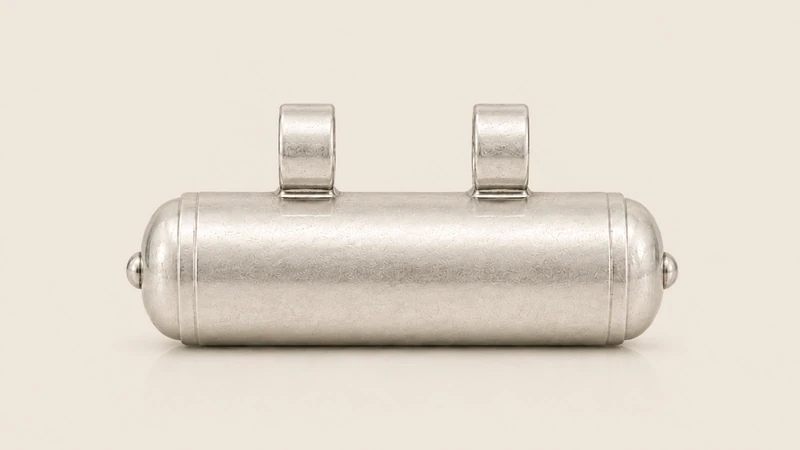
Your energised Sri Chakra Yantra
The Sri Chakra stands in your ritual from the sankalpa onward and is energised during it — not consecrated separately beforehand, and not blessed afterwards. When the Latcharchana is added, it is the object the lakh of names is offered to.
When the rite concludes it is rolled and locked inside its silver amulet by Agamic rite, and ships to you with your prasadam at no extra cost.
Personal sankalpa
Your name, gotra and nakshatra — and up to four family members if you wish. Never a shared or group ritual.
Live telecast, the whole rite
Watch your own homa in real time from the ashram, from the sankalpa to the final aarti. Streamed openly on our YouTube channel by default, or unlisted on request at checkout.
Free energised Sri Chakra Yantra
Shipped to you with your prasadam.
Prasadam, shipped free
Vibhuti from your own fire, kumkum and sacred ash — delivered to any country at no charge.
The Saptashati in full
Seven hundred verses, recited complete at every single parayanam. Never an abridged path, at any scale.
Suvasini and Kumari puja
The honouring of women and young girls that the Chandi rites prescribe, performed in full as part of your ritual. The one stage held off camera, for their privacy.
A note on your telecast
The rite is telecast in full — from the sankalpa in which your name is spoken, through every parayanam of the Saptashati, to the Vasordhara that closes it. Four hours in the Nava Chandi, and across two or three consecutive days at the larger scales, live.
One stage is deliberately held off camera. In the Suvasini and Kumari puja, women and young girls of the household and the village are honoured as living forms of the Devi — their feet washed, their hands filled, worshipped as she is worshipped. They come as devotees, not as participants in a broadcast, and their privacy is not ours to trade for a camera angle. The puja is performed in full at every scale; it is simply not filmed. The telecast pauses for it and resumes with the homa. It is the only part of this rite you will not see, and we would rather say so plainly than let you notice a gap.
By default it is streamed openly on our YouTube channel so that devotees everywhere may witness the rituals — and because we believe you should be able to see our work before you trust us with yours. Your sankalpa names you and any family members you add, so if you would rather your ceremony were not public, choose the private telecast option at checkout and it is streamed as an unlisted link, which does not appear on our channel or in search, though anyone who has the link can watch it and share it.
How to wear your energised Sri Chakra Yantra
Your auspicious time to wear it
Wear it for the first time on a Friday, between 6.30 and 7.30 in the morning. Bathe first, place the yantra on your pooja altar and offer your prayers, then wear it around your neck or your waist, on a red or black thread or a silver chain.
At a funeral
Take the yantra off before you attend a funeral.
Purify the amulet
Whenever the yantra has been taken off, or if it was worn at a funeral, dip it in raw milk or Ganga jal, show it incense, dhoop or attar (perfume), and then wear it again.
Keep the energy intact
You may repeat this energising once a week or once a month.
How your Chandi Homa is performed
Fourteen stages, the same at every scale. The eighth is the parayanam itself, repeated as many times as your scale calls for.
 These fourteen stages, as they happenFrom a live telecast at our Yagna Ashram
The rite is telecast in parts. Watch a real one: Part one · Part two
Sankalpa
Your name, gotra and nakshatra — and those of up to four family members — declared before the fire with the intention this homa is performed for.
Kalasha Sthapana
The consecrated pots established and the Devi invoked into them, as the Chandi rites require before any recitation begins.
Ashtadikpalaka invocation
The guardians of the eight directions invoked for the protection of the rite.
Ganapati Puja
Performed first, as tradition prescribes, so that obstruction is cleared before the Devi is approached.
Punyavachanam & pranayama
Purification of the priests, the materials and the space; the breath steadied before a long recitation.
Agni Pratishtha
The fire consecrated in the homa kunda and Agni invoked as the carrier of every offering that follows.
Navarna mantra japa
The nine-syllable mantra of the Devi recited as the foundation on which the Saptashati is laid.
Durga Saptashati parayana
The heart of the rite — the seven hundred verses recited in full, as many times as the scale you have chosen calls for. This is what the duration exists for, and it is set out sitting by sitting in the schedule above.
Kumkum archana
The Devi's names offered with kumkum — and, if the Latcharchana is added, a full lakh of them to the Sri Chakra.
Suvasini & Kumari puja
The traditional honouring of women and young girls as living forms of the Devi, as the Chandi rites prescribe. This is the one stage we do not film: they come as devotees to be worshipped, not as participants in a broadcast. Your telecast pauses here and resumes with the homa.
The Chandi Homa
The fire offering proper — one homa by each priest in the Nava and the Sata, and one hundred across ten kundams on the third day of the Sahasra.
Vasordhara Homa
The unbroken stream of ghee poured into the fire that closes every Chandi rite — the offering that seals what the parayanams have raised.
Yantra energisation
Your Sri Chakra Yantra stands in the ritual and is energised during it — not before, not after.
Aarti & Dispatch
Aarti performed live on your telecast. Vibhuti from your own fire, kumkum and your energised Sri Chakra Yantra are packed and shipped free to your door.
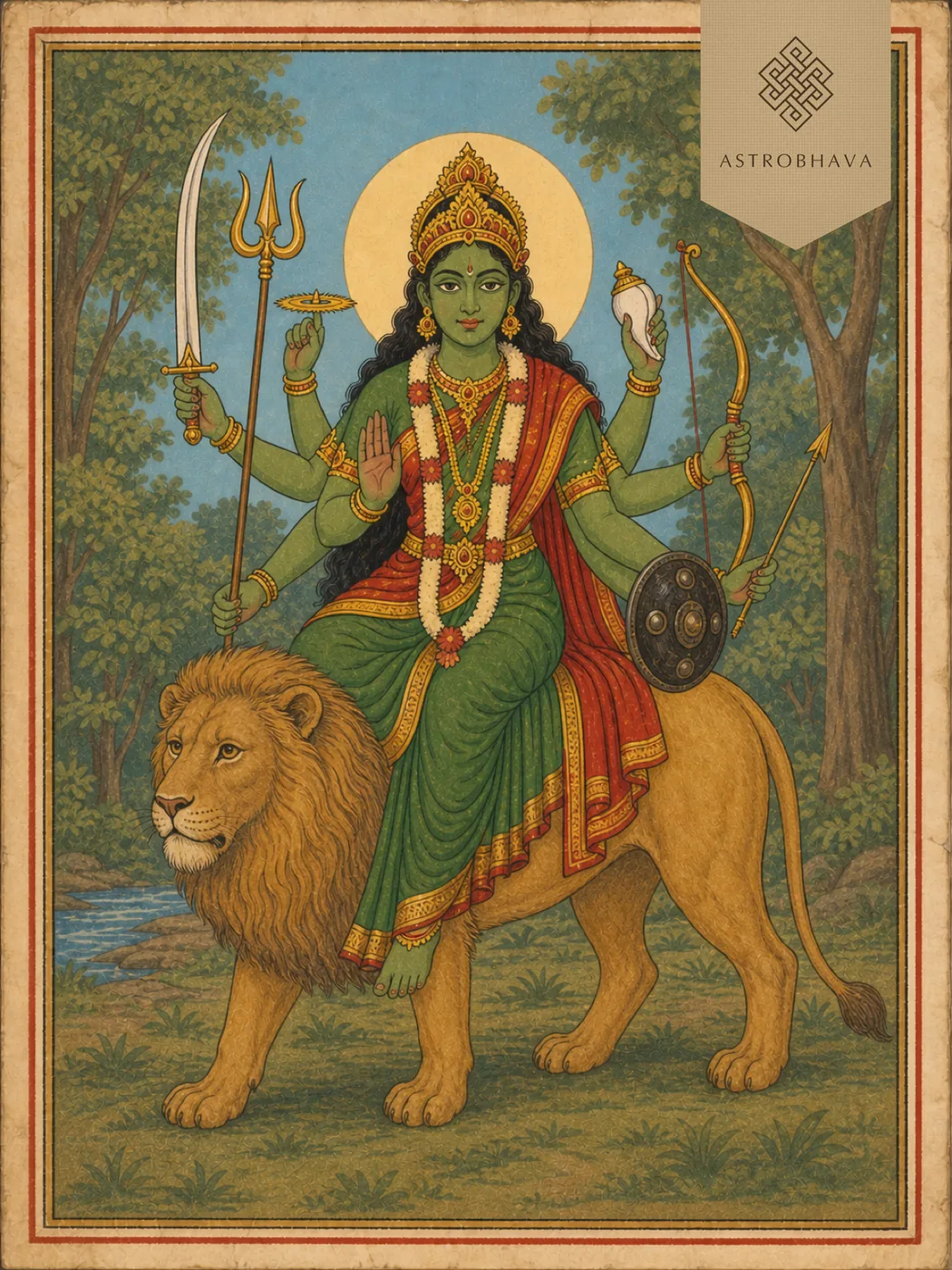
Chandi — the Devi in her fighting form
Chandi is Durga as she appears in the Devi Mahatmyam: not the mother who consoles but the one who takes the field. The text names her Chandika, the fierce, and describes her destroying what the gods themselves could not — Mahishasura who could not be killed by any man, Raktabija whose every drop of blood became another demon.
That is the reason this rite exists in the form it does. It is invoked when a difficulty has a will behind it, and when the ordinary remedies have already been tried.
Durga Saptashati: the text, the Navarna mantra & how to chant
The thirteen chapters with their meaning, the nine-syllable mantra word by word, and how devotees recite at home — on our mantra guides.
Read the Mantra Guides →Ask before you book
The difference between nine recitations and a thousand is not a matter of budget but of what your situation calls for. Nirnaya, our free ritual guide, will tell you which the tradition indicates. For a full reading of your chart, book a live session with our astrologers.
Frequently asked
Other rituals for protection and adversaries
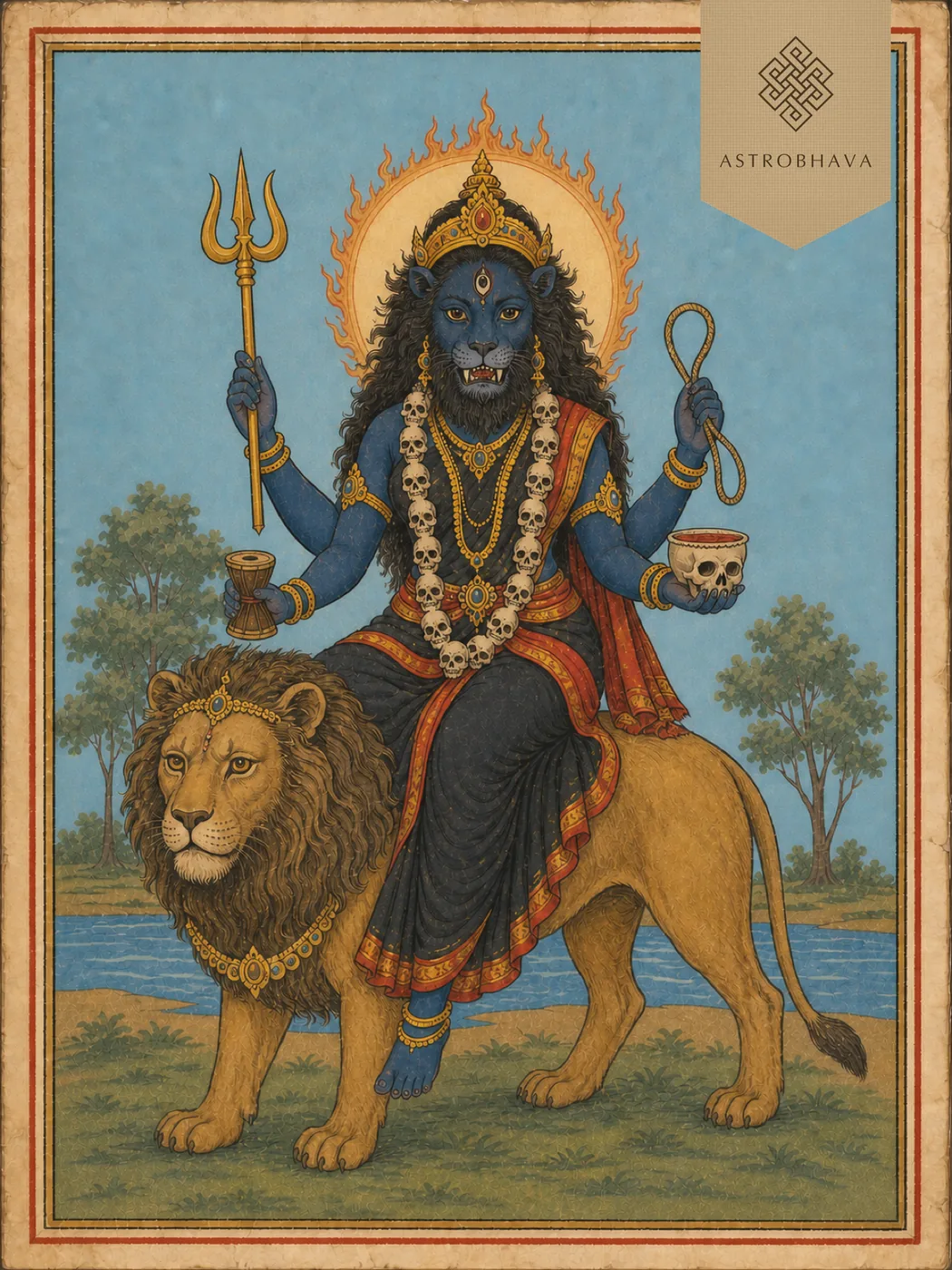
Pratyangira Devi Homa
The fierce protective goddess — invoked against black magic, sorcery and hidden adversaries.
From $737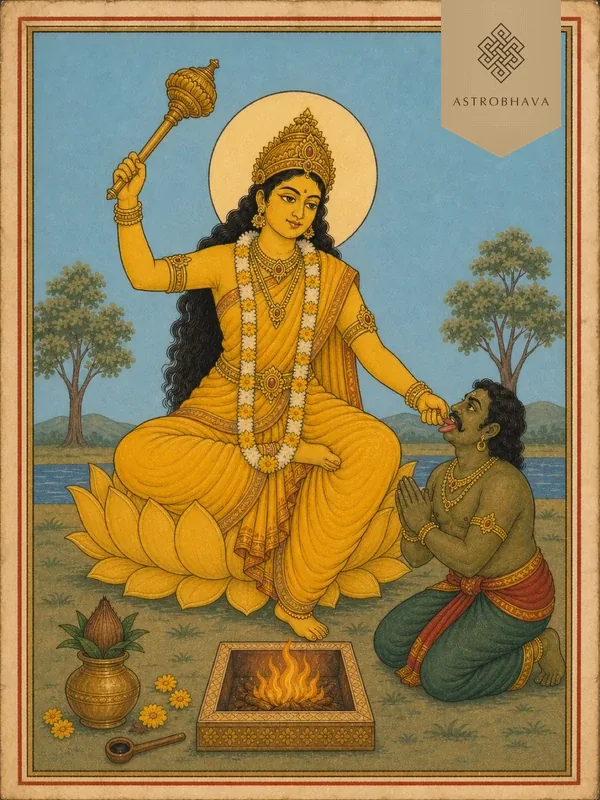
Bagalamukhi Homa
The goddess who stills the opponent's speech — the classical rite for litigation and rivalry.
From $737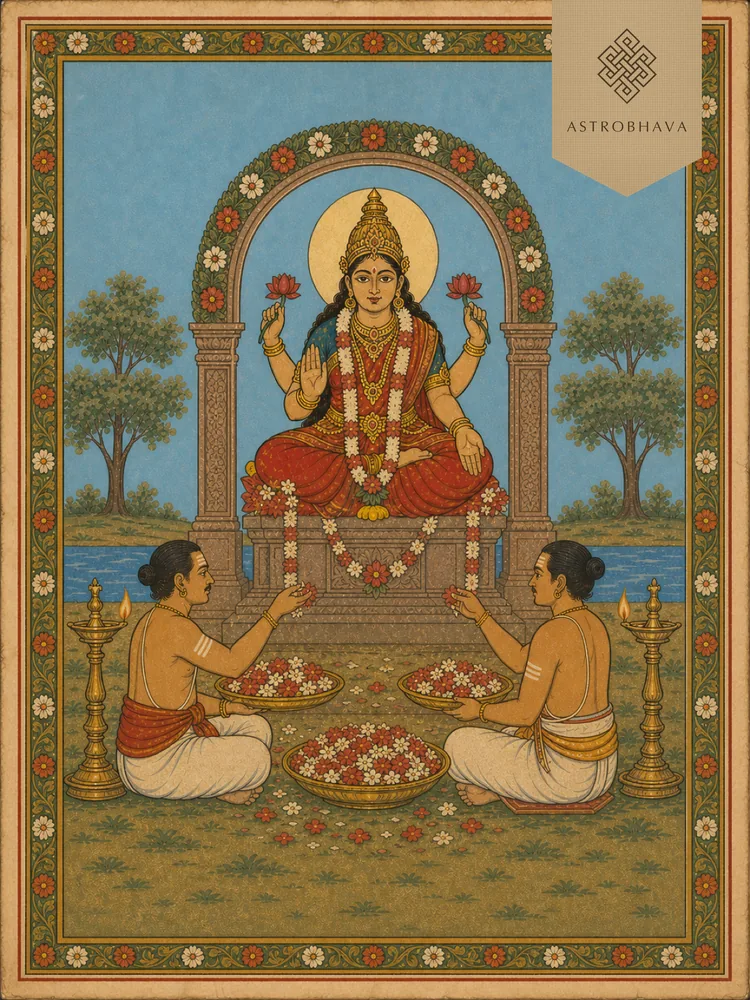
Latcharchana
One lakh names of the Devi offered in strict count — the Aradhana, on its own.
$3,840Seven hundred verses, returned to the fire
Book your Chandi Homa, watch it performed live from our Yagna Ashram, and receive your energised Sri Chakra Yantra anywhere in the world.
Choose Your Scale