The occurrence of Dwijapriya Sankashti 2026 on February 5th marks a significant spiritual junction in the Vedic lunar calendar. Falling during the Krishna Paksha (waning phase) of the Magha month, this specific Sankashti Chaturthi is dedicated to Dwijapriya Ganesha, the 6th of the 32 forms of Lord Ganapati. In Vedic astrology, this day is highly regarded for its ability to mitigate the harsh effects of planetary transits and provide a “Sankashti” (deliverance from difficulties) to those navigating complex life cycles.
From an astrological perspective, the timing of this vrat is crucial. As we move through early 2026, the alignment of the Moon in the sensitive signs of the zodiac often creates a sense of mental restlessness. Observing the dwijapriya vrat acts as a grounding mechanism, stabilizing the lunar influence on our subconscious mind and helping practitioners overcome obstacles that seem insurmountable.
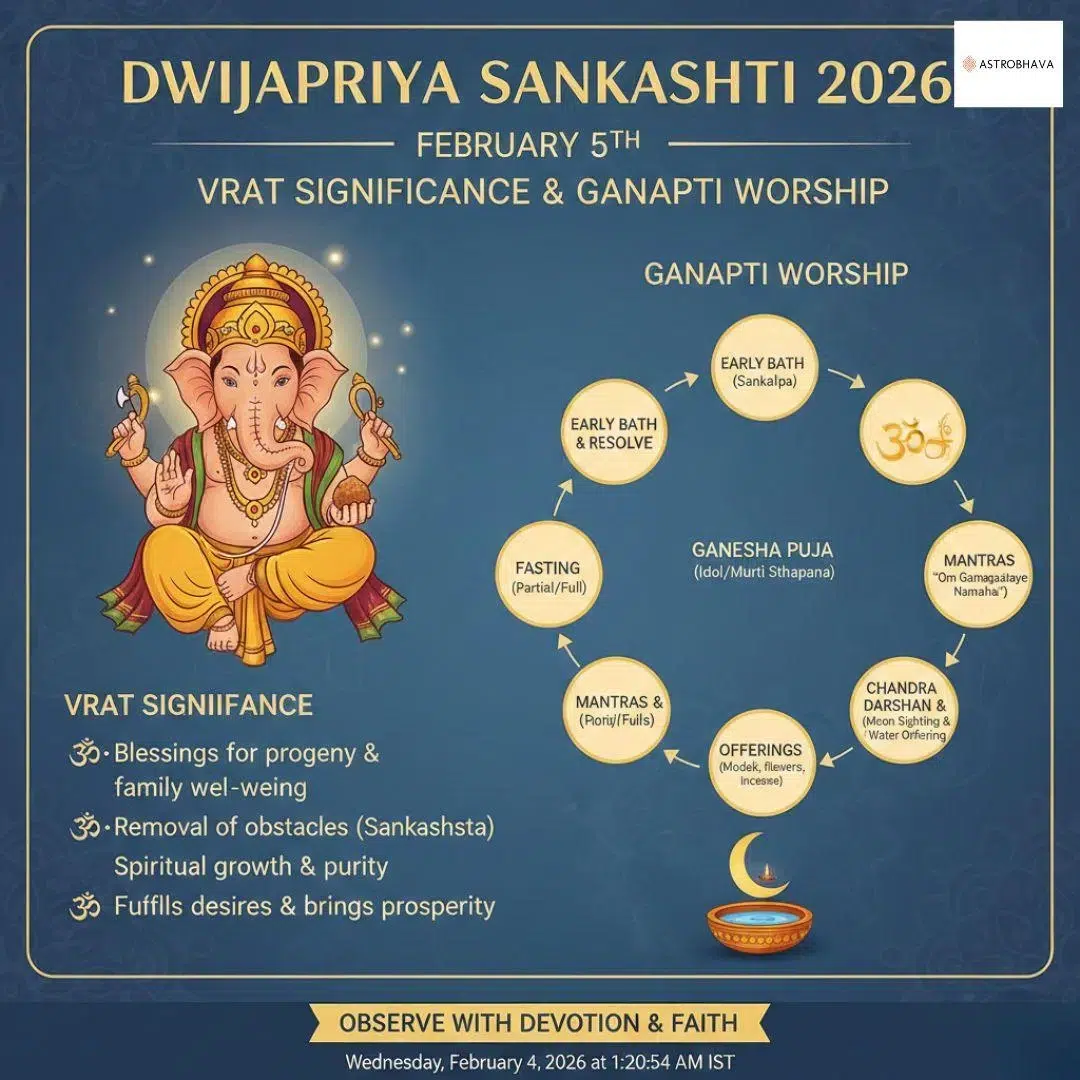
Dwijapriya Sankashti Chaturthi 2026 will be observed on Thursday, February 5, 2026.
It falls during Magha Krishna Chaturthi and is dedicated to Dwijapriya Ganesha, a form associated with wisdom, mental clarity, and relief from lunar and karmic obstacles. The vrat is observed from Chaturthi Tithi and completed after Moonrise on the same day.
Key Takeaways: Dwijapriya Sankashti 2026
If you are looking for a quick summary of the auspiciousness of this day, here are the essential points:
- Date: Thursday, February 5, 2026.
- Deity: Lord Dwijapriya Ganesha (The “Twice-Born” or beloved of the learned).
- Core Benefit: Mental peace, academic success, and the removal of “Vighna” (obstacles) caused by Saturn or Rahu.
- Main Ritual: A day-long fast concluded only after sighting and offering Arghya (water) to the Moon.
- Astrological Focus: Balancing the Moon’s energy to improve intuition and decision-making.
Dwijapriya Sankashti Chaturthi 2026 will be observed on Thursday, February 5, 2026.
It falls during Magha month, Krishna Paksha, and the vrat is completed only after Moonrise (Chandrodaya) on the same day.
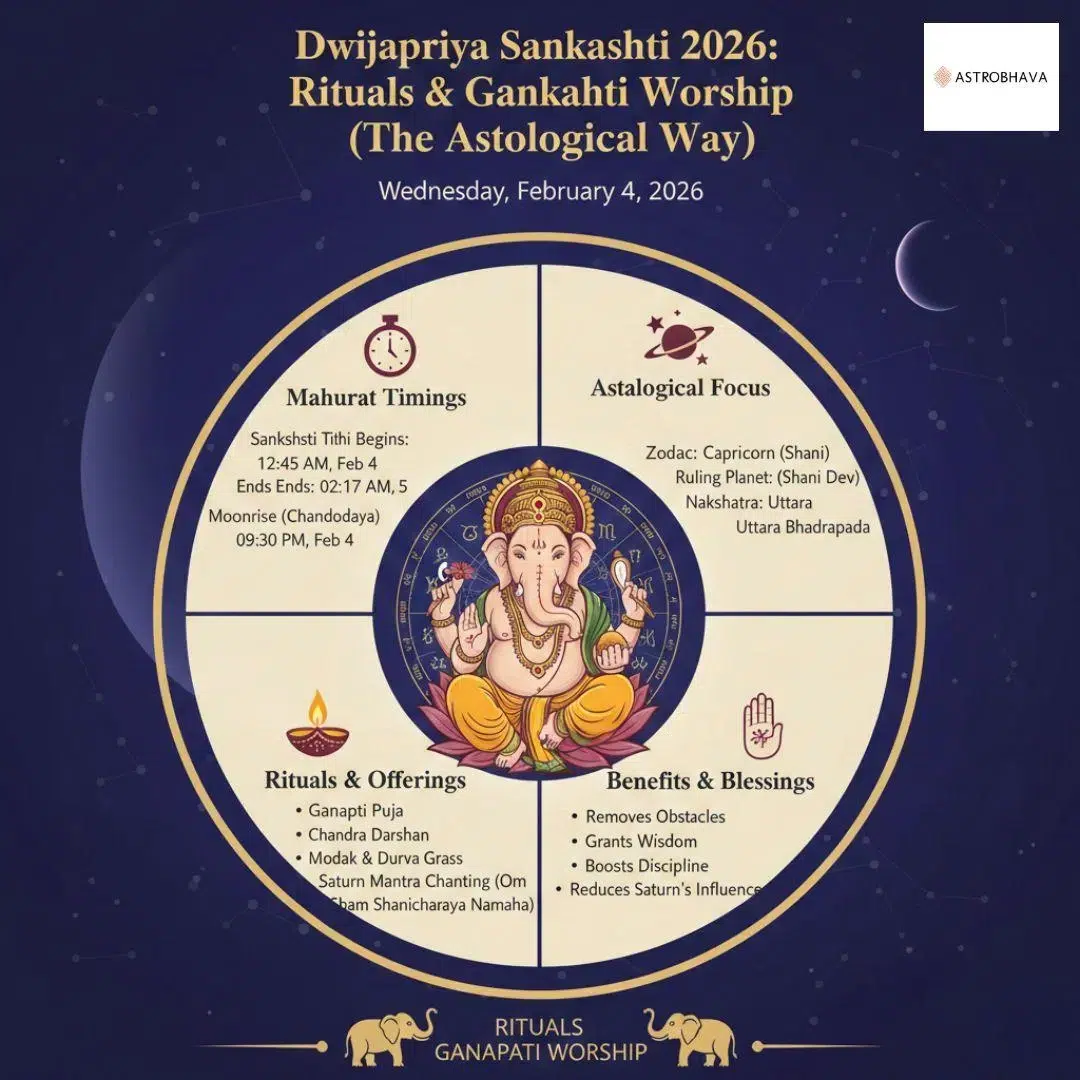
Important Timings for Dwijapriya Sankashti 2026
| Event | Date & Time |
| Dwijapriya Sankashti Chaturthi Date | Thursday, February 5, 2026 |
| Chaturthi Tithi Begins | 12:09 AM on February 5, 2026 |
| Chaturthi Tithi Ends | 12:22 AM on February 6, 2026 |
| Moonrise on Sankashti Day | 09:35 PM |
| Lunar Phase | Krishna Paksha (Waning Moon) |
| Fast Completion Time | After Moonrise and Arghya |
These timings are based on traditional Panchang calculations and may vary slightly depending on geographic location.
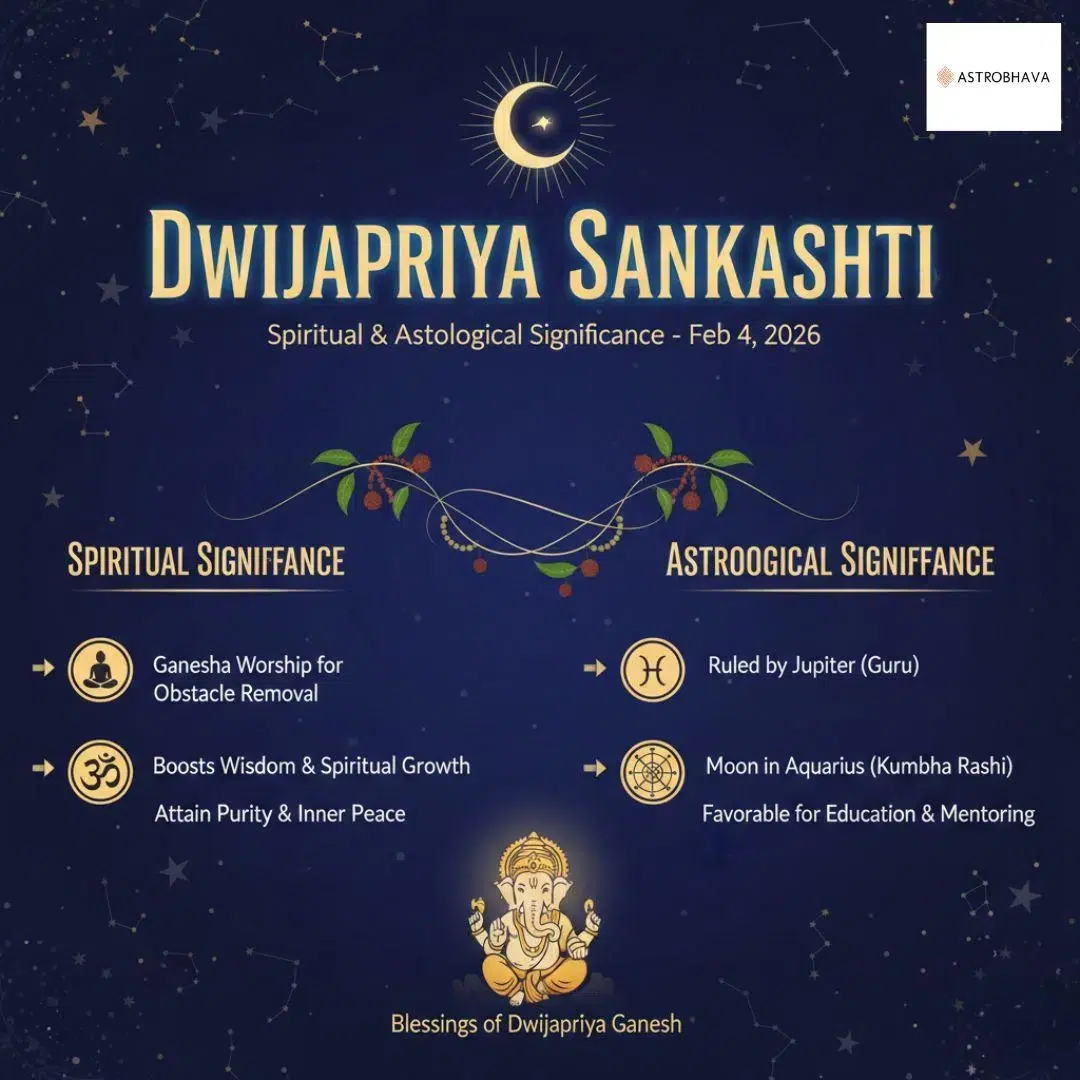
The Spiritual and Astrological Significance of Dwijapriya Sankashti 2026
In classical Vedic astrology, the Chaturthi Tithi (fourth lunar day) is ruled by Lord Ganesha. While every month has a Sankashti, the Dwijapriya Sankashti 2026 holds a unique vibration. The term “Dwija” refers to being twice-born—first physically and second spiritually through the acquisition of knowledge.
The Lunar Connection
The Moon is the significator of the mind (Chandrama Manaso Jatah). On a Sankashti, the Moon is often in a position that can trigger emotional volatility. By observing the sankashti chaturthi vrat, a practitioner consciously aligns their internal rhythm with the lunar cycle. This discipline helps in pacifying a debilitated or afflicted Moon in one’s birth chart, fostering a sense of emotional resilience.
Mitigation of Obstacles
Lord Ganesha is the ruler of Ketu. In 2026, many individuals may be feeling the restrictive or confusing effects of Ketu transits. Worshiping Ganesh Sankashti on this day serves as a potent remedy to channel Ketu’s chaotic energy into spiritual growth and analytical clarity.
Who Should Observe the Dwijapriya Vrat?
This vrat is also commonly searched alongside terms such as Sankashti Chaturthi Moonrise time, Ganesh vrat for mental peace, and Magha Sankashti remedies. While anyone can seek the blessings of Lord Ganesha, certain astrological conditions make this dwijapriya sankashti 2026 particularly beneficial for specific groups:
- Students and Academics: Since Dwijapriya Ganesha is associated with the “twice-born” and the pursuit of Shastras, those appearing for exams or research will find enhanced concentration.
- Those under Sade Sati or Dhaiya: If Saturn is currently influencing your Rashi, the mental pressure can be immense. This vrat helps in cooling the “Tamasic” heat of Saturn.
- Individuals with Chandradosha: If your horoscope has a Moon-Rahu (Grahan Yoga) or Moon-Saturn (Vish Yoga) conjunction, the prayers offered today act as a soothing balm for the psyche.
- Professionals facing stagnation: If Mercury (the planet of business) is weak in your chart, Ganesha worship helps improve communication and logic.
Enhancing Financial Resilience with Dwijapriya Ganesha
In the specialized branch of Vedic financial astrology, Dwijapriya Sankashti 2026 is viewed as a “wealth-restoring” lunar phase. The name Dwijapriya signifies the one who is “beloved of the twice-born,” but it also carries the vibration of prosperity that is earned through wisdom and right action. If your birth chart shows a weak 2nd house (wealth) or 11th house (gains), this day offers a powerful energetic reset:
- Debt Dissolution: The specific frequency of Dwija Ganapati is believed to aid in the gradual clearance of old debts (Rina Mukti).
- Wealth Protection: Performing remedies today acts as a “Kavacha” (shield) for your savings, preventing sudden or unexpected losses caused by Malefic Rahu or Saturn.
- Business Growth: For entrepreneurs, the dwijapriya vrat helps in “re-birthing” stagnant business plans, providing the mental clarity needed to pivot toward more profitable ventures.
- Abhishekam Benefits: Astrologers often recommend a simple Abhishekam (ritual bath) of the Ganesha idol with sugarcane juice on this day, as sugarcane symbolizes the sweetness of prosperity and the arrival of new income streams.
Rituals and Ganapati Worship (The Astrological Way)
Astrologers often observe that the efficacy of a ritual lies in its intention and timing. Here is how to perform the dwijapriya vrat effectively on dwijapriya sankashti 2026:
Morning Discipline
Start the day with a meditative bath. Wear yellow or green clothing. In Vedic color therapy, green resonates with Mercury (the planet Ganesha rules), and yellow resonates with Jupiter, enhancing the “Dwija” or scholarly aspect of the day.
The Altar Setup
Place an idol or image of Lord Ganesha facing North or East. Offer red flowers—specifically Hibiscus if available—as the color red stimulates the Muladhara Chakra, which Ganesha governs.
Chanting and Mantras
The vibration of sound is a key remedy for planetary afflictions. Recite the following:
- “Om Gam Ganapataye Namaha” (108 times)
- “Om Dwijapriyaya Namaha” (Specific to this Sankashti)
The Evening Arghya
The most vital part of the Sankashti Chaturthi vrat is the Moon worship. When the Moon rises, offer a mixture of water, milk, and sandalwood. This act is a symbolic cooling of the mind’s desires and an acknowledgment of the cosmic order.
Planetary Alignment and the Power of the “Twice-Born” Energy
From an astrological perspective, Dwijapriya Sankashti 2026 offers a unique window to recalibrate your personal energy through the “Dwija” (twice-born) principle:
- Mercury-Moon Synthesis: This day harmonizes the emotional Moon with the intellectual Mercury, fostering a state of high emotional intelligence.
- Ketu Mitigation: As Ganesha rules Ketu, this vrat helps ground those feeling detached or confused by current Ketu transits, providing much-needed direction.
- Karmic Cleansing: The “twice-born” energy symbolizes a fresh start, making it the perfect time to initiate remedies for long-standing Pitra or Balarishta doshas.
- Focus on Growth: It shifts the practitioner from a state of mere survival to one of conscious, spiritual evolution.
Release mental stress and karmic Moon imbalances through a powerful Chandra Homa on Feb 5, 2026.
Simple Remedies for Planetary Harmony
If you cannot observe a full fast, you can still perform these simple, non-harmful astrological remedies:
- Donation: Donate green moong dal or jaggery to a temple. This strengthens Mercury and Sun placements.
- Behavioral Remedy: Practice “Mauna” (silence) for at least two hours during the day to conserve mental energy.
- Environmental: Feed durva grass (Cynodon dactylon) to a cow. From a planetary perspective, this harmonizes the Earth element in your chart.
Restore emotional balance and peace during Dwijapriya Sankashti with a dedicated Chandra Puja.
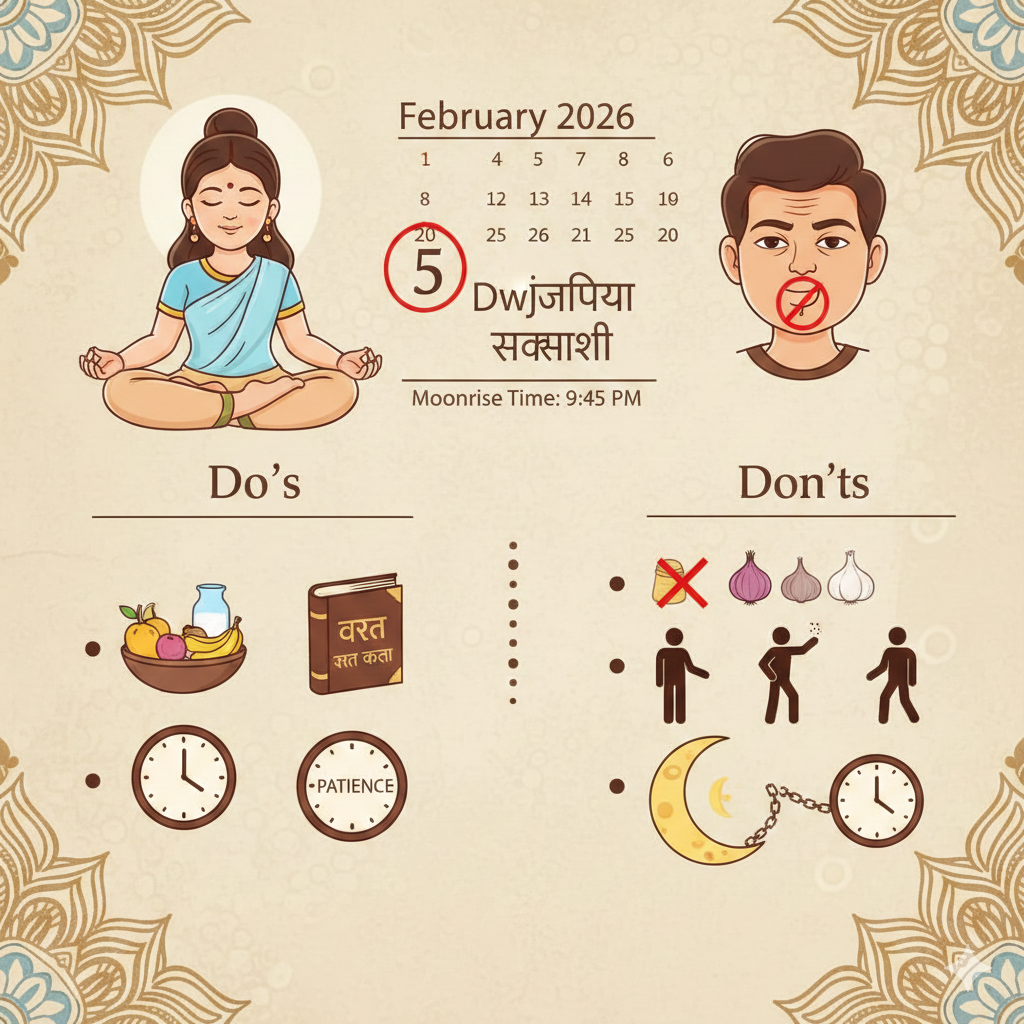
Do’s and Don’ts
| Do’s | Don’ts |
| Maintain a sattvic diet (fruits, roots, milk). | Avoid consuming salt, onion, or garlic. |
| Read the Vrat Katha (story) in the evening. | Avoid arguments or harsh speech. |
| Focus on the concept of ‘patience’ throughout the day. | Do not break the fast before seeing the Moon. |
Frequently Asked Questions (FAQs)
- Can I drink water during the Dwijapriya Sankashti 2026 fast?
Yes. In Vedic tradition, there are levels of fasting. You can choose a Phalahar (fruit-based) or Jalahar (water-based) fast. The goal is to purify the body, not to cause physical distress.
- What if the Moon is not visible due to clouds?
Astrologically, the Tithi and the calculated moonrise time are what matter most. If the sky is overcast, you may perform the Arghya at the exact time of moonrise mentioned in the local Panchang while facing the direction of the Moon.
- Why is Lord Ganesha worshiped for Moon-related problems?
In Puranic history, Ganesha has a unique command over the Moon (Chandra). By worshiping Ganesha, we balance the lunar tides within our own emotional body, preventing impulsive decisions.
- Is this vrat beneficial for health issues?
While not a substitute for medical advice, many practitioners find that the discipline of the fast improves digestion and reduces stress-related ailments, which are often linked to a weak Moon in the chart.
Conclusion
Dwijapriya Sankashti Chaturthi 2026, observed on Thursday, February 5, is a spiritually significant day for restoring mental balance, strengthening wisdom, and removing obstacles linked to lunar and karmic influences. Dedicated to Dwijapriya Ganesha, this Magha Krishna Chaturthi emphasises patience, discipline, and inner clarity rather than outward ritual alone.
By observing the vrat with awareness of Tithi, Moonrise, and intention, devotees can align their actions with the lunar cycle and experience steadiness in thought, learning, and decision-making. Whether undertaken as a full fast or through simple remedies, the essence of this Sankashti lies in calming the mind and resetting one’s spiritual focus.
For those navigating academic pressure, emotional unrest, or periods of stagnation, Dwijapriya Sankashti offers an opportunity to reconnect with wisdom-driven growth and begin the next phase with clarity and confidence.
If you’re experiencing similar planetary influences in your personal chart and want clarity beyond general predictions, Astrobhava offers personalised astrological guidance rooted in Vedic wisdom. A focused chart analysis can help you understand timing, remedies, and the deeper reason behind your current phase.
Author Bio: Astrobhava
Astrobhava is a premier global platform dedicated to preserving and providing access to authentic Vedic rituals and astrological remedies. Our team consists of highly learned Vedic priests and expert astrologers who specialize in ancient fire ceremonies and personalized planetary remedies.
AstroBhava is a premier Vedic astrology and remedial center based in Coimbatore, India. Specializing in Nadi Astrology, Homas, and Pujas, the platform has served over 400,000 seekers across 80 countries. Led by seasoned South Indian scholars and priests, AstroBhava bridges ancient Vedic wisdom with modern life to help individuals resolve karmic debts and achieve spiritual alignment.
Moon Homa/Chandra Homa for Stability & Peace of Mind
https://youtu.be/pJj3gotS7l0?si=kee5H6Hd_VgqHueQ