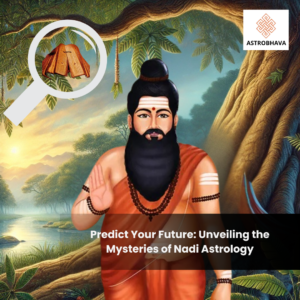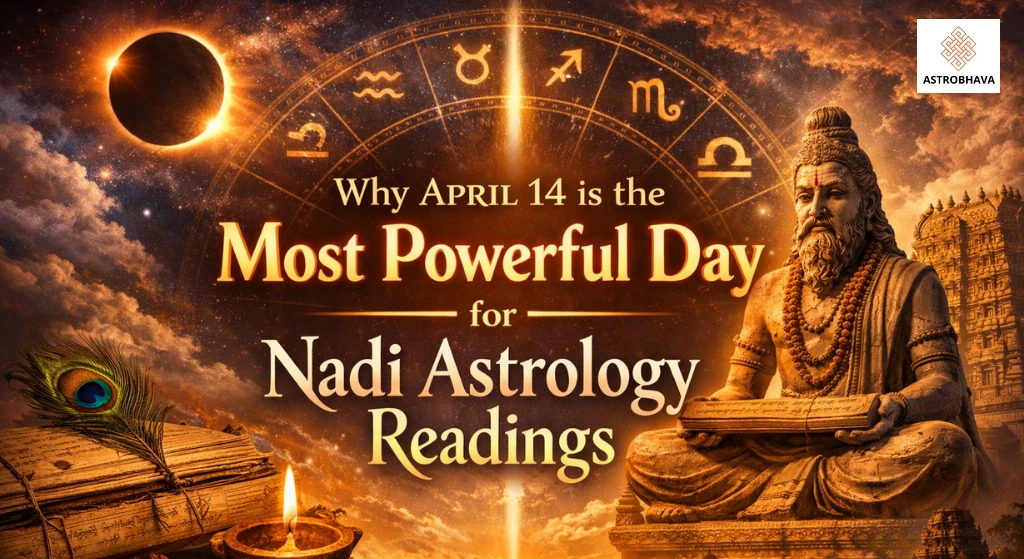
Discover why this ancient Tamil new year holds the key to your most accurate destiny reading
Introduction: A Date That Changes Everything
Have you ever wondered why certain days feel more charged with energy than others? Why some moments in time seem to carry a weight that others simply don’t? If you’ve been curious about Nadi Astrology Readings — that ancient, mystical science etched on palm leaves by the sage Agastya thousands of years ago — then you’ve probably also wondered when the best time is to seek one out.
The answer, according to astrologers, scholars, and devoted seekers across South India, is April 14.
This isn’t a marketing gimmick or a convenient coincidence. There are deep astrological, spiritual, and cultural reasons why April 14 stands apart from every other day in the calendar when it comes to Nadi Astrology. And in this post, we’re going to walk through all of them — conversationally, clearly, and with enough depth that you’ll walk away genuinely understanding why this date is treated with such reverence.
Grab a cup of chai and let’s get into it.
What Is Nadi Astrology and Why Does Timing Matter?
Before we dive into why April 14 is special, let’s make sure we’re on the same page about what Nadi Astrology actually is.
Nadi Astrology is an ancient Indian system of astrology rooted primarily in Tamil Nadu. It’s based on a collection of palm leaf manuscripts — called Nadi Granthas — written by sages like Agastya, Bhrigu, and Vashista thousands of years ago. These sages, through deep penance and divine insight, are believed to have foreseen the lives of specific souls who would be born in the future. The leaves contain detailed readings — past, present, and future — for individuals, identified through their thumbprints.
Now, why does timing matter for a system that was written thousands of years ago?
Great question. The answer lies in how energy flows. Just like how a doctor might tell you certain medications work better at specific times of day, or a farmer knows that certain crops grow only in particular seasons, Nadi Astrology Readings are believed to be most accurate and most receptive when the cosmic energy is aligned. And on April 14, that alignment is extraordinary.
April 14: The Tamil New Year — A Fresh Cosmic Slate
April 14 marks Puthandu, the Tamil New Year. It’s the first day of the Tamil month of Chithirai, and it coincides with the Sun’s entry into Aries (Mesha Rasi) — the first sign of the zodiac.
Think of it this way: if the zodiac is a clock, April 14 is when the clock resets to 12:00. The Sun, which is the soul of the zodiac in Vedic astrology, begins its journey from the very first degree of the very first sign. This is called Mesha Sankranti.
This solar transition is significant for several reasons:
- The Sun is at peak clarity — it has just exited Pisces, the sign of confusion and dissolution, and entered Aries, the sign of new beginnings and raw energy.
- All planetary positions are recalculated in the new Vedic year (Panchang), making it the ideal moment to assess karmic trajectories.
- The energy of renewal is at its highest, making it the most receptive time for spiritual and astrological work.
For Nadi Astrology specifically, this means the “doors” to reading a person’s leaf are believed to be most open. The sages who wrote these leaves were deeply attuned to solar cycles, and April 14 sits at the apex of one such cycle.
The Role of Mesha Sankranti in Nadi Astrology
Let’s go a little deeper because this is where it gets genuinely fascinating.
Mesha Sankranti isn’t just the Tamil New Year — it’s also the astrological new year across many Indian traditions. In the Vedic system, each Sankranti (solar transit) carries specific energy, and Mesha Sankranti is considered the most powerful of all twelve because it marks the beginning of the solar year.
In the context of Nadi Astrology Readings, this matters enormously. Here’s why:
The Nadi leaves were written based on solar positioning. The sages encoded their prophecies in alignment with the natural rhythms of the cosmos — and chief among those rhythms is the Sun’s annual journey. When the Sun returns to degree zero of Aries, it’s as if the universe is rebooting. Karma from the previous year completes its cycle, and the new karmic blueprint begins to take shape.
Seeking a Nadi reading on or around April 14 means you are stepping into this reading at the precise moment when your karmic slate is most clearly visible — to the astrologer, to the leaf, and according to tradition, to the sage himself.
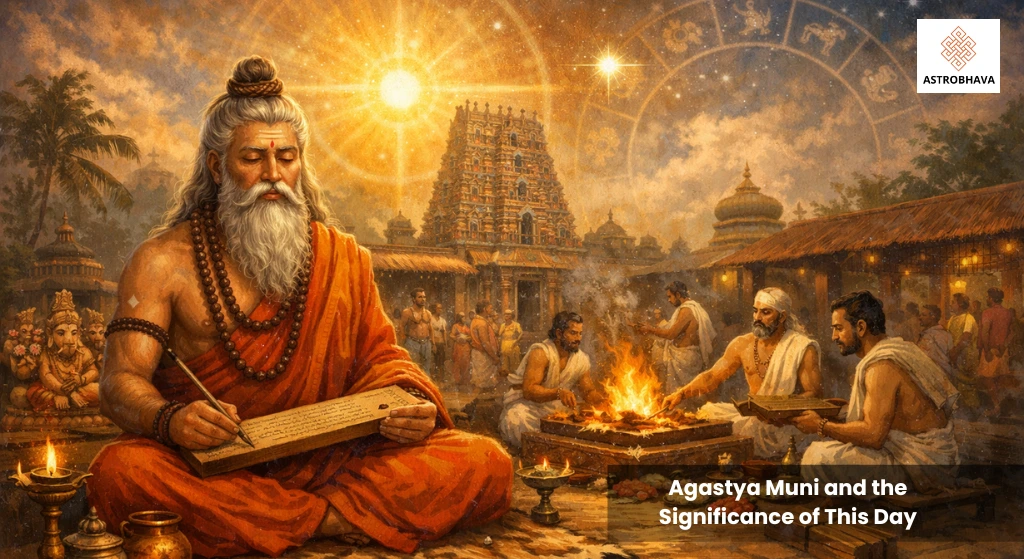 Agastya Muni and the Significance of This Day
You can’t talk about Nadi Astrology without talking about Sage Agastya — arguably the most revered Nadi Seer. And interestingly, April 14 carries special significance in relation to Agastya as well.
In Tamil tradition, this period — around the Tamil New Year — is when special prayers and rituals are performed in honor of the sages who composed the Nadi Granthas. Many Nadi readers and scholars believe that the spiritual connection to these sages is strongest during this time because of the alignment of cosmic and earthly energies.
Think of it like trying to call someone on the phone. The connection is always there theoretically, but on April 14, the signal is at full bars.
Several prominent Nadi Astrology centers across Tamil Nadu — particularly in Vaitheeswaran Koil, the heartland of Nadi Astrology — observe special rituals on this day. Astrologers report that leaf identifications are more accurate, readings flow more smoothly, and seekers experience a higher degree of resonance with what’s revealed.
🌟 Struggling to understand your life’s purpose or facing repeated obstacles?
Why Seekers Get More Accurate Readings on April 14
This is the practical question most people have: does the date of the reading actually affect its accuracy?
According to experienced Nadi astrologers — and this aligns with broader Vedic astrology principles — yes, it does, and here’s the explanation that makes logical sense even to skeptics.
- The reader’s intuitive capacity is heightened. Nadi astrologers spend years, sometimes decades, honing their sensitivity to cosmic energy. On high-energy days like April 14, their ability to locate the correct leaf and interpret it is sharpened. It’s similar to how a musician performs better in an acoustically rich concert hall versus a dampened room.
- The seeker’s receptivity is higher. On astrologically significant days, human beings are more open — whether they know it or not. The mind is naturally quieter, the ego slightly less defensive, and the soul more willing to receive truth. This allows the reading to penetrate more deeply and be received more clearly.
- The karmic window is widest. Vedic astrology operates on the principle of karma flowing through time. On Mesha Sankranti, the karmic record of the previous year has closed, and the new year’s record is just beginning. This transitional moment is when karmic truths are most legible — and Nadi leaves, being records of karmic destinies, respond to this clarity.
April 14 and the 12 Rashis — How Each Sign Benefits
Another reason April 14 is particularly powerful for Nadi Astrology Readings is that the Sun’s entry into Aries affects all twelve zodiac signs simultaneously. Each Rashi (sign) experiences a shift in planetary influences, which means everyone — regardless of their birth sign — is entering a new energetic chapter.
This is why a reading taken on or around April 14 captures a uniquely complete picture. It reflects not just where you’ve been, but where the cosmic winds are blowing for the next twelve months. A Nadi reading taken at this point becomes a roadmap for the entire year ahead, not just a snapshot of current circumstances.
What Happens in Vaitheeswaran Koil on April 14?
If you’ve never heard of Vaitheeswaran Koil, it’s a small town in Tamil Nadu that is considered the global epicenter of Nadi Astrology. The temple town is dedicated to Lord Shiva in his form as the healer, and the Nadi tradition here goes back centuries.
On April 14, this town comes alive in a way that’s hard to describe unless you’ve witnessed it. Thousands of seekers from across India and around the world converge here. The Nadi reading centers open early. There are special pujas (ritual worship) performed at the temple. And the astrologers — many of whom are hereditary custodians of the ancient leaves — perform their work with an almost meditative focus.
It is believed that on this day, even those who have been searching for their leaf for years may finally find it. There are countless accounts of individuals who traveled to Vaitheeswaran Koil on the Tamil New Year and experienced breakthroughs in their reading that they hadn’t found in previous attempts.
🌿 Can’t travel to Vaitheeswaran Koil?
How to Prepare for a Nadi Reading on April 14
If you’re planning to get a Nadi Astrology Reading on this powerful day, preparation matters. Here’s what seasoned seekers recommend:
Start a few days before:
- Reduce consumption of non-vegetarian food and alcohol. Keeping the body lighter helps spiritual sensitivity.
- Spend a few minutes in meditation or quiet reflection each morning, focusing on what questions you truly want answered.
- Write down your most pressing life questions — career, relationships, health, spiritual path — so you’re clear when the reading begins.
On the day itself:
- Wake up early and observe silence for at least the first hour of the morning if possible.
- Take a bath and wear clean, preferably light-colored clothes — this is traditional practice before any sacred astrological activity.
- Approach the reading with an open heart, not just an analytical mind. Nadi is a sacred system; it rewards humility.
After the reading:
- Give yourself time to process. Don’t rush into judgments. Some of what’s revealed may make perfect sense immediately; other parts may take weeks to integrate.
- If remedies are suggested (and they often are in Nadi readings), follow them with sincerity. The timing of April 14 means remedies begun on this day carry amplified efficacy.
Learn more about Nadi Astrology and how it reveals your life secrets
The Science Behind Sacred Timing
For those of you who like to bridge the ancient and the modern, here’s something interesting to chew on.
Chronobiology — the study of how biological and psychological processes are influenced by time cycles — confirms what Vedic sages knew intuitively: timing matters. Just as the human body is governed by circadian rhythms, lunar cycles affect tidal patterns and human mood, and seasons shift our psychological and physiological states, astrological cycles create measurable shifts in consciousness.
April 14 sits at the intersection of multiple cycles: the solar year, the Vedic calendar, the Tamil cultural calendar, and the agricultural cycle (it also marks harvest festivals across South and Southeast Asia — Baisakhi in Punjab, Bohag Bihu in Assam, Vishu in Kerala, Songkran in Thailand). The fact that so many ancient cultures independently recognized this date as a moment of cosmic renewal is not coincidence — it’s convergence of observed wisdom.
For Nadi Astrology Readings, this convergence creates what you might call an optimal signal window. The cosmos is at its most organized, and in that organization, individual destiny becomes most legible.
Common Myths About Nadi Astrology — Debunked
Since we’re covering this topic thoroughly, let’s clear up some misconceptions that often stop people from accessing this profound system.
Myth 1: Nadi Astrology is only for Hindus. Not true. The leaves speak of souls, not religions. Seekers from every faith and background have received meaningful readings.
Myth 2: The readings are generic and could apply to anyone. Legitimate Nadi readings are specific to an individual — identified through thumbprint and confirmed through a question-and-answer process where the astrologer mentions details about your life that you verify. It’s remarkably precise when done authentically.
Myth 3: You can only get a Nadi reading in person in Tamil Nadu. Online Nadi readings facilitated by authentic centers have become reliable and widely accessible. The leaf exists; what matters is connecting with verified readers.
Myth 4: It’s all predetermined, so what’s the point? Nadi readings don’t just reveal fate — they reveal karma and offer remedies to shift unfavorable patterns. The system is fundamentally empowering, not fatalistic.
🔮 Tired of feeling stuck despite working hard?
Conclusion: Don’t Let This Day Pass Without Intention
April 14 is not just another date on a crowded calendar. It is, by the testimony of ancient sages, living Nadi astrologers, and thousands of seekers across generations, the most powerful day to receive a Nadi Astrology Reading. The Sun’s reset into Aries, the Tamil New Year’s spiritual charge, the heightened receptivity of astrologers and seekers alike, the karmic window opening for the new year — all of it converges on this one remarkable day.
If you’ve been sitting on the fence about getting a Nadi reading — wondering if it’s real, if it’s for you, if the timing is right — consider this your cosmic nudge. April 14 is coming, and the ancient wisdom encoded in those palm leaves has been waiting, perhaps for a very long time, for precisely you to arrive.
Take the step. Ask the questions you’ve been afraid to ask. Let the leaves speak.
Frequently Asked Questions (FAQs)
Q1. What exactly makes April 14 more powerful for Nadi Astrology Readings than other days?
April 14 marks Mesha Sankranti — the Sun’s entry into Aries and the Vedic/Tamil astrological new year. This is when cosmic energy is at its most organized and receptive, making karmic patterns most visible and Nadi readings most accurate.
Q2. Can I get a Nadi Astrology Reading online on April 14, or do I need to travel to Tamil Nadu?
Authentic online Nadi readings are available through reputable centers like AstroBhava. The geographical distance doesn’t diminish the reading’s accuracy when working with verified, traditional readers.
Q3. How long does a Nadi Astrology Reading typically take?
A standard reading takes anywhere from 45 minutes to 2 hours, depending on the chapters being read. The initial chapter covers general life predictions; additional chapters cover specific areas like career, marriage, health, and spiritual path.
Q4. What do I need to bring or prepare for a Nadi Reading?
Primarily, your thumbprint (right thumb for males, left for females). It’s also helpful to have your questions ready and to approach the session with an open mind. Fasting or eating lightly beforehand is recommended by many traditional practitioners.
Q5. Is Nadi Astrology 100% accurate?
Nadi Astrology, when accessed through authentic centers and trained readers, is remarkably accurate — particularly in revealing past events the reader has no prior knowledge of. Future predictions are karmic probabilities, not fixed absolutes, and can be modified through the remedies suggested in the reading.
Q6. What is the difference between Nadi Astrology and regular Vedic Astrology?
Vedic Astrology is a calculated system based on planetary positions at birth. Nadi Astrology involves physically locating a pre-written palm leaf that contains your specific life’s record. The two can complement each other beautifully.
Q7. Are the remedies suggested in Nadi Readings effective?
Most seekers who follow their prescribed remedies — which may include temple visits, charitable acts, mantras, or specific rituals — report significant positive shifts. Remedies begun on auspicious days like April 14 are believed to carry additional potency.
Q8. How do I know if the Nadi reader I’m consulting is authentic?
Look for readers with hereditary lineage in Nadi traditions, transparent processes for leaf identification, verifiable testimonials, and no pressure to purchase multiple additional services. Platforms like AstroBhava vet their Nadi astrologers rigorously to ensure authenticity.