Hindu cosmology describes time as four successive ages—Satya, Treta, Dvapara and Kali—each shorter and spiritually denser than the one before. Kaliyuga, the age we inhabit, is portrayed in the Vishnu Purana and the Bhagavata Purana as a period when adharma thrives, attention shortens, and the felt link between the human and the divine grows thin. The same texts that map the difficulty also name a refuge suited to it.
That refuge is Hanuman. The question is not whether other deities are less divine—they are not—but why tradition so consistently points the Kaliyuga devotee toward this particular figure. The answer rests on his status as a Chiranjeevi, on a specific cluster of protective qualities, and on forms of worship simple enough for an age that cannot sustain the long austerities of earlier yugas.
What follows is the scriptural and practical case for Hanuman as the protector most closely matched to Kaliyuga’s conditions—what the tradition prescribes and what sincere practice has long meant, not a forecast of any particular result.
What the Puranas Say About Kaliyuga
In the classical account, each yuga declines in dharma. Satya is marked by truth and long life; Treta and Dvapara still support elaborate yagna and disciplined sadhana. Kaliyuga is described as the age in which unrighteousness gains ground, mental focus weakens, lifespan shortens, and negative influences find easier entry into ordinary life.
The Puranas do not leave the devotee without a path. They repeatedly emphasise nama-smarana—remembrance of the divine name—and accessible devotion over prolonged forest renunciation. Within that prescription, Hanuman occupies a special place: not as a replacement for Vishnu, Shiva or Devi, but as the figure whose mode of availability fits an age of distraction and fear. Understanding Kaliyuga’s symptoms is the first step toward understanding why his worship is urged so strongly in this cycle.
The Divine Mandate: Hanuman as Chiranjeevi
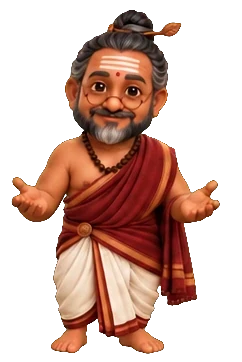
Hanuman is counted among the Chiranjeevis—the immortal beings who remain on earth across the yugas. After Rama’s victory he did not withdraw to a distant realm. The Ananda Ramayana and related Puranic strands record Rama’s blessing that Hanuman shall remain so long as Rama’s story is told and remembered. Because the Ramayana continues to be recited daily in countless homes, tradition holds that Hanuman’s presence on earth is unbroken by divine decree.
This is more than poetry. Other deities are invoked from their own spheres; Hanuman is described as stationed in the physical realm with a standing assignment to respond to devotees. The image often used by teachers is simple: one may revere a distant general, yet the sentry at the door is the one who stands watch tonight. That theological weight—immortality plus earthly station—is the foundation of his role as Kaliyuga’s protector.
astrobhava.com
The Refuge Matched to This Age
Why tradition points Kaliyuga toward Hanuman
- 4 YUGASSatya, Treta, Dvapara, Kali
- CHIRANJEEVIimmortal, stationed on earth
- 40 VERSESthe Hanuman Chalisa
- MANGAL · SHANIprincipal weekdays observed
The Classical Reasoning
- Counted among the Chiranjeevis
- Rama's blessing while his story is told
- Stationed in the physical realm, not a distant sphere
- Sankat Mochan, remover of troubles
- Treated as a conduit to Rama's grace
- Chalisa: evil spirits dare not draw near
Why the Mode of Worship Changed
Earlier yugas
- Truth and long life in Satya
- Elaborate yajna, disciplined sadhana
- Complex shrauta rites
- Years of forest renunciation
Kaliyuga
- Adharma gains ground
- Attention and focus weaken
- Nama-smarana emphasised
- No Sanskrit scholarship required
Simple Ways Tradition Invites His Protection
- Begin the day with the name — Jai Hanuman
- Recite the Chalisa once daily
- Keep his murti with direction and cleanliness
- Offer red sindoor and mustard oil
- Bajrang Baan reserved for acute distress
Under a heavy Shani period, tradition prescribes Saturday worship as support within karma — not a bargain for a fixed result
Regularity and sincerity, not intensity for its own sake
nama · chalisa · seva
ASTROBHAVA.COMVedic rituals, never a group ceremony, telecast live
The Qualities Kaliyuga Actually Needs
Strength alone does not explain the emphasis. Tradition attributes to Hanuman a combination of qualities that map directly onto Kaliyuga’s characteristic troubles.
Mastery over fear and malevolent influence. The Hanuman Chalisa of Tulsidas, composed for ordinary devotees in a turbulent phase of this age, contains the well-known line that ghosts and evil spirits do not approach where Hanuman’s name is sounded. Across regions, households under spiritual distress have long turned to his nama and Chalisa as a protective practice. In an age when dark and unsettled energies are said to be more active, this dimension of his worship is central.
Channel of Rama’s grace. Hanuman’s bhakti is not only an emotional ideal; it is treated as a cosmic conduit. Because he carries Rama constantly in his heart, approaching Hanuman is traditionally understood as opening a direct path to Rama’s grace—valuable in an age when unmediated connection feels harder to sustain.
Courage and inner steadiness. Kaliyuga’s sharpest weapons are often mental: anxiety, confusion, self-doubt and loss of faith. As Sankat Mochan, the remover of troubles, Hanuman is invoked specifically for these inner obstacles. Devotees seek not spectacle but resilience, clarity and the courage to face what the day brings.
Hanuman, Shani and Planetary Hardship
In Jyotish, Shani (Saturn) is the graha most associated with delay, karmic weight and prolonged difficulty—pressures that feel especially heavy in Kaliyuga. A well-known traditional narrative recounts Hanuman overpowering Shani, after which Shani is said to deal more gently with Hanuman’s devotees. This is one reason Saturday is sacred to both, and why Hanuman temples fill on Shanivar.
For anyone examining a running Sade Sati or a hard Shani dasha, classical remedy lists routinely include Hanuman worship—Chalisa on Saturdays, oil offerings, and fire rites offered in his name. You can also track where Saturn is moving now through the house’s notes on the Saturn transit. This is the path tradition prescribes when Shani’s influence weighs on a chart; it is support within karma, not a claim to cancel it.
Where a full fire offering is sought, the Hanuman Homam is the rite the ashram priests perform for protection, courage and the pacification of fear—conducted at the Yagna Ashram and selected temples, and telecast live to devotees wherever they live.
The Hanuman Chalisa: Accessible Power for This Age
Tulsidas wrote the Hanuman Chalisa in the sixteenth century so that it would need no Sanskrit scholarship, no costly materials and no elaborate procedure—forty verses of devotion available to anyone who can speak them. That accessibility is itself a theological statement. The long meditations, complex shrauta rites and years of renunciation suited to earlier yugas are acknowledged to lie beyond most people now. Hanuman’s compassion, tradition says, meets the devotee through the simplest acts: his name, his Chalisa, a sincere visit to his shrine.
Teachers across sampradayas have long treated the Chalisa as a compact spiritual kit for Kaliyuga—covering protection, steadiness, relief from fear and the turning of the mind toward liberation. For those building a daily practice, guidance on posture, breath and pronunciation is set out in the house’s note on how to chant a mantra correctly. Consistency matters more than display.
Guardian of Dharma, Not Only of the Individual
Hanuman’s role is not limited to private safety. In Treta Yuga he served dharma by aiding Rama against Ravana—the figure of ego, arrogance and adharma. In Kaliyuga, adharma seldom arrives as a ten-headed king. It arrives quietly: dishonesty in relationships, cruelty treated as normal, the slow fraying of the values that hold families and communities.
To invoke Hanuman is, in the traditional reading, to call on the force that has always stood against those tendencies, in whatever form they take. That is why wrestlers, students, householders and people in public life have all found him relevant to their particular struggles. He transcends a single role while embodying strength, loyalty, service and fearlessness together.
Rites grouped under protection and the clearing of negative influence sit in the same stream: the house performs them as traditional support for devotees who wish to place their household under that guardian ideal, without naming any particular worldly result.
Simple Ways Tradition Invites His Protection
No complete overhaul of life is required to begin. Time-tested steps include:
- Begin the day with the name. Before other demands claim attention, a quiet “Jai Hanuman” or “Jai Bajrangbali” sets the day’s intention toward protection and steadiness.
- Recite the Chalisa. Once daily is the standard rhythm; Tuesday and Saturday are especially observed. When forty verses are not possible, the opening doha recited with sincerity still holds the practice.
- Keep his murti or image with care. A traditional household measure places Hanuman with attention to direction and cleanliness at the threshold or shrine, as a mark of the home’s orientation.
- Offer sindoor and oil. Red sindoor and mustard oil are his customary offerings; a simple Tuesday offering at home or at a temple builds the relationship over time.
- Turn to the Bajrang Baan in acute distress. This hymn is reserved in tradition for moments of sharp fear, crisis or sensed spiritual attack—treated as a direct and forceful call, not as casual daily reading.
Auspicious weekdays and tithi windows for any deeper vow can be checked on the daily panchang for one’s own city. The point is regularity and sincerity, not intensity for its own sake.
Questions devotees ask
The AstroBhava Editorial Desk chooses the topics for this blog and decides what is published.