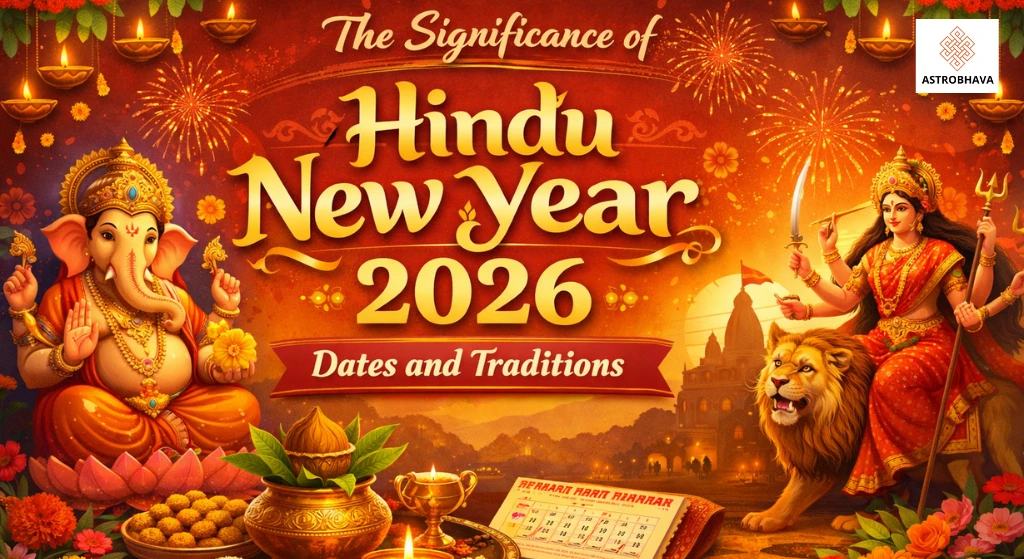
Every year, millions of Hindus across the world mark the beginning of a new cycle — not on January 1st, but according to ancient lunar and solar calendars that have guided communities for thousands of years. Hindu New Year 2026 is approaching, and whether you’re celebrating Ugadi in Karnataka, Vishu in Kerala, or Baisakhi in Punjab, the essence remains the same: renewal, gratitude, and spiritual intention. This article walks you through everything you need to know — dates, rituals, regional customs, and how to make your celebration genuinely meaningful.
1. Introduction: Welcoming Hindu New Year 2026
1.1. What Is Hindu New Year and Why Does It Matter?
Hindu New Year isn’t a single date on a universal calendar. It’s a collection of regional celebrations rooted in the Hindu lunar and lunisolar calendar systems. These mark the start of a new Samvat — a year-cycle tied to cosmic movements, agricultural seasons, and spiritual rhythms. For practicing Hindus, this isn’t just a cultural holiday. It’s a moment to reset intentions, seek blessings, and align daily life with dharmic principles.
1.2. Overview of Hindu New Year 2026 and Its Cultural Importance
What makes Hindu New Year 2026 particularly significant is the confluence of astrological transitions happening this year. The Vikram Samvat 2083 begins with notable planetary positions that astrologers say amplify the importance of starting the year with proper ritual and intention. Across India and globally, communities are preparing early — and that preparation itself is part of the tradition.
1.3. How Astrobhava Helps You Celebrate Meaningfully
At Astrobhava, we’ve spent years helping families connect with the deeper meaning behind Hindu festivals. Our astrologers, Panchanga experts, and cultural guides work together to give you personalized, accurate guidance — not generic advice. Whether you’re a first-generation immigrant trying to pass traditions to your children or a devout practitioner seeking precise muhurta timings, Astrobhava has you covered.
Start your new year with the divine blessings of Ganpathi
2. Hindu New Year 2026 Dates: A Regional Overview
2.1. Ugadi and Gudi Padwa: Dates for South and West India
Ugadi — celebrated in Karnataka, Andhra Pradesh, and Telangana — and Gudi Padwa in Maharashtra both fall on the first day of Chaitra Shukla Pratipada. In 2026, this date lands on March 19th. Both festivals mark the start of the Hindu lunisolar calendar and are celebrated with elaborate rituals, special dishes, and the reading of the Panchanga. The Gudi — a decorated pole raised outside homes — symbolizes victory and prosperity for the year ahead.
2.2. Vishu and Puthandu: New Year Dates in Kerala and Tamil Nadu
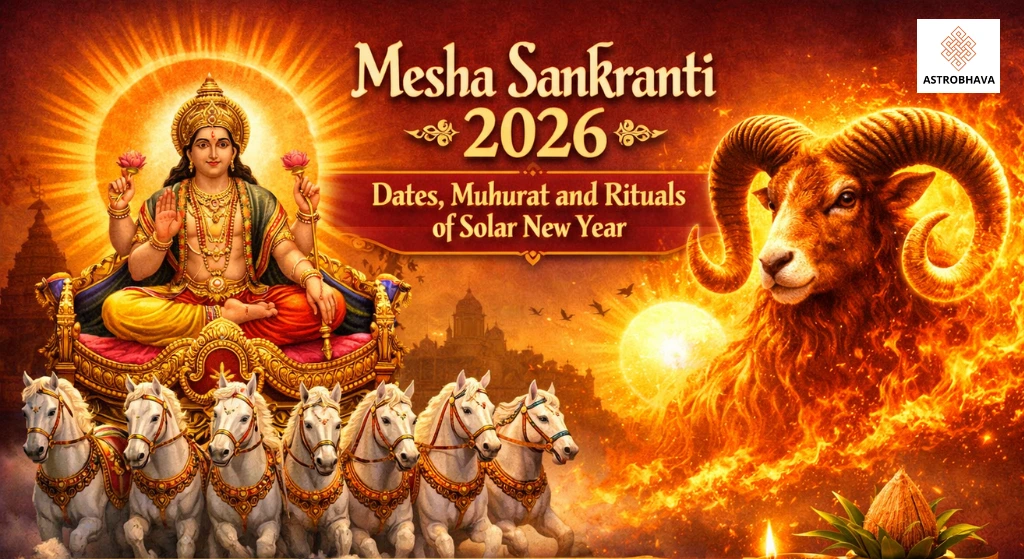
Kerala’s Vishu and Tamil Nadu’s Puthandu follow the solar calendar, typically falling in mid-April. In 2026, both are expected around April 14th. Vishu is famous for the Vishukkani — an auspicious arrangement of fruits, flowers, gold, and a lit lamp that devotees view first thing in the morning. Puthandu, meanwhile, features the Kanni sight and elaborate kolam decorations outside homes.
2.3. Baisakhi and Bohag Bihu: North and Northeast Indian New Year Dates
Baisakhi in Punjab and Bohag Bihu in Assam also fall around April 13–14, 2026. Baisakhi carries immense historical weight — it marks both the Sikh New Year and the founding of the Khalsa in 1699. Bohag Bihu is Assam’s harvest festival and new year combined, celebrated with the Bihu dance, traditional music, and feasting. These aren’t just religious events — they’re full cultural expressions of identity.
2.4. Vikram Samvat New Year 2026: The Pan-Indian Lunar Calendar Date
The Vikram Samvat calendar, used widely across North and Central India, places the Hindu New Year 2026 dates in mid-March. Samvat 2083 begins on March 19, 2026. This calendar, believed to have been established by Emperor Vikramaditya, is used for determining religious festivals, auspicious dates for marriages, and major life events across Hindu communities nationwide.
Over 1.2 billion Hindus worldwide observe some form of the Hindu New Year — making it one of the most widely celebrated cultural new year events on Earth, according to World Religion Database estimates (2024).
Also read about Chaitra Navaratri 2026, which coincides with Hindu New Year.
3. The Spiritual and Astrological Significance of Hindu New Year 2026
3.1. Planetary Alignments and Their Influence in 2026
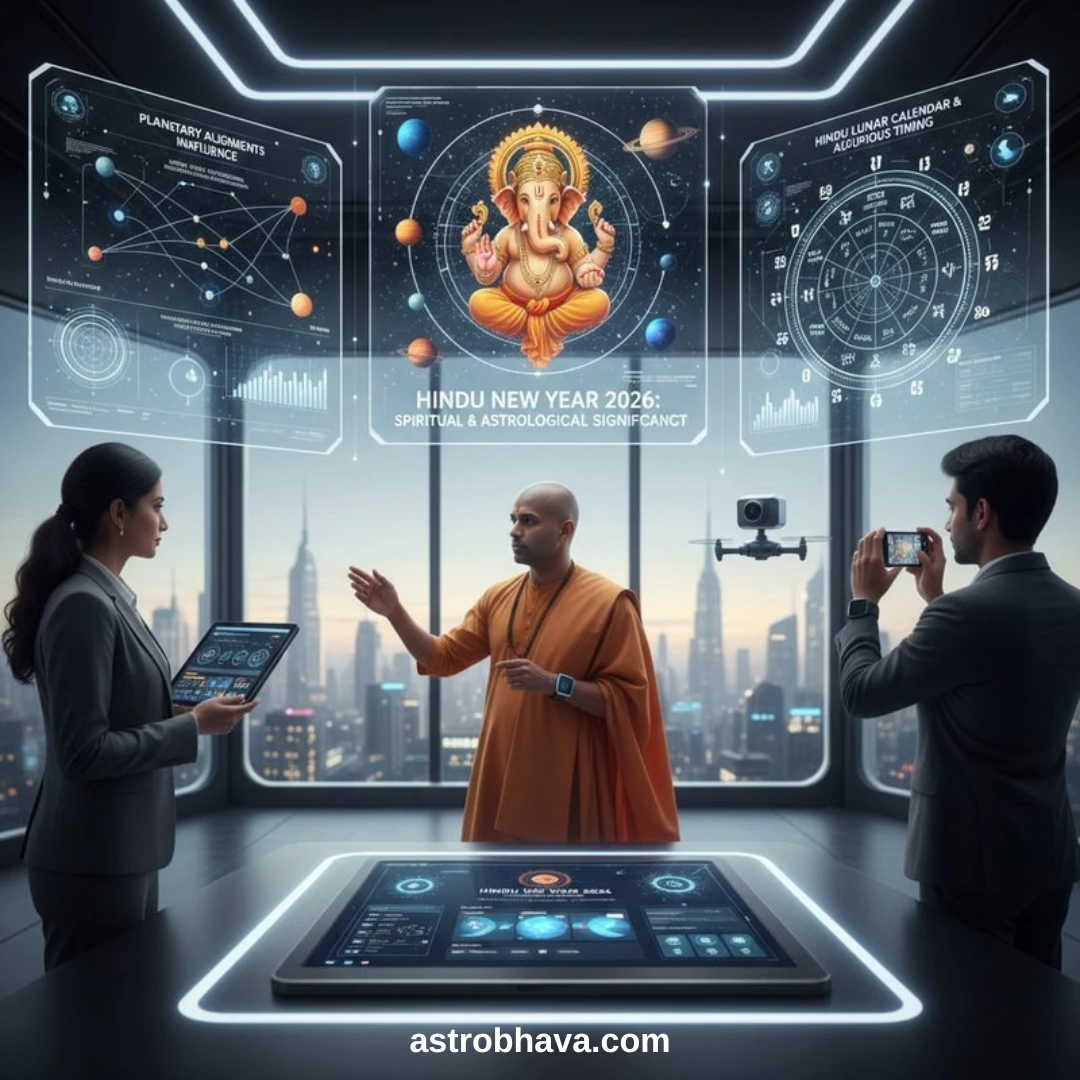
In 2026, Jupiter’s transit into Gemini creates what Vedic astrologers call a particularly favorable period for education, communication, and new ventures. Saturn’s position in Pisces adds a layer of karmic accountability. For those beginning new businesses or relationships around the Hindu New Year 2026 dates, astrologers at Astrobhava suggest this alignment supports long-term commitment over quick gains.
To neutralise planetary alignments and their effects- Explore remedies
3.2. The Role of the Hindu Lunar Calendar in Determining Auspicious Timing
The Hindu lunar calendar — the Panchanga — tracks five elements: Tithi (lunar day), Vara (weekday), Nakshatra (star), Yoga, and Karana. Together, these determine the quality of any given moment. Starting a new year ritual during a Shubha Muhurta (auspicious time window) isn’t superstition — it’s a sophisticated system developed over millennia to align human action with natural cycles.
3.3. What the New Year Panchanga Predicts for 2026
The annual Panchanga reading for Samvat 2083 indicates a year ruled by strong solar energy, favorable for agriculture, health initiatives, and spiritual practice. Communities across Andhra Pradesh traditionally hold public Panchanga readings on Ugadi morning — a custom that combines astrology, community, and celebration in one powerful ritual.
4. Hindu New Year 2026 Traditions: Rituals and Customs Across India
4.1. Puja Rituals and Prayers Performed on Hindu New Year
Morning puja on Hindu New Year typically involves offerings to Ganesha, Lakshmi, and the family deity. Lamps are lit before sunrise, incense is burned, and mantras are recited. I’ve seen families spend weeks preparing for this — not because they have to, but because the ritual itself creates a sense of sacred space that carries through the rest of the year.
4.2. Traditional Foods and Their Symbolic Meanings
Food is theology in Hindu culture. Ugadi Pachadi — a mixture of neem, jaggery, raw mango, tamarind, salt, and chili — represents the six flavors of life: bitterness, sweetness, sourness, saltiness, tanginess, and spice. You eat it all at once to symbolically accept life’s full spectrum. Tamil Puthandu features a platter called Kanni with specific items representing prosperity, knowledge, and abundance.
4.3. Decorating Homes with Rangoli, Mango Leaves, and Flowers
Mango leaf torans hung at doorways are believed to purify the air and invite positive energy — and there’s actually some botanical science behind it. Mango leaves release oxygen and have antimicrobial properties. Rangoli made from rice flour or colored powder at the entrance welcomes guests and deities alike. These aren’t just decorations. They’re intentional acts of creating sacred space.
 5. How to Celebrate Hindu New Year 2026: A Step-by-Step Guide
5.1. Preparing Your Home and Altar for the New Year Puja
Start three days before the date. Clean your home thoroughly — this is both practical and symbolic. Set up your puja altar with fresh flowers, a clean cloth, idols or images of your chosen deity, a diya, incense, and offerings like fruits and sweets. The preparation is part of the ceremony, not just the backdrop.
5.2. Performing the Morning Rituals: Abhyanga Snanam and Prayers
Abhyanga Snanam — an oil bath taken before sunrise — is a cornerstone of Hindu New Year morning rituals. Sesame oil is traditionally used for its warming properties. After bathing, wear new clothes, light the lamp, and begin prayers. The sequence matters: body purification before spiritual offering reflects the principle that external and internal cleanliness go hand in hand.
5.3. Consulting a Panchanga or Astrologer for Personalized Guidance
What most people miss is the value of a personalized Panchanga reading. A generic calendar tells you the date — an astrologer tells you the best time within that date for your specific birth chart. Astrobhava’s consultants offer exactly this service, helping you identify your personal muhurta for beginning new ventures, investments, or spiritual practices in 2026.
5.4. Celebrating with Family, Community, and Cultural Events
After morning rituals, the day opens up for community. Attend temple events, visit relatives, participate in cultural programs. Many cities now host public Ugadi or Baisakhi melas. In 2026, we’re seeing a strong trend of younger generations actively organizing these events — a genuinely encouraging sign for cultural continuity.
Seek the divine and protective power of Lord Hanuman by performing Hanuman Homam
6. Hindu New Year 2026 Celebrations Around the World
6.1. How the Indian Diaspora Celebrates the Hindu New Year Globally
From Houston to London to Sydney, Indian diaspora communities are making Hindu New Year 2026 celebrations more visible than ever. Hindu temples in the UK, US, Canada, and Australia organize elaborate programs. The Swaminarayan temples in particular run some of the most well-attended New Year events outside India, drawing thousands of attendees annually.
6.2. Virtual and Community Events Planned for Hindu New Year 2026
Post-pandemic, virtual celebration formats have stuck around — and honestly, they’ve been a gift for diaspora families. Live-streamed Panchanga readings, online puja sessions, and virtual cultural performances allow participation regardless of geography. Astrobhava hosts annual live sessions for Hindu New Year 2026 celebrations that attract participants from over 30 countries.
6.3. Incorporating Modern Touches While Honoring Ancient Traditions
Here’s the thing — tradition doesn’t have to be frozen in time. Families are now creating digital Panchanga journals, sharing Vishukkani arrangements on social media, and using apps to find precise muhurta timings. The core remains intact. The delivery evolves. That balance is exactly what keeps these traditions alive across generations.
7. Common Mistakes to Avoid During Hindu New Year 2026 Celebrations
7.1. Ignoring Regional Differences in Dates and Customs
One of the most common errors I’ve seen is conflating all Hindu New Year celebrations into one date. A Tamil family celebrating Puthandu on April 14th and a Maharashtrian family celebrating Gudi Padwa on March 19th are both correct — for their traditions. Assuming otherwise causes real confusion and, sometimes, unintentional disrespect.
7.2. Skipping the Panchanga Reading and Auspicious Muhurta
Rushing through the day without consulting the Panchanga is like building a house without checking the foundation. The muhurta — auspicious time window — exists for a reason. Beginning your new year rituals during an inauspicious Tithi or during Rahu Kalam can undermine the positive energy you’re trying to cultivate. Take ten minutes to check. It genuinely matters.
7.3. Overlooking the Spiritual Essence Behind the Festivities
Festivals can become performances — elaborate, beautiful, and hollow. The real power of Hindu New Year 2026 traditions lies in sincere intention. Light the lamp because you mean it. Eat the Pachadi and actually reflect on accepting life’s mixed flavors. Teach children the why, not just the what. That’s what transforms ritual into transformation.
A 2023 Pew Research study found that 72% of Hindus globally consider religious festivals extremely important to their cultural identity — underscoring why authentic, meaningful celebration matters far more than elaborate but hollow observance.
8. Frequently Asked Questions About Hindu New Year 2026
8.1. What Is the Exact Date of Hindu New Year 2026?
There isn’t one single date — and that’s intentional. Ugadi and Gudi Padwa fall on March 19, 2026. Baisakhi and Puthandu fall around April 13–14, 2026. Vikram Samvat 2083 also begins March 19, 2026. The date depends on your regional tradition and the calendar system your community follows. Astrobhava’s regional calendar tool can help you identify the correct date for your tradition.
8.2. Which Hindu New Year Traditions Are Most Widely Observed?
Ugadi, Gudi Padwa, Baisakhi, Vishu, and Puthandu are the most widely observed Hindu New Year 2026 traditions across India. Ugadi and Gudi Padwa collectively reach the largest populations in South and West India. Baisakhi has strong global recognition due to the Sikh diaspora. All involve morning rituals, special foods, new clothing, and community gatherings.
8.3. How Is Hindu New Year 2026 Different From the Gregorian New Year?
The Gregorian New Year on January 1st is primarily a civil calendar marker with largely secular celebrations. Hindu New Year is rooted in astronomical, agricultural, and spiritual cycles. It carries Panchanga readings, deity worship, family rituals, and astrological guidance. The intention is fundamentally different — one marks a date, the other marks a cosmic transition.
8.4. Can Non-Hindus Participate in Hindu New Year 2026 Celebrations?
Absolutely. Hindu culture has always been welcoming to curious, respectful guests. Attending a community Ugadi event, tasting Pachadi, or watching a Vishu Kani arrangement are all experiences open to anyone. The key is approaching with genuine curiosity and respect — not treating sacred rituals as exotic entertainment. Most Hindu families are genuinely delighted to share their traditions.
8.5. How Can Astrobhava Help Me Plan My Hindu New Year 2026 Celebrations?
Astrobhava offers personalized Panchanga consultations, muhurta timing for rituals, birth-chart-based guidance for the year ahead, and curated celebration guides for each regional Hindu New Year tradition. Whether you need a 30-minute astrologer consultation or a comprehensive annual forecast for Samvat 2083, our team is ready. Visit Astrobhava to book your Hindu New Year 2026 session today.
- Personalized Muhurta Timing — Get your ideal ritual start time based on your birth chart
- Regional Celebration Guides — Detailed customs for Ugadi, Vishu, Baisakhi, and more
- Annual Panchanga Forecast — What Samvat 2083 holds for your career, health, and relationships
- Live Virtual Sessions — Join Astrobhava’s global Hindu New Year 2026 celebrations online
- Family Puja Guidance — Step-by-step ritual support for families celebrating at home