Have you ever felt like no matter how hard you pray, something invisible keeps pulling you back — financially, emotionally, or spiritually? If yes, then Varuthini Ekadashi might just be the divine reset you’ve been waiting for. This is one of those rare sacred days in the Hindu calendar that goes far beyond simple fasting. It’s a full-blown spiritual shield — and if you observe it right, the results can be life-changing.
So let’s sit down and talk everything about Varuthini Ekadashi 2026 — what it is, when it falls, why it matters more than most people realise, and exactly how to observe it for maximum blessings.
What Is Varuthini Ekadashi?
Before we get into the dates and rituals, let’s understand what “Varuthini” actually means. The word comes from Sanskrit and translates to “one who protects” or “armoured.” So Varuthini Ekadashi is literally the Ekadashi that wraps you in divine armour — protection from negativity, bad karma, financial struggles, and spiritual stagnation.
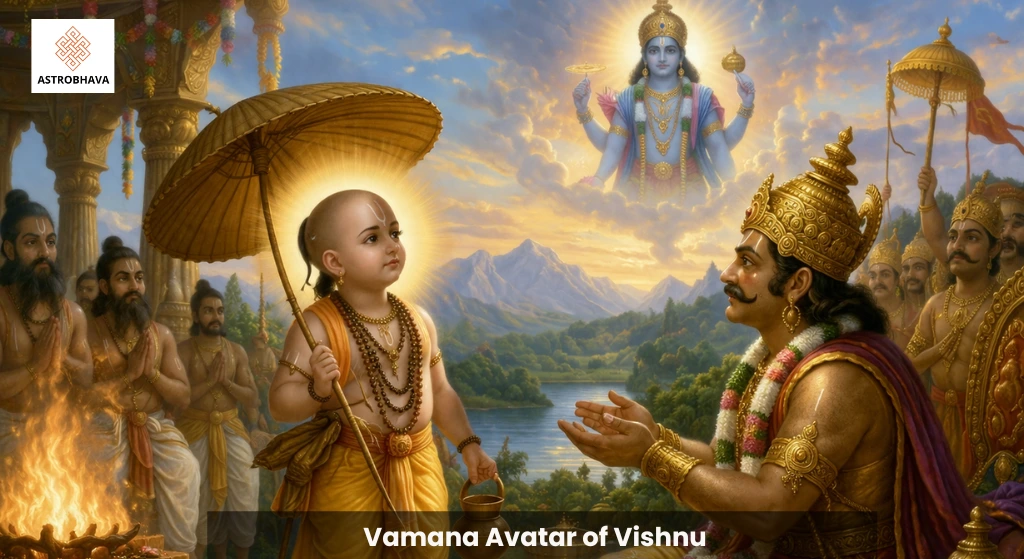
Varuthini Ekadashi falls on the 11th day of Krishna Paksha (the waning phase of the moon) during the month of Vaishakha, and it is dedicated to Lord Vishnu’s fifth incarnation, Lord Vamana. This day is observed with deep devotion, fasting, prayers, and acts of charity — all aimed at invoking Lord Vishnu’s divine grace.
The greatness of Varuthini Ekadashi is extolled in the Padma Purana, where Lord Krishna narrates its glory to King Yudhishthira. So yes, this isn’t just folklore. It’s deeply rooted in ancient scripture.
Varuthini Ekadashi 2026: Date and Timings
Let’s get straight to the most-searched question — when exactly is Varuthini Ekadashi 2026?
Varuthini Ekadashi falls on Monday, April 13, 2026. It is the first Ekadashi of the month of Vaishakh, observed during the Krishna Paksha.
Here’s a quick breakdown of the important timings:
Ekadashi Tithi Begins: 11:24 PM on April 12, 2026 Ekadashi Tithi Ends: 9:32 PM on April 13, 2026 Fasting Day: Monday, April 13, 2026
The Varuthini Ekadashi 2026 Parana time (fast-breaking window) begins at 6:11 AM and ends at 8:42 AM on April 14, 2026.
Devotees should break their fast only after the Hari Vasara end moment at 06:54 AM on April 14, within the prescribed window ending at 08:31 AM.
One important thing to note — Ekadashi fasting always begins with sunrise and mostly ends after the next day’s sunrise. Devotees also skip dinner made of all sorts of grains on the previous night to avoid any residual food in their stomach when they begin fasting at sunrise.
The Mythology Behind Varuthini Ekadashi
Every Ekadashi has a story, and Varuthini’s is particularly powerful. There are actually two legends commonly associated with this day, and both are worth knowing.
The Story of King Mandhata: According to the Padma Purana, Lord Krishna narrated the story of King Mandhata to Yudhishthira. The king observed Varuthini Ekadashi with complete devotion and dedication, and as a result, he attained heaven and was freed from all his accumulated sins. His story became a blueprint for devotees seeking liberation.
Lord Shiva’s Fast: According to Hindu mythology, Lord Shiva’s rage led to the beheading of Lord Brahma’s fifth head. Lord Brahma cursed Lord Shiva, who then resorted to severe fasting and penance to get rid of the curse. It was the day of Varuthini Ekadashi when Lord Shiva fasted and freed himself from the clutches of the curse.
If even Lord Shiva observed this fast to cleanse himself of a great sin, imagine what it can do for us ordinary mortals. That’s the kind of spiritual gravity this day carries.
Why Is Varuthini Ekadashi So Significant?
You might wonder — there are 24 Ekadashis in a year, so what makes this one special? Quite a lot, actually.
Observing this vrat is believed to confer good fortune, wealth, and prosperity, act as a shield against all evil and misfortunes, and liberate devotees from the cycle of birth and death.
Observing Varuthini Ekadashi is believed to help devotees gain redemption from sins and evil deeds, succeed in attaining Moksha, and receive divine blessings from deities and ancestors.
While describing this fast, Krishna Ji told Arjuna that the merit of the Varuthini Ekadashi fast is equal to the merit of doing penance for ten thousand years.
The significance of this day is considered greater than giving land, gold, or food in charity. It is even equated to performing 100 Kanyadaans (giving one’s daughter in marriage), which is regarded as the highest form of charity.
That’s a staggering level of spiritual merit packed into a single day of fasting and devotion.
Also, both Varuthini Ekadashi and Mohini Ekadashi in April 2026 fall on Mondays, making them particularly significant for devotees who also observe Somvar (Monday) vrats. Falling on a Monday — the day associated with Lord Shiva — adds another layer of auspiciousness to this already powerful day.
Who Should Observe Varuthini Ekadashi 2026?
Honestly? Everyone. But here are the people who can benefit the most:
- Those struggling financially — this fast is specifically known to open doors of prosperity and remove wealth-related obstacles.
- Those seeking relief from past karma — if you feel like you’re carrying the weight of past mistakes, this Ekadashi is your chance to reset.
- Young women seeking good marriage alliances — in some cultures, young women observe this fast to get suitable grooms, and observing a single day fast during this period is considered auspicious and equivalent to thousands of years of penance.
- Those on the path of moksha — if spiritual liberation is your ultimate goal, this is one of the most powerful fasting days to observe.
- Anyone dealing with negative energy or bad luck — the word “Varuthini” itself promises protection. Think of it as a divine reset button.
Seek the divine blessings of lord Vishnu on this powerful day
Fasting Rules for Varuthini Ekadashi 2026
Now let’s talk about the actual do’s and don’ts of the fast, because this is where a lot of people get confused.
The Day Before (Dashami — April 12): On the 10th tithi (Dashami), eat a single sattvic meal in the evening, avoiding tamasic foods such as onion, garlic, heavy spices, and non-vegetarian items. Set your intention (sankalpa) for the Ekadashi vrat, mentally dedicating the fast to Lord Vishnu.
On the Fasting Day (Ekadashi — April 13):
- Wake up before sunrise, ideally during Brahma Muhurat (around 4–5 AM)
- Take a holy bath and wear clean, preferably yellow or white clothes
- Set up your altar with an idol or image of Lord Vishnu
- Light a ghee lamp and incense
- Offer tulsi leaves, flowers, and fruits to the deity
- Observe a full fast — ideally without water; if not possible, fruit and milk are permitted
- Chant Vishnu Sahasranama or “Om Namo Bhagavate Vasudevaya” throughout the day
- Stay awake as long as possible through the night, engaging in bhajan and prayer
Foods Prohibited During Varuthini Ekadashi: Rice, chickpeas, black gram, lentils, betel nut, honey, and non-vegetarian food are avoided. Eating from bell metal utensils is also prohibited.
There are four types of Ekadashi fasting: Jalahar (fasting with only water), Ksheerbhoji (fasting on milk and dairy products), Phalahari (fasting on fruits only), and the complete fast. Devotees can decide the type according to their will power and physical strength.
Step-by-Step Puja Vidhi for Varuthini Ekadashi 2026
Here’s a simple, practical puja routine you can follow:
Step 1: Wake up early, preferably in Brahma Muhurat. Take a bath and wear clean clothes.
Step 2: Clean your puja space and sprinkle Gangajal (or clean water) to purify it.
Step 3: Place an idol or photo of Lord Vishnu (or Lord Vamana specifically) on your altar.
Step 4: Light a ghee diya and agarbatti (incense sticks).
Step 5: Offer yellow flowers, tulsi leaves, and fruits. Offer panchamrit (a mixture of milk, curd, honey, ghee, and sugar) if possible.
Step 6: Recite the Varuthini Ekadashi Vrat Katha (the story associated with this day).
Step 7: Chant the following mantras with devotion:
- “Om Namo Bhagavate Vasudevaya” — 108 times
- “Om Vishnave Namah”
- “Om Lakshmipataye Namah”
Step 8: Perform aarti of Lord Vishnu in the evening.
Step 9: Stay awake at night and engage in devotional singing, scripture reading, or meditation.
Step 10: Break the fast the next morning (April 14) during Parana time between 6:11 AM and 8:42 AM.
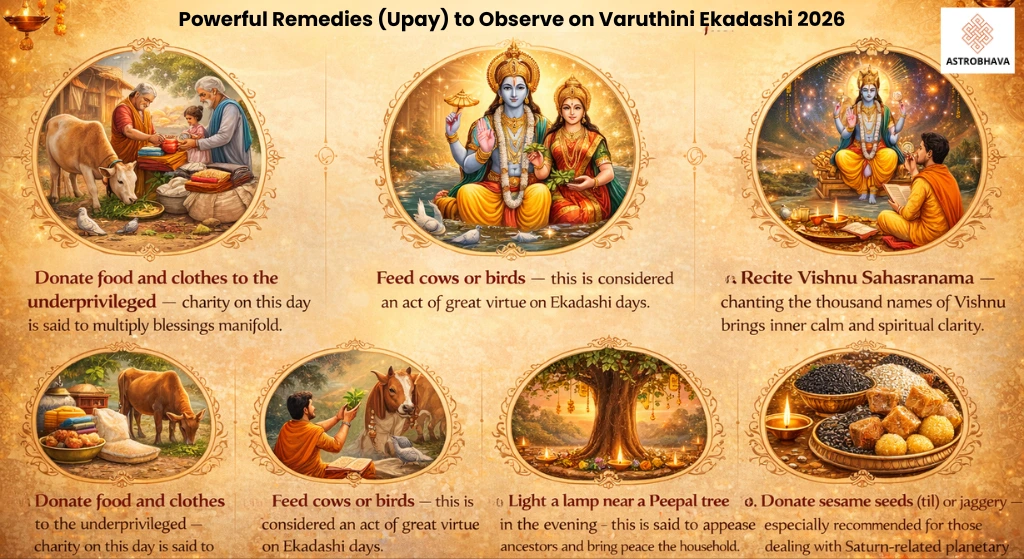 Powerful Remedies (Upay) to Observe on This Day
Beyond fasting and puja, there are some specific remedies that devotees can perform on Varuthini Ekadashi 2026 to maximise the benefits:
- Donate food and clothes to the underprivileged — charity on this day is said to multiply blessings manifold.
- Feed cows or birds — this is considered an act of great virtue on Ekadashi days.
- Offer tulsi leaves to Lord Vishnu — tulsi is the most beloved offering for Lord Vishnu.
- Recite Vishnu Sahasranama — chanting the thousand names of Vishnu brings inner calm and spiritual clarity.
- Light a lamp near a Peepal tree in the evening — this is said to appease ancestors and bring peace to the household.
- Donate sesame seeds (til) or jaggery — especially recommended for those dealing with Saturn-related planetary issues.
How to Break the Fast (Parana Vidhi)
Breaking the fast is just as important as observing it. A lot of people don’t realise that not following the Parana rules can actually reduce the merit of the fast.
Parana means the breaking of the fast. Ekadashi Parana is done after sunrise on the next day of the Ekadashi fast. Observing Parana within the Dwadashi period, which gets over before sunrise, is considered very important, as not adhering to the Dwadashi tithi is viewed as an offence.
The Parana of Varuthini Ekadashi will be performed on April 14, 2026, with the auspicious time from 6:54 AM to 8:53 AM. The Hari Vasara period will conclude at 6:54 AM on the Parana Tithi. It should be kept in mind that Ekadashi vratas are not broken during the Hari Vasara.
After breaking the fast, it’s best to eat light sattvic food — fruits, milk, and simple grain-based meals are ideal. Avoid heavy or spicy food immediately after a long fast.
Common Mistakes People Make on Varuthini Ekadashi
Let’s be honest — we’ve all been guilty of these at some point. Here’s what to avoid:
- Breaking the fast at the wrong time — never break the fast before the prescribed Parana time. And don’t miss the window either.
- Eating rice or grains — even a small amount of rice is considered a violation of the Ekadashi vrat. Stick to fruits, nuts, and milk.
- Skipping the night vigil — the night watch (Ratri Jagaran) is considered very important on Ekadashi. Try to stay awake and pray.
- Getting into arguments or negative behaviour — the spirit of the day calls for peaceful, calm, and sattvic behaviour. Arguments, gossip, and anger diminish the spiritual merit.
- Not doing charity — Varuthini Ekadashi specifically emphasises donation. Skipping it means leaving major blessings on the table.
If you miss the fast of Ekadashi by mistake, you can repent and take the resolution of Nirjala Ekadashi. Fasting and worship are completely a matter of reverence and devotion. Therefore, even if you commit any mistake during the fast due to ignorance, have full faith in your deity and apologise to him.
Varuthini Ekadashi and Astrology: The Planetary Connection
Here’s something most blogs won’t tell you — Varuthini Ekadashi 2026 carries a special planetary significance because it falls on a Monday. Monday is ruled by the Moon, which governs our mind, emotions, and inner peace. Observing a fast dedicated to Lord Vishnu (who governs preservation and balance) on a Moon-ruled day creates a powerful synergy between emotional healing and divine protection.
The Varuthini Ekadashi 2026 shubh yoga time provides a favourable planetary alignment, which promotes both spiritual development and purification activities. Fasting on this day is believed to give the same merit as donating gold or performing grand yajnas.
If you have challenging planetary placements in your Kundli — especially related to Saturn, Rahu, or Ketu — observing this Ekadashi with full discipline can help soften those influences significantly.
Conclusion
Varuthini Ekadashi 2026 is not just another fasting day on the Hindu calendar — it’s a profound spiritual opportunity. Whether you’re seeking financial stability, karmic cleansing, protection from negative forces, or simply a deeper connection with the divine, this Ekadashi offers all of it and more. Falling on Monday, April 13, 2026, with a Parana window on April 14 between 6:11 AM and 8:42 AM, this is a day that deserves your full attention and devotion.
Follow the fasting rules, perform the puja with sincerity, do a little charity, chant the Vishnu mantras, and most importantly — approach the day with a genuinely open and surrendered heart. Because at the end of the day, Lord Vishnu doesn’t weigh the size of your offerings. He weighs the depth of your bhakti.
May Varuthini Ekadashi 2026 bring you divine protection, peace, and prosperity. 🙏
FAQs About Varuthini Ekadashi 2026
Q1. When is Varuthini Ekadashi 2026?
Varuthini Ekadashi 2026 falls on Monday, April 13, 2026. The Ekadashi tithi begins at 11:24 PM on April 12 and ends at 9:32 PM on April 13.
Q2. What is the Parana time for Varuthini Ekadashi 2026?
The Parana (fast-breaking) time is from 6:11 AM to 8:42 AM on April 14, 2026. You should not break your fast before the Hari Vasara ends at 6:54 AM.
Q3. Which deity is worshipped on Varuthini Ekadashi?
Varuthini Ekadashi is primarily dedicated to Lord Vishnu, and specifically to his fifth incarnation, Lord Vamana.
Q4. Can pregnant women or sick people observe this fast?
Those with health conditions can observe a partial fast — consuming only fruits, milk, and nuts — instead of a complete fast. The intention and devotion matter most. Always consult your doctor before fasting if you have a medical condition.
Q5. What foods are strictly prohibited on Varuthini Ekadashi?
Rice, wheat, grains, chickpeas, lentils, black gram, onion, garlic, non-vegetarian food, honey, and betel nut are all prohibited. Eating from bell metal utensils is also avoided.
Q6. What is the significance of the name “Varuthini”?
The word Varuthini comes from Sanskrit and means “one who protects” or “armoured.” The vrat is believed to create a divine shield of protection around the devotee against evil, misfortune, and negative karma.
Q7. Is Varuthini Ekadashi observed differently in North and South India?
The day of observance is the same across India. The only difference is the calendar month — it falls in Vaishakha month per the North Indian Purnimanta calendar, and in Chaitra month per the South Indian Amavasyanta calendar.
Q8. What is the Vrat Katha and where is it mentioned?
The Varuthini Ekadashi Vrat Katha is narrated in the Padma Purana and the Bhavishya Purana, where Lord Krishna explains the glory of this fast to King Yudhishthira and Arjuna respectively.
Q9. Can you drink water during Varuthini Ekadashi fast?
Ideally, the fast is observed without water (Nirjala) for maximum merit. However, those who cannot manage a waterless fast can observe it with water only, or with fruit and milk, depending on their capacity.
Q10. What is the best mantra to chant on Varuthini Ekadashi?
The most powerful mantras for this day are “Om Namo Bhagavate Vasudevaya” (chanted 108 times), “Om Vishnave Namah,” and the Vishnu Sahasranama. You can also listen to or read the Vishnu Chalisa.