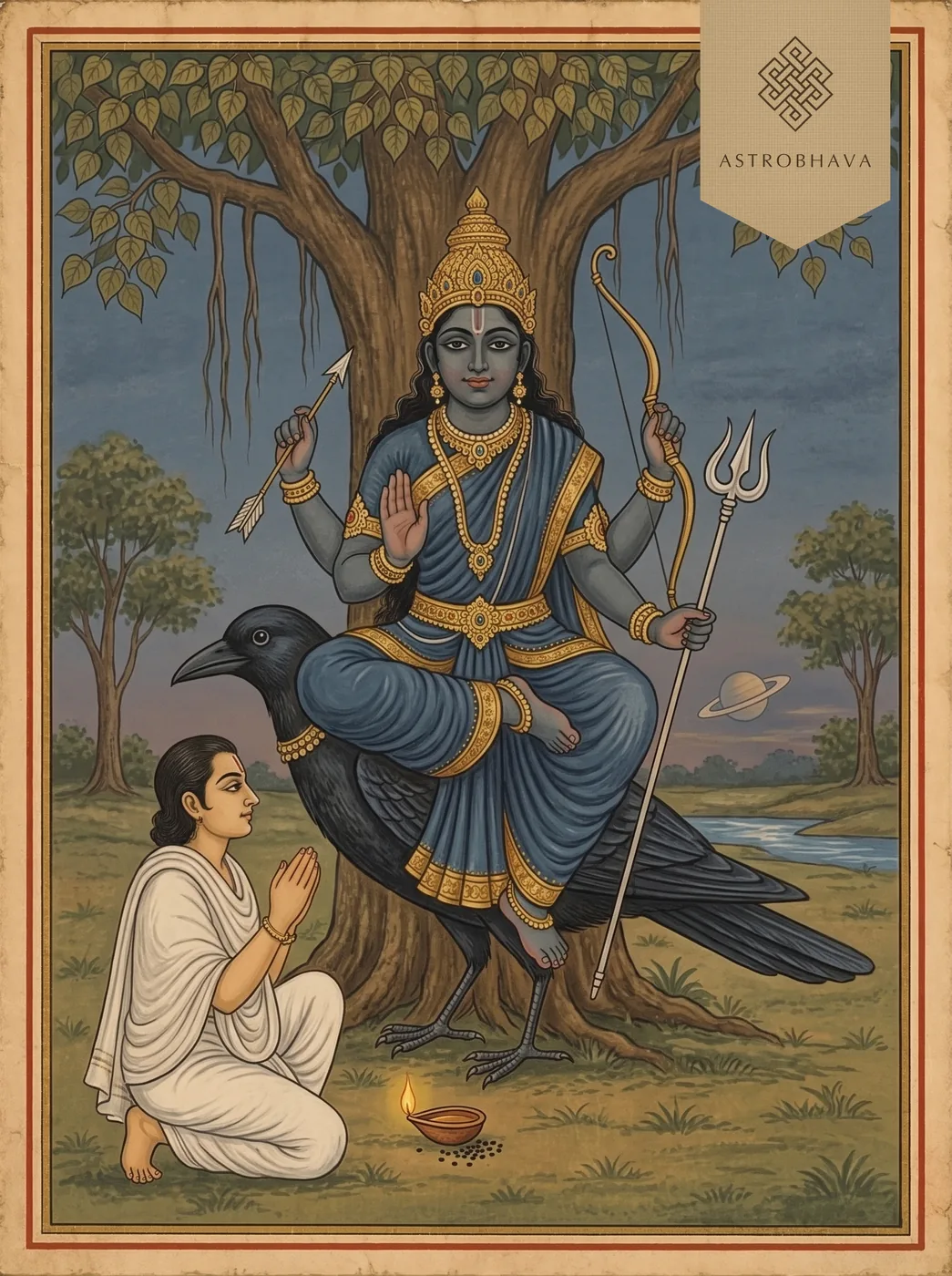
Shani Chalisa
जय गणेश गिरिजा सुवन, मंगल करण कृपाल । दीनन के दुःख दूर करि, कीजै नाथ निहाल ॥In Devanagari, Tamil, Telugu, Kannada, Malayalam and English — with the meaning of every word, and the one syllable most people pronounce wrongly.
What the Shani Chalisa is
The Shani Chalisa printed here is a Hindi devotional poem of forty chaupai couplets addressed to Shani Dev, son of the Sun and of Chhaya. Two dohas open it: the first greets Ganesha as the son of Girija, the second asks 'Ravi tanaya', the Sun's son, to guard the honour of the devotee. Chaupais 1 to 5 describe his form: four arms, a dark body, a jewelled crown, and a mace, trident and axe in his hands. Chaupais 6 and 7 give ten names, among them Pingala, Konastha, Sauri and Manda. Chaupais 10 to 26 read episodes of the Ramayana, the Mahabharata and the tale of King Vikrama as the working of Shani's period. Chaupais 27 to 35 list seven mounts and four metal 'feet' and the result the text assigns to each. Chaupai 40 names the poet as Ram Sundar, 'servant of the Lord', and the closing doha says the recitation text was prepared by Vimal. Nothing more is documented about either, and no date of composition is known.
King Vikrama, a painted bird and Raga Deepak
Chaupais 15 to 18 compress a tale told at length in the Shani Mahatmya, the devotional narrative of Shani and King Vikramaditya of Ujjain. In the usual retelling, the king's court debates which planet is the greatest, and Vikramaditya speaks lightly of Shani, who then announces that his period will rest on the king. A horse bought from a stranger carries Vikramaditya to a distant city and vanishes. Lodging in a merchant's house, he sees a bird in a wall painting come to life at midnight and swallow the pearl necklace of the merchant's daughter, Alolika. Accused of the theft, he loses his hands and feet by order of the local king and later earns his keep turning an oil-seller's press. The chalisa calls the painted bird a peacock; prose versions usually make it a swan. Release comes through music. One night he sings Raga Deepak, the raga said to light lamps by itself, and the lamps of the city begin to burn. The princess Padmasena asks to hear the singer, Shani appears and restores his limbs, the bird gives back the necklace, and the king marries the princess. According to tradition, Vikramaditya asked only that Shani spare others what he had been through, and the tale is still read on Saturdays.
The mantra, in six scripts
- जय
- jaya — victory
- गणेश
- gaṇeśa — Ganesha
- गिरिजा
- girijā — of Girija (Parvati)
- सुवन
- suvana — son
- मंगल
- maṃgala — auspiciousness
- करण
- karaṇa — bringer of
- कृपाल
- kṛpāla — merciful one
- दीनन
- dīnana — the humble
- के
- ke — of
- दुःख
- duḥkha — sorrows
- दूर
- dūra — away
- करि
- kari — having removed
- कीजै
- kījai — please make
- नाथ
- nātha — O Lord
- निहाल
- nihāla — content, fulfilled
Shani Chalisa lyrics in full
All 43 verses, in Hindi, Tamil, Telugu, Kannada, Malayalam and English, each with its meaning. Choose a script:
Download the Shani Chalisa PDFAll 43 verses with their meanings, in Hindi. Free to print and keep.
जय गणेश गिरिजा सुवन, मंगल करण कृपाल ।
दीनन के दुःख दूर करि, कीजै नाथ निहाल ॥
ஜய கணேஶ கிரிஜா ஸுவந, மம்கல கரண க்ருபால ।
தீநந கே துஃக தூர கரி, கீஜை நாத நிஹால ॥
జయ గణేశ గిరిజా సువన, మంగల కరణ కృపాల ।
దీనన కే దుఃఖ దూర కరి, కీజై నాథ నిహాల ॥
ಜಯ ಗಣೇಶ ಗಿರಿಜಾ ಸುವನ, ಮಂಗಲ ಕರಣ ಕೃಪಾಲ ।
ದೀನನ ಕೇ ದುಃಖ ದೂರ ಕರಿ, ಕೀಜೈ ನಾಥ ನಿಹಾಲ ॥
ജയ ഗണേശ ഗിരിജാ സുവന, മംഗല കരണ കൃപാല ।
ദീനന കേ ദുഃഖ ദൂര കരി, കീജൈ നാഥ നിഹാല ॥
jaya gaṇeśa girijā suvana, maṃgala karaṇa kṛpāla |
dīnana ke duḥkha dūra kari, kījai nātha nihāla ||
Victory to Ganesha, son of Girija (Parvati), the kind one who brings auspiciousness. O Lord, remove the sorrows of the humble and make them content.
जय जय श्री शनिदेव प्रभु, सुनहु विनय महाराज ।
करहु कृपा हे रवि तनय, राखहु जन की लाज ॥
ஜய ஜய ஶ்ரீ ஶநிதேவ ப்ரபு, ஸுநஹு விநய மஹாராஜ ।
கரஹு க்ருபா ஹே ரவி தநய, ராகஹு ஜந கீ லாஜ ॥
జయ జయ శ్రీ శనిదేవ ప్రభు, సునహు వినయ మహారాజ ।
కరహు కృపా హే రవి తనయ, రాఖహు జన కీ లాజ ॥
ಜಯ ಜಯ ಶ್ರೀ ಶನಿದೇವ ಪ್ರಭು, ಸುನಹು ವಿನಯ ಮಹಾರಾಜ ।
ಕರಹು ಕೃಪಾ ಹೇ ರವಿ ತನಯ, ರಾಖಹು ಜನ ಕೀ ಲಾಜ ॥
ജയ ജയ ശ്രീ ശനിദേവ പ്രഭു, സുനഹു വിനയ മഹാരാജ ।
കരഹു കൃപാ ഹേ രവി തനയ, രാഖഹു ജന കീ ലാജ ॥
jaya jaya śrī śanideva prabhu, sunahu vinaya mahārāja |
karahu kṛpā he ravi tanaya, rākhahu jana kī lāja ||
Glory, glory to Lord Shani Dev; great king, hear my plea. Show mercy, O son of the Sun, and protect the honour of your devotee.
जयति जयति शनिदेव दयाला ।
करत सदा भक्तन प्रतिपाला ॥
ஜயதி ஜயதி ஶநிதேவ தயாலா ।
கரத ஸதா பக்தந ப்ரதிபாலா ॥
జయతి జయతి శనిదేవ దయాలా ।
కరత సదా భక్తన ప్రతిపాలా ॥
ಜಯತಿ ಜಯತಿ ಶನಿದೇವ ದಯಾಲಾ ।
ಕರತ ಸದಾ ಭಕ್ತನ ಪ್ರತಿಪಾಲಾ ॥
ജയതി ജയതി ശനിദേവ ദയാലാ ।
കരത സദാ ഭക്തന പ്രതിപാലാ ॥
jayati jayati śanideva dayālā |
karata sadā bhaktana pratipālā ||
Victory, victory to compassionate Shanideva, who always cares for and protects his devotees.
चारि भुजा, तनु श्याम विराजै ।
माथे रतन मुकुट छवि छाजै ॥
சாரி புஜா, தநு ஶ்யாம விராஜை ।
மாதே ரதந முகுட சவி சாஜை ॥
చారి భుజా, తను శ్యామ విరాజై ।
మాథే రతన ముకుట ఛవి ఛాజై ॥
ಚಾರಿ ಭುಜಾ, ತನು ಶ್ಯಾಮ ವಿರಾಜೈ ।
ಮಾಥೇ ರತನ ಮುಕುಟ ಛವಿ ಛಾಜೈ ॥
ചാരി ഭുജാ, തനു ശ്യാമ വിരാജൈ ।
മാഥേ രതന മുകുട ഛവി ഛാജൈ ॥
cāri bhujā, tanu śyāma virājai |
māthe ratana mukuṭa chavi chājai ||
He has four arms and a dark body that shines; a jewelled crown on his head gives him splendour.
परम विशाल मनोहर भाला ।
टेढ़ी दृष्टि भृकुटि विकराला ॥
பரம விஶால மநோஹர பாலா ।
டேடீ த்ருஷ்டி ப்ருகுடி விகராலா ॥
పరమ విశాల మనోహర భాలా ।
టేఢీ దృష్టి భృకుటి వికరాలా ॥
ಪರಮ ವಿಶಾಲ ಮನೋಹರ ಭಾಲಾ ।
ಟೇಢೀ ದೃಷ್ಟಿ ಭೃಕುಟಿ ವಿಕರಾಲಾ ॥
പരമ വിശാല മനോഹര ഭാലാ ।
ടേഢീ ദൃഷ്ടി ഭൃകുടി വികരാലാ ॥
parama viśāla manohara bhālā |
ṭeṛhī dṛṣṭi bhṛkuṭi vikarālā ||
His broad forehead is very beautiful; his sidelong gaze and arched brows look fierce.
कुण्डल श्रवण चमाचम चमके ।
हिये माल मुक्तन मणि दमके ॥
குண்டல ஶ்ரவண சமாசம சமகே ।
ஹியே மால முக்தந மணி தமகே ॥
కుణ్డల శ్రవణ చమాచమ చమకే ।
హియే మాల ముక్తన మణి దమకే ॥
ಕುಣ್ಡಲ ಶ್ರವಣ ಚಮಾಚಮ ಚಮಕೇ ।
ಹಿಯೇ ಮಾಲ ಮುಕ್ತನ ಮಣಿ ದಮಕೇ ॥
കുണ്ഡല ശ്രവണ ചമാചമ ചമകേ ।
ഹിയേ മാല മുക്തന മണി ദമകേ ॥
kuṇḍala śravaṇa camācama camake |
hiye māla muktana maṇi damake ||
Earrings glitter brightly in his ears, and a necklace of pearls and gems gleams on his chest.
कर में गदा त्रिशूल कुठारा ।
पल बिच करैं अरिहिं संहारा ॥
கர மேம் கதா த்ரிஶூல குடாரா ।
பல பிச கரைம் அரிஹிம் ஸம்ஹாரா ॥
కర మేం గదా త్రిశూల కుఠారా ।
పల బిచ కరైం అరిహిం సంహారా ॥
ಕರ ಮೇಂ ಗದಾ ತ್ರಿಶೂಲ ಕುಠಾರಾ ।
ಪಲ ಬಿಚ ಕರೈಂ ಅರಿಹಿಂ ಸಂಹಾರಾ ॥
കര മേം ഗദാ ത്രിശൂല കുഠാരാ ।
പല ബിച കരൈം അരിഹിം സംഹാരാ ॥
kara meṃ gadā triśūla kuṭhārā |
pala bica karaiṃ arihiṃ saṃhārā ||
In his hands he holds a mace, a trident and an axe, and in a moment he destroys enemies.
पिंगल, कृष्णों, छाया नन्दन ।
यम, कोणस्थ, रौद्र, दुःख भंजन ॥
பிம்கல, க்ருஷ்ணோம், சாயா நந்தந ।
யம, கோணஸ்த, ரௌத்ர, துஃக பம்ஜந ॥
పింగల, కృష్ణోం, ఛాయా నన్దన ।
యమ, కోణస్థ, రౌద్ర, దుఃఖ భంజన ॥
ಪಿಂಗಲ, ಕೃಷ್ಣೋಂ, ಛಾಯಾ ನನ್ದನ ।
ಯಮ, ಕೋಣಸ್ಥ, ರೌದ್ರ, ದುಃಖ ಭಂಜನ ॥
പിംഗല, കൃഷ്ണോം, ഛായാ നന്ദന ।
യമ, കോണസ്ഥ, രൌദ്ര, ദുഃഖ ഭംജന ॥
piṃgala, kṛṣṇoṃ, chāyā nandana |
yama, koṇastha, raudra, duḥkha bhaṃjana ||
Pingala, Krishna, son of Chhaya, Yama, Konastha, Raudra, remover of sorrow -
सौरी, मन्द, शनि, दशनामा ।
भानु पुत्र पूजहिं सब कामा ॥
ஸௌரீ, மந்த, ஶநி, தஶநாமா ।
பாநு புத்ர பூஜஹிம் ஸப காமா ॥
సౌరీ, మన్ద, శని, దశనామా ।
భాను పుత్ర పూజహిం సబ కామా ॥
ಸೌರೀ, ಮನ್ದ, ಶನಿ, ದಶನಾಮಾ ।
ಭಾನು ಪುತ್ರ ಪೂಜಹಿಂ ಸಬ ಕಾಮಾ ॥
സൌരീ, മന്ദ, ശനി, ദശനാമാ ।
ഭാനു പുത്ര പൂജഹിം സബ കാമാ ॥
saurī, manda, śani, daśanāmā |
bhānu putra pūjahiṃ saba kāmā ||
Sauri, Manda and Shani: these are his ten names. The verse says that all wishes are fulfilled for those who worship the son of the Sun.
जा पर प्रभु प्रसन्न है जाहीं ।
रंकहुं राव करैं क्षण माहीं ॥
ஜா பர ப்ரபு ப்ரஸந்ந ஹை ஜாஹீம் ।
ரம்கஹும் ராவ கரைம் க்ஷண மாஹீம் ॥
జా పర ప్రభు ప్రసన్న హై జాహీం ।
రంకహుం రావ కరైం క్షణ మాహీం ॥
ಜಾ ಪರ ಪ್ರಭು ಪ್ರಸನ್ನ ಹೈ ಜಾಹೀಂ ।
ರಂಕಹುಂ ರಾವ ಕರೈಂ ಕ್ಷಣ ಮಾಹೀಂ ॥
ജാ പര പ്രഭു പ്രസന്ന ഹൈ ജാഹീം ।
രംകഹും രാവ കരൈം ക്ഷണ മാഹീം ॥
jā para prabhu prasanna hai jāhīṃ |
raṃkahuṃ rāva karaiṃ kṣaṇa māhīṃ ||
Those with whom the Lord is pleased are raised from pauper to king in an instant.
पर्वतहू तृण होई निहारत ।
तृणहू को पर्वत करि डारत ॥
பர்வதஹூ த்ருண ஹோஈ நிஹாரத ।
த்ருணஹூ கோ பர்வத கரி டாரத ॥
పర్వతహూ తృణ హోఈ నిహారత ।
తృణహూ కో పర్వత కరి డారత ॥
ಪರ್ವತಹೂ ತೃಣ ಹೋಈ ನಿಹಾರತ ।
ತೃಣಹೂ ಕೋ ಪರ್ವತ ಕರಿ ಡಾರತ ॥
പര്വതഹൂ തൃണ ഹോഈ നിഹാരത ।
തൃണഹൂ കോ പര്വത കരി ഡാരത ॥
parvatahū tṛṇa hoī nihārata |
tṛṇahū ko parvata kari ḍārata ||
A mountain becomes a blade of grass under his gaze, and he can turn a blade of grass into a mountain.
राज मिलत वन रामहिं दीन्हो ।
कैकेइहुं की मति हरि लीन्हो ॥
ராஜ மிலத வந ராமஹிம் தீந்ஹோ ।
கைகேஇஹும் கீ மதி ஹரி லீந்ஹோ ॥
రాజ మిలత వన రామహిం దీన్హో ।
కైకేఇహుం కీ మతి హరి లీన్హో ॥
ರಾಜ ಮಿಲತ ವನ ರಾಮಹಿಂ ದೀನ್ಹೋ ।
ಕೈಕೇಇಹುಂ ಕೀ ಮತಿ ಹರಿ ಲೀನ್ಹೋ ॥
രാജ മിലത വന രാമഹിം ദീന്ഹോ ।
കൈകേഇഹും കീ മതി ഹരി ലീന്ഹോ ॥
rāja milata vana rāmahiṃ dīnho |
kaikeihuṃ kī mati hari līnho ||
Rama was about to receive the kingdom but was given the forest instead; it was Shani, the verse says, who turned Kaikeyi's mind.
बनहूं में मृग कपट दिखाई ।
मातु जानकी गयी चुराई ॥
பநஹூம் மேம் ம்ருக கபட திகாஈ ।
மாது ஜாநகீ கயீ சுராஈ ॥
బనహూం మేం మృగ కపట దిఖాఈ ।
మాతు జానకీ గయీ చురాఈ ॥
ಬನಹೂಂ ಮೇಂ ಮೃಗ ಕಪಟ ದಿಖಾಈ ।
ಮಾತು ಜಾನಕೀ ಗಯೀ ಚುರಾಈ ॥
ബനഹൂം മേം മൃഗ കപട ദിഖാഈ ।
മാതു ജാനകീ ഗയീ ചുരാഈ ॥
banahūṃ meṃ mṛga kapaṭa dikhāī |
mātu jānakī gayī curāī ||
Even in the forest a deceptive deer was shown, and mother Janaki (Sita) was carried off.
लखनहिं शक्ति विकल करिडारा ।
मचिगा दल में हाहाकारा ॥
லகநஹிம் ஶக்தி விகல கரிடாரா ।
மசிகா தல மேம் ஹாஹாகாரா ॥
లఖనహిం శక్తి వికల కరిడారా ।
మచిగా దల మేం హాహాకారా ॥
ಲಖನಹಿಂ ಶಕ್ತಿ ವಿಕಲ ಕರಿಡಾರಾ ।
ಮಚಿಗಾ ದಲ ಮೇಂ ಹಾಹಾಕಾರಾ ॥
ലഖനഹിം ശക്തി വികല കരിഡാരാ ।
മചിഗാ ദല മേം ഹാഹാകാരാ ॥
lakhanahiṃ śakti vikala kariḍārā |
macigā dala meṃ hāhākārā ||
He left Lakshmana stricken by the spear-weapon, and an uproar broke out in Rama's camp.
रावण की गति मति बौराई ।
रामचन्द्र सों बैर बढ़ाई ॥
ராவண கீ கதி மதி பௌராஈ ।
ராமசந்த்ர ஸோம் பைர படாஈ ॥
రావణ కీ గతి మతి బౌరాఈ ।
రామచన్ద్ర సోం బైర బఢాఈ ॥
ರಾವಣ ಕೀ ಗತಿ ಮತಿ ಬೌರಾಈ ।
ರಾಮಚನ್ದ್ರ ಸೋಂ ಬೈರ ಬಢಾಈ ॥
രാവണ കീ ഗതി മതി ബൌരാഈ ।
രാമചന്ദ്ര സോം ബൈര ബഢാഈ ॥
rāvaṇa kī gati mati baurāī |
rāmacandra soṃ baira baṛhāī ||
Ravana's judgement and conduct were thrown into confusion, and he made enmity with Ramachandra.
दियो कीट करि कंचन लंका ।
बजि बजरंग बीर की डंका ॥
தியோ கீட கரி கம்சந லம்கா ।
பஜி பஜரம்க பீர கீ டம்கா ॥
దియో కీట కరి కంచన లంకా ।
బజి బజరంగ బీర కీ డంకా ॥
ದಿಯೋ ಕೀಟ ಕರಿ ಕಂಚನ ಲಂಕಾ ।
ಬಜಿ ಬಜರಂಗ ಬೀರ ಕೀ ಡಂಕಾ ॥
ദിയോ കീട കരി കംചന ലംകാ ।
ബജി ബജരംഗ ബീര കീ ഡംകാ ॥
diyo kīṭa kari kaṃcana laṃkā |
baji bajaraṃga bīra kī ḍaṃkā ||
Golden Lanka was reduced to ruin, and the drum of the heroic Hanuman (Bajrang) resounded.
नृप विक्रम पर तुहि पगु धारा ।
चित्र मयूर निगलि गै हारा ॥
ந்ருப விக்ரம பர துஹி பகு தாரா ।
சித்ர மயூர நிகலி கை ஹாரா ॥
నృప విక్రమ పర తుహి పగు ధారా ।
చిత్ర మయూర నిగలి గై హారా ॥
ನೃಪ ವಿಕ್ರಮ ಪರ ತುಹಿ ಪಗು ಧಾರಾ ।
ಚಿತ್ರ ಮಯೂರ ನಿಗಲಿ ಗೈ ಹಾರಾ ॥
നൃപ വിക്രമ പര തുഹി പഗു ധാരാ ।
ചിത്ര മയൂര നിഗലി ഗൈ ഹാരാ ॥
nṛpa vikrama para tuhi pagu dhārā |
citra mayūra nigali gai hārā ||
When you set foot upon King Vikrama, a painted peacock swallowed a necklace.
हार नौलाखा लाग्यो चोरी ।
हाथ पैर डरवायो तोरी ॥
ஹார நௌலாகா லாக்யோ சோரீ ।
ஹாத பைர டரவாயோ தோரீ ॥
హార నౌలాఖా లాగ్యో చోరీ ।
హాథ పైర డరవాయో తోరీ ॥
ಹಾರ ನೌಲಾಖಾ ಲಾಗ್ಯೋ ಚೋರೀ ।
ಹಾಥ ಪೈರ ಡರವಾಯೋ ತೋರೀ ॥
ഹാര നൌലാഖാ ലാഗ്യോ ചോരീ ।
ഹാഥ പൈര ഡരവായോ തോരീ ॥
hāra naulākhā lāgyo corī |
hātha paira ḍaravāyo torī ||
He was accused of stealing the necklace worth nine lakh, and had his hands and feet cut off.
भारी दशा निकृष्ट दिखायो ।
तेलिहिं घर कोल्हू चलवायो ॥
பாரீ தஶா நிக்ருஷ்ட திகாயோ ।
தேலிஹிம் கர கோல்ஹூ சலவாயோ ॥
భారీ దశా నికృష్ట దిఖాయో ।
తేలిహిం ఘర కోల్హూ చలవాయో ॥
ಭಾರೀ ದಶಾ ನಿಕೃಷ್ಟ ದಿಖಾಯೋ ।
ತೇಲಿಹಿಂ ಘರ ಕೋಲ್ಹೂ ಚಲವಾಯೋ ॥
ഭാരീ ദശാ നികൃഷ്ട ദിഖായോ ।
തേലിഹിം ഘര കോല്ഹൂ ചലവായോ ॥
bhārī daśā nikṛṣṭa dikhāyo |
telihiṃ ghara kolhū calavāyo ||
You showed him a hard and lowly period, making him turn an oil-press in an oil-seller's house.
विनय राग दीपक महँ कीन्हों ।
तब प्रसन्न प्रभु है सुख दीन्हों ॥
விநய ராக தீபக மஹம் கீந்ஹோம் ।
தப ப்ரஸந்ந ப்ரபு ஹை ஸுக தீந்ஹோம் ॥
వినయ రాగ దీపక మహఁ కీన్హోం ।
తబ ప్రసన్న ప్రభు హై సుఖ దీన్హోం ॥
ವಿನಯ ರಾಗ ದೀಪಕ ಮಹಁ ಕೀನ್ಹೋಂ ।
ತಬ ಪ್ರಸನ್ನ ಪ್ರಭು ಹೈ ಸುಖ ದೀನ್ಹೋಂ ॥
വിനയ രാഗ ദീപക മഹഁ കീന്ഹോം ।
തബ പ്രസന്ന പ്രഭു ഹൈ സുഖ ദീന്ഹോം ॥
vinaya rāga dīpaka mahaṃ kīnhoṃ |
taba prasanna prabhu hai sukha dīnhoṃ ||
When he sang a humble plea in Raga Deepak, the Lord was pleased and gave him happiness.
हरिश्चन्द्र नृप नारि बिकानी ।
आपहुँ भरे डोम घर पानी ॥
ஹரிஶ்சந்த்ர ந்ருப நாரி பிகாநீ ।
ஆபஹும் பரே டோம கர பாநீ ॥
హరిశ్చన్ద్ర నృప నారి బికానీ ।
ఆపహుఁ భరే డోమ ఘర పానీ ॥
ಹರಿಶ್ಚನ್ದ್ರ ನೃಪ ನಾರಿ ಬಿಕಾನೀ ।
ಆಪಹುಁ ಭರೇ ಡೋಮ ಘರ ಪಾನೀ ॥
ഹരിശ്ചന്ദ്ര നൃപ നാരി ബികാനീ ।
ആപഹുഁ ഭരേ ഡോമ ഘര പാനീ ॥
hariścandra nṛpa nāri bikānī |
āpahuṃ bhare ḍoma ghara pānī ||
King Harishchandra's wife was sold, and he himself carried water in the house of a cremation-ground keeper.
तैसे नल पर दशा सिरानी ।
भूँजी-मीन कूद गयी पानी ॥
தைஸே நல பர தஶா ஸிராநீ ।
பூம்ஜீ-மீந கூத கயீ பாநீ ॥
తైసే నల పర దశా సిరానీ ।
భూఁజీ-మీన కూద గయీ పానీ ॥
ತೈಸೇ ನಲ ಪರ ದಶಾ ಸಿರಾನೀ ।
ಭೂಁಜೀ-ಮೀನ ಕೂದ ಗಯೀ ಪಾನೀ ॥
തൈസേ നല പര ദശാ സിരാനീ ।
ഭൂഁജീ-മീന കൂദ ഗയീ പാനീ ॥
taise nala para daśā sirānī |
bhūṃjī-mīna kūda gayī pānī ||
In the same way a hard period fell on King Nala, and even a roasted fish jumped back into the water.
श्री शंकरहि गहयो जब जाई ।
पार्वती को सती कराई ॥
ஶ்ரீ ஶம்கரஹி கஹயோ ஜப ஜாஈ ।
பார்வதீ கோ ஸதீ கராஈ ॥
శ్రీ శంకరహి గహయో జబ జాఈ ।
పార్వతీ కో సతీ కరాఈ ॥
ಶ್ರೀ ಶಂಕರಹಿ ಗಹಯೋ ಜಬ ಜಾಈ ।
ಪಾರ್ವತೀ ಕೋ ಸತೀ ಕರಾಈ ॥
ശ്രീ ശംകരഹി ഗഹയോ ജബ ജാഈ ।
പാര്വതീ കോ സതീ കരാഈ ॥
śrī śaṃkarahi gahayo jaba jāī |
pārvatī ko satī karāī ||
When this influence came to Lord Shankara (Shiva), it brought about Parvati's self-immolation as Sati.
तनिक विलोकत ही करि रीसा ।
नभ उड़ि गयो गौरिसुत सीसा ॥
தநிக விலோகத ஹீ கரி ரீஸா ।
நப உடி கயோ கௌரிஸுத ஸீஸா ॥
తనిక విలోకత హీ కరి రీసా ।
నభ ఉడి గయో గౌరిసుత సీసా ॥
ತನಿಕ ವಿಲೋಕತ ಹೀ ಕರಿ ರೀಸಾ ।
ನಭ ಉಡಿ ಗಯೋ ಗೌರಿಸುತ ಸೀಸಾ ॥
തനിക വിലോകത ഹീ കരി രീസാ ।
നഭ ഉഡി ഗയോ ഗൌരിസുത സീസാ ॥
tanika vilokata hī kari rīsā |
nabha uṛi gayo gaurisuta sīsā ||
With only a slight glance in anger, the head of Gauri's son (Ganesha) flew off into the sky.
पाण्डव पर भै दशा तुम्हारी ।
बची द्रोपदी होति उघारी ॥
பாண்டவ பர பை தஶா தும்ஹாரீ ।
பசீ த்ரோபதீ ஹோதி உகாரீ ॥
పాణ్డవ పర భై దశా తుమ్హారీ ।
బచీ ద్రోపదీ హోతి ఉఘారీ ॥
ಪಾಣ್ಡವ ಪರ ಭೈ ದಶಾ ತುಮ್ಹಾರೀ ।
ಬಚೀ ದ್ರೋಪದೀ ಹೋತಿ ಉಘಾರೀ ॥
പാണ്ഡവ പര ഭൈ ദശാ തുമ്ഹാരീ ।
ബചീ ദ്രോപദീ ഹോതി ഉഘാരീ ॥
pāṇḍava para bhai daśā tumhārī |
bacī dropadī hoti ughārī ||
Your period fell on the Pandavas, and Draupadi was nearly disrobed but was saved.
कौरव के भी गति मति मारयो ।
युद्ध महाभारत करि डारयो ॥
கௌரவ கே பீ கதி மதி மாரயோ ।
யுத்த மஹாபாரத கரி டாரயோ ॥
కౌరవ కే భీ గతి మతి మారయో ।
యుద్ధ మహాభారత కరి డారయో ॥
ಕೌರವ ಕೇ ಭೀ ಗತಿ ಮತಿ ಮಾರಯೋ ।
ಯುದ್ಧ ಮಹಾಭಾರತ ಕರಿ ಡಾರಯೋ ॥
കൌരവ കേ ഭീ ഗതി മതി മാരയോ ।
യുദ്ധ മഹാഭാരത കരി ഡാരയോ ॥
kaurava ke bhī gati mati mārayo |
yuddha mahābhārata kari ḍārayo ||
It struck down the reasoning of the Kauravas too, and brought about the great war of the Mahabharata.
रवि कहं मुख महं धरि तत्काला ।
लेकर कूदि परयो पाताला ॥
ரவி கஹம் முக மஹம் தரி தத்காலா ।
லேகர கூதி பரயோ பாதாலா ॥
రవి కహం ముఖ మహం ధరి తత్కాలా ।
లేకర కూది పరయో పాతాలా ॥
ರವಿ ಕಹಂ ಮುಖ ಮಹಂ ಧರಿ ತತ್ಕಾಲಾ ।
ಲೇಕರ ಕೂದಿ ಪರಯೋ ಪಾತಾಲಾ ॥
രവി കഹം മുഖ മഹം ധരി തത്കാലാ ।
ലേകര കൂദി പരയോ പാതാലാ ॥
ravi kahaṃ mukha mahaṃ dhari tatkālā |
lekara kūdi parayo pātālā ||
At once you seized the Sun in your mouth and leapt down into the underworld.
शेष देव-लखि विनती लाई ।
रवि को मुख ते दियो छुड़ाई ॥
ஶேஷ தேவ-லகி விநதீ லாஈ ।
ரவி கோ முக தே தியோ சுடாஈ ॥
శేష దేవ-లఖి వినతీ లాఈ ।
రవి కో ముఖ తే దియో ఛుడాఈ ॥
ಶೇಷ ದೇವ-ಲಖಿ ವಿನತೀ ಲಾಈ ।
ರವಿ ಕೋ ಮುಖ ತೇ ದಿಯೋ ಛುಡಾಈ ॥
ശേഷ ദേവ-ലഖി വിനതീ ലാഈ ।
രവി കോ മുഖ തേ ദിയോ ഛുഡാഈ ॥
śeṣa deva-lakhi vinatī lāī |
ravi ko mukha te diyo chuṛāī ||
Seeing this, the gods led by Shesha made their plea, and the Sun was released from your mouth.
वाहन प्रभु के सात सुजाना ।
जग दिग्गज गर्दभ मृग स्वाना ॥
வாஹந ப்ரபு கே ஸாத ஸுஜாநா ।
ஜக திக்கஜ கர்தப ம்ருக ஸ்வாநா ॥
వాహన ప్రభు కే సాత సుజానా ।
జగ దిగ్గజ గర్దభ మృగ స్వానా ॥
ವಾಹನ ಪ್ರಭು ಕೇ ಸಾತ ಸುಜಾನಾ ।
ಜಗ ದಿಗ್ಗಜ ಗರ್ದಭ ಮೃಗ ಸ್ವಾನಾ ॥
വാഹന പ്രഭു കേ സാത സുജാനാ ।
ജഗ ദിഗ്ഗജ ഗര്ദഭ മൃഗ സ്വാനാ ॥
vāhana prabhu ke sāta sujānā |
jaga diggaja gardabha mṛga svānā ||
The Lord has seven fine mounts: the elephant (the 'world-elephant'), the donkey, the deer and the dog,
जम्बुक सिंह आदि नख धारी ।
सो फल ज्योतिष कहत पुकारी ॥
ஜம்புக ஸிம்ஹ ஆதி நக தாரீ ।
ஸோ பல ஜ்யோதிஷ கஹத புகாரீ ॥
జమ్బుక సింహ ఆది నఖ ధారీ ।
సో ఫల జ్యోతిష కహత పుకారీ ॥
ಜಮ್ಬುಕ ಸಿಂಹ ಆದಿ ನಖ ಧಾರೀ ।
ಸೋ ಫಲ ಜ್ಯೋತಿಷ ಕಹತ ಪುಕಾರೀ ॥
ജമ്ബുക സിംഹ ആദി നഖ ധാരീ ।
സോ ഫല ജ്യോതിഷ കഹത പുകാരീ ॥
jambuka siṃha ādi nakha dhārī |
so phala jyotiṣa kahata pukārī ||
the jackal, the lion and other clawed beasts; astrology declares the results of each.
गज वाहन लक्ष्मी गृह आवैं ।
हय ते सुख सम्पत्ति उपजावै ॥
கஜ வாஹந லக்ஷ்மீ க்ருஹ ஆவைம் ।
ஹய தே ஸுக ஸம்பத்தி உபஜாவை ॥
గజ వాహన లక్ష్మీ గృహ ఆవైం ।
హయ తే సుఖ సమ్పత్తి ఉపజావై ॥
ಗಜ ವಾಹನ ಲಕ್ಷ್ಮೀ ಗೃಹ ಆವೈಂ ।
ಹಯ ತೇ ಸುಖ ಸಮ್ಪತ್ತಿ ಉಪಜಾವೈ ॥
ഗജ വാഹന ലക്ഷ്മീ ഗൃഹ ആവൈം ।
ഹയ തേ സുഖ സമ്പത്തി ഉപജാവൈ ॥
gaja vāhana lakṣmī gṛha āvaiṃ |
haya te sukha sampatti upajāvai ||
When he comes on the elephant, Lakshmi enters the home; on the horse he brings comfort and wealth.
गर्दभ हानि करै बहु काजा ।
सिंह सिद्धकर राज समाजा ॥
கர்தப ஹாநி கரை பஹு காஜா ।
ஸிம்ஹ ஸித்தகர ராஜ ஸமாஜா ॥
గర్దభ హాని కరై బహు కాజా ।
సింహ సిద్ధకర రాజ సమాజా ॥
ಗರ್ದಭ ಹಾನಿ ಕರೈ ಬಹು ಕಾಜಾ ।
ಸಿಂಹ ಸಿದ್ಧಕರ ರಾಜ ಸಮಾಜಾ ॥
ഗര്ദഭ ഹാനി കരൈ ബഹു കാജാ ।
സിംഹ സിദ്ധകര രാജ സമാജാ ॥
gardabha hāni karai bahu kājā |
siṃha siddhakara rāja samājā ||
On the donkey he spoils many undertakings; on the lion he brings success and standing in royal society.
जम्बुक बुद्धि नष्ट कर डारै ।
मृग दे कष्ट प्राण संहारै ॥
ஜம்புக புத்தி நஷ்ட கர டாரை ।
ம்ருக தே கஷ்ட ப்ராண ஸம்ஹாரை ॥
జమ్బుక బుద్ధి నష్ట కర డారై ।
మృగ దే కష్ట ప్రాణ సంహారై ॥
ಜಮ್ಬುಕ ಬುದ್ಧಿ ನಷ್ಟ ಕರ ಡಾರೈ ।
ಮೃಗ ದೇ ಕಷ್ಟ ಪ್ರಾಣ ಸಂಹಾರೈ ॥
ജമ്ബുക ബുദ്ധി നഷ്ട കര ഡാരൈ ।
മൃഗ ദേ കഷ്ട പ്രാണ സംഹാരൈ ॥
jambuka buddhi naṣṭa kara ḍārai |
mṛga de kaṣṭa prāṇa saṃhārai ||
On the jackal he destroys good sense; on the deer he gives suffering that threatens life.
जब आवहिं प्रभु स्वान सवारी ।
चोरी आदि होय डर भारी ॥
ஜப ஆவஹிம் ப்ரபு ஸ்வாந ஸவாரீ ।
சோரீ ஆதி ஹோய டர பாரீ ॥
జబ ఆవహిం ప్రభు స్వాన సవారీ ।
చోరీ ఆది హోయ డర భారీ ॥
ಜಬ ಆವಹಿಂ ಪ್ರಭು ಸ್ವಾನ ಸವಾರೀ ।
ಚೋರೀ ಆದಿ ಹೋಯ ಡರ ಭಾರೀ ॥
ജബ ആവഹിം പ്രഭു സ്വാന സവാരീ ।
ചോരീ ആദി ഹോയ ഡര ഭാരീ ॥
jaba āvahiṃ prabhu svāna savārī |
corī ādi hoya ḍara bhārī ||
When the Lord rides the dog, theft and similar troubles bring great fear.
तैसहि चारि चरण यह नामा ।
स्वर्ण लौह चाँदी अरु तामा ॥
தைஸஹி சாரி சரண யஹ நாமா ।
ஸ்வர்ண லௌஹ சாம்தீ அரு தாமா ॥
తైసహి చారి చరణ యహ నామా ।
స్వర్ణ లౌహ చాఁదీ అరు తామా ॥
ತೈಸಹಿ ಚಾರಿ ಚರಣ ಯಹ ನಾಮಾ ।
ಸ್ವರ್ಣ ಲೌಹ ಚಾಁದೀ ಅರು ತಾಮಾ ॥
തൈസഹി ചാരി ചരണ യഹ നാമാ ।
സ്വര്ണ ലൌഹ ചാഁദീ അരു താമാ ॥
taisahi cāri caraṇa yaha nāmā |
svarṇa lauha cāṃdī aru tāmā ||
Likewise there are four 'feet' (charanas) by name: gold, iron, silver and copper.
लौह चरण पर जब प्रभु आवैं ।
धन जन सम्पत्ति नष्ट करावै ॥
லௌஹ சரண பர ஜப ப்ரபு ஆவைம் ।
தந ஜந ஸம்பத்தி நஷ்ட கராவை ॥
లౌహ చరణ పర జబ ప్రభు ఆవైం ।
ధన జన సమ్పత్తి నష్ట కరావై ॥
ಲೌಹ ಚರಣ ಪರ ಜಬ ಪ್ರಭು ಆವೈಂ ।
ಧನ ಜನ ಸಮ್ಪತ್ತಿ ನಷ್ಟ ಕರಾವೈ ॥
ലൌഹ ചരണ പര ജബ പ്രഭു ആവൈം ।
ധന ജന സമ്പത്തി നഷ്ട കരാവൈ ॥
lauha caraṇa para jaba prabhu āvaiṃ |
dhana jana sampatti naṣṭa karāvai ||
When the Lord comes on the iron foot, he causes loss of wealth, people and property.
समता ताम्र रजत शुभकारी ।
स्वर्ण सर्वसुख मंगल कारी ॥
ஸமதா தாம்ர ரஜத ஶுபகாரீ ।
ஸ்வர்ண ஸர்வஸுக மம்கல காரீ ॥
సమతా తామ్ర రజత శుభకారీ ।
స్వర్ణ సర్వసుఖ మంగల కారీ ॥
ಸಮತಾ ತಾಮ್ರ ರಜತ ಶುಭಕಾರೀ ।
ಸ್ವರ್ಣ ಸರ್ವಸುಖ ಮಂಗಲ ಕಾರೀ ॥
സമതാ താമ്ര രജത ശുഭകാരീ ।
സ്വര്ണ സര്വസുഖ മംഗല കാരീ ॥
samatā tāmra rajata śubhakārī |
svarṇa sarvasukha maṃgala kārī ||
Copper brings an even balance and silver is auspicious; gold brings every happiness and good fortune.
जो यह शनि चरित्र नित गावै ।
कबहुं न दशा निकृष्ट सतावै ॥
ஜோ யஹ ஶநி சரித்ர நித காவை ।
கபஹும் ந தஶா நிக்ருஷ்ட ஸதாவை ॥
జో యహ శని చరిత్ర నిత గావై ।
కబహుం న దశా నికృష్ట సతావై ॥
ಜೋ ಯಹ ಶನಿ ಚರಿತ್ರ ನಿತ ಗಾವೈ ।
ಕಬಹುಂ ನ ದಶಾ ನಿಕೃಷ್ಟ ಸತಾವೈ ॥
ജോ യഹ ശനി ചരിത്ര നിത ഗാവൈ ।
കബഹും ന ദശാ നികൃഷ്ട സതാവൈ ॥
jo yaha śani caritra nita gāvai |
kabahuṃ na daśā nikṛṣṭa satāvai ||
The verse says that one who sings this account of Shani every day is never troubled by a bad period.
अदभुत नाथ दिखावैं लीला ।
करैं शत्रु के नशि बलि ढीला ॥
அதபுத நாத திகாவைம் லீலா ।
கரைம் ஶத்ரு கே நஶி பலி டீலா ॥
అదభుత నాథ దిఖావైం లీలా ।
కరైం శత్రు కే నశి బలి ఢీలా ॥
ಅದಭುತ ನಾಥ ದಿಖಾವೈಂ ಲೀಲಾ ।
ಕರೈಂ ಶತ್ರು ಕೇ ನಶಿ ಬಲಿ ಢೀಲಾ ॥
അദഭുത നാഥ ദിഖാവൈം ലീലാ ।
കരൈം ശത്രു കേ നശി ബലി ഢീലാ ॥
adabhuta nātha dikhāvaiṃ līlā |
karaiṃ śatru ke naśi bali ḍhīlā ||
The Lord shows wondrous play, weakening the strength of one's enemies.
जो पण्डित सुयोग्य बुलवाई ।
विधिवत शनि ग्रह शान्ति कराई ॥
ஜோ பண்டித ஸுயோக்ய புலவாஈ ।
விதிவத ஶநி க்ரஹ ஶாந்தி கராஈ ॥
జో పణ్డిత సుయోగ్య బులవాఈ ।
విధివత శని గ్రహ శాన్తి కరాఈ ॥
ಜೋ ಪಣ್ಡಿತ ಸುಯೋಗ್ಯ ಬುಲವಾಈ ।
ವಿಧಿವತ ಶನಿ ಗ್ರಹ ಶಾನ್ತಿ ಕರಾಈ ॥
ജോ പണ്ഡിത സുയോഗ്യ ബുലവാഈ ।
വിധിവത ശനി ഗ്രഹ ശാന്തി കരാഈ ॥
jo paṇḍita suyogya bulavāī |
vidhivata śani graha śānti karāī ||
One who calls a qualified pandit and has the rite for pacifying the planet Shani done in the proper way,
पीपल जल शनि दिवस चढ़ावत ।
दीप दान दै बहु सुख पावत ॥
பீபல ஜல ஶநி திவஸ சடாவத ।
தீப தாந தை பஹு ஸுக பாவத ॥
పీపల జల శని దివస చఢావత ।
దీప దాన దై బహు సుఖ పావత ॥
ಪೀಪಲ ಜಲ ಶನಿ ದಿವಸ ಚಢಾವತ ।
ದೀಪ ದಾನ ದೈ ಬಹು ಸುಖ ಪಾವತ ॥
പീപല ജല ശനി ദിവസ ചഢാവത ।
ദീപ ദാന ദൈ ബഹു സുഖ പാവത ॥
pīpala jala śani divasa caṛhāvata |
dīpa dāna dai bahu sukha pāvata ||
and who offers water to the pipal tree on Saturday and gives lamps in charity, gains much happiness, the verse says.
कहत राम सुन्दर प्रभु दासा ।
शनि सुमिरत सुख होत प्रकाशा ॥
கஹத ராம ஸுந்தர ப்ரபு தாஸா ।
ஶநி ஸுமிரத ஸுக ஹோத ப்ரகாஶா ॥
కహత రామ సున్దర ప్రభు దాసా ।
శని సుమిరత సుఖ హోత ప్రకాశా ॥
ಕಹತ ರಾಮ ಸುನ್ದರ ಪ್ರಭು ದಾಸಾ ।
ಶನಿ ಸುಮಿರತ ಸುಖ ಹೋತ ಪ್ರಕಾಶಾ ॥
കഹത രാമ സുന്ദര പ്രഭു ദാസാ ।
ശനി സുമിരത സുഖ ഹോത പ്രകാശാ ॥
kahata rāma sundara prabhu dāsā |
śani sumirata sukha hota prakāśā ||
Says Ramsundar, servant of the Lord: by remembering Shani, happiness shines forth.
पाठ शनिश्चर देव को, कीन्हों विमल तैयार ।
करत पाठ चालीस दिन, हो भवसागर पार ॥
பாட ஶநிஶ்சர தேவ கோ, கீந்ஹோம் விமல தையார ।
கரத பாட சாலீஸ திந, ஹோ பவஸாகர பார ॥
పాఠ శనిశ్చర దేవ కో, కీన్హోం విమల తైయార ।
కరత పాఠ చాలీస దిన, హో భవసాగర పార ॥
ಪಾಠ ಶನಿಶ್ಚರ ದೇವ ಕೋ, ಕೀನ್ಹೋಂ ವಿಮಲ ತೈಯಾರ ।
ಕರತ ಪಾಠ ಚಾಲೀಸ ದಿನ, ಹೋ ಭವಸಾಗರ ಪಾರ ॥
പാഠ ശനിശ്ചര ദേവ കോ, കീന്ഹോം വിമല തൈയാര ।
കരത പാഠ ചാലീസ ദിന, ഹോ ഭവസാഗര പാര ॥
pāṭha śaniścara deva ko, kīnhoṃ vimala taiyāra |
karata pāṭha cālīsa dina, ho bhavasāgara pāra ||
This recitation of Lord Shanishchara was prepared by Vimal. The verse says that one who recites it for forty days crosses the ocean of worldly existence.
The syllable people get wrong
In chaupai 3, bhṛkuṭi (the brows) is often said 'bhru-ku-tee' with a soft English t. The ṛ is the vowel 'ri', so it is bhri-ku-ti, and the ṭ is retroflex, made with the tongue curled back against the roof of the mouth.
When the Shani Chalisa is chanted
Festival. Shani Jayanti, the Amavasya of Jyeshtha
Questions
Have your chart read before you decide
Chanting is yours to do, and free. But which deity your situation calls for — and whether a mantra alone is the right response — depends on your chart. Sometimes it is; sometimes it is not.
- Over 30 years in the Guru–Sishya Parampara, from the age of five
- He reads every chart himself — 60 minutes, one to one, never delegated
- Charts are read only between sunrise and sunset, following tradition