In Vedic tradition, a Homa is not simply a ceremony you schedule at your convenience. The ancient rishis — who encoded their wisdom into texts like the Grihyasutras, the Muhurta Chintamani, and the Brihat Samhita — understood that sacred fire rituals interact with cosmic energy. And cosmic energy is not uniform across time. It shifts, peaks, and recedes with the movement of the sun, moon, planets, and lunar tithis. This is why the question of when to perform a Homa is just as important as how to perform it.
For spiritual devotees living abroad — in the United States, the United Kingdom, Canada, Australia, or elsewhere in the NRI diaspora — access to a Vedic priest who can calculate the best Homa timing precisely and then perform the ritual with authentic precision can be transformative. At AstroBhava, every Homa is individually scheduled after our expert Vedic astrologers select the most auspicious muhurta (auspicious moment) for your specific sankalpa (intention), so that the energy of the fire ceremony is amplified to its fullest potential.
But what does the classical tradition actually say about timing? Let us explore, deity by deity.
 The Sacred Science of Muhurta: Why Best Homa Timing Matters
The Vedic science of muhurta (auspicious timing) rests on five pillars known as the Panchanga: Tithi (lunar day), Vara (weekday), Nakshatra (lunar mansion), Yoga (the sun-moon combination), and Karana (half-tithi). Every moment in time carries a specific energetic quality determined by the interplay of these five elements. When you align the performance of a deity-specific Homa with the cosmic conditions most favorable to that deity, the Homa’s power multiplies exponentially.
Classical texts identify several universally auspicious windows:
Brahma Muhurta — approximately 96 to 48 minutes before local sunrise — is described in the Ashtanga Hridayam and other sacred texts as the most sattvic (pure) window of the day. Homas performed during Brahma Muhurta are said to carry the prayers directly to the divine realm with minimal obstruction.
Abhijit Muhurta — roughly a 48-minute window centered on local solar noon — is considered universally auspicious by the Muhurta Chintamani and is the fallback “master muhurta” that overrides many inauspicious combinations.
Pradosha Kala — the hour and a half window around sunset, particularly on Trayodashi tithis — is supremely sacred for Shiva-related Homas.
Beyond these daily windows, the best Homa timing for each deity is dictated by specific weekdays, tithis, nakshatras, and annual festival dates. Here is what the classical knowledge tradition prescribes for each major deity.
1. Ganapati Homa: Best Timing for the Remover of Obstacles
Ruling Day: Wednesday (Budhavar), ruled by Mercury
Sacred Tithi: Chaturthi (4th lunar day) — both Shukla Chaturthi and Sankashti Chaturthi
Auspicious Nakshatras: Hasta, Pushya, Ashwini
Annual Peak: Ganesh Chaturthi (Shukla Chaturthi of Bhadrapada, August–September)
Best Daily Window: Morning, before noon
Lord Ganesha is invoked at the very beginning of every Vedic ritual, including every other Homa on this list. The Ganapati Upanishad and the Mudgala Purana are clear: Ganesha’s energy is most accessible on Wednesday, the day ruled by Mercury, which governs intellect, speech, and the clearing of confusion. The Chaturthi tithi is Ganesha’s own tithi — the 4th lunar day in both the bright and dark fortnight carries his divine imprint.
The most powerful single combination according to priestly tradition is Wednesday + Chaturthi Tithi. When these two align, it is considered a “Maha Muhurta” for Ganapathi Homa. The rarest and most potent version of this is Angaraki Chaturthi — when Chaturthi falls on a Tuesday (Mangalvar). Despite being Mangala’s day, the convergence of Mars’s energy with Ganesha’s tithi creates a fire that is said to remove even the most deeply rooted karmic obstacles.
Ganapathi Homa is the right choice when you are launching a new business, career, or relationship; when you face repeated unexplained failures; or when planetary doshas are blocking all progress.
✨ Clear every obstacle before they multiply.
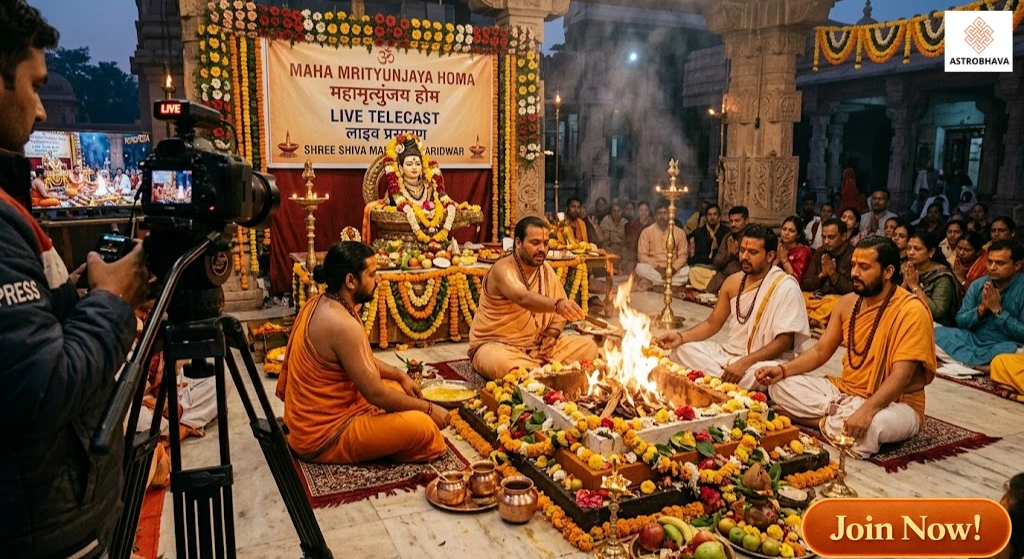 2. Maha Mrityunjaya Homa: Best Timing for Healing and Longevity
Ruling Day: Monday (Somavar), ruled by the Moon; also auspicious on Pradosha days (Trayodashi)
Sacred Tithi: Trayodashi (13th lunar day), Ashtami (8th lunar day)
Auspicious Nakshatras: Ardra, Mrigashira, Pushya, Anuradha
Annual Peak: Maha Shivaratri (Krishna Chaturdashi of Phalguna, February–March); Shravan Mondays (entire Shravan month, July–August)
Best Daily Window: Pradosha Kala (evening twilight), Brahma Muhurta
The Maha Mrityunjaya Mantra is sourced from the Rigveda (Mandala VII.59.12) and the Shiva Purana prescribes its use specifically through fire ritual for conquering illness, fear of death, and life-threatening situations. Monday is Lord Shiva’s day, and the Trayodashi tithi — particularly Pradosha on Trayodashi — is the most sacred time for all Shaiva rituals.
The classical text Kashi Khanda specifies that a Mrityunjaya Homa performed on a Shravan Somavar (Monday in the sacred month of Shravan) carries the blessings of the entirety of Kashi (Varanasi). For NRIs or global devotees who cannot travel to Kashi, having this Homa performed authentically by experienced Vedic priests on these specific days replicates that sacred connection.
Maha Mrityunjaya Homa is the most recommended ritual when someone faces a serious health diagnosis, after accidents or surgeries, to remove the fear of death, for longevity, and for anyone experiencing the effects of a severely afflicted 8th house in their birth chart.
3. Sudarshana Homa: Best Timing for Protection and Destroying Negativity
Ruling Day: Sunday (Ravivar), ruled by the Sun; also Tuesday (Mangalvar)
Sacred Tithi: Shashti (6th lunar day), Purnima (Full Moon)
Auspicious Nakshatras: Krittika, Uttara Phalguni, Uttara Ashadha, Uttara Bhadrapada (the three Uttara nakshatras are directly linked to Surya/Vishnu energy)
Annual Peak: Vaikunta Ekadashi (Dhanurmasa/Margashirsha, December); any Ekadashi in Vishnu-dedicated months
Best Daily Window: Morning, especially during the Sun’s hora (planetary hour)
Sudarshana is the divine discus of Lord Vishnu — the weapon of ultimate divine justice that destroys evil and restores cosmic order. The Sudarshana Ashtakam and Pancharatra Agama texts describe the Sudarshana Homa as the foremost remedy for: black magic, evil eye (drishti dosha), enemy afflictions, sudden unexplained reversals, and the negative effects of Rahu-Ketu in the horoscope.
Sunday is the day of Surya (the Sun), and since Lord Sudarshana is intrinsically linked to Vishnu’s solar radiance, Sunday Homas for Sudarshana are especially potent. The three Uttara nakshatras (Uttara Phalguni, Uttara Ashadha, Uttara Bhadrapada), all carrying solar-Vishnu energy, amplify the protective power of the ritual significantly when the Moon is transiting them.
Sudarshana Homa is particularly recommended for individuals in adversarial situations — legal disputes, workplace enemies, business competition — as well as for those who feel they are under the influence of negative energies, psychic attack, or repeated unexplained misfortune.
🛡️ Build a divine shield around your life.
Book your Sudarshana Homa at AstroBhava — live-telecasted with individual muhurta selection.
4. Lakshmi Kubera Homa & Mahalakshmi Homa: Best Timing for Wealth and Prosperity
Ruling Day: Friday (Shukravar), ruled by Venus
Sacred Tithi: Purnima (Full Moon), Ashtami (8th lunar day of Shukla Paksha)
Auspicious Nakshatras: Rohini, Revati, Pushya, Purva Phalguni, Bharani
Annual Peak: Diwali (Lakshmi Puja on Amavasya of Kartika, October–November); Sharad Purnima (Full Moon of Ashwin); Akshaya Tritiya (Shukla Tritiya of Vaishakha, April–May); Varalakshmi Vratam (second Friday of Shravan)
Best Daily Window: Evening, during Venus hora
The Sri Sukta of the Rigveda — the canonical hymn to Lakshmi — specifies lotus flowers, bilva leaves, and ghee as the primary offerings. The Lakshmi Tantra and Pancharatra texts that govern Vaishnava worship designate Friday as Lakshmi’s day and Rohini nakshatra as her ruling nakshatra.
Akshaya Tritiya is considered by classical Jyotisha texts as inherently free of any inauspicious qualities — the word “Akshaya” means inexhaustible, and any auspicious action performed on this day is said to yield inexhaustible fruits. Combined with a Lakshmi Homa, the best Homa timing for wealth reaches its annual zenith on this date. Sharad Purnima, when the moon is at its fullest radiance and in Ashwini nakshatra, is another peak date — the Bhavishya Purana describes Lakshmi as descending to bless devoted households on this night.
For Kubera, the divine treasurer of the heavens, auspicious combinations also include the transit of Jupiter (Guru) through favorable signs, particularly Sagittarius or Pisces.
💰 Invite Lakshmi’s abundance into your life.
5. Navagraha Homa: Best Timing for Planetary Harmony
Ruling Day: Timing varies by planet; the best universal day is Saturday (Shanivar) for Graha Shanti, or Sunday for starting the sequence
Sacred Tithi: Purnima (Full Moon) or Amavasya (New Moon), both being peak planetary influence points
Auspicious Nakshatras: Pushya (ruled by Saturn, universally auspicious), Hasta (Moon), Chitra (Mars/Venus)
Annual Peak: Makar Sankranti (Sun’s entry into Capricorn, January 14); Navaratri (both Chaitra and Sharada Navaratris); any eclipse period (for pre-emptive Graha Shanti)
Best Daily Window: Brahma Muhurta or Abhijit Muhurta
The Navagraha Homa is unique because it is not a single-deity ritual — it invokes all nine celestial planets simultaneously. The Brihat Parashara Hora Shastra, the foundational text of Vedic astrology, describes specific offerings for each graha: red flowers and wheat for the Sun; white rice and milk for the Moon; red lentils and sesame for Mars; green grass and durva for Mercury; chickpeas and turmeric for Jupiter; white sesame and sugar for Venus; sesame and mustard oil for Saturn; and blue flowers for Rahu and Ketu.
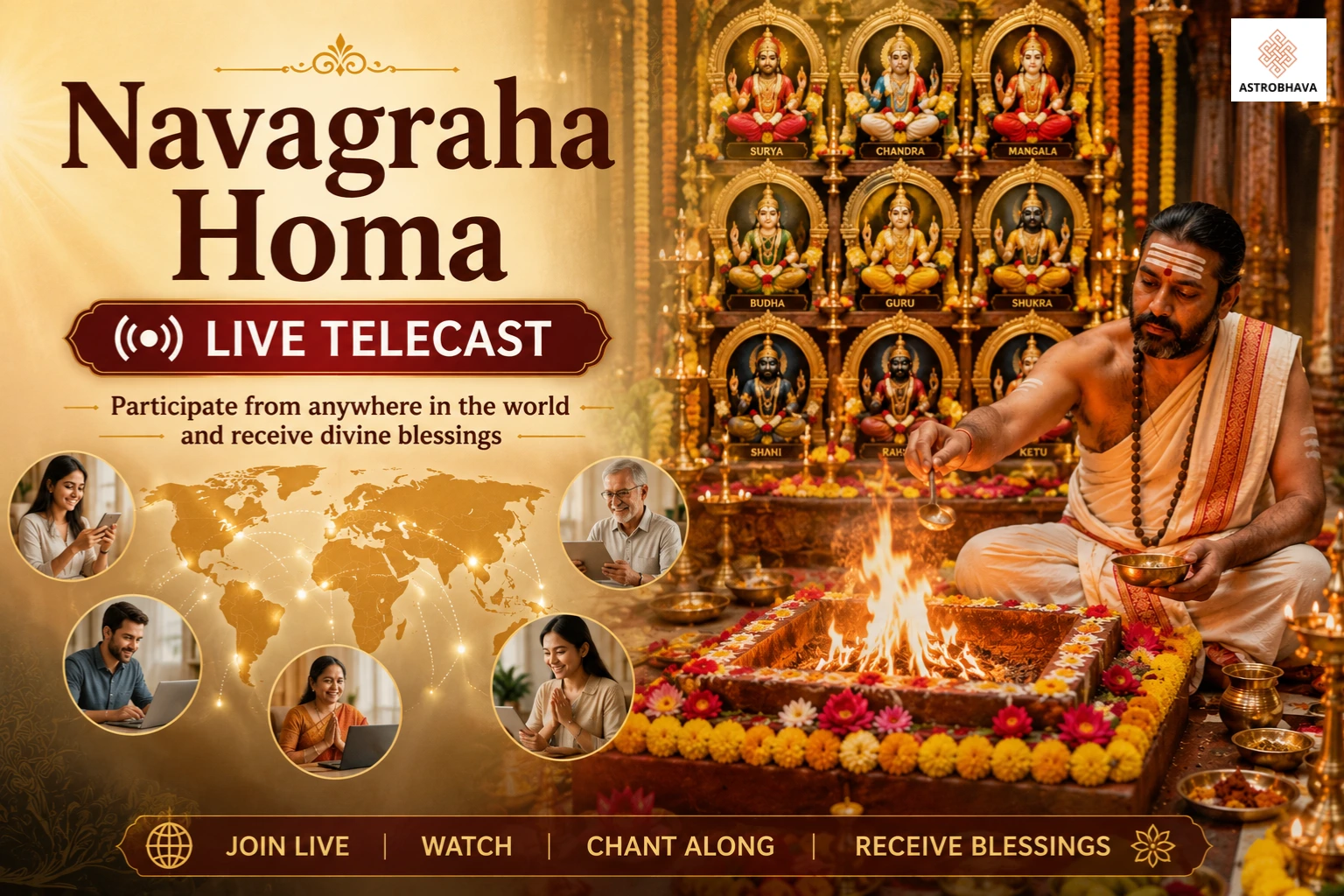 The best Homa timing for Navagraha Homa from a classical standpoint is during Pushya nakshatra, which the Muhurta Chintamani calls “the nurse” nakshatra — a universally nourishing lunar mansion whose energy feeds all planetary deities. Eclipse periods (both solar and lunar) are particularly critical times to perform this Homa as a pre-emptive or remedial measure, since eclipses dramatically amplify planetary karmas for several months around them.
For NRIs and global devotees experiencing planetary dashas (major periods) and antardashas (sub-periods) that are producing visible challenges, the Navagraha Homa is the most comprehensive single ritual available.
🪐 Balance all nine planets in one powerful ceremony.
6. Chandi Homa: Best Timing for Victory Over All Adversity
Ruling Day: Tuesday (Mangalvar), ruled by Mars; also Friday for Shakti energy
Sacred Tithi: Ashtami (8th lunar day) and Navami (9th lunar day) — both sacred to Devi
Auspicious Nakshatras: Mula, Jyeshtha, Vishakha (all Mars/Ketu-ruled nakshatras resonate with Chandi’s fierce energy)
Annual Peak: Navaratri — both Chaitra Navaratri (March–April) and Sharada Navaratri (September–October); Vijayadasami (Dussehra)
Best Daily Window: Morning to midday; classical texts specify the Chandi Homa must begin during the day and conclude before sunset
The Devi Mahatmya (also known as the Durga Saptashati or the Chandi Path, part of the Markandeya Purana) is the canonical text governing Chandi worship. It explicitly identifies Ashtami and Navami of Navaratri as the apex days for the Devi’s blessing. The three forms of Chandi — Mahakali, Mahalakshmi, and Mahasaraswati — correspond respectively to the first three days, the middle three days, and the final three days of Navaratri.
Performing Chandi Homa during Navaratri, particularly on Ashtami and Navami, when the Moon is in favorable nakshatras such as Vishakha or Jyeshtha, is considered extraordinarily potent for victory in legal battles, elimination of deep-rooted enemies, reversal of severe karmic afflictions, and protection from all evil forces.
7. Lakshmi Narasimha Homa: Best Timing for Fierce Protection and Debt Relief
Ruling Day: Friday (Narasimha’s blessing through Lakshmi) or Saturday (for protection from Saturn’s afflictions)
Sacred Tithi: Narasimha Chaturdashi (Shukla Chaturdashi of Vaishakha, May) — the anniversary of Lord Narasimha’s manifestation
Auspicious Nakshatras: Shravana, Dhanishtha (Vishnu nakshatras)
Annual Peak: Narasimha Jayanti (Vaishakha Shukla Chaturdashi, May)
Best Daily Window: Evening twilight (the time Narasimha appeared — “neither day nor night” according to the Bhagavata Purana)
The Lakshmi Narasimha Homa uniquely combines Vishnu’s fierce protective aspect with Lakshmi’s grace. It is the classical remedy for those facing severe financial debt, intense fear, persistent ill health, and enemies who use occult means. AstroBhava’s priests perform this Homa with specific offerings including banana stems, ashwatha (peepal) leaves, and Tulasi — all detailed in the Pancharatra Agamas.
🌸 Invoke the fierce grace of Narasimha.
Key Timing Factors: A Quick-Reference Table
| Deity / Homa | Best Day | Best Tithi | Annual Peak |
| Ganapati Homa | Wednesday | Chaturthi (4th) | Ganesh Chaturthi (Aug–Sep) |
| Maha Mrityunjaya Homa | Monday | Trayodashi (13th) | Maha Shivaratri (Feb–Mar); Shravan Mondays (Jul–Aug) |
| Sudarshana Homa | Sunday | Shashti (6th), Purnima | Vaikunta Ekadashi (Dec) |
| Lakshmi / Lakshmi Kubera Homa | Friday | Purnima, Ashtami | Diwali (Oct–Nov); Akshaya Tritiya (Apr–May) |
| Navagraha Homa | Any (Pushya nakshatra) | Purnima or Amavasya | Eclipse periods; Makar Sankranti |
| Chandi Homa | Tuesday / Friday | Ashtami, Navami | Navaratri (Mar–Apr, Sep–Oct) |
| Lakshmi Narasimha Homa | Friday / Saturday | Chaturdashi (14th) | Narasimha Jayanti (May) |
What to Do If You Miss the “Perfect” Muhurta
A common concern among devotees — especially those living abroad who cannot always observe the Hindu calendar precisely — is whether a Homa performed outside the peak timing is still beneficial.
The Dharmasindhu and Nirnaya Sindhu, two classical texts on ritual law, are reassuring on this point. They clarify that while peak timing amplifies results, an experienced astrologer can always identify a secondary muhurta of sufficient quality. The key is that the Homa must never be performed during: Rahu Kala (inauspicious daily window), Yamaganda, Gulika Kala, Visha Ghati, or during major grahan (eclipse).
This is precisely why AstroBhava’s process includes dedicated astrologer consultation to select the right muhurta for your Homa. Our astrologers confirm the timing within 24 to 48 hours of your booking — accounting for your birth details, your sankalpa, and the current Panchanga — before sending you the live telecast link.
The Role of Puja and Japa in Complementing Homa Timing
Classical texts — particularly the Agama Shastras that govern temple worship — describe three ascending levels of ritual intensity: Japa (mantra repetition), Puja (worship with offerings), and Homa (fire ritual). Each has its own recommended timing:
Japa is best during Brahma Muhurta, Sandhyakala (twilight), and during the planetary hora of the deity’s ruling planet.
Puja should ideally be performed twice daily — at sunrise and at dusk — with specific abhisheka (ritual bathing of the deity) prescribed for Pradosha on Shiva, and on Fridays for Lakshmi.
Homa is the most concentrated form of worship and should be reserved for the specific auspicious dates described above.
AstroBhava offers all three levels of sacred service — individual Homa, Puja, and Japa — each performed by certified Vedic priests with complete personalization. Whether you are an NRI in New York, a devotee in London, or a spiritual seeker in Melbourne, you can now access the full spectrum of Vedic ritual at the exact right time, without compromise.
Conclusion
The classical Vedic texts are precise, detailed, and unwavering on this point: the best Homa timing is not arbitrary. It is a science. Each deity carries a specific cosmic frequency, and that frequency resonates most powerfully on particular days, during particular lunar phases, and in particular annual windows. Performing a Ganapati Homa on Chaturthi Wednesday, a Mrityunjaya Homa during Shravan Somavar, a Lakshmi Homa on Akshaya Tritiya or Diwali, a Chandi Homa during Navaratri Ashtami, or a Sudarshana Homa on a Sunday aligned with Uttara nakshatras — these are not superstitions. They are the distilled wisdom of generations of rishi observation, encoded precisely because the results are observable and real.
For global devotees who cannot physically be present at a sacred Vedic temple, AstroBhava bridges that gap completely. Every Homa is performed individually (never as a group ceremony), live-telecasted so you can participate in real-time, and scheduled only after expert astrologer muhurta selection specific to your name, gotra, and sankalpa. The sacred ash (vibhuti), energized Yantra, and prasadam are shipped free worldwide so the Homa’s blessings travel with you.
The divine fire is always burning. The question is simply: will you light it at the right moment?
🔥 Your auspicious moment is waiting. Explore the full range of Homa services at AstroBhava — individual rituals for every need, every deity, and every intention, performed by India’s finest Vedic priests and live-streamed directly to you.
Frequently Asked Questions (FAQs)
Q1: What is the best time to perform a Homa in general?
The best time to perform a Homa, according to classical Vedic texts, is during Brahma Muhurta (96 to 48 minutes before sunrise) or during Abhijit Muhurta (around solar noon). For deity-specific Homas, the best Homa timing also depends on the ruling weekday, tithi, and nakshatra of that deity. AstroBhava’s astrologers calculate this individually for every booking.
Q2: Can I perform a Homa on any day, or must it be on the specific auspicious day?
While Homas can be performed on other days with a secondary muhurta, performing them on the specific auspicious day associated with the deity — for example, Wednesday and Chaturthi for Ganapati, or Monday and Trayodashi for Mrityunjaya — significantly amplifies the ritual’s power and the speed of results. Certain dates should always be avoided: Rahu Kala, eclipse days (unless as remedial), and Amavasya for most Homas (except Pitru-related ones).
Q3: Is the best Homa timing the same for everyone?
No. While deity-specific timing rules apply universally, the individual muhurta is further refined based on your personal birth chart, your ruling dasha period, and your specific sankalpa. This is why AstroBhava’s process always involves personalized astrologer consultation before scheduling your Homa.
Q4: What is the best time to perform Sudarshana Homa?
Sunday, during the morning hours and ideally during the Sun’s hora (planetary hour), is the best time to perform Sudarshana Homa. Annual peaks include Vaikunta Ekadashi and any Ekadashi in the Vishnu-dedicated months of Kartika and Margashirsha. The best Homa timing for Sudarshana is further amplified when the Moon transits the Uttara nakshatras.
Q5: Which Homa is best for health and what is the best time to perform it?
The Maha Mrityunjaya Homa is the foremost Homa for health, healing, and longevity. The best time to perform this Homa is on Mondays during the sacred month of Shravan (July–August), on Pradosha days (Trayodashi tithi, evening twilight), or on Maha Shivaratri. AstroBhava offers this Homa with personalized muhurta and live telecast.
Q6: Can NRIs and devotees living in the USA or UK benefit from online Homas performed in India?
Yes, absolutely. The Vedic principle of sankalpa establishes a direct energetic link between the devotee and the ritual regardless of physical distance. AstroBhava’s priests perform each Homa individually with your name, gotra, and intention explicitly stated in the sankalpa, and the ceremony is live-telecasted so you can participate in real-time from anywhere in the world. Energized Yantras and sacred prasadam are shipped free to over 40 countries.
Q7: What is the difference between a Homa, a Puja, and a Japa, and which should I choose?
A Puja is devotional worship with offerings to a deity. A Japa is the repetition of sacred mantras to build divine connection over time. A Homa is a fire ritual that concentrates and amplifies both — it is the most powerful of the three for producing specific results quickly. For ongoing protection and blessing, combining all three is ideal. AstroBhava offers all three as individual services, each with personalized timing.
Q8: How far in advance should I book a Homa to ensure the best auspicious timing?
Booking at least one to two weeks in advance is recommended so that AstroBhava’s astrologers have adequate time to identify the most auspicious muhurta aligned with the upcoming calendar of tithis and nakshatras. For peak dates like Maha Shivaratri, Navaratri, Ganesh Chaturthi, and Diwali, booking one month in advance is strongly advised, as slots fill quickly.