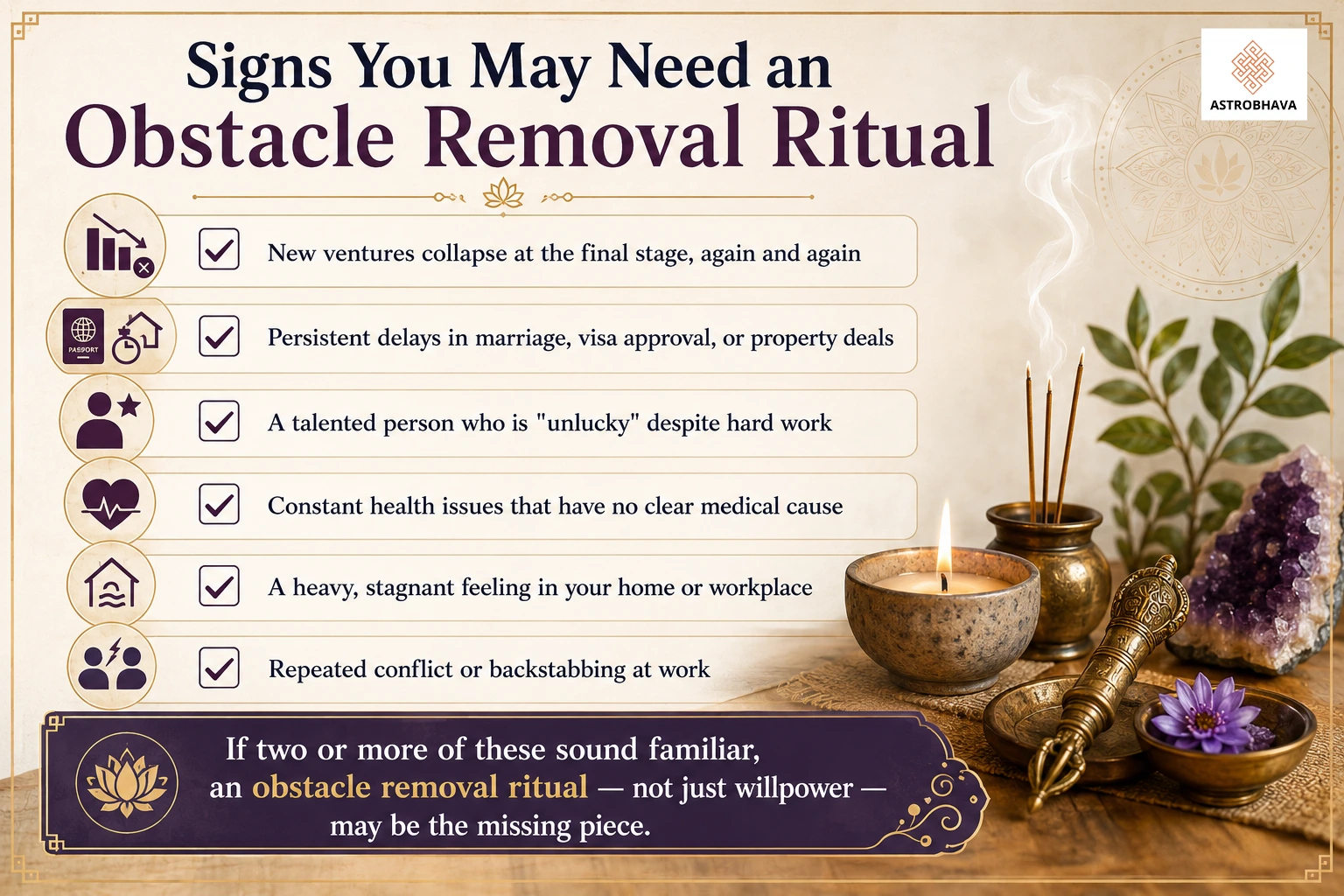
There is a blade of grass so sacred in the Vedic tradition that even Lord Ganesha — the mighty elephant-headed deity who commands entire armies of divine beings — bowed before its power. This humble, creeping grass, known as Arukampul in Tamil and Durva in Sanskrit, is not merely a ritual ingredient. It is the very heart of one of the most potent fire ceremonies in Vedic tradition: the Arukampul Homam.
For devotees living in the USA, UK, Canada, Australia, and UAE — far from the sacred temples of India — understanding why Arukampul holds this extraordinary place in Ganesha’s worship is not just spiritually enriching. It is the first step toward accessing a ritual that Vedic priests have used for millennia to dissolve obstacles, restore health, and invite unshakeable prosperity into a devotee’s life.
This blog reveals the complete story behind Arukampul, the deep scriptural roots of the Arukampul Homam, and exactly how you can receive its blessings — wherever in the world you are.
What Is Arukampul? The Grass That Conquered a Demon
Arukampul (botanical name: Cynodon dactylon) is known across India by many names — Durva grass in Sanskrit, Doorva in Hindi, Karuka in Malayalam, and Bermuda grass in the Western world. It is a perennial, fast-growing, dark green creeping grass that regenerates even after being cut, making it a powerful symbol of renewal, rebirth, and undying life force.
In the Vedic world, every offering to a deity is chosen with cosmic precision. Arukampul was not randomly assigned to Lord Ganesha. Its selection is rooted in a profound mythological event recorded in the ancient Puranas.
 The Story of Analasura: Why Arukampul Became Sacred to Ganesha
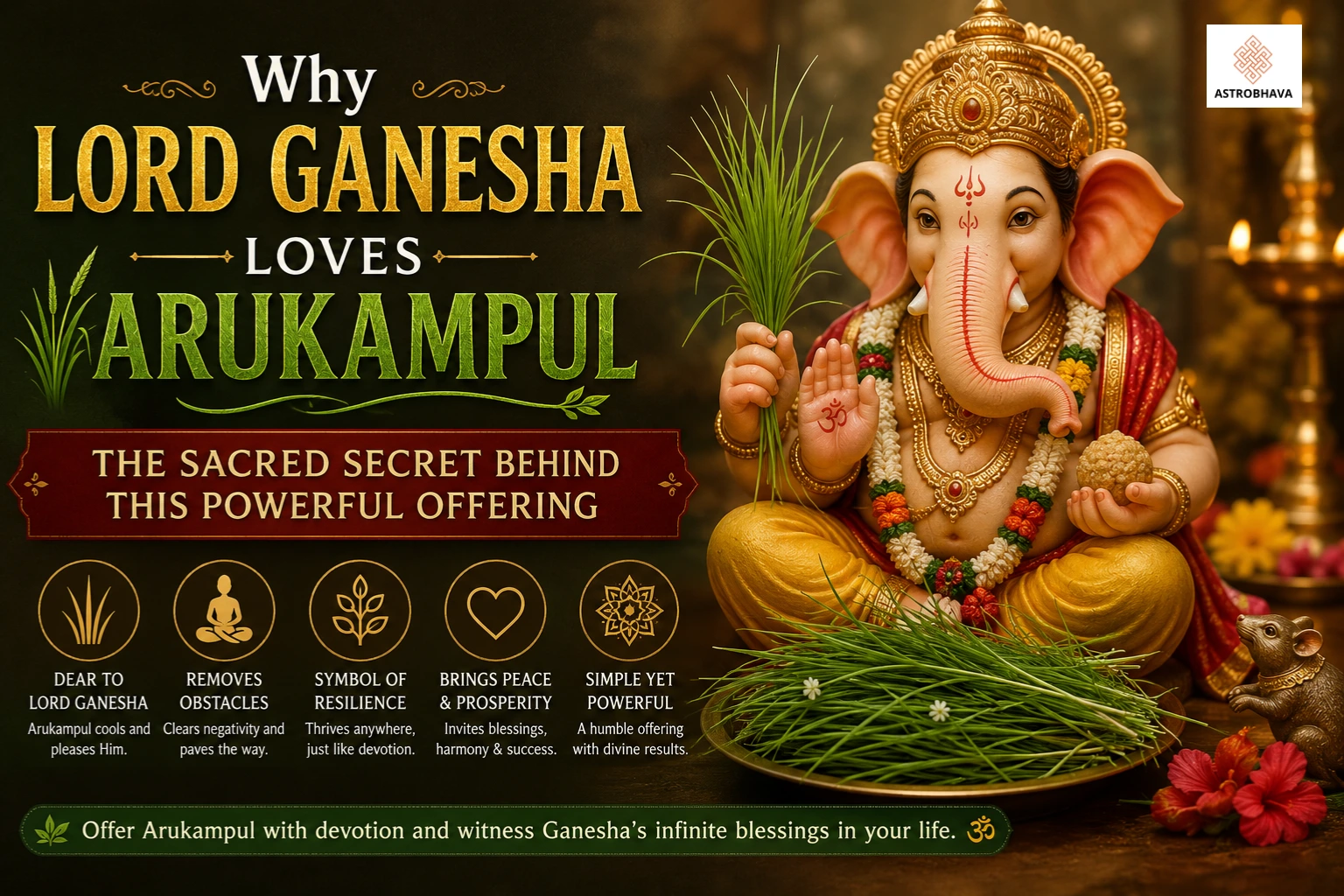
Long ago, a fearsome demon named Analasura — whose very name means “fire” — terrorized all the three worlds. His eyes blazed like twin suns. His breath emitted columns of flame that scorched forests and terrified sages. Even the Devas could not subdue him. In desperation, they approached Lord Ganesha and begged for his protection.
In an act of supreme sacrifice and divine power, Lord Ganesha swallowed the demon whole. But Analasura’s fiery nature did not die with him. Once inside Ganesha’s stomach, the demon’s energy caused intense, unbearable heat to radiate through Lord Ganesha’s entire body. The pain was immense. The gods tried to cool him — the moon rested on his head, Varuna poured sacred waters, Shiva applied sacred ash — but nothing extinguished the internal inferno.
Then a group of Rishis performing a Yagna arrived. They took twenty-one blades of Arukampul that they were using in their sacred fire ritual and offered them to Lord Ganesha, asking him to swallow them. The moment the Arukampul grass entered his body, the burning sensation ceased completely. The fire of Analasura was extinguished by this simple, humble grass.
Lord Ganesha was overwhelmed with joy. He declared that from that day forward, whoever worshipped him with an offering of Arukampul would always have his full grace and blessings — without condition, without fail.
This is not legend for its own sake. This is the scriptural foundation of the Arukampul Homam — a fire ritual built upon the sacred bond between this grass and the remover of all obstacles.
The Vedic Science Behind Arukampul’s Power
The Ganapati Atharvashirsha, one of the most authoritative Vedic texts dedicated to Lord Ganesha, explicitly states that offering Durva grass to Ganesha makes a person opulent like Lord Kubera, the divine treasurer of the universe. This is not a small blessing — Kubera-level wealth means abundance free from lack, anxiety, and material insufficiency.
Why Does Arukampul Attract the Ganesha Principle So Powerfully?
The word Durva itself encodes its spiritual function. It comes from two Sanskrit roots: Duhu (meaning “that which is far”) and Avam (meaning “that which brings closer”). Durva — Arukampul — is literally “that which brings the distant spiritual energy of Lord Ganesha closer to the devotee.”
According to Vedic science, every deity emits specific cosmic frequencies called Pavitraks — pure divine particles. Lord Ganesha’s Pavitraks are uniquely attracted by Arukampul. Among all the plants in creation, this grass has the highest natural capacity to draw the Ganesha Principle toward it. When Arukampul is offered into the sacred fire during the Arukampul Homam, those divine particles are released into the ritual space and directly infused into the devotee’s aura, consciousness, and destiny.
Ayurveda confirms this at a physiological level too. Durva grass contains alkaloids and natural cooling compounds that reduce bodily heat — exactly the role it played in cooling Ganesha after he swallowed Analasura. On the plane of ritual, this cooling principle translates to the extinguishing of karmic “heat” — the unseen fire of past mistakes, ancestral debts, and planetary afflictions that blocks a devotee’s forward movement in life.
The Significance of 21 Blades
Vedic priests offer Arukampul in specific numbers — 3, 5, 7, or 21 blades tied together. The bundle of 21 is particularly sacred because it mirrors the exact number the Rishis used to heal Ganesha after he swallowed Analasura. In the Arukampul Homam, these bundles are offered into the homa kund while specific mantras are chanted, activating the full spectrum of Ganesha’s blessings.
In a durvankur (a three-bladed offering), the middle leaflet attracts the Primal Ganesha Principle, while the two lateral leaflets attract the Primal Shiva and Primal Shakti energies. The Arukampul Homam thus invokes not just Ganesha alone but the entire divine triad of Shiva, Shakti, and Ganesha simultaneously — making it one of the most complete and powerful fire rituals in the Vedic canon.
What Is Arukampul Homam? A Complete Understanding
The Arukampul Homam is a consecrated Vedic fire ritual in which Arukampul grass is the primary and most sacred offering into the homa kund (sacred fire pit), accompanied by ghee, modak, coconut, honey, sugarcane, puffed rice, and other prescribed samagri (ritual materials), all offered while chanting the thousand names of Lord Ganesha and his powerful moola mantras.
The ritual is rooted in the Ganapati Atharvashirsha and the Ganesha Purana, and has been performed in sacred temple towns across South India — especially in Tamil Nadu and Kerala — for generations. It is particularly associated with the Tamil tradition, where Ganesha is worshipped as Pillayar, and Arukampul (known also as Arugampul or Arugam grass) is considered his most beloved offering.
 Benefits of Arukampul Homam
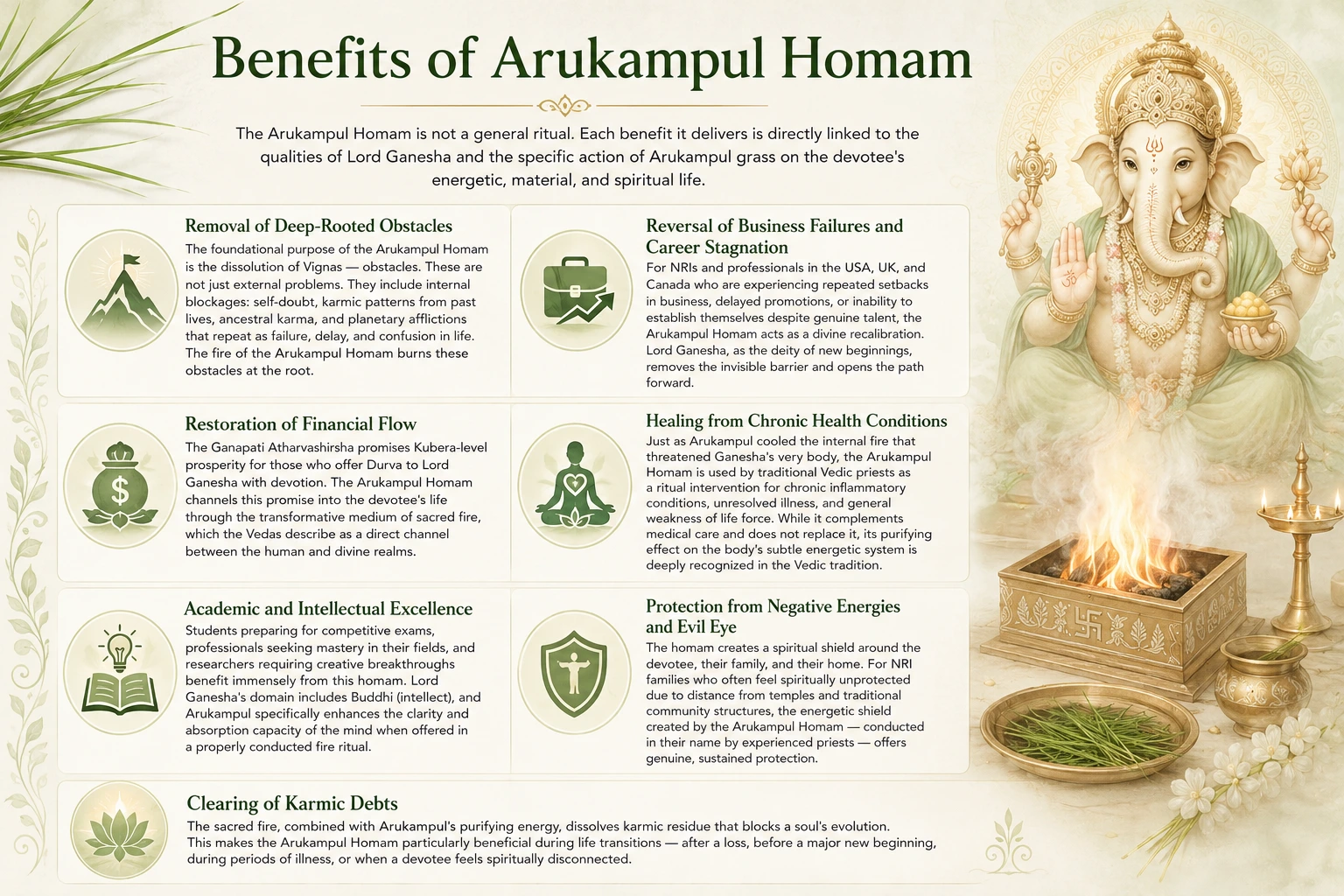
The Arukampul Homam is not a general ritual. Each benefit it delivers is directly linked to the qualities of Lord Ganesha and the specific action of Arukampul grass on the devotee’s energetic, material, and spiritual life.
Removal of Deep-Rooted Obstacles
The foundational purpose of the Arukampul Homam is the dissolution of Vignas — obstacles. These are not just external problems. They include internal blockages: self-doubt, karmic patterns from past lives, ancestral karma, and planetary afflictions that repeat as failure, delay, and confusion in life. The fire of the Homam burns these obstacles at the root.
Reversal of Business Failures and Career Stagnation
For NRIs and professionals in the USA, UK, and Canada who are experiencing repeated setbacks in business, delayed promotions, or inability to establish themselves despite genuine talent, the Arukampul Homam acts as a divine recalibration. Lord Ganesha, as the deity of new beginnings, removes the invisible barrier and opens the path forward.
Restoration of Financial Flow
The Ganapati Atharvashirsha promises Kubera-level prosperity for those who offer Durva to Lord Ganesha with devotion. The Arukampul Homam channels this promise into the devotee’s life through the transformative medium of sacred fire, which the Vedas describe as a direct channel between the human and divine realms.
Healing from Chronic Health Conditions
Just as Arukampul cooled the internal fire that threatened Ganesha’s very body, the Arukampul Homam is used by traditional Vedic priests as a ritual intervention for chronic inflammatory conditions, unresolved illness, and general weakness of life force. While it complements medical care and does not replace it, its purifying effect on the body’s subtle energetic system is deeply recognized in the Vedic tradition.
Academic and Intellectual Excellence
Students preparing for competitive exams, professionals seeking mastery in their fields, and researchers requiring creative breakthroughs benefit immensely from this homam. Lord Ganesha’s domain includes Buddhi (intellect), and Arukampul specifically enhances the clarity and absorption capacity of the mind when offered in a properly conducted fire ritual.
Protection from Negative Energies and Evil Eye
The homam creates a spiritual shield around the devotee, their family, and their home. For NRI families who often feel spiritually unprotected due to distance from temples and traditional community structures, the energetic shield created by the Arukampul Homam — conducted in their name by experienced priests — offers genuine, sustained protection.
Clearing of Karmic Debts
The sacred fire, combined with Arukampul’s purifying energy, dissolves karmic residue that blocks a soul’s evolution. This makes the Arukampul Homam particularly beneficial during life transitions — after a loss, before a major new beginning, during periods of illness, or when a devotee feels spiritually disconnected.
Arukampul Homam Puja Vidhi: Step-by-Step Procedure
The Arukampul Homam is a structured Vedic ritual with precise steps that must be followed in sequence. At AstroBhava, every step is performed by certified Vedic priests trained in traditional Padashalas, following Agama Shastra and Vedic Vidhi with complete purity and devotion.
Step 1: Sankalpa (Sacred Declaration of Intent)
The ritual begins with the Sankalpa — a formal declaration by the priest using the devotee’s name, Nakshatra (birth star), Rashi (moon sign), and Gotra (ancestral lineage). This is the most critical step because it anchors the entire ritual to the specific individual. Without a proper Sankalpa, the blessings of the homam cannot be directed precisely. At AstroBhava, your personal details are used to set this Sankalpa, ensuring that every mantra chanted and every Arukampul blade offered into the fire carries your name in the divine register.
Step 2: Ganapati Avahana (Invocation of Lord Ganesha)
The priest invokes the living presence of Lord Ganesha into the idol and the homa kund through sacred Avahana mantras. This is not symbolic — in Vedic tradition, the deity is believed to genuinely descend into the sanctified space when properly invited with the correct mantras, spoken by a priest who has maintained the necessary ritual purity.
Step 3: Punyavachanam and Pranayama (Purification)
The priest and the ritual space are purified through Punyavachanam — sacred water sprinkled with mantras — and Pranayama, the controlled breathing that elevates the priest’s consciousness to the level required for divine contact. This ensures that the ritual space is energetically clean and that no negative vibrations can enter during the ceremony.
Step 4: Agni Pratishtha (Consecration of Sacred Fire)
The homa kund (fire pit) is prepared and the sacred fire is lit with specific mantras. The fire — Agni — is understood in Vedic tradition as a living deity, the divine messenger between humans and the gods. The mantras chanted during Agni Pratishtha invite the Agni deity to serve as the intermediary for all offerings.
Step 5: Arukampul Offerings with Ganesha Mantras
This is the heart of the Arukampul Homam. Bundles of fresh Arukampul grass — typically 21 blades each — are offered into the sacred fire while the priest chants the Ganesha moola mantra, the thousand names of Lord Ganesha (Ganesha Sahasranama), and specific Durva-related mantras from the Ganapati Atharvashirsha. Key mantras chanted include:
ॐ गं गणपतये नमः — Om Gam Ganapataye Namah
दूर्वाङ्कुरैर्गणपतिं प्रपूजयामि — I worship Ganapati with Durva sprouts
With each offering of Arukampul into the sacred fire, the Ganesha Principle is activated and amplified in the ritual space.
Step 6: Samagri Ahuti (Offering of Sacred Materials)
Beyond Arukampul, the following sacred items are offered into the fire throughout the ritual: ghee (clarified butter), modak (Ganesha’s favorite sweet), coconut, honey, puffed rice, sugarcane, and specific herbs prescribed by the Vedic tradition. Each offering corresponds to a specific blessing — modak for fulfillment of desires, coconut for breaking the hard shell of ego and obstacle, honey for sweetness in relationships and speech.
Step 7: Purnahuti (Final Complete Offering)
The Purnahuti is the culminating offering — a complete bundle of all the ritual materials tied together and placed into the fire with the final, most powerful mantras. This seals the ritual and completes the divine transaction between the devotee and Lord Ganesha.
Step 8: Aarti and Prasad Distribution
The ritual concludes with the waving of camphor flame before Lord Ganesha (Deepa Aarti) and the distribution of blessed prasadam — the sacred ash (vibhuti), turmeric, kumkum, and sacred Arukampul — which carries the condensed blessings of the entire ritual.
The Most Auspicious Days for Arukampul Homam in 2026
The Arukampul Homam carries the greatest power when performed on days that align with Lord Ganesha’s cosmic energy. The most auspicious timings in 2026 include:
Vinayaka Chaturthi (Ganesh Chaturthi): Falls on August 27, 2026. This is the single most powerful day of the year for any Ganesha ritual. The Arukampul Homam performed on this date carries the blessings of an entire year’s worship.
Monthly Shukla Chaturthi (Vinayaka Chaturthi): The fourth day of the bright fortnight every month — the next significant ones in 2026 fall on July 29 and August 27. Each monthly Chaturthi is an auspicious window for the Homam.
Sankashti Chaturthi: The Krishna Paksha Chaturthi (fourth day of the waning moon) each month is a deeply powerful day for Ganesha worship. Performing the Arukampul Homam during Sankashti is especially beneficial for removing chronic obstacles that have resisted other remedies.
Wednesday (Budhavar): Lord Ganesha is the Adhipati (lord) of Wednesday in Vedic tradition. An Arukampul Homam on any Wednesday amplifies its effects for intellect, business, communication, and new beginnings.
At AstroBhava, the exact Muhurta (auspicious time) for your Arukampul Homam is determined by our expert astrologers based on your Nakshatra and Rashi — ensuring your ritual falls in the most favorable cosmic window.
Which Is the Best Day for Ganapathi Homam? A Complete Vedic Guide
Arukampul Homam for NRI Devotees: Participate from the USA, UK, Canada, Australia, and UAE
One of the most painful realities for Hindu families living abroad is the absence of authentic ritual infrastructure. The nearest temple may be an hour’s drive away and may not perform personalized homams. Local priests trained in the specific protocols of Vedic fire rituals are rare. The sacred herbs — including fresh Arukampul — are simply unavailable in most Western cities.
AstroBhava was built precisely to close this gap.
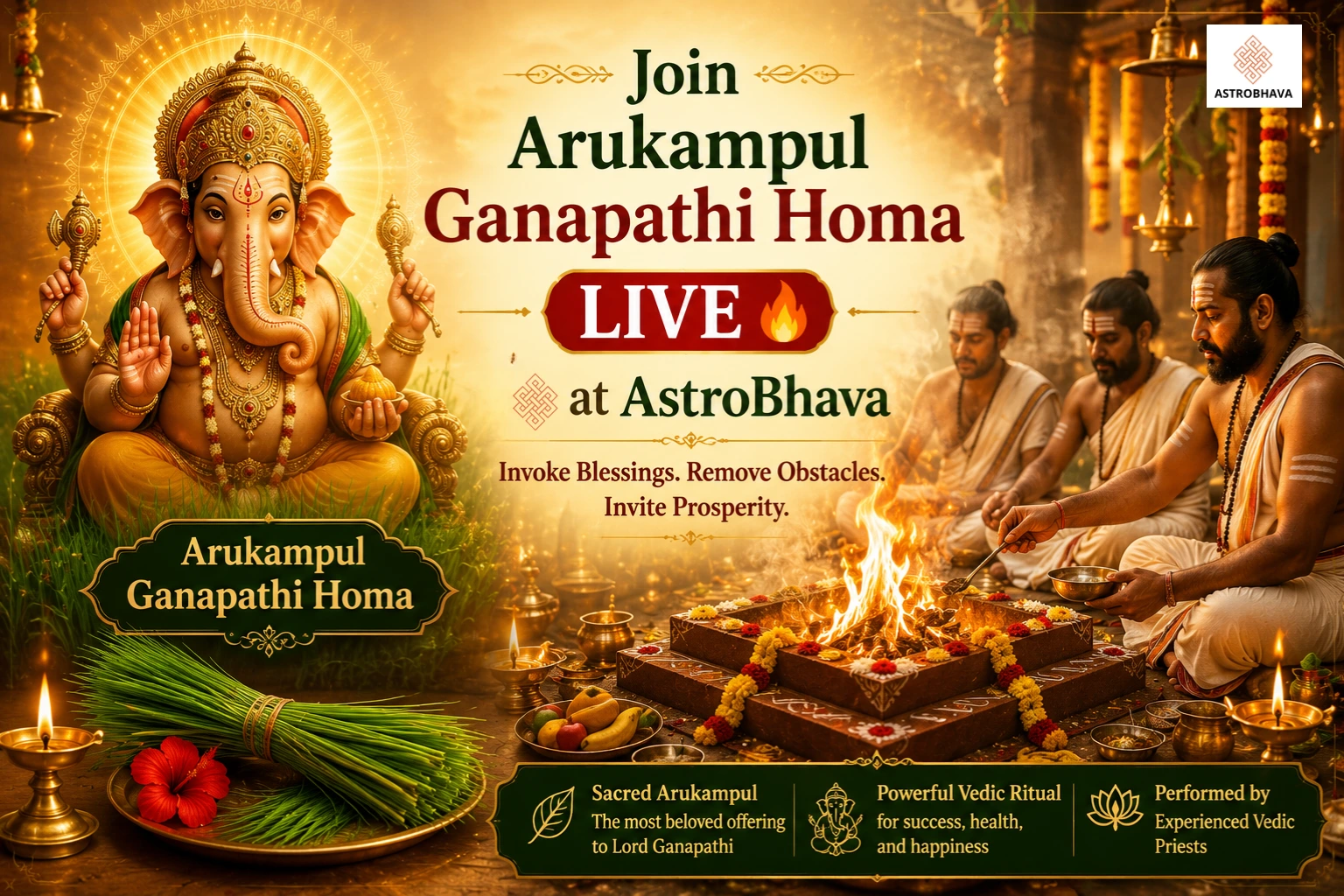 How It Works for NRIs:
Your Homam is performed in AstroBhava’s Yagna Ashram in India by certified Vedic priests trained in traditional Padashalas and guided by Brahmashree Shivaaya, the head of AstroBhava’s spiritual and astrological solutions. The ritual is conducted using fresh, authentic Arukampul and all prescribed samagri, with your name, Gotra, Nakshatra, and personal Sankalpa declared at the beginning.
The entire homam is broadcast live on AstroBhava’s YouTube channel, so you can watch and participate in real time from your living room in Houston, London, Toronto, Melbourne, or Dubai. After the ritual, your energized Ganapathi Yantra — enclosed in a sacred silver amulet — along with the blessed prasadam (sacred ash, kumkum, turmeric) are shipped free worldwide to your doorstep.
🔱 Can’t attend a temple this Chaturthi? Your Arukampul Homam can be performed in your name in sacred India — watch it live from anywhere in the world.
→ Book Your Arukampul Homam at AstroBhava
The Ganapathi Yantra: Your Permanent Arukampul Homam Blessing
Every Arukampul Homam at AstroBhava comes with a complimentary energized Ganapathi Yantra — a geometric copper plate inscribed with the sacred cosmic diagram of Lord Ganesha. The Yantra is energized during the homam through a three-stage process:
Jala Pradishtha: The Yantra is immersed overnight in Panchakavya — a sacred mixture of cow’s milk, curd, ghee, urine, and dung — while geometric figures are inscribed upon it.
Prana Pradishtha: On the second day, the priest performs Pranayama into the Yantra, transferring his life force into the sacred diagram.
Jeeva Pradishtha: On the third day, the Yantra’s soul is awakened through 108 mantra recitations and specific offerings.
The fully energized Yantra is then sealed inside a sacred silver amulet that can be worn around the neck or waist for lifelong protection, or placed in your home altar. It continuously emits the Ganesha Principle attracted by the Arukampul Homam, sustaining the ritual’s blessings long after the fire has been extinguished.
✨ Carry the blessings of Lord Ganesha with you always — explore AstroBhava’s Energized Ganapathi Yantra, shipped free to your home worldwide.
Deepening Your Connection: Ganapathi Japa After the Arukampul Homam
For devotees who wish to extend the blessings of the Homam into a sustained, daily spiritual practice, AstroBhava’s Ganapathi Japa service is the perfect complement. In the Japa, certified priests perform anywhere from 1,001 to 1,25,001 recitations of Lord Ganesha’s moola mantra — Om Gam Ganapataye Namah — in your name, in the sacred energy vortex of AstroBhava’s temple.
The 48-day Japa package aligns the mantra recitations with all 27 Nakshatras, 12 Rashis, and 9 planets — a complete cosmic cycle that ensures the blessings permeate every layer of the devotee’s life. The vibrations of the Arukampul Homam are, in this way, extended into a continuous 48-day stream of divine energy directed toward your specific goals.
💫 Multiply the power of your Arukampul Homam with sustained Ganapathi Japa — let thousands of sacred chants work in your name, day and night.
Conclusion: The Sacred Grass That Changes Everything
The story of Arukampul and Lord Ganesha is not mythology in the distant sense. It is a living, active teaching about the nature of divine grace — how the most humble and overlooked things in creation can carry the greatest power, and how a sincere offering made with understanding and devotion can dissolve even the most fearsome obstacles.
The Arukampul Homam is not a ritual you perform as a last resort. It is a ritual you perform as an act of sacred relationship with the first of all gods — the deity who must be honored before any endeavor, any new beginning, any prayer seeking the divine’s assistance.
For NRI devotees across the globe, AstroBhava has made this ancient, transformative ritual fully accessible. You do not need to be in India. You do not need to source fresh Arukampul. You do not need to find a priest who knows the proper Ganapati Atharvashirsha protocols. AstroBhava’s team does all of this for you, with complete transparency, live broadcasting, and worldwide delivery of blessed prasadam and an energized Yantra.
If your life has walls where there should be open doors — if something invisible keeps interrupting your success, your peace, or your health — it may be time to make the same offering the Rishis made on that ancient, mythical day: a bundle of humble Arukampul grass, offered in full faith to the one deity whose love for this sacred herb is written into the very structure of the universe.
Frequently Asked Questions About Arukampul Homam
What is Arukampul Homam and who should perform it?
The Arukampul Homam is a Vedic fire ritual in which Arukampul (Durva grass) is the primary sacred offering to Lord Ganesha, performed to remove obstacles, invite prosperity, and restore health. Anyone facing persistent obstacles, business failures, health challenges, relationship conflicts, or seeking protection from negative energies should consider performing this homam.
Why is Arukampul specifically used for Lord Ganesha and not other deities?
According to the Puranas, Arukampul was used by the Rishis to cool Lord Ganesha’s body after he swallowed the demon Analasura. From that day, Ganesha declared Arukampul his most beloved offering. Additionally, Vedic science confirms that this grass has the highest natural capacity to attract the Ganesha cosmic principle (Pavitrak) among all plants.
What is the significance of offering 21 blades of Arukampul?
The number 21 mirrors the bundle of Arukampul that the Rishis used to heal Ganesha after his battle with Analasura. This is why 21 blades tied together is the most complete and powerful offering in the Arukampul Homam tradition.
How long does the Arugampul Homam take?
A complete Arukampul Homam at AstroBhava lasts over one hour, conducted in their dedicated Yagna Ashram in India. The duration may vary slightly based on the specific package chosen.
Can I participate in the Arukampul Homam from abroad?
Yes. AstroBhava live-streams the entire Arukampul Homam on their YouTube channel, allowing devotees in the USA, UK, Canada, Australia, UAE, and over 40 other countries to watch and participate in real time. Prasadam and the energized Ganapathi Yantra are shipped worldwide for free after the ritual.
When is the best time to perform Arukampul Homam in 2026?
The most auspicious dates in 2026 are Ganesh Chaturthi (August 27, 2026), monthly Vinayaka Chaturthi, Sankashti Chaturthi, and any Wednesday. AstroBhava’s astrologers determine the exact Muhurta based on your personal Nakshatra and Rashi.
What do I receive after the Arukampul Homam is performed?
You receive a live stream link before the ritual, a complimentary energized Ganapathi Yantra enclosed in a silver amulet, and blessed prasadam including sacred ash (vibhuti), kumkum, and turmeric — all shipped free to your doorstep worldwide.
Is the Arukampul Homam performed for me individually or as part of a group?
At AstroBhava, every Arukampul Homam is performed exclusively for the individual devotee and their immediate family. No group homams are conducted. Your name, Gotra, Nakshatra, and personal Sankalpa are declared at the beginning of every ritual.
What is the mantra chanted during Arukampul Homam?
The primary mantra is Om Gam Ganapataye Namah. This is combined with Ganesha’s thousand names (Ganesha Sahasranama), specific Durva-offering mantras from the Ganapati Atharvashirsha, and the Ganesha moola mantra repeated with each Arukampul offering into the sacred fire.
Can the Arukampul Homam help with immigration and visa delays that NRIs face?
Visa delays, work permit rejections, and immigration hurdles are classic “Vighnas” — the obstacles that Lord Ganesha rules over. Many devotees in the USA, UK, and Canada have sought the Arukampul Homam specifically for these life-changing situations. While Vedic rituals work in conjunction with personal effort and do not replace legal processes, the ritual is believed to remove the unseen energetic blockages that cause repeated delays and failures in such matters.