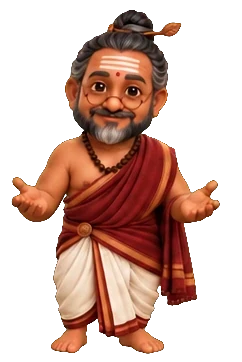
Buddha Purnima — also called Buddha Jayanti, Vesak or Vaishakha Purnima — is the full-moon day of the month of Vaishakha, and the holiest observance in the Buddhist calendar. In the Sanatan Dharma tradition it is held in equal reverence, for the same tithi is remembered as Kurma Jayanti and Lord Buddha is counted among the avatars of Vishnu. In 2026 the festival falls on Friday, 1 May.
What sets this Purnima apart is the classical claim that three decisive events in the life of Gautama Buddha — his birth at Lumbini, his enlightenment under the Bodhi tree at Bodh Gaya, and his mahaparinirvana at Kushinagar — all took place on this same full moon. That is why the day is called the triple blessed day.
Whether you are in Chennai or New Jersey, the observance is simple: purify the body, light a lamp, chant, sit in silence, and give. The sections below set out the 2026 date and tithi, the scriptural and traditional background, and the practices houses and temples prescribe for the day.
When Is Buddha Purnima 2026? Date and Tithi
Buddha Purnima 2026 is observed on Friday, 1 May 2026. The Purnima tithi begins on 30 April 2026 at 9:12 p.m. IST and ends on 1 May 2026 at 10:52 p.m. IST. Because the tithi prevails at sunrise on 1 May, that is the official day of the festival. Sunrise on the day is at 5:41 a.m. IST; moonrise is at 6:52 p.m. IST, so the evening hours after the moon is up are traditionally preferred for quiet japa and meditation.
Devotees outside India convert these IST marks to local time. The rule of observance does not change with the zone: the day on which Purnima is current at local sunrise is the day kept. For the current tithi, nakshatra and rahukalam in your own city, consult the free daily panchang; the wider list of festival dates is on the festival calendar.
astrobhava.com
Vaishakha Purnima 2026
One full moon, three remembrances
- 1 MAY 2026Friday, day of observance
- 9:12 P.M.tithi begins 30 April
- 10:52 P.M.tithi ends 1 May
- 2588THbirth anniversary counted
Why triple blessed
- Birth — Lumbini, in present-day Nepal
- Enlightenment — under the peepal at Bodh Gaya
- Mahaparinirvana — final liberation at Kushinagar
How the house keeps it
- Rise in brahma muhurta, around 4:00 a.m. IST
- Bathe with Gangajal, or rock salt and turmeric
- Offer white flowers, ghee diyas, kheer as naivedya
- Sit twenty to thirty minutes watching the breath
- Give food, clothes or money as daan
Two angas of the same tithi
Buddha remembrance
- Om Muni Muni Mahamuni Shakyamuniye Svaha
- Three Refuges recited in Pali
- Dhammapada, Jataka or Lalitavistara reading
Vishnu anga
- Buddha as the ninth avatar of Vishnu
- Same tithi kept as Kurma Jayanti
- Om Namo Bhagavate Vasudevaya, 108 times
Moonrise 6:52 p.m. IST — evening hours preferred for japa
A short sitting and one honest act of giving
stillness · charity · mantra
ASTROBHAVA.COMVedic rituals, never a group ceremony, telecast live
Why It Is Called the Triple Blessed Day
Tradition holds that three moments of the Buddha’s life converged on the Vaishakha full moon:
- Birth — Siddhartha Gautama was born in the Shakya clan at Lumbini (in present-day Nepal), conventionally dated around 563 BCE.
- Enlightenment (Bodhi) — after years of search and austerity, he sat beneath the peepal tree at Bodh Gaya and attained supreme awakening on this same Purnima.
- Mahaparinirvana — his final liberation from the cycle of birth and death took place at Kushinagar, again on the Vaishakha full moon.
Three events, one lunar day. Vedic and Buddhist calendars alike therefore treat Vaishakha Purnima as a day of unusual stillness, when intention, charity and mantra are given special weight. Counting from the traditional birth year, the 2026 observance marks the 2588th birth anniversary. That the tithi falls on a Friday — the weekday of Shukra — is noted in Jyotisha as a further mark of the day’s gentle, sattvic character, suited to devotion and inward practice rather than loud celebration.
Buddha Purnima in Sanatan Dharma
In the Puranic listing of Vishnu’s descents, Buddha is remembered as the ninth avatar. Vaishakha Purnima is therefore doubly marked in Hindu households: it is Buddha Jayanti, and it is also Kurma Jayanti — the day Vishnu took the form of the cosmic tortoise to bear Mount Mandara during the churning of the ocean (Samudra Manthan), from which the nectar of immortality arose.
This confluence is why many families keep a Vishnu or Satyanarayana observance alongside remembrance of the Buddha. A Kurma Homam is the rite classically tied to Kurma Jayanti; the broader Dasavathara Homam remembers all ten descents, including Buddha. Both are the forms tradition prescribes when this tithi is kept with Vishnu at the centre.
The Story of Siddhartha Gautama
Prince Siddhartha was raised in privilege within the Shakya clan and shielded from the sight of suffering. Encounters with old age, disease, death and a wandering ascetic broke that shelter. He left palace, wealth and family and sought the end of duhkha through severe austerities, until the body itself failed. He then took the middle path — neither indulgence nor extreme penance — and sat in deep meditation beneath the peepal at Bodh Gaya. On the Vaishakha full moon he attained Bodhi and became the Buddha, the Awakened One.
From there he walked to Sarnath, near Varanasi, and gave the first discourse, the Dhamma Chakka Pavattana Sutta, setting the Wheel of Dharma in motion. The Four Noble Truths and the Noble Eightfold Path remain the core of what is taught on this day: the fact of suffering, its cause, its cessation, and the path. Reading a few verses of the Dhammapada, a Jataka tale, or the Lalitavistara is a traditional way to keep the afternoon of the festival.
Rituals and Observances for the Day
The house practice is modest and does not require a temple visit. Tradition commonly prescribes the following on Buddha Purnima:
- Brahma muhurta rising. Rise roughly an hour and a half before sunrise. On 1 May 2026 that window opens around 4:00 a.m. IST; elsewhere, keep the same spirit in local pre-dawn hours.
- Sacred bath. Bathe with a few drops of Gangajal, or with rock salt and turmeric in the water. Many chant Om Namah Shivaya or Om Namo Bhagavate Vasudevaya while bathing.
- Altar and offering. Place a clean image of the Buddha or of Vishnu. Offer white flowers (lotus where available), light ghee diyas and incense, and present kheer — the sweet rice pudding associated with the meal offered to Siddhartha before enlightenment — as naivedya.
- Meditation. Even twenty or thirty minutes of silent sitting, watching the breath without chasing thoughts, is the practice most closely aligned with the day’s meaning.
- Daan. Give food, clothes or money. Feeding the hungry is the act most often named; some communities also release caged birds as a sign of liberation.
- Sattvic fare. Avoid meat, onion, garlic and alcohol. Fruits, milk, kheer and light boiled grains keep the day clean. A full fast is not mandatory; a partial fast or a single sattvic meal is widely kept.
Where a peepal (Bodhi) tree stands at a local temple or dharma centre, watering it, lighting a lamp beneath it and walking around it once or thrice is an old mark of respect. For those who wish a fire offering on the tithi, rites under the spiritual growth homam grouping are the ones families most often request for Vaishakha Purnima.
Mantras and Japa on Vaishakha Purnima
Purnima is classically favoured for japa. On Buddha Purnima the mantras most often taken up are the Buddha’s own dharani-style invocation and the Three Refuges in Pali, together with a Vishnu mantra for households that keep the avatar remembrance.
Chant 108 times on a mala, in the morning or after moonrise. The refuge formula is recited slowly, three times or in longer mala rounds:
Households that also keep the Vishnu anga of the day add Om Namo Bhagavate Vasudevaya (108 times) or a shorter reading of the Vishnu Sahasranama. Guidance on posture, breath and mala count is set out in the house note on how to chant a mantra correctly. If a full mala practice is hard to sustain, commissioning a priestly japa on the same tithi is the traditional alternative; the sankalpa is taken in the devotee’s name at the ashram.
Questions devotees ask
The AstroBhava Editorial Desk chooses the topics for this blog and decides what is published.