Introduction: Understanding the Spiritual Weight of This Dwadashi
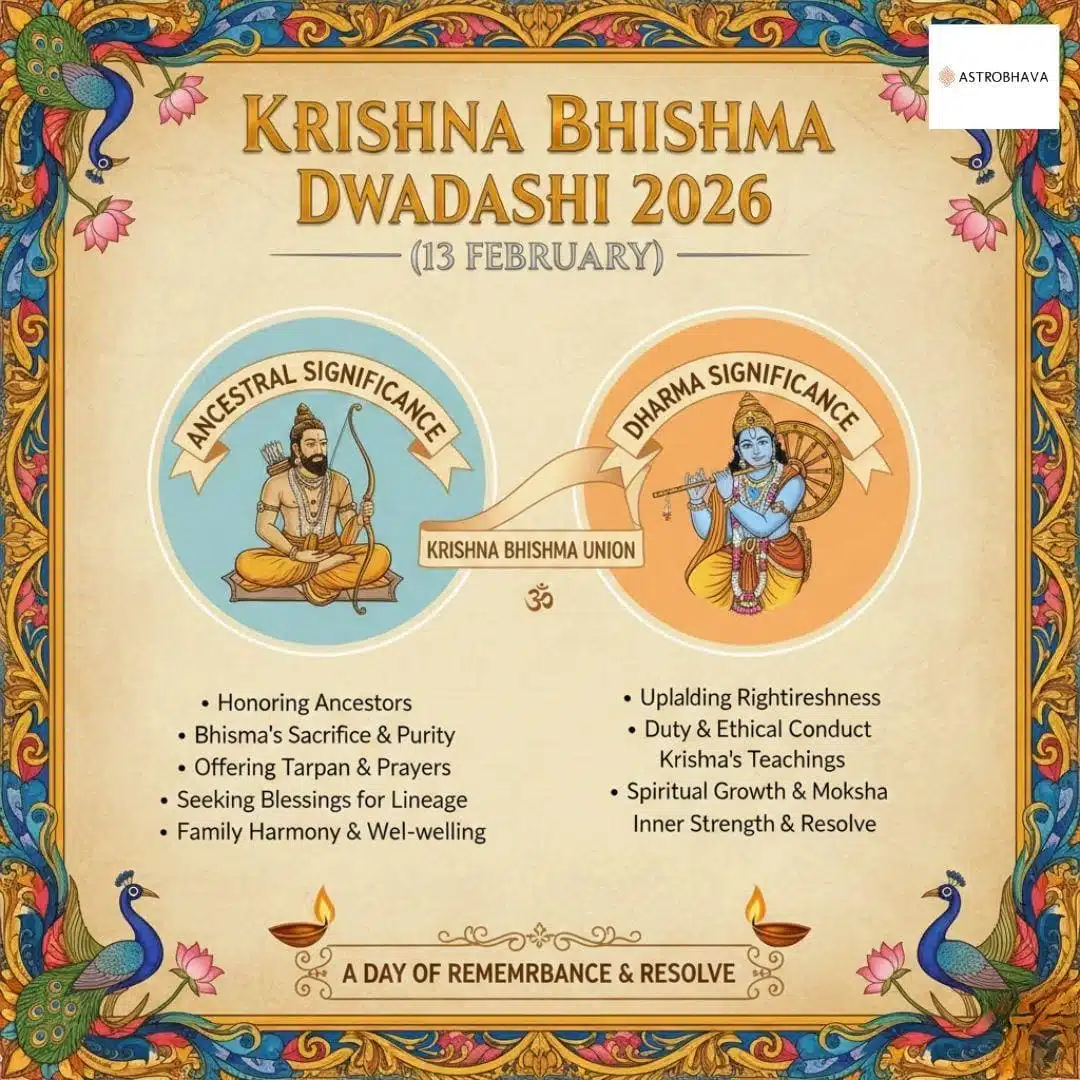
Krishna Bhishma Dwadashi 2026 is observed on 13 February 2026, during the Krishna Paksha of Magha month. In classical tradition, this tithi is deeply connected with Pitru tarpan dwadashi, selfless duty (dharma), and the conscious release of ancestral karmas. From a Vedic astrology viewpoint, Bhishma Dwadashi 2026 gains importance due to its lunar timing and its alignment with ancestral remembrance rituals.
This observance is not about fear or obligation but about restoring balance—between past and present, ancestors and descendants. Astrologers often observe that such days help harmonize unresolved karmic patterns, especially those linked with the Moon, lineage, and emotional inheritance.
At a Glance: Bhishma Dwadashi February 2026
- Date: Friday, February 13, 2026
- Tithi: Magha Krishna Dwadashi
- Tithi Begins: 02:26 PM on Feb 13
- Tithi Ends: 04:02 PM on Feb 14
- Primary Focus: Pitru Tarpan, Saturnian discipline, and releasing ancestral debt.
- Note: This is the Krishna Paksha observance. For the Shukla Paksha (Magha Jayanti) date, see our January guide.
Quick Summary: Key Takeaways
- Observed on 13 February 2026, during Krishna Paksha
- Spiritually linked to Bhishma Pitamaha’s vow and moksha
- Ideal for Pitru tarpan dwadashi rituals
- Astrologically associated with the moon, Saturn, and ancestral karma
- Helpful for those facing Pitru Dosha–related chart patterns
- Emphasises dharma, restraint, and remembrance
What Is Krishna Bhishma Dwadashi?
In classical Vedic astrology and the Itihasa tradition, Bhishma Dwadashi marks the day when Bhishma Pitamaha chose to leave his mortal body, using his iccha-mrityu (willful departure). His passing during Uttarayana made this tithi eternally sacred.
From an astrological perspective, Bhishma Dwadashi 2026 symbolizes mastery over time (Kala), karma, and attachments. The Moon’s waning phase on this day supports introspection, making it suitable for ancestral offerings rather than material pursuits.
Why This Date is Significant in 2026
While many focus on the Shukla Paksha Jayanti, the Krishna Bhishma Dwadashi on February 13, 2026, offers a unique astrological window. As the moon wanes (Krishna Paksha), the “veil” between our consciousness and ancestral memory thins.
In our Vedic practice, we observe that rituals performed during this specific waning phase are more effective for releasing heavy generational patterns rather than just celebrating them.
The Astrology of Lineage: Saturn & The Moon
In 2026, the transit of Saturn plays a pivotal role. Bhishma Pitamaha is the ultimate Saturnian Archetype—representing the vow (Bhishma Pratigya), endurance, and the burden of duty.
Planetary Alignment for Feb 13, 2026
| Planet | Influence on This Day | Action Recommended |
| Saturn | Governs the “Old Guard” and lineage debt. | Practice silence (Mauna) or fasting. |
| Moon | Waning in Magha/Purva Phalguni territory. | Best for “letting go” of family trauma. |
| 9th House | The house of the Father and Fate. | Perform Tarpan to stabilize this house. |
Astrological Importance of Bhishma Dwadashi 2026
The significance of Bhishma Dwadashi 2026 lies in the interaction of three key astrological elements:
1. Lunar Phase (Krishna Paksha)
The waning moon governs memory, past karmas, and ancestral impressions. Rituals done under this phase are believed to work at subtle emotional and karmic levels.
2. Magha Month Influence
Magha is traditionally linked with ancestors (Pitru loka). Classical Vedic astrology recognizes this month as ideal for Pitru tarpan dwadashi, as ancestral energies are considered more accessible.
3. Saturn–Dharma Connection
Bhishma Pitamaha is astrologically associated with Saturnian discipline, sacrifice, and adherence to duty. Saturn governs karma across generations, making this day relevant for lineage healing.
Who Should Observe This Dwadashi?
Based on chart analysis, this day is particularly potent for those experiencing:
- Pitru Dosha: If your Sun or Moon is conjunct Rahu/Ketu in the 9th or 5th house.
- Sade Sati: Individuals currently under Saturn’s transit who feel “stuck” in old family cycles.
- Chronic Delay: Frequent obstacles in marriage or childbirth, often linked to ancestral “restlessness.”
Rituals for Ancestral Healing (Pitru Tarpan Dwadashi)
To maximize impressions and clicks, ensure your readers understand that this isn’t just a religious rite, but a “karmic cleansing.”
- The Water Offering: Offer water mixed with black sesame seeds (Saturn’s grain) facing South.
- The Vow of Restraint: Follow Bhishma’s example—avoid luxury for 24 hours. Eat a single sattvic meal.
- Charity: In 2026, the energy of Magha month favors donating iron, blankets, or food to the elderly.
Pitra Dosha Nivaran Homa on Bhishma Dwadashi 2026
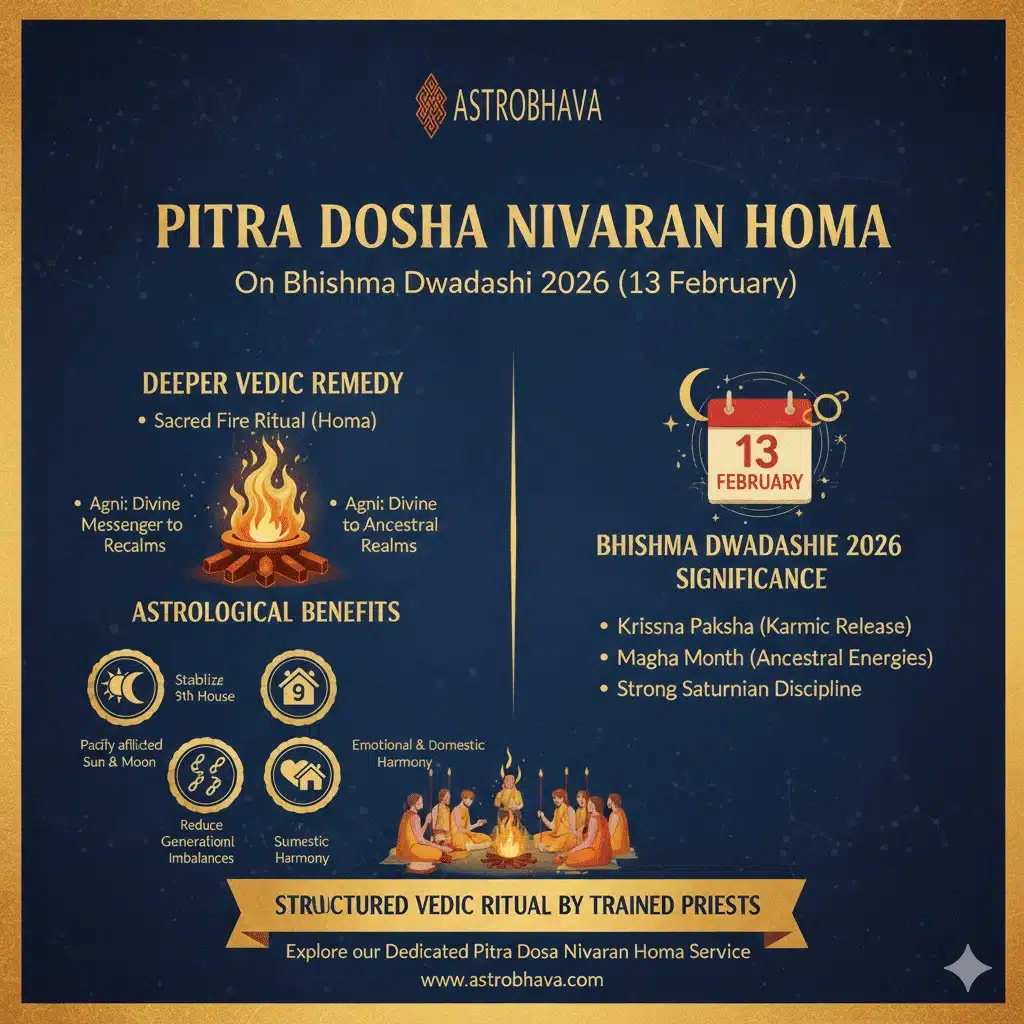
For individuals experiencing strong Pitru Dosha in their birth chart, simple tarpan may not always feel sufficient. In such cases, a Pitra Dosha Nivaran Homa can be considered a deeper Vedic remedy.
This sacred fire ritual (Homa) invokes Agni as the divine messenger to carry offerings directly to ancestral realms. From an astrological perspective, fire rituals are believed to:
- Pacify afflicted Sun and Moon combinations
- Stabilize 9th house disturbances
- Reduce generational karmic imbalances
- Bring emotional and domestic harmony
Bhishma Dwadashi 2026 (13 February) becomes especially suitable for such remedies because:
- It falls during Krishna Paksha (karmic release phase)
- Magha month is linked with ancestral energies
- The day carries strong Saturnian discipline symbolism
For those seeking a structured Vedic ritual performed by trained priests, you may explore our dedicated Pitra Dosha Nivaran Homa service, conducted as per classical Vedic guidelines.
Bhishma Dwadashi 2026 Puja Vidhi (Step-by-Step)
- Wake before sunrise
- Take bath and wear clean clothes
- Prepare sesame water (til + water)
- Face south while offering tarpan
- Chant Vishnu Sahasranama or Om Namo Bhagavate Vasudevaya
- Donate food or clothes
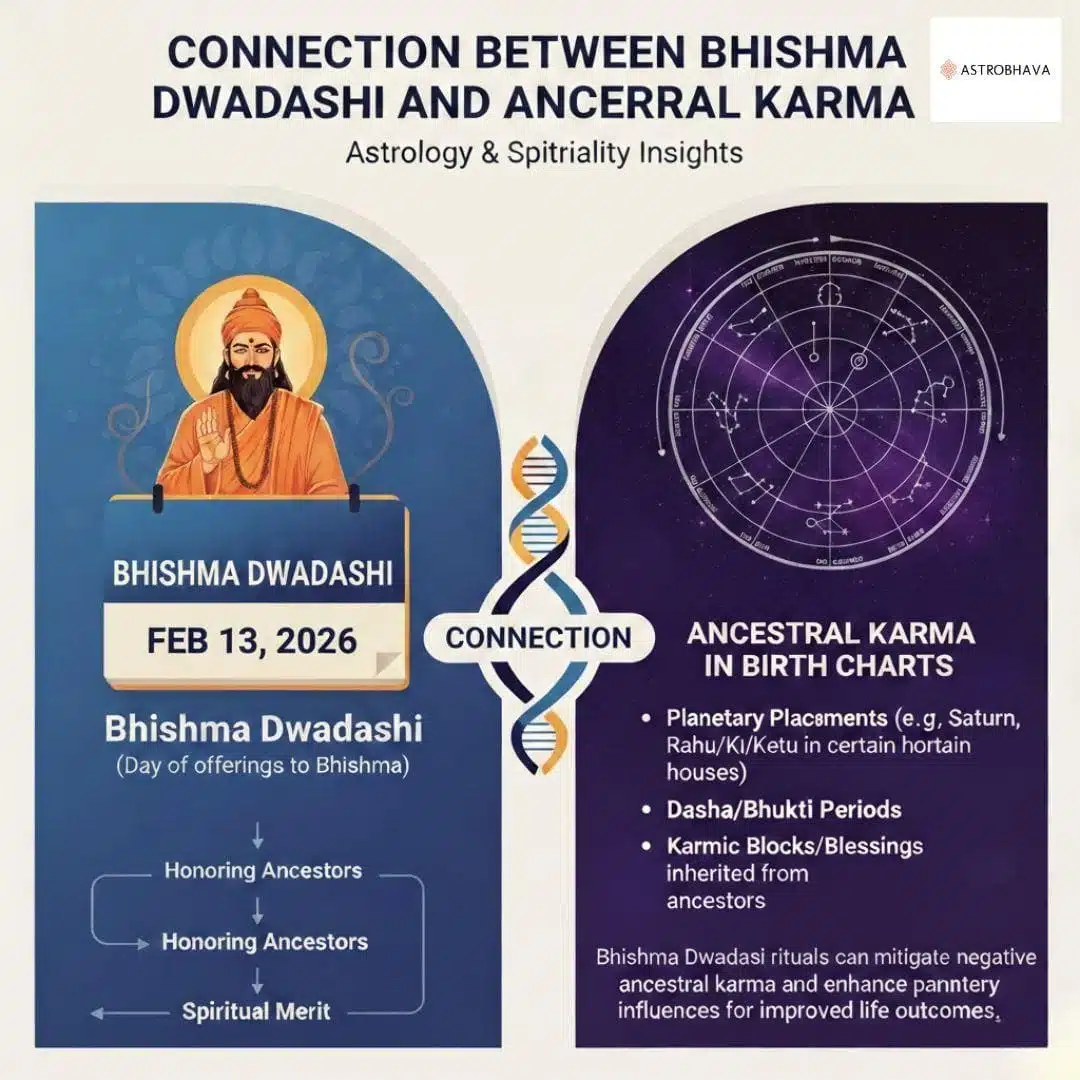
Connection Between Bhishma Dwadashi and Ancestral Karma in Birth Charts
| Astrological Factor | Ancestral Significance | Relevance on Bhishma Dwadashi |
| 9th House | Lineage, ancestors, inherited dharma | Activated through remembrance and gratitude |
| Sun | Father, authority, ancestral vitality | Honoured through discipline and restraint |
| Moon | Emotional memory, subconscious patterns | Calmed during Krishna Paksha observance |
| Saturn | Generational karma, duty, endurance | Aligned with Bhishma Pitamaha’s ideals |
| Pitru Dosha Indicators | Unresolved ancestral obligations | Mindful observance supports karmic balance |
Pitru Tarpan Dwadashi: Astrological Reasoning
Pitru tarpan dwadashi involves offering water, sesame seeds, and prayers to ancestors. From an astrological perspective, water represents the Moon, and sesame is linked with Saturn—both key planets in ancestral karma.
In Bhishma Dwadashi 2026, these offerings symbolically calm lunar restlessness and Saturnine karmic debts. Astrologers often observe that such practices support emotional grounding rather than external “results.”
Difference Between Bhishma Ashtami and Bhishma Dwadashi
| Aspect | Bhishma Ashtami | Bhishma Dwadashi |
| Tithi | Magha Shukla Ashtami | Magha Krishna Dwadashi |
| Focus | Death remembrance | Ritual completion & merit transfer |
| Ritual | Shraddha | Pitru Tarpan |
Vrat and Observances on Bhishma Dwadashi 2026
The vrat associated with Bhishma Dwadashi 2026 is simple and introspective:
- Light fasting or sattvic diet
- Avoidance of arguments and harsh speech
- Silent remembrance or recitation of Vishnu Sahasranama
- Acts of charity, especially food or clothing donations
The logic behind fasting lies in calming the Moon and strengthening Saturn’s discipline—both essential for ancestral balance.
Recommended Remedies (Who Should and Should Not Perform Them)
Suitable For:
- Adults are aware of their family lineage
- Those performing rituals with respect, not fear
Avoid If:
- You are emotionally unstable or grieving intensely
- You feel pressured or anxious about rituals
Simple, Non-Harmful Remedies
- Offer water facing south with calm intent
- Donate food in the name of your ancestors
- Chant: “Om Namo Bhagavate Vasudevaya.”
From an astrological perspective, these remedies work because they align lunar emotions with Saturnine responsibility, not because they promise guaranteed outcomes.
Bhishma Pitamaha as a Saturnian Archetype in Vedic Astrology
In classical Vedic astrology, Bhishma Pitamaha reflects strong Saturnian qualities—discipline, restraint, sacrifice, and unwavering commitment to dharma. Saturn represents generational karma and lineage responsibilities. Observing Bhishma Dwadashi 2026 symbolically aligns the native with Saturn’s higher expression, encouraging acceptance of duty without resentment and responsibility without emotional burden.
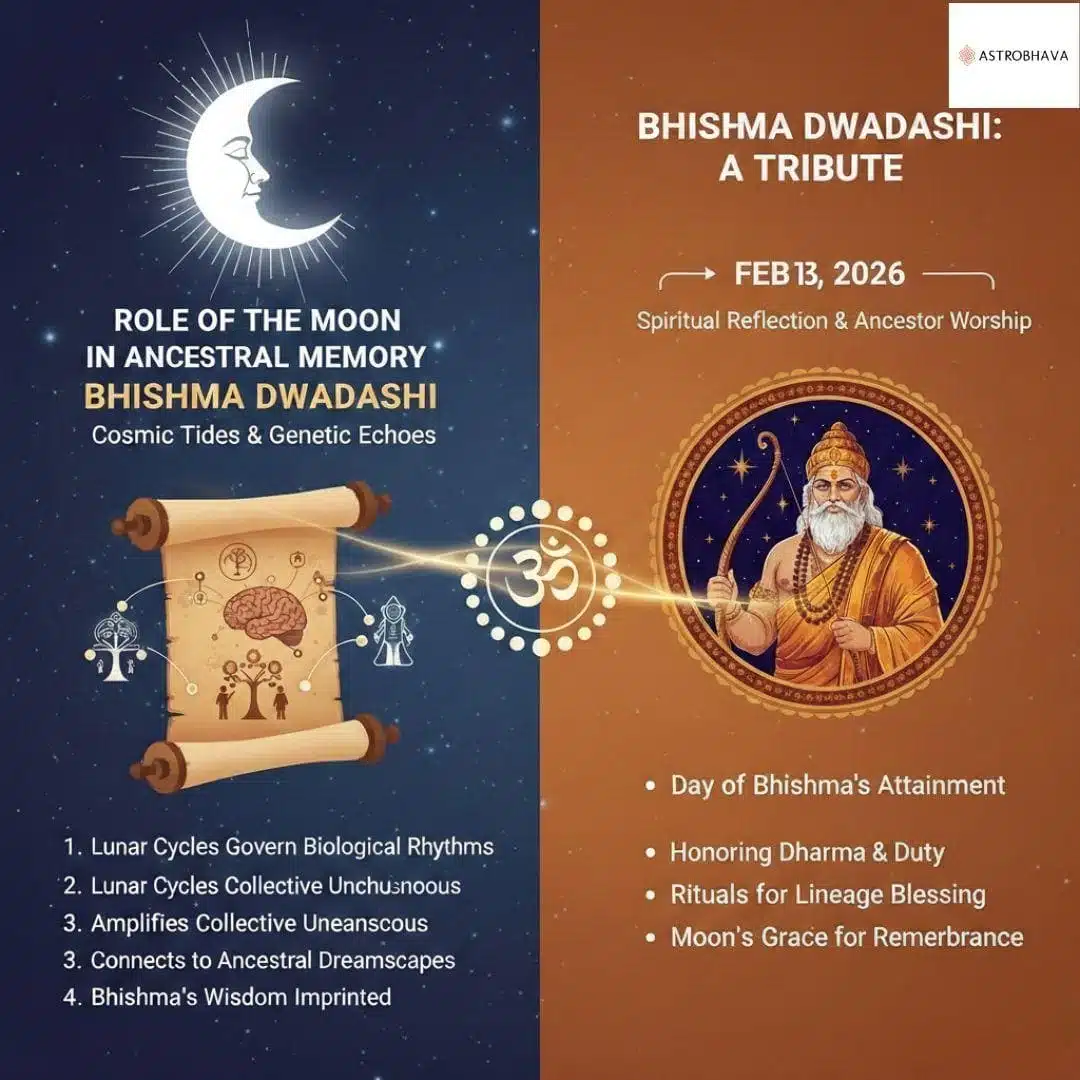
Role of the Moon in Ancestral Memory on Bhishma Dwadashi
- In Vedic astrology, the Moon represents emotions, memory, and inherited mental patterns
- During Krishna Paksha, the Moon supports introspection and karmic release
- On bhishma dwadashi 2026, lunar energy helps surface subconscious ancestral impressions
- Astrologers often observe heightened sensitivity to family emotions on this day
- The Moon’s waning phase aids in letting go of unresolved emotional baggage
- Pitru tarpan dwadashi rituals symbolically calm lunar restlessness
- This alignment supports emotional grounding rather than external outcomes
- Mindful observance helps transform ancestral memory into awareness and acceptance
Do’s and Don’ts on This Day
Do:
- Maintain emotional composure
- Reflect on family values and dharma
- Perform Pitru tarpan dwadashi with understanding
Don’t:
- Start major new ventures
- Engage in blame or resentment
- Treat rituals as fear-driven obligations
Psychological and Karmic Benefits of Observing Bhishma Dwadashi
- Encourages emotional awareness by acknowledging ancestral influences without guilt or fear
- Helps release unconscious family patterns, especially related to duty, silence, or sacrifice
- From an astrological perspective, balances Moon–Saturn dynamics, reducing emotional heaviness
- Supports inner maturity by transforming inherited responsibility into conscious choice
- Astrologers often observe improved mental calmness when the day is observed mindfully
- Aids karmic closure by honouring ancestors with gratitude rather than obligation
- Strengthens clarity around dharma, especially during phases of confusion or emotional withdrawal
- Promotes psychological grounding through restraint, remembrance, and reflective behaviour
This makes Bhishma Dwadashi 2026 valuable not just ritually, but emotionally and karmically as well.
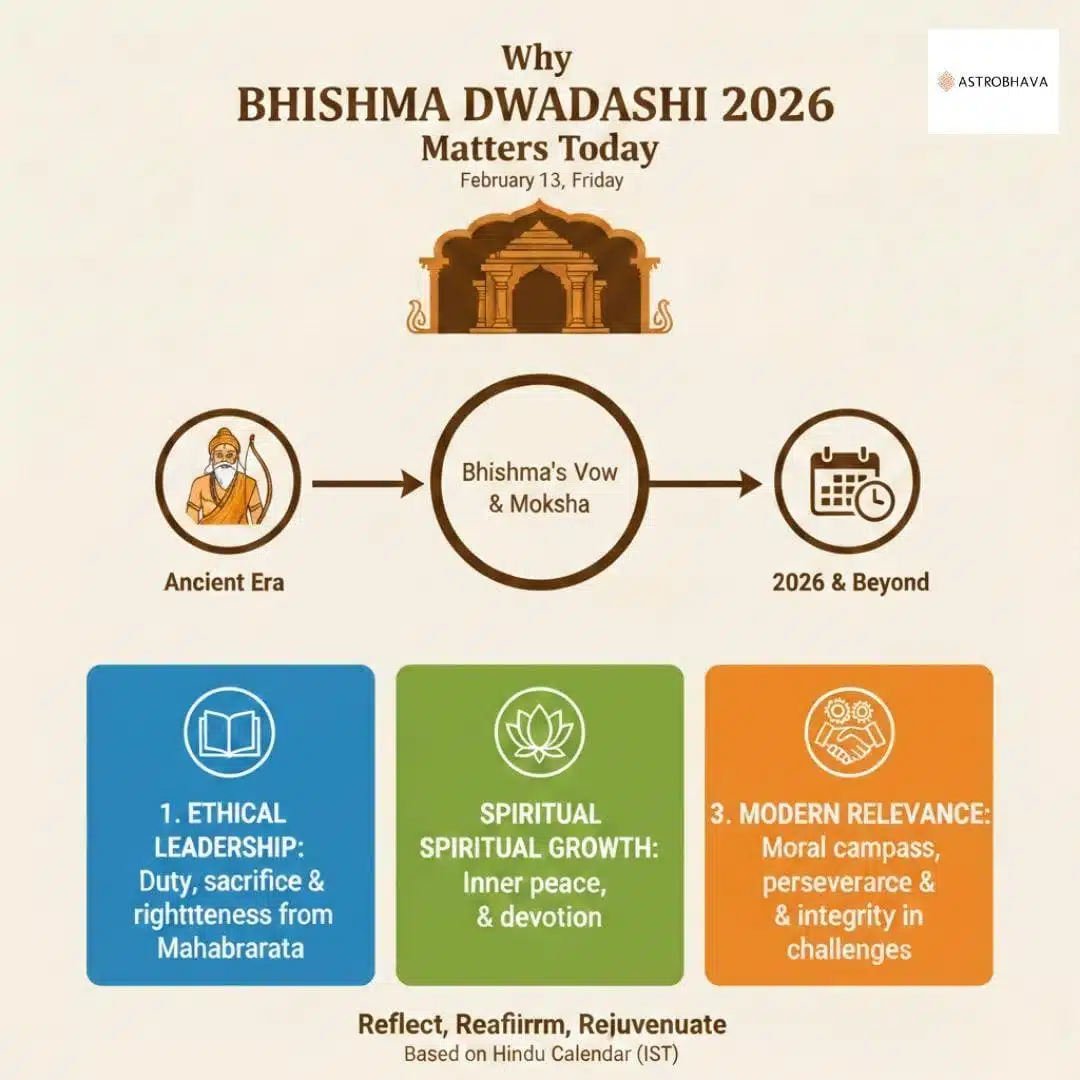
Why Bhishma Dwadashi 2026 Matters Today
In modern times, ancestral issues often surface as emotional patterns rather than visible problems. Bhishma Dwadashi 2026 reminds us that healing lineage karma begins with awareness, responsibility, and restraint—values Bhishma Pitamaha embodied.
From a Vedic astrology standpoint, this day supports inner alignment more than external change, making it quietly powerful.
When Should You Consider a Pitra Dosha Nivaran Homa?
You may consider a Homa if:
- Repeated delays in marriage or childbirth
- Chronic financial instability linked to family karma
- Strong Rahu/Sun or Moon afflictions in 9th house
- Guidance from a qualified astrologer recommends it
While Bhishma Dwadashi supports remembrance and gratitude, a properly performed Homa can deepen the remedial effect for those requiring stronger astrological intervention.
Frequently Asked Questions (FAQs)
Q1. Is Bhishma Dwadashi 2026 only for people with Pitru Dosha?
No. Anyone can observe it respectfully for ancestral gratitude.
Q2. Is Pitru tarpan dwadashi compulsory on this date?
It is optional and should be done with understanding, not pressure.
Q3. Can women perform rituals on Bhishma Dwadashi?
Yes. Vedic astrology does not restrict remembrance rituals by gender.
Q4. Can I perform Pitra Dosha Nivaran Homa on Bhishma Dwadashi 2026?
Yes. Bhishma Dwadashi is considered spiritually supportive for ancestral remedies. While basic tarpan can be performed at home, a full Vedic Homa should ideally be conducted by trained priests following correct mantras and procedures.
Q5. Is this the same as Bhishma Ashtami?
No. Bhishma Ashtami (Jan 26) commemorates his death, while Dwadashi focuses on the completion of rituals and the flow of merit to the ancestors.
Q6. Can I perform these rituals at home? Yes. While a riverbank is traditional, your “intent” and the astrological timing (Muhurta) are what matter most in Vedic psychology.
Q7. What is the spiritual meaning of Bhishma Dwadashi 2026?
Bhishma Dwadashi 2026 (13 February 2026) represents dharma, ancestral remembrance, and karmic maturity. Spiritually, this day honors the legacy of Bhishma Pitamaha, who symbolized discipline, sacrifice, and mastery over destiny.
From a Vedic perspective, the Krishna Paksha phase supports introspection and release of emotional patterns linked to lineage. Observing Bhishma Dwadashi encourages:
- Acceptance of inherited responsibilities
- Gratitude toward ancestors
- Emotional restraint and inner maturity
- Letting go of resentment tied to family karma
Rather than fear-based ritual, the deeper spiritual meaning lies in conscious remembrance and alignment with dharma.
Q8. Is Bhishma Dwadashi good for removing Pitru Dosha?
Bhishma Dwadashi is considered supportive for balancing Pitru Dosha, but it is not a guaranteed “removal” day.
In Vedic astrology, Pitru Dosha is associated with afflictions to the Sun, Moon, or 9th house in a birth chart. Since Bhishma Dwadashi falls in the Magha period — traditionally connected with ancestral energies — performing Pitru Tarpan (water and sesame offerings) on this day may help:
- Calm emotional heaviness linked to lineage
- Reduce subconscious ancestral patterns
- Support Moon–Saturn karmic balance
However, complete resolution of Pitru Dosha usually requires personalized chart-based remedies and consistent spiritual practice.
Final Thoughts
The deeper meaning of Bhishma Dwadashi 2026 lies in conscious remembrance, not ritual perfection. It is a day to reflect on inherited values, karmic responsibility, and emotional maturity—core themes in Vedic astrology.
Bhishma Pitamah waited for the most auspicious time to transcend; you can use that same cosmic timing to help your ancestors find peace. If you feel “stuck” in life despite your best efforts, it may be due to unresolved ancestral debts (Pitru Dosha).
This February 2026, don’t just read about the tradition—participate in it. Perform a sacred Thila Homa to dissolve karmic blocks and invite the protection of your forefathers into your life.
https://www.youtube.com/live/hsuehIYLNmA?si=TdJ-y50zyFf8UBcM