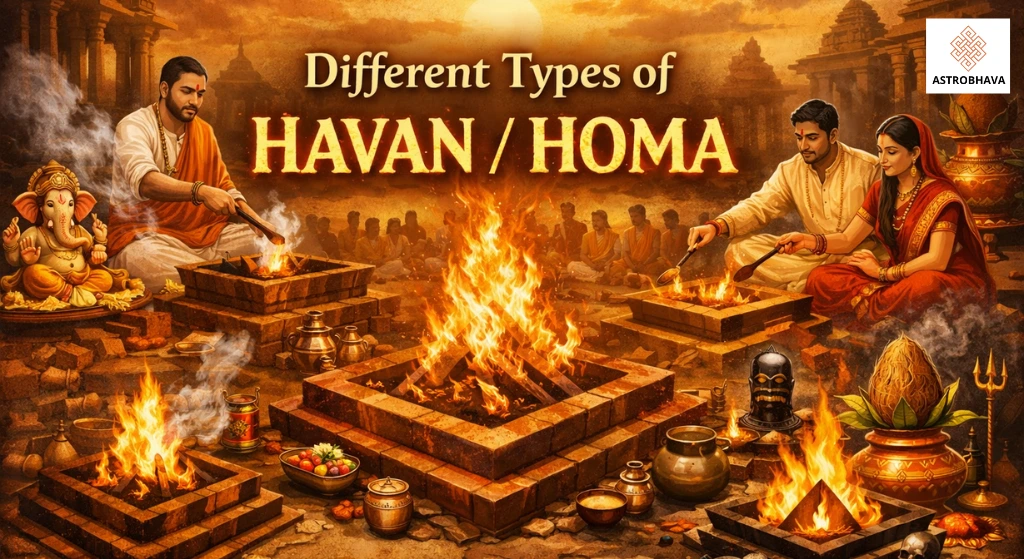
In the rich tapestry of Hindu traditions, few rituals hold as much spiritual depth and transformative power as the Havan or Homam. This ancient fire ceremony, deeply rooted in Vedic scriptures, serves as a bridge between the human realm and the divine. As we delve into exploring the different types of Havan, we’ll uncover how these sacred practices can bring prosperity, peace, and protection into our lives. Whether you’re a spiritual seeker or someone curious about Vedic rituals, understanding the types of Havan can open doors to profound personal growth and harmony.
Havan, also known as Homam in South Indian traditions, involves invoking deities through offerings into a sacred fire. The flames symbolize purification, and the mantras chanted during the ritual amplify intentions. In this comprehensive blog, we’ll explore everything from the basics to the various types of Havan, their procedures, and benefits. By the end, you’ll have a clear picture of how incorporating different types of Havan into your life can lead to spiritual and material fulfillment.
What is Havan/Homa?
At its core, Havan or Homa is a ritualistic fire offering performed to honor gods, seek blessings, or mitigate negative influences. The term “Havan” derives from the Sanskrit word “Havya,” meaning offerings to the divine, while “Homa” is a variant used in Tamil and Telugu cultures. This practice dates back to the Vedic period, over 3,000 years ago, and is mentioned in texts like the Rigveda and Yajurveda.
In a typical Havan, priests or participants create a fire pit (known as a Havan Kund) and offer ghee, grains, herbs, and other sacred items into the flames while chanting specific mantras. The smoke from the fire is believed to carry the offerings to the heavens, purifying the environment and the participants’ minds. Exploring the different types of Havan reveals how this ritual adapts to various purposes— from daily worship to elaborate ceremonies for life events.
Unlike simple prayers, Havan involves a structured invocation, making it a powerful tool for manifestation. It’s not just a religious act but a scientific one too, as the herbs and woods used release beneficial compounds into the air, promoting health and ecological balance. As we continue to examine the types of Havan, it’s evident that this ritual transcends cultural boundaries, appealing to anyone seeking inner peace.
Significance of Havan
The significance of Havan lies in its ability to harmonize the five elements—earth, water, fire, air, and ether—within and around us. Fire, as the central element, represents transformation, turning material offerings into spiritual energy. In Hindu philosophy, performing Havan aligns one’s karma with cosmic forces, helping to resolve planetary doshas (afflictions) and attract positive vibrations.
Spiritually, Havan fosters devotion (Bhakti) and discipline, encouraging participants to focus their intentions. It’s a communal activity that strengthens family bonds and community ties. Environmentally, the ritual purifies the atmosphere; studies have shown that Havan smoke reduces airborne bacteria by up to 94%. This makes exploring the different types of Havan not just a cultural exercise but a holistic approach to well-being.
In modern times, Havan’s significance extends to stress relief and mental clarity. Amidst the chaos of daily life, these rituals provide a meditative anchor. Whether for prosperity, health, or protection, the types of Havan offer tailored solutions to life’s challenges, making them indispensable in Vedic astrology and spirituality.
 Core Elements of Havan
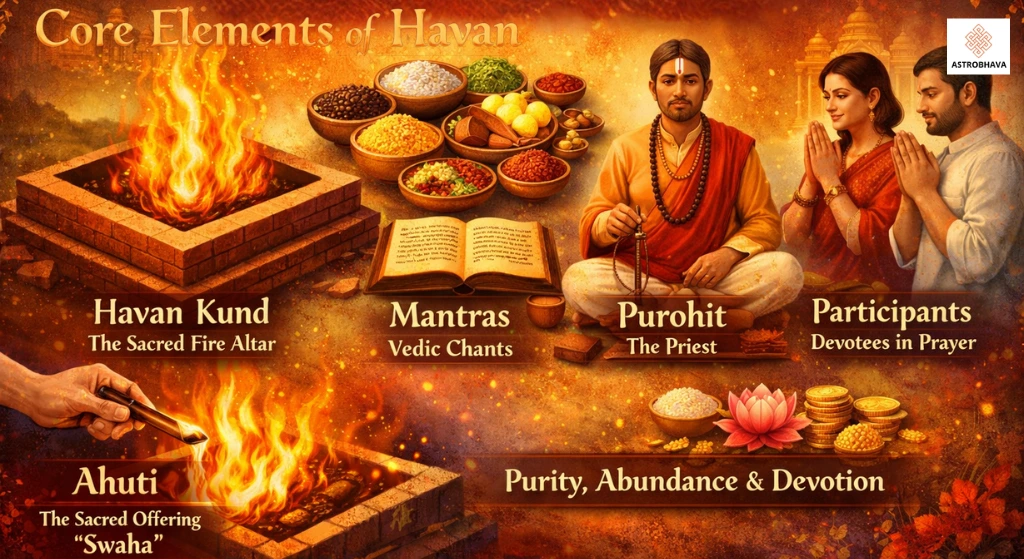
To truly appreciate the different types of Havan, one must understand its core elements. These form the foundation of every ritual, ensuring its efficacy.
- Havan Kund: The fire altar, often square or circular, symbolizes the universe. It’s constructed with bricks or metal and consecrated before use.
- Samagri (Offerings): A mixture of herbs, grains, ghee, and woods like mango or sandalwood. Each ingredient has symbolic meaning—ghee for purity, rice for abundance.
- Mantras: Sacred chants from Vedas invoke specific deities. The rhythm and pronunciation are crucial for vibrational energy.
- Priest (Purohit): An experienced guide who leads the ritual, ensuring adherence to traditions.
- Participants: Their faith and focus amplify the ritual’s power.
- Ahuti: The act of offering into the fire, accompanied by “Swaha” to signify surrender.
These elements remain consistent across all types of Havan, but their emphasis varies. For instance, in prosperity-focused types of Havan, more emphasis is on abundance-related offerings.
Havan Procedure
The procedure for Havan is methodical, ensuring spiritual alignment. While specifics differ among types of Havan, the general steps are as follows:
- Preparation: Cleanse the space and participants with holy water. Set up the Havan Kund and arrange samagri.
- Sankalpa: State the intention of the ritual, invoking blessings for the purpose.
- Invocation (Avahana): Light the fire with camphor or ghee, chanting Ganesh mantras to remove obstacles.
- Main Offerings: Chant deity-specific mantras while offering samagri. Each ahuti is timed with “Swaha.”
- Purnahuti: The final offering, often a coconut or fruits, symbolizing completion.
- Aarti and Prasad: Conclude with lamp circling and distribution of blessed food.
- Visarjana: Thank the deities and disperse the ashes in flowing water.
This procedure, lasting 1-2 hours, requires precision. For complex types of Havan, consulting experts like those at Astrobhava ensures authenticity.
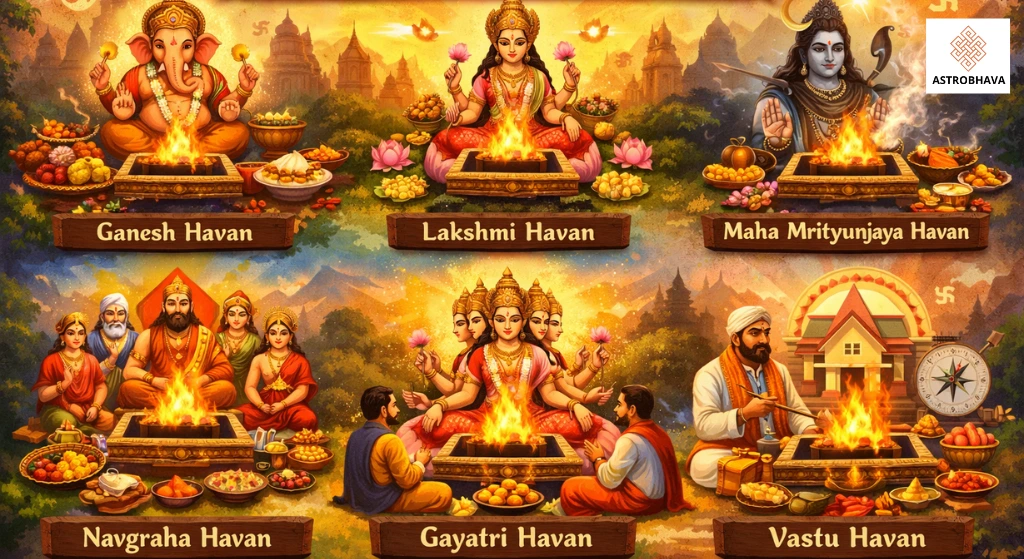 Different Types of Havan
Now, let’s dive into the heart of our exploration: the different types of Havan. Each type targets specific life aspects, drawing from Vedic wisdom. We’ll cover some popular ones, highlighting their purposes and how they can benefit you.
Ganapati Homam
One of the most revered types of Havan is Ganapati Homam, dedicated to Lord Ganesha, the remover of obstacles. This ritual is ideal for new beginnings, such as starting a business or education. It involves chanting the Ganapati Atharvashirsha and offering modaks (sweets) into the fire.
Performed during festivals like Ganesh Chaturthi, this type of Havan clears hurdles and bestows wisdom. Participants often experience improved focus and success in endeavors.
Navagraha Homam
Among the astrological types of Havan, Navagraha Homam stands out. It appeases the nine planets (Navagrahas) to mitigate doshas in one’s horoscope. Each planet—Sun, Moon, Mars, etc.—receives specific offerings, like red cloth for Mars or milk for Moon.
This ritual is crucial for those facing career setbacks or health issues due to planetary influences. By balancing cosmic energies, it promotes overall harmony.
Lakshmi Homam
For prosperity seekers, Lakshmi Homam is a key type of Havan. Dedicated to Goddess Lakshmi, it invokes wealth and abundance. Offerings include lotus seeds, coins, and ghee, with chants from Sri Sukta.
This ritual is performed on Fridays or during Diwali, attracting financial stability and material comforts. It’s especially beneficial for business owners.
Sudarshana Homam
Protection-oriented types of Havan include Sudarshana Homam, honoring Lord Vishnu’s discus (Sudarshana Chakra). It wards off evil eyes, enemies, and negative energies through powerful mantras and herbal offerings.
Ideal for those in legal troubles or facing threats, this ritual creates a shield of divine protection.
Safeguard your well-being; reserve Sudarshana Homam at Astrobhava for ultimate security.
Ayush Homam
Health-focused among the types of Havan is Ayush Homam, performed for longevity and well-being. It invokes Ayur Devata (deity of life) with offerings of medicinal herbs.
Commonly done on birthdays, it enhances vitality and prevents illnesses, making it perfect for families.
Boost your health span—book Ayush Homam with Astrobhava for a longer, healthier life.
Chandi Homam
For overcoming adversities, Chandi Homam is a potent type of Havan dedicated to Goddess Durga. It involves reciting Devi Mahatmyam and offering fierce items like red chilies.
This ritual destroys obstacles and grants victory, often performed during Navratri.
Conquer challenges head-on; arrange Chandi Homam through Astrobhava for empowerment.
Mrityunjaya Homam
One of the healing types of Havan, Mrityunjaya Homam pays homage to Lord Shiva for conquering death. The Maha Mrityunjaya mantra is chanted 108 times with offerings of bilva leaves.
It’s recommended for serious illnesses or accidents, promoting recovery and peace.
Seek healing and protection—book Mrityunjaya Homam with Astrobhava today.
Saraswati Homam
Education and creativity thrive with Saraswati Homam, a type of Havan for Goddess Saraswati. Offerings include books, fruits, and white flowers, enhancing knowledge and arts.
Students and artists benefit greatly, especially during Vasant Panchami.
Unlock your intellectual potential; schedule Saraswati Homam at Astrobhava.
Dhanvantari Homam
Dedicated to the god of medicine, Dhanvantari Homam is among health-centric types of Havan. It uses Ayurvedic herbs to invoke healing energies.
Perfect for chronic ailments, it restores physical and mental balance.
Embrace holistic health—book Dhanvantari Homam with Astrobhava.
Vastu Homam
For home harmony, Vastu Homam corrects architectural defects through fire rituals. It balances energies in living spaces.
New homeowners often perform this to ensure peace.
Harmonize your space; reserve Vastu Homam through Astrobhava.
These are just a few of the many types of Havan, each offering unique blessings tailored to life’s facets.
Benefits of Performing Havan/Homa with Astrobhava
Performing Havan with Astrobhava elevates the experience. As a trusted platform, Astrobhava connects you with certified priests who conduct authentic rituals, either in-person or online. Benefits include:
- Personalization: Tailored to your horoscope and needs.
- Convenience: Virtual options for global access.
- Purity: High-quality samagri sourced ethically.
- Expert Guidance: Astrologers ensure optimal timing.
- Holistic Impact: Beyond spiritual, it aids mental health and environmental purification.
- Affordable Prices: Prices are set based on the number of days and are highly affordable.
Participants report increased positivity, resolved issues, and enhanced life quality. Whether choosing from various types of Havan, Astrobhava ensures transformative results.
Conclusion
Exploring the different types of Havan reveals a world of spiritual richness, where fire becomes a medium for divine connection. From Ganapati Homam for new starts to Mrityunjaya Homam for healing, each type addresses specific aspirations. Incorporating these rituals, especially with Astrobhava’s expertise, can lead to profound changes.
In a fast-paced world, Havan reminds us of ancient wisdom’s relevance. Embrace these practices for a balanced, blessed life.
FAQs
Q1: What is the difference between Havan and Homam?
A: Havan and Homam refer to the same fire ritual, with “Havan” used in North India and “Homam” in South India. The core remains identical across types of Havan.
Q2: How often should one perform Havan?
A: It depends on the type; daily for simple ones, annually for specific types of Havan like Ayush Homam.
Q3: Can Havan be performed at home?
A: Yes, with guidance. Astrobhava offers virtual priest services for all types of Havan.
Q4: Are there scientific benefits to Havan?
A: Absolutely; the smoke purifies air, reduces stress, and releases beneficial ions.
Q5: Which type of Havan is best for career growth?
A: Navagraha or Ganapati Homam among the types of Havan can help mitigate obstacles and boost opportunities.
Q6: Is online Havan effective?
A: Yes, as intention matters. Astrobhava’s live streams ensure authenticity for all types of Havan.
Q7: What preparations are needed for Havan?
A: Fasting, clean space, and positive mindset enhance any type of Havan.
Q8: Can non-Hindus perform Havan?
A: Havan is universal; anyone with faith can participate in its types.
Q9: How long does a typical Havan last?
A: 1-2 hours, varying by the complexity of the type of Havan.