Introduction
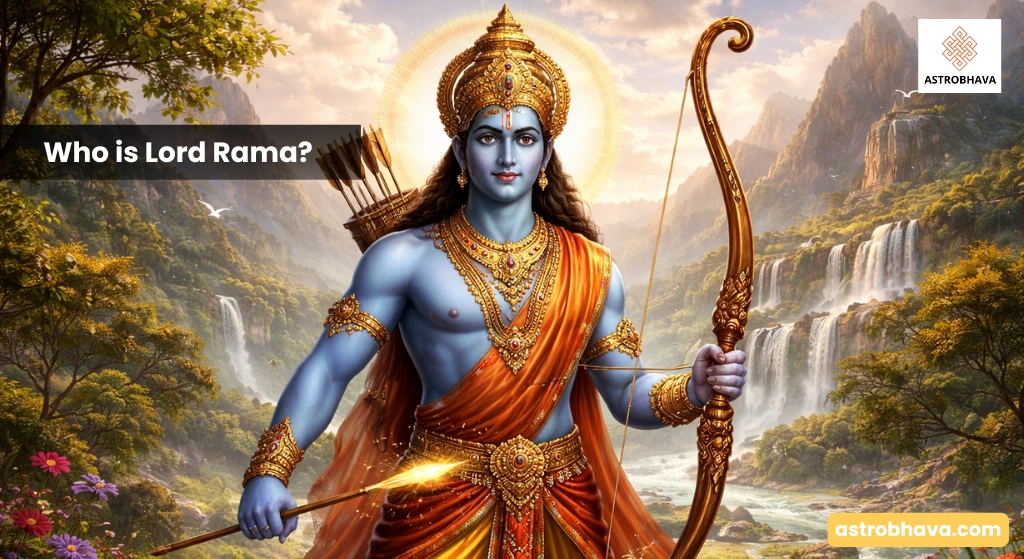
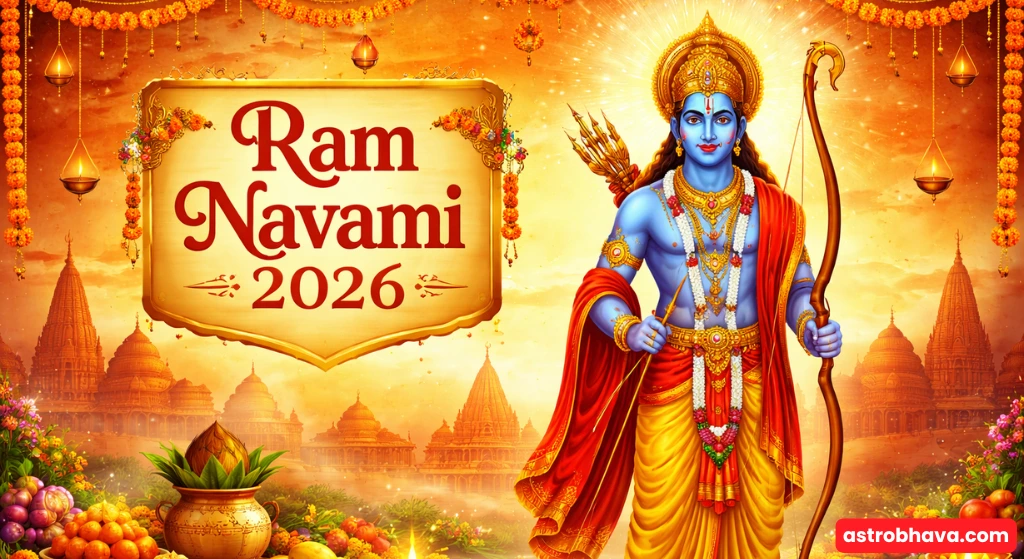
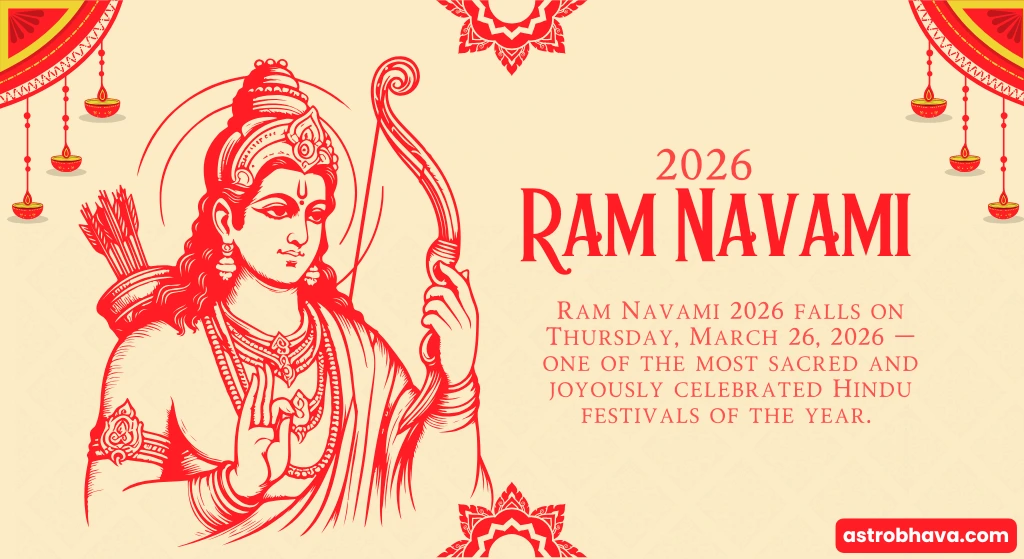
Ram Navami 2026 falls on Thursday, March 26, 2026 — one of the most sacred and joyously celebrated Hindu festivals of the year. Observed on the ninth day (Navami) of the bright fortnight (Shukla Paksha) of the Chaitra month, this holy day marks the birth of Lord Rama, the seventh avatar of Lord Vishnu and the beloved hero of the Ramayana.
Every year, millions of devotees across India and around the world observe fasts, chant Rama’s divine name, perform elaborate pujas, and come together in bhajan sessions to honour this extraordinary occasion. Ram Navami 2026 is not just a religious festival — it is a celebration of righteousness, compassion, courage, and the eternal victory of good over evil.
Whether you are a lifelong devotee or someone seeking to understand this festival more deeply, this guide covers everything you need to know: the date and timings, the divine story of Rama’s birth, its spiritual significance, the rituals observed, and how celebrations unfold across India.
👉 Book Your Personalized Kundali Reading at AstroBhava →
 Ram Navami 2026: Date and Auspicious Timings
 Ram Navami 2026: Date and Auspicious Timings
Before diving into rituals and preparations, it is essential to know the exact timings so that your worship is performed at the most auspicious hour.
Ram Navami 2026 — Dates & Timings (IST)
| Detail | Timing |
| Festival Date | Thursday, March 26, 2026 |
| Navami Tithi Begins | 11:48 AM on March 26, 2026 |
| Navami Tithi Ends | 10:06 AM on March 27, 2026 |
| Madhyahna Puja Muhurta | 11:13 AM to 1:41 PM (New Delhi) |
| Exact Madhyahna Moment (Lord Rama’s Birth) | 12:27 PM |
| Nakshatra | Punarvasu |
The Madhyahna Muhurta — the midday window — is the single most important time on Ram Navami 2026. According to Hindu scriptures, Lord Rama was born precisely at noon, and performing the Janma Abhishek (ritual bathing of the idol) and puja during this period is believed to carry immense divine merit.
Maximise the benefits of Ram Navami by performing these 3 rituals
The Divine Story of Lord Rama’s Birth
Behind every great festival is a story that has shaped civilisations. The story of Ram Navami takes us back thousands of years to the glorious kingdom of Ayodhya, ruled by the noble King Dasharatha of the Ikshvaku dynasty.
The Longing of King Dasharatha
Despite ruling a prosperous kingdom and being blessed with three devoted queens — Kaushalya, Kaikeyi, and Sumitra — King Dasharatha carried a deep ache in his heart: he had no son to carry forward his lineage and the throne of Ayodhya. On the counsel of the royal sage Vasishtha, the king decided to perform the sacred Putrakameshti Yajna — a fire ritual specifically conducted to obtain sons — under the guidance of the great sage Rishyashringa.
The Divine Gift from the Fire
The gods were moved by Dasharatha’s devotion and the power of the yajna. From the sacred fire emerged a divine being bearing a golden vessel filled with payasam (sacred sweet kheer), instructing the king to distribute it among his queens. Queen Kaushalya received half, Queen Kaikeyi received a quarter, and Queen Sumitra received the remaining quarter (which she consumed in two portions at different times).
The Moment of Rama’s Birth
In due course, on the ninth day (Navami) of Chaitra Shukla Paksha, when the sun stood at its glorious noon zenith and the Punarvasu Nakshatra graced the sky, Queen Kaushalya gave birth to a radiant boy whose very presence lit up the three worlds. This divine child was Lord Rama — none other than Lord Vishnu himself, who had taken mortal form to rid the earth of the demonic tyranny of Ravana, the ten-headed king of Lanka.
At the auspicious moment of Rama’s birth, flowers rained from the heavens, celestial musicians (Gandharvas) filled the skies with divine melodies, and sages chanted Vedic hymns in joyful praise. Simultaneously, Queen Kaikeyi gave birth to Bharata, and Queen Sumitra delivered the twins Lakshmana and Shatrughna — but it was Rama’s arrival that sent ripples of joy across all realms of existence.
Rama: The Maryada Purushottam
Lord Rama is venerated as the Maryada Purushottam — the Perfect Man who upholds righteous conduct in every role and every relationship. As a son, he chose fourteen years of forest exile over his father’s grief. As a husband, he stood by truth even at enormous personal cost. As a king, he governed with impartiality and love. His life, chronicled in the Valmiki Ramayana and retold beautifully in Tulsidas’s Ramcharitmanas, remains the ultimate moral and spiritual compass for hundreds of millions of people.
Ram Navami is one of the most powerful days of the year for receiving divine blessings and clearing karmic obstacles. Discover which specific prayers, mantras, and rituals will be most auspicious for your unique birth chart this Ram Navami.
Learn more about 7th incarnation of Vishnu i.e. Lord Rama here
The Spiritual Significance of Ram Navami
Ram Navami 2026 holds significance that goes far beyond the celebration of a birth anniversary. It is a day of deep spiritual renewal — an invitation to internalise the divine qualities that Lord Rama embodied.
1. The Triumph of Dharma Over Adharma
At its heart, Ram Navami is a celebration of righteousness descending into a world overtaken by darkness. Ravana — despite his immense power and vast knowledge — had let ego, pride, and unrestrained desire corrupt his soul. Rama’s birth was the universe’s response: a living proof that love, truth, and virtue will always outlast arrogance and evil.
2. The Infinite Power of Ram Naam
Hindu philosophy teaches that the mere utterance of the name “Ram” carries the seed of liberation. The Rama Naam is said to contain within it the essence of all thousand names of Lord Vishnu. On Ram Navami, chanting “Jai Shri Ram,” “Om Sri Ramaya Namaha,” or reciting the Rama Raksha Stotra is considered a fast track to spiritual purification and divine grace.
The great saint Tulsidas wrote in the Ramcharitmanas: “Ram naam mani deep dharo, jeeha dehari dwar” — Keep the jewel-lamp of Ram’s name at the threshold of your tongue. Ram Navami is the ideal day to establish or deepen this practice.
3. Astrological Significance
According to Vedic astrology, Lord Rama was born under a celestial configuration of extraordinary rarity — five planets in exaltation simultaneously, with Cancer Lagna and the Punarvasu Nakshatra. This makes Ram Navami an astronomically and astrologically powerful day for performing remedial rituals, reciting mantras for planetary relief, and seeking blessings for health, prosperity, and family harmony.
4. A Day for Inner Transformation
Ram Navami is not merely about external rituals. It is an invitation to reflect: Where in our lives are we compromising on truth? Where have we let ego overpower compassion? The story of Rama is ultimately a map for the inner journey — from ignorance to wisdom, from selfishness to service, from darkness to light.
👉 Book Your Rama Homa at AstroBhava →
Ram Navami Rituals and Traditions
Observing Ram Navami 2026 with proper rituals magnifies its spiritual potency. Here is a step-by-step guide to the key traditions followed by devotees.
1. Pre-Dawn Preparations (Brahma Muhurta)
Devotees wake before sunrise, take a purifying bath — often with a few drops of Ganga jal or tulsi leaves added to the water — and wear clean, preferably yellow or saffron-coloured clothes. The home is swept and cleaned, and a sacred puja space (mandap) is set up with an idol or framed image of Lord Rama, Sita, Lakshmana, and Hanuman.
2. Fasting (Vrat)
Many devotees observe a strict fast on Ram Navami, consuming only fruits, milk, and sattvic foods. Some undertake a complete Nirjala (waterless) fast from sunrise to sunset. Fasting is understood as an act of surrender, self-discipline, and purification — aligning the body’s energy with the elevated frequency of the occasion.
3. Puja and Abhishek
The idol of Bal Rama (infant Rama) is ceremonially bathed with Panchamrit — a sacred mixture of milk, curd, honey, ghee, and sugar — accompanied by Vedic mantras. After the abhishek, the idol is dressed in fresh clothes, adorned with flowers (especially marigold and lotus), and offered naivedyam (food offering), typically including kheer, fruits, and tulsi leaves.
4. Tulsi Archana
108 tulsi leaves are offered to Lord Rama’s idol, each accompanied by one of the 108 names of Vishnu — a deeply purifying practice that is said to wash away the sins of many lifetimes.
5. Ram Naam Japa and Scripture Recitation
Devotees chant “Om Sri Ram Jai Ram Jai Jai Ram” 108 times on a tulsi bead mala. Groups gather to read or listen to the Ramcharitmanas (particularly the Bala Kanda describing Rama’s birth), the Sundara Kanda (celebrating Hanuman’s devotion), and the Rama Raksha Stotra (for divine protection). This collective reading — known as an Akhand Path — often runs for 24 hours in temples and community halls.
6. The Janma Aarti at Noon (Madhyahna Aarti)
The crown jewel of Ram Navami observance is the Janma Aarti — the aarti performed at noon to celebrate the exact moment of Rama’s birth. Conch shells are blown, temple bells ring in joyful cacophony, and priests perform the aarti of baby Rama amidst a shower of flowers and the thunderous chanting of “Jai Shri Ram” by thousands of gathered devotees. This moment — wherever it is experienced, at a grand temple or a quiet home — is one of pure, collective bliss.
7. Prasad Distribution
Traditional Ram Navami prasad varies by region. In South India, offerings include Panakam (a refreshing drink of jaggery, lemon, ginger, and black pepper), Neer Moram (spiced buttermilk), and Vadapappu (soaked lentils). In North India, sweetened kheer, puri, and halwa are commonly distributed as bhog to all devotees.
🙏 Book a Ram Navami Puja at a Sacred Temple — Through AstroBhava
Can’t travel to Ayodhya or Rameswaram this year? Let AstroBhava’s verified pandits perform a Ram Navami puja on your behalf at a hallowed temple. You will receive prasad by mail, a detailed puja report, and a personalised blessing certificate.
👉 Book Your Ram Navami Temple Puja at AstroBhava →
Conclusion
Ram Navami 2026 arrives at a time when the world deeply needs the values that Lord Rama so perfectly embodied — truth, compassion, courage, discipline, and service. This sacred festival is not just a birthday celebration; it is an annual reset, a divine reminder that righteousness is not weakness but the highest form of strength.
Whether you observe the day with a full fast, a heartfelt puja, the recitation of the Ramcharitmanas, or simply a few quiet moments of prayer with Rama’s name on your lips — every act of devotion on this day carries immeasurable spiritual weight.
As Ram Navami 2026 approaches on March 26, 2026, prepare your heart and your home to welcome the divine energy of Lord Rama. Let His story inspire you. Let His name purify you. And let His example guide you — in every role, every relationship, every decision.
Jai Shri Ram. 🙏
Frequently Asked Questions (FAQs)
Q1. When is Ram Navami 2026?
Ram Navami 2026 falls on Thursday, March 26, 2026. The Navami Tithi of Chaitra Shukla Paksha begins on the evening of March 25 and continues through March 26. The most auspicious window for puja is the Madhyahna Muhurta: approximately 11:13 AM to 1:41 PM on Thursday, March 26, 2026.
Q2. Why is Ram Navami celebrated?
Ram Navami celebrates the birth of Lord Rama — the seventh avatar of Lord Vishnu — who was born to King Dasharatha and Queen Kaushalya in Ayodhya. It is also a celebration of dharma (righteousness), truth, and the eternal principle that divine grace descends into the world whenever unrighteousness prevails.
Q3. What is the significance of fasting on Ram Navami?
Fasting on Ram Navami is a devotional act of surrender and self-purification. It is believed to cleanse the body and mind, intensify prayer, and accumulate significant spiritual merit (punya). Devotees typically fast from sunrise to sunset, breaking the fast after the evening aarti. Those who cannot fast fully may consume fruits and milk.
Q4. Which mantras should be chanted on Ram Navami 2026?
The most powerful mantras for Ram Navami include:
- Om Sri Ramaya Namaha — the primary salutation
- Om Sri Ram Jai Ram Jai Jai Ram — the classic naam japa mantra
- Rama Raksha Stotra — for divine protection and blessings
- Reading the Bala Kanda of the Ramcharitmanas and the Sundara Kanda are also highly recommended.
Q5. What prasad is offered on Ram Navami?
Traditional Ram Navami prasad includes Panakam (jaggery, lemon, ginger, and black pepper drink), Neer Moram (spiced buttermilk), and Vadapappu (soaked lentils) — especially in South India. In North India, sweetened kheer, puri, and halwa are popular offerings.
Q6. What is the best time to perform puja on Ram Navami 2026?
The Madhyahna Muhurta — from approximately 11:13 AM to 1:41 PM on March 26, 2026 — is the single most auspicious window for Ram Navami puja, as it corresponds to the time of Rama’s birth at noon.