Ganesh Chalisa
जय गणपति सदगुण सदन कविवर बदन कृपाल । विघ्न हरण मंगल करण जय जय गिरिजालाल ॥In Devanagari, Tamil, Telugu, Kannada, Malayalam and English — with the meaning of every word, and the one syllable most people pronounce wrongly.
What the Ganesh Chalisa is
The Ganesh Chalisa is a Hindi devotional poem to Ganesha in the chalisa form, written in an Awadhi-flavoured Hindi. Its poet names himself only once, in chaupai 37, as Ramsundar, servant of the Lord (prabhudasa). The text has an opening doha, 38 chaupais and two closing dohas, so the 'forty' of the title is a round number rather than an exact count. The sequence moves in clear stages. Chaupais 1 to 8 describe Ganesha's form: the curved trunk, the three-line tripundra on the forehead, a book, axe and trident in his hands, modakas as his offering, a yellow garment, Riddhi and Siddhi waving the fan beside him and the mouse waiting at the door. Chaupais 9 to 30 narrate his birth, and chaupais 31 to 34 the contest of wisdom with his brother. The poet then confesses his own dullness and asks for devotion, the second doha states the fruit of reading, and the last doha is a dated colophon.
Shani's glance and seven turns around two parents
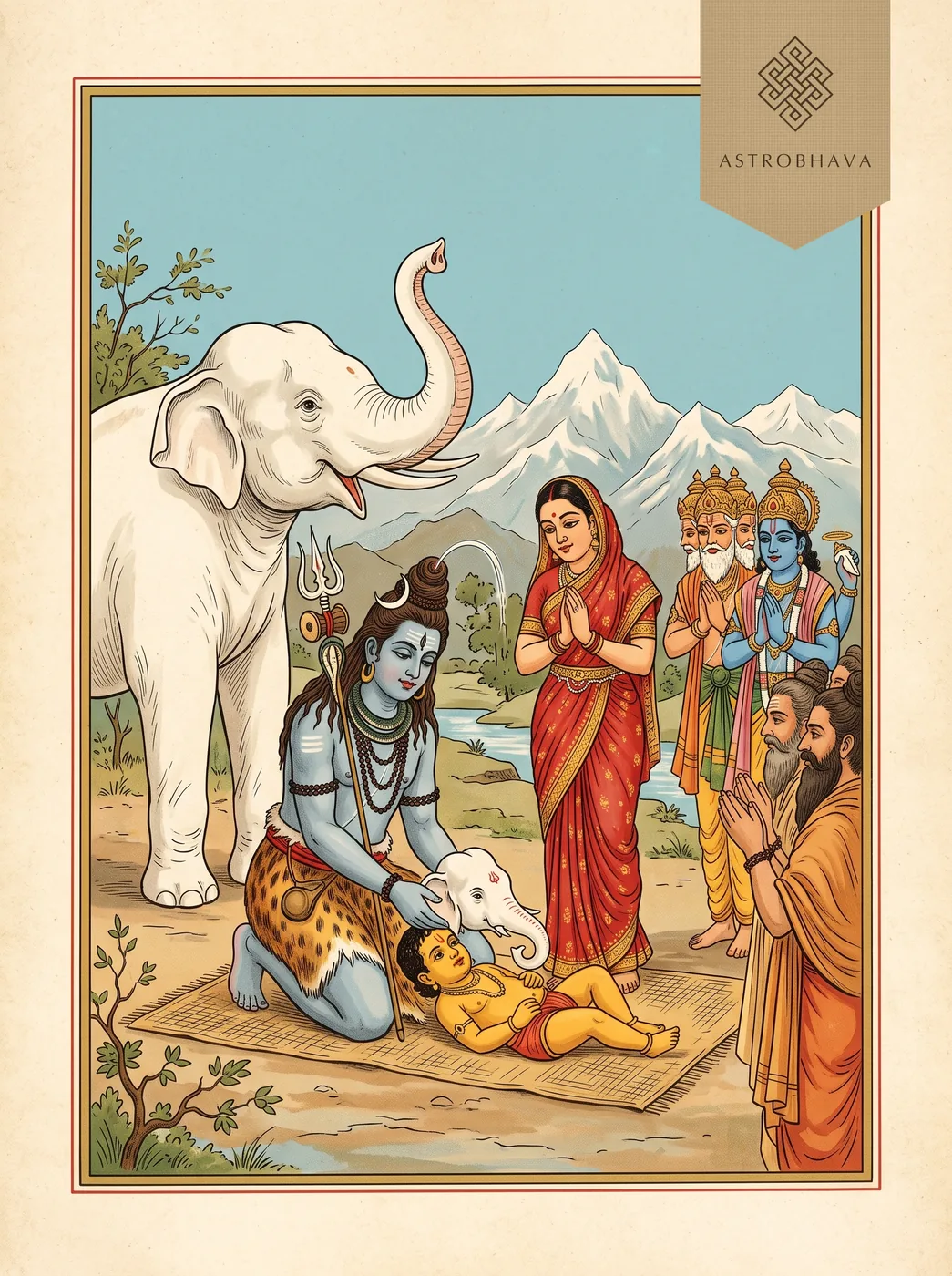
The birth story in chaupais 10 to 30 follows the Ganapati Khanda of the Brahma Vaivarta Purana, not the better-known Shiva Purana account in which Shiva himself beheads the boy guarding Parvati's door. In the Brahma Vaivarta telling, Parvati keeps the punyaka vow for a son, and a hungry, penance-thin brahmin comes to the door and then vanishes; a voice reveals he was Janardana, and a newborn is found inside. The chalisa makes one quiet change: it addresses Ganesha himself as the brahmin guest who blessed his mother and then lay down in the cradle as a baby, in keeping with that Purana's claim that Ganesha is a form of Krishna. Among the gods who come to see the child is Shani, who keeps his eyes lowered. The Purana explains why: his wife had cursed him that whatever he looked at would be destroyed. Parvati insists, the glance falls, and the head flies off. Vishnu rides Garuda to the Pushpabhadra river and returns with an elephant's head, Shiva restores life, and the child is named Ganesha and made first to be worshipped. Chaupai 33 then takes the contest from the Shiva Purana's Kumara Khanda, where Ganesha circles his parents seven times instead of the earth; the chalisa keeps that number, 'sata pradakshina'.
The mantra, in six scripts
- जय
- jaya — glory
- गणपति
- gaṇapati — to Ganapati
- सदगुण
- sadaguṇa — of good qualities
- सदन
- sadana — home
- कविवर
- kavivara — beloved of poets
- बदन
- badana — face
- कृपाल
- kṛpāla — gracious one
- विघ्न
- vighna — obstacles
- हरण
- haraṇa — remover
- मंगल
- maṃgala — good fortune
- करण
- karaṇa — bringer
- जय
- jaya — glory
- जय
- jaya — glory
- गिरिजालाल
- girijālāla — darling son of Girija (Parvati)
Ganesh Chalisa lyrics in full
All 41 verses, in Hindi, Tamil, Telugu, Kannada, Malayalam and English, each with its meaning. Choose a script:
Download the Ganesh Chalisa PDFAll 41 verses with their meanings, in Hindi. Free to print and keep.
जय गणपति सदगुण सदन कविवर बदन कृपाल ।
विघ्न हरण मंगल करण जय जय गिरिजालाल ॥
ஜய கணபதி ஸதகுண ஸதந கவிவர பதந க்ருபால ।
விக்ந ஹரண மம்கல கரண ஜய ஜய கிரிஜாலால ॥
జయ గణపతి సదగుణ సదన కవివర బదన కృపాల ।
విఘ్న హరణ మంగల కరణ జయ జయ గిరిజాలాల ॥
ಜಯ ಗಣಪತಿ ಸದಗುಣ ಸದನ ಕವಿವರ ಬದನ ಕೃಪಾಲ ।
ವಿಘ್ನ ಹರಣ ಮಂಗಲ ಕರಣ ಜಯ ಜಯ ಗಿರಿಜಾಲಾಲ ॥
ജയ ഗണപതി സദഗുണ സദന കവിവര ബദന കൃപാല ।
വിഘ്ന ഹരണ മംഗല കരണ ജയ ജയ ഗിരിജാലാല ॥
jaya gaṇapati sadaguṇa sadana kavivara badana kṛpāla |
vighna haraṇa maṃgala karaṇa jaya jaya girijālāla ||
Glory to Ganapati, home of every virtue, gracious one with a face loved by poets. Remover of obstacles and bringer of good fortune, glory, glory to the darling son of Girija (Parvati).
जय जय जय गणपति गणराजू ।
मंगल भरण करण शुभ काजू ॥
ஜய ஜய ஜய கணபதி கணராஜூ ।
மம்கல பரண கரண ஶுப காஜூ ॥
జయ జయ జయ గణపతి గణరాజూ ।
మంగల భరణ కరణ శుభ కాజూ ॥
ಜಯ ಜಯ ಜಯ ಗಣಪತಿ ಗಣರಾಜೂ ।
ಮಂಗಲ ಭರಣ ಕರಣ ಶುಭ ಕಾಜೂ ॥
ജയ ജയ ജയ ഗണപതി ഗണരാജൂ ।
മംഗല ഭരണ കരണ ശുഭ കാജൂ ॥
jaya jaya jaya gaṇapati gaṇarājū |
maṃgala bharaṇa karaṇa śubha kājū ||
Glory, glory, glory to Ganapati, king of the ganas, who fills life with blessings and brings good works to completion.
जय गजबदन सदन सुखदाता ।
विश्व विनायक बुद्धि विधाता ॥
ஜய கஜபதந ஸதந ஸுகதாதா ।
விஶ்வ விநாயக புத்தி விதாதா ॥
జయ గజబదన సదన సుఖదాతా ।
విశ్వ వినాయక బుద్ధి విధాతా ॥
ಜಯ ಗಜಬದನ ಸದನ ಸುಖದಾತಾ ।
ವಿಶ್ವ ವಿನಾಯಕ ಬುದ್ಧಿ ವಿಧಾತಾ ॥
ജയ ഗജബദന സദന സുഖദാതാ ।
വിശ്വ വിനായക ബുദ്ധി വിധാതാ ॥
jaya gajabadana sadana sukhadātā |
viśva vināyaka buddhi vidhātā ||
Glory to the elephant-faced one, the abode and giver of happiness, Vinayaka of the whole world and the giver of wisdom.
वक्र तुण्ड शुचि शुण्ड सुहावन ।
तिलक त्रिपुण्ड भाल मन भावन ॥
வக்ர துண்ட ஶுசி ஶுண்ட ஸுஹாவந ।
திலக த்ரிபுண்ட பால மந பாவந ॥
వక్ర తుణ్డ శుచి శుణ్డ సుహావన ।
తిలక త్రిపుణ్డ భాల మన భావన ॥
ವಕ್ರ ತುಣ್ಡ ಶುಚಿ ಶುಣ್ಡ ಸುಹಾವನ ।
ತಿಲಕ ತ್ರಿಪುಣ್ಡ ಭಾಲ ಮನ ಭಾವನ ॥
വക്ര തുണ്ഡ ശുചി ശുണ്ഡ സുഹാവന ।
തിലക ത്രിപുണ്ഡ ഭാല മന ഭാവന ॥
vakra tuṇḍa śuci śuṇḍa suhāvana |
tilaka tripuṇḍa bhāla mana bhāvana ||
Your curved trunk is pure and lovely, and the three-line tilak on your forehead delights the mind.
राजत मणि मुक्तन उर माला ।
स्वर्ण मुकुट शिर नयन विशाला ॥
ராஜத மணி முக்தந உர மாலா ।
ஸ்வர்ண முகுட ஶிர நயந விஶாலா ॥
రాజత మణి ముక్తన ఉర మాలా ।
స్వర్ణ ముకుట శిర నయన విశాలా ॥
ರಾಜತ ಮಣಿ ಮುಕ್ತನ ಉರ ಮಾಲಾ ।
ಸ್ವರ್ಣ ಮುಕುಟ ಶಿರ ನಯನ ವಿಶಾಲಾ ॥
രാജത മണി മുക്തന ഉര മാലാ ।
സ്വര്ണ മുകുട ശിര നയന വിശാലാ ॥
rājata maṇi muktana ura mālā |
svarṇa mukuṭa śira nayana viśālā ||
A garland of jewels and pearls shines on your chest; a golden crown sits on your head, and your eyes are large.
पुस्तक पाणि कुठार त्रिशूलं ।
मोदक भोग सुगन्धित फूलं ॥
புஸ்தக பாணி குடார த்ரிஶூலம் ।
மோதக போக ஸுகந்தித பூலம் ॥
పుస్తక పాణి కుఠార త్రిశూలం ।
మోదక భోగ సుగన్ధిత ఫూలం ॥
ಪುಸ್ತಕ ಪಾಣಿ ಕುಠಾರ ತ್ರಿಶೂಲಂ ।
ಮೋದಕ ಭೋಗ ಸುಗನ್ಧಿತ ಫೂಲಂ ॥
പുസ്തക പാണി കുഠാര ത്രിശൂലം ।
മോദക ഭോഗ സുഗന്ധിത ഫൂലം ॥
pustaka pāṇi kuṭhāra triśūlaṃ |
modaka bhoga sugandhita phūlaṃ ||
In your hands are a book, an axe and a trident; modaks are your offering, along with fragrant flowers.
सुन्दर पीताम्बर तन साजित ।
चरण पादुका मुनि मन राजित ॥
ஸுந்தர பீதாம்பர தந ஸாஜித ।
சரண பாதுகா முநி மந ராஜித ॥
సున్దర పీతామ్బర తన సాజిత ।
చరణ పాదుకా ముని మన రాజిత ॥
ಸುನ್ದರ ಪೀತಾಮ್ಬರ ತನ ಸಾಜಿತ ।
ಚರಣ ಪಾದುಕಾ ಮುನಿ ಮನ ರಾಜಿತ ॥
സുന്ദര പീതാമ്ബര തന സാജിത ।
ചരണ പാദുകാ മുനി മന രാജിത ॥
sundara pītāmbara tana sājita |
caraṇa pādukā muni mana rājita ||
A handsome yellow garment adorns your body, and your sandalled feet shine in the minds of sages.
धनि शिवसुवन षडानन भ्राता ।
गौरी ललन विश्व-विख्याता ॥
தநி ஶிவஸுவந ஷடாநந ப்ராதா ।
கௌரீ லலந விஶ்வ-விக்யாதா ॥
ధని శివసువన షడానన భ్రాతా ।
గౌరీ లలన విశ్వ-విఖ్యాతా ॥
ಧನಿ ಶಿವಸುವನ ಷಡಾನನ ಭ್ರಾತಾ ।
ಗೌರೀ ಲಲನ ವಿಶ್ವ-ವಿಖ್ಯಾತಾ ॥
ധനി ശിവസുവന ഷഡാനന ഭ്രാതാ ।
ഗൌരീ ലലന വിശ്വ-വിഖ്യാതാ ॥
dhani śivasuvana ṣaḍānana bhrātā |
gaurī lalana viśva-vikhyātā ||
Blessed is the son of Shiva, brother of six-faced Kartikeya, the darling of Gauri, famed throughout the world.
ऋद्धि सिद्धि तव चंवर सुधारे ।
मूषक वाहन सोहत द्वारे ॥
ருத்தி ஸித்தி தவ சம்வர ஸுதாரே ।
மூஷக வாஹந ஸோஹத த்வாரே ॥
ఋద్ధి సిద్ధి తవ చంవర సుధారే ।
మూషక వాహన సోహత ద్వారే ॥
ಋದ್ಧಿ ಸಿದ್ಧಿ ತವ ಚಂವರ ಸುಧಾರೇ ।
ಮೂಷಕ ವಾಹನ ಸೋಹತ ದ್ವಾರೇ ॥
ഋദ്ധി സിദ്ധി തവ ചംവര സുധാരേ ।
മൂഷക വാഹന സോഹത ദ്വാരേ ॥
ṛddhi siddhi tava caṃvara sudhāre |
mūṣaka vāhana sohata dvāre ||
Riddhi and Siddhi wave the chamara fan for you, and your mouse mount waits handsomely at the door.
कहौं जन्म शुभ कथा तुम्हारी ।
अति शुचि पावन मंगलकारी ॥
கஹௌம் ஜந்ம ஶுப கதா தும்ஹாரீ ।
அதி ஶுசி பாவந மம்கலகாரீ ॥
కహౌం జన్మ శుభ కథా తుమ్హారీ ।
అతి శుచి పావన మంగలకారీ ॥
ಕಹೌಂ ಜನ್ಮ ಶುಭ ಕಥಾ ತುಮ್ಹಾರೀ ।
ಅತಿ ಶುಚಿ ಪಾವನ ಮಂಗಲಕಾರೀ ॥
കഹൌം ജന്മ ശുഭ കഥാ തുമ്ഹാരീ ।
അതി ശുചി പാവന മംഗലകാരീ ॥
kahauṃ janma śubha kathā tumhārī |
ati śuci pāvana maṃgalakārī ||
Let me tell the auspicious story of your birth, which is very pure, sanctifying and full of blessing.
एक समय गिरिराज कुमारी ।
पुत्र हेतु तप कीन्हा भारी ॥
ஏக ஸமய கிரிராஜ குமாரீ ।
புத்ர ஹேது தப கீந்ஹா பாரீ ॥
ఏక సమయ గిరిరాజ కుమారీ ।
పుత్ర హేతు తప కీన్హా భారీ ॥
ಏಕ ಸಮಯ ಗಿರಿರಾಜ ಕುಮಾರೀ ।
ಪುತ್ರ ಹೇತು ತಪ ಕೀನ್ಹಾ ಭಾರೀ ॥
ഏക സമയ ഗിരിരാജ കുമാരീ ।
പുത്ര ഹേതു തപ കീന്ഹാ ഭാരീ ॥
eka samaya girirāja kumārī |
putra hetu tapa kīnhā bhārī ||
Once the daughter of the mountain king (Parvati) performed great austerities to gain a son.
भयो यज्ञ जब पूर्ण अनूपा ।
तब पहुँच्यो तुम धरि द्विज रूपा ॥
பயோ யஜ்ஞ ஜப பூர்ண அநூபா ।
தப பஹும்ச்யோ தும தரி த்விஜ ரூபா ॥
భయో యజ్ఞ జబ పూర్ణ అనూపా ।
తబ పహుఁచ్యో తుమ ధరి ద్విజ రూపా ॥
ಭಯೋ ಯಜ್ಞ ಜಬ ಪೂರ್ಣ ಅನೂಪಾ ।
ತಬ ಪಹುಁಚ್ಯೋ ತುಮ ಧರಿ ದ್ವಿಜ ರೂಪಾ ॥
ഭയോ യജ്ഞ ജബ പൂര്ണ അനൂപാ ।
തബ പഹുഁച്യോ തുമ ധരി ദ്വിജ രൂപാ ॥
bhayo yajña jaba pūrṇa anūpā |
taba pahuṃcyo tuma dhari dvija rūpā ||
When her matchless sacrifice was complete, you arrived there in the form of a brahmin.
अतिथि जानि कै गौरी सुखारी ।
बहु विधि सेवा करी तुम्हारी ॥
அதிதி ஜாநி கை கௌரீ ஸுகாரீ ।
பஹு விதி ஸேவா கரீ தும்ஹாரீ ॥
అతిథి జాని కై గౌరీ సుఖారీ ।
బహు విధి సేవా కరీ తుమ్హారీ ॥
ಅತಿಥಿ ಜಾನಿ ಕೈ ಗೌರೀ ಸುಖಾರೀ ।
ಬಹು ವಿಧಿ ಸೇವಾ ಕರೀ ತುಮ್ಹಾರೀ ॥
അതിഥി ജാനി കൈ ഗൌരീ സുഖാരീ ।
ബഹു വിധി സേവാ കരീ തുമ്ഹാരീ ॥
atithi jāni kai gaurī sukhārī |
bahu vidhi sevā karī tumhārī ||
Knowing you to be a guest, Gauri was glad and served you in many ways.
अति प्रसन्न ह्वै तुम वर दीन्हा ।
मातु पुत्र हित जो तप कीन्हा ॥
அதி ப்ரஸந்ந ஹ்வை தும வர தீந்ஹா ।
மாது புத்ர ஹித ஜோ தப கீந்ஹா ॥
అతి ప్రసన్న హ్వై తుమ వర దీన్హా ।
మాతు పుత్ర హిత జో తప కీన్హా ॥
ಅತಿ ಪ್ರಸನ್ನ ಹ್ವೈ ತುಮ ವರ ದೀನ್ಹಾ ।
ಮಾತು ಪುತ್ರ ಹಿತ ಜೋ ತಪ ಕೀನ್ಹಾ ॥
അതി പ്രസന്ന ഹ്വൈ തുമ വര ദീന്ഹാ ।
മാതു പുത്ര ഹിത ജോ തപ കീന്ഹാ ॥
ati prasanna hvai tuma vara dīnhā |
mātu putra hita jo tapa kīnhā ||
Greatly pleased, you granted a boon to the mother for the austerity she had done for the sake of a son.
मिलहि पुत्र तुहि बुद्धि विशाला ।
बिना गर्भ धारण यहि काला ॥
மிலஹி புத்ர துஹி புத்தி விஶாலா ।
பிநா கர்ப தாரண யஹி காலா ॥
మిలహి పుత్ర తుహి బుద్ధి విశాలా ।
బినా గర్భ ధారణ యహి కాలా ॥
ಮಿಲಹಿ ಪುತ್ರ ತುಹಿ ಬುದ್ಧಿ ವಿಶಾಲಾ ।
ಬಿನಾ ಗರ್ಭ ಧಾರಣ ಯಹಿ ಕಾಲಾ ॥
മിലഹി പുത്ര തുഹി ബുദ്ധി വിശാലാ ।
ബിനാ ഗര്ഭ ധാരണ യഹി കാലാ ॥
milahi putra tuhi buddhi viśālā |
binā garbha dhāraṇa yahi kālā ||
You told her: you will receive a son of great wisdom, at this very time, without carrying him in the womb.
गणनायक गुण ज्ञान निधाना ।
पूजित प्रथम रूप भगवाना ॥
கணநாயக குண ஜ்ஞாந நிதாநா ।
பூஜித ப்ரதம ரூப பகவாநா ॥
గణనాయక గుణ జ్ఞాన నిధానా ।
పూజిత ప్రథమ రూప భగవానా ॥
ಗಣನಾಯಕ ಗುಣ ಜ್ಞಾನ ನಿಧಾನಾ ।
ಪೂಜಿತ ಪ್ರಥಮ ರೂಪ ಭಗವಾನಾ ॥
ഗണനായക ഗുണ ജ്ഞാന നിധാനാ ।
പൂജിത പ്രഥമ രൂപ ഭഗവാനാ ॥
gaṇanāyaka guṇa jñāna nidhānā |
pūjita prathama rūpa bhagavānā ||
He will be the leader of the ganas, a treasury of virtue and knowledge, a form of the Lord worshipped first of all.
अस कहि अन्तर्धान रूप ह्वै ।
पलना पर बालक स्वरूप ह्वै ॥
அஸ கஹி அந்தர்தாந ரூப ஹ்வை ।
பலநா பர பாலக ஸ்வரூப ஹ்வை ॥
అస కహి అన్తర్ధాన రూప హ్వై ।
పలనా పర బాలక స్వరూప హ్వై ॥
ಅಸ ಕಹಿ ಅನ್ತರ್ಧಾನ ರೂಪ ಹ್ವೈ ।
ಪಲನಾ ಪರ ಬಾಲಕ ಸ್ವರೂಪ ಹ್ವೈ ॥
അസ കഹി അന്തര്ധാന രൂപ ഹ്വൈ ।
പലനാ പര ബാലക സ്വരൂപ ഹ്വൈ ॥
asa kahi antardhāna rūpa hvai |
palanā para bālaka svarūpa hvai ||
Saying this, you vanished from sight and appeared in the cradle in the form of a baby.
बनि शिशु रुदन जबहिं तुम ठाना ।
लखि मुख सुख नहिं गौरि समाना ॥
பநி ஶிஶு ருதந ஜபஹிம் தும டாநா ।
லகி முக ஸுக நஹிம் கௌரி ஸமாநா ॥
బని శిశు రుదన జబహిం తుమ ఠానా ।
లఖి ముఖ సుఖ నహిం గౌరి సమానా ॥
ಬನಿ ಶಿಶು ರುದನ ಜಬಹಿಂ ತುಮ ಠಾನಾ ।
ಲಖಿ ಮುಖ ಸುಖ ನಹಿಂ ಗೌರಿ ಸಮಾನಾ ॥
ബനി ശിശു രുദന ജബഹിം തുമ ഠാനാ ।
ലഖി മുഖ സുഖ നഹിം ഗൌരി സമാനാ ॥
bani śiśu rudana jabahiṃ tuma ṭhānā |
lakhi mukha sukha nahiṃ gauri samānā ||
When, as an infant, you began to cry, Gauri looked at your face and her joy could not be contained.
सकल मगन सुख मंगल गावहिं ।
नभ ते सुरन सुमन वर्षावहिं ॥
ஸகல மகந ஸுக மம்கல காவஹிம் ।
நப தே ஸுரந ஸுமந வர்ஷாவஹிம் ॥
సకల మగన సుఖ మంగల గావహిం ।
నభ తే సురన సుమన వర్షావహిం ॥
ಸಕಲ ಮಗನ ಸುಖ ಮಂಗಲ ಗಾವಹಿಂ ।
ನಭ ತೇ ಸುರನ ಸುಮನ ವರ್ಷಾವಹಿಂ ॥
സകല മഗന സുഖ മംഗല ഗാവഹിം ।
നഭ തേ സുരന സുമന വര്ഷാവഹിം ॥
sakala magana sukha maṃgala gāvahiṃ |
nabha te surana sumana varṣāvahiṃ ||
Everyone was overjoyed and sang songs of celebration, and the gods showered flowers from the sky.
शम्भु उमा बहु दान लुटावहिं ।
सुर मुनिजन सुत देखन आवहिं ॥
ஶம்பு உமா பஹு தாந லுடாவஹிம் ।
ஸுர முநிஜந ஸுத தேகந ஆவஹிம் ॥
శమ్భు ఉమా బహు దాన లుటావహిం ।
సుర మునిజన సుత దేఖన ఆవహిం ॥
ಶಮ್ಭು ಉಮಾ ಬಹು ದಾನ ಲುಟಾವಹಿಂ ।
ಸುರ ಮುನಿಜನ ಸುತ ದೇಖನ ಆವಹಿಂ ॥
ശമ്ഭു ഉമാ ബഹു ദാന ലുടാവഹിം ।
സുര മുനിജന സുത ദേഖന ആവഹിം ॥
śambhu umā bahu dāna luṭāvahiṃ |
sura munijana suta dekhana āvahiṃ ||
Shambhu and Uma gave away gifts freely, and gods and sages came to see the son.
लखि अति आनन्द मंगल साजा ।
देखन भी आये शनि राजा ॥
லகி அதி ஆநந்த மம்கல ஸாஜா ।
தேகந பீ ஆயே ஶநி ராஜா ॥
లఖి అతి ఆనన్ద మంగల సాజా ।
దేఖన భీ ఆయే శని రాజా ॥
ಲಖಿ ಅತಿ ಆನನ್ದ ಮಂಗಲ ಸಾಜಾ ।
ದೇಖನ ಭೀ ಆಯೇ ಶನಿ ರಾಜಾ ॥
ലഖി അതി ആനന്ദ മംഗല സാജാ ।
ദേഖന ഭീ ആയേ ശനി രാജാ ॥
lakhi ati ānanda maṃgala sājā |
dekhana bhī āye śani rājā ||
Seeing the great joy and festive preparations, King Shani also came to look.
निज अवगुण गुनि शनि मन माहीं ।
बालक देखन चाहत नाहीं ॥
நிஜ அவகுண குநி ஶநி மந மாஹீம் ।
பாலக தேகந சாஹத நாஹீம் ॥
నిజ అవగుణ గుని శని మన మాహీం ।
బాలక దేఖన చాహత నాహీం ॥
ನಿಜ ಅವಗುಣ ಗುನಿ ಶನಿ ಮನ ಮಾಹೀಂ ।
ಬಾಲಕ ದೇಖನ ಚಾಹತ ನಾಹೀಂ ॥
നിജ അവഗുണ ഗുനി ശനി മന മാഹീം ।
ബാലക ദേഖന ചാഹത നാഹീം ॥
nija avaguṇa guni śani mana māhīṃ |
bālaka dekhana cāhata nāhīṃ ||
But Shani, mindful of his own harmful nature, did not wish to look at the child.
गिरिजा कछु मन भेद बढ़ायो ।
उत्सव मोर न शनि तुहि भायो ॥
கிரிஜா கசு மந பேத படாயோ ।
உத்ஸவ மோர ந ஶநி துஹி பாயோ ॥
గిరిజా కఛు మన భేద బఢాయో ।
ఉత్సవ మోర న శని తుహి భాయో ॥
ಗಿರಿಜಾ ಕಛು ಮನ ಭೇದ ಬಢಾಯೋ ।
ಉತ್ಸವ ಮೋರ ನ ಶನಿ ತುಹಿ ಭಾಯೋ ॥
ഗിരിജാ കഛു മന ഭേദ ബഢായോ ।
ഉത്സവ മോര ന ശനി തുഹി ഭായോ ॥
girijā kachu mana bheda baṛhāyo |
utsava mora na śani tuhi bhāyo ||
Girija felt somewhat hurt and said: Shani, does my celebration not please you?
कहन लगे शनि मन सकुचाई ।
का करिहौ शिशु मोहि दिखाई ॥
கஹந லகே ஶநி மந ஸகுசாஈ ।
கா கரிஹௌ ஶிஶு மோஹி திகாஈ ॥
కహన లగే శని మన సకుచాఈ ।
కా కరిహౌ శిశు మోహి దిఖాఈ ॥
ಕಹನ ಲಗೇ ಶನಿ ಮನ ಸಕುಚಾಈ ।
ಕಾ ಕರಿಹೌ ಶಿಶು ಮೋಹಿ ದಿಖಾಈ ॥
കഹന ലഗേ ശനി മന സകുചാഈ ।
കാ കരിഹൌ ശിശു മോഹി ദിഖാഈ ॥
kahana lage śani mana sakucāī |
kā karihau śiśu mohi dikhāī ||
Shani, hesitant at heart, began to say: what will you gain by showing me the child?
नहिं विश्वास उमा उर भयऊ ।
शनि सों बालक देखन कह्यऊ ॥
நஹிம் விஶ்வாஸ உமா உர பயஊ ।
ஶநி ஸோம் பாலக தேகந கஹ்யஊ ॥
నహిం విశ్వాస ఉమా ఉర భయఊ ।
శని సోం బాలక దేఖన కహ్యఊ ॥
ನಹಿಂ ವಿಶ್ವಾಸ ಉಮಾ ಉರ ಭಯಊ ।
ಶನಿ ಸೋಂ ಬಾಲಕ ದೇಖನ ಕಹ್ಯಊ ॥
നഹിം വിശ്വാസ ഉമാ ഉര ഭയഊ ।
ശനി സോം ബാലക ദേഖന കഹ്യഊ ॥
nahiṃ viśvāsa umā ura bhayaū |
śani soṃ bālaka dekhana kahyaū ||
Uma did not believe him, and she asked Shani to look at the child.
पड़तहिं शनि दृग कोण प्रकाशा ।
बालक सिर उड़ि गयो अकाशा ॥
படதஹிம் ஶநி த்ருக கோண ப்ரகாஶா ।
பாலக ஸிர உடி கயோ அகாஶா ॥
పడతహిం శని దృగ కోణ ప్రకాశా ।
బాలక సిర ఉడి గయో అకాశా ॥
ಪಡತಹಿಂ ಶನಿ ದೃಗ ಕೋಣ ಪ್ರಕಾಶಾ ।
ಬಾಲಕ ಸಿರ ಉಡಿ ಗಯೋ ಅಕಾಶಾ ॥
പഡതഹിം ശനി ദൃഗ കോണ പ്രകാശാ ।
ബാലക സിര ഉഡി ഗയോ അകാശാ ॥
paṛatahiṃ śani dṛga koṇa prakāśā |
bālaka sira uṛi gayo akāśā ||
As soon as the glance from the corner of Shani's eye fell on him, the child's head flew off into the sky.
गिरिजा गिरीं विकल ह्वै धरणी ।
सो दुख दशा गयो नहिं वरणी ॥
கிரிஜா கிரீம் விகல ஹ்வை தரணீ ।
ஸோ துக தஶா கயோ நஹிம் வரணீ ॥
గిరిజా గిరీం వికల హ్వై ధరణీ ।
సో దుఖ దశా గయో నహిం వరణీ ॥
ಗಿರಿಜಾ ಗಿರೀಂ ವಿಕಲ ಹ್ವೈ ಧರಣೀ ।
ಸೋ ದುಖ ದಶಾ ಗಯೋ ನಹಿಂ ವರಣೀ ॥
ഗിരിജാ ഗിരീം വികല ഹ്വൈ ധരണീ ।
സോ ദുഖ ദശാ ഗയോ നഹിം വരണീ ॥
girijā girīṃ vikala hvai dharaṇī |
so dukha daśā gayo nahiṃ varaṇī ||
Girija fell to the ground in anguish; that state of grief cannot be described.
हाहाकार मच्यो कैलाशा ।
शनि कीन्हों लखि सुत को नाशा ॥
ஹாஹாகார மச்யோ கைலாஶா ।
ஶநி கீந்ஹோம் லகி ஸுத கோ நாஶா ॥
హాహాకార మచ్యో కైలాశా ।
శని కీన్హోం లఖి సుత కో నాశా ॥
ಹಾಹಾಕಾರ ಮಚ್ಯೋ ಕೈಲಾಶಾ ।
ಶನಿ ಕೀನ್ಹೋಂ ಲಖಿ ಸುತ ಕೋ ನಾಶಾ ॥
ഹാഹാകാര മച്യോ കൈലാശാ ।
ശനി കീന്ഹോം ലഖി സുത കോ നാശാ ॥
hāhākāra macyo kailāśā |
śani kīnhoṃ lakhi suta ko nāśā ||
A cry of lament rose over Kailasa: Shani, by looking, had destroyed the son.
तुरत गरुड़ चढ़ि विष्णु सिधाये ।
काटि चक्र सो गज शिर लाये ॥
துரத கருட சடி விஷ்ணு ஸிதாயே ।
காடி சக்ர ஸோ கஜ ஶிர லாயே ॥
తురత గరుడ చఢి విష్ణు సిధాయే ।
కాటి చక్ర సో గజ శిర లాయే ॥
ತುರತ ಗರುಡ ಚಢಿ ವಿಷ್ಣು ಸಿಧಾಯೇ ।
ಕಾಟಿ ಚಕ್ರ ಸೋ ಗಜ ಶಿರ ಲಾಯೇ ॥
തുരത ഗരുഡ ചഢി വിഷ്ണു സിധായേ ।
കാടി ചക്ര സോ ഗജ ശിര ലായേ ॥
turata garuṛa caṛhi viṣṇu sidhāye |
kāṭi cakra so gaja śira lāye ||
At once Vishnu set out on Garuda, cut off an elephant's head with his discus and brought it back.
बालक के धड़ ऊपर धारयो ।
प्राण मन्त्र पढ़ि शंकर डारयो ॥
பாலக கே தட ஊபர தாரயோ ।
ப்ராண மந்த்ர படி ஶம்கர டாரயோ ॥
బాలక కే ధడ ఊపర ధారయో ।
ప్రాణ మన్త్ర పఢి శంకర డారయో ॥
ಬಾಲಕ ಕೇ ಧಡ ಊಪರ ಧಾರಯೋ ।
ಪ್ರಾಣ ಮನ್ತ್ರ ಪಢಿ ಶಂಕರ ಡಾರಯೋ ॥
ബാലക കേ ധഡ ഊപര ധാരയോ ।
പ്രാണ മന്ത്ര പഢി ശംകര ഡാരയോ ॥
bālaka ke dhaṛa ūpara dhārayo |
prāṇa mantra paṛhi śaṃkara ḍārayo ||
He placed it on the child's body, and Shankara recited the life-giving mantra and breathed life into him.
नाम गणेश शम्भु तब कीन्हे ।
प्रथम पूज्य बुद्धि निधि वर दीन्हे ॥
நாம கணேஶ ஶம்பு தப கீந்ஹே ।
ப்ரதம பூஜ்ய புத்தி நிதி வர தீந்ஹே ॥
నామ గణేశ శమ్భు తబ కీన్హే ।
ప్రథమ పూజ్య బుద్ధి నిధి వర దీన్హే ॥
ನಾಮ ಗಣೇಶ ಶಮ್ಭು ತಬ ಕೀನ್ಹೇ ।
ಪ್ರಥಮ ಪೂಜ್ಯ ಬುದ್ಧಿ ನಿಧಿ ವರ ದೀನ್ಹೇ ॥
നാമ ഗണേശ ശമ്ഭു തബ കീന്ഹേ ।
പ്രഥമ പൂജ്യ ബുദ്ധി നിധി വര ദീന്ഹേ ॥
nāma gaṇeśa śambhu taba kīnhe |
prathama pūjya buddhi nidhi vara dīnhe ||
Then Shambhu named him Ganesha and gave him the boon of being worshipped first, a treasury of wisdom.
बुद्धि परीक्षा जब शिव कीन्हा ।
पृथ्वी कर प्रदक्षिणा लीन्हा ॥
புத்தி பரீக்ஷா ஜப ஶிவ கீந்ஹா ।
ப்ருத்வீ கர ப்ரதக்ஷிணா லீந்ஹா ॥
బుద్ధి పరీక్షా జబ శివ కీన్హా ।
పృథ్వీ కర ప్రదక్షిణా లీన్హా ॥
ಬುದ್ಧಿ ಪರೀಕ್ಷಾ ಜಬ ಶಿವ ಕೀನ್ಹಾ ।
ಪೃಥ್ವೀ ಕರ ಪ್ರದಕ್ಷಿಣಾ ಲೀನ್ಹಾ ॥
ബുദ്ധി പരീക്ഷാ ജബ ശിവ കീന്ഹാ ।
പൃഥ്വീ കര പ്രദക്ഷിണാ ലീന്ഹാ ॥
buddhi parīkṣā jaba śiva kīnhā |
pṛthvī kara pradakṣiṇā līnhā ||
When Shiva set a test of wisdom, a race to circle the earth was undertaken.
चले षडानन भरमि भुलाई ।
रचे बैठ तुम बुद्धि उपाई ॥
சலே ஷடாநந பரமி புலாஈ ।
ரசே பைட தும புத்தி உபாஈ ॥
చలే షడానన భరమి భులాఈ ।
రచే బైఠ తుమ బుద్ధి ఉపాఈ ॥
ಚಲೇ ಷಡಾನನ ಭರಮಿ ಭುಲಾಈ ।
ರಚೇ ಬೈಠ ತುಮ ಬುದ್ಧಿ ಉಪಾಈ ॥
ചലേ ഷഡാനന ഭരമി ഭുലാഈ ।
രചേ ബൈഠ തുമ ബുദ്ധി ഉപാഈ ॥
cale ṣaḍānana bharami bhulāī |
race baiṭha tuma buddhi upāī ||
Six-faced Kartikeya set off, wandering and misled, while you sat and devised a clever plan.
चरण मातु-पितु के धर लीन्हें ।
तिनके सात प्रदक्षिण कीन्हें ॥
சரண மாது-பிது கே தர லீந்ஹேம் ।
திநகே ஸாத ப்ரதக்ஷிண கீந்ஹேம் ॥
చరణ మాతు-పితు కే ధర లీన్హేం ।
తినకే సాత ప్రదక్షిణ కీన్హేం ॥
ಚರಣ ಮಾತು-ಪಿತು ಕೇ ಧರ ಲೀನ್ಹೇಂ ।
ತಿನಕೇ ಸಾತ ಪ್ರದಕ್ಷಿಣ ಕೀನ್ಹೇಂ ॥
ചരണ മാതു-പിതു കേ ധര ലീന്ഹേം ।
തിനകേ സാത പ്രദക്ഷിണ കീന്ഹേം ॥
caraṇa mātu-pitu ke dhara līnheṃ |
tinake sāta pradakṣiṇa kīnheṃ ||
You took hold of the feet of your mother and father and walked around them seven times.
धनि गणेश कहि शिव हिय हरषे ।
नभ ते सुरन सुमन बहु बरसे ॥
தநி கணேஶ கஹி ஶிவ ஹிய ஹரஷே ।
நப தே ஸுரந ஸுமந பஹு பரஸே ॥
ధని గణేశ కహి శివ హియ హరషే ।
నభ తే సురన సుమన బహు బరసే ॥
ಧನಿ ಗಣೇಶ ಕಹಿ ಶಿವ ಹಿಯ ಹರಷೇ ।
ನಭ ತೇ ಸುರನ ಸುಮನ ಬಹು ಬರಸೇ ॥
ധനി ഗണേശ കഹി ശിവ ഹിയ ഹരഷേ ।
നഭ തേ സുരന സുമന ബഹു ബരസേ ॥
dhani gaṇeśa kahi śiva hiya haraṣe |
nabha te surana sumana bahu barase ||
Saying 'Blessed is Ganesha', Shiva rejoiced at heart, and the gods rained many flowers from the sky.
तुम्हरी महिमा बुद्धि बड़ाई ।
शेष सहस मुख सके न गाई ॥
தும்ஹரீ மஹிமா புத்தி படாஈ ।
ஶேஷ ஸஹஸ முக ஸகே ந காஈ ॥
తుమ్హరీ మహిమా బుద్ధి బడాఈ ।
శేష సహస ముఖ సకే న గాఈ ॥
ತುಮ್ಹರೀ ಮಹಿಮಾ ಬುದ್ಧಿ ಬಡಾಈ ।
ಶೇಷ ಸಹಸ ಮುಖ ಸಕೇ ನ ಗಾಈ ॥
തുമ്ഹരീ മഹിമാ ബുദ്ധി ബഡാഈ ।
ശേഷ സഹസ മുഖ സകേ ന ഗാഈ ॥
tumharī mahimā buddhi baṛāī |
śeṣa sahasa mukha sake na gāī ||
Your glory and the greatness of your wisdom cannot be sung even by Shesha with his thousand mouths.
मैं मति हीन मलीन दुखारी ।
करहुँ कौन विधि विनय तुम्हारी ॥
மைம் மதி ஹீந மலீந துகாரீ ।
கரஹும் கௌந விதி விநய தும்ஹாரீ ॥
మైం మతి హీన మలీన దుఖారీ ।
కరహుఁ కౌన విధి వినయ తుమ్హారీ ॥
ಮೈಂ ಮತಿ ಹೀನ ಮಲೀನ ದುಖಾರೀ ।
ಕರಹುಁ ಕೌನ ವಿಧಿ ವಿನಯ ತುಮ್ಹಾರೀ ॥
മൈം മതി ഹീന മലീന ദുഖാരീ ।
കരഹുഁ കൌന വിധി വിനയ തുമ്ഹാരീ ॥
maiṃ mati hīna malīna dukhārī |
karahuṃ kauna vidhi vinaya tumhārī ||
I am dull of mind, impure and sorrowful; in what way can I offer my prayer to you?
भजत रामसुन्दर प्रभुदासा ।
जग प्रयाग ककरा दुर्वासा ॥
பஜத ராமஸுந்தர ப்ரபுதாஸா ।
ஜக ப்ரயாக ககரா துர்வாஸா ॥
భజత రామసున్దర ప్రభుదాసా ।
జగ ప్రయాగ కకరా దుర్వాసా ॥
ಭಜತ ರಾಮಸುನ್ದರ ಪ್ರಭುದಾಸಾ ।
ಜಗ ಪ್ರಯಾಗ ಕಕರಾ ದುರ್ವಾಸಾ ॥
ഭജത രാമസുന്ദര പ്രഭുദാസാ ।
ജഗ പ്രയാഗ കകരാ ദുര്വാസാ ॥
bhajata rāmasundara prabhudāsā |
jaga prayāga kakarā durvāsā ||
Ramsundar, servant of the Lord, sings your praise; the rest of the line names places (Prayag, Kakra, Durvasa), and editors read it in different ways.
अब प्रभु दया दीन पर कीजै ।
अपनी शक्ति भक्ति कुछ दीजै ॥
அப ப்ரபு தயா தீந பர கீஜை ।
அபநீ ஶக்தி பக்தி குச தீஜை ॥
అబ ప్రభు దయా దీన పర కీజై ।
అపనీ శక్తి భక్తి కుఛ దీజై ॥
ಅಬ ಪ್ರಭು ದಯಾ ದೀನ ಪರ ಕೀಜೈ ।
ಅಪನೀ ಶಕ್ತಿ ಭಕ್ತಿ ಕುಛ ದೀಜೈ ॥
അബ പ്രഭു ദയാ ദീന പര കീജൈ ।
അപനീ ശക്തി ഭക്തി കുഛ ദീജൈ ॥
aba prabhu dayā dīna para kījai |
apanī śakti bhakti kucha dījai ||
Now, Lord, have mercy on this humble one, and grant me something of your strength and devotion.
श्री गणेश यह चालीसा पाठ करै धर ध्यान ।
नित नव मंगल गृह बसै लहे जगत सन्मान ॥
ஶ்ரீ கணேஶ யஹ சாலீஸா பாட கரை தர த்யாந ।
நித நவ மம்கல க்ருஹ பஸை லஹே ஜகத ஸந்மாந ॥
శ్రీ గణేశ యహ చాలీసా పాఠ కరై ధర ధ్యాన ।
నిత నవ మంగల గృహ బసై లహే జగత సన్మాన ॥
ಶ್ರೀ ಗಣೇಶ ಯಹ ಚಾಲೀಸಾ ಪಾಠ ಕರೈ ಧರ ಧ್ಯಾನ ।
ನಿತ ನವ ಮಂಗಲ ಗೃಹ ಬಸೈ ಲಹೇ ಜಗತ ಸನ್ಮಾನ ॥
ശ്രീ ഗണേശ യഹ ചാലീസാ പാഠ കരൈ ധര ധ്യാന ।
നിത നവ മംഗല ഗൃഹ ബസൈ ലഹേ ജഗത സന്മാന ॥
śrī gaṇeśa yaha cālīsā pāṭha karai dhara dhyāna |
nita nava maṃgala gṛha basai lahe jagata sanmāna ||
The verse says that whoever recites this Shri Ganesha Chalisa with attention will see fresh blessings dwell in the home every day and will gain honour in the world.
संवत् अपन सहस्र दश ऋषि पंचमी दिनेश ।
पूरण चालीसा भयो मंगल मूर्ति गणेश ॥
ஸம்வத் அபந ஸஹஸ்ர தஶ ருஷி பம்சமீ திநேஶ ।
பூரண சாலீஸா பயோ மம்கல மூர்தி கணேஶ ॥
సంవత్ అపన సహస్ర దశ ఋషి పంచమీ దినేశ ।
పూరణ చాలీసా భయో మంగల మూర్తి గణేశ ॥
ಸಂವತ್ ಅಪನ ಸಹಸ್ರ ದಶ ಋಷಿ ಪಂಚಮೀ ದಿನೇಶ ।
ಪೂರಣ ಚಾಲೀಸಾ ಭಯೋ ಮಂಗಲ ಮೂರ್ತಿ ಗಣೇಶ ॥
സംവത് അപന സഹസ്ര ദശ ഋഷി പംചമീ ദിനേശ ।
പൂരണ ചാലീസാ ഭയോ മംഗല മൂര്തി ഗണേശ ॥
saṃvat apana sahasra daśa ṛṣi paṃcamī dineśa |
pūraṇa cālīsā bhayo maṃgala mūrti gaṇeśa ||
This closing doha is a colophon recording when the Chalisa was completed: on Rishi Panchami, falling on a Sunday, in a samvat year given by an obscure phrase ('apana sahasra dasha') that cannot be dated with confidence. So the Chalisa was completed; Ganesha is the embodiment of auspiciousness.
The syllable people get wrong
In chaupai 8, ऋद्धि (ṛddhi, one of the two attendants waving the fan) is often said 'ridhi' with a single soft d. The ṛ is said 'ri', and the द्ध (ddh) cluster is a doubled d whose second half is breathy, so it is rid-dhi, with a slight hold on the d before the aspirated dhi.
When the Ganesh Chalisa is chanted
Weekday. Tuesday
Festival. Ganesh Chaturthi; its colophon names Rishi Panchami, the next day
Questions
Have your chart read before you decide
Chanting is yours to do, and free. But which deity your situation calls for — and whether a mantra alone is the right response — depends on your chart. Sometimes it is; sometimes it is not.
- Over 30 years in the Guru–Sishya Parampara, from the age of five
- He reads every chart himself — 60 minutes, one to one, never delegated
- Charts are read only between sunrise and sunset, following tradition
Related
Ganapathi Mula Mantra
The foundational mantra. Chanted at the start of any undertaking.
Bala Ganapathi Mantra
The child form. For children's wellbeing and early education.
Taruna Ganapathi Mantra
The youthful form. For vigour at the start of a venture.
Ganapathi Homa
The fire ritual, performed for you and telecast live.