“She who is the source of all creation, the destroyer of all evil — She is Durga, the invincible.”
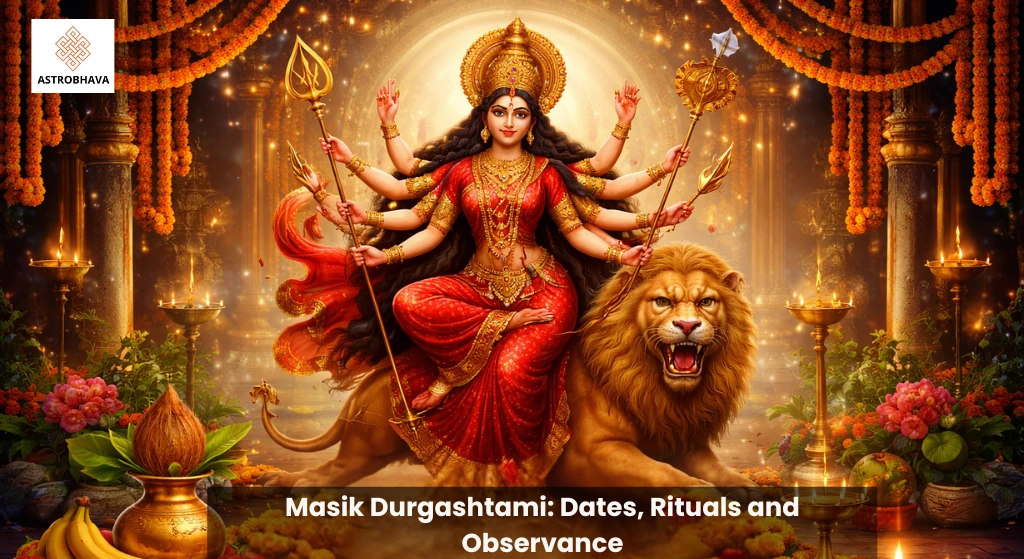
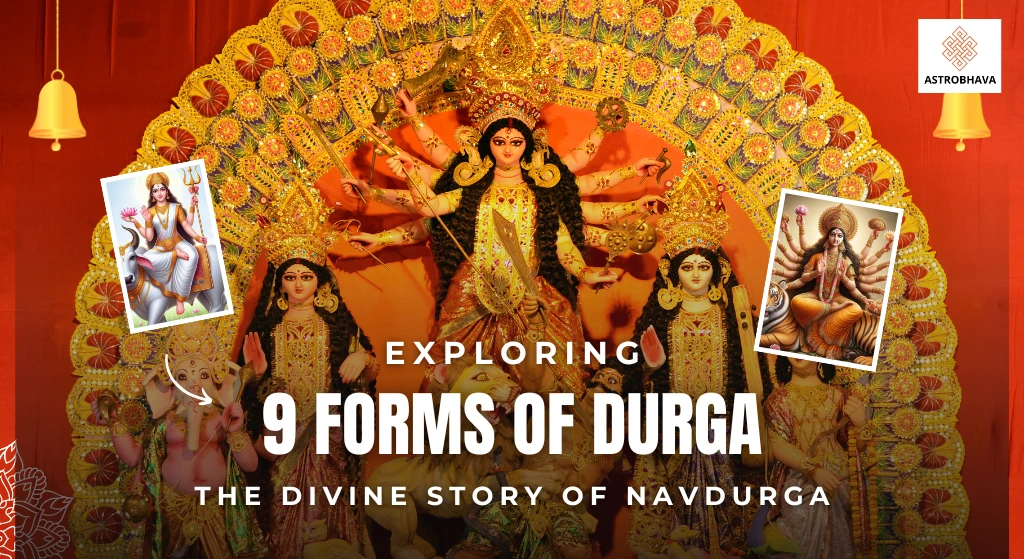
In the vast and luminous tapestry of Hindu spirituality, few figures command reverence as profoundly as Goddess Durga. Celebrated as Adi Shakti — the primordial cosmic energy — she is worshipped across India and the world as the ultimate symbol of feminine power, divine grace, and righteous strength. During the festival of Navratri, devotees honour the 9 forms of Durga, each a distinct manifestation carrying unique qualities, symbolism, and blessings.
The word Navdurga comes from the Sanskrit “Nav” (nine) and “Durga” (the invincible one). Together, these nine forms represent the complete journey of the divine feminine — from serene motherhood to ferocious warrior energy. Understanding the 9 forms of Durga is not merely a religious exercise; it is a spiritual roadmap that mirrors the nine stages of human consciousness, transformation, and liberation.
This blog dives deep into the divine story of Navdurga, exploring each form’s mythology, significance, and the timeless wisdom she offers to every devotee who seeks her grace.
The 9 Forms of Durga: Navdurga in Detail
Each of the 9 forms of Durga corresponds to one day of Navratri, and together they narrate the complete story of divine power, maternal love, and cosmic justice.
1. Shailaputri — Daughter of the Mountain (Day 1)
The first of the 9 forms of Durga, Shailaputri is the daughter of Himavat, the king of the mountains. She rides a white bull (Nandi) and carries a trident and lotus in her hands. As the reincarnation of Sati, she embodies the grounded, stable energy of the earth itself.
Worshipping Shailaputri on the first day of Navratri blesses devotees with unwavering strength, robust health, and rootedness in the face of life’s storms. In Vedic astrology, she governs the Moon (Chandra), and her blessings can calm lunar afflictions in one’s birth chart.
Seek the divine blessings of Maa Shailputri on Day 1 of Chaitra Navaratri!
2. Brahmacharini — The Ascetic Goddess (Day 2)
Brahmacharini, the second of the 9 forms of Durga, is the goddess of penance and austerity. Barefoot and serene, she holds a rosary (Japamala) and a water pot (Kamandal), walking the long path of rigorous tapasya.
Her story is one of extraordinary devotion — she performed severe penance for thousands of years to win Lord Shiva as her husband. She symbolises discipline, renunciation, and the infinite power of focused spiritual practice. Devotees who worship her gain endurance, moral strength, and the ability to overcome life’s greatest hardships.
Seek the divine blessings of Maa Brahmacharini on Day 2 of Chaitra Navaratri!
3. Chandraghanta — The Bell-Shaped Moon (Day 3)
The third among the 9 forms of Durga, Chandraghanta takes her name from the crescent moon (Chandra) shaped like a bell (Ghanta) adorning her forehead. Riding a tiger and bearing ten arms filled with weapons, she is the warrior goddess who subdued the demon Mahishasura’s army with terrifying might.
She embodies fearlessness and readiness for battle. Her bell-like third eye is said to ward off evil spirits. Worshipping her on the third day of Navratri bestows bravery, grace, and freedom from fear — making her especially beloved by those facing adversity or injustice.
Seek the divine blessings of Maa Chandraghanta on Day 3 of Chaitra Navaratri!
4. Kushmanda — The Cosmic Creator (Day 4)
Kushmanda is perhaps the most cosmically powerful of the 9 forms of Durga. Her name means “the one whose smile created the universe.” She is believed to have created the cosmos with her divine smile when there was nothing but darkness and void.
She resides at the core of the Sun itself and radiates solar energy in all directions. Riding a lion and bearing eight arms filled with weapons and a glowing jar of divine nectar, she is the source of all light and life. Worshipping Kushmanda on the fourth day clears diseases, bestows fame, and fills life with vitality and joy.
Seek the divine blessings of Maa Kushmanda on Day 4 of Chaitra Navaratri!
5. Skandamata — Mother of Skanda (Day 5)
The fifth of the 9 forms of Durga is Skandamata, the mother of Skanda (Kartikeya), the god of war. She is depicted seated on a lion, cradling the infant Kartikeya in her lap, and holding a lotus in each of her four arms.
She embodies the fierce yet tender love of a mother — one who will go to war to protect her child. Worship of Skandamata on the fifth day of Navratri is believed to open the gateway to liberation (moksha) and bless devotees with intelligence, prosperity, and the warm shelter of maternal divine grace.
Seek the divine blessings of Maa Skandamata on Day 5 of Chaitra Navaratri!
6. Katyayani — The Warrior Goddess (Day 6)
Katyayani is among the most celebrated of the 9 forms of Durga. Born to the sage Katyayana to fulfill his lifelong wish, she incarnated for the specific purpose of slaying the buffalo demon Mahishasura. With four arms, a gleaming sword and shield, riding a magnificent lion, she embodies the full ferocity of divine justice.
In the Bhagavata Purana, she is the goddess worshipped by the Gopis of Vrindavan, who prayed to her for Lord Krishna as their husband. Worshipping her removes obstacles in marriage, bestows courage, and grants protection against all dark forces.
Seek the divine blessings of Maa Katyayani on Day 6 of Chaitra Navaratri!
7. Kalaratri — The Dark Night of Destruction (Day 7)
The seventh and most fearsome of the 9 forms of Durga, Kalaratri is the destroyer of darkness and ignorance. Dark-complexioned, dishevelled-haired, and riding a donkey, she holds a sword and an iron hook. Her fiery breath burns evil to ash, and her three eyes shine like the fires of cosmic dissolution.
Despite her terrifying appearance, she is called Shubhankari — the giver of auspicious blessings — because she destroys every negative force that stands between the devotee and liberation. Worshipping Kalaratri on the seventh day conquers fear, removes the effects of black magic, and dissolves every obstacle from one’s path.
Seek the divine blessings of Maa Kalaratri on Day 7 of Chaitra Navaratri!
8. Mahagauri — The Radiant White Goddess (Day 8)
Mahagauri, the eighth of the 9 forms of Durga, is extraordinarily pure and luminous. After years of intense penance, she was bathed by Lord Shiva with the holy waters of the Ganga, and her dark complexion transformed into a radiant, glowing white. She rides a white bull and holds a damaru (drum) and trident.
She represents purity, peace, and the reward of sustained devotion. Just as she was cleansed by divine grace, she washes away the sins and past karmas of those who worship her on the eighth day. She fulfills all desires and bestows a deep inner peace that the material world simply cannot offer.
Seek the divine blessings of Maa Mahagauri on Day 8 of Chaitra Navaratri!
9. Siddhidatri — Bestower of All Siddhis (Day 9)
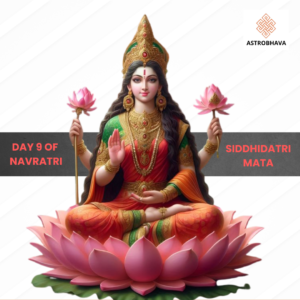
The ninth and final of the 9 forms of Durga is Siddhidatri, the goddess who grants all eight supernatural powers (Ashta Siddhis) — Anima, Mahima, Garima, Laghima, Prapti, Prakambya, Ishitva, and Vashitva. She is depicted seated on a fully bloomed lotus, surrounded by Siddhas, Gandharvas, Yakshas, and the Gods themselves.
Even Lord Shiva received his divine powers from Siddhidatri. Worshipping her on Navami completes the sacred cycle of Navratri and opens the devotee to the fullness of divine wisdom, cosmic power, and eternal spiritual fulfillment.
Seek the divine blessings of Maa Siddhidatri on Day 9 of Chaitra Navaratri!
 Why the 9 Forms of Durga Matter in Daily Life
The 9 forms of Durga are not merely mythological figures — they are living energies that correspond to the nine chakras of the human body, the nine planets (Navagrahas) of Vedic astrology, and the nine stages of spiritual evolution.
Astrological Significance: Each of the 9 forms of Durga is associated with one of the nine Navagrahas. Propitiating a specific form can pacify malefic planetary effects in your birth chart and bring relief from karmic burdens.
Chakra Alignment: The nine goddesses correspond to the nine energy centres of the body, from the Muladhara (root chakra) to Brahmarandra at the crown. Meditating on each form in sequence activates and balances these vital centres.
Spiritual Evolution: The journey from Shailaputri to Siddhidatri mirrors the soul’s path from earthly attachment to complete liberation — making the 9 forms of Durga a living roadmap for any sincere spiritual seeker.
Protection and Grace: Each goddess offers specific forms of divine protection — from fear, illness, and financial loss to relationship difficulties and spiritual obstacles — making daily worship of the 9 forms of Durga deeply practical and not just ritualistic.
Navratri: The Festival of the 9 Forms of Durga
Navratri, which translates to “nine nights,” is one of the most widely celebrated Hindu festivals in the world. Observed four times a year — with Sharada Navratri in autumn being the most prominent — it is a nine-day period dedicated entirely to worshipping the 9 forms of Durga in sequence.
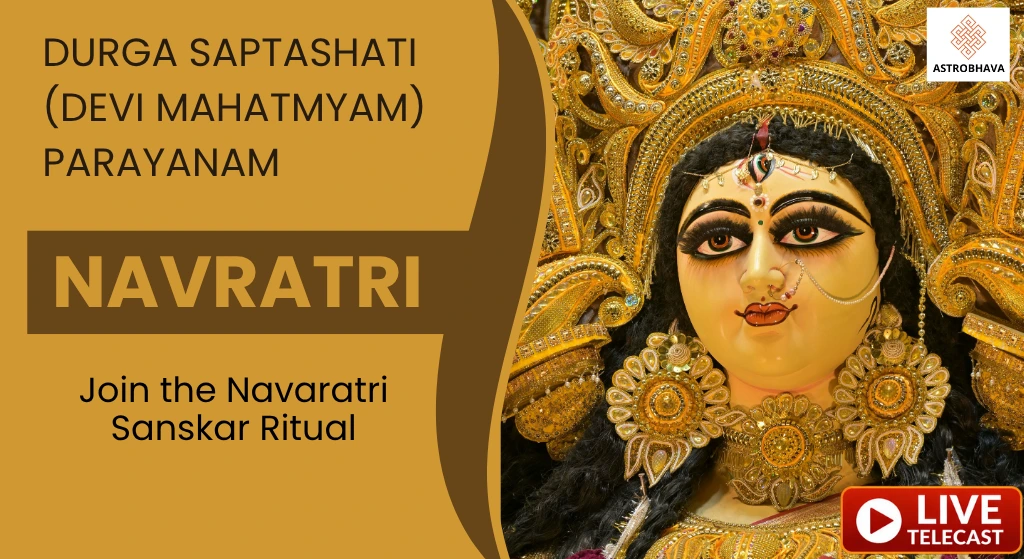
During these nine nights, homes are adorned with flowers, lamps, and idols of the Goddess. Devotees observe fasts, chant the Durga Saptashati (700 verses in praise of the Goddess), perform Kanya Pujan (honouring nine young girls as living manifestations of Navdurga), and celebrate the victory of the divine over the demonic through garba, dandiya, and other devotional arts.
The tenth day, Vijayadasami (Dussehra), marks the triumphant conclusion — the day the Goddess finally slew Mahishasura, and Lord Rama defeated Ravana. It is a day of cosmic victory that belongs to all who have persevered in righteousness.
When a devotee knows the story and significance behind each of the 9 forms of Durga, Navratri transforms from a cultural celebration into a genuine nine-step spiritual initiation.
Conclusion
The 9 forms of Durga represent far more than religious iconography — they are a complete philosophical and spiritual system. From the grounded stability of Shailaputri to the all-encompassing grace of Siddhidatri, each goddess invites the devotee to explore a different dimension of their own inner life. The fierce forms like Kalaratri teach us to face our deepest fears; the gentle forms like Mahagauri remind us of the transformative power of purity and surrender.
In a world that is increasingly chaotic and uncertain, the 9 forms of Durga offer an ancient yet eternally relevant answer: turn inward, invoke the divine feminine within and without, and trust in the Shakti that sustains all of creation.
Whether you are a devout Hindu seeking deeper understanding or a curious soul exploring Vedic wisdom, the Navdurga tradition is a wellspring of light that never runs dry. This Navratri, may you walk through each of the nine days with awareness, reverence, and the joy of knowing that the Goddess walks with you — in all her nine radiant, powerful, and compassionate forms.
🙏 Jai Mata Di 🙏
Frequently Asked Questions (FAQs)
Q1. What are the 9 forms of Durga called?
The 9 forms of Durga, collectively known as Navdurga, are: Shailaputri, Brahmacharini, Chandraghanta, Kushmanda, Skandamata, Katyayani, Kalaratri, Mahagauri, and Siddhidatri. Each is worshipped on a specific day of the Navratri festival.
Q2. Why are there specifically 9 forms of Durga?
The number nine holds deep significance in Hindu cosmology. The 9 forms of Durga correspond to the nine Navagrahas, nine chakras in the human energy system, and the nine stages of spiritual evolution — together representing the complete spectrum of the divine feminine energy.
Q3. Which of the 9 forms of Durga is considered most powerful?
All 9 forms of Durga are aspects of the same supreme power (Adi Shakti), so none is technically “more powerful” than another. However, Kalaratri is often regarded as the most formidable for her role as the destroyer of all darkness, while Siddhidatri is considered the most complete as she bestows all divine powers and siddhis.
Q4. How are the 9 forms of Durga worshipped during Navratri?
Devotees worship each of the 9 forms of Durga on consecutive days through specific rituals — dedicated mantras from the Durga Saptashati, offering of particular flowers and prasad, fasting, katha (storytelling), and Kanya Pujan on the eighth or ninth day.
Q5. Which planet does each of the 9 forms of Durga govern?
Shailaputri governs the Moon; Brahmacharini governs Mars; Chandraghanta governs Venus; Kushmanda governs the Sun; Skandamata governs Mercury; Katyayani governs Jupiter; Kalaratri governs Saturn; Mahagauri governs Rahu; and Siddhidatri governs Ketu.
Q6. Can non-Hindus connect with the 9 forms of Durga?
The energy of the 9 forms of Durga is universal. Anyone approaching the Goddess with sincerity, respect, and an open heart is welcome to learn from and connect with Navdurga’s wisdom. The qualities she embodies — courage, purity, discipline, love, and justice — transcend any single religion or tradition.
Q7. How can Astrobhava help me connect with the 9 forms of Durga?
Astrobhava offers personalised Navdurga Kundali readings that identify which of the 9 forms of Durga is most significant in your birth chart. You can also book authentic Navratri pujas by Vedic pandits, receive gemstone recommendations based on your planetary positions, and access remedies rooted in the worship of the 9 forms of Durga.