Have you ever wondered why certain patterns keep repeating in your life—the same relationship struggles, career blocks, or emotional lessons? Astrology suggests these aren’t random. They’re often linked to karmic indicators astrology, a powerful branch of astrology that reveals your soul’s unfinished business from past lives and your purpose in this one.
Your birth chart is more than personality traits—it’s a karmic roadmap. In this blog, we’ll explore karmic indicators in astrology, how to identify them in your chart, and what they mean for your destiny, relationships, career, and spiritual growth.
What Are Karmic Indicators in Astrology, and Why Do They Matter?
Karmic indicators in astrology are specific planets, nodes, houses, and aspects that reveal past-life patterns and soul lessons. When astrologers analyze Karmic indicators astrology, they’re essentially decoding why certain challenges or talents feel “fated.”
These indicators matter because they help you:
- Understand recurring life patterns
- Heal unresolved emotional baggage
- Align with your soul’s purpose
- Make conscious choices instead of repeating karmic loops
In short, Karmic indicators astrology explains why life pushes you in certain directions—even when you resist.
How Does the Birth Chart Reveal Past-Life Karma?
Your birth chart is a snapshot of the sky at the moment your soul entered this lifetime. According to Karmic indicators astrology, this chart carries impressions of past actions (karma) that shape your current experiences.
Astrologers study:
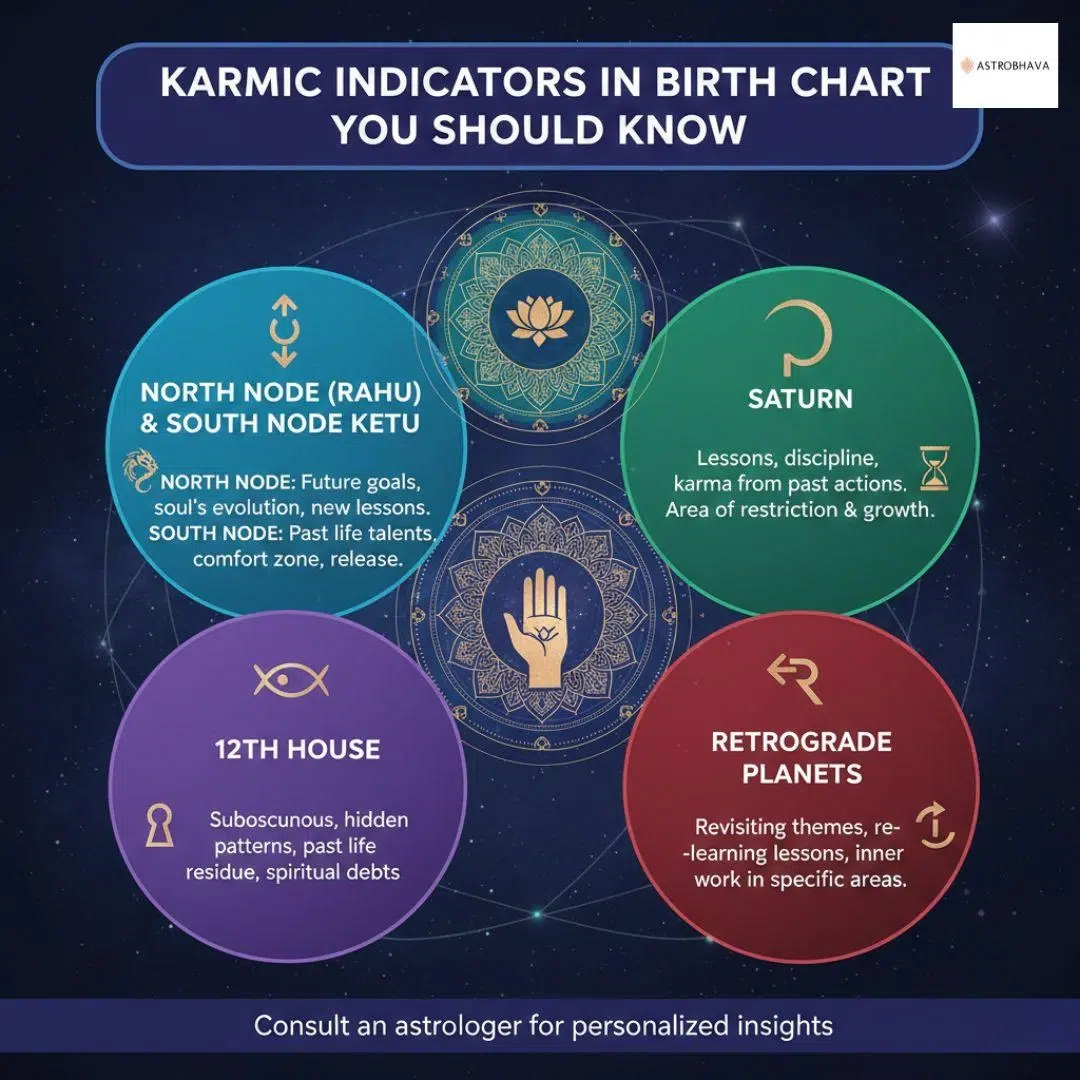
- Lunar Nodes (Rahu & Ketu)
- Saturn placements
- 8th and 12th houses
- Retrograde planets
- Certain planetary aspects
These elements together reveal what you’ve already mastered and what still needs balancing in this lifetime.
Why Are Rahu and Ketu the Strongest Karmic Indicators?
In Karmic indicators astrology, Rahu (North Node) and Ketu (South Node) are considered the most powerful karmic markers.
- Ketu represents past-life comfort zones, talents, and patterns you’ve already lived.
- Rahu shows the unfamiliar path your soul must grow into now.
For example:
- Ketu in the 7th house may indicate past-life dependency on relationships.
- Rahu in the 1st house pushes you toward independence and self-identity.
These nodes explain why certain situations feel easy yet limiting while others feel challenging but transformative.
What Role Does Saturn Play in Karmic Astrology?
Saturn is often called the lord of karma in Karmic indicators astrology. Wherever Saturn sits in your chart, life demands responsibility, discipline, and maturity.
Saturn teaches through:
- Delays
- Restrictions
- Hard-earned rewards
A strong Saturn placement suggests:
- Heavy karmic lessons
- Long-term growth through patience
- Wisdom earned through experience
Though Saturn’s lessons feel tough, they’re meant to liberate your soul from past mistakes, not punish you.
How Do the 8th and 12th Houses Show Karmic Debt?
In Karmic indicators astrology, the 8th and 12th houses are deeply connected to past-life karma.
8th House
- Sudden transformations
- Shared karma with others
- Emotional and psychological rebirth
12th House
- Past-life memories
- Spiritual isolation
- Moksha (liberation)
Planets placed here often indicate unresolved karmic baggage that resurfaces for healing in this lifetime.
How Do Nakshatras Act as Hidden Karmic Indicators in Astrology?
Nakshatras (lunar constellations) play a subtle yet powerful role in Karmic indicators astrology. While planets show what you experience, nakshatras reveal why your soul is drawn toward certain behaviors, fears, or desires.
Each nakshatra carries a karmic imprint linked to past-life tendencies:
- Some nakshatras indicate unfinished duties
- Others show spiritual advancement from previous births
- Certain nakshatras highlight karmic bonds with parents, partners, or children
For example, placements in nakshatras like Ashlesha, Jyeshtha, or Moola often point toward deep emotional or ancestral karma that must be consciously healed. Understanding nakshatra-level karma adds depth and precision to Karmic indicators astrology, especially when decoding emotional patterns.
What Do Karmic Indicators Say About Health and Emotional Healing?
Health issues—especially chronic or unexplained ones—are often linked to karmic roots in Karmic indicators astrology. Planets influencing the 6th, 8th, and 12th houses can show where emotional stress from past lives manifests physically.
Examples include:
- Saturn-related karma showing long-term ailments
- Moon-Ketu connections indicating emotional suppression
- 12th house dominance suggesting psychosomatic issues
These placements don’t signal inevitability. Instead, they highlight areas where emotional awareness, therapy, or spiritual healing can resolve long-standing karmic imbalances. In this way, Karmic indicators astrology bridges the gap between mind, body, and soul.
How Can Transit Planets Activate Dormant Karmic Indicators?
Karma doesn’t operate all at once—it activates in phases. In Karmic indicators astrology, planetary transits trigger dormant karmic lessons at specific times in life.
Major karmic activators include:
- Saturn return or Saturn transits
- Rahu-Ketu transits over natal planets
- Eclipse cycles on nodal axes
These periods often coincide with life-altering events such as career shifts, relationship endings, spiritual awakenings, or sudden realizations. Understanding transit-based karma helps you prepare emotionally and respond consciously instead of reacting unconsciously.
When timing aligns with awareness, Karmic indicators astrology becomes a powerful tool for transformation rather than confusion.
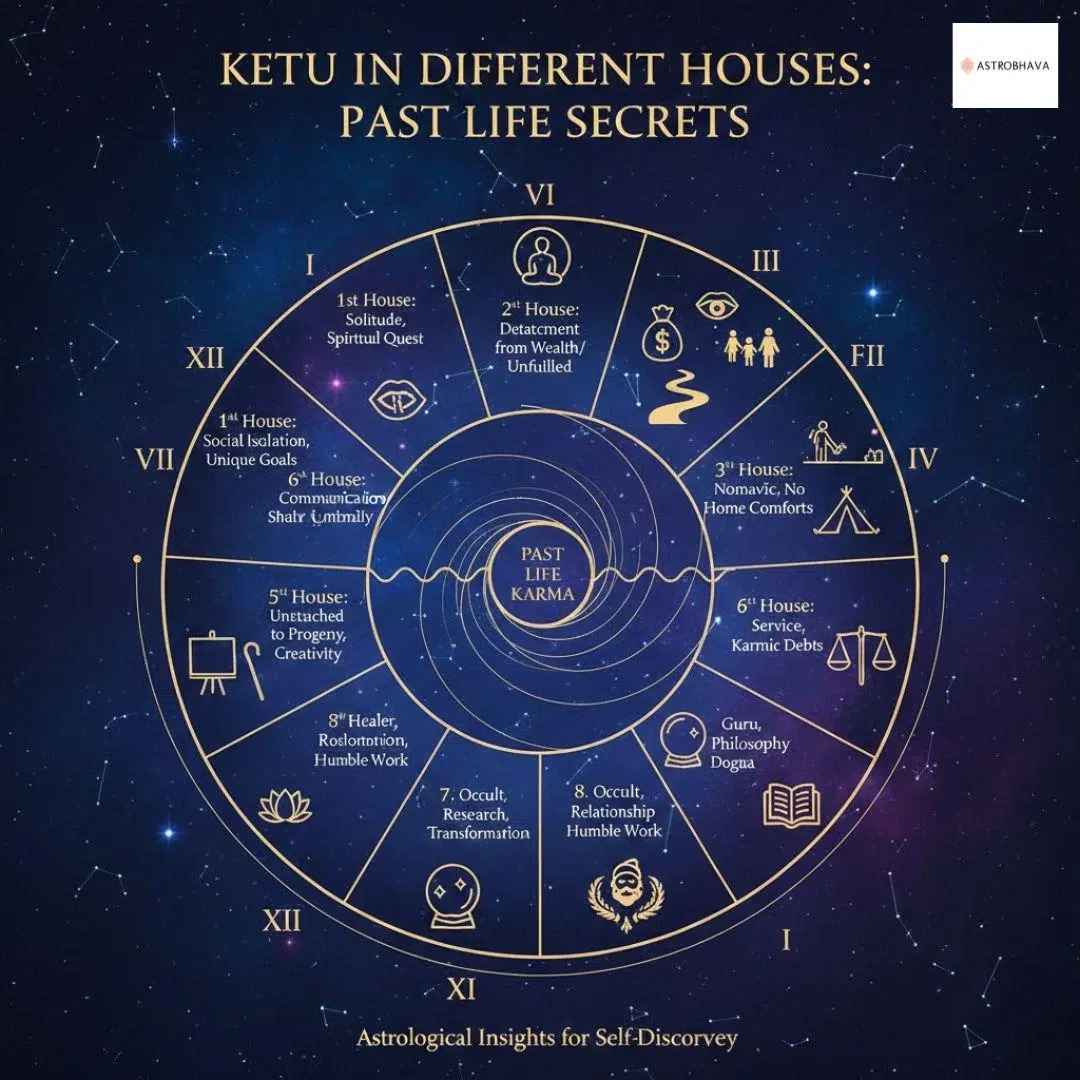
What Does Ketu in Different Houses Say About Your Past Life?
Ketu’s house placement in Karmic indicators astrology reveals where your soul has already gained mastery.
Examples:
- Ketu in 10th house → Past-life authority or leadership
- Ketu in 4th house → Strong emotional or family karma
- Ketu in 11th house → Detachment from social validation
Understanding Ketu helps you avoid staying stuck in what feels comfortable but no longer serves your growth.
Can Retrograde Planets Indicate Unfinished Karma?
Yes—retrograde planets are powerful markers in Karmic indicators astrology. When a planet is retrograde at birth, it suggests unfinished lessons from past lives.
Common themes include:
- Relearning relationship dynamics (Venus retrograde)
- Revisiting communication patterns (Mercury retrograde)
- Redefining ambition and action (Mars retrograde)
These planets demand inner work before outer success.
How Do Karmic Aspects Reveal Repeating Life Patterns?
Certain planetary aspects are key in Karmic indicators astrology, especially:
- Saturn conjunct Moon
- Nodes conjunct personal planets
- 8th/12th house rulers in tense aspects
These aspects explain:
- Why certain emotional triggers repeat
- Why you attract similar people or situations
- What lessons must be consciously resolved
Awareness is the first step toward breaking karmic cycles.
How Do Karmic Indicators Affect Relationships and Marriage?
Relationships are a major theme in Karmic indicators astrology because souls often reincarnate together to settle unfinished business.
Signs of karmic relationships include:
- Instant emotional intensity
- On-off dynamics
- Lessons through separation or sacrifice
Nodes or Saturn in the 7th house often indicate relationships meant for soul growth, not comfort.
Can Karmic Astrology Guide Career and Life Purpose?
Absolutely. Karmic indicators astrology can show why certain careers feel aligned—or blocked.
For example:
- Rahu in 10th house → Desire for recognition and ambition
- Saturn in 6th house → Service-oriented karmic duty
- 12th house emphasis → Spiritual or healing professions
When you align your career with your karmic path, work feels meaningful rather than exhausting.
How Can You Heal or Balance Karmic Indicators?
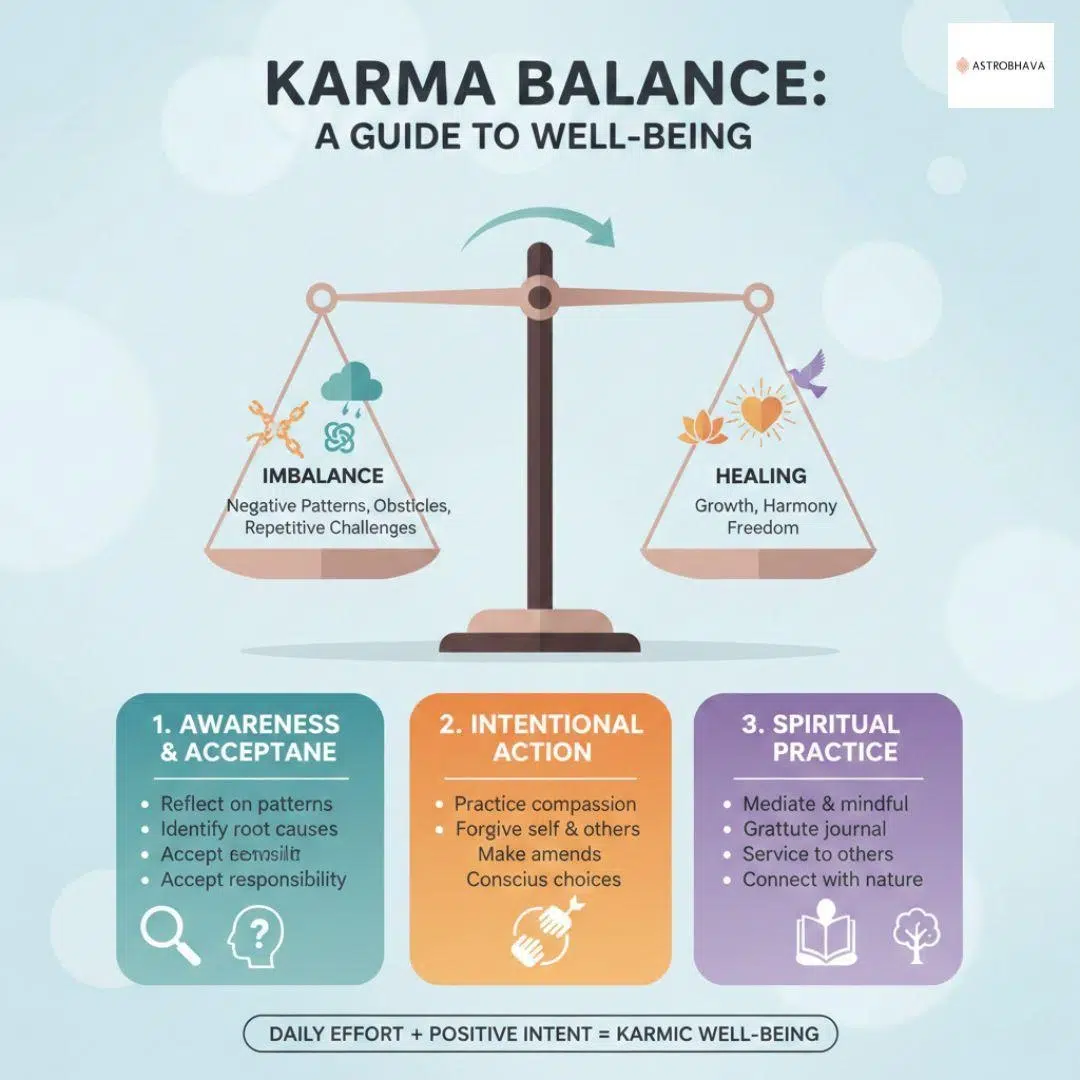
Karma isn’t about fear—it’s about evolution. Karmic indicators astrology helps you become conscious of your lessons so you can transcend them.
Ways to balance karma:
- Self-awareness and accountability
- Meditation and spiritual practices
- Charity and service
- Conscious decision-making
You’re not here to suffer karma—you’re here to complete it.
Is Karmic Astrology Fate or Free Will?
This is a common question in Karmic indicators astrology. The answer is: karma shows tendencies, not fixed destiny.
Your chart shows:
- Where you’re tested
- What you must learn
- How growth happens
Free will determines how you respond. Conscious choices can soften even the toughest karmic lessons.
How Do Karmic Indicators Explain Repeated Life Challenges?
If you continue to face similar struggles despite changing circumstances, Karmic Indicators Astrology offers a clear explanation. These repeating patterns are not coincidences—they’re signals pointing to unresolved soul lessons.
For example, repeated financial instability may be linked to Saturn or Rahu placements associated with past misuse of resources. Similarly, recurring emotional pain can be traced to Moon-Saturn or Node-Moon connections. These challenges persist until awareness replaces avoidance.
Understanding karmic indicators allows you to respond consciously rather than react emotionally. Once the lesson is acknowledged, life often softens the challenge—or removes it entirely.
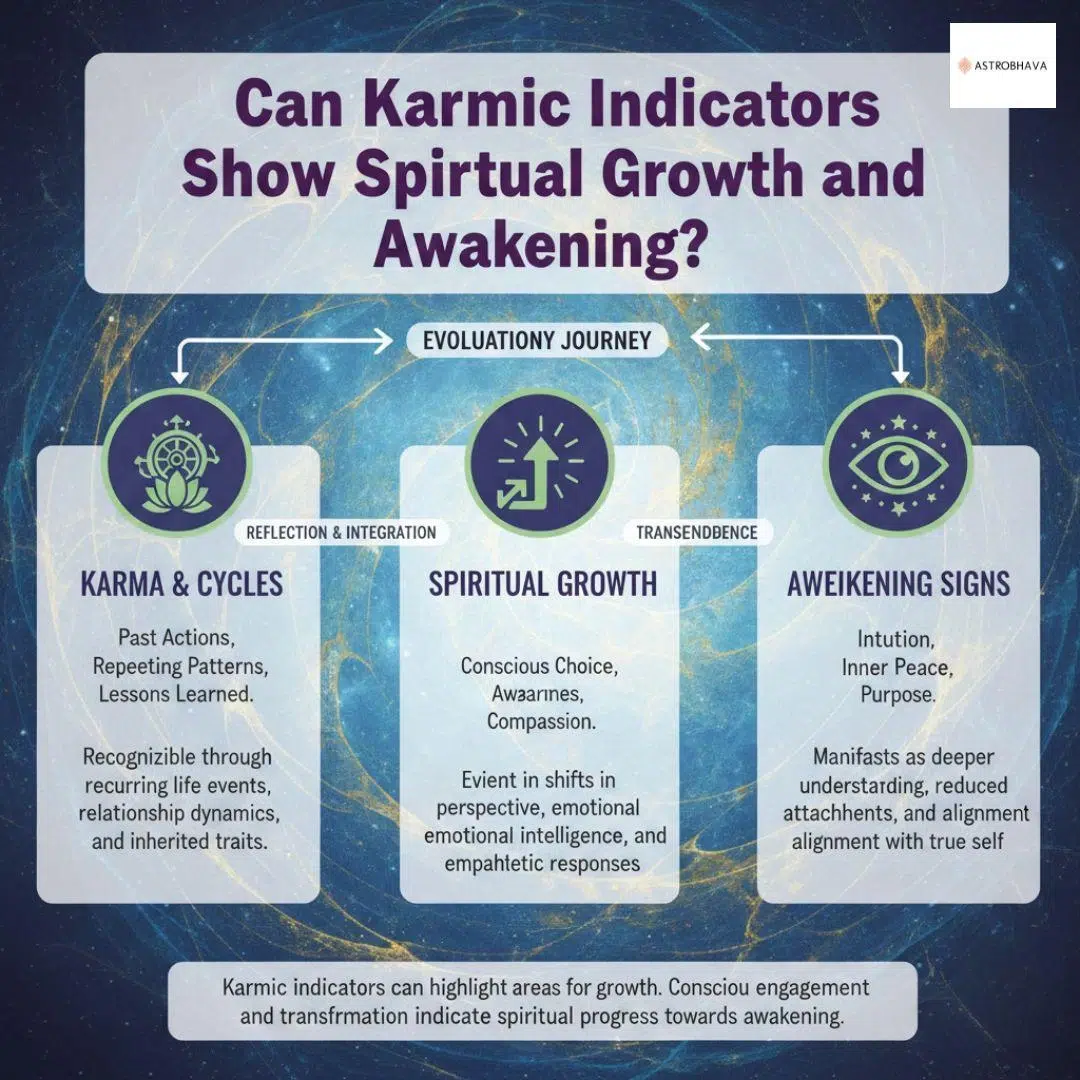
Can Karmic Indicators Show Spiritual Growth and Awakening?
Yes, one of the most powerful aspects of Karmic indicators astrology is its connection to spiritual evolution. Strong 12th house placements, Ketu dominance, or Neptune aspects often indicate souls on a spiritual awakening path.
Such individuals may feel:
- Detached from material success
- Drawn toward meditation or healing
- Emotionally sensitive to collective energy
These placements suggest past-life spiritual work and a current-life mission to deepen inner awareness. While this path may feel isolating, it often leads to profound wisdom and inner peace.
Frequently Asked Questions (FAQs)
1. What are the main karmic indicators in astrology?
Lunar Nodes (Rahu & Ketu), Saturn, 8th and 12th houses, retrograde planets, and specific aspects are key karmic indicators.
2. Can karmic astrology predict future events?
It doesn’t predict exact events but reveals karmic themes that influence future experiences.
3. Is bad karma visible in a birth chart?
Charts show lessons, not “bad” karma. Challenges indicate areas of growth and healing.
4. Can karmic debt be completely resolved in one lifetime?
Some karma can be resolved through awareness and conscious action, while deeper soul lessons may carry forward.
5. Do all birth charts have karmic indicators?
Yes. Every soul carries karma, and every chart reflects a unique karmic journey.
Final Thoughts: Why Understanding Karmic Indicators Changes Everything
When you understand Karmic indicators astrology, life stops feeling random. Struggles gain meaning. Patterns make sense. And growth becomes intentional.
Your birth chart isn’t a sentence—it’s a guidebook. By recognizing karmic indicators, you step into awareness, break cycles, and move closer to your soul’s true purpose.
If you’ve ever felt that life is trying to teach you something, astrology already knows what it is—you just need to read the signs.
Discover what your birth chart is truly revealing. Explore Karmic indicators astrology with Astrobhava and uncover your past-life lessons, soul purpose, and life patterns through personalized, expert astrological guidance.
Many traditions view homa rituals as practices that help clear inner blocks, strengthen focus, and support intentions related to career progress. In this approach, ritual work is not about magical shortcuts but about aligning your mindset, energy, and clarity with your professional goals.
To support your guide with a visual explanation, watch this detailed video:
Watch the full video here:
https://youtu.be/-jAKASMzbK0?si=r0ZOavEiqaZhZIQN
This video explains:
-
How specific homa rituals are tailored to support career focus and opportunity
-
Why ritual intention and disciplined practice can enhance confidence and clarity
-
How these practices may help reduce internal resistance and support long-term success
This overview is useful for anyone interested in practical approaches to strengthening job focus, direction, and professional confidence.