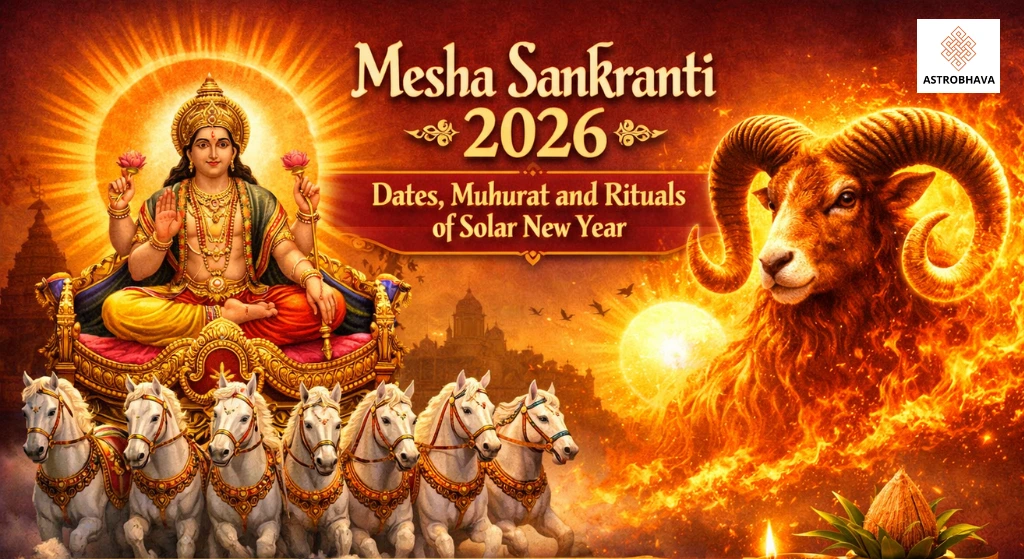
There’s something quietly magical about the middle of April every year. The air starts shifting, the heat begins to assert itself, and somewhere deep in the rhythm of the cosmos, the Sun takes a decisive step — moving out of Pisces and into the bold, fiery sign of Aries. That moment, right there, is what the Hindu tradition celebrates as Mesha Sankranti. And in 2026, it’s an occasion worth marking on your calendar — and in your heart.
So whether you’ve grown up observing this festival or you’re just beginning to explore its layers, let’s walk through everything you need to know about Mesha Sankranti 2026 — the date, the muhurat, the rituals, what it means across different states, and why even a simple prayer on this day carries enormous weight.
What Exactly Is Mesha Sankranti?
Let’s start with the basics, because the name itself tells you the story. “Sankranti” comes from the Sanskrit word meaning transition — specifically, the Sun’s movement from one zodiac sign to the next. There are twelve Sankrantis in a Hindu calendar year, one for each zodiac sign. But Mesha Sankranti is the most significant of them all.
It marks the Sun’s transition into Mesha Rashi, or Aries, the first sign of the zodiac. This transition is considered highly auspicious because it symbolizes the beginning of a new solar cycle, bringing renewed energy, clarity, and opportunities.
The movement of the Sun into Aries also marks the end of Kharmas — a period traditionally considered unsuitable for auspicious activities. With Mesha Sankranti, marriages, new ventures, housewarmings, and spiritual practices resume with renewed enthusiasm.
Think of it like a cosmic green light. Everything that was on hold now gets the divine go-ahead.
Mesha Sankranti 2026: Date and Exact Timing
Mesha Sankranti in 2026 will be observed on Tuesday, April 14, 2026. The Sankranti moment — when the Sun officially enters Mesha Rashi — occurs at 09:39 AM IST.
The auspicious windows for rituals are: Punya Kala from 05:57 AM to 01:55 PM, and Maha Punya Kala from 07:30 AM to 11:47 AM.
In 2026, Mesha Sankranti will be occurring on Monday, the 14th of April, in the Purva Ashadha nakshatra.
If you’re planning to perform rituals, do try to observe them during the Maha Punya Kala. That window between 07:30 AM and 11:47 AM is considered the holiest part of the entire day. But if you miss it, don’t stress — the broader Punya Kala gives you until the early afternoon. What matters most is your sincerity and intent.
Check today’s panchang for precise timings and muhurat
The Muhurat Explained: Punya Kaal and Maha Punya Kaal
Many people hear the word “muhurat” and immediately feel overwhelmed. But it’s actually a very practical concept. A muhurat is simply the most favorable time window for performing a specific activity. On Mesha Sankranti, two windows matter the most.
For Mesha Sankranti, ten ghatis before and ten ghatis after the Sankranti moment are considered shubh or auspicious, and this time window is taken for all daan-punya activities.
The Maha Punya Kaal is the inner core of that window — the most concentrated period of spiritual energy. Ritual bathing, Surya Arghya, and charity performed during this period are believed to yield multiplied spiritual merit. Many temples also conduct special Surya puja ceremonies during this window.
So the hierarchy is simple: Maha Punya Kaal is the gold standard, Punya Kaal is the silver standard. Either one works beautifully when approached with devotion.
Why Is Mesha Sankranti Spiritually Significant?
Here’s something that often gets lost in the celebration — the deeper reason why this day is so charged with meaning.
In Vedic understanding, the Sun is not just a celestial body; it represents Surya Dev, the source of life, energy, and consciousness. When the Sun enters Aries, its energy is considered at its peak. This makes the day especially suitable for spiritual practices, charity, and letting go of attachments.
At its core, Mesha Sankranti is a celebration of transformation and positive change. The fast and prayers represent a commitment to starting anew, shedding negativity, and welcoming divine blessings. The festival embodies the spirit of renewal and growth, guiding individuals toward a life of clarity, peace, and spiritual fulfillment, while encouraging generosity and compassion for others.
There’s also a practical dimension. With the Sun exalted in Aries, its cosmic influence is believed to strengthen willpower, dissolve inertia, and open new doors — quite literally the energy you want to tap into at the beginning of a new solar year.
 Step-by-Step Rituals for Mesha Sankranti 2026
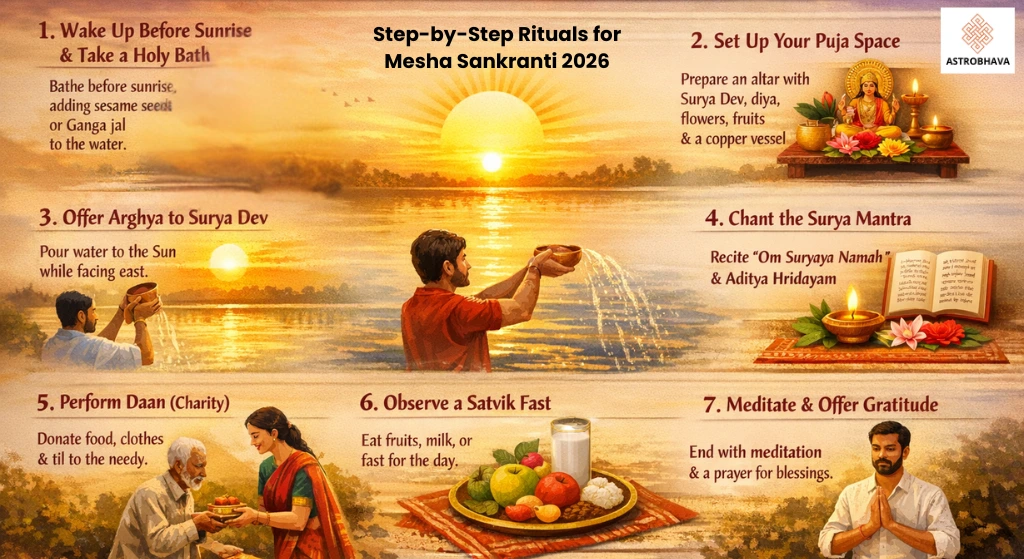
You don’t need a grand setup to observe Mesha Sankranti meaningfully. Here’s a clear, step-by-step guide you can follow even at home.
- Wake Up Before Sunrise and Take a Holy Bath
Devotees rise before dawn and perform ritualistic holy baths (Snana) in sacred rivers such as the Ganga, Yamuna, and Godavari, symbolizing the cleansing of sins and the renewal of spiritual purity. If you’re not near a river, a bath at home with the right intention works perfectly fine. Add a pinch of sesame seeds or a few drops of Ganga jal to your bathwater if you have it.
- Set Up Your Puja Space
Clean the puja place and arrange a small altar. You can keep an image or idol of Surya Dev. Light the diya and the incense sticks to begin the puja. Flowers, kumkum, turmeric, rice, fruits, jaggery, and water are the basic items required. A copper vessel is required to pour the water as an offering to the Sun God.
- Offer Arghya to Surya Dev
This is the heart of the entire observance. Offering Arghya (water oblations) to Surya Deva at sunrise is considered a sacred act of surrender, where one invokes divine radiance, inner clarity, and auspiciousness. Stand facing the east, hold your copper vessel with both hands, and slowly pour water while chanting.
- Chant the Surya Mantra
Recite the Surya Mantra “Om Suryaya Namah” and other relevant mantras such as Aditya Hridayam for blessings. If you have a Panchang or calendar, follow the auspicious timings and recite the mantras during the designated Punya Kaal Muhurat.
- Perform Daan (Charity)
Mesha Sankranti is a time for giving. Donating til (sesame), jaggery, grains, and clothes to the poor or to a temple is highly beneficial. You may also donate water or food to the needy. Even a small, heartfelt act of giving carries tremendous spiritual weight on this day.
- Observe a Satvik Fast
The most important aspect of Mesha Sankranti is eating satvik or pure hygienic vegetarian food and refraining from any bad habits. A partial fast involves consuming fruits, milk, and nuts, while a complete fast involves abstaining from food and water.
- Conclude with Meditation and Gratitude
After the rituals, sit peacefully for a few minutes to meditate and offer gratitude. Conclude the puja with a final prayer to the Sun, asking for divine blessings of health, wealth, and prosperity for yourself and your family.
Explore 7 Powerful Mantras to Worship Sun God
What to Offer, What to Avoid
On Mesha Sankranti, your offerings matter and so do your choices for the day.
Auspicious items to offer: sesame seeds (til), jaggery (gur), red flowers, fresh fruits, water in a copper vessel, red cloth, and wheat.
Things traditionally avoided: non-vegetarian food, alcohol, tamasic foods like onion and garlic, harsh speech, and any activity that disturbs your inner peace.
One should try to spend the day eating satvik food and avoid any bad habits. One must chant stotras and hymns while performing other rituals during celebrations that take place in each community.
Which Gods Are Worshipped on Mesha Sankranti?
While Surya Dev is the central deity of the day, the worship doesn’t stop there. On this day, it is considered auspicious to worship Lord Shiva, Hanuman, Vishnu, and Maa Kali.
During Mesha Sankranti, people perform Puja rituals to gain blessings from deities like Lord Shiva and Goddess Kali. These rituals are conducted during the Punya and Maha Punya Kaal Muhurta.
In Odisha especially, many devotees visit significant temples. Devotees visit Puri Jagannath, Samaleshwari, Cuttack Chandi, and Biraja temples to offer prayers and puja.
How Different States Celebrate Mesha Sankranti 2026
One of the most beautiful things about this festival is how it takes on a different character across India, yet carries the same soul everywhere you look.
Tamil Nadu celebrates it as Puthandu, marking the New Year with traditional feasts and rituals. Kerala observes it as Vishu, symbolizing the harvest festival with elaborate Vishukkani displays. Punjab observes it as Vaisakhi, celebrating the harvest and holding special significance for the Sikh community. Assam celebrates it as Bihu, ushering in the Assamese New Year with songs, dances, and joy. Odisha calls it Pana Sankranti, featuring the preparation of Pana, a cooling festive drink.
In West Bengal, Pohela Boishakh — the Bengali New Year — falls on Wednesday, April 15, 2026, marking the beginning of Bengali Era 1433. The Mesha Sankranti moment occurs at 09:39 AM on April 14, 2026, and as per the traditional rule, Naba Barsha is observed on the next sunrise day.
In Orissa, the first day of the year is celebrated on the same day as the Sankranti if it occurs before Hindu midnight — known as Pana Sankranti. In Tamil Nadu, when Sankranti takes place after sunrise and before sunset, the year begins on the same day. Mesha Sankranti is celebrated as Vishu in Kerala. In Bengal, when Sankranti takes place between sunrise and midnight, the year begins on the following day.
Six different names, six different cultural expressions — but one unified intention: to welcome the solar new year with joy and gratitude.
The Astrological Significance of Sun Entering Aries
From an astrological standpoint, this transit is particularly powerful. Aries is the first sign of the zodiac, and the Sun’s entry here marks a genuine cosmic reset.
The Sun, which is worshipped as Surya Deva, the divine illuminator of truth and consciousness, ascends to its highest position and emanates limitless energy and good fortune.
In Vedic astrology, the Sun in Aries is considered exalted — meaning it operates at its fullest potential. This is the time when solar energy most powerfully supports clarity of purpose, courage, leadership, and vitality. People with strong Sun placements in their birth charts often feel this transit like a surge of life force.
Even if your personal chart has a weaker Sun, performing rituals and prayers during Mesha Sankranti 2026 is considered one of the most effective ways to invite Surya Dev’s blessings and strengthen his influence in your life.
Mesha Sankranti and the Concept of Daan-Punya
One aspect that often doesn’t get enough attention is the emphasis on charitable giving on this day. Daan — meaning donation or giving — is not just encouraged; it’s considered one of the highest spiritual acts you can perform during the Punya Kaal.
Charity on this day is not viewed as a simple act of giving. In the Vedic worldview, giving during a Sankranti multiplies the merit of your action many times over. The idea is that the cosmic energy on this day acts as an amplifier — whatever you put out, comes back magnified.
Common items for daan include sesame seeds, jaggery, grains, new clothes, footwear, copper vessels filled with water, and even gold or silver if one is able. Donating to temples, feeding the hungry, or contributing to a cause you believe in — all of it counts.
Dana-Punya (charitable giving) is emphasized in scriptures, as acts of generosity — whether in the form of food, clothes, or financial aid — bestow immeasurable merit and invoke divine blessings.
Tips to Make the Most of Mesha Sankranti 2026
Even if you can’t do everything by the book, here are some simple ways to observe the spirit of the day:
Wake up early and step outside to greet the morning sun — just that one act of acknowledgment carries meaning. Light a diya and spend five minutes in silence before the day begins. Make a small donation to someone who needs it. Cook a fresh, vegetarian meal from scratch and eat it mindfully. Call or visit someone elderly in your family and seek their blessings. If you have children, tell them the story of Surya Dev — pass the tradition on.
Tradition gives you structure, but it doesn’t demand perfection. Whether you follow every ritual in detail or keep things simple, what truly matters is the intent behind your actions. A quiet prayer, a small act of giving, or even a moment of awareness can hold just as much meaning.
Conclusion
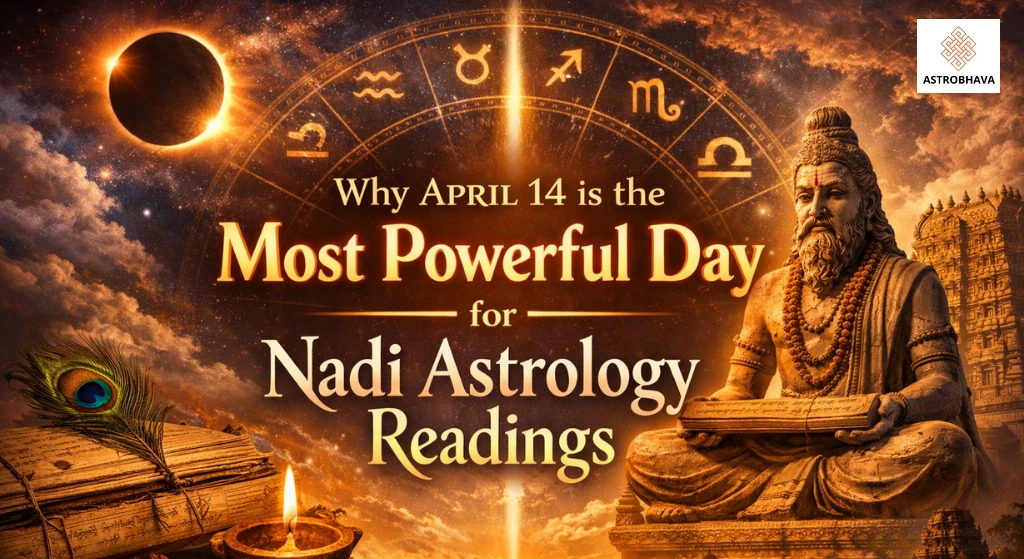
Mesha Sankranti 2026 falls on Tuesday, April 14, and it’s more than just a date on the Hindu calendar. It’s the universe signaling a new chapter — the Sun stepping into its first sign, fully charged and ready to illuminate whatever intentions you set on this day. Whether you observe it as Vishu in Kerala, Vaisakhi in Punjab, Puthandu in Tamil Nadu, or simply as the Solar New Year at home, the essence is the same: gratitude, renewal, and a conscious step forward.
The Punya Kaal between 05:57 AM and 01:55 PM IST, with the most sacred Maha Punya Kaal from 07:30 AM to 11:47 AM, gives you a powerful window to bathe, pray, offer Arghya, chant, donate, and invite the blessings of Surya Dev into your life. Use it well. Connect with Astrobhava to perform the rituals and maixmise the blessings on this auspicious day.
Let this Mesha Sankranti 2026 be a true reset — not just for your calendar, but for your intentions, your relationships, and your path ahead.
Frequently Asked Questions (FAQs)
Q1. When is Mesha Sankranti 2026?
Mesha Sankranti 2026 falls on Tuesday, April 14, 2026. The Sankranti moment — when the Sun enters Mesha Rashi — occurs at 09:39 AM IST.
Q2. What is the Punya Kaal timing for Mesha Sankranti 2026?
The Punya Kaal is from 05:57 AM to 01:55 PM IST, and the Maha Punya Kaal — the most sacred window — is from 07:30 AM to 11:47 AM IST on April 14, 2026.
Q3. What is the difference between Mesha Sankranti and Makar Sankranti?
Both are Sankrantis marking the Sun’s transit into a different zodiac sign. Makar Sankranti occurs in January when the Sun enters Capricorn, while Mesha Sankranti happens in April when the Sun enters Aries. Mesha Sankranti marks the Solar New Year; Makar Sankranti marks the Sun’s northward journey (Uttarayan).
Q4. Why is Mesha Sankranti called the Solar New Year?
Because the Hindu solar calendar begins with the Sun entering Aries — the first sign of the zodiac. Most regional solar calendars in India, including Tamil, Malayalam, Odia, and Bengali calendars, calculate the new year based on this transit.
Q5. Which god is worshipped on Mesha Sankranti?
Surya Dev (the Sun God) is the primary deity, but Lord Shiva, Lord Vishnu, Lord Hanuman, and Goddess Kali are also worshipped on this day for complete blessings.
Q6. Can I perform rituals at home if I can’t visit a temple?
Absolutely. A clean puja space, a copper vessel of water, some flowers and jaggery, a lit diya, and sincere recitation of the Surya Mantra (Om Suryaya Namah) is all you need. Intention and devotion matter more than elaborate arrangements.
Q7. Is fasting mandatory on Mesha Sankranti?
Fasting is recommended but not compulsory. You can observe a partial fast by consuming fruits, milk, and nuts, or simply maintain a satvik vegetarian diet throughout the day.
Q8. What should I donate on Mesha Sankranti 2026?
Sesame seeds, jaggery, red cloth, grains, fruits, new clothes, copper vessels filled with water, and footwear are all considered auspicious donations. Donating to temples, feeding the needy, or contributing to charitable causes all count as meaningful daan on this day.
Q9. How is Mesha Sankranti celebrated differently across India?
It is celebrated as Puthandu in Tamil Nadu, Vishu in Kerala, Vaisakhi in Punjab, Bihu in Assam, Pana Sankranti in Odisha, and Pohela Boishakh (a day later) in West Bengal. Each state has its own rituals and customs, but all celebrate the arrival of the Solar New Year.
Q10. What nakshatra falls on Mesha Sankranti 2026?
Mesha Sankranti 2026 falls in the Purva Ashadha nakshatra, which adds an additional layer of auspiciousness to the day’s observances.