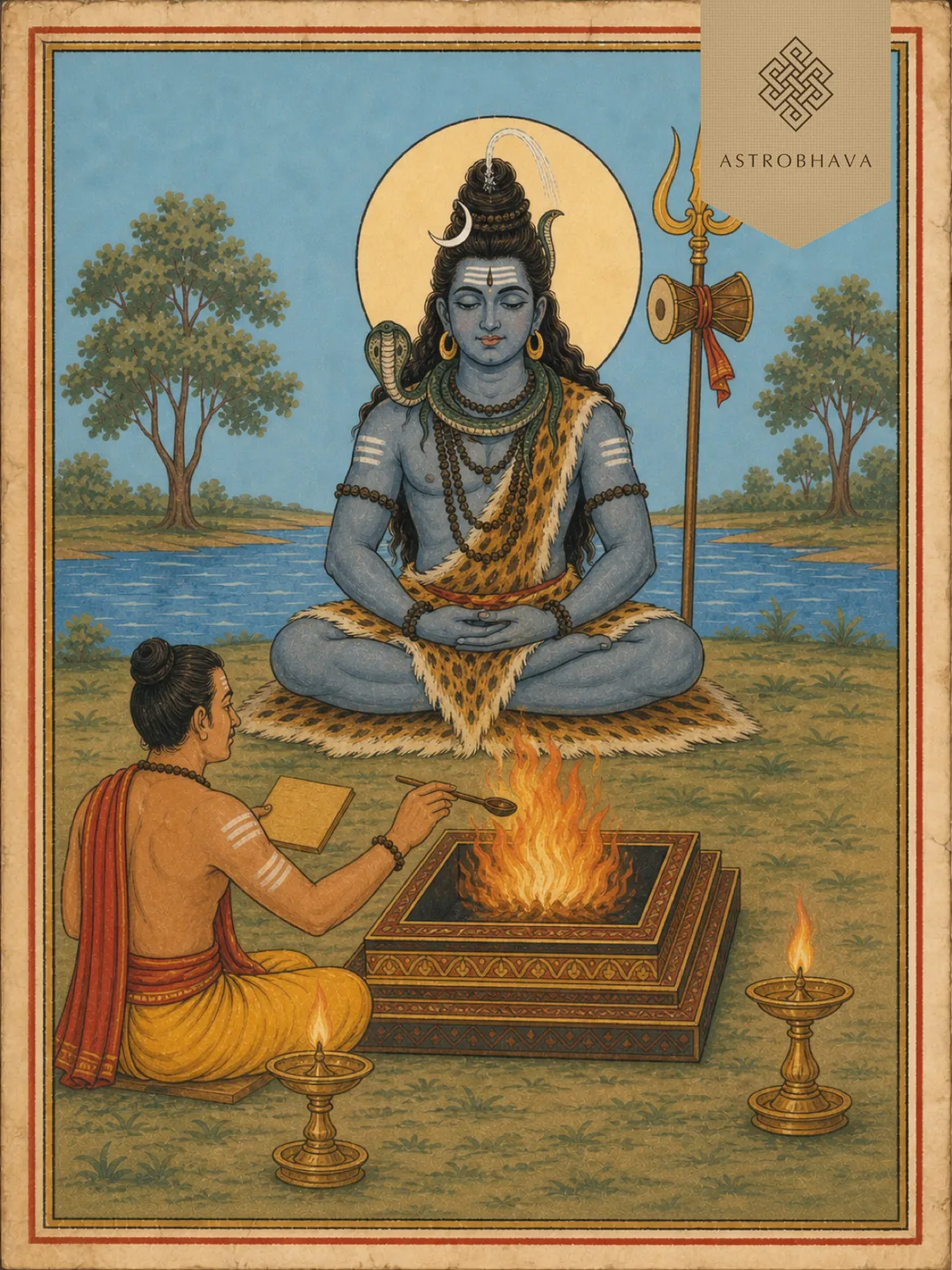
Rudrashtakam Homa
Also spelled Rudrashtakam Homam
रुद्राष्टकम् होमEight verses of pure praise, offered into fire for you — that the mind grow still and Shiva's grace draw near.
- Never a group ceremony — only the names you give are spoken
- Muhurta fixed from your own birth chart, confirmed within 24–48 working hours
- Free energised Rudra Yantra, sealed in a silver amulet, shipped worldwide at no charge
The Ritual and Its Weight
The Rudrashtakam is Goswami Tulsidas's eight-verse hymn to Rudra — the auspicious one, formless, beyond the reach of the senses, worshipped by sages and by the simplest heart alike. In the Rudrashtakam Homa, those verses are not merely recited. They are offered. Each stanza is carried into the fire with ghee and sacred wood, so that praise itself becomes oblation and the sound of Shiva's names fills the mandapa.
Tradition places this rite among the offerings made for the inner life — for the seeker who wants devotion to deepen, for the household that wants quiet after a long unsettled season, for the mind that has grown restless and seeks a still centre. The hymn asks for nothing material. It only praises, and then pleads at the last: have mercy on me. That is the weight of the Rudrashtakam Homa. It teaches the heart to want the Lord and nothing else.
नमामीशमीशान निर्वाणरूपं विभुं व्यापकं ब्रह्मवेदस्वरूपम् । निजं निर्गुणं निर्विकल्पं निरीहं चिदाकाशमाकाशवासं भजेऽहम् ॥ I bow to the Lord of all, whose very form is liberation, all-pervading, the essence of the Vedas — self-existent, beyond qualities, beyond change, beyond desire; I worship him who is the sky of pure consciousness and who dwells in that sky.What a Maha Homa is
Not every fire ritual is performed at the same scale. A Maha Homa is our largest form — more priests, a longer fire, and the complete chanting sequence the rite prescribes rather than an abridged one. This is what that means in practice.
A Maha Homa is never a group ceremony, the same as any homa we conduct. What the scale changes is the weight of the offering — ten trained voices holding one hymn for two hours is a different undertaking from one voice for an hour, and it is reserved for the intentions that warrant it.
Benefits of the Rudrashtakam Homa
The tradition prescribes the Rudrashtakam Homa for these ends. Approach it as worship, not as transaction.
Deepening of devotion
Eight verses of unbroken praise, offered on your behalf, to soften the heart and turn it toward Shiva.
Inner stillness
Prescribed for the restless mind — a rite traditionally taken up when thought will not settle and quiet is sought.
Divine grace
The hymn closes by asking Rudra for mercy alone. Devotees offer it seeking that grace, in whatever form it comes.
Purification of intent
Fire is offered so that lower urges, resentment and clouded motive are surrendered along with the ghee.
Strength on the sadhana path
Taken up by seekers at the start of japa, vrata or a new discipline, asking that the practice hold.
Peace in the household
Families book the Rudrashtakam Homa for a settled atmosphere at home and steadiness through difficult stretches.
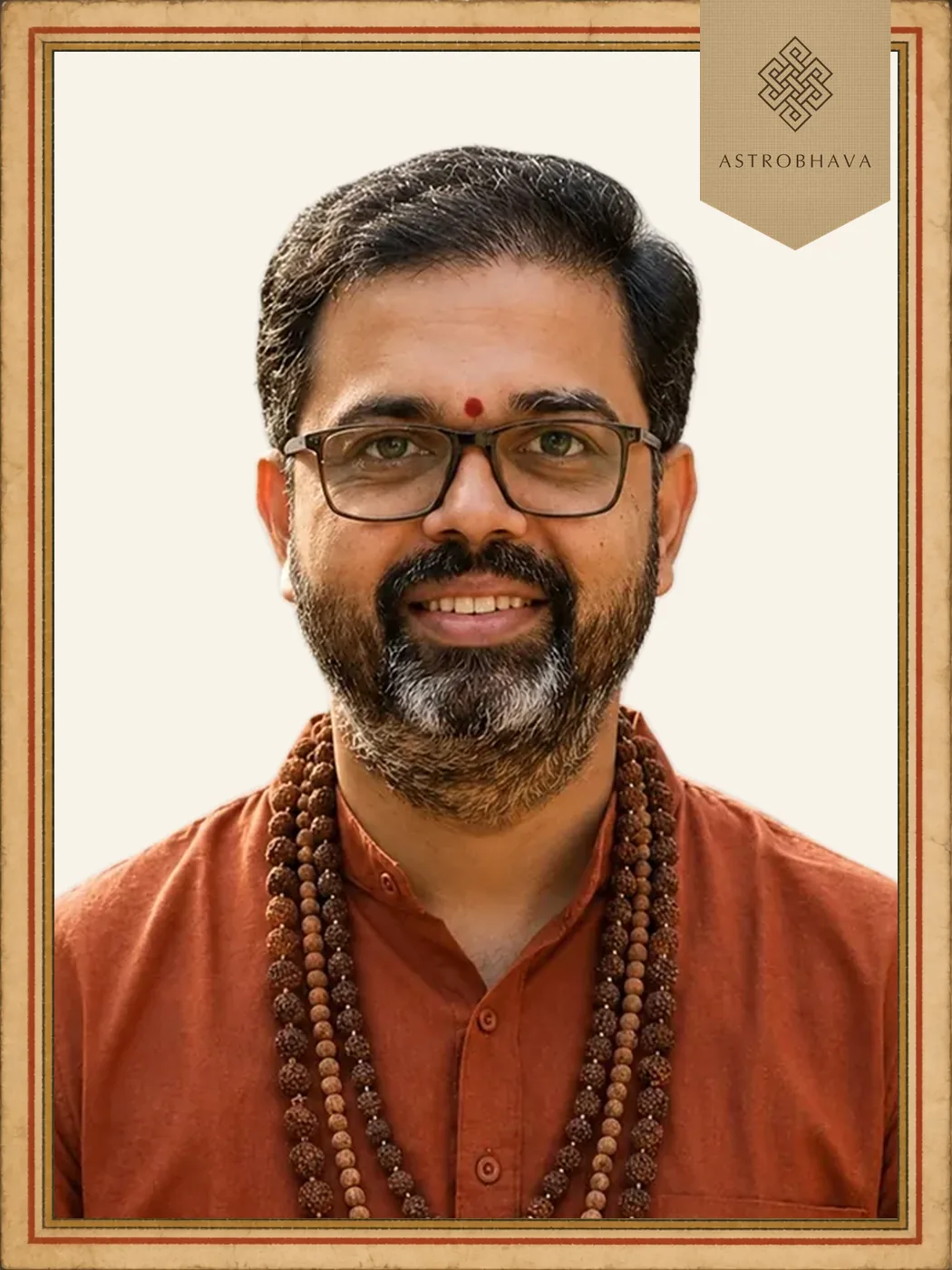
Under the guidance of Brahmashree Shivaaya
Every priest who performs your Rudrashtakam Homa is trained in a traditional Padashala and personally recruited by Brahmashree Shivaaya — Chief Operating Officer & Head of Astrological & Spiritual Solutions at AstroBhava. Your ritual is conducted at our own Yagna Ashram — never a rented venue.
Meet our priests →- Certified Vedic priests — trained in traditional Padashalas
- 100% Agama Vidhi — as prescribed in the scriptures
- One chart, one sankalpa, one fire — never a group ceremony
- Muhurta from your chart — date fixed to your birth details
- Free worldwide delivery — prasadam & energised Rudra Yantra
One rite, one price
There is nothing to choose. Unlike most of our homas, the Rudrashtakam Homa is not offered at several priest counts. It is performed one way, as the rite requires — 5 priests, 5 hours — with the free energised Rudra Yantra sealed in its silver amulet, the live telecast, and free worldwide delivery of your prasadam all included in the one price.
2,160 ahutis in all. Each of the 5 priests makes 54 complete recitations of the Rudrashtakam (270 in all), with one offering at every verse, and all of them perform at the same time, in one ceremony.
Has your astrologer prescribed a different ritual count? Our priests can review it and arrange a customised homa. Call our Devotee Relationship Team on +91 96295 55442 — they confirm the count, the priests, the approximate duration and the total price before you book.
All-inclusive — no shipping charges, no additions at checkout. See everything included →
You book — and add birth details on the next page, straight after payment.
Within 24–48 working hours — your muhurta is confirmed by email.
The day before — your telecast link arrives by email.
After the homa — tracking email with how and when to wear the Rudra Yantra.
The most auspicious days for a Rudrashtakam Homa
Any day may be given to Shiva, yet these occasions are held especially fit for the Rudrashtakam Homa.
The weekday of Shiva. Mondays, and Sravana Mondays above all, are the customary choice for this homa.
The twilight hour of the thirteenth tithi, twice each lunar month, when Shiva is worshipped in his dancing form.
The great night of Shiva, and its monthly return — held the most fruitful occasion for offerings to Rudra.
The star of Rudra himself. Ardra days, and the Ardra of Margazhi in particular, are chosen by many devotees.
You do not need to wait for one of these days. Whenever you book, our astrologers calculate the muhurta from your own birth chart — a date chosen for you personally, which tradition regards as more precise than a calendar date chosen for everyone. If you would like the homa on one of the days above, tell us at checkout and we will fix the muhurta within it.
What you receive
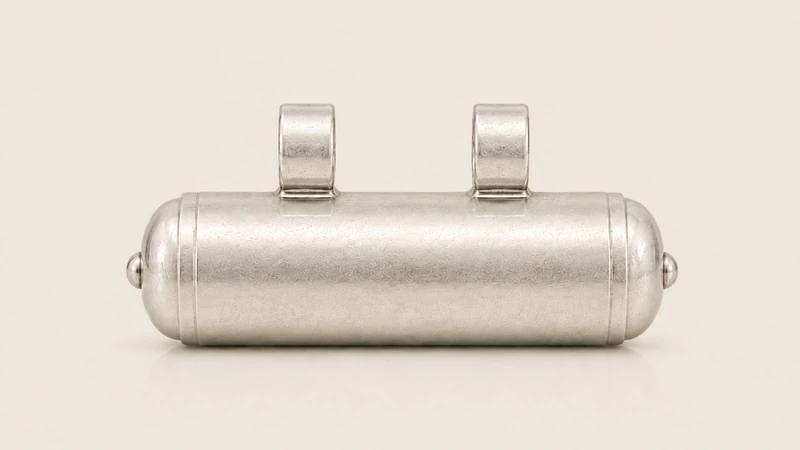
The sealing of the Rudra Yantra
The Rudra Yantra is consecrated over three days — Jala (holy-water consecration with mantras), Prana (life force through pranayama & chants) and Jeeva Pratishta (awakened with 108 recitations & offerings) — then present through your homa, receiving the energies raised in the fire. When your homa concludes, it is rolled and locked inside its silver amulet according to Agama vidhi — the practice by which those energies are held within a consecrated object rather than dispersing. It is why a homa performed at our ashram can still reach a devotee ten thousand miles away: what the fire raised travels to you, sealed.
This is what arrives at your door, at no extra cost, with your prasadam.
Personal sankalpa
Your name, gotra & nakshatra — and up to four family members if you wish. No one else is named.
Hear yours read back, as the priest will say it →Live telecast
Watch your own homa in real time from the ashram. Streamed openly on our YouTube channel by default — or request an unlisted telecast at checkout.
Free energised Rudra Yantra, sealed in a silver amulet
Shipped to you with your prasadam.
Prasadam, shipped free
Sacred vibhuti, sandalwood powder & kumkum from your fire — delivered to any country.
How to wear your energised Rudra Yantra
Your auspicious time to wear it
Wear it for the first time on a Monday, between 6.30 and 7.30 in the morning. Bathe first, place the yantra on your pooja altar and offer your prayers, then wear it around your neck or your waist, on a red or black thread or a silver chain.
At a funeral
Take the yantra off before you attend a funeral.
Purify the amulet
Whenever the yantra has been taken off, or if it was worn at a funeral, dip it in raw milk or Ganga jal, show it incense, dhoop or attar (perfume), and then wear it again.
Keep the energy intact
You may repeat this energising once a week or once a month.
How your Rudrashtakam Homa is performed
Sankalpa
The priest states your name, gotra and nakshatra — and those of up to four family members — with the intention this homa is performed for.
Ganapati Puja
The customary invocation to Ganapati, clearing obstacles before the deity is approached.
Agni Pratishtha
The fire is consecrated in the homa kunda and Agni invoked as the carrier of every offering that follows.
Rudra Avahana
The Rudrashtakam is chanted, inviting the deity's presence into the fire — by five priests.
Ahuti
Ghee and akshata, with the flowers, grains and dravyas proper to this deity, are offered in sequence with mantra. Each of the 5 priests makes 432 of these offerings, one at every verse of the Rudrashtakam — 2,160 in all.
Purnahuti
The final complete offering seals the sankalpa stated at the opening.
Aarti & Dispatch
Aarti is performed live on your telecast. Vibhuti, sandalwood powder, kumkum and your energised Rudra Yantra are then packed and shipped free to your door.
Rudra (Shiva)
The Rudrashtakam is addressed to Shiva as Rudra, and it is not a free-standing hymn: Goswami Tulsidas set it inside the Uttara Kanda of his Ramcharitmanas, written in the 1570s, where it follows Doha 107 (kha). The eight verses run in bhujangaprayata, a twelve-syllable metre whose short-long-long beat gives the hymn its rolling sound; a closing anushtubh verse makes nine. The sequence moves in a clear arc. Verses 1 and 2 speak of Shiva without form: the root of Om, the fourth state beyond waking, dream and sleep, beyond speech and the senses. Verses 3 and 4 turn to his form, white as the snowy Himalaya, with Ganga in his hair, the young moon on his brow and a blue throat. Verses 5 and 6 gather titles such as foe of Tripura and enemy of Kamadeva, and repeat the plea prasida, be pleased. Verses 7 and 8 drop all praise and ask for refuge, the singer admitting that they know no yoga, japa or ritual.
In this homa that grace is invoked through fire, with your own name and birth details spoken in the sankalpa.
Rudrashtakam: meaning, pronunciation & how to chant
The mantra word by word, how it is pronounced, and how devotees chant it at home.
Read the Mantra Guide →Ask before you book
Nirnaya, our free ritual guide, recommends the traditional ritual for your situation instantly. For a full reading of your chart, book a live session with our astrologers.
Frequently asked
Your ritual date is an auspicious muhurta calculated personally for you — not a slot on a rota. Once it is confirmed, rescheduling from the customer's side is not available, and cancellation does not carry a refund. If we ever have to move your ritual for unforeseen reasons at the ashram, we will inform you immediately and provide a fresh auspicious date at no cost — and your telecast, recording, prasadam and yantra remain exactly as promised.
Read the full refund and cancellation policy.
Other rituals to consider
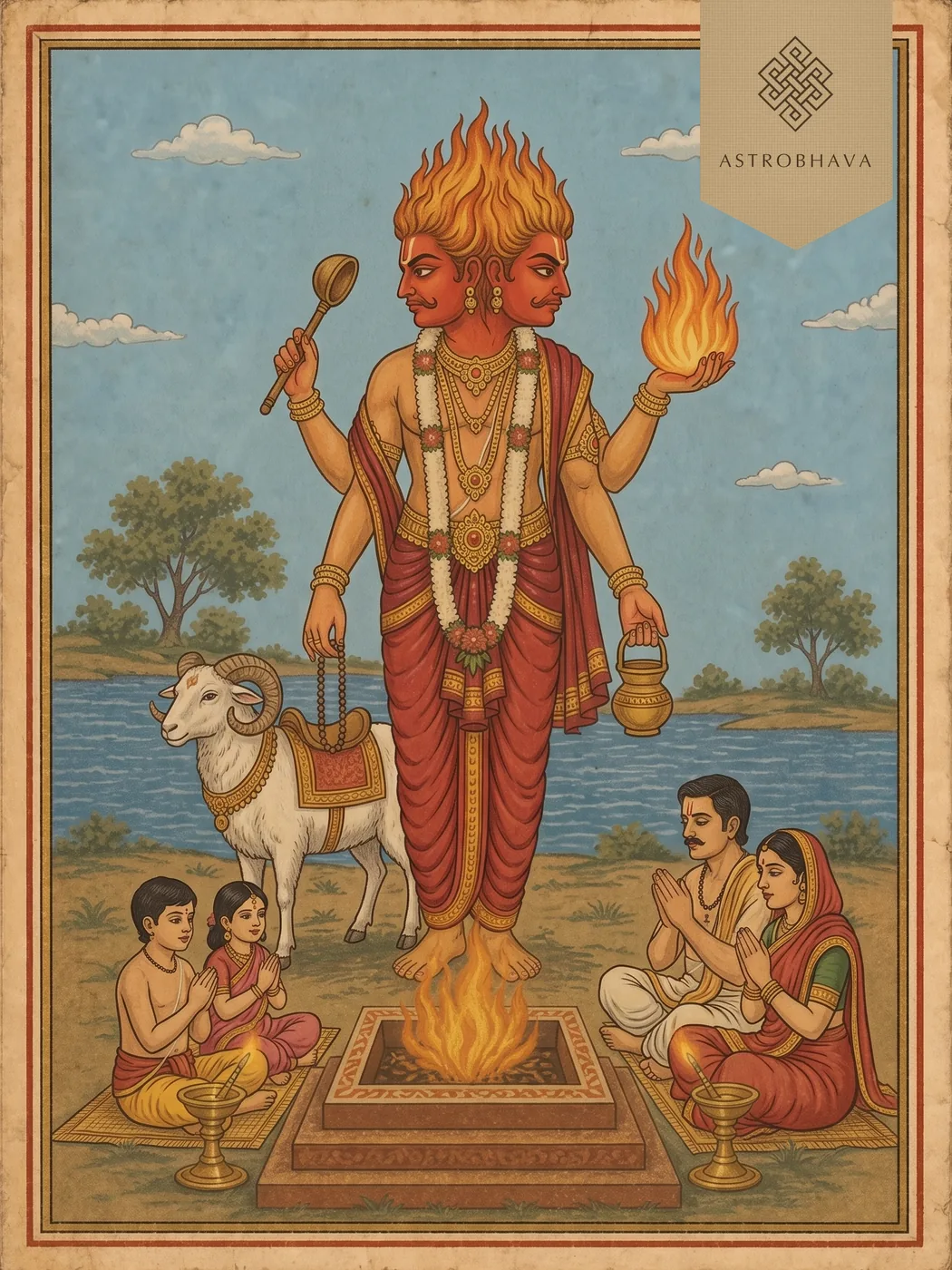
Aikyamatha Sooktha Homa
Booked for harmony of heart and mind — unity at home, steadiness within, and divine grace.
Maha Homa
Ayyappa Homa
For clearing long-standing obstacles, delays and hurdles blocking your progress.

Brahmacharini Homa
For steadiness in sadhana, deepening devotion and the calm grace of Devi's tapas.
Let Shiva's name be spoken with yours
Book your Rudrashtakam Homa, watch it performed live from our Yagna Ashram, and receive your energised Rudra Yantra anywhere in the world.
Choose Your Package