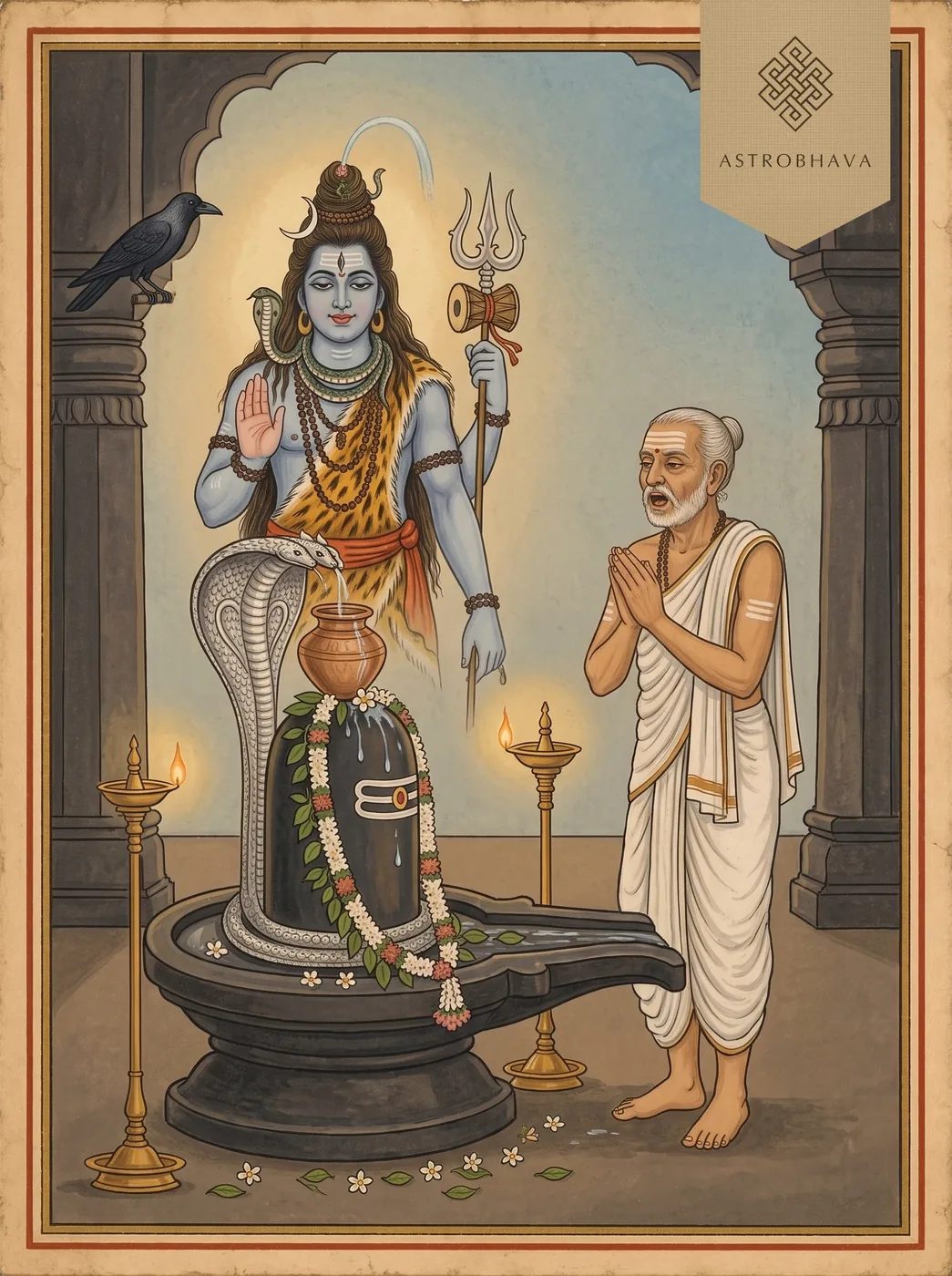
Rudrashtakam
नमामीशमीशान निर्वाणरूपं विभुं व्यापकं ब्रह्मवेदस्वरूपम् । निजं निर्गुणं निर्विकल्पं निरीहं चिदाकाशमाकाशवासं भजेऽहम् ॥Also known as Namami Shamishan
In Devanagari, Tamil, Telugu, Kannada, Malayalam and English — with the meaning of every word, and the one syllable most people pronounce wrongly.
What the Rudrashtakam is
The Rudrashtakam is addressed to Shiva as Rudra, and it is not a free-standing hymn: Goswami Tulsidas set it inside the Uttara Kanda of his Ramcharitmanas, written in the 1570s, where it follows Doha 107 (kha). The eight verses run in bhujangaprayata, a twelve-syllable metre whose short-long-long beat gives the hymn its rolling sound; a closing anushtubh verse makes nine. The sequence moves in a clear arc. Verses 1 and 2 speak of Shiva without form: the root of Om, the fourth state beyond waking, dream and sleep, beyond speech and the senses. Verses 3 and 4 turn to his form, white as the snowy Himalaya, with Ganga in his hair, the young moon on his brow and a blue throat. Verses 5 and 6 gather titles such as foe of Tripura and enemy of Kamadeva, and repeat the plea prasida, be pleased. Verses 7 and 8 drop all praise and ask for refuge, the singer admitting that they know no yoga, japa or ritual.
A guru's plea in an Ujjain temple
In the Ramcharitmanas the hymn belongs to someone else's life story. The crow-sage Kakabhushundi, telling Garuda how he came to love Rama, describes an earlier birth. He had left Ayodhya in a time of famine and settled in Ujjain, where a gentle Brahmin teacher, a devotee of Shiva who also honoured Vishnu, took him in. The disciple's devotion to Shiva had hardened into contempt for Vishnu's devotees, and the guru's advice did not reach him. One day, while he sat repeating Shiva's name in a Shiva temple, the guru walked in and the disciple, out of pride, did not rise or bow. A voice from the sky, Shiva's own, pronounced a curse: he would become a serpent and pass through a thousand births. Seeing the terror on his pupil's face, the guru did not plead his own injury. He folded his hands and sang these eight verses on the disciple's behalf, which is why the closing verse says the hymn was 'spoken by a Brahmin'. According to the Manas, Shiva let the sentence stand but softened it: the births would come without the pain of dying, and his knowledge would carry over from body to body. Some popular retellings name the singer as the sage Lomasha; in the Manas text Lomasha appears only later in the story, and the singer is the unnamed Ujjain guru.
The mantra, in six scripts
- नमामीशमीशान
- namāmīśamīśāna — I bow to the Lord, the ruler
- निर्वाणरूपं
- nirvāṇarūpaṃ — whose form is liberation
- विभुं
- vibhuṃ — the mighty one
- व्यापकं
- vyāpakaṃ — all-pervading
- ब्रह्मवेदस्वरूपम्
- brahmavedasvarūpam — Brahman and the Veda in essence
- निजं
- nijaṃ — resting in his own nature
- निर्गुणं
- nirguṇaṃ — beyond qualities
- निर्विकल्पं
- nirvikalpaṃ — beyond distinctions
- निरीहं
- nirīhaṃ — beyond desire
- चिदाकाशमाकाशवासं
- cidākāśamākāśavāsaṃ — consciousness like sky, sky-clad
- भजेऽहम्
- bhaje'ham — I worship
Rudrashtakam lyrics in full
As printed in the Gita Press Ramcharitmanas: eight verses and a closing verse on the fruit of reciting it. Other printings differ in a few words; the questions on this page list them.
All 9 verses, in Sanskrit, Tamil, Telugu, Kannada, Malayalam and English, each with its meaning. Choose a script:
Download the Rudrashtakam PDFAll 9 verses with their meanings, in Sanskrit. Free to print and keep.
नमामीशमीशान निर्वाणरूपं विभुं व्यापकं ब्रह्मवेदस्वरूपम् ।
निजं निर्गुणं निर्विकल्पं निरीहं चिदाकाशमाकाशवासं भजेऽहम् ॥
நமாமீஶமீஶாந நிர்வாணரூபம் விபும் வ்யாபகம் ப்ரஹ்மவேதஸ்வரூபம் ।
நிஜம் நிர்குணம் நிர்விகல்பம் நிரீஹம் சிதாகாஶமாகாஶவாஸம் பஜேஹம் ॥
నమామీశమీశాన నిర్వాణరూపం విభుం వ్యాపకం బ్రహ్మవేదస్వరూపమ్ ।
నిజం నిర్గుణం నిర్వికల్పం నిరీహం చిదాకాశమాకాశవాసం భజేఽహమ్ ॥
ನಮಾಮೀಶಮೀಶಾನ ನಿರ್ವಾಣರೂಪಂ ವಿಭುಂ ವ್ಯಾಪಕಂ ಬ್ರಹ್ಮವೇದಸ್ವರೂಪಮ್ ।
ನಿಜಂ ನಿರ್ಗುಣಂ ನಿರ್ವಿಕಲ್ಪಂ ನಿರೀಹಂ ಚಿದಾಕಾಶಮಾಕಾಶವಾಸಂ ಭಜೇಽಹಮ್ ॥
നമാമീശമീശാന നിര്വാണരൂപം വിഭും വ്യാപകം ബ്രഹ്മവേദസ്വരൂപമ് ।
നിജം നിര്ഗുണം നിര്വികല്പം നിരീഹം ചിദാകാശമാകാശവാസം ഭജേഽഹമ് ॥
namāmīśamīśāna nirvāṇarūpaṃ vibhuṃ vyāpakaṃ brahmavedasvarūpam |
nijaṃ nirguṇaṃ nirvikalpaṃ nirīhaṃ cidākāśamākāśavāsaṃ bhaje'ham ||
I bow to the Lord, the ruler of all, whose very form is liberation, the all-pervading, all-encompassing one who is Brahman and the Veda itself. I worship him who rests in his own nature, beyond qualities, beyond distinctions and beyond desire, who is consciousness like the sky and who wears the sky as his garment.
निराकारमोङ्कारमूलं तुरीयं गिराज्ञानगोतीतमीशं गिरीशम् ।
करालं महाकालकालं कृपालं गुणागारसंसारपारं नतोऽहम् ॥
நிராகாரமோங்காரமூலம் துரீயம் கிராஜ்ஞாநகோதீதமீஶம் கிரீஶம் ।
கராலம் மஹாகாலகாலம் க்ருபாலம் குணாகாரஸம்ஸாரபாரம் நதோஹம் ॥
నిరాకారమోఙ్కారమూలం తురీయం గిరాజ్ఞానగోతీతమీశం గిరీశమ్ ।
కరాలం మహాకాలకాలం కృపాలం గుణాగారసంసారపారం నతోఽహమ్ ॥
ನಿರಾಕಾರಮೋಙ್ಕಾರಮೂಲಂ ತುರೀಯಂ ಗಿರಾಜ್ಞಾನಗೋತೀತಮೀಶಂ ಗಿರೀಶಮ್ ।
ಕರಾಲಂ ಮಹಾಕಾಲಕಾಲಂ ಕೃಪಾಲಂ ಗುಣಾಗಾರಸಂಸಾರಪಾರಂ ನತೋಽಹಮ್ ॥
നിരാകാരമോങ്കാരമൂലം തുരീയം ഗിരാജ്ഞാനഗോതീതമീശം ഗിരീശമ് ।
കരാലം മഹാകാലകാലം കൃപാലം ഗുണാഗാരസംസാരപാരം നതോഽഹമ് ॥
nirākāramoṅkāramūlaṃ turīyaṃ girājñānagotītamīśaṃ girīśam |
karālaṃ mahākālakālaṃ kṛpālaṃ guṇāgārasaṃsārapāraṃ nato'ham ||
I bow to the formless one, the root of Om, the fourth state beyond waking, dream and sleep, the Lord beyond speech, knowledge and the senses, the Lord of the mountain. He is fearsome, the death even of Mahakala, yet compassionate; he is the abode of all virtues and stands beyond worldly existence.
तुषाराद्रिसङ्काशगौरं गभीरं मनोभूतकोटिप्रभाश्रीशरीरम् ।
स्फुरन्मौलिकल्लोलिनी चारुगङ्गा लसद्भालबालेन्दु कण्ठे भुजङ्गा ॥
துஷாராத்ரிஸங்காஶகௌரம் கபீரம் மநோபூதகோடிப்ரபாஶ்ரீஶரீரம் ।
ஸ்புரந்மௌலிகல்லோலிநீ சாருகங்கா லஸத்பாலபாலேந்து கண்டே புஜங்கா ॥
తుషారాద్రిసఙ్కాశగౌరం గభీరం మనోభూతకోటిప్రభాశ్రీశరీరమ్ ।
స్ఫురన్మౌలికల్లోలినీ చారుగఙ్గా లసద్భాలబాలేన్దు కణ్ఠే భుజఙ్గా ॥
ತುಷಾರಾದ್ರಿಸಙ್ಕಾಶಗೌರಂ ಗಭೀರಂ ಮನೋಭೂತಕೋಟಿಪ್ರಭಾಶ್ರೀಶರೀರಮ್ ।
ಸ್ಫುರನ್ಮೌಲಿಕಲ್ಲೋಲಿನೀ ಚಾರುಗಙ್ಗಾ ಲಸದ್ಭಾಲಬಾಲೇನ್ದು ಕಣ್ಠೇ ಭುಜಙ್ಗಾ ॥
തുഷാരാദ്രിസങ്കാശഗൌരം ഗഭീരം മനോഭൂതകോടിപ്രഭാശ്രീശരീരമ് ।
സ്ഫുരന്മൌലികല്ലോലിനീ ചാരുഗങ്ഗാ ലസദ്ഭാലബാലേന്ദു കണ്ഠേ ഭുജങ്ഗാ ॥
tuṣārādrisaṅkāśagauraṃ gabhīraṃ manobhūtakoṭiprabhāśrīśarīram |
sphuranmaulikallolinī cārugaṅgā lasadbhālabālendu kaṇṭhe bhujaṅgā ||
He is white like the snowy Himalaya and profound, his body glowing with the radiance and beauty of countless Kamadevas. On his head sparkles the lovely river Ganga, on his brow shines the young crescent moon, and serpents adorn his throat.
चलत्कुण्डलं भ्रूसुनेत्रं विशालं प्रसन्नाननं नीलकण्ठं दयालम् ।
मृगाधीशचर्माम्बरं मुण्डमालं प्रियं शङ्करं सर्वनाथं भजामि ॥
சலத்குண்டலம் ப்ரூஸுநேத்ரம் விஶாலம் ப்ரஸந்நாநநம் நீலகண்டம் தயாலம் ।
ம்ருகாதீஶசர்மாம்பரம் முண்டமாலம் ப்ரியம் ஶங்கரம் ஸர்வநாதம் பஜாமி ॥
చలత్కుణ్డలం భ్రూసునేత్రం విశాలం ప్రసన్నాననం నీలకణ్ఠం దయాలమ్ ।
మృగాధీశచర్మామ్బరం ముణ్డమాలం ప్రియం శఙ్కరం సర్వనాథం భజామి ॥
ಚಲತ್ಕುಣ್ಡಲಂ ಭ್ರೂಸುನೇತ್ರಂ ವಿಶಾಲಂ ಪ್ರಸನ್ನಾನನಂ ನೀಲಕಣ್ಠಂ ದಯಾಲಮ್ ।
ಮೃಗಾಧೀಶಚರ್ಮಾಮ್ಬರಂ ಮುಣ್ಡಮಾಲಂ ಪ್ರಿಯಂ ಶಙ್ಕರಂ ಸರ್ವನಾಥಂ ಭಜಾಮಿ ॥
ചലത്കുണ്ഡലം ഭ്രൂസുനേത്രം വിശാലം പ്രസന്നാനനം നീലകണ്ഠം ദയാലമ് ।
മൃഗാധീശചര്മാമ്ബരം മുണ്ഡമാലം പ്രിയം ശങ്കരം സര്വനാഥം ഭജാമി ॥
calatkuṇḍalaṃ bhrūsunetraṃ viśālaṃ prasannānanaṃ nīlakaṇṭhaṃ dayālam |
mṛgādhīśacarmāmbaraṃ muṇḍamālaṃ priyaṃ śaṅkaraṃ sarvanāthaṃ bhajāmi ||
His earrings sway; his brows are fine and his eyes large; his face is serene, his throat blue, and he is merciful. I worship Shankara, beloved of all and Lord of all, who wears the lion's skin as his garment and a garland of skulls.
प्रचण्डं प्रकृष्टं प्रगल्भं परेशं अखण्डं अजं भानुकोटिप्रकाशम् ।
त्रयःशूलनिर्मूलनं शूलपाणिं भजेऽहं भवानीपतिं भावगम्यम् ॥
ப்ரசண்டம் ப்ரக்ருஷ்டம் ப்ரகல்பம் பரேஶம் அகண்டம் அஜம் பாநுகோடிப்ரகாஶம் ।
த்ரயஃஶூலநிர்மூலநம் ஶூலபாணிம் பஜேஹம் பவாநீபதிம் பாவகம்யம் ॥
ప్రచణ్డం ప్రకృష్టం ప్రగల్భం పరేశం అఖణ్డం అజం భానుకోటిప్రకాశమ్ ।
త్రయఃశూలనిర్మూలనం శూలపాణిం భజేఽహం భవానీపతిం భావగమ్యమ్ ॥
ಪ್ರಚಣ್ಡಂ ಪ್ರಕೃಷ್ಟಂ ಪ್ರಗಲ್ಭಂ ಪರೇಶಂ ಅಖಣ್ಡಂ ಅಜಂ ಭಾನುಕೋಟಿಪ್ರಕಾಶಮ್ ।
ತ್ರಯಃಶೂಲನಿರ್ಮೂಲನಂ ಶೂಲಪಾಣಿಂ ಭಜೇಽಹಂ ಭವಾನೀಪತಿಂ ಭಾವಗಮ್ಯಮ್ ॥
പ്രചണ്ഡം പ്രകൃഷ്ടം പ്രഗല്ഭം പരേശം അഖണ്ഡം അജം ഭാനുകോടിപ്രകാശമ് ।
ത്രയഃശൂലനിര്മൂലനം ശൂലപാണിം ഭജേഽഹം ഭവാനീപതിം ഭാവഗമ്യമ് ॥
pracaṇḍaṃ prakṛṣṭaṃ pragalbhaṃ pareśaṃ akhaṇḍaṃ ajaṃ bhānukoṭiprakāśam |
trayaḥśūlanirmūlanaṃ śūlapāṇiṃ bhaje'haṃ bhavānīpatiṃ bhāvagamyam ||
He is fierce, supreme, bold and radiant, the highest Lord, undivided and unborn, shining like millions of suns. I worship the husband of Bhavani, who holds the trident, who uproots the three kinds of suffering, and who is reached through loving devotion.
कलातीतकल्याणकल्पान्तकारी सदासज्जनानन्ददाता पुरारी ।
चिदानन्दसन्दोहमोहापहारी प्रसीद प्रसीद प्रभो मन्मथारी ॥
கலாதீதகல்யாணகல்பாந்தகாரீ ஸதாஸஜ்ஜநாநந்ததாதா புராரீ ।
சிதாநந்தஸந்தோஹமோஹாபஹாரீ ப்ரஸீத ப்ரஸீத ப்ரபோ மந்மதாரீ ॥
కలాతీతకల్యాణకల్పాన్తకారీ సదాసజ్జనానన్దదాతా పురారీ ।
చిదానన్దసన్దోహమోహాపహారీ ప్రసీద ప్రసీద ప్రభో మన్మథారీ ॥
ಕಲಾತೀತಕಲ್ಯಾಣಕಲ್ಪಾನ್ತಕಾರೀ ಸದಾಸಜ್ಜನಾನನ್ದದಾತಾ ಪುರಾರೀ ।
ಚಿದಾನನ್ದಸನ್ದೋಹಮೋಹಾಪಹಾರೀ ಪ್ರಸೀದ ಪ್ರಸೀದ ಪ್ರಭೋ ಮನ್ಮಥಾರೀ ॥
കലാതീതകല്യാണകല്പാന്തകാരീ സദാസജ്ജനാനന്ദദാതാ പുരാരീ ।
ചിദാനന്ദസന്ദോഹമോഹാപഹാരീ പ്രസീദ പ്രസീദ പ്രഭോ മന്മഥാരീ ॥
kalātītakalyāṇakalpāntakārī sadāsajjanānandadātā purārī |
cidānandasandohamohāpahārī prasīda prasīda prabho manmathārī ||
He is beyond all parts and measures, auspicious, the one who brings the aeon to its end, ever the giver of joy to the good, the foe of the demon Tripura. O Lord, fullness of consciousness and bliss, remover of delusion, enemy of Kamadeva, be pleased, be pleased.
न यावद् उमानाथ पादारविन्दं भजन्तीह लोके परे वा नराणाम् ।
न तावत्सुखं शान्ति सन्तापनाशं प्रसीद प्रभो सर्वभूताधिवासम् ॥
ந யாவத் உமாநாத பாதாரவிந்தம் பஜந்தீஹ லோகே பரே வா நராணாம் ।
ந தாவத்ஸுகம் ஶாந்தி ஸந்தாபநாஶம் ப்ரஸீத ப்ரபோ ஸர்வபூதாதிவாஸம் ॥
న యావద్ ఉమానాథ పాదారవిన్దం భజన్తీహ లోకే పరే వా నరాణామ్ ।
న తావత్సుఖం శాన్తి సన్తాపనాశం ప్రసీద ప్రభో సర్వభూతాధివాసమ్ ॥
ನ ಯಾವದ್ ಉಮಾನಾಥ ಪಾದಾರವಿನ್ದಂ ಭಜನ್ತೀಹ ಲೋಕೇ ಪರೇ ವಾ ನರಾಣಾಮ್ ।
ನ ತಾವತ್ಸುಖಂ ಶಾನ್ತಿ ಸನ್ತಾಪನಾಶಂ ಪ್ರಸೀದ ಪ್ರಭೋ ಸರ್ವಭೂತಾಧಿವಾಸಮ್ ॥
ന യാവദ് ഉമാനാഥ പാദാരവിന്ദം ഭജന്തീഹ ലോകേ പരേ വാ നരാണാമ് ।
ന താവത്സുഖം ശാന്തി സന്താപനാശം പ്രസീദ പ്രഭോ സര്വഭൂതാധിവാസമ് ॥
na yāvad umānātha pādāravindaṃ bhajantīha loke pare vā narāṇām |
na tāvatsukhaṃ śānti santāpanāśaṃ prasīda prabho sarvabhūtādhivāsam ||
O Lord of Uma, as long as people do not worship your lotus feet, they find neither happiness nor peace, nor an end to their suffering, in this world or the next. O Lord who dwells in all beings, be pleased.
न जानामि योगं जपं नैव पूजां नतोऽहं सदा सर्वदा शम्भु तुभ्यम् ।
जराजन्मदुःखौघतातप्यमानं प्रभो पाहि आपन्नमामीश शम्भो ॥
ந ஜாநாமி யோகம் ஜபம் நைவ பூஜாம் நதோஹம் ஸதா ஸர்வதா ஶம்பு துப்யம் ।
ஜராஜந்மதுஃகௌகதாதப்யமாநம் ப்ரபோ பாஹி ஆபந்நமாமீஶ ஶம்போ ॥
న జానామి యోగం జపం నైవ పూజాం నతోఽహం సదా సర్వదా శమ్భు తుభ్యమ్ ।
జరాజన్మదుఃఖౌఘతాతప్యమానం ప్రభో పాహి ఆపన్నమామీశ శమ్భో ॥
ನ ಜಾನಾಮಿ ಯೋಗಂ ಜಪಂ ನೈವ ಪೂಜಾಂ ನತೋಽಹಂ ಸದಾ ಸರ್ವದಾ ಶಮ್ಭು ತುಭ್ಯಮ್ ।
ಜರಾಜನ್ಮದುಃಖೌಘತಾತಪ್ಯಮಾನಂ ಪ್ರಭೋ ಪಾಹಿ ಆಪನ್ನಮಾಮೀಶ ಶಮ್ಭೋ ॥
ന ജാനാമി യോഗം ജപം നൈവ പൂജാം നതോഽഹം സദാ സര്വദാ ശമ്ഭു തുഭ്യമ് ।
ജരാജന്മദുഃഖൌഘതാതപ്യമാനം പ്രഭോ പാഹി ആപന്നമാമീശ ശമ്ഭോ ॥
na jānāmi yogaṃ japaṃ naiva pūjāṃ nato'haṃ sadā sarvadā śambhu tubhyam |
jarājanmaduḥkhaughatātapyamānaṃ prabho pāhi āpannamāmīśa śambho ||
I know neither yoga, nor japa, nor worship; O Shambhu, I simply bow to you always and at every moment. O Lord, protect me, a sufferer burning in the flood of sorrows of old age and birth; O Lord Shambhu, I bow to you.
रुद्राष्टकमिदं प्रोक्तं विप्रेण हरतोषये ।
ये पठन्ति नरा भक्त्या तेषां शम्भुः प्रसीदति ॥
ருத்ராஷ்டகமிதம் ப்ரோக்தம் விப்ரேண ஹரதோஷயே ।
யே படந்தி நரா பக்த்யா தேஷாம் ஶம்புஃ ப்ரஸீததி ॥
రుద్రాష్టకమిదం ప్రోక్తం విప్రేణ హరతోషయే ।
యే పఠన్తి నరా భక్త్యా తేషాం శమ్భుః ప్రసీదతి ॥
ರುದ್ರಾಷ್ಟಕಮಿದಂ ಪ್ರೋಕ್ತಂ ವಿಪ್ರೇಣ ಹರತೋಷಯೇ ।
ಯೇ ಪಠನ್ತಿ ನರಾ ಭಕ್ತ್ಯಾ ತೇಷಾಂ ಶಮ್ಭುಃ ಪ್ರಸೀದತಿ ॥
രുദ്രാഷ്ടകമിദം പ്രോക്തം വിപ്രേണ ഹരതോഷയേ ।
യേ പഠന്തി നരാ ഭക്ത്യാ തേഷാം ശമ്ഭുഃ പ്രസീദതി ॥
rudrāṣṭakamidaṃ proktaṃ vipreṇa haratoṣaye |
ye paṭhanti narā bhaktyā teṣāṃ śambhuḥ prasīdati ||
This Rudrashtakam was spoken by a Brahmin to please Hara (Shiva). The verse says that Shambhu is pleased with those who recite it with devotion.
The syllable people get wrong
The opening word namāmīśamīśāna is often broken as 'namami shamishan', but it joins namāmi + īśam + īśāna ('I bow to the Lord, the ruler'), so say it na-maa-MEE-sha-MEE-shaa-na, with every ī and ā held long and each ś a soft 'sh'.
When the Rudrashtakam is chanted
Weekday. Monday
Festival. Maha Shivaratri and the Mondays of Shravan
Questions
Have your chart read before you decide
Chanting is yours to do, and free. But which deity your situation calls for — and whether a mantra alone is the right response — depends on your chart. Sometimes it is; sometimes it is not.
- Over 30 years in the Guru–Sishya Parampara, from the age of five
- He reads every chart himself — 60 minutes, one to one, never delegated
- Charts are read only between sunrise and sunset, following tradition