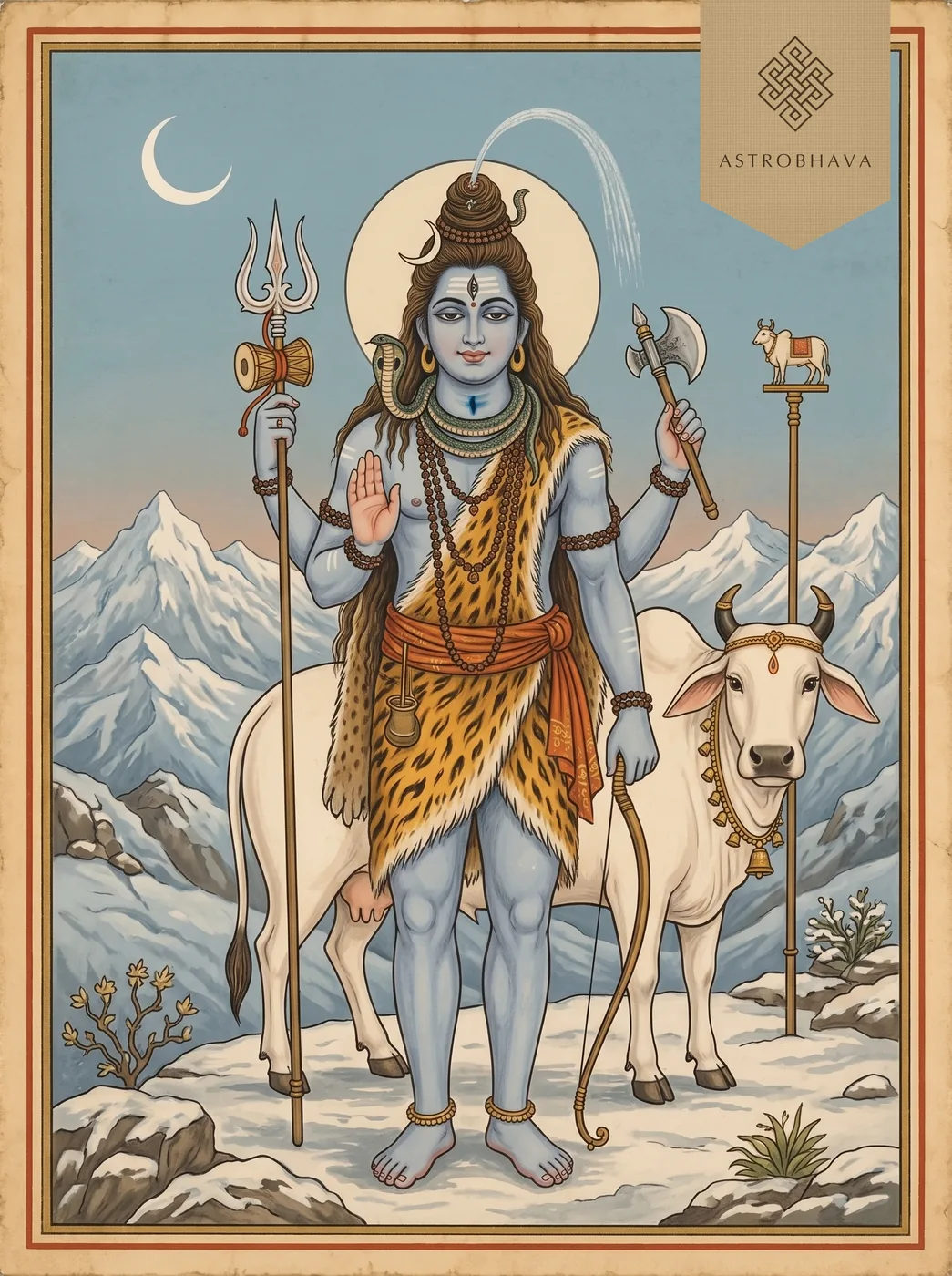
Shiva Ashtottara Shatanamavali
ॐ शिवाय नमः ।Also known as Shiva Ashtothram
In Devanagari, Tamil, Telugu, Kannada, Malayalam and English — with the meaning of every word, and the one syllable most people pronounce wrongly.
What the Shiva Ashtottara Shatanamavali is
The Shiva Ashtottara Shatanamavali is a list rather than a poem: 108 names of Shiva, each set between Om and namah, so that every line is a complete salutation in the dative case. It is the archana form of a thirteen-verse stotram in anushtubh metre, and printed editions close it with a colophon placing it in the Shiva Rahasya, in a conversation between Gauri and Narayana. The list opens with Shiva, Maheshvara and Shambhu and ends with Parameshvara, the supreme Lord. Between those points the names move freely between the god's appearance (the crescent moon, the matted hair, the dark throat, the bull banner), his weapons (the Pinaka bow, the trident, the axe), the deeds told of him in the Puranas, and titles of pure philosophy such as the unmanifest, the imperishable and the endless. Name 108 does not summarise the rest; it simply returns to lordship, as the second name began.
A Puranic list with Vedic roots
The Shiva Rahasya is counted among the Shaiva upapuranas, the secondary Puranas of the Shiva tradition. It is a vast work, given as twelve amshas or parts and close to a hundred thousand verses, and its sixth part is the Ribhu Gita. According to the colophon printed with the namavali, the 108 names come from the seventh part, chapter 13, verses 203 to 215, where they are spoken in a dialogue between Gauri and Narayana. The viniyoga that some editions print before the list names Narayana as its seer and Sri Sadashiva as its deity. Many of the names are far older than the Purana. The fifth anuvaka of the Sri Rudram salutes the god as Girisha and Shipivishta in a single line and as Kapardin, the one with braided hair, in another, and its closing anuvakas call him Nilalohita and describe him wearing a hide and carrying the Pinaka. The Puranic layer shows in names that each compress a whole episode: the burning of Kama (25), the slaying of Andhaka (26), the three cities of Tripura (38 and 68), and, close to the end, three names from the wrecking of Daksha's sacrifice, where tradition holds that Pushan lost his teeth and Bhaga his eyes (97, 99 and 101).
The mantra, in six scripts
- ॐ
- oṃ — Om, the sacred syllable
- शिवाय
- śivāya — to Shiva, the auspicious
- नमः
- namaḥ — salutation
Shiva Ashtottara Shatanamavali lyrics in full
The 108 names in archana form, each opening with Om and closing with namah.
All 108 verses, in Sanskrit, Tamil, Telugu, Kannada, Malayalam and English, each with its meaning. Choose a script:
Download the Shiva Ashtottara Shatanamavali PDFAll 108 verses with their meanings, in Sanskrit. Free to print and keep.
ॐ शिवाय नमः ।
ௐ ஶிவாய நமஃ ।
ఓం శివాయ నమః ।
ಓಂ ಶಿವಾಯ ನಮಃ ।
ഓം ശിവായ നമഃ ।
oṃ śivāya namaḥ |
Salutations to Shiva, the auspicious one.
ॐ महेश्वराय नमः ।
ௐ மஹேஶ்வராய நமஃ ।
ఓం మహేశ్వరాయ నమః ।
ಓಂ ಮಹೇಶ್ವರಾಯ ನಮಃ ।
ഓം മഹേശ്വരായ നമഃ ।
oṃ maheśvarāya namaḥ |
Salutations to Maheshvara, the great Lord.
ॐ शम्भवे नमः ।
ௐ ஶம்பவே நமஃ ।
ఓం శమ్భవే నమః ।
ಓಂ ಶಮ್ಭವೇ ನಮಃ ।
ഓം ശമ്ഭവേ നമഃ ।
oṃ śambhave namaḥ |
Salutations to Shambhu, the source of well-being.
ॐ पिनाकिने नमः ।
ௐ பிநாகிநே நமஃ ।
ఓం పినాకినే నమః ।
ಓಂ ಪಿನಾಕಿನೇ ನಮಃ ।
ഓം പിനാകിനേ നമഃ ।
oṃ pinākine namaḥ |
Salutations to the bearer of the bow Pinaka.
ॐ शशिशेखराय नमः ।
ௐ ஶஶிஶேகராய நமஃ ।
ఓం శశిశేఖరాయ నమః ।
ಓಂ ಶಶಿಶೇಖರಾಯ ನಮಃ ।
ഓം ശശിശേഖരായ നമഃ ।
oṃ śaśiśekharāya namaḥ |
Salutations to him who wears the crescent moon on his head.
ॐ वामदेवाय नमः ।
ௐ வாமதேவாய நமஃ ।
ఓం వామదేవాయ నమః ।
ಓಂ ವಾಮದೇವಾಯ ನಮಃ ।
ഓം വാമദേവായ നമഃ ।
oṃ vāmadevāya namaḥ |
Salutations to Vamadeva, the gracious and beautiful god.
ॐ विरूपाक्षाय नमः ।
ௐ விரூபாக்ஷாய நமஃ ।
ఓం విరూపాక్షాయ నమః ।
ಓಂ ವಿರೂಪಾಕ್ಷಾಯ ನಮಃ ।
ഓം വിരൂപാക്ഷായ നമഃ ।
oṃ virūpākṣāya namaḥ |
Salutations to him of uncommon eyes (the three-eyed one).
ॐ कपर्दिने नमः ।
ௐ கபர்திநே நமஃ ।
ఓం కపర్దినే నమః ।
ಓಂ ಕಪರ್ದಿನೇ ನಮಃ ।
ഓം കപര്ദിനേ നമഃ ।
oṃ kapardine namaḥ |
Salutations to him who wears matted, coiled hair.
ॐ नीललोहिताय नमः ।
ௐ நீலலோஹிதாய நமஃ ।
ఓం నీలలోహితాయ నమః ।
ಓಂ ನೀಲಲೋಹಿತಾಯ ನಮಃ ।
ഓം നീലലോഹിതായ നമഃ ।
oṃ nīlalohitāya namaḥ |
Salutations to him who is blue and red in colour.
ॐ शङ्कराय नमः ।
ௐ ஶங்கராய நமஃ ।
ఓం శఙ్కరాయ నమః ।
ಓಂ ಶಙ್ಕರಾಯ ನಮಃ ।
ഓം ശങ്കരായ നമഃ ।
oṃ śaṅkarāya namaḥ |
Salutations to Shankara, the giver of welfare.
ॐ शूलपाणये नमः ।
ௐ ஶூலபாணயே நமஃ ।
ఓం శూలపాణయే నమః ।
ಓಂ ಶೂಲಪಾಣಯೇ ನಮಃ ।
ഓം ശൂലപാണയേ നമഃ ।
oṃ śūlapāṇaye namaḥ |
Salutations to him who holds the trident in his hand.
ॐ खट्वाङ्गिने नमः ।
ௐ கட்வாங்கிநே நமஃ ।
ఓం ఖట్వాఙ్గినే నమః ।
ಓಂ ಖಟ್ವಾಙ್ಗಿನೇ ನಮಃ ।
ഓം ഖട്വാങ്ഗിനേ നമഃ ।
oṃ khaṭvāṅgine namaḥ |
Salutations to the bearer of the khatvanga, the skull-topped staff.
ॐ विष्णुवल्लभाय नमः ।
ௐ விஷ்ணுவல்லபாய நமஃ ।
ఓం విష్ణువల్లభాయ నమః ।
ಓಂ ವಿಷ್ಣುವಲ್ಲಭಾಯ ನಮಃ ।
ഓം വിഷ്ണുവല്ലഭായ നമഃ ।
oṃ viṣṇuvallabhāya namaḥ |
Salutations to him who is dear to Vishnu.
ॐ शिपिविष्टाय नमः ।
ௐ ஶிபிவிஷ்டாய நமஃ ।
ఓం శిపివిష్టాయ నమః ।
ಓಂ ಶಿಪಿವಿಷ್ಟಾಯ ನಮಃ ।
ഓം ശിപിവിഷ്ടായ നമഃ ।
oṃ śipiviṣṭāya namaḥ |
Salutations to Shipivishta, he who is pervaded by rays of light.
ॐ अम्बिकानाथाय नमः ।
ௐ அம்பிகாநாதாய நமஃ ।
ఓం అమ్బికానాథాయ నమః ।
ಓಂ ಅಮ್ಬಿಕಾನಾಥಾಯ ನಮಃ ।
ഓം അമ്ബികാനാഥായ നമഃ ।
oṃ ambikānāthāya namaḥ |
Salutations to the Lord of Ambika (Parvati).
ॐ श्रीकण्ठाय नमः ।
ௐ ஶ்ரீகண்டாய நமஃ ।
ఓం శ్రీకణ్ఠాయ నమః ।
ಓಂ ಶ್ರೀಕಣ್ಠಾಯ ನಮಃ ।
ഓം ശ്രീകണ്ഠായ നമഃ ।
oṃ śrīkaṇṭhāya namaḥ |
Salutations to him whose throat is glorious.
ॐ भक्तवत्सलाय नमः ।
ௐ பக்தவத்ஸலாய நமஃ ।
ఓం భక్తవత్సలాయ నమః ।
ಓಂ ಭಕ್ತವತ್ಸಲಾಯ ನಮಃ ।
ഓം ഭക്തവത്സലായ നമഃ ।
oṃ bhaktavatsalāya namaḥ |
Salutations to him who is tender towards his devotees.
ॐ भवाय नमः ।
ௐ பவாய நமஃ ।
ఓం భవాయ నమః ।
ಓಂ ಭವಾಯ ನಮಃ ।
ഓം ഭവായ നമഃ ।
oṃ bhavāya namaḥ |
Salutations to Bhava, existence itself.
ॐ शर्वाय नमः ।
ௐ ஶர்வாய நமஃ ।
ఓం శర్వాయ నమః ।
ಓಂ ಶರ್ವಾಯ ನಮಃ ।
ഓം ശര്വായ നമഃ ।
oṃ śarvāya namaḥ |
Salutations to Sharva, the destroyer.
ॐ त्रिलोकेशाय नमः ।
ௐ த்ரிலோகேஶாய நமஃ ।
ఓం త్రిలోకేశాయ నమః ।
ಓಂ ತ್ರಿಲೋಕೇಶಾಯ ನಮಃ ।
ഓം ത്രിലോകേശായ നമഃ ।
oṃ trilokeśāya namaḥ |
Salutations to the Lord of the three worlds.
ॐ शितिकण्ठाय नमः ।
ௐ ஶிதிகண்டாய நமஃ ।
ఓం శితికణ్ఠాయ నమః ।
ಓಂ ಶಿತಿಕಣ್ಠಾಯ ನಮಃ ।
ഓം ശിതികണ്ഠായ നമഃ ।
oṃ śitikaṇṭhāya namaḥ |
Salutations to him whose throat is dark blue.
ॐ शिवाप्रियाय नमः ।
ௐ ஶிவாப்ரியாய நமஃ ।
ఓం శివాప్రియాయ నమః ।
ಓಂ ಶಿವಾಪ್ರಿಯಾಯ ನಮಃ ।
ഓം ശിവാപ്രിയായ നമഃ ।
oṃ śivāpriyāya namaḥ |
Salutations to the beloved of Shiva (Parvati).
ॐ उग्राय नमः ।
ௐ உக்ராய நமஃ ।
ఓం ఉగ్రాయ నమః ।
ಓಂ ಉಗ್ರಾಯ ನಮಃ ।
ഓം ഉഗ്രായ നമഃ ।
oṃ ugrāya namaḥ |
Salutations to the fierce one.
ॐ कपालिने नमः ।
ௐ கபாலிநே நமஃ ।
ఓం కపాలినే నమః ।
ಓಂ ಕಪಾಲಿನೇ ನಮಃ ।
ഓം കപാലിനേ നമഃ ।
oṃ kapāline namaḥ |
Salutations to the bearer of the skull bowl.
ॐ कामारये नमः ।
ௐ காமாரயே நமஃ ।
ఓం కామారయే నమః ।
ಓಂ ಕಾಮಾರಯೇ ನಮಃ ।
ഓം കാമാരയേ നമഃ ।
oṃ kāmāraye namaḥ |
Salutations to the foe of Kama, the god of desire.
ॐ अन्धकासुरसूदनाय नमः ।
ௐ அந்தகாஸுரஸூதநாய நமஃ ।
ఓం అన్ధకాసురసూదనాయ నమః ।
ಓಂ ಅನ್ಧಕಾಸುರಸೂದನಾಯ ನಮಃ ।
ഓം അന്ധകാസുരസൂദനായ നമഃ ।
oṃ andhakāsurasūdanāya namaḥ |
Salutations to the slayer of the demon Andhaka.
ॐ गङ्गाधराय नमः ।
ௐ கங்காதராய நமஃ ।
ఓం గఙ్గాధరాయ నమః ।
ಓಂ ಗಙ್ಗಾಧರಾಯ ನಮಃ ।
ഓം ഗങ്ഗാധരായ നമഃ ।
oṃ gaṅgādharāya namaḥ |
Salutations to him who holds the Ganga in his hair.
ॐ ललाटाक्षाय नमः ।
ௐ லலாடாக்ஷாய நமஃ ।
ఓం లలాటాక్షాయ నమః ।
ಓಂ ಲಲಾಟಾಕ್ಷಾಯ ನಮಃ ।
ഓം ലലാടാക്ഷായ നമഃ ।
oṃ lalāṭākṣāya namaḥ |
Salutations to him who has an eye on his forehead.
ॐ कालकालाय नमः ।
ௐ காலகாலாய நமஃ ।
ఓం కాలకాలాయ నమః ।
ಓಂ ಕಾಲಕಾಲಾಯ ನಮಃ ।
ഓം കാലകാലായ നമഃ ।
oṃ kālakālāya namaḥ |
Salutations to him who is death even to Time (Kala).
ॐ कृपानिधये नमः ।
ௐ க்ருபாநிதயே நமஃ ।
ఓం కృపానిధయే నమః ।
ಓಂ ಕೃಪಾನಿಧಯೇ ನಮಃ ।
ഓം കൃപാനിധയേ നമഃ ।
oṃ kṛpānidhaye namaḥ |
Salutations to the treasure-house of compassion.
ॐ भीमाय नमः ।
ௐ பீமாய நமஃ ।
ఓం భీమాయ నమః ।
ಓಂ ಭೀಮಾಯ ನಮಃ ।
ഓം ഭീമായ നമഃ ।
oṃ bhīmāya namaḥ |
Salutations to the awe-inspiring one.
ॐ परशुहस्ताय नमः ।
ௐ பரஶுஹஸ்தாய நமஃ ।
ఓం పరశుహస్తాయ నమః ।
ಓಂ ಪರಶುಹಸ್ತಾಯ ನಮಃ ।
ഓം പരശുഹസ്തായ നമഃ ।
oṃ paraśuhastāya namaḥ |
Salutations to him who holds the axe in his hand.
ॐ मृगपाणये नमः ।
ௐ ம்ருகபாணயே நமஃ ।
ఓం మృగపాణయే నమః ।
ಓಂ ಮೃಗಪಾಣಯೇ ನಮಃ ।
ഓം മൃഗപാണയേ നമഃ ।
oṃ mṛgapāṇaye namaḥ |
Salutations to him who holds a deer in his hand.
ॐ जटाधराय नमः ।
ௐ ஜடாதராய நமஃ ।
ఓం జటాధరాయ నమః ।
ಓಂ ಜಟಾಧರಾಯ ನಮಃ ।
ഓം ജടാധരായ നമഃ ।
oṃ jaṭādharāya namaḥ |
Salutations to the wearer of matted locks.
ॐ कैलासवासिने नमः ।
ௐ கைலாஸவாஸிநே நமஃ ।
ఓం కైలాసవాసినే నమః ।
ಓಂ ಕೈಲಾಸವಾಸಿನೇ ನಮಃ ।
ഓം കൈലാസവാസിനേ നമഃ ।
oṃ kailāsavāsine namaḥ |
Salutations to the dweller on Mount Kailasa.
ॐ कवचिने नमः ।
ௐ கவசிநே நமஃ ।
ఓం కవచినే నమః ।
ಓಂ ಕವಚಿನೇ ನಮಃ ।
ഓം കവചിനേ നമഃ ।
oṃ kavacine namaḥ |
Salutations to the one clad in armour.
ॐ कठोराय नमः ।
ௐ கடோராய நமஃ ।
ఓం కఠోరాయ నమః ।
ಓಂ ಕಠೋರಾಯ ನಮಃ ।
ഓം കഠോരായ നമഃ ।
oṃ kaṭhorāya namaḥ |
Salutations to the stern and unyielding one.
ॐ त्रिपुरान्तकाय नमः ।
ௐ த்ரிபுராந்தகாய நமஃ ।
ఓం త్రిపురాన్తకాయ నమః ।
ಓಂ ತ್ರಿಪುರಾನ್ತಕಾಯ ನಮಃ ।
ഓം ത്രിപുരാന്തകായ നമഃ ।
oṃ tripurāntakāya namaḥ |
Salutations to the destroyer of the three cities (Tripura).
ॐ वृषाङ्काय नमः ।
ௐ வ்ருஷாங்காய நமஃ ।
ఓం వృషాఙ్కాయ నమః ।
ಓಂ ವೃಷಾಙ್ಕಾಯ ನಮಃ ।
ഓം വൃഷാങ്കായ നമഃ ।
oṃ vṛṣāṅkāya namaḥ |
Salutations to him whose emblem is the bull.
ॐ वृषभारूढाय नमः ।
ௐ வ்ருஷபாரூடாய நமஃ ।
ఓం వృషభారూఢాయ నమః ।
ಓಂ ವೃಷಭಾರೂಢಾಯ ನಮಃ ।
ഓം വൃഷഭാരൂഢായ നമഃ ।
oṃ vṛṣabhārūḍhāya namaḥ |
Salutations to him who rides the bull.
ॐ भस्मोद्धूलितविग्रहाय नमः ।
ௐ பஸ்மோத்தூலிதவிக்ரஹாய நமஃ ।
ఓం భస్మోద్ధూలితవిగ్రహాయ నమః ।
ಓಂ ಭಸ್ಮೋದ್ಧೂಲಿತವಿಗ್ರಹಾಯ ನಮಃ ।
ഓം ഭസ്മോദ്ധൂലിതവിഗ്രഹായ നമഃ ।
oṃ bhasmoddhūlitavigrahāya namaḥ |
Salutations to him whose body is smeared with sacred ash.
ॐ सामप्रियाय नमः ।
ௐ ஸாமப்ரியாய நமஃ ।
ఓం సామప్రియాయ నమః ।
ಓಂ ಸಾಮಪ್ರಿಯಾಯ ನಮಃ ।
ഓം സാമപ്രിയായ നമഃ ।
oṃ sāmapriyāya namaḥ |
Salutations to him who loves the Sama chants.
ॐ स्वरमयाय नमः ।
ௐ ஸ்வரமயாய நமஃ ।
ఓం స్వరమయాయ నమః ।
ಓಂ ಸ್ವರಮಯಾಯ ನಮಃ ।
ഓം സ്വരമയായ നമഃ ।
oṃ svaramayāya namaḥ |
Salutations to him who is made of sound (the musical notes).
ॐ त्रयीमूर्तये नमः ।
ௐ த்ரயீமூர்தயே நமஃ ।
ఓం త్రయీమూర్తయే నమః ।
ಓಂ ತ್ರಯೀಮೂರ್ತಯೇ ನಮಃ ।
ഓം ത്രയീമൂര്തയേ നമഃ ।
oṃ trayīmūrtaye namaḥ |
Salutations to him whose form is the three Vedas.
ॐ अनीश्वराय नमः ।
ௐ அநீஶ்வராய நமஃ ।
ఓం అనీశ్వరాయ నమః ।
ಓಂ ಅನೀಶ್ವರಾಯ ನಮಃ ।
ഓം അനീശ്വരായ നമഃ ।
oṃ anīśvarāya namaḥ |
Salutations to him who has no lord above him.
ॐ सर्वज्ञाय नमः ।
ௐ ஸர்வஜ்ஞாய நமஃ ।
ఓం సర్వజ్ఞాయ నమః ।
ಓಂ ಸರ್ವಜ್ಞಾಯ ನಮಃ ।
ഓം സര്വജ്ഞായ നമഃ ।
oṃ sarvajñāya namaḥ |
Salutations to the all-knowing one.
ॐ परमात्मने नमः ।
ௐ பரமாத்மநே நமஃ ।
ఓం పరమాత్మనే నమః ।
ಓಂ ಪರಮಾತ್ಮನೇ ನಮಃ ।
ഓം പരമാത്മനേ നമഃ ।
oṃ paramātmane namaḥ |
Salutations to the supreme Self.
ॐ सोमसूर्याग्निलोचनाय नमः ।
ௐ ஸோமஸூர்யாக்நிலோசநாய நமஃ ।
ఓం సోమసూర్యాగ్నిలోచనాయ నమః ।
ಓಂ ಸೋಮಸೂರ್ಯಾಗ್ನಿಲೋಚನಾಯ ನಮಃ ।
ഓം സോമസൂര്യാഗ്നിലോചനായ നമഃ ।
oṃ somasūryāgnilocanāya namaḥ |
Salutations to him whose eyes are the moon, the sun and fire.
ॐ हविषे नमः ।
ௐ ஹவிஷே நமஃ ।
ఓం హవిషే నమః ।
ಓಂ ಹವಿಷೇ ನಮಃ ।
ഓം ഹവിഷേ നമഃ ।
oṃ haviṣe namaḥ |
Salutations to him who is himself the oblation.
ॐ यज्ञमयाय नमः ।
ௐ யஜ்ஞமயாய நமஃ ।
ఓం యజ్ఞమయాయ నమః ।
ಓಂ ಯಜ್ಞಮಯಾಯ ನಮಃ ।
ഓം യജ്ഞമയായ നമഃ ।
oṃ yajñamayāya namaḥ |
Salutations to him who is the sacrifice itself.
ॐ सोमाय नमः ।
ௐ ஸோமாய நமஃ ।
ఓం సోమాయ నమః ।
ಓಂ ಸೋಮಾಯ ನಮಃ ।
ഓം സോമായ നമഃ ।
oṃ somāya namaḥ |
Salutations to Soma, he who is with Uma.
ॐ पञ्चवक्त्राय नमः ।
ௐ பஞ்சவக்த்ராய நமஃ ।
ఓం పఞ్చవక్త్రాయ నమః ।
ಓಂ ಪಞ್ಚವಕ್ತ್ರಾಯ ನಮಃ ।
ഓം പഞ്ചവക്ത്രായ നമഃ ।
oṃ pañcavaktrāya namaḥ |
Salutations to the five-faced one.
ॐ सदाशिवाय नमः ।
ௐ ஸதாஶிவாய நமஃ ।
ఓం సదాశివాయ నమః ।
ಓಂ ಸದಾಶಿವಾಯ ನಮಃ ।
ഓം സദാശിവായ നമഃ ।
oṃ sadāśivāya namaḥ |
Salutations to Sadashiva, the ever-auspicious.
ॐ विश्वेश्वराय नमः ।
ௐ விஶ்வேஶ்வராய நமஃ ।
ఓం విశ్వేశ్వరాయ నమః ।
ಓಂ ವಿಶ್ವೇಶ್ವರಾಯ ನಮಃ ।
ഓം വിശ്വേശ്വരായ നമഃ ।
oṃ viśveśvarāya namaḥ |
Salutations to the Lord of the universe.
ॐ वीरभद्राय नमः ।
ௐ வீரபத்ராய நமஃ ।
ఓం వీరభద్రాయ నమః ।
ಓಂ ವೀರಭದ್ರಾಯ ನಮಃ ।
ഓം വീരഭദ്രായ നമഃ ।
oṃ vīrabhadrāya namaḥ |
Salutations to Virabhadra, the heroic and gracious one.
ॐ गणनाथाय नमः ।
ௐ கணநாதாய நமஃ ।
ఓం గణనాథాయ నమః ।
ಓಂ ಗಣನಾಥಾಯ ನಮಃ ।
ഓം ഗണനാഥായ നമഃ ।
oṃ gaṇanāthāya namaḥ |
Salutations to the Lord of the ganas, his attendant hosts.
ॐ प्रजापतये नमः ।
ௐ ப்ரஜாபதயே நமஃ ।
ఓం ప్రజాపతయే నమః ।
ಓಂ ಪ್ರಜಾಪತಯೇ ನಮಃ ।
ഓം പ്രജാപതയേ നമഃ ।
oṃ prajāpataye namaḥ |
Salutations to the Lord of all creatures.
ॐ हिरण्यरेतसे नमः ।
ௐ ஹிரண்யரேதஸே நமஃ ।
ఓం హిరణ్యరేతసే నమః ।
ಓಂ ಹಿರಣ್ಯರೇತಸೇ ನಮಃ ।
ഓം ഹിരണ്യരേതസേ നമഃ ।
oṃ hiraṇyaretase namaḥ |
Salutations to him whose seed is gold.
ॐ दुर्धर्षाय नमः ।
ௐ துர்தர்ஷாய நமஃ ।
ఓం దుర్ధర్షాయ నమః ।
ಓಂ ದುರ್ಧರ್ಷಾಯ ನಮಃ ।
ഓം ദുര്ധര്ഷായ നമഃ ।
oṃ durdharṣāya namaḥ |
Salutations to the invincible one.
ॐ गिरीशाय नमः ।
ௐ கிரீஶாய நமஃ ।
ఓం గిరీశాయ నమః ।
ಓಂ ಗಿರೀಶಾಯ ನಮಃ ।
ഓം ഗിരീശായ നമഃ ।
oṃ girīśāya namaḥ |
Salutations to the Lord of the mountain.
ॐ गिरिशाय नमः ।
ௐ கிரிஶாய நமஃ ।
ఓం గిరిశాయ నమః ।
ಓಂ ಗಿರಿಶಾಯ ನಮಃ ।
ഓം ഗിരിശായ നമഃ ।
oṃ giriśāya namaḥ |
Salutations to him who dwells on the mountain.
ॐ अनघाय नमः ।
ௐ அநகாய நமஃ ।
ఓం అనఘాయ నమః ।
ಓಂ ಅನಘಾಯ ನಮಃ ।
ഓം അനഘായ നമഃ ।
oṃ anaghāya namaḥ |
Salutations to the sinless one.
ॐ भुजङ्गभूषणाय नमः ।
ௐ புஜங்கபூஷணாய நமஃ ।
ఓం భుజఙ్గభూషణాయ నమః ।
ಓಂ ಭುಜಙ್ಗಭೂಷಣಾಯ ನಮಃ ।
ഓം ഭുജങ്ഗഭൂഷണായ നമഃ ।
oṃ bhujaṅgabhūṣaṇāya namaḥ |
Salutations to him who is adorned with serpents.
ॐ भर्गाय नमः ।
ௐ பர்காய நமஃ ।
ఓం భర్గాయ నమః ।
ಓಂ ಭರ್ಗಾಯ ನಮಃ ।
ഓം ഭര്ഗായ നമഃ ।
oṃ bhargāya namaḥ |
Salutations to Bharga, the radiant one who burns away sin.
ॐ गिरिधन्वने नमः ।
ௐ கிரிதந்வநே நமஃ ।
ఓం గిరిధన్వనే నమః ।
ಓಂ ಗಿರಿಧನ್ವನೇ ನಮಃ ।
ഓം ഗിരിധന്വനേ നമഃ ।
oṃ giridhanvane namaḥ |
Salutations to him whose bow is a mountain (Meru).
ॐ गिरिप्रियाय नमः ।
ௐ கிரிப்ரியாய நமஃ ।
ఓం గిరిప్రియాయ నమః ।
ಓಂ ಗಿರಿಪ್ರಿಯಾಯ ನಮಃ ।
ഓം ഗിരിപ്രിയായ നമഃ ।
oṃ giripriyāya namaḥ |
Salutations to him who loves the mountains.
ॐ कृत्तिवाससे नमः ।
ௐ க்ருத்திவாஸஸே நமஃ ।
ఓం కృత్తివాససే నమః ।
ಓಂ ಕೃತ್ತಿವಾಸಸೇ ನಮಃ ।
ഓം കൃത്തിവാസസേ നമഃ ।
oṃ kṛttivāsase namaḥ |
Salutations to him who wears a hide as his garment.
ॐ पुरारातये नमः ।
ௐ புராராதயே நமஃ ।
ఓం పురారాతయే నమః ।
ಓಂ ಪುರಾರಾತಯೇ ನಮಃ ।
ഓം പുരാരാതയേ നമഃ ।
oṃ purārātaye namaḥ |
Salutations to the enemy of the cities (Tripura).
ॐ भगवते नमः ।
ௐ பகவதே நமஃ ।
ఓం భగవతే నమః ।
ಓಂ ಭಗವತೇ ನಮಃ ।
ഓം ഭഗവതേ നമഃ ।
oṃ bhagavate namaḥ |
Salutations to the Blessed Lord.
ॐ प्रमथाधिपाय नमः ।
ௐ ப்ரமதாதிபாய நமஃ ।
ఓం ప్రమథాధిపాయ నమః ।
ಓಂ ಪ್ರಮಥಾಧಿಪಾಯ ನಮಃ ।
ഓം പ്രമഥാധിപായ നമഃ ।
oṃ pramathādhipāya namaḥ |
Salutations to the chief of the Pramathas, his attendants.
ॐ मृत्युञ्जयाय नमः ।
ௐ ம்ருத்யுஞ்ஜயாய நமஃ ।
ఓం మృత్యుఞ్జయాయ నమః ।
ಓಂ ಮೃತ್ಯುಞ್ಜಯಾಯ ನಮಃ ।
ഓം മൃത്യുഞ്ജയായ നമഃ ।
oṃ mṛtyuñjayāya namaḥ |
Salutations to the conqueror of death.
ॐ सूक्ष्मतनवे नमः ।
ௐ ஸூக்ஷ்மதநவே நமஃ ।
ఓం సూక్ష్మతనవే నమః ।
ಓಂ ಸೂಕ್ಷ್ಮತನವೇ ನಮಃ ।
ഓം സൂക്ഷ്മതനവേ നമഃ ।
oṃ sūkṣmatanave namaḥ |
Salutations to him whose form is subtle.
ॐ जगद्व्यापिने नमः ।
ௐ ஜகத்வ்யாபிநே நமஃ ।
ఓం జగద్వ్యాపినే నమః ।
ಓಂ ಜಗದ್ವ್ಯಾಪಿನೇ ನಮಃ ।
ഓം ജഗദ്വ്യാപിനേ നമഃ ।
oṃ jagadvyāpine namaḥ |
Salutations to him who pervades the world.
ॐ जगद्गुरवे नमः ।
ௐ ஜகத்குரவே நமஃ ।
ఓం జగద్గురవే నమః ।
ಓಂ ಜಗದ್ಗುರವೇ ನಮಃ ।
ഓം ജഗദ്ഗുരവേ നമഃ ।
oṃ jagadgurave namaḥ |
Salutations to the teacher of the world.
ॐ व्योमकेशाय नमः ।
ௐ வ்யோமகேஶாய நமஃ ।
ఓం వ్యోమకేశాయ నమః ।
ಓಂ ವ್ಯೋಮಕೇಶಾಯ ನಮಃ ।
ഓം വ്യോമകേശായ നമഃ ।
oṃ vyomakeśāya namaḥ |
Salutations to him whose hair is the sky.
ॐ महासेनजनकाय नमः ।
ௐ மஹாஸேநஜநகாய நமஃ ।
ఓం మహాసేనజనకాయ నమః ।
ಓಂ ಮಹಾಸೇನಜನಕಾಯ ನಮಃ ।
ഓം മഹാസേനജനകായ നമഃ ।
oṃ mahāsenajanakāya namaḥ |
Salutations to the father of Mahasena (Skanda).
ॐ चारुविक्रमाय नमः ।
ௐ சாருவிக்ரமாய நமஃ ।
ఓం చారువిక్రమాయ నమః ।
ಓಂ ಚಾರುವಿಕ್ರಮಾಯ ನಮಃ ।
ഓം ചാരുവിക്രമായ നമഃ ।
oṃ cāruvikramāya namaḥ |
Salutations to him whose valour is graceful.
ॐ रुद्राय नमः ।
ௐ ருத்ராய நமஃ ।
ఓం రుద్రాయ నమః ।
ಓಂ ರುದ್ರಾಯ ನಮಃ ।
ഓം രുദ്രായ നമഃ ।
oṃ rudrāya namaḥ |
Salutations to Rudra, the one who drives away sorrow.
ॐ भूतपतये नमः ।
ௐ பூதபதயே நமஃ ।
ఓం భూతపతయే నమః ।
ಓಂ ಭೂತಪತಯೇ ನಮಃ ।
ഓം ഭൂതപതയേ നമഃ ।
oṃ bhūtapataye namaḥ |
Salutations to the Lord of all beings.
ॐ स्थाणवे नमः ।
ௐ ஸ்தாணவே நமஃ ।
ఓం స్థాణవే నమః ।
ಓಂ ಸ್ಥಾಣವೇ ನಮಃ ।
ഓം സ്ഥാണവേ നമഃ ।
oṃ sthāṇave namaḥ |
Salutations to the steadfast one, firm as a pillar.
ॐ अहिर्बुध्न्याय नमः ।
ௐ அஹிர்புத்ந்யாய நமஃ ।
ఓం అహిర్బుధ్న్యాయ నమః ।
ಓಂ ಅಹಿರ್ಬುಧ್ನ್ಯಾಯ ನಮಃ ।
ഓം അഹിര്ബുധ്ന്യായ നമഃ ।
oṃ ahirbudhnyāya namaḥ |
Salutations to Ahirbudhnya, the serpent of the deep.
ॐ दिगम्बराय नमः ।
ௐ திகம்பராய நமஃ ।
ఓం దిగమ్బరాయ నమః ।
ಓಂ ದಿಗಮ್ಬರಾಯ ನಮಃ ।
ഓം ദിഗമ്ബരായ നമഃ ।
oṃ digambarāya namaḥ |
Salutations to him who is clothed by the directions of space.
ॐ अष्टमूर्तये नमः ।
ௐ அஷ்டமூர்தயே நமஃ ।
ఓం అష్టమూర్తయే నమః ।
ಓಂ ಅಷ್ಟಮೂರ್ತಯೇ ನಮಃ ।
ഓം അഷ്ടമൂര്തയേ നമഃ ।
oṃ aṣṭamūrtaye namaḥ |
Salutations to him who has eight forms.
ॐ अनेकात्मने नमः ।
ௐ அநேகாத்மநே நமஃ ।
ఓం అనేకాత్మనే నమః ।
ಓಂ ಅನೇಕಾತ್ಮನೇ ನಮಃ ।
ഓം അനേകാത്മനേ നമഃ ।
oṃ anekātmane namaḥ |
Salutations to him who is the self of many.
ॐ सात्त्विकाय नमः ।
ௐ ஸாத்த்விகாய நமஃ ।
ఓం సాత్త్వికాయ నమః ।
ಓಂ ಸಾತ್ತ್ವಿಕಾಯ ನಮಃ ।
ഓം സാത്ത്വികായ നമഃ ।
oṃ sāttvikāya namaḥ |
Salutations to the pure one, full of sattva.
ॐ शुद्धविग्रहाय नमः ।
ௐ ஶுத்தவிக்ரஹாய நமஃ ।
ఓం శుద్ధవిగ్రహాయ నమః ।
ಓಂ ಶುದ್ಧವಿಗ್ರಹಾಯ ನಮಃ ।
ഓം ശുദ്ധവിഗ്രഹായ നമഃ ।
oṃ śuddhavigrahāya namaḥ |
Salutations to him whose form is pure.
ॐ शाश्वताय नमः ।
ௐ ஶாஶ்வதாய நமஃ ।
ఓం శాశ్వతాయ నమః ।
ಓಂ ಶಾಶ್ವತಾಯ ನಮಃ ।
ഓം ശാശ്വതായ നമഃ ।
oṃ śāśvatāya namaḥ |
Salutations to the eternal one.
ॐ खण्डपरशवे नमः ।
ௐ கண்டபரஶவே நமஃ ।
ఓం ఖణ్డపరశవే నమః ।
ಓಂ ಖಣ್ಡಪರಶವೇ ನಮಃ ।
ഓം ഖണ്ഡപരശവേ നമഃ ।
oṃ khaṇḍaparaśave namaḥ |
Salutations to the bearer of the broken axe.
ॐ अजाय नमः ।
ௐ அஜாய நமஃ ।
ఓం అజాయ నమః ।
ಓಂ ಅಜಾಯ ನಮಃ ।
ഓം അജായ നമഃ ।
oṃ ajāya namaḥ |
Salutations to the unborn one.
ॐ पाशविमोचकाय नमः ।
ௐ பாஶவிமோசகாய நமஃ ।
ఓం పాశవిమోచకాయ నమః ।
ಓಂ ಪಾಶವಿಮೋಚಕಾಯ ನಮಃ ।
ഓം പാശവിമോചകായ നമഃ ।
oṃ pāśavimocakāya namaḥ |
Salutations to him who releases souls from their bonds.
ॐ मृडाय नमः ।
ௐ ம்ருடாய நமஃ ।
ఓం మృడాయ నమః ।
ಓಂ ಮೃಡಾಯ ನಮಃ ।
ഓം മൃഡായ നമഃ ।
oṃ mṛḍāya namaḥ |
Salutations to Mrida, the gracious one.
ॐ पशुपतये नमः ।
ௐ பஶுபதயே நமஃ ।
ఓం పశుపతయే నమః ।
ಓಂ ಪಶುಪತಯೇ ನಮಃ ।
ഓം പശുപതയേ നമഃ ।
oṃ paśupataye namaḥ |
Salutations to the Lord of all souls (pashus).
ॐ देवाय नमः ।
ௐ தேவாய நமஃ ।
ఓం దేవాయ నమః ।
ಓಂ ದೇವಾಯ ನಮಃ ।
ഓം ദേവായ നമഃ ।
oṃ devāya namaḥ |
Salutations to the shining god.
ॐ महादेवाय नमः ।
ௐ மஹாதேவாய நமஃ ।
ఓం మహాదేవాయ నమః ।
ಓಂ ಮಹಾದೇವಾಯ ನಮಃ ।
ഓം മഹാദേവായ നമഃ ।
oṃ mahādevāya namaḥ |
Salutations to the great god.
ॐ अव्ययाय नमः ।
ௐ அவ்யயாய நமஃ ।
ఓం అవ్యయాయ నమః ।
ಓಂ ಅವ್ಯಯಾಯ ನಮಃ ।
ഓം അവ്യയായ നമഃ ।
oṃ avyayāya namaḥ |
Salutations to the imperishable one.
ॐ हरये नमः ।
ௐ ஹரயே நமஃ ।
ఓం హరయే నమః ।
ಓಂ ಹರಯೇ ನಮಃ ।
ഓം ഹരയേ നമഃ ।
oṃ haraye namaḥ |
Salutations to Hari, he who takes away.
ॐ पूषदन्तभिदे नमः ।
ௐ பூஷதந்தபிதே நமஃ ।
ఓం పూషదన్తభిదే నమః ।
ಓಂ ಪೂಷದನ್ತಭಿದೇ ನಮಃ ।
ഓം പൂഷദന്തഭിദേ നമഃ ।
oṃ pūṣadantabhide namaḥ |
Salutations to him who broke the teeth of Pushan.
ॐ अव्यग्राय नमः ।
ௐ அவ்யக்ராய நமஃ ।
ఓం అవ్యగ్రాయ నమః ।
ಓಂ ಅವ್ಯಗ್ರಾಯ ನಮಃ ।
ഓം അവ്യഗ്രായ നമഃ ।
oṃ avyagrāya namaḥ |
Salutations to the one who is never disturbed.
ॐ दक्षाध्वरहराय नमः ।
ௐ தக்ஷாத்வரஹராய நமஃ ।
ఓం దక్షాధ్వరహరాయ నమః ।
ಓಂ ದಕ್ಷಾಧ್ವರಹರಾಯ ನಮಃ ।
ഓം ദക്ഷാധ്വരഹരായ നമഃ ।
oṃ dakṣādhvaraharāya namaḥ |
Salutations to the destroyer of Daksha's sacrifice.
ॐ हराय नमः ।
ௐ ஹராய நமஃ ।
ఓం హరాయ నమః ।
ಓಂ ಹರಾಯ ನಮಃ ।
ഓം ഹരായ നമഃ ।
oṃ harāya namaḥ |
Salutations to Hara, the remover.
ॐ भगनेत्रभिदे नमः ।
ௐ பகநேத்ரபிதே நமஃ ।
ఓం భగనేత్రభిదే నమః ।
ಓಂ ಭಗನೇತ್ರಭಿದೇ ನಮಃ ।
ഓം ഭഗനേത്രഭിദേ നമഃ ।
oṃ bhaganetrabhide namaḥ |
Salutations to him who struck out the eyes of Bhaga.
ॐ अव्यक्ताय नमः ।
ௐ அவ்யக்தாய நமஃ ।
ఓం అవ్యక్తాయ నమః ।
ಓಂ ಅವ್ಯಕ್ತಾಯ ನಮಃ ।
ഓം അവ്യക്തായ നമഃ ।
oṃ avyaktāya namaḥ |
Salutations to the unmanifest one.
ॐ सहस्राक्षाय नमः ।
ௐ ஸஹஸ்ராக்ஷாய நமஃ ।
ఓం సహస్రాక్షాయ నమః ।
ಓಂ ಸಹಸ್ರಾಕ್ಷಾಯ ನಮಃ ।
ഓം സഹസ്രാക്ഷായ നമഃ ।
oṃ sahasrākṣāya namaḥ |
Salutations to the thousand-eyed one.
ॐ सहस्रपदे नमः ।
ௐ ஸஹஸ்ரபதே நமஃ ।
ఓం సహస్రపదే నమః ।
ಓಂ ಸಹಸ್ರಪದೇ ನಮಃ ।
ഓം സഹസ്രപദേ നമഃ ।
oṃ sahasrapade namaḥ |
Salutations to the thousand-footed one.
ॐ अपवर्गप्रदाय नमः ।
ௐ அபவர்கப்ரதாய நமஃ ।
ఓం అపవర్గప్రదాయ నమః ।
ಓಂ ಅಪವರ್ಗಪ್ರದಾಯ ನಮಃ ।
ഓം അപവര്ഗപ്രദായ നമഃ ।
oṃ apavargapradāya namaḥ |
Salutations to the giver of final liberation.
ॐ अनन्ताय नमः ।
ௐ அநந்தாய நமஃ ।
ఓం అనన్తాయ నమః ।
ಓಂ ಅನನ್ತಾಯ ನಮಃ ।
ഓം അനന്തായ നമഃ ।
oṃ anantāya namaḥ |
Salutations to the endless one.
ॐ तारकाय नमः ।
ௐ தாரகாய நமஃ ।
ఓం తారకాయ నమః ।
ಓಂ ತಾರಕಾಯ ನಮಃ ।
ഓം താരകായ നമഃ ।
oṃ tārakāya namaḥ |
Salutations to him who carries beings across (to liberation).
ॐ परमेश्वराय नमः ।
ௐ பரமேஶ்வராய நமஃ ।
ఓం పరమేశ్వరాయ నమః ।
ಓಂ ಪರಮೇಶ್ವರಾಯ ನಮಃ ।
ഓം പരമേശ്വരായ നമഃ ।
oṃ parameśvarāya namaḥ |
Salutations to the supreme Lord.
The syllable people get wrong
Name 74, jagadgurave (जगद्गुरवे), is often said as jagadguruve; the dative of guru takes the ending -ave, so the u of guru becomes the a of ga-ra-ve: ja-gad-gu-ra-ve. The same pattern gives śambhave (Name 3), not śambhuve.
When the Shiva Ashtottara Shatanamavali is chanted
Weekday. Monday
Festival. Maha Shivaratri
Questions
Have your chart read before you decide
Chanting is yours to do, and free. But which deity your situation calls for — and whether a mantra alone is the right response — depends on your chart. Sometimes it is; sometimes it is not.
- Over 30 years in the Guru–Sishya Parampara, from the age of five
- He reads every chart himself — 60 minutes, one to one, never delegated
- Charts are read only between sunrise and sunset, following tradition