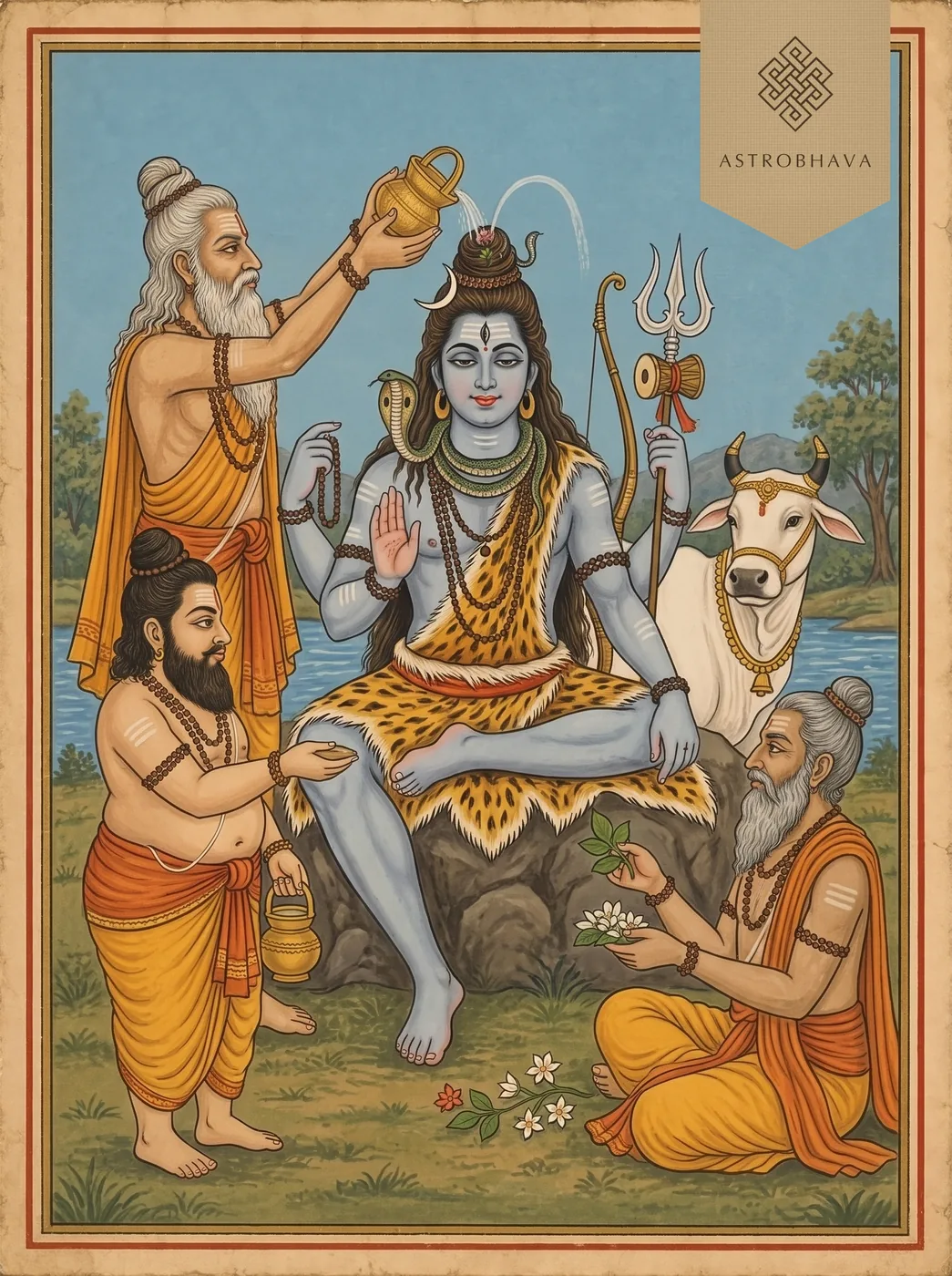
Shiva Panchakshara Stotram
नागेन्द्रहाराय त्रिलोचनाय भस्माङ्गरागाय महेश्वराय । नित्याय शुद्धाय दिगम्बराय तस्मै नकाराय नमः शिवाय ॥Also known as Nagendra Haraya
In Devanagari, Tamil, Telugu, Kannada, Malayalam and English — with the meaning of every word, and the one syllable most people pronounce wrongly.
What the Shiva Panchakshara Stotram is
The Shiva Panchakshara Stotram is a short Sanskrit hymn to Shiva built on the five syllables na, ma, shi, va and ya. Each of its five verses opens with its own syllable: Nagendraharaya for na, Mandakini for ma, Shivaya for shi, Vasishtha for va and Yakshasvarupaya for ya. Each verse also closes on the same refrain, tasmai na-karaya namah shivaya, changing only the syllable it names, so the five-syllable formula is spelled out twice, once at the head of the verses and once in their last lines. Between those two points every verse is a chain of epithets, each a separate salutation: the serpent garland, the ash-smeared body, the three eyes, the bull on his banner, the Pinaka bow in his hand. A sixth, closing verse states the fruit of reciting it. The colophon of the printed editions names Adi Shankaracharya as the author, and the hymn is counted among the shorter stotras gathered under his name.
Five verses holding five older stories
The printed tradition attaches no composition legend to this hymn; the colophon simply names Shankara, and the date assumed is his traditional eighth century. What the verses carry instead are older stories, each folded into a single compound. In the shi verse, dakshadhvaranashaka, 'destroyer of Daksha's sacrifice', recalls the Purana account in which Daksha insulted Shiva at his own rite, Sati gave up her life in its fire, and Virabhadra, sprung from a lock of Shiva's hair, laid the sacrifice waste. In the va verse, kumbhodbhava, 'the one born from a pot', is the sage Agastya, whom legend makes a son of Mitra and Varuna born from a jar; he stands with Vasishtha and Gautama among the sages who worship Shiva's head. The ya verse calls Shiva yakshasvarupa, 'one who took the form of a Yaksha'. One reading links this to the Kena Upanishad, where an unknown being appears before the gods after their victory, Agni cannot burn a blade of grass placed before it, Vayu cannot move it, and Uma Haimavati tells Indra that it was Brahman. The ma verse names Mandakini, the Ganga of heaven, whose water anoints him alongside sandal paste.
The mantra, in six scripts
- नागेन्द्रहाराय
- nāgendrahārāya — to him whose garland is the king of serpents
- त्रिलोचनाय
- trilocanāya — to the three-eyed one
- भस्माङ्गरागाय
- bhasmāṅgarāgāya — to him whose body is smeared with ash
- महेश्वराय
- maheśvarāya — to the great Lord
- नित्याय
- nityāya — to the eternal one
- शुद्धाय
- śuddhāya — to the pure one
- दिगम्बराय
- digambarāya — to him clothed by the directions
- तस्मै
- tasmai — to him
- नकाराय
- nakārāya — who is the syllable na
- नमः
- namaḥ — salutation
- शिवाय
- śivāya — to Shiva
Shiva Panchakshara Stotram lyrics in full
Five verses, one for each syllable of na-ma-shi-va-ya, followed by the closing verse on the fruit of recitation.
All 6 verses, in Sanskrit, Tamil, Telugu, Kannada, Malayalam and English, each with its meaning. Choose a script:
Download the Shiva Panchakshara Stotram PDFAll 6 verses with their meanings, in Sanskrit. Free to print and keep.
नागेन्द्रहाराय त्रिलोचनाय भस्माङ्गरागाय महेश्वराय ।
नित्याय शुद्धाय दिगम्बराय तस्मै नकाराय नमः शिवाय ॥
நாகேந்த்ரஹாராய த்ரிலோசநாய பஸ்மாங்கராகாய மஹேஶ்வராய ।
நித்யாய ஶுத்தாய திகம்பராய தஸ்மை நகாராய நமஃ ஶிவாய ॥
నాగేన్ద్రహారాయ త్రిలోచనాయ భస్మాఙ్గరాగాయ మహేశ్వరాయ ।
నిత్యాయ శుద్ధాయ దిగమ్బరాయ తస్మై నకారాయ నమః శివాయ ॥
ನಾಗೇನ್ದ್ರಹಾರಾಯ ತ್ರಿಲೋಚನಾಯ ಭಸ್ಮಾಙ್ಗರಾಗಾಯ ಮಹೇಶ್ವರಾಯ ।
ನಿತ್ಯಾಯ ಶುದ್ಧಾಯ ದಿಗಮ್ಬರಾಯ ತಸ್ಮೈ ನಕಾರಾಯ ನಮಃ ಶಿವಾಯ ॥
നാഗേന്ദ്രഹാരായ ത്രിലോചനായ ഭസ്മാങ്ഗരാഗായ മഹേശ്വരായ ।
നിത്യായ ശുദ്ധായ ദിഗമ്ബരായ തസ്മൈ നകാരായ നമഃ ശിവായ ॥
nāgendrahārāya trilocanāya bhasmāṅgarāgāya maheśvarāya |
nityāya śuddhāya digambarāya tasmai nakārāya namaḥ śivāya ||
Salutations to Shiva, who wears the king of serpents as a garland, the three-eyed one, whose body is smeared with sacred ash, the great Lord. To him who is eternal, pure and clothed only by the directions, to him who is the syllable 'na', salutations to Shiva.
मन्दाकिनीसलिलचन्दनचर्चिताय नन्दीश्वरप्रमथनाथमहेश्वराय ।
मन्दारपुष्पबहुपुष्पसुपूजिताय तस्मै मकाराय नमः शिवाय ॥
மந்தாகிநீஸலிலசந்தநசர்சிதாய நந்தீஶ்வரப்ரமதநாதமஹேஶ்வராய ।
மந்தாரபுஷ்பபஹுபுஷ்பஸுபூஜிதாய தஸ்மை மகாராய நமஃ ஶிவாய ॥
మన్దాకినీసలిలచన్దనచర్చితాయ నన్దీశ్వరప్రమథనాథమహేశ్వరాయ ।
మన్దారపుష్పబహుపుష్పసుపూజితాయ తస్మై మకారాయ నమః శివాయ ॥
ಮನ್ದಾಕಿನೀಸಲಿಲಚನ್ದನಚರ್ಚಿತಾಯ ನನ್ದೀಶ್ವರಪ್ರಮಥನಾಥಮಹೇಶ್ವರಾಯ ।
ಮನ್ದಾರಪುಷ್ಪಬಹುಪುಷ್ಪಸುಪೂಜಿತಾಯ ತಸ್ಮೈ ಮಕಾರಾಯ ನಮಃ ಶಿವಾಯ ॥
മന്ദാകിനീസലിലചന്ദനചര്ചിതായ നന്ദീശ്വരപ്രമഥനാഥമഹേശ്വരായ ।
മന്ദാരപുഷ്പബഹുപുഷ്പസുപൂജിതായ തസ്മൈ മകാരായ നമഃ ശിവായ ॥
mandākinīsalilacandanacarcitāya nandīśvarapramathanāthamaheśvarāya |
mandārapuṣpabahupuṣpasupūjitāya tasmai makārāya namaḥ śivāya ||
Salutations to Shiva, who is anointed with the water of the Ganga and with sandal paste, the great Lord who is master of Nandi and of the Pramatha attendants. To him who is richly worshipped with mandara and many other flowers, to him who is the syllable 'ma', salutations to Shiva.
शिवाय गौरीवदनाब्जवृन्दसूर्याय दक्षाध्वरनाशकाय ।
श्रीनीलकण्ठाय वृषध्वजाय तस्मै शिकाराय नमः शिवाय ॥
ஶிவாய கௌரீவதநாப்ஜவ்ருந்தஸூர்யாய தக்ஷாத்வரநாஶகாய ।
ஶ்ரீநீலகண்டாய வ்ருஷத்வஜாய தஸ்மை ஶிகாராய நமஃ ஶிவாய ॥
శివాయ గౌరీవదనాబ్జవృన్దసూర్యాయ దక్షాధ్వరనాశకాయ ।
శ్రీనీలకణ్ఠాయ వృషధ్వజాయ తస్మై శికారాయ నమః శివాయ ॥
ಶಿವಾಯ ಗೌರೀವದನಾಬ್ಜವೃನ್ದಸೂರ್ಯಾಯ ದಕ್ಷಾಧ್ವರನಾಶಕಾಯ ।
ಶ್ರೀನೀಲಕಣ್ಠಾಯ ವೃಷಧ್ವಜಾಯ ತಸ್ಮೈ ಶಿಕಾರಾಯ ನಮಃ ಶಿವಾಯ ॥
ശിവായ ഗൌരീവദനാബ്ജവൃന്ദസൂര്യായ ദക്ഷാധ്വരനാശകായ ।
ശ്രീനീലകണ്ഠായ വൃഷധ്വജായ തസ്മൈ ശികാരായ നമഃ ശിവായ ॥
śivāya gaurīvadanābjavṛndasūryāya dakṣādhvaranāśakāya |
śrīnīlakaṇṭhāya vṛṣadhvajāya tasmai śikārāya namaḥ śivāya ||
Salutations to the auspicious one, the sun that makes the lotus of Gauri's face bloom, the destroyer of Daksha's sacrifice. To the blue-throated one whose banner bears the bull, to him who is the syllable 'shi', salutations to Shiva.
वसिष्ठकुम्भोद्भवगौतमार्यमुनीन्द्रदेवार्चितशेखराय ।
चन्द्रार्कवैश्वानरलोचनाय तस्मै वकाराय नमः शिवाय ॥
வஸிஷ்டகும்போத்பவகௌதமார்யமுநீந்த்ரதேவார்சிதஶேகராய ।
சந்த்ரார்கவைஶ்வாநரலோசநாய தஸ்மை வகாராய நமஃ ஶிவாய ॥
వసిష్ఠకుమ్భోద్భవగౌతమార్యమునీన్ద్రదేవార్చితశేఖరాయ ।
చన్ద్రార్కవైశ్వానరలోచనాయ తస్మై వకారాయ నమః శివాయ ॥
ವಸಿಷ್ಠಕುಮ್ಭೋದ್ಭವಗೌತಮಾರ್ಯಮುನೀನ್ದ್ರದೇವಾರ್ಚಿತಶೇಖರಾಯ ।
ಚನ್ದ್ರಾರ್ಕವೈಶ್ವಾನರಲೋಚನಾಯ ತಸ್ಮೈ ವಕಾರಾಯ ನಮಃ ಶಿವಾಯ ॥
വസിഷ്ഠകുമ്ഭോദ്ഭവഗൌതമാര്യമുനീന്ദ്രദേവാര്ചിതശേഖരായ ।
ചന്ദ്രാര്കവൈശ്വാനരലോചനായ തസ്മൈ വകാരായ നമഃ ശിവായ ॥
vasiṣṭhakumbhodbhavagautamāryamunīndradevārcitaśekharāya |
candrārkavaiśvānaralocanāya tasmai vakārāya namaḥ śivāya ||
Salutations to Shiva, whose head is worshipped by Vasishtha, Agastya (the one born from a pot), Gautama and other noble sages, and by Indra and the gods. To him whose eyes are the moon, the sun and fire, to him who is the syllable 'va', salutations to Shiva.
यक्षस्वरूपाय जटाधराय पिनाकहस्ताय सनातनाय ।
दिव्याय देवाय दिगम्बराय तस्मै यकाराय नमः शिवाय ॥
யக்ஷஸ்வரூபாய ஜடாதராய பிநாகஹஸ்தாய ஸநாதநாய ।
திவ்யாய தேவாய திகம்பராய தஸ்மை யகாராய நமஃ ஶிவாய ॥
యక్షస్వరూపాయ జటాధరాయ పినాకహస్తాయ సనాతనాయ ।
దివ్యాయ దేవాయ దిగమ్బరాయ తస్మై యకారాయ నమః శివాయ ॥
ಯಕ್ಷಸ್ವರೂಪಾಯ ಜಟಾಧರಾಯ ಪಿನಾಕಹಸ್ತಾಯ ಸನಾತನಾಯ ।
ದಿವ್ಯಾಯ ದೇವಾಯ ದಿಗಮ್ಬರಾಯ ತಸ್ಮೈ ಯಕಾರಾಯ ನಮಃ ಶಿವಾಯ ॥
യക്ഷസ്വരൂപായ ജടാധരായ പിനാകഹസ്തായ സനാതനായ ।
ദിവ്യായ ദേവായ ദിഗമ്ബരായ തസ്മൈ യകാരായ നമഃ ശിവായ ॥
yakṣasvarūpāya jaṭādharāya pinākahastāya sanātanāya |
divyāya devāya digambarāya tasmai yakārāya namaḥ śivāya ||
Salutations to Shiva, who took the form of a Yaksha, who wears matted locks, who holds the Pinaka bow in his hand, the eternal one. To the divine, shining God clothed only by the directions, to him who is the syllable 'ya', salutations to Shiva.
पञ्चाक्षरमिदं पुण्यं यः पठेच्छिवसन्निधौ ।
शिवलोकमवाप्नोति शिवेन सह मोदते ॥
பஞ்சாக்ஷரமிதம் புண்யம் யஃ படேச்சிவஸந்நிதௌ ।
ஶிவலோகமவாப்நோதி ஶிவேந ஸஹ மோததே ॥
పఞ్చాక్షరమిదం పుణ్యం యః పఠేచ్ఛివసన్నిధౌ ।
శివలోకమవాప్నోతి శివేన సహ మోదతే ॥
ಪಞ್ಚಾಕ್ಷರಮಿದಂ ಪುಣ್ಯಂ ಯಃ ಪಠೇಚ್ಛಿವಸನ್ನಿಧೌ ।
ಶಿವಲೋಕಮವಾಪ್ನೋತಿ ಶಿವೇನ ಸಹ ಮೋದತೇ ॥
പഞ്ചാക്ഷരമിദം പുണ്യം യഃ പഠേച്ഛിവസന്നിധൌ ।
ശിവലോകമവാപ്നോതി ശിവേന സഹ മോദതേ ॥
pañcākṣaramidaṃ puṇyaṃ yaḥ paṭhecchivasannidhau |
śivalokamavāpnoti śivena saha modate ||
The verse says that whoever recites this sacred hymn of the five syllables in the presence of Shiva reaches the world of Shiva and rejoices there together with Shiva.
The syllable people get wrong
In verse 4, kumbhodbhava (कुम्भोद्भव, kumbhodbhava, 'born from a pot', meaning Agastya) has two aspirated b sounds and a long o: say kum-bhod-bha-va, with a breathy bh in both places, not 'kumbodbava'.
When the Shiva Panchakshara Stotram is chanted
Weekday. Monday
Festival. Maha Shivaratri
Questions
Have your chart read before you decide
Chanting is yours to do, and free. But which deity your situation calls for — and whether a mantra alone is the right response — depends on your chart. Sometimes it is; sometimes it is not.
- Over 30 years in the Guru–Sishya Parampara, from the age of five
- He reads every chart himself — 60 minutes, one to one, never delegated
- Charts are read only between sunrise and sunset, following tradition