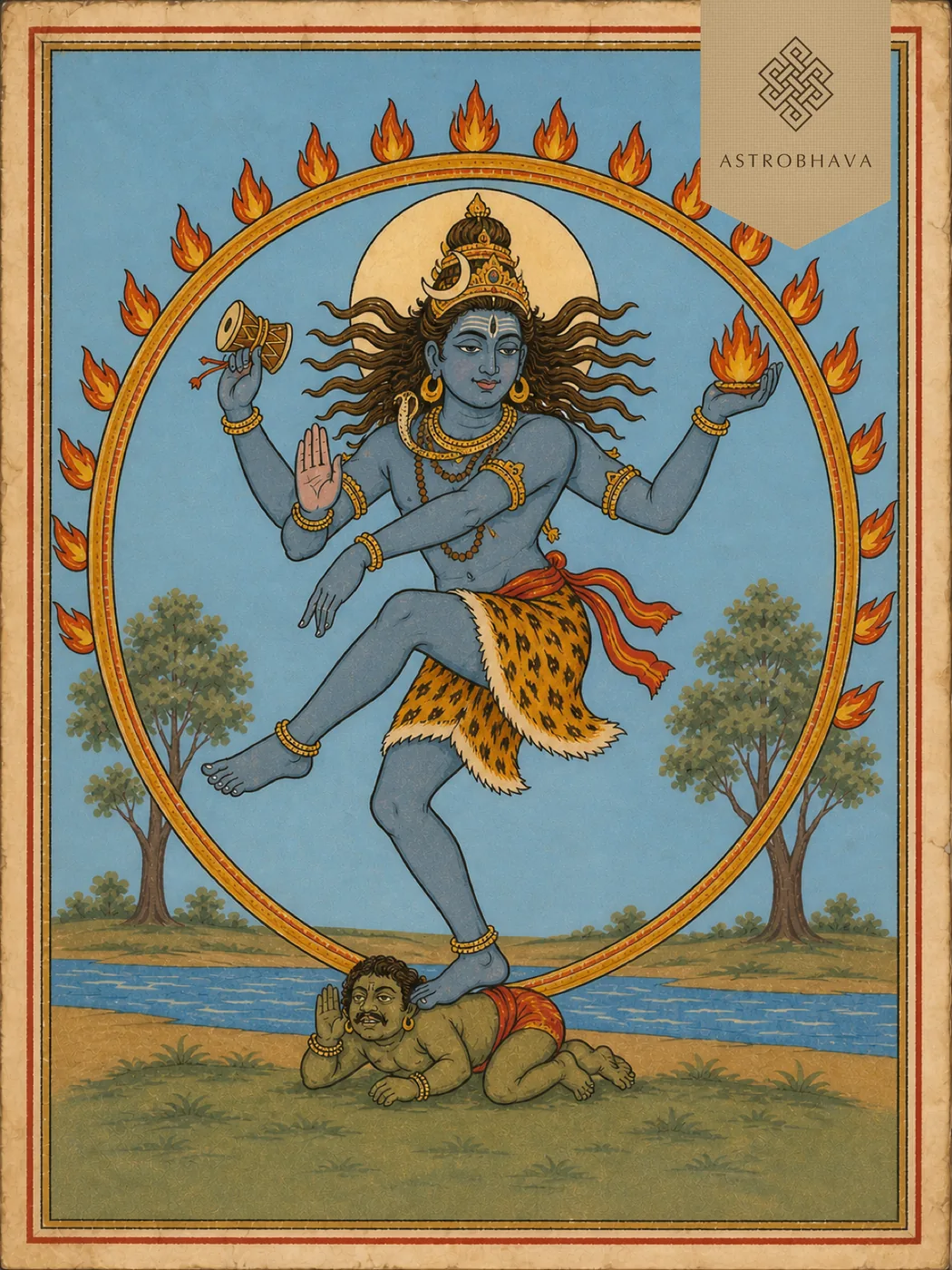
Shiva Tandava Stotram
जटाटवीगलज्जलप्रवाहपावितस्थले गलेऽवलम्ब्य लम्बितां भुजङ्गतुङ्गमालिकाम् । डमड्डमड्डमड्डमन्निनादवड्डमर्वयं चकार चण्डताण्डवं तनोतु नः शिवः शिवम् ॥Also known as Shiv Tandav Stotram
In Devanagari, Tamil, Telugu, Kannada, Malayalam and English — with the meaning of every word, and the one syllable most people pronounce wrongly.
What the Shiva Tandava Stotram is
The Shiva Tandava Stotram praises the god above all in the midst of his fierce tandava, the cosmic dance that shakes the worlds. Composed in the voice of Ravana, the hymn piles on the imagery of matted locks whipping through space, the Ganga tumbling from them, serpents coiled as garlands, and the drum rattling damat-damat. The deity addressed is the dancer whose stamping foot both creates and dissolves, whose ornaments are living cobras. The dance is not the poem’s only subject. Later verses recall the burning of Kama by the fire of Shiva’s eye and the play of Parvati, the poet asks when he may live as an ascetic beside the Ganga, and the hymn closes with a phala-shruti for those who recite it daily.
Ravana Beneath Kailasa
The Uttara Kanda of the Ramayana and later Shaiva retellings describe how Ravana, proud of the strength that had conquered the three worlds, came to Mount Kailasa and attempted to uproot it so that he might carry Shiva’s abode to Lanka. As he heaved, the mountain trembled and Parvati was alarmed. Shiva, seated in meditation, simply pressed the mountain down with the great toe of his right foot, pinning Ravana beneath the rock for a thousand years. In that crushed darkness the ten-headed king praised Shiva with hymns; the Ramayana does not name them, and later tradition identifies that praise as the Shiva Tandava Stotram, with its cascading alliteration on the god’s dance. When the hymn was complete, Shiva released him and granted the boon of the invincible sword Chandrahasa. The stotra therefore originates not from a court poet or a rishi but from the agony and awe of the demon-king who had felt the weight of the dancer’s single toe.
The mantra, in six scripts
- जटाटवी
- jaṭāṭavī — forest of matted locks
- गलत्
- galat — flowing down
- जल
- jala — water
- प्रवाह
- pravāha — stream
- पावित
- pāvita — purified
- स्थले
- sthale — on the ground
- गले
- gale — on the neck
- अवलम्ब्य
- avalambya — having hung
- लम्बितां
- lambitāṃ — dangling
- भुजङ्ग
- bhujaṅga — serpent
- तुङ्ग
- tuṅga — lofty
- मालिकाम्
- mālikām — garland
- डमड्डमड्डमड्डमन्
- ḍamaḍḍamaḍḍamaḍḍaman — ḍamaḍ-ḍamaḍ-ḍamaḍ-ḍam
- निनादवत्
- ninādavat — with the sound
- डमरु
- ḍamaru — damaru drum
- अयं
- ayaṃ — he
- चकार
- cakāra — performed
- चण्ड
- caṇḍa — fierce
- ताण्डवं
- tāṇḍavaṃ — tandava dance
- तनोतु
- tanotu — may he extend
- नः
- naḥ — to us
- शिवः
- śivaḥ — Shiva
- शिवम्
- śivam — auspiciousness
Shiva Tandava Stotram lyrics in full
All 17 verses, in Sanskrit, Tamil, Telugu, Kannada, Malayalam and English, each with its meaning. Choose a script:
Download the Shiva Tandava Stotram PDFAll 17 verses with their meanings, in Sanskrit. Free to print and keep.
जटाटवीगलज्जलप्रवाहपावितस्थले गलेऽवलम्ब्य लम्बितां भुजङ्गतुङ्गमालिकाम् ।
डमड्डमड्डमड्डमन्निनादवड्डमर्वयं चकार चण्डताण्डवं तनोतु नः शिवः शिवम् ॥
ஜடாடவீகலஜ்ஜலப்ரவாஹபாவிதஸ்தலே கலேவலம்ப்ய லம்பிதாம் புஜங்கதுங்கமாலிகாம் ।
டமட்டமட்டமட்டமந்நிநாதவட்டமர்வயம் சகார சண்டதாண்டவம் தநோது நஃ ஶிவஃ ஶிவம் ॥
జటాటవీగలజ్జలప్రవాహపావితస్థలే గలేఽవలమ్బ్య లమ్బితాం భుజఙ్గతుఙ్గమాలికామ్ ।
డమడ్డమడ్డమడ్డమన్నినాదవడ్డమర్వయం చకార చణ్డతాణ్డవం తనోతు నః శివః శివమ్ ॥
ಜಟಾಟವೀಗಲಜ್ಜಲಪ್ರವಾಹಪಾವಿತಸ್ಥಲೇ ಗಲೇಽವಲಮ್ಬ್ಯ ಲಮ್ಬಿತಾಂ ಭುಜಙ್ಗತುಙ್ಗಮಾಲಿಕಾಮ್ ।
ಡಮಡ್ಡಮಡ್ಡಮಡ್ಡಮನ್ನಿನಾದವಡ್ಡಮರ್ವಯಂ ಚಕಾರ ಚಣ್ಡತಾಣ್ಡವಂ ತನೋತು ನಃ ಶಿವಃ ಶಿವಮ್ ॥
ജടാടവീഗലജ്ജലപ്രവാഹപാവിതസ്ഥലേ ഗലേഽവലമ്ബ്യ ലമ്ബിതാം ഭുജങ്ഗതുങ്ഗമാലികാമ് ।
ഡമഡ്ഡമഡ്ഡമഡ്ഡമന്നിനാദവഡ്ഡമര്വയം ചകാര ചണ്ഡതാണ്ഡവം തനോതു നഃ ശിവഃ ശിവമ് ॥
jaṭāṭavīgalajjalapravāhapāvitasthale gale'valambya lambitāṃ bhujaṅgatuṅgamālikām |
ḍamaḍḍamaḍḍamaḍḍamanninādavaḍḍamarvayaṃ cakāra caṇḍatāṇḍavaṃ tanotu naḥ śivaḥ śivam ||
With the Ganga flowing from the forest of his matted locks sanctifying his neck, and a long, lofty garland of serpents hanging there, Shiva danced the fierce Tandava to the 'damad damad' of his drum. May that Shiva bring us what is auspicious.
जटाकटाहसम्भ्रमभ्रमन्निलिम्पनिर्झरीविलोलवीचिवल्लरीविराजमानमूर्द्धनि ।
धगद्धगद्धगज्ज्वलल्ललाटपट्टपावके किशोरचन्द्रशेखरे रतिः प्रतिक्षणं मम ॥
ஜடாகடாஹஸம்ப்ரமப்ரமந்நிலிம்பநிர்சரீவிலோலவீசிவல்லரீவிராஜமாநமூர்த்தநி ।
தகத்தகத்தகஜ்ஜ்வலல்லலாடபட்டபாவகே கிஶோரசந்த்ரஶேகரே ரதிஃ ப்ரதிக்ஷணம் மம ॥
జటాకటాహసమ్భ్రమభ్రమన్నిలిమ్పనిర్ఝరీవిలోలవీచివల్లరీవిరాజమానమూర్ద్ధని ।
ధగద్ధగద్ధగజ్జ్వలల్లలాటపట్టపావకే కిశోరచన్ద్రశేఖరే రతిః ప్రతిక్షణం మమ ॥
ಜಟಾಕಟಾಹಸಮ್ಭ್ರಮಭ್ರಮನ್ನಿಲಿಮ್ಪನಿರ್ಝರೀವಿಲೋಲವೀಚಿವಲ್ಲರೀವಿರಾಜಮಾನಮೂರ್ದ್ಧನಿ ।
ಧಗದ್ಧಗದ್ಧಗಜ್ಜ್ವಲಲ್ಲಲಾಟಪಟ್ಟಪಾವಕೇ ಕಿಶೋರಚನ್ದ್ರಶೇಖರೇ ರತಿಃ ಪ್ರತಿಕ್ಷಣಂ ಮಮ ॥
ജടാകടാഹസമ്ഭ്രമഭ്രമന്നിലിമ്പനിര്ഝരീവിലോലവീചിവല്ലരീവിരാജമാനമൂര്ദ്ധനി ।
ധഗദ്ധഗദ്ധഗജ്ജ്വലല്ലലാടപട്ടപാവകേ കിശോരചന്ദ്രശേഖരേ രതിഃ പ്രതിക്ഷണം മമ ॥
jaṭākaṭāhasambhramabhramannilimpanirjharīvilolavīcivallarīvirājamānamūrddhani |
dhagaddhagaddhagajjvalallalāṭapaṭṭapāvake kiśoracandraśekhare ratiḥ pratikṣaṇaṃ mama ||
His head shines with the restless waves of the celestial river whirling in the cauldron of his matted hair; fire blazes 'dhagad dhagad' on his forehead; the young crescent moon is his crest. In him my delight lies, moment after moment.
धराधरेन्द्रनन्दिनीविलासबन्धुबन्धुरस्फुरद्दिगन्तसन्ततिप्रमोदमानमानसे ।
कृपाकटाक्षधोरणीनिरुद्धदुर्धरापदि क्वचिद्दिगम्बरे मनो विनोदमेतु वस्तुनि ॥
தராதரேந்த்ரநந்திநீவிலாஸபந்துபந்துரஸ்புரத்திகந்தஸந்ததிப்ரமோதமாநமாநஸே ।
க்ருபாகடாக்ஷதோரணீநிருத்ததுர்தராபதி க்வசித்திகம்பரே மநோ விநோதமேது வஸ்துநி ॥
ధరాధరేన్ద్రనన్దినీవిలాసబన్ధుబన్ధురస్ఫురద్దిగన్తసన్తతిప్రమోదమానమానసే ।
కృపాకటాక్షధోరణీనిరుద్ధదుర్ధరాపది క్వచిద్దిగమ్బరే మనో వినోదమేతు వస్తుని ॥
ಧರಾಧರೇನ್ದ್ರನನ್ದಿನೀವಿಲಾಸಬನ್ಧುಬನ್ಧುರಸ್ಫುರದ್ದಿಗನ್ತಸನ್ತತಿಪ್ರಮೋದಮಾನಮಾನಸೇ ।
ಕೃಪಾಕಟಾಕ್ಷಧೋರಣೀನಿರುದ್ಧದುರ್ಧರಾಪದಿ ಕ್ವಚಿದ್ದಿಗಮ್ಬರೇ ಮನೋ ವಿನೋದಮೇತು ವಸ್ತುನಿ ॥
ധരാധരേന്ദ്രനന്ദിനീവിലാസബന്ധുബന്ധുരസ്ഫുരദ്ദിഗന്തസന്തതിപ്രമോദമാനമാനസേ ।
കൃപാകടാക്ഷധോരണീനിരുദ്ധദുര്ധരാപദി ക്വചിദ്ദിഗമ്ബരേ മനോ വിനോദമേതു വസ്തുനി ॥
dharādharendranandinīvilāsabandhubandhurasphuraddigantasantatipramodamānamānase |
kṛpākaṭākṣadhoraṇīniruddhadurdharāpadi kvaciddigambare mano vinodametu vastuni ||
His heart rejoices in the graceful play of the mountain king's daughter, which lights up every quarter, and the stream of his compassionate glances holds back even unbearable hardship. May my mind find its joy in that sky-clad Being.
जटाभुजङ्गपिङ्गलस्फुरत्फणामणिप्रभाकदम्बकुङ्कुमद्रवप्रलिप्तदिग्वधूमुखे ।
मदान्धसिन्धुरस्फुरत्त्वगुत्तरीयमेदुरे मनो विनोदमद्भुतं बिभर्तु भूतभर्तरि ॥
ஜடாபுஜங்கபிங்கலஸ்புரத்பணாமணிப்ரபாகதம்பகுங்குமத்ரவப்ரலிப்ததிக்வதூமுகே ।
மதாந்தஸிந்துரஸ்புரத்த்வகுத்தரீயமேதுரே மநோ விநோதமத்புதம் பிபர்து பூதபர்தரி ॥
జటాభుజఙ్గపిఙ్గలస్ఫురత్ఫణామణిప్రభాకదమ్బకుఙ్కుమద్రవప్రలిప్తదిగ్వధూముఖే ।
మదాన్ధసిన్ధురస్ఫురత్త్వగుత్తరీయమేదురే మనో వినోదమద్భుతం బిభర్తు భూతభర్తరి ॥
ಜಟಾಭುಜಙ್ಗಪಿಙ್ಗಲಸ್ಫುರತ್ಫಣಾಮಣಿಪ್ರಭಾಕದಮ್ಬಕುಙ್ಕುಮದ್ರವಪ್ರಲಿಪ್ತದಿಗ್ವಧೂಮುಖೇ ।
ಮದಾನ್ಧಸಿನ್ಧುರಸ್ಫುರತ್ತ್ವಗುತ್ತರೀಯಮೇದುರೇ ಮನೋ ವಿನೋದಮದ್ಭುತಂ ಬಿಭರ್ತು ಭೂತಭರ್ತರಿ ॥
ജടാഭുജങ്ഗപിങ്ഗലസ്ഫുരത്ഫണാമണിപ്രഭാകദമ്ബകുങ്കുമദ്രവപ്രലിപ്തദിഗ്വധൂമുഖേ ।
മദാന്ധസിന്ധുരസ്ഫുരത്ത്വഗുത്തരീയമേദുരേ മനോ വിനോദമദ്ഭുതം ബിഭര്തു ഭൂതഭര്തരി ॥
jaṭābhujaṅgapiṅgalasphuratphaṇāmaṇiprabhākadambakuṅkumadravapraliptadigvadhūmukhe |
madāndhasindhurasphurattvaguttarīyamedure mano vinodamadbhutaṃ bibhartu bhūtabhartari ||
The glow of the gems on the hoods of the tawny serpents in his hair tints the faces of the maidens of the directions like liquid saffron, and he wears the gleaming hide of a rut-maddened elephant as his upper cloth. May my mind take wondrous delight in that Lord of all beings.
सहस्रलोचनप्रभृत्यशेषलेखशेखरप्रसूनधूलिधोरणीविधूसराङ्घ्रिपीठभूः ।
भुजङ्गराजमालया निबद्धजाटजूटकः श्रियै चिराय जायतां चकोरबन्धुशेखरः ॥
ஸஹஸ்ரலோசநப்ரப்ருத்யஶேஷலேகஶேகரப்ரஸூநதூலிதோரணீவிதூஸராங்க்ரிபீடபூஃ ।
புஜங்கராஜமாலயா நிபத்தஜாடஜூடகஃ ஶ்ரியை சிராய ஜாயதாம் சகோரபந்துஶேகரஃ ॥
సహస్రలోచనప్రభృత్యశేషలేఖశేఖరప్రసూనధూలిధోరణీవిధూసరాఙ్ఘ్రిపీఠభూః ।
భుజఙ్గరాజమాలయా నిబద్ధజాటజూటకః శ్రియై చిరాయ జాయతాం చకోరబన్ధుశేఖరః ॥
ಸಹಸ್ರಲೋಚನಪ್ರಭೃತ್ಯಶೇಷಲೇಖಶೇಖರಪ್ರಸೂನಧೂಲಿಧೋರಣೀವಿಧೂಸರಾಙ್ಘ್ರಿಪೀಠಭೂಃ ।
ಭುಜಙ್ಗರಾಜಮಾಲಯಾ ನಿಬದ್ಧಜಾಟಜೂಟಕಃ ಶ್ರಿಯೈ ಚಿರಾಯ ಜಾಯತಾಂ ಚಕೋರಬನ್ಧುಶೇಖರಃ ॥
സഹസ്രലോചനപ്രഭൃത്യശേഷലേഖശേഖരപ്രസൂനധൂലിധോരണീവിധൂസരാങ്ഘ്രിപീഠഭൂഃ ।
ഭുജങ്ഗരാജമാലയാ നിബദ്ധജാടജൂടകഃ ശ്രിയൈ ചിരായ ജായതാം ചകോരബന്ധുശേഖരഃ ॥
sahasralocanaprabhṛtyaśeṣalekhaśekharaprasūnadhūlidhoraṇīvidhūsarāṅghripīṭhabhūḥ |
bhujaṅgarājamālayā nibaddhajāṭajūṭakaḥ śriyai cirāya jāyatāṃ cakorabandhuśekharaḥ ||
His footstool is grey with the pollen falling from the flowers on the heads of Indra and all the gods; his matted hair is tied with a garland made of the king of serpents; the moon, friend of the cakora bird, is his crest. May he be for lasting prosperity.
ललाटचत्वरज्वलद्धनञ्जयस्फुलिङ्गभानिपीतपञ्चसायकं नमन्निलिम्पनायकम् ।
सुधामयूखलेखया विराजमानशेखरं महाकपालि सम्पदे शिरो जटालमस्तु नः ॥
லலாடசத்வரஜ்வலத்தநஞ்ஜயஸ்புலிங்கபாநிபீதபஞ்சஸாயகம் நமந்நிலிம்பநாயகம் ।
ஸுதாமயூகலேகயா விராஜமாநஶேகரம் மஹாகபாலி ஸம்பதே ஶிரோ ஜடாலமஸ்து நஃ ॥
లలాటచత్వరజ్వలద్ధనఞ్జయస్ఫులిఙ్గభానిపీతపఞ్చసాయకం నమన్నిలిమ్పనాయకమ్ ।
సుధామయూఖలేఖయా విరాజమానశేఖరం మహాకపాలి సమ్పదే శిరో జటాలమస్తు నః ॥
ಲಲಾಟಚತ್ವರಜ್ವಲದ್ಧನಞ್ಜಯಸ್ಫುಲಿಙ್ಗಭಾನಿಪೀತಪಞ್ಚಸಾಯಕಂ ನಮನ್ನಿಲಿಮ್ಪನಾಯಕಮ್ ।
ಸುಧಾಮಯೂಖಲೇಖಯಾ ವಿರಾಜಮಾನಶೇಖರಂ ಮಹಾಕಪಾಲಿ ಸಮ್ಪದೇ ಶಿರೋ ಜಟಾಲಮಸ್ತು ನಃ ॥
ലലാടചത്വരജ്വലദ്ധനഞ്ജയസ്ഫുലിങ്ഗഭാനിപീതപഞ്ചസായകം നമന്നിലിമ്പനായകമ് ।
സുധാമയൂഖലേഖയാ വിരാജമാനശേഖരം മഹാകപാലി സമ്പദേ ശിരോ ജടാലമസ്തു നഃ ॥
lalāṭacatvarajvaladdhanañjayasphuliṅgabhānipītapañcasāyakaṃ namannilimpanāyakam |
sudhāmayūkhalekhayā virājamānaśekharaṃ mahākapāli sampade śiro jaṭālamastu naḥ ||
With sparks of the fire blazing on the broad courtyard of his forehead he consumed Kama, the god of the five arrows; the lord of the gods bows before him; the crescent of the nectar-rayed moon shines on his crown. May that matted-haired head of the great skull-bearer be for our welfare.
करालभालपट्टिकाधगद्धगद्धगज्ज्वलद्धनञ्जयाहुतीकृतप्रचण्डपञ्चसायके ।
धराधरेन्द्रनन्दिनीकुचाग्रचित्रपत्रकप्रकल्पनैकशिल्पिनि त्रिलोचने रतिर्मम ॥
கராலபாலபட்டிகாதகத்தகத்தகஜ்ஜ்வலத்தநஞ்ஜயாஹுதீக்ருதப்ரசண்டபஞ்சஸாயகே ।
தராதரேந்த்ரநந்திநீகுசாக்ரசித்ரபத்ரகப்ரகல்பநைகஶில்பிநி த்ரிலோசநே ரதிர்மம ॥
కరాలభాలపట్టికాధగద్ధగద్ధగజ్జ్వలద్ధనఞ్జయాహుతీకృతప్రచణ్డపఞ్చసాయకే ।
ధరాధరేన్ద్రనన్దినీకుచాగ్రచిత్రపత్రకప్రకల్పనైకశిల్పిని త్రిలోచనే రతిర్మమ ॥
ಕರಾಲಭಾಲಪಟ್ಟಿಕಾಧಗದ್ಧಗದ್ಧಗಜ್ಜ್ವಲದ್ಧನಞ್ಜಯಾಹುತೀಕೃತಪ್ರಚಣ್ಡಪಞ್ಚಸಾಯಕೇ ।
ಧರಾಧರೇನ್ದ್ರನನ್ದಿನೀಕುಚಾಗ್ರಚಿತ್ರಪತ್ರಕಪ್ರಕಲ್ಪನೈಕಶಿಲ್ಪಿನಿ ತ್ರಿಲೋಚನೇ ರತಿರ್ಮಮ ॥
കരാലഭാലപട്ടികാധഗദ്ധഗദ്ധഗജ്ജ്വലദ്ധനഞ്ജയാഹുതീകൃതപ്രചണ്ഡപഞ്ചസായകേ ।
ധരാധരേന്ദ്രനന്ദിനീകുചാഗ്രചിത്രപത്രകപ്രകല്പനൈകശില്പിനി ത്രിലോചനേ രതിര്മമ ॥
karālabhālapaṭṭikādhagaddhagaddhagajjvaladdhanañjayāhutīkṛtapracaṇḍapañcasāyake |
dharādharendranandinīkucāgracitrapatrakaprakalpanaikaśilpini trilocane ratirmama ||
He offered the mighty five-arrowed Kama as an oblation into the fire blazing 'dhagad dhagad' on his fearsome forehead, and he alone is the artist who paints decorative designs on the bosom of the mountain king's daughter. My delight is in the Three-eyed One.
नवीनमेघमण्डलीनिरुद्धदुर्धरस्फुरत्कुहूनिशीथिनीतमःप्रबन्धबद्धकन्धरः ।
निलिम्पनिर्झरीधरस्तनोतु कृत्तिसिन्धुरः कलानिधानबन्धुरः श्रियं जगद्धुरन्धरः ॥
நவீநமேகமண்டலீநிருத்ததுர்தரஸ்புரத்குஹூநிஶீதிநீதமஃப்ரபந்தபத்தகந்தரஃ ।
நிலிம்பநிர்சரீதரஸ்தநோது க்ருத்திஸிந்துரஃ கலாநிதாநபந்துரஃ ஶ்ரியம் ஜகத்துரந்தரஃ ॥
నవీనమేఘమణ్డలీనిరుద్ధదుర్ధరస్ఫురత్కుహూనిశీథినీతమఃప్రబన్ధబద్ధకన్ధరః ।
నిలిమ్పనిర్ఝరీధరస్తనోతు కృత్తిసిన్ధురః కలానిధానబన్ధురః శ్రియం జగద్ధురన్ధరః ॥
ನವೀನಮೇಘಮಣ್ಡಲೀನಿರುದ್ಧದುರ್ಧರಸ್ಫುರತ್ಕುಹೂನಿಶೀಥಿನೀತಮಃಪ್ರಬನ್ಧಬದ್ಧಕನ್ಧರಃ ।
ನಿಲಿಮ್ಪನಿರ್ಝರೀಧರಸ್ತನೋತು ಕೃತ್ತಿಸಿನ್ಧುರಃ ಕಲಾನಿಧಾನಬನ್ಧುರಃ ಶ್ರಿಯಂ ಜಗದ್ಧುರನ್ಧರಃ ॥
നവീനമേഘമണ്ഡലീനിരുദ്ധദുര്ധരസ്ഫുരത്കുഹൂനിശീഥിനീതമഃപ്രബന്ധബദ്ധകന്ധരഃ ।
നിലിമ്പനിര്ഝരീധരസ്തനോതു കൃത്തിസിന്ധുരഃ കലാനിധാനബന്ധുരഃ ശ്രിയം ജഗദ്ധുരന്ധരഃ ॥
navīnameghamaṇḍalīniruddhadurdharasphuratkuhūniśīthinītamaḥprabandhabaddhakandharaḥ |
nilimpanirjharīdharastanotu kṛttisindhuraḥ kalānidhānabandhuraḥ śriyaṃ jagaddhurandharaḥ ||
His neck is dark as the dense gloom of a new-moon midnight shrouded by banks of fresh clouds. May he who bears the celestial river, wears the elephant's hide, is lovely with the moon and carries the burden of the world spread prosperity.
प्रफुल्लनीलपङ्कजप्रपञ्चकालिमप्रभाऽवलम्बिकण्ठकन्दलीरुचिप्रबद्धकन्धरम् ।
स्मरच्छिदं पुरच्छिदं भवच्छिदं मखच्छिदं गजच्छिदान्धकच्छिदं तमन्तकच्छिदं भजे ॥
ப்ரபுல்லநீலபங்கஜப்ரபஞ்சகாலிமப்ரபாவலம்பிகண்டகந்தலீருசிப்ரபத்தகந்தரம் ।
ஸ்மரச்சிதம் புரச்சிதம் பவச்சிதம் மகச்சிதம் கஜச்சிதாந்தகச்சிதம் தமந்தகச்சிதம் பஜே ॥
ప్రఫుల్లనీలపఙ్కజప్రపఞ్చకాలిమప్రభాఽవలమ్బికణ్ఠకన్దలీరుచిప్రబద్ధకన్ధరమ్ ।
స్మరచ్ఛిదం పురచ్ఛిదం భవచ్ఛిదం మఖచ్ఛిదం గజచ్ఛిదాన్ధకచ్ఛిదం తమన్తకచ్ఛిదం భజే ॥
ಪ್ರಫುಲ್ಲನೀಲಪಙ್ಕಜಪ್ರಪಞ್ಚಕಾಲಿಮಪ್ರಭಾಽವಲಮ್ಬಿಕಣ್ಠಕನ್ದಲೀರುಚಿಪ್ರಬದ್ಧಕನ್ಧರಮ್ ।
ಸ್ಮರಚ್ಛಿದಂ ಪುರಚ್ಛಿದಂ ಭವಚ್ಛಿದಂ ಮಖಚ್ಛಿದಂ ಗಜಚ್ಛಿದಾನ್ಧಕಚ್ಛಿದಂ ತಮನ್ತಕಚ್ಛಿದಂ ಭಜೇ ॥
പ്രഫുല്ലനീലപങ്കജപ്രപഞ്ചകാലിമപ്രഭാഽവലമ്ബികണ്ഠകന്ദലീരുചിപ്രബദ്ധകന്ധരമ് ।
സ്മരച്ഛിദം പുരച്ഛിദം ഭവച്ഛിദം മഖച്ഛിദം ഗജച്ഛിദാന്ധകച്ഛിദം തമന്തകച്ഛിദം ഭജേ ॥
praphullanīlapaṅkajaprapañcakālimaprabhā'valambikaṇṭhakandalīruciprabaddhakandharam |
smaracchidaṃ puracchidaṃ bhavacchidaṃ makhacchidaṃ gajacchidāndhakacchidaṃ tamantakacchidaṃ bhaje ||
His throat is bound with the dark lustre of a spread of full-blown blue lotuses. I worship him who cut down Kama, destroyed the three cities, cuts the bonds of worldly existence, ended Daksha's sacrifice, slew the elephant demon and Andhaka, and cut down Yama, the god of death.
अखर्वसर्वमङ्गलाकलाकदम्बमञ्जरीरसप्रवाहमाधुरीविजृम्भणामधुव्रतम् ।
स्मरान्तकं पुरान्तकं भवान्तकं मखान्तकं गजान्तकान्धकान्तकं तमन्तकान्तकं भजे ॥
அகர்வஸர்வமங்கலாகலாகதம்பமஞ்ஜரீரஸப்ரவாஹமாதுரீவிஜ்ரும்பணாமதுவ்ரதம் ।
ஸ்மராந்தகம் புராந்தகம் பவாந்தகம் மகாந்தகம் கஜாந்தகாந்தகாந்தகம் தமந்தகாந்தகம் பஜே ॥
అఖర్వసర్వమఙ్గలాకలాకదమ్బమఞ్జరీరసప్రవాహమాధురీవిజృమ్భణామధువ్రతమ్ ।
స్మరాన్తకం పురాన్తకం భవాన్తకం మఖాన్తకం గజాన్తకాన్ధకాన్తకం తమన్తకాన్తకం భజే ॥
ಅಖರ್ವಸರ್ವಮಙ್ಗಲಾಕಲಾಕದಮ್ಬಮಞ್ಜರೀರಸಪ್ರವಾಹಮಾಧುರೀವಿಜೃಮ್ಭಣಾಮಧುವ್ರತಮ್ ।
ಸ್ಮರಾನ್ತಕಂ ಪುರಾನ್ತಕಂ ಭವಾನ್ತಕಂ ಮಖಾನ್ತಕಂ ಗಜಾನ್ತಕಾನ್ಧಕಾನ್ತಕಂ ತಮನ್ತಕಾನ್ತಕಂ ಭಜೇ ॥
അഖര്വസര്വമങ്ഗലാകലാകദമ്ബമഞ്ജരീരസപ്രവാഹമാധുരീവിജൃമ്ഭണാമധുവ്രതമ് ।
സ്മരാന്തകം പുരാന്തകം ഭവാന്തകം മഖാന്തകം ഗജാന്തകാന്ധകാന്തകം തമന്തകാന്തകം ഭജേ ॥
akharvasarvamaṅgalākalākadambamañjarīrasapravāhamādhurīvijṛmbhaṇāmadhuvratam |
smarāntakaṃ purāntakaṃ bhavāntakaṃ makhāntakaṃ gajāntakāndhakāntakaṃ tamantakāntakaṃ bhaje ||
Like a bee, he delights in the sweetness of the nectar flowing from the blossom-cluster of the arts of the all-auspicious Parvati. I worship him, the ender of Kama, of the three cities, of worldly bondage, of Daksha's sacrifice, of the elephant demon and Andhaka, and the ender of Yama himself.
जयत्वदभ्रविभ्रमभ्रमद्भुजङ्गमश्वसद्विनिर्गमत्क्रमस्फुरत्करालभालहव्यवाट् ।
धिमिद्धिमिद्धिमिद्ध्वनन्मृदङ्गतुङ्गमङ्गलध्वनिक्रमप्रवर्तितप्रचण्डताण्डवः शिवः ॥
ஜயத்வதப்ரவிப்ரமப்ரமத்புஜங்கமஶ்வஸத்விநிர்கமத்க்ரமஸ்புரத்கராலபாலஹவ்யவாட் ।
திமித்திமித்திமித்த்வநந்ம்ருதங்கதுங்கமங்கலத்வநிக்ரமப்ரவர்திதப்ரசண்டதாண்டவஃ ஶிவஃ ॥
జయత్వదభ్రవిభ్రమభ్రమద్భుజఙ్గమశ్వసద్వినిర్గమత్క్రమస్ఫురత్కరాలభాలహవ్యవాట్ ।
ధిమిద్ధిమిద్ధిమిద్ధ్వనన్మృదఙ్గతుఙ్గమఙ్గలధ్వనిక్రమప్రవర్తితప్రచణ్డతాణ్డవః శివః ॥
ಜಯತ್ವದಭ್ರವಿಭ್ರಮಭ್ರಮದ್ಭುಜಙ್ಗಮಶ್ವಸದ್ವಿನಿರ್ಗಮತ್ಕ್ರಮಸ್ಫುರತ್ಕರಾಲಭಾಲಹವ್ಯವಾಟ್ ।
ಧಿಮಿದ್ಧಿಮಿದ್ಧಿಮಿದ್ಧ್ವನನ್ಮೃದಙ್ಗತುಙ್ಗಮಙ್ಗಲಧ್ವನಿಕ್ರಮಪ್ರವರ್ತಿತಪ್ರಚಣ್ಡತಾಣ್ಡವಃ ಶಿವಃ ॥
ജയത്വദഭ്രവിഭ്രമഭ്രമദ്ഭുജങ്ഗമശ്വസദ്വിനിര്ഗമത്ക്രമസ്ഫുരത്കരാലഭാലഹവ്യവാട് ।
ധിമിദ്ധിമിദ്ധിമിദ്ധ്വനന്മൃദങ്ഗതുങ്ഗമങ്ഗലധ്വനിക്രമപ്രവര്തിതപ്രചണ്ഡതാണ്ഡവഃ ശിവഃ ॥
jayatvadabhravibhramabhramadbhujaṅgamaśvasadvinirgamatkramasphuratkarālabhālahavyavāṭ |
dhimiddhimiddhimiddhvananmṛdaṅgatuṅgamaṅgaladhvanikramapravartitapracaṇḍatāṇḍavaḥ śivaḥ ||
The fire on his fearsome forehead flares with the hissing breath of serpents whirling in wide circles, and his fierce Tandava moves to the loud, auspicious beat of the mridanga sounding 'dhimid dhimid dhimid'. Victory to that Shiva.
दृषद्विचित्रतल्पयोर्भुजङ्गमौक्तिकस्रजोर्गरिष्ठरत्नलोष्ठयोः सुहृद्विपक्षपक्षयोः ।
तृणारविन्दचक्षुषोः प्रजामहीमहेन्द्रयोः समप्रवृत्तिकः कदा सदाशिवं भजाम्यहम् ॥
த்ருஷத்விசித்ரதல்பயோர்புஜங்கமௌக்திகஸ்ரஜோர்கரிஷ்டரத்நலோஷ்டயோஃ ஸுஹ்ருத்விபக்ஷபக்ஷயோஃ ।
த்ருணாரவிந்தசக்ஷுஷோஃ ப்ரஜாமஹீமஹேந்த்ரயோஃ ஸமப்ரவ்ருத்திகஃ கதா ஸதாஶிவம் பஜாம்யஹம் ॥
దృషద్విచిత్రతల్పయోర్భుజఙ్గమౌక్తికస్రజోర్గరిష్ఠరత్నలోష్ఠయోః సుహృద్విపక్షపక్షయోః ।
తృణారవిన్దచక్షుషోః ప్రజామహీమహేన్ద్రయోః సమప్రవృత్తికః కదా సదాశివం భజామ్యహమ్ ॥
ದೃಷದ್ವಿಚಿತ್ರತಲ್ಪಯೋರ್ಭುಜಙ್ಗಮೌಕ್ತಿಕಸ್ರಜೋರ್ಗರಿಷ್ಠರತ್ನಲೋಷ್ಠಯೋಃ ಸುಹೃದ್ವಿಪಕ್ಷಪಕ್ಷಯೋಃ ।
ತೃಣಾರವಿನ್ದಚಕ್ಷುಷೋಃ ಪ್ರಜಾಮಹೀಮಹೇನ್ದ್ರಯೋಃ ಸಮಪ್ರವೃತ್ತಿಕಃ ಕದಾ ಸದಾಶಿವಂ ಭಜಾಮ್ಯಹಮ್ ॥
ദൃഷദ്വിചിത്രതല്പയോര്ഭുജങ്ഗമൌക്തികസ്രജോര്ഗരിഷ്ഠരത്നലോഷ്ഠയോഃ സുഹൃദ്വിപക്ഷപക്ഷയോഃ ।
തൃണാരവിന്ദചക്ഷുഷോഃ പ്രജാമഹീമഹേന്ദ്രയോഃ സമപ്രവൃത്തികഃ കദാ സദാശിവം ഭജാമ്യഹമ് ॥
dṛṣadvicitratalpayorbhujaṅgamauktikasrajorgariṣṭharatnaloṣṭhayoḥ suhṛdvipakṣapakṣayoḥ |
tṛṇāravindacakṣuṣoḥ prajāmahīmahendrayoḥ samapravṛttikaḥ kadā sadāśivaṃ bhajāmyaham ||
When shall I worship Sadashiva with the same regard for a stone and a splendid bed, a serpent and a string of pearls, a precious gem and a clod of earth, friend and foe, a blade of grass and a lotus-eyed beauty, common folk and a great king?
कदा निलिम्पनिर्झरीनिकुञ्जकोटरे वसन् विमुक्तदुर्मतिः सदा शिरःस्थमञ्जलिं वहन् ।
विलोललोललोचनो ललामभाललग्नकः शिवेति मन्त्रमुच्चरन् कदा सुखी भवाम्यहम् ॥
கதா நிலிம்பநிர்சரீநிகுஞ்ஜகோடரே வஸந் விமுக்ததுர்மதிஃ ஸதா ஶிரஃஸ்தமஞ்ஜலிம் வஹந் ।
விலோலலோலலோசநோ லலாமபாலலக்நகஃ ஶிவேதி மந்த்ரமுச்சரந் கதா ஸுகீ பவாம்யஹம் ॥
కదా నిలిమ్పనిర్ఝరీనికుఞ్జకోటరే వసన్ విముక్తదుర్మతిః సదా శిరఃస్థమఞ్జలిం వహన్ ।
విలోలలోలలోచనో లలామభాలలగ్నకః శివేతి మన్త్రముచ్చరన్ కదా సుఖీ భవామ్యహమ్ ॥
ಕದಾ ನಿಲಿಮ್ಪನಿರ್ಝರೀನಿಕುಞ್ಜಕೋಟರೇ ವಸನ್ ವಿಮುಕ್ತದುರ್ಮತಿಃ ಸದಾ ಶಿರಃಸ್ಥಮಞ್ಜಲಿಂ ವಹನ್ ।
ವಿಲೋಲಲೋಲಲೋಚನೋ ಲಲಾಮಭಾಲಲಗ್ನಕಃ ಶಿವೇತಿ ಮನ್ತ್ರಮುಚ್ಚರನ್ ಕದಾ ಸುಖೀ ಭವಾಮ್ಯಹಮ್ ॥
കദാ നിലിമ്പനിര്ഝരീനികുഞ്ജകോടരേ വസന് വിമുക്തദുര്മതിഃ സദാ ശിരഃസ്ഥമഞ്ജലിം വഹന് ।
വിലോലലോലലോചനോ ലലാമഭാലലഗ്നകഃ ശിവേതി മന്ത്രമുച്ചരന് കദാ സുഖീ ഭവാമ്യഹമ് ॥
kadā nilimpanirjharīnikuñjakoṭare vasan vimuktadurmatiḥ sadā śiraḥsthamañjaliṃ vahan |
vilolalolalocano lalāmabhālalagnakaḥ śiveti mantramuccaran kadā sukhī bhavāmyaham ||
When shall I be happy, dwelling in a hollow among the groves by the celestial river, free of evil thoughts, always holding my joined palms above my head, my restless eyes fixed on the Lord whose forehead bears the sacred mark, and chanting the mantra 'Shiva'?
निलिम्पनाथनागरीकदम्बमौलमल्लिकानिगुम्फनिर्भरक्षरन्मधूष्णिकामनोहरः ।
तनोतु नो मनोमुदं विनोदिनीमहर्निशं परश्रियः परं पदं तदङ्गजत्विषां चयः ॥
நிலிம்பநாதநாகரீகதம்பமௌலமல்லிகாநிகும்பநிர்பரக்ஷரந்மதூஷ்ணிகாமநோஹரஃ ।
தநோது நோ மநோமுதம் விநோதிநீமஹர்நிஶம் பரஶ்ரியஃ பரம் பதம் ததங்கஜத்விஷாம் சயஃ ॥
నిలిమ్పనాథనాగరీకదమ్బమౌలమల్లికానిగుమ్ఫనిర్భరక్షరన్మధూష్ణికామనోహరః ।
తనోతు నో మనోముదం వినోదినీమహర్నిశం పరశ్రియః పరం పదం తదఙ్గజత్విషాం చయః ॥
ನಿಲಿಮ್ಪನಾಥನಾಗರೀಕದಮ್ಬಮೌಲಮಲ್ಲಿಕಾನಿಗುಮ್ಫನಿರ್ಭರಕ್ಷರನ್ಮಧೂಷ್ಣಿಕಾಮನೋಹರಃ ।
ತನೋತು ನೋ ಮನೋಮುದಂ ವಿನೋದಿನೀಮಹರ್ನಿಶಂ ಪರಶ್ರಿಯಃ ಪರಂ ಪದಂ ತದಙ್ಗಜತ್ವಿಷಾಂ ಚಯಃ ॥
നിലിമ്പനാഥനാഗരീകദമ്ബമൌലമല്ലികാനിഗുമ്ഫനിര്ഭരക്ഷരന്മധൂഷ്ണികാമനോഹരഃ ।
തനോതു നോ മനോമുദം വിനോദിനീമഹര്നിശം പരശ്രിയഃ പരം പദം തദങ്ഗജത്വിഷാം ചയഃ ॥
nilimpanāthanāgarīkadambamaulamallikānigumphanirbharakṣaranmadhūṣṇikāmanoharaḥ |
tanotu no manomudaṃ vinodinīmaharniśaṃ paraśriyaḥ paraṃ padaṃ tadaṅgajatviṣāṃ cayaḥ ||
The radiance of his limbs is made lovely by the fragrant honey dripping from the jasmine garlands woven on the heads of the celestial women, and it is the highest seat of supreme splendour. May it spread delight in our minds day and night.
प्रचण्डवाडवानलप्रभाशुभप्रचारणी महाष्टसिद्धिकामिनीजनाऽवहूतजल्पना ।
विमुक्तवामलोचनाविवाहकालिकध्वनिः शिवेति मन्त्रभूषणा जगज्जयाय जायताम् ॥
ப்ரசண்டவாடவாநலப்ரபாஶுபப்ரசாரணீ மஹாஷ்டஸித்திகாமிநீஜநாவஹூதஜல்பநா ।
விமுக்தவாமலோசநாவிவாஹகாலிகத்வநிஃ ஶிவேதி மந்த்ரபூஷணா ஜகஜ்ஜயாய ஜாயதாம் ॥
ప్రచణ్డవాడవానలప్రభాశుభప్రచారణీ మహాష్టసిద్ధికామినీజనాఽవహూతజల్పనా ।
విముక్తవామలోచనావివాహకాలికధ్వనిః శివేతి మన్త్రభూషణా జగజ్జయాయ జాయతామ్ ॥
ಪ್ರಚಣ್ಡವಾಡವಾನಲಪ್ರಭಾಶುಭಪ್ರಚಾರಣೀ ಮಹಾಷ್ಟಸಿದ್ಧಿಕಾಮಿನೀಜನಾಽವಹೂತಜಲ್ಪನಾ ।
ವಿಮುಕ್ತವಾಮಲೋಚನಾವಿವಾಹಕಾಲಿಕಧ್ವನಿಃ ಶಿವೇತಿ ಮನ್ತ್ರಭೂಷಣಾ ಜಗಜ್ಜಯಾಯ ಜಾಯತಾಮ್ ॥
പ്രചണ്ഡവാഡവാനലപ്രഭാശുഭപ്രചാരണീ മഹാഷ്ടസിദ്ധികാമിനീജനാഽവഹൂതജല്പനാ ।
വിമുക്തവാമലോചനാവിവാഹകാലികധ്വനിഃ ശിവേതി മന്ത്രഭൂഷണാ ജഗജ്ജയായ ജായതാമ് ॥
pracaṇḍavāḍavānalaprabhāśubhapracāraṇī mahāṣṭasiddhikāminījanā'vahūtajalpanā |
vimuktavāmalocanāvivāhakālikadhvaniḥ śiveti mantrabhūṣaṇā jagajjayāya jāyatām ||
Blazing like the fierce fire beneath the ocean, it drives away all that is inauspicious. It is the chant called out by the celestial women who embody the eight great siddhis, and the joyful sound raised by the doe-eyed women at the hour of Shiva's wedding. May this chant, adorned with the mantra 'Shiva', be for the victory of the world.
इमं हि नित्यमेवमुक्तमुत्तमोत्तमं स्तवं पठन्स्मरन्ब्रुवन्नरो विशुद्धिमेति सन्ततम् ।
हरे गुरौ सुभक्तिमाशु याति नाऽन्यथा गतिं विमोहनं हि देहिनां सुशङ्करस्य चिन्तनम् ॥
இமம் ஹி நித்யமேவமுக்தமுத்தமோத்தமம் ஸ்தவம் படந்ஸ்மரந்ப்ருவந்நரோ விஶுத்திமேதி ஸந்ததம் ।
ஹரே குரௌ ஸுபக்திமாஶு யாதி நாந்யதா கதிம் விமோஹநம் ஹி தேஹிநாம் ஸுஶங்கரஸ்ய சிந்தநம் ॥
ఇమం హి నిత్యమేవముక్తముత్తమోత్తమం స్తవం పఠన్స్మరన్బ్రువన్నరో విశుద్ధిమేతి సన్తతమ్ ।
హరే గురౌ సుభక్తిమాశు యాతి నాఽన్యథా గతిం విమోహనం హి దేహినాం సుశఙ్కరస్య చిన్తనమ్ ॥
ಇಮಂ ಹಿ ನಿತ್ಯಮೇವಮುಕ್ತಮುತ್ತಮೋತ್ತಮಂ ಸ್ತವಂ ಪಠನ್ಸ್ಮರನ್ಬ್ರುವನ್ನರೋ ವಿಶುದ್ಧಿಮೇತಿ ಸನ್ತತಮ್ ।
ಹರೇ ಗುರೌ ಸುಭಕ್ತಿಮಾಶು ಯಾತಿ ನಾಽನ್ಯಥಾ ಗತಿಂ ವಿಮೋಹನಂ ಹಿ ದೇಹಿನಾಂ ಸುಶಙ್ಕರಸ್ಯ ಚಿನ್ತನಮ್ ॥
ഇമം ഹി നിത്യമേവമുക്തമുത്തമോത്തമം സ്തവം പഠന്സ്മരന്ബ്രുവന്നരോ വിശുദ്ധിമേതി സന്തതമ് ।
ഹരേ ഗുരൌ സുഭക്തിമാശു യാതി നാഽന്യഥാ ഗതിം വിമോഹനം ഹി ദേഹിനാം സുശങ്കരസ്യ ചിന്തനമ് ॥
imaṃ hi nityamevamuktamuttamottamaṃ stavaṃ paṭhansmaranbruvannaro viśuddhimeti santatam |
hare gurau subhaktimāśu yāti nā'nyathā gatiṃ vimohanaṃ hi dehināṃ suśaṅkarasya cintanam ||
The hymn says that a person who daily reads, remembers and recites this finest of hymns, as given here, grows steadily purer and comes to deep devotion to Hara, the true teacher, for there is no other way; contemplation of Shankara clears the delusion of embodied beings.
पूजावसानसमये दशवक्त्रगीतं यः शम्भुपूजनपरं पठति प्रदोषे ।
तस्य स्थिरां रथगजेन्द्रतुरङ्गयुक्तां लक्ष्मीं सदैव सुमुखीं प्रददाति शम्भुः ॥
பூஜாவஸாநஸமயே தஶவக்த்ரகீதம் யஃ ஶம்புபூஜநபரம் படதி ப்ரதோஷே ।
தஸ்ய ஸ்திராம் ரதகஜேந்த்ரதுரங்கயுக்தாம் லக்ஷ்மீம் ஸதைவ ஸுமுகீம் ப்ரததாதி ஶம்புஃ ॥
పూజావసానసమయే దశవక్త్రగీతం యః శమ్భుపూజనపరం పఠతి ప్రదోషే ।
తస్య స్థిరాం రథగజేన్ద్రతురఙ్గయుక్తాం లక్ష్మీం సదైవ సుముఖీం ప్రదదాతి శమ్భుః ॥
ಪೂಜಾವಸಾನಸಮಯೇ ದಶವಕ್ತ್ರಗೀತಂ ಯಃ ಶಮ್ಭುಪೂಜನಪರಂ ಪಠತಿ ಪ್ರದೋಷೇ ।
ತಸ್ಯ ಸ್ಥಿರಾಂ ರಥಗಜೇನ್ದ್ರತುರಙ್ಗಯುಕ್ತಾಂ ಲಕ್ಷ್ಮೀಂ ಸದೈವ ಸುಮುಖೀಂ ಪ್ರದದಾತಿ ಶಮ್ಭುಃ ॥
പൂജാവസാനസമയേ ദശവക്ത്രഗീതം യഃ ശമ്ഭുപൂജനപരം പഠതി പ്രദോഷേ ।
തസ്യ സ്ഥിരാം രഥഗജേന്ദ്രതുരങ്ഗയുക്താം ലക്ഷ്മീം സദൈവ സുമുഖീം പ്രദദാതി ശമ്ഭുഃ ॥
pūjāvasānasamaye daśavaktragītaṃ yaḥ śambhupūjanaparaṃ paṭhati pradoṣe |
tasya sthirāṃ rathagajendraturaṅgayuktāṃ lakṣmīṃ sadaiva sumukhīṃ pradadāti śambhuḥ ||
The hymn says that whoever recites this song of the ten-headed Ravana, devoted to the worship of Shambhu, at the close of worship in the Pradosha twilight, is given by Shambhu steady and gracious fortune, with chariots, elephants and horses.
The syllable people get wrong
The drum-word ḍamaḍḍama contains the retroflex ḍ repeated with a doubled ḍḍ; speakers often soften both to dental d or collapse the cluster into a single “dam-a-dam,” erasing the hammer-stroke force that the verse deliberately mimics.
When the Shiva Tandava Stotram is chanted
Weekday. Monday
Festival. Maha Shivaratri night recitation
Questions
Have your chart read before you decide
Chanting is yours to do, and free. But which deity your situation calls for — and whether a mantra alone is the right response — depends on your chart. Sometimes it is; sometimes it is not.
- Over 30 years in the Guru–Sishya Parampara, from the age of five
- He reads every chart himself — 60 minutes, one to one, never delegated
- Charts are read only between sunrise and sunset, following tradition
Related
Rudra Gayatri Mantra
The Gayatri form addressed to Rudra.
Shiva Ashtottara Shatanamavali
108 names of Shiva, from Shivaya to Parameshvaraya, in archana form
Shiva Panchakshara Stotram
Five verses, each opening and closing on one syllable of Namah Shivaya
Rudra Homa
The fire ritual, performed for you and telecast live.