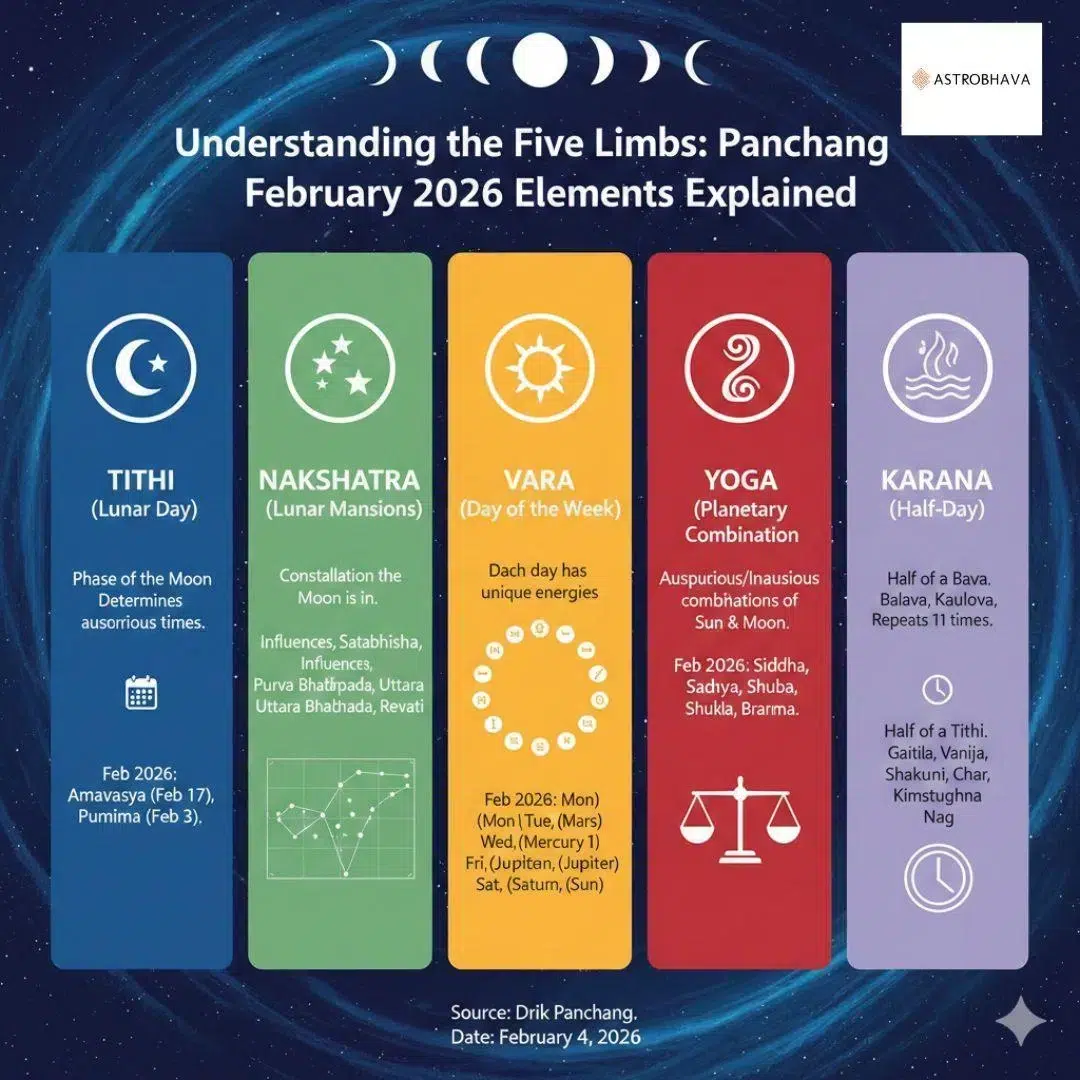
The Vedic calendar, or Panchang, is far more than a simple record of dates; it is a sophisticated astronomical tool that maps the quality of time. By synchronizing the movements of the Sun and the Moon, the Panchang helps us align our daily actions with the cosmic rhythm. In Vedic astrology, the word “Panchang” literally translates to “five limbs” (Pancha meaning five, and Anga meaning limbs), representing five distinct energy sources that influence our physical and mental well-being.
As we move through February 2026, understanding these celestial shifts is particularly important. With major planetary alignments occurring this month, knowing the daily panchang February 2026 details allows you to choose the right moments for new beginnings, spiritual practices, and even rest. Whether you are planning a wedding, starting a business, or simply seeking inner peace, the wisdom of the five limbs provides a roadmap for success.
February 2026 Panchang – Daily Tithi, Nakshatra & Rahu Kaal (IST)
The Panchang February 2026 provides day-wise lunar details to help plan religious rituals, auspicious beginnings, and important life activities. Below is a practical daily Panchang snapshot covering the most searched elements — Tithi, Nakshatra, Rahu Kaal, and Abhijit Muhurta — as observed in Indian Standard Time (IST).
February 2026 Panchang (IST) Overview
February 2026 begins with Purnima on Feb 1 and ends after Amavasya on Feb 17, making it a month focused on completion, introspection, and renewal. Daily Panchang elements include Tithi, Nakshatra, Yoga, Karana, Rahu Kaal, and Abhijit Muhurta for planning rituals and auspicious activities.
Key Panchang Dates & Their Astrological Theme – February 2026
| Date (Feb 2026) | Key Tithi | Nakshatra | Primary Energy |
| Feb 1 | Purnima | Ashlesha/Magha | Completion & Ancestral blessings |
| Feb 9 | Ashtami | Vishakha | Balance and determination |
| Feb 17 | Amavasya | Shatabhisha | Introspection & Healing |
| Feb 25 | Navami | Rohini | Creativity & Nurturing |
Quick Summary: Key Takeaways for February 2026
If you are looking for a fast glance at the panchang February 2026 highlights, keep these points in mind:
- The Power of Tithi: Use the Waxing Moon (Shukla Paksha) until the Purnima on February 1st and again after the Amavasya on February 17th for growth-oriented activities.
- Nakshatra Influence: Pay close attention to the Moon’s transit through Pushya and Revati this month for spiritual and financial stability.
- Karan & Yoga: These subtle elements will dictate the “flavor” of your efforts—choose Dhruva or Harshana yoga days for long-term projects.
- Spiritual High Points: Maha Shivaratri (observed near the end of the month/early March cycle) and the Magha Purnima are essential windows for remedial measures.
- February 2026 begins with Purnima and transitions into Amavasya on February 17, making the month ideal for both completion and renewal activities.
- Shukla Paksha days after Amavasya are considered more favorable for new initiatives, investments, and spiritual vows.
- Avoid Rahu Kaal and Gulika Kaal for weddings, business launches, and major commitments.
- Abhijit Muhurta can be used as a corrective timing window on days with mixed Panchang results.
The Five Pillars of the Panchang
In classical Vedic astrology, each of the five limbs is governed by a specific element and a planetary ruler. When we look at the panchang for February 2026, we evaluate these five components to determine the Muhurta (auspicious timing).
1. Tithi (The Lunar Day)
The Tithi is the lunar day based on the angular distance between the Sun and the Moon. There are 30 Tithis in a lunar month.
- Astrological Logic: Tithi represents the Jala (water) element and governs our emotions and relationships.
- February 2026 Context: The month begins just as we hit the Purnima (Full Moon). Around February 17th, we encounter the Amavasya (New Moon). From an astrological perspective, the period leading up to the New Moon is better for introspection and clearing debts, while the period after is ideal for manifestation.
2. Nakshatra (The Lunar Mansion)
The Nakshatra is perhaps the most vital part of the panchang February 2026. It represents the Prithvi (earth) element and indicates the actual position of the Moon in the 27 constellations.
- Astrological Logic: The Nakshatra tells us the “vibe” of the day. For example, if the Moon is in Ashwini, the energy is fast and healing. If it is in Satabhisha, the day favors research and hidden knowledge.
- What to watch for: During February, when the Moon transits through auspicious Nakshatras like Rohini or Shravana, it creates a fertile ground for domestic harmony and professional networking.
3. Yoga (The Solar-Lunar Angle)
Yoga translates to “union.” It is calculated by adding the longitudes of the Sun and Moon and represents the Akasha (ether) element.
- Astrological Logic: There are 27 Yogas. Some, like Siddhi or Amrita, are highly beneficial, while others, like Vyatipata, suggest a day where results may be unpredictable or chaotic.
- Application: Checking the yoga in your panchang February 2026 helps you understand the underlying “weather” of the day. Is it a day of flow or a day of friction?
4. Karana (Half of a Tithi)
Karana represents the Prithvi (earth) or Bhumi element and relates to our professional actions and productivity.
- Astrological Logic: There are 11 Karanas. Some are “fixed,” and some are “movable.”
- Insight: Astrologers often observe that while Tithi rules the mind, Karana rules the physical execution of a task. If you have a difficult task to complete in February, look for a Bava or Balava Karana in your daily panchang February 2026 readings.
5. Vaara (The Solar Day)
Vaara refers to the seven days of the week, each ruled by a planet (e.g., Sunday by the Sun, Tuesday by Mars).
- Astrological Logic: It represents the Agni (fire) element, governing our vitality and health.
- February 2026 Tip: Tuesdays in February are governed by Mars. If Mars is well-placed in your chart, these days are excellent for courageous actions. If not, these are days to avoid unnecessary confrontations.
How to Use the Daily Panchang in February 2026
To apply the Panchang February 2026 effectively in daily life, follow this simple sequence:
- Check Vaara (weekday) to understand the planet influencing the day
- Confirm the Nakshatra, as it determines the emotional and practical quality of time
- Review the Tithi to assess mental readiness and stability
- Avoid Rahu Kaal and Gulika Kaal for starting important activities
- Use Abhijit Muhurta if no other auspicious timing is available
This method helps align actions with favorable cosmic conditions rather than relying on a single Panchang element.
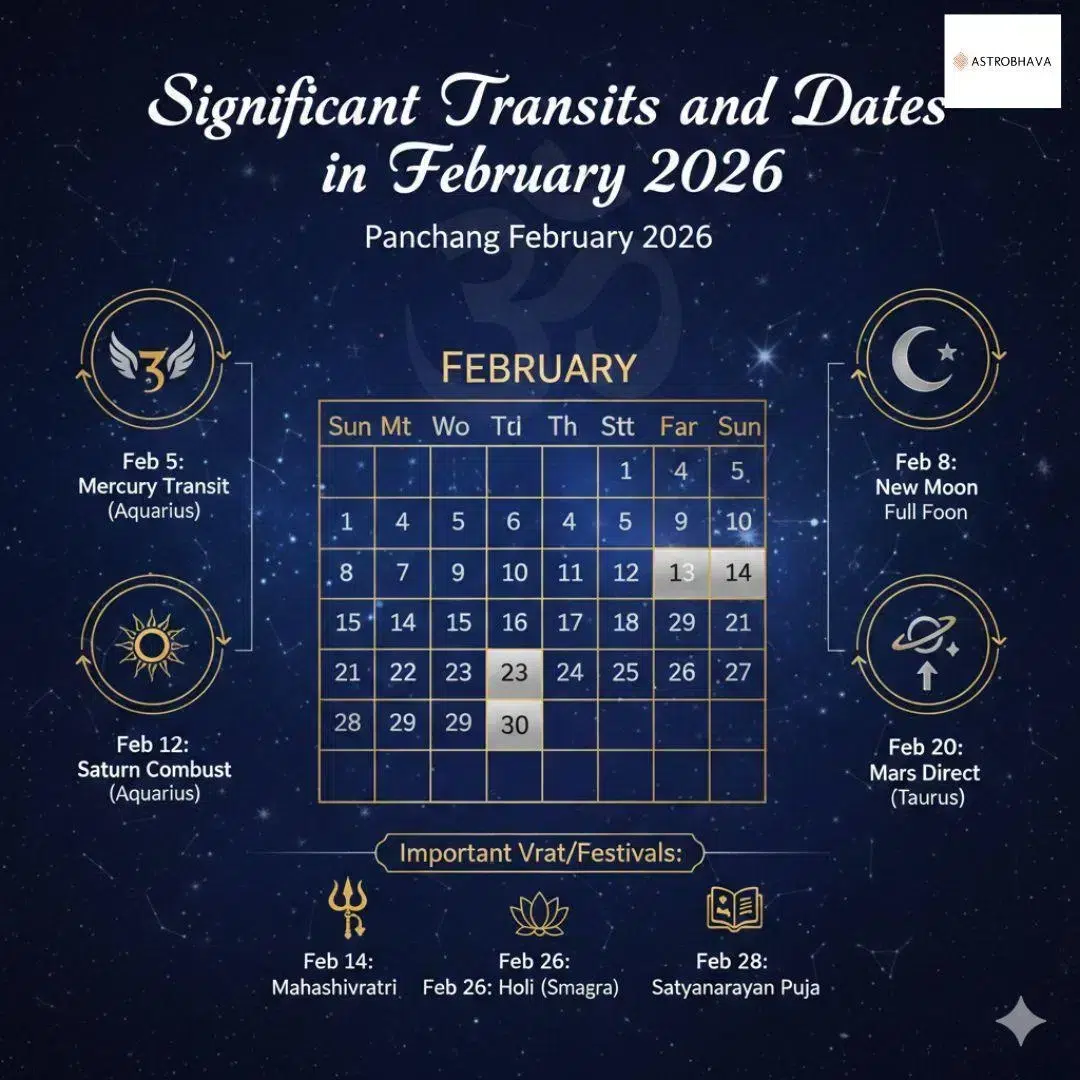
Significant Transits and Dates in February 2026
When analyzing the panchang February 2026, we must look at how the daily elements interact with larger planetary transits.
- Sun in Aquarius: Around mid-February, the Sun moves into Aquarius (Kumbha Sankranti). This shift brings a focus on community, innovation, and social justice.
- The Influence of Saturn: As Saturn continues its journey through its own or friendly signs during this period, the panchang February 2026 will reflect a need for discipline. Days where the Nakshatra is ruled by Saturn (like Pushya or Anuradha) will be pivotal for long-term commitments.
Auspicious & Sensitive Days in February 2026 (Panchang View)
Favorable Days
- Days with Shukla Paksha + benefic Nakshatras like Rohini, Pushya, or Shravana
- Thursdays and Fridays with supportive Tithi–Nakshatra combinations
Sensitive Days
- February 17 (Amavasya) — best suited for spiritual practices, not celebrations
- Days with Bhadra Karana or adverse Yogas — avoid weddings and business launches
Practical Remedies for February 2026
If you find that the panchang February 2026 indicates a “heavy” or “malefic” day (such as a Bhadra Karana or a Vyatipata Yoga), Vedic astrology offers simple, non-harmful ways to mitigate the energy.
For Mental Clarity (Tithi/Moon Remedies)
If the lunar day is challenging, practice Chandra Arghya. Offer water to the Moon or simply meditate on the mantra Om Som Somaya Namaha. This is especially recommended for those with a weak Moon in their birth chart or those feeling emotionally volatile during the February Amavasya.
For Career Obstacles (Karana Remedies)
On days when the panchang February 2026 shows a difficult Karana, donate small amounts of food or grains to those in need. In Vedic logic, giving helps balance the “earth” element of Karana, making your physical work proceed with fewer hurdles.
For Health and Vitality (Vaara Remedies)
Align your diet with the day’s ruler. For instance, on a Sunday (Sun’s day), eat light, warming foods. On a Friday (Venus’s day), focus on clean, aesthetically pleasing meals. This honors the Agni of the day.
Understanding Rahu Kaal and Gulika Kaal
In the panchang February 2026, identifying “avoidance windows” is as crucial as finding auspicious ones.
- Rahu Kaal: A daily period (approx. 90 minutes) considered unfavorable for new ventures as it is governed by the chaotic energy of Rahu.
- Gulika Kaal: Often called ‘Preta Kaal,’ any activity started now tends to repeat. Astrologers suggest using this for routine tasks rather than unique celebrations.
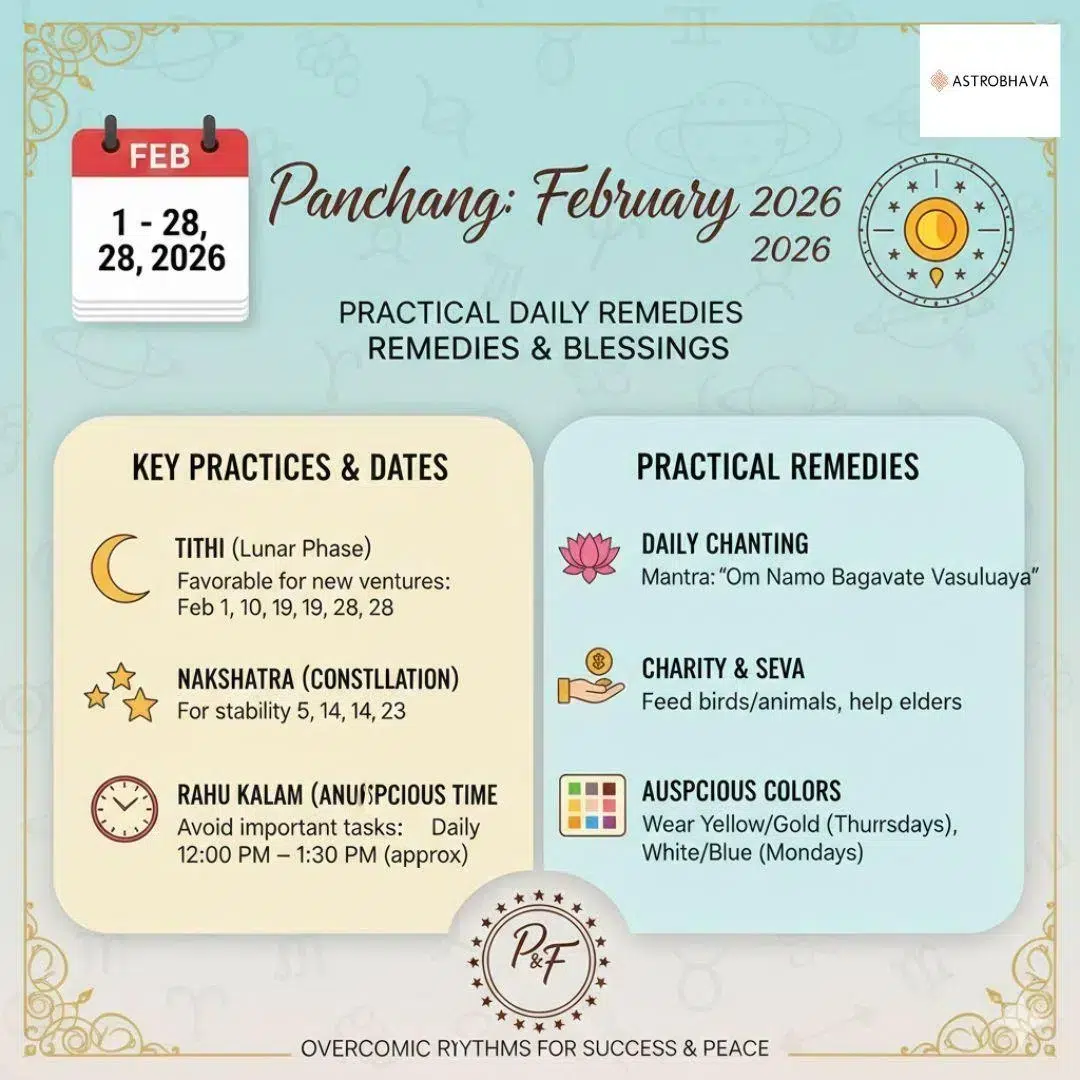
Rahu Kaal Timing Table (STANDARD – IST)
These are fixed weekday windows used across all Hindu Panchang systems.
(Exact clock minutes depend on local sunrise — mention this below the table.)
| Day | Rahu Kaal Window |
| Sunday | 4:30 PM – 6:00 PM |
| Monday | 7:30 AM – 9:00 AM |
| Tuesday | 3:00 PM – 4:30 PM |
| Wednesday | 12:00 PM – 1:30 PM |
| Thursday | 1:30 PM – 3:00 PM |
| Friday | 10:30 AM – 12:00 PM |
| Saturday | 9:00 AM – 10:30 AM |
Gulika Kaal (Yamagandam) — Reference Table
| Day | Gulika Kaal |
| Sunday | 3:00 PM – 4:30 PM |
| Monday | 1:30 PM – 3:00 PM |
| Tuesday | 12:00 PM – 1:30 PM |
| Wednesday | 10:30 AM – 12:00 PM |
| Thursday | 9:00 AM – 10:30 AM |
| Friday | 7:30 AM – 9:00 AM |
| Saturday | 6:00 AM – 7:30 AM |
The Importance of Abhijit Muhurta in February
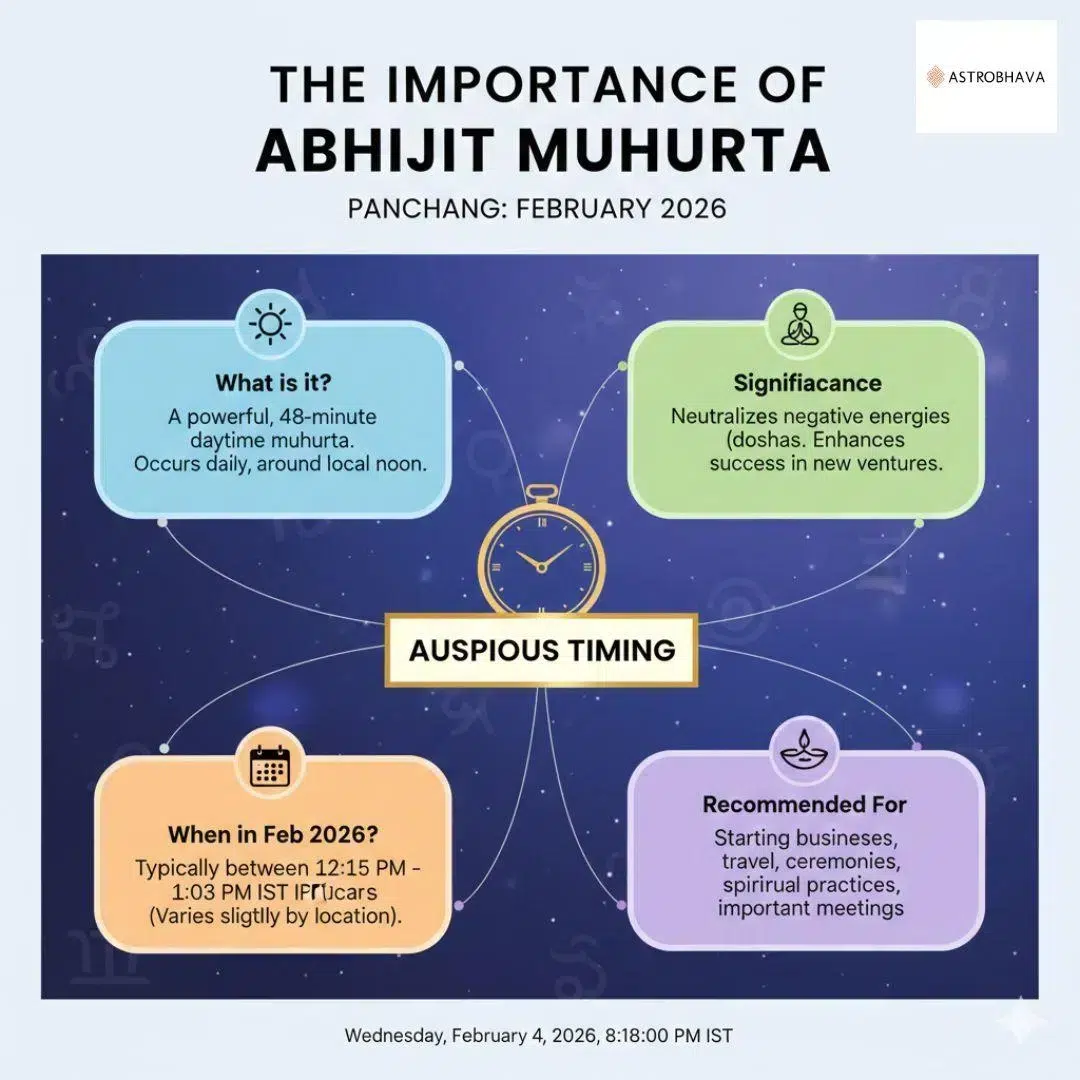
If you find the daily panchang February 2026 elements are generally unfavorable, but you must perform an urgent task, look for the Abhijit Muhurta.
- The Victorious Window: Occurring daily around the local solar noon, this “eighth Muhurta” is capable of neutralizing many minor astrological defects (doshas).
- Solar Strength: From an astrological perspective, the Sun is at its highest point of strength during this time, providing the clarity and authority needed for quick decision-making, even on days when the panchang February 2026 suggests more challenging lunar influences.
Abhijit Muhurta (Universally Accepted Rule)
| Muhurta | Approx Timing |
| Abhijit Muhurta | 11:48 AM – 12:36 PM (IST) |
Abhijit Muhurta is absent on Wednesdays and varies slightly by latitude.
Panchang timings are calculated based on sunrise and geographical location. The above Rahu Kaal, Gulika Kaal, and Abhijit Muhurta timings follow standard Vedic Panchang conventions for IST. For precise city-specific Muhurta, consult a local Panchang or astrologer.
FAQ: Common Doubts About the February 2026 Panchang
Q: Can I use the February 2026 Panchang for any location?
A: While the Tithi and Yoga occur almost simultaneously worldwide, the timing of when they start and end depends on your local sunrise. Always use a location-specific panchang February 2026 for precise Muhurtas.
Q: Is the Amavasya on February 17th a bad day for everything?
A: Not at all. From an astrological perspective, Amavasya is excellent for spiritual retreats, honoring ancestors (Pitru Tarpan), and ending bad habits. It is only avoided for “outward” celebrations like weddings or grand openings.
Q: Why do Nakshatras change at odd times during the day?
A: Unlike the 24-hour clock, Nakshatras are based on the Moon’s movement through space. This is why a Nakshatra might start at 2:00 PM on one day and end at 4:00 PM the next. Checking a reliable panchang February 2026 ensures you don’t miss these transition points.
Q: What is the most important element to check for daily success?
A: For general success, the Nakshatra and the Tithi are the most vital. If both are favorable in the panchang February 2026, the day is generally considered productive.
Conclusion
The panchang February 2026 serves as a cosmic weather report. By understanding the interplay of tithi nakshatra yoga karana, you move from being a passive observer of life to an active participant in your destiny. Remember that astrology is not about fear; it is about preparedness. Even a “challenging” day is simply an invitation to slow down and reflect.
This Panchang February 2026 guide is intended for general spiritual and planning purposes. Individual Muhurta suitability may vary based on personal birth charts and location.
If you’re experiencing similar planetary influences in your personal chart and want clarity beyond general predictions, Astrobhava offers personalised astrological guidance rooted in Vedic wisdom. Readers seeking personalised timing guidance may consult a qualified astrologer or trusted Panchang source such as Astrobhava.
Navigating the Karmic Axis: Rahu and Ketu in Vedic Astrology
https://youtu.be/sz6tBKIOOpc?si=A4iFHa0k1LOUr6Hb