The sacred Hindu calendar is dotted with auspicious occasions that carry profound spiritual energy, and among them, Tara Jayanti 2026 stands as one of the most powerful days for seekers of divine wisdom, liberation, and protection. Celebrated as the birth anniversary of Goddess Tara — the second of the ten Mahavidyas — this sacred Tithi is not merely a festival but a cosmic gateway through which devotees connect with one of the most compassionate and fierce forms of Adi Shakti.
Whether you are a sincere devotee, a spiritual seeker, or someone looking to navigate the turbulences of life with divine guidance, understanding the full significance of Tara Jayanti 2026 can transform the way you approach this auspicious day. In this comprehensive guide, we cover the exact date, puja timings, mythology, rituals, spiritual benefits, and much more.
 What is Tara Jayanti?
Tara Jayanti marks the divine appearance of Goddess Tara on this earthly plane. She is the second among the Dasha Mahavidyas — the ten great wisdom goddesses of the Tantric and Shakta traditions — and is often considered closely related to Goddess Kali in her appearance and cosmic function. The name Tara derives from the Sanskrit root meaning “the one who ferries you across” — across the turbulent ocean of samsara, worldly suffering, and ignorance.
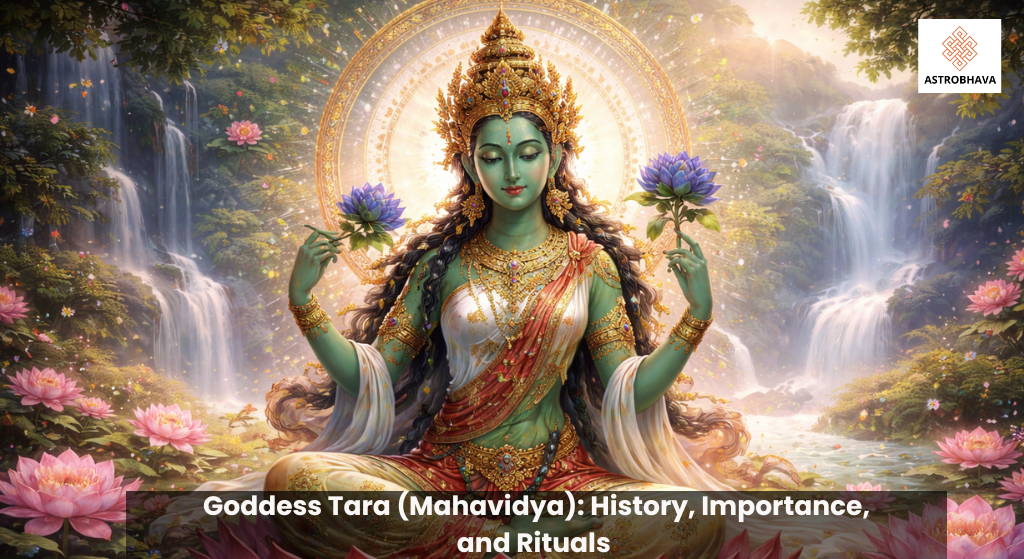
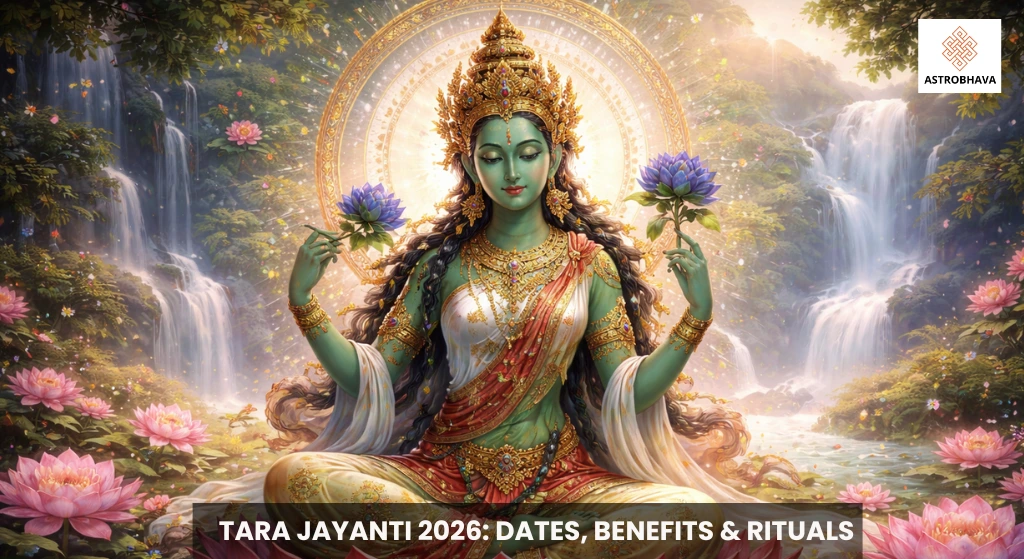
Goddess Tara is revered as the goddess of knowledge, salvation, and compassionate protection. She is depicted with a blue complexion, which in Tantric philosophy represents her boundless, transcendent nature and her connection to infinite cosmic space. She holds a sword, a severed head, a dagger, and offers the Abhaya Mudra (gesture of fearlessness) with her four hands, symbolising her power to simultaneously destroy evil and grant refuge to her devotees.
The worship of Goddess Tara has ancient roots, tracing back to traditions prevalent not only in India but also in Tibet, China, and Ladakh, where she was revered as a supreme deity of compassion and liberation. The most important Shaktipeeth of Goddess Tara — Tarapith — is located on the banks of the Dwarka River in West Bengal, where it is believed the eyes of Goddess Sati fell. This sacred seat remains one of the most visited Tantric pilgrimage sites in India.
Tara Jayanti 2026: Date and Puja Timings
Tara Jayanti 2026 falls on Thursday, March 26, 2026. According to the Hindu lunar calendar, it is observed on the Navami Tithi (9th lunar day) of Shukla Paksha in the month of Chaitra. The night of this Tithi is traditionally referred to as Tara-Ratri, considered especially potent for Tantric Sadhana and Mantra Japa.
| Detail | Information |
| Date | Thursday, March 26, 2026 |
| Tithi | Chaitra Shukla Navami |
| Navami Tithi Begins | 12:18 PM on March 26, 2026 |
| Navami Tithi Ends | 10:36 AM on March 27, 2026 |
| Most Auspicious Time | Sunrise to Noon on March 26 (Puja), Tara-Ratri (Night of March 26) for Sadhana |
It is also noteworthy that Tara Jayanti 2026 coincides with Ram Navami — the birth anniversary of Lord Ram — on the same Chaitra Shukla Navami Tithi. This convergence is considered highly auspicious, as both Sri Ram and Goddess Tara share the same sacred Tithi, making this day doubly blessed for spiritual endeavours.
Seek the divine blessings of Goddess Tara- Join the live Tara Homa Performance by Astrobhava’s expert priests
The Divine Origin of Goddess Tara: Mythology and Legend
Understanding the mythology behind Goddess Tara deepens one’s connection to the deity on this sacred day.
The Slaying of Hayagriva
According to the Swatantra Tantra and Mahakal Samhita, Goddess Tara first appeared on the banks of the Cholana River on the western slopes of Mount Meru. When a ferocious demon named Hayagriva was terrorising the worlds and had received a boon that made him nearly indestructible, Goddess Mahakali transformed herself by taking on a blue hue and assuming the form of Tara to finally slay him. The blue-complexioned manifestation thus became known as Goddess Tara — or Nila Saraswati (the Blue Goddess of Knowledge).
Tara and the Samudra Manthan
Another prominent legend connects Goddess Tara to the cosmic churning of the ocean (Samudra Manthan). When the deadly poison Halahala emerged from the depths, threatening all of creation, Lord Shiva consumed it to save the universe. As the poison burned through him, it was Goddess Tara who appeared with boundless compassion, cradled Shiva like a mother, and nursed him with her divine milk, neutralising the poison’s effects. This act of maternal compassion is one of the most cited reasons devotees approach Tara as a nurturing, protective mother figure.
The First Worship by Sage Vasishtha
It is believed that Sage Vasishtha was among the first to perform the worship of Goddess Tara on Earth. After travelling to China and Tibet to learn the Tantric method of her worship, he returned to establish her veneration in the Hindu tradition — which is why Tara worship maintains strong connections to both Hindu Shakta and Tibetan Buddhist traditions to this day.
Want to know more about Goddess Tara? Read the blog here
Significance of Tara Jayanti 2026 in Astrology
The planetary alignment on Tara Jayanti 2026 carries unique spiritual weight. The Sun, Saturn, and Neptune are positioned together in the water sign of Pisces, with Saturn sitting in the star zone of Uttara Bhadrapada. Pisces governs endings, transformation, and dissolution of old karma, while Saturn enforces karmic accountability. This configuration suggests that 2026’s Tara Jayanti is an especially potent time to shed old baggage, break negative patterns, and invoke Tara’s transformative energy for a clean spiritual slate.
Simultaneously, the Moon and Jupiter are positioned in Gemini — the sign that governs the mind, voice, and communication. This is a powerful cosmic hint: Mantra Japa and chanting on this day will carry amplified vibrational energy, making it the ideal time to perform Tara Mantra recitations and invoke her grace through sound.
Spiritual Benefits of Worshipping Goddess Tara on Tara Jayanti
 Spiritual Benefits of Worshipping Goddess Tara on Tara Jayanti
The Tantric texts and devotional traditions list a wide range of blessings that flow to sincere devotees who worship Goddess Tara on her Jayanti:
- Removal of Fear and Negativity Goddess Tara is the supreme bestower of Abhaya (fearlessness). Worshipping her helps dissolve deep-seated fears, anxieties, and mental blocks that prevent spiritual and material progress.
- Attainment of Knowledge and Wisdom As Nila Saraswati, Tara bestows sharp intellect, eloquence, and the wisdom to discern the truth from illusion. Students, scholars, and seekers of higher knowledge greatly benefit from her worship.
- Destruction of Enemies and Obstacles Tantric texts emphasise that devotion to Tara brings the destruction of enemies — both external adversaries and internal obstacles like ego, attachment, and ignorance.
- Vak Siddhi (Power of Speech) One of the most celebrated boons of Tara worship is Vak Siddhi — the perfection of speech — where one’s words carry power, authority, and the capacity to manifest.
- Liberation from Pitra Dosha Chanting the Tara Mantra 108 times on Tara Jayanti is believed to free devotees from the effects of Pitra Dosha and other karmic afflictions passed down through ancestral lines.
- Salvation and Moksha At the highest spiritual level, Goddess Tara is a Moksha-dayini — the giver of liberation. Through sustained devotion, she guides the soul across the ocean of rebirth and samsara.
- Protection of the Household Placing a Tara Yantra in the home’s sacred space or treasury after the puja is said to invite the goddess’s protective energy, shielding the household from misfortune.
🔥 Invoke Tara’s transformative fire on this auspicious day — Book Your Tara Homa with AstroBhava and let expert Vedic priests perform the sacred fire ritual on your behalf.
Step-by-Step Rituals for Tara Jayanti 2026
Performing the Tara Jayanti puja with sincerity, even in a simplified home setting, invites the goddess’s divine presence. Here is a complete guide:
Morning Preparation
- Wake up before sunrise. Take a ritual bath with clean, preferably cold water.
- Wear fresh, clean clothes — white, blue, or red are considered auspicious colours for Tara worship.
- Clean your puja space and establish a sacred atmosphere.
Setting Up the Altar
- Place a wooden stool (pata) in your worship area and cover it with a clean red or blue cloth.
- Place an idol, yantra, or image of Goddess Tara at the centre.
- Arrange blue and red flowers, as Maa Tara is said to be especially fond of these colours.
- Set out offerings of water, milk, rice, sweets (kheer, mishri water), and seasonal fruits.
The Puja Sequence
- Achaman (Purification): Sip water from your palm three times while chanting purification mantras.
- Ganesh Puja: Begin by invoking Lord Ganesha, the remover of obstacles, to ensure the puja proceeds without hindrance.
- Sankalpa (Intention): State your heartfelt intention before the goddess — what you seek from her grace.
- Dhyana (Meditation): Visualise Goddess Tara in her blue-complexioned form, holding a sword, skull cup, dagger, and offering the Abhaya Mudra.
- Shodashopachara Puja: Offer 16 sacred items including water, flowers, incense, lamp, naivedya (food offering), and more.
- Mantra Japa: Chant the Tara Mantra “ॐ ह्रीं स्त्रीं हुं फट्” (Om Hreem Streem Hum Phat) a minimum of 108 times on a Rudraksha or Sphatik mala. Those observing the Vrat may aim for 1,008 repetitions.
- Aarti: Conclude with the aarti of Goddess Tara.
- Prasad Distribution: Distribute the offered sweets to family members and the needy.
Don’t know how to do a Puja? Book your Tara Puja with Astrobhava and let the expert priest perform the puja under your sankalp.
Tara-Ratri: The Sacred Night
The night of Chaitra Shukla Navami is specifically called Tara-Ratri, and it is considered the most potent time for Tantric Sadhana and advanced mantra practices. Experienced practitioners and Tantra Sadhaks use this night for intensive japa, meditation, and invocation of Goddess Tara’s deeper energies.
📿 Deepen your devotion with a dedicated Tara Japa Service on AstroBhava — have qualified Vedic pandits perform 1,008 or 10,008 repetitions of the Tara Mantra for your wellbeing and liberation.
Fasting (Vrat) Rules for Tara Jayanti 2026
Observing a Vrat (fast) on Tara Jayanti amplifies the spiritual merit of the day. Here are the traditional rules:
- Begin the fast after your morning bath and puja on March 26, 2026.
- Abstain from non-vegetarian food, alcohol, and tamasic foods throughout the day.
- A Nirjala (waterless) fast is the most rigorous and meritorious form, though a Phalahari fast (consuming only fruits, milk, and root vegetables) is widely practised.
- Maintain inner purity — avoid anger, harsh speech, and negative thoughts throughout the day.
- Break the fast after performing the evening aarti or the next morning after sunrise.
- It is believed that observing this Vrat helps in liberation from Pitra Dosha and all forms of karmic debt.
Tara Yantra: The Sacred Instrument of Her Grace
The Tara Yantra is a geometrical diagram that embodies the concentrated energy of Goddess Tara. Consecrating and worshipping a Tara Yantra on Tara Jayanti is considered extremely auspicious. According to the Tantra Shastra, Sadhana (spiritual practice) performed with the support of a properly consecrated Yantra accelerates results manifold, as the Yantra serves as a direct physical representation of the deity.
After the puja on Tara Jayanti, the Tara Yantra may be placed in the treasury or wealth corner of the home to attract her protective blessings for the entire year.
The Significance of Tarapith: The Living Shaktipeeth
No discussion of Tara Jayanti is complete without mentioning Tarapith, one of India’s most powerful Tantric pilgrimage sites. Located in Birbhum district of West Bengal, on the banks of the Dwarka River, this is the Shaktipeeth where the eyes of Goddess Sati are believed to have fallen, earning it also the name Nayantara (the eye). On Tara Jayanti, Tarapith becomes the epicentre of grand celebrations, Tantric rituals, mass yagnas, and thousands of devotees offering their prayers to Maa Tara.
For those unable to visit in person, performing Tara puja at home or through dedicated priest services carries equivalent spiritual merit when done with sincere devotion.
🌺 Can’t travel to Tarapith this year? Book a Tara Puja with AstroBhava’s experienced priests and receive the blessings of Goddess Tara from the comfort of your home — prasad delivered to your doorstep.
Do’s and Don’ts on Tara Jayanti 2026
Do’s
- Wake up early and take a ritual bath before sunrise.
- Wear clean clothes in blue, red, or white.
- Offer blue and red flowers, milk, kheer, and fresh fruits.
- Chant the Tara Mantra at least 108 times.
- Donate food, clothes, or money to the poor and needy.
- Read or listen to Tara Kavach or Tara Stotram.
- Observe the fast with sincerity.
Don’ts
- Avoid consuming non-vegetarian food, onion, garlic, and alcohol.
- Do not engage in quarrels or use harsh language.
- Avoid any kind of tamasic or impure activity.
- Do not leave the puja incomplete once started.
- Avoid sleeping during the day if observing the Vrat.
Tara Mantra: The Power of Her Sacred Sound
The primary mantra of Goddess Tara is:
ॐ ह्रीं स्त्रीं हुं फट् Om Hreem Streem Hum Phat
This is a powerful Tantric Beeja Mantra that invokes Tara’s energy of liberation, protection, and transformation. Chanting it 108 times daily — especially during the Brahma Muhurta (pre-dawn period) — is considered highly beneficial. On Tara Jayanti, 1,008 or even 10,008 repetitions are traditionally recommended for those seeking profound transformation.
Another powerful mantra is:
स्त्रीं हूं हृं हूं फट् Streem Hum Hreem Hum Phat
This Panchakshari (five-syllable root) Mantra is said to bring universal welfare, peace, and the swift granting of the devotee’s sincere prayers.
Conclusion
Tara Jayanti 2026 on Thursday, March 26 is a day that vibrates with rare cosmic and spiritual energy. As the second Mahavidya, Goddess Tara embodies the divine mother who rushes to your rescue when the world feels overwhelming. She cuts through the thickest of karmic knots with her sword of wisdom, ferries the surrendered soul across the ocean of suffering, and bestows her devotees with fearlessness, eloquence, and ultimately, liberation.
Whether you choose to observe a strict fast, perform a detailed puja at your home altar, chant her mantra through the sacred Tara-Ratri, or seek the grace of an expert-performed Homa or Japa service, the most important ingredient is sincere, heartfelt devotion. Approach Maa Tara with an open heart, lay your fears and burdens at her feet, and trust in her boundless compassion to guide you forward.
May the blessings of Goddess Tara illuminate your path on this sacred Tara Jayanti 2026 and throughout the year ahead.
Frequently Asked Questions (FAQs)
Q1. When is Tara Jayanti 2026?
Tara Jayanti 2026 is observed on Thursday, March 26, 2026, on the Navami Tithi of Chaitra Shukla Paksha. The Navami Tithi begins at 12:18 PM on March 26 and ends at 10:36 AM on March 27.
Q2. Who is Goddess Tara?
Goddess Tara is the second of the ten Dasha Mahavidyas in Hindu Tantric tradition. She is a fierce, compassionate form of Adi Shakti who is worshipped as the goddess of knowledge, liberation, and protection. Her name means “the one who ferries you across” — symbolising her role in guiding devotees across the ocean of worldly suffering.
Q3. What is the significance of Tara-Ratri?
Tara-Ratri refers to the night of Chaitra Shukla Navami, which coincides with Tara Jayanti. This night is considered especially potent for Tantric Sadhana, Mantra Japa, and deep meditation on Goddess Tara. Serious practitioners use this night for intensive spiritual practices.
Q4. What is the main mantra for Goddess Tara?
The primary Tara Mantra is “Om Hreem Streem Hum Phat” (ॐ ह्रीं स्त्रीं हुं फट्). Chanting it 108 times on Tara Jayanti is considered highly auspicious and beneficial for removing obstacles, gaining wisdom, and seeking liberation.
Q5. Can anyone worship Goddess Tara on Tara Jayanti?
Yes, Tara Jayanti can be observed by anyone with sincere devotion, regardless of their background. While the rituals are rooted in Hindu and Tantric traditions, the universal qualities of Goddess Tara — compassion, protection, and wisdom — are accessible to all spiritual seekers.
Q6. What offerings are made to Goddess Tara?
Goddess Tara is particularly fond of blue and red flowers. Devotees offer these along with milk, kheer (rice pudding), mishri (rock sugar) water, fresh fruits, and sweets. A ghee lamp and incense are also essential parts of the offering.
Q7. What are the benefits of observing the fast on Tara Jayanti?
Observing the Tara Jayanti Vrat is believed to bestow liberation from Pitra Dosha, relief from karmic debts, removal of fear and negativity, attainment of wisdom, and overall wellbeing. Chanting the Tara Mantra 108 times during the fast amplifies these benefits.
Q8. What is Tarapith and why is it significant on Tara Jayanti?
Tarapith is a famous Tantric Shaktipeeth located in Birbhum, West Bengal, on the banks of the Dwarka River. It is believed to be the spot where the eyes of Goddess Sati fell and is one of the most powerful seats of Tara worship in India. On Tara Jayanti, large-scale celebrations, yagnas, and Tantric rituals take place at Tarapith, drawing devotees from across the country.
Q9. Does Tara Jayanti 2026 coincide with any other festival?
Yes, Tara Jayanti 2026 coincides with Ram Navami, the birth anniversary of Lord Ram. Both celebrations fall on Chaitra Shukla Navami, making March 26, 2026 doubly auspicious and deeply spiritually significant.
Q10. How can I participate in Tara Jayanti rituals if I cannot perform them myself?
You can participate in Tara Jayanti rituals through dedicated priest services. Platforms like AstroBhava offer Tara Puja, Tara Homa, and Tara Japa services performed by qualified Vedic priests on your behalf, with prasad delivered to your home.
Jai Maa Tara — May the Blue Goddess guide you across all obstacles and into the light of wisdom and liberation.