The festival of Holi, known for its vibrant colors, joyous gatherings, and symbolic triumph of good over evil, is one of the most anticipated celebrations in Hindu culture. However, in 2026, a unique celestial event is set to overlap with this festive occasion: the Lunar eclipse 2026. Many devotees are wondering if the Lunar eclipse 2026 will impact the traditional Holi rituals, including Holika Dahan and the playful throwing of colors. This rare coincidence, happening after nearly a century, brings into focus concepts like sutak kaal and eclipse effects on religious practices. In this detailed blog, we’ll explore the dates, potential influences, and ways to navigate the Lunar eclipse 2026 while honoring Holi traditions.
What is a Lunar Eclipse and Why Does Lunar Eclipse 2026 Matter?
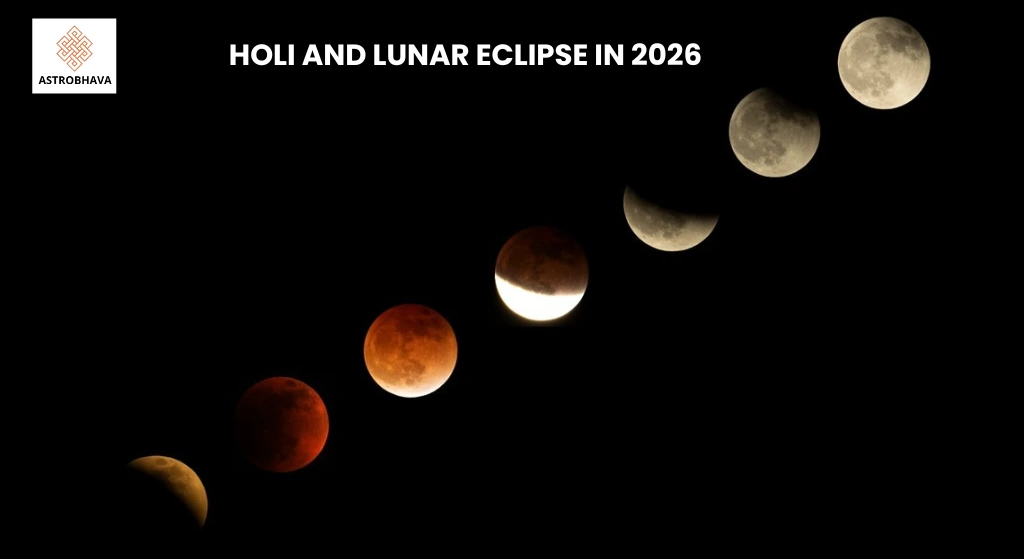
A lunar eclipse occurs when the Earth positions itself between the Sun and the Moon, casting a shadow that darkens the Moon. The Lunar eclipse 2026 is particularly noteworthy as it will be a total lunar eclipse, often called a “Blood Moon” due to the reddish hue the Moon takes on during totality. This phenomenon holds deep astrological and spiritual significance in Hinduism, where eclipses are seen as periods of heightened cosmic energy that can influence human emotions, health, and daily activities.
The Lunar eclipse 2026 stands out because it coincides with Holi, a festival tied to the full moon (Purnima) in the month of Phalguna. According to Vedic beliefs, eclipses like the Lunar eclipse 2026 can amplify both positive and negative energies, making it essential to observe precautions. Eclipse effects may include temporary disruptions in mental clarity or physical well-being, prompting many to turn to remedies for protection.
Watch our live Chandra Homa to seek the blessings of chandra dev
Date and Time of Lunar Eclipse 2026
The Lunar eclipse 2026 is scheduled for March 3, 2026, with visibility across Asia, including India, as well as Australia and parts of North America. Here are the key timings in Indian Standard Time (IST):
- Penumbral Eclipse Begins: 2:14 PM IST
- Partial Eclipse Begins: 3:20 PM IST
- Total Eclipse Begins: 4:34 PM IST
- Maximum Eclipse: 5:03 PM IST
- Total Eclipse Ends: 5:33 PM IST
- Partial Eclipse Ends: 6:38 PM IST
- Penumbral Eclipse Ends: 7:44 PM IST
Timings may vary for each location. The above timings are calculated for Delhi.
This afternoon-to-evening timing means the Lunar eclipse 2026 will be observable in India during the late hours of March 3, potentially overlapping with Holi preparations.
If you’re planning to witness the Lunar eclipse 2026, consider performing protective rituals beforehand. For instance, booking a Lakshmi Narasimha Homa can help mitigate any adverse eclipse effects—click here to schedule your personalized homa and ensure spiritual safeguarding during this powerful event.
Holi 2026 Dates and Celebrations
Holi 2026 falls amid some date confusion across India, largely due to the Lunar eclipse 2026. Traditionally, Holika Dahan (the bonfire ritual symbolizing the burning of evil) occurs on the evening of Phalguna Purnima, followed by Rangwali Holi (the color festival) the next day.
- Holika Dahan: March 3, 2026 (evening, auspicious muhurta around 6:22 PM IST)
- Holi (Festival of Colors): March 4, 2026
However, in some regions, celebrations might shift to March 3 or adjust timings to avoid the eclipse effects. The Purnima Tithi begins on the afternoon of March 3, aligning closely with the Lunar eclipse 2026. This overlap raises questions about how the Lunar eclipse 2026 might alter the festive spirit.
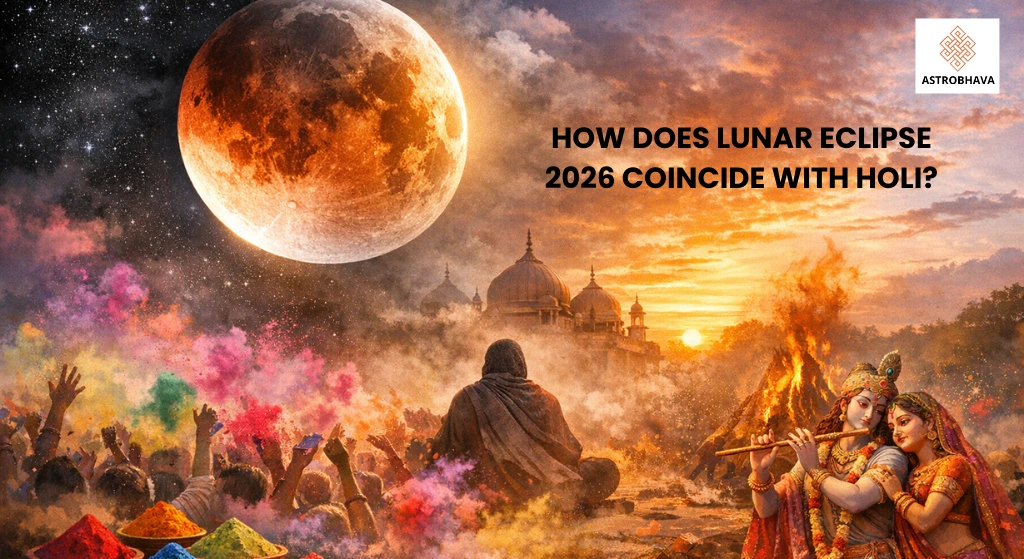 How Does Lunar Eclipse 2026 Coincide with Holi?
The Lunar eclipse 2026 directly aligns with the full moon of Holi, creating a rare astronomical and cultural event not seen in about 100 years. In Hinduism, Holi celebrates renewal and joy, but the Lunar eclipse 2026 introduces an element of caution. The eclipse effects could symbolically represent a “shadow” over the festivities, urging introspection amid celebration.
Astrologically, the Lunar eclipse 2026 may heighten emotional sensitivities, contrasting with Holi’s exuberant energy. While the festival encourages social bonding, the eclipse might prompt some to focus on inner reflection. Despite this, many believe the positive vibes of Holi can counterbalance the eclipse effects, turning the day into a transformative experience.
Understanding Sutak Kaal During Lunar Eclipse 2026
Sutak kaal is a pivotal concept in Hindu traditions during eclipses. It refers to the inauspicious period before an eclipse when certain activities are avoided to minimize negative influences. For lunar eclipses, sutak kaal typically begins 9 hours prior to the eclipse’s start.
For the Lunar eclipse 2026:
- Sutak Kaal Begins: Approximately 5:14 AM IST on March 3, 2026 (9 hours before penumbral start at 2:14 PM IST)
- Sutak Kaal Ends: At the conclusion of the eclipse, around 7:44 PM IST
During sutak kaal, devotees are advised against eating cooked food, touching temple idols, starting new ventures, or performing auspicious rituals. This period overlaps with Holi morning preparations, potentially affecting Holika Dahan if it falls within sutak kaal. Some regions may perform the bonfire earlier to avoid the eclipse effects.
Eclipse Effects on Holi Rituals and Celebrations
The eclipse effects during the Lunar eclipse 2026 could subtly influence Holi in several ways. According to Hindu beliefs, eclipses disrupt natural energies, leading to precautions like avoiding outdoor activities during the event. For Holi, this might mean rescheduling color play or focusing on indoor prayers.
Key eclipse effects include:
- Emotional Impact: The Lunar eclipse 2026 may cause mood swings or anxiety, contrasting Holi’s joy—remedies like meditation can help.
- Health Considerations: Pregnant women and the elderly are often advised to stay indoors to avoid purported negative vibrations.
- Ritual Adjustments: Holika Dahan might be held before sutak kaal intensifies, ensuring the fire ritual’s sanctity.
Despite these, the Lunar eclipse 2026 can enhance spiritual depth, making Holi a time for both fun and reflection.
To counteract any grahan dosh (eclipse defects) from the Lunar eclipse 2026, participate in a Chandra Grahan Shanti Puja. Book your slot today and invite peace into your Holi celebrations.
Do’s and Don’ts for Lunar Eclipse 2026
The Lunar Eclipse 2026, also known as Chandra Grahan, is set to occur on March 3, 2026, and will be visible in India, including Jodhpur, Rajasthan. This total lunar eclipse coincides with Holi, adding a layer of spiritual significance. In Hinduism, eclipses are viewed as powerful cosmic events that can influence energies, so traditional guidelines emphasize precautions during the Sutak Kaal (inauspicious period starting about 9 hours before the eclipse) and the eclipse itself. Sutak Kaal for this event begins around 5:14 AM IST on March 3 and lasts until the eclipse ends at approximately 7:44 PM IST.
These do’s and don’ts are rooted in Vedic astrology and aim to protect physical, mental, and spiritual well-being. They apply generally, but consult a local astrologer or panchang for personalized advice based on your birth chart. Pregnant women, the elderly, and children may need extra care.
General Do’s and Don’ts During Lunar Eclipse 2026
These apply during Sutak Kaal and the eclipse itself, based on Vedic traditions to mitigate grahan dosh (eclipse defects).
| Category | Do’s | Don’ts |
| Spiritual Practices | Chant mantras like Gayatri Mantra, Mahamrityunjaya Mantra, or Vishnu Sahasranama for protection and purification. Meditate or pray silently. Perform charity (daan) like donating food or clothes after the eclipse ends. | Avoid touching temple idols, starting new auspicious activities, or performing pujas during Sutak. No temple visits or religious rituals during the eclipse hours. |
| Food and Daily Habits | Cover cooked food with Tulsi leaves to protect from negative energies. Eat only after the eclipse and a purifying bath. Exceptions for children, elderly, sick, or pregnant individuals. | Avoid eating, cooking, or drinking (except for the vulnerable groups mentioned). No oil massages, brushing teeth, combing hair, or using sharp objects like knives/scissors. Refrain from sexual activities. |
| Health and Safety | Stay indoors, especially pregnant women, to avoid purported emotional or physical disruptions. Take a bath after the eclipse for cleansing. | Don’t watch the eclipse if pregnant or unwell; avoid outdoor exposure during peak hours. |
| Post-Eclipse | Offer prayers with devotion. Prepare and share prasadam (sweets) after rituals. | Don’t resume normal activities without a bath or mantra recitation. |
Specific Do’s and Don’ts for Holi Celebrations Amid the Eclipse
The coincidence adds complexity, as Holika Dahan (bonfire ritual symbolizing good over evil) typically occurs on Purnima evening, clashing with the eclipse. Focus on adjustments to maintain the festival’s joy while respecting eclipse precautions.
- Do’s for Holika Dahan and Holi:
- Perform Holika Dahan on March 2 evening (after sunset, post-Bhadra Kaal, around 7-9 PM IST) to avoid Sutak and eclipse overlap—many astrologers recommend this for safety and tradition.
- If on March 3, do it early morning before Sutak (around 5:14 AM) or after the eclipse ends, but check local muhurta.
- Light the bonfire with devotion, recite Holika mantras, and keep the area clean.
- For Rangwali Holi on March 4, incorporate post-eclipse remedies like chanting before playing colors to enhance positive energies.
- Maintain a positive mindset; view the eclipse as a time for emotional purification alongside Holi’s renewal theme.
- Don’ts for Holika Dahan and Holi:
- Avoid Holika Dahan during Sutak Kaal or eclipse hours, as fire rituals are inauspicious then—no puja or bonfire during the eclipse.
- Don’t mix eclipse viewing with Holi preparations; prioritize indoor reflection over outdoor festivities during peak eclipse.
- Refrain from starting color play or gatherings during Sutak on March 3 morning/afternoon.
- Avoid negativity or arguments, as the eclipse may heighten emotions—keep Holi’s spirit of joy intact post-eclipse.
This eclipse offers a unique blend of celebration and introspection. By following these guidelines, you can honor both the celestial event and Holi traditions safely.
 Remedies and Rituals to Mitigate Lunar Eclipse 2026 Effects
While the Lunar eclipse 2026 brings challenges, traditional remedies can help balance its energies. Chanting mantras like the Gayatri Mantra during the eclipse is recommended. Donating food or clothing post-eclipse also purifies the aura.
Special homas (fire rituals) are highly effective. For example, the Lakshmi Narasimha Homa invokes Lord Narasimha’s protection against eclipse effects—ideal for families celebrating Holi amid the Lunar eclipse 2026. Schedule your Lakshmi Narasimha Homa now to shield your loved ones from any astrological imbalances.
Other rituals include bathing after the eclipse and reciting the Aditya Hridayam Stotra for solar-lunar harmony.
Conclusion
The Lunar eclipse 2026 coinciding with Holi presents a fascinating blend of celestial wonder and cultural tradition. While sutak kaal and eclipse effects may require adjustments to rituals, they also offer an opportunity for deeper spiritual engagement. By observing precautions and performing remedies, devotees can celebrate Holi with renewed vigor, turning the Lunar eclipse 2026 into a memorable milestone of faith and festivity. Embrace this rare event mindfully, and let the colors of Holi shine brighter than ever.
FAQs
1. Will the Lunar Eclipse 2026 cancel Holi celebrations?
No, Holi will proceed, but timings may adjust in some regions due to sutak kaal and eclipse effects.
2. What is sutak kaal during Lunar Eclipse 2026?
Sutak kaal is the 9-hour inauspicious period before the eclipse, starting around 5:14 AM IST on March 3, 2026, when auspicious activities are avoided.
3. How do eclipse effects impact health during Lunar Eclipse 2026?
Eclipse effects may cause temporary emotional or physical discomfort; remedies like homas can help mitigate them.
4. Can I perform Holika Dahan during Lunar Eclipse 2026?
It’s advisable to complete it before sutak kaal intensifies; consult local panchangs for muhurta.
5. What remedies are best for Lunar Eclipse 2026?
Chanting mantras, donating, and homas like Lakshmi Narasimha Homa are recommended—book one to enhance your protection.