Soundarya Lahari
शिवः शक्त्या युक्तो यदि भवति शक्तः प्रभवितुं न चेदेवं देवो न खलु कुशलः स्पन्दितुमपि । अतस्त्वामाराध्यां हरिहरविरिञ्चादिभिरपि प्रणन्तुं स्तोतुं वा कथमकृतपुण्यः प्रभवति ॥Also known as Saundaryalahari
In Devanagari, Tamil, Telugu, Kannada, Malayalam and English — with the meaning of every word, and the one syllable most people pronounce wrongly.
What the Soundarya Lahari is
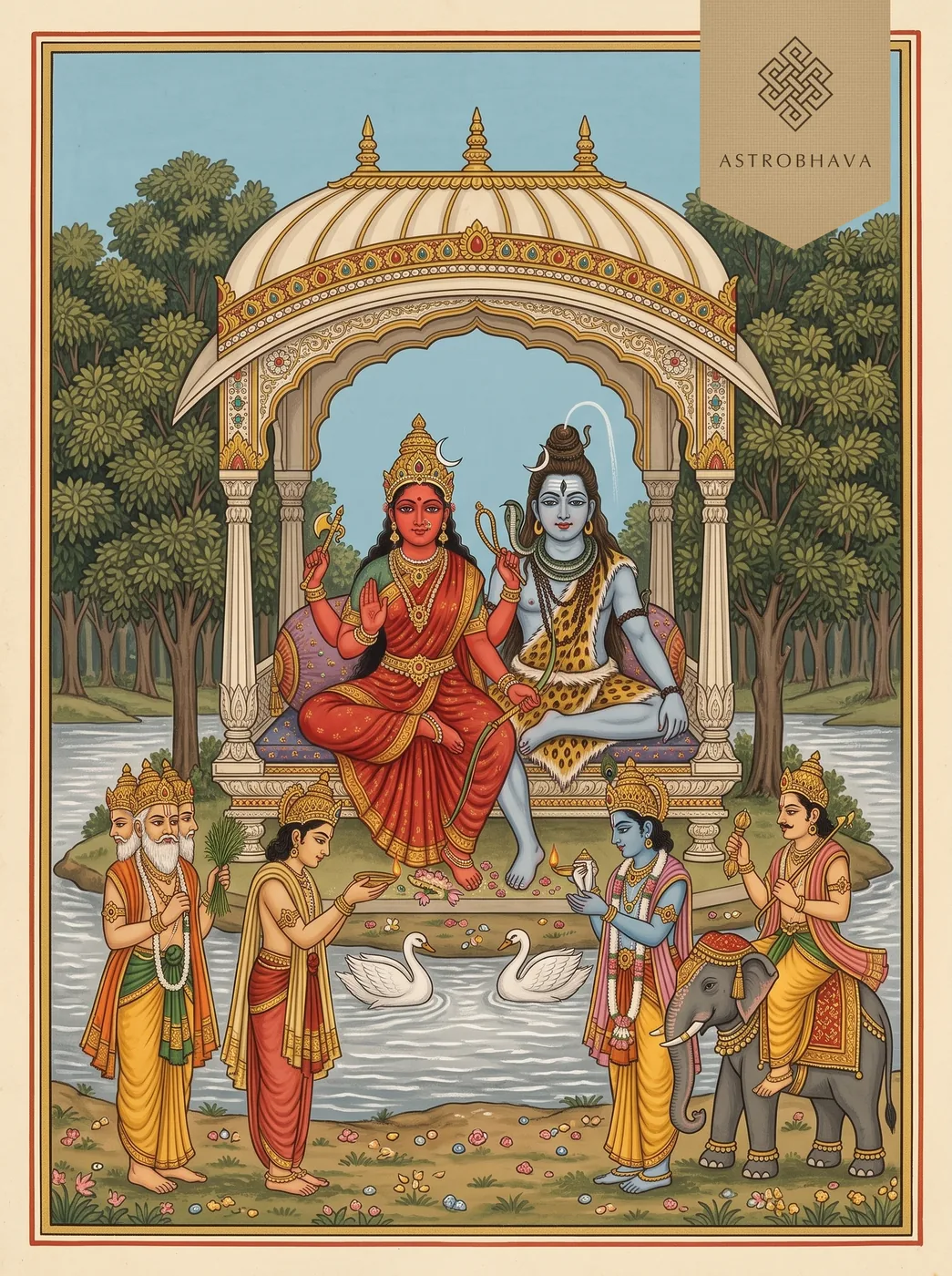
The Soundarya Lahari, 'the wave of beauty', is a hymn of one hundred Sanskrit verses addressed to the Goddess as the consort of Shiva, whom it calls the daughter of the snowy mountain, Bhagavati and Janani, Mother. Tradition attributes it to Adi Shankaracharya, and the whole hundred is composed in the shikharini metre. South Indian practice divides it in two. Verses 1 to 41, the Ananda Lahari or 'wave of bliss', open with the claim that Shiva cannot even stir unless joined with Shakti, then turn to her seat on the island of gems in the ocean of nectar, the syllables that make up her name, and her dance with the nine-fold Shiva in the Muladhara. Verses 42 to 100 describe her form in order, from the golden crown set with twelve suns to the feet that her house swans try to imitate. Verse 99 speaks of the worshipper, and verse 100 hands the hymn back to her as words that were hers already.
The manuscript torn in two at Kailasa
According to tradition, Shankara journeyed to Kailasa to worship Shiva and Parvati, and Shiva gave him a manuscript of one hundred verses on the Goddess. On the road back Nandi stopped him, tore the manuscript in two and kept one half. Shankara returned to Shiva with the loss and was told to keep the forty-one verses left in his hands and to compose the rest himself. His fifty-nine verses, 42 to 100, complete the hundred. The legend explains why the first part is often treated as received teaching and the second as Shankara's own poem, and why the two halves carry separate names. Accounts differ. Another tradition says Ganesha inscribed the first part on Mount Meru, and some name the gandharva Pushpadanta as its author; scholars still debate whether the Advaita teacher wrote it. Verse 75, on a child of the Dravida land who drank the Goddess's milk and became a poet among great poets, is read by some as Shankara's own signature and by others as a reference to the Tamil child-saint Tirujnanasambandar.
The mantra, in six scripts
- शिवः
- śivaḥ — Shiva
- शक्त्या
- śaktyā — with Shakti
- युक्तो
- yukto — joined
- यदि
- yadi — if
- भवति
- bhavati — becomes
- शक्तः
- śaktaḥ — able
- प्रभवितुं
- prabhavituṃ — to create
- न
- na — not
- चेदेवं
- cedevaṃ — if otherwise
- देवो
- devo — the god
- न
- na — not
- खलु
- khalu — indeed
- कुशलः
- kuśalaḥ — skilled
- स्पन्दितुमपि
- spanditumapi — even to stir
- अतस्त्वामाराध्यां
- atastvāmārādhyāṃ — therefore you, worthy of worship
- हरिहरविरिञ्चादिभिरपि
- hariharaviriñcādibhirapi — even by Vishnu, Shiva, Brahma and the rest
- प्रणन्तुं
- praṇantuṃ — to bow to
- स्तोतुं
- stotuṃ — to praise
- वा
- vā — or
- कथमकृतपुण्यः
- kathamakṛtapuṇyaḥ — how one without merit
- प्रभवति
- prabhavati — is able
Soundarya Lahari lyrics in full
One hundred verses in the shikharini metre, in the order chanted in South India: the Ananda Lahari (1 to 41) and the Soundarya Lahari (42 to 100).
All 100 verses, in Sanskrit, Tamil, Telugu, Kannada, Malayalam and English, each with its meaning. Choose a script:
Download the Soundarya Lahari PDFAll 100 verses with their meanings, in Sanskrit. Free to print and keep.
शिवः शक्त्या युक्तो यदि भवति शक्तः प्रभवितुं न चेदेवं देवो न खलु कुशलः स्पन्दितुमपि ।
अतस्त्वामाराध्यां हरिहरविरिञ्चादिभिरपि प्रणन्तुं स्तोतुं वा कथमकृतपुण्यः प्रभवति ॥
ஶிவஃ ஶக்த்யா யுக்தோ யதி பவதி ஶக்தஃ ப்ரபவிதும் ந சேதேவம் தேவோ ந கலு குஶலஃ ஸ்பந்திதுமபி ।
அதஸ்த்வாமாராத்யாம் ஹரிஹரவிரிஞ்சாதிபிரபி ப்ரணந்தும் ஸ்தோதும் வா கதமக்ருதபுண்யஃ ப்ரபவதி ॥
శివః శక్త్యా యుక్తో యది భవతి శక్తః ప్రభవితుం న చేదేవం దేవో న ఖలు కుశలః స్పన్దితుమపి ।
అతస్త్వామారాధ్యాం హరిహరవిరిఞ్చాదిభిరపి ప్రణన్తుం స్తోతుం వా కథమకృతపుణ్యః ప్రభవతి ॥
ಶಿವಃ ಶಕ್ತ್ಯಾ ಯುಕ್ತೋ ಯದಿ ಭವತಿ ಶಕ್ತಃ ಪ್ರಭವಿತುಂ ನ ಚೇದೇವಂ ದೇವೋ ನ ಖಲು ಕುಶಲಃ ಸ್ಪನ್ದಿತುಮಪಿ ।
ಅತಸ್ತ್ವಾಮಾರಾಧ್ಯಾಂ ಹರಿಹರವಿರಿಞ್ಚಾದಿಭಿರಪಿ ಪ್ರಣನ್ತುಂ ಸ್ತೋತುಂ ವಾ ಕಥಮಕೃತಪುಣ್ಯಃ ಪ್ರಭವತಿ ॥
ശിവഃ ശക്ത്യാ യുക്തോ യദി ഭവതി ശക്തഃ പ്രഭവിതും ന ചേദേവം ദേവോ ന ഖലു കുശലഃ സ്പന്ദിതുമപി ।
അതസ്ത്വാമാരാധ്യാം ഹരിഹരവിരിഞ്ചാദിഭിരപി പ്രണന്തും സ്തോതും വാ കഥമകൃതപുണ്യഃ പ്രഭവതി ॥
śivaḥ śaktyā yukto yadi bhavati śaktaḥ prabhavituṃ na cedevaṃ devo na khalu kuśalaḥ spanditumapi |
atastvāmārādhyāṃ hariharaviriñcādibhirapi praṇantuṃ stotuṃ vā kathamakṛtapuṇyaḥ prabhavati ||
Shiva, when joined with Shakti, is able to create; without her, the god cannot even stir. So how could anyone who has not earned merit bow to you or praise you, whom even Vishnu, Shiva and Brahma worship?
तनीयांसं पांसुं तव चरणपङ्केरुहभवं विरिञ्चिः संचिन्वन्विरचयति लोकानविकलम् ।
वहत्येनं शौरिः कथमपि सहस्रेण शिरसां हरः संक्षुद्यैनं भजति भसितोद्धूलनविधिम् ॥
தநீயாம்ஸம் பாம்ஸும் தவ சரணபங்கேருஹபவம் விரிஞ்சிஃ ஸம்சிந்வந்விரசயதி லோகாநவிகலம் ।
வஹத்யேநம் ஶௌரிஃ கதமபி ஸஹஸ்ரேண ஶிரஸாம் ஹரஃ ஸம்க்ஷுத்யைநம் பஜதி பஸிதோத்தூலநவிதிம் ॥
తనీయాంసం పాంసుం తవ చరణపఙ్కేరుహభవం విరిఞ్చిః సంచిన్వన్విరచయతి లోకానవికలమ్ ।
వహత్యేనం శౌరిః కథమపి సహస్రేణ శిరసాం హరః సంక్షుద్యైనం భజతి భసితోద్ధూలనవిధిమ్ ॥
ತನೀಯಾಂಸಂ ಪಾಂಸುಂ ತವ ಚರಣಪಙ್ಕೇರುಹಭವಂ ವಿರಿಞ್ಚಿಃ ಸಂಚಿನ್ವನ್ವಿರಚಯತಿ ಲೋಕಾನವಿಕಲಮ್ ।
ವಹತ್ಯೇನಂ ಶೌರಿಃ ಕಥಮಪಿ ಸಹಸ್ರೇಣ ಶಿರಸಾಂ ಹರಃ ಸಂಕ್ಷುದ್ಯೈನಂ ಭಜತಿ ಭಸಿತೋದ್ಧೂಲನವಿಧಿಮ್ ॥
തനീയാംസം പാംസും തവ ചരണപങ്കേരുഹഭവം വിരിഞ്ചിഃ സംചിന്വന്വിരചയതി ലോകാനവികലമ് ।
വഹത്യേനം ശൌരിഃ കഥമപി സഹസ്രേണ ശിരസാം ഹരഃ സംക്ഷുദ്യൈനം ഭജതി ഭസിതോദ്ധൂലനവിധിമ് ॥
tanīyāṃsaṃ pāṃsuṃ tava caraṇapaṅkeruhabhavaṃ viriñciḥ saṃcinvanviracayati lokānavikalam |
vahatyenaṃ śauriḥ kathamapi sahasreṇa śirasāṃ haraḥ saṃkṣudyainaṃ bhajati bhasitoddhūlanavidhim ||
Gathering a tiny speck of dust from your lotus feet, Brahma creates the worlds without flaw. Vishnu, as the thousand-headed serpent, carries that same speck with effort, and Shiva grinds it to powder and smears it on his body as sacred ash.
अविद्यानामन्तस्तिमिरमिहिरद्वीपनगरी जडानां चैतन्यस्तबकमकरन्दस्रुतिझरी ।
दरिद्राणां चिन्तामणिगुणनिका जन्मजलधौ निमग्नानां दंष्ट्रा मुररिपुवराहस्य भवति ॥
அவித்யாநாமந்தஸ்திமிரமிஹிரத்வீபநகரீ ஜடாநாம் சைதந்யஸ்தபகமகரந்தஸ்ருதிசரீ ।
தரித்ராணாம் சிந்தாமணிகுணநிகா ஜந்மஜலதௌ நிமக்நாநாம் தம்ஷ்ட்ரா முரரிபுவராஹஸ்ய பவதி ॥
అవిద్యానామన్తస్తిమిరమిహిరద్వీపనగరీ జడానాం చైతన్యస్తబకమకరన్దస్రుతిఝరీ ।
దరిద్రాణాం చిన్తామణిగుణనికా జన్మజలధౌ నిమగ్నానాం దంష్ట్రా మురరిపువరాహస్య భవతి ॥
ಅವಿದ್ಯಾನಾಮನ್ತಸ್ತಿಮಿರಮಿಹಿರದ್ವೀಪನಗರೀ ಜಡಾನಾಂ ಚೈತನ್ಯಸ್ತಬಕಮಕರನ್ದಸ್ರುತಿಝರೀ ।
ದರಿದ್ರಾಣಾಂ ಚಿನ್ತಾಮಣಿಗುಣನಿಕಾ ಜನ್ಮಜಲಧೌ ನಿಮಗ್ನಾನಾಂ ದಂಷ್ಟ್ರಾ ಮುರರಿಪುವರಾಹಸ್ಯ ಭವತಿ ॥
അവിദ്യാനാമന്തസ്തിമിരമിഹിരദ്വീപനഗരീ ജഡാനാം ചൈതന്യസ്തബകമകരന്ദസ്രുതിഝരീ ।
ദരിദ്രാണാം ചിന്താമണിഗുണനികാ ജന്മജലധൌ നിമഗ്നാനാം ദംഷ്ട്രാ മുരരിപുവരാഹസ്യ ഭവതി ॥
avidyānāmantastimiramihiradvīpanagarī jaḍānāṃ caitanyastabakamakarandasrutijharī |
daridrāṇāṃ cintāmaṇiguṇanikā janmajaladhau nimagnānāṃ daṃṣṭrā muraripuvarāhasya bhavati ||
For the ignorant, the dust of your feet is a city of the rising sun that ends inner darkness; for the dull, a stream of honey flowing from clusters of awareness. For the poor it is a string of wish-granting gems, and for those sunk in the ocean of birth it is the tusk of Vishnu as the boar.
त्वदन्यः पाणिभ्यामभयवरदो दैवतगणस्त्वमेका नैवासि प्रकटितवराभीत्यभिनया ।
भयात्त्रातुं दातुं फलमपि च वाञ्छासमधिकं शरण्ये लोकानां तव हि चरणावेव निपुणौ ॥
த்வதந்யஃ பாணிப்யாமபயவரதோ தைவதகணஸ்த்வமேகா நைவாஸி ப்ரகடிதவராபீத்யபிநயா ।
பயாத்த்ராதும் தாதும் பலமபி ச வாஞ்சாஸமதிகம் ஶரண்யே லோகாநாம் தவ ஹி சரணாவேவ நிபுணௌ ॥
త్వదన్యః పాణిభ్యామభయవరదో దైవతగణస్త్వమేకా నైవాసి ప్రకటితవరాభీత్యభినయా ।
భయాత్త్రాతుం దాతుం ఫలమపి చ వాఞ్ఛాసమధికం శరణ్యే లోకానాం తవ హి చరణావేవ నిపుణౌ ॥
ತ್ವದನ್ಯಃ ಪಾಣಿಭ್ಯಾಮಭಯವರದೋ ದೈವತಗಣಸ್ತ್ವಮೇಕಾ ನೈವಾಸಿ ಪ್ರಕಟಿತವರಾಭೀತ್ಯಭಿನಯಾ ।
ಭಯಾತ್ತ್ರಾತುಂ ದಾತುಂ ಫಲಮಪಿ ಚ ವಾಞ್ಛಾಸಮಧಿಕಂ ಶರಣ್ಯೇ ಲೋಕಾನಾಂ ತವ ಹಿ ಚರಣಾವೇವ ನಿಪುಣೌ ॥
ത്വദന്യഃ പാണിഭ്യാമഭയവരദോ ദൈവതഗണസ്ത്വമേകാ നൈവാസി പ്രകടിതവരാഭീത്യഭിനയാ ।
ഭയാത്ത്രാതും ദാതും ഫലമപി ച വാഞ്ഛാസമധികം ശരണ്യേ ലോകാനാം തവ ഹി ചരണാവേവ നിപുണൌ ॥
tvadanyaḥ pāṇibhyāmabhayavarado daivatagaṇastvamekā naivāsi prakaṭitavarābhītyabhinayā |
bhayāttrātuṃ dātuṃ phalamapi ca vāñchāsamadhikaṃ śaraṇye lokānāṃ tava hi caraṇāveva nipuṇau ||
The other gods show the gestures of protection and boon with their hands; you alone make no such gesture. For your feet by themselves, O refuge of the worlds, are able to save from fear and to give more than one wishes for.
हरिस्त्वामाराध्य प्रणतजनसौभाग्यजननीं पुरा नारी भूत्वा पुररिपुमपि क्षोभमनयत् ।
स्मरोऽपि त्वां नत्वा रतिनयनलेह्येन वपुषा मुनीनामप्यन्तः प्रभवति हि मोहाय महताम् ॥
ஹரிஸ்த்வாமாராத்ய ப்ரணதஜநஸௌபாக்யஜநநீம் புரா நாரீ பூத்வா புரரிபுமபி க்ஷோபமநயத் ।
ஸ்மரோபி த்வாம் நத்வா ரதிநயநலேஹ்யேந வபுஷா முநீநாமப்யந்தஃ ப்ரபவதி ஹி மோஹாய மஹதாம் ॥
హరిస్త్వామారాధ్య ప్రణతజనసౌభాగ్యజననీం పురా నారీ భూత్వా పురరిపుమపి క్షోభమనయత్ ।
స్మరోఽపి త్వాం నత్వా రతినయనలేహ్యేన వపుషా మునీనామప్యన్తః ప్రభవతి హి మోహాయ మహతామ్ ॥
ಹರಿಸ್ತ್ವಾಮಾರಾಧ್ಯ ಪ್ರಣತಜನಸೌಭಾಗ್ಯಜನನೀಂ ಪುರಾ ನಾರೀ ಭೂತ್ವಾ ಪುರರಿಪುಮಪಿ ಕ್ಷೋಭಮನಯತ್ ।
ಸ್ಮರೋಽಪಿ ತ್ವಾಂ ನತ್ವಾ ರತಿನಯನಲೇಹ್ಯೇನ ವಪುಷಾ ಮುನೀನಾಮಪ್ಯನ್ತಃ ಪ್ರಭವತಿ ಹಿ ಮೋಹಾಯ ಮಹತಾಮ್ ॥
ഹരിസ്ത്വാമാരാധ്യ പ്രണതജനസൌഭാഗ്യജനനീം പുരാ നാരീ ഭൂത്വാ പുരരിപുമപി ക്ഷോഭമനയത് ।
സ്മരോഽപി ത്വാം നത്വാ രതിനയനലേഹ്യേന വപുഷാ മുനീനാമപ്യന്തഃ പ്രഭവതി ഹി മോഹായ മഹതാമ് ॥
haristvāmārādhya praṇatajanasaubhāgyajananīṃ purā nārī bhūtvā puraripumapi kṣobhamanayat |
smaro'pi tvāṃ natvā ratinayanalehyena vapuṣā munīnāmapyantaḥ prabhavati hi mohāya mahatām ||
Vishnu, having worshipped you who bring good fortune to those who bow, once became a woman and stirred even Shiva, the destroyer of the cities. Kama too, bowing to you, gained a body that delights the eyes of Rati, and with it he can bewilder even great sages.
धनुः पौष्पं मौर्वी मधुकरमयी पञ्च विशिखा वसन्तः सामन्तो मलयमरुदायोधनरथः ।
तथाप्येकः सर्वं हिमगिरिसुते कामपि कृपामपाङ्गात्ते लब्ध्वा जगदिदमनङ्गो विजयते ॥
தநுஃ பௌஷ்பம் மௌர்வீ மதுகரமயீ பஞ்ச விஶிகா வஸந்தஃ ஸாமந்தோ மலயமருதாயோதநரதஃ ।
ததாப்யேகஃ ஸர்வம் ஹிமகிரிஸுதே காமபி க்ருபாமபாங்காத்தே லப்த்வா ஜகதிதமநங்கோ விஜயதே ॥
ధనుః పౌష్పం మౌర్వీ మధుకరమయీ పఞ్చ విశిఖా వసన్తః సామన్తో మలయమరుదాయోధనరథః ।
తథాప్యేకః సర్వం హిమగిరిసుతే కామపి కృపామపాఙ్గాత్తే లబ్ధ్వా జగదిదమనఙ్గో విజయతే ॥
ಧನುಃ ಪೌಷ್ಪಂ ಮೌರ್ವೀ ಮಧುಕರಮಯೀ ಪಞ್ಚ ವಿಶಿಖಾ ವಸನ್ತಃ ಸಾಮನ್ತೋ ಮಲಯಮರುದಾಯೋಧನರಥಃ ।
ತಥಾಪ್ಯೇಕಃ ಸರ್ವಂ ಹಿಮಗಿರಿಸುತೇ ಕಾಮಪಿ ಕೃಪಾಮಪಾಙ್ಗಾತ್ತೇ ಲಬ್ಧ್ವಾ ಜಗದಿದಮನಙ್ಗೋ ವಿಜಯತೇ ॥
ധനുഃ പൌഷ്പം മൌര്വീ മധുകരമയീ പഞ്ച വിശിഖാ വസന്തഃ സാമന്തോ മലയമരുദായോധനരഥഃ ।
തഥാപ്യേകഃ സര്വം ഹിമഗിരിസുതേ കാമപി കൃപാമപാങ്ഗാത്തേ ലബ്ധ്വാ ജഗദിദമനങ്ഗോ വിജയതേ ॥
dhanuḥ pauṣpaṃ maurvī madhukaramayī pañca viśikhā vasantaḥ sāmanto malayamarudāyodhanarathaḥ |
tathāpyekaḥ sarvaṃ himagirisute kāmapi kṛpāmapāṅgātte labdhvā jagadidamanaṅgo vijayate ||
His bow is made of flowers, its string of bees, his arrows only five, spring is his ally and the breeze from the Malaya hills his chariot. Yet, daughter of the snowy mountain, the bodiless Kama conquers this whole world alone, having received some grace from the corner of your eye.
क्वणत्काञ्चीदामा करिकलभकुम्भस्तननता परिक्षीणा मध्ये परिणतशरच्चन्द्रवदना ।
धनुर्बाणान्पाशं सृणिमपि दधाना करतलैः पुरस्तादास्तां नः पुरमथितुराहोपुरुषिका ॥
க்வணத்காஞ்சீதாமா கரிகலபகும்பஸ்தநநதா பரிக்ஷீணா மத்யே பரிணதஶரச்சந்த்ரவதநா ।
தநுர்பாணாந்பாஶம் ஸ்ருணிமபி ததாநா கரதலைஃ புரஸ்தாதாஸ்தாம் நஃ புரமதிதுராஹோபுருஷிகா ॥
క్వణత్కాఞ్చీదామా కరికలభకుమ్భస్తననతా పరిక్షీణా మధ్యే పరిణతశరచ్చన్ద్రవదనా ।
ధనుర్బాణాన్పాశం సృణిమపి దధానా కరతలైః పురస్తాదాస్తాం నః పురమథితురాహోపురుషికా ॥
ಕ್ವಣತ್ಕಾಞ್ಚೀದಾಮಾ ಕರಿಕಲಭಕುಮ್ಭಸ್ತನನತಾ ಪರಿಕ್ಷೀಣಾ ಮಧ್ಯೇ ಪರಿಣತಶರಚ್ಚನ್ದ್ರವದನಾ ।
ಧನುರ್ಬಾಣಾನ್ಪಾಶಂ ಸೃಣಿಮಪಿ ದಧಾನಾ ಕರತಲೈಃ ಪುರಸ್ತಾದಾಸ್ತಾಂ ನಃ ಪುರಮಥಿತುರಾಹೋಪುರುಷಿಕಾ ॥
ക്വണത്കാഞ്ചീദാമാ കരികലഭകുമ്ഭസ്തനനതാ പരിക്ഷീണാ മധ്യേ പരിണതശരച്ചന്ദ്രവദനാ ।
ധനുര്ബാണാന്പാശം സൃണിമപി ദധാനാ കരതലൈഃ പുരസ്താദാസ്താം നഃ പുരമഥിതുരാഹോപുരുഷികാ ॥
kvaṇatkāñcīdāmā karikalabhakumbhastananatā parikṣīṇā madhye pariṇataśaraccandravadanā |
dhanurbāṇānpāśaṃ sṛṇimapi dadhānā karatalaiḥ purastādāstāṃ naḥ puramathiturāhopuruṣikā ||
With a jingling girdle, bending under breasts like the temples of a young elephant, slender at the waist, with a face like the full autumn moon, holding bow, arrows, noose and goad in her hands: may she, the proud self of Shiva who destroyed the cities, stand before us.
सुधासिन्धोर्मध्ये सुरविटपिवाटीपरिवृते मणिद्वीपे नीपोपवनवति चिन्तामणिगृहे ।
शिवाकारे मञ्चे परमशिवपर्यङ्कनिलयां भजन्ति त्वां धन्याः कतिचन चिदानन्दलहरीम् ॥
ஸுதாஸிந்தோர்மத்யே ஸுரவிடபிவாடீபரிவ்ருதே மணித்வீபே நீபோபவநவதி சிந்தாமணிக்ருஹே ।
ஶிவாகாரே மஞ்சே பரமஶிவபர்யங்கநிலயாம் பஜந்தி த்வாம் தந்யாஃ கதிசந சிதாநந்தலஹரீம் ॥
సుధాసిన్ధోర్మధ్యే సురవిటపివాటీపరివృతే మణిద్వీపే నీపోపవనవతి చిన్తామణిగృహే ।
శివాకారే మఞ్చే పరమశివపర్యఙ్కనిలయాం భజన్తి త్వాం ధన్యాః కతిచన చిదానన్దలహరీమ్ ॥
ಸುಧಾಸಿನ್ಧೋರ್ಮಧ್ಯೇ ಸುರವಿಟಪಿವಾಟೀಪರಿವೃತೇ ಮಣಿದ್ವೀಪೇ ನೀಪೋಪವನವತಿ ಚಿನ್ತಾಮಣಿಗೃಹೇ ।
ಶಿವಾಕಾರೇ ಮಞ್ಚೇ ಪರಮಶಿವಪರ್ಯಙ್ಕನಿಲಯಾಂ ಭಜನ್ತಿ ತ್ವಾಂ ಧನ್ಯಾಃ ಕತಿಚನ ಚಿದಾನನ್ದಲಹರೀಮ್ ॥
സുധാസിന്ധോര്മധ്യേ സുരവിടപിവാടീപരിവൃതേ മണിദ്വീപേ നീപോപവനവതി ചിന്താമണിഗൃഹേ ।
ശിവാകാരേ മഞ്ചേ പരമശിവപര്യങ്കനിലയാം ഭജന്തി ത്വാം ധന്യാഃ കതിചന ചിദാനന്ദലഹരീമ് ॥
sudhāsindhormadhye suraviṭapivāṭīparivṛte maṇidvīpe nīpopavanavati cintāmaṇigṛhe |
śivākāre mañce paramaśivaparyaṅkanilayāṃ bhajanti tvāṃ dhanyāḥ katicana cidānandalaharīm ||
In the middle of the ocean of nectar, on the island of gems ringed by heavenly trees, in a grove of kadamba trees, in a mansion of wish-granting stones, on a couch shaped as Shiva with Paramashiva as its cushion: few and blessed are those who worship you there, a wave of consciousness and bliss.
महीं मूलाधारे कमपि मणिपूरे हुतवहं स्थितं स्वाधिष्ठाने हृदि मरुतमाकाशमुपरि ।
मनोऽपि भ्रूमध्ये सकलमपि भित्त्वा कुलपथं सहस्रारे पद्मे सह रहसि पत्या विहरसे ॥
மஹீம் மூலாதாரே கமபி மணிபூரே ஹுதவஹம் ஸ்திதம் ஸ்வாதிஷ்டாநே ஹ்ருதி மருதமாகாஶமுபரி ।
மநோபி ப்ரூமத்யே ஸகலமபி பித்த்வா குலபதம் ஸஹஸ்ராரே பத்மே ஸஹ ரஹஸி பத்யா விஹரஸே ॥
మహీం మూలాధారే కమపి మణిపూరే హుతవహం స్థితం స్వాధిష్ఠానే హృది మరుతమాకాశముపరి ।
మనోఽపి భ్రూమధ్యే సకలమపి భిత్త్వా కులపథం సహస్రారే పద్మే సహ రహసి పత్యా విహరసే ॥
ಮಹೀಂ ಮೂಲಾಧಾರೇ ಕಮಪಿ ಮಣಿಪೂರೇ ಹುತವಹಂ ಸ್ಥಿತಂ ಸ್ವಾಧಿಷ್ಠಾನೇ ಹೃದಿ ಮರುತಮಾಕಾಶಮುಪರಿ ।
ಮನೋಽಪಿ ಭ್ರೂಮಧ್ಯೇ ಸಕಲಮಪಿ ಭಿತ್ತ್ವಾ ಕುಲಪಥಂ ಸಹಸ್ರಾರೇ ಪದ್ಮೇ ಸಹ ರಹಸಿ ಪತ್ಯಾ ವಿಹರಸೇ ॥
മഹീം മൂലാധാരേ കമപി മണിപൂരേ ഹുതവഹം സ്ഥിതം സ്വാധിഷ്ഠാനേ ഹൃദി മരുതമാകാശമുപരി ।
മനോഽപി ഭ്രൂമധ്യേ സകലമപി ഭിത്ത്വാ കുലപഥം സഹസ്രാരേ പദ്മേ സഹ രഹസി പത്യാ വിഹരസേ ॥
mahīṃ mūlādhāre kamapi maṇipūre hutavahaṃ sthitaṃ svādhiṣṭhāne hṛdi marutamākāśamupari |
mano'pi bhrūmadhye sakalamapi bhittvā kulapathaṃ sahasrāre padme saha rahasi patyā viharase ||
You pierce earth at the Muladhara, water at the Manipura, fire at the Svadhishthana, air at the heart, space above it and mind between the brows. Having broken through the whole path of the Kula, you sport in secret with your consort in the thousand-petalled lotus.
सुधाधारासारैश्चरणयुगलान्तर्विगलितैः प्रपञ्चं सिञ्चन्ती पुनरपि रसाम्नायमहसः ।
अवाप्य स्वां भूमिं भुजगनिभमध्युष्टवलयं स्वमात्मानं कृत्वा स्वपिषि कुलकुण्डे कुहरिणि ॥
ஸுதாதாராஸாரைஶ்சரணயுகலாந்தர்விகலிதைஃ ப்ரபஞ்சம் ஸிஞ்சந்தீ புநரபி ரஸாம்நாயமஹஸஃ ।
அவாப்ய ஸ்வாம் பூமிம் புஜகநிபமத்யுஷ்டவலயம் ஸ்வமாத்மாநம் க்ருத்வா ஸ்வபிஷி குலகுண்டே குஹரிணி ॥
సుధాధారాసారైశ్చరణయుగలాన్తర్విగలితైః ప్రపఞ్చం సిఞ్చన్తీ పునరపి రసామ్నాయమహసః ।
అవాప్య స్వాం భూమిం భుజగనిభమధ్యుష్టవలయం స్వమాత్మానం కృత్వా స్వపిషి కులకుణ్డే కుహరిణి ॥
ಸುಧಾಧಾರಾಸಾರೈಶ್ಚರಣಯುಗಲಾನ್ತರ್ವಿಗಲಿತೈಃ ಪ್ರಪಞ್ಚಂ ಸಿಞ್ಚನ್ತೀ ಪುನರಪಿ ರಸಾಮ್ನಾಯಮಹಸಃ ।
ಅವಾಪ್ಯ ಸ್ವಾಂ ಭೂಮಿಂ ಭುಜಗನಿಭಮಧ್ಯುಷ್ಟವಲಯಂ ಸ್ವಮಾತ್ಮಾನಂ ಕೃತ್ವಾ ಸ್ವಪಿಷಿ ಕುಲಕುಣ್ಡೇ ಕುಹರಿಣಿ ॥
സുധാധാരാസാരൈശ്ചരണയുഗലാന്തര്വിഗലിതൈഃ പ്രപഞ്ചം സിഞ്ചന്തീ പുനരപി രസാമ്നായമഹസഃ ।
അവാപ്യ സ്വാം ഭൂമിം ഭുജഗനിഭമധ്യുഷ്ടവലയം സ്വമാത്മാനം കൃത്വാ സ്വപിഷി കുലകുണ്ഡേ കുഹരിണി ॥
sudhādhārāsāraiścaraṇayugalāntarvigalitaiḥ prapañcaṃ siñcantī punarapi rasāmnāyamahasaḥ |
avāpya svāṃ bhūmiṃ bhujaganibhamadhyuṣṭavalayaṃ svamātmānaṃ kṛtvā svapiṣi kulakuṇḍe kuhariṇi ||
With streams of nectar flowing from between your feet you drench the whole body again, coming from the radiance of the moon. Then you return to your own place, take the form of a serpent coiled in three and a half turns, and sleep in the hollow of the Kula-kunda.
चतुर्भिः श्रीकण्ठैः शिवयुवतिभिः पञ्चभिरपि प्रभिन्नाभिः शम्भोर्नवभिरपि मूलप्रकृतिभिः ।
चतुश्चत्वारिंशद्वसुदलकलाश्रत्रिवलयत्रिरेखाभिः सार्धं तव शरणकोणाः परिणताः ॥
சதுர்பிஃ ஶ்ரீகண்டைஃ ஶிவயுவதிபிஃ பஞ்சபிரபி ப்ரபிந்நாபிஃ ஶம்போர்நவபிரபி மூலப்ரக்ருதிபிஃ ।
சதுஶ்சத்வாரிம்ஶத்வஸுதலகலாஶ்ரத்ரிவலயத்ரிரேகாபிஃ ஸார்தம் தவ ஶரணகோணாஃ பரிணதாஃ ॥
చతుర్భిః శ్రీకణ్ఠైః శివయువతిభిః పఞ్చభిరపి ప్రభిన్నాభిః శమ్భోర్నవభిరపి మూలప్రకృతిభిః ।
చతుశ్చత్వారింశద్వసుదలకలాశ్రత్రివలయత్రిరేఖాభిః సార్ధం తవ శరణకోణాః పరిణతాః ॥
ಚತುರ್ಭಿಃ ಶ್ರೀಕಣ್ಠೈಃ ಶಿವಯುವತಿಭಿಃ ಪಞ್ಚಭಿರಪಿ ಪ್ರಭಿನ್ನಾಭಿಃ ಶಮ್ಭೋರ್ನವಭಿರಪಿ ಮೂಲಪ್ರಕೃತಿಭಿಃ ।
ಚತುಶ್ಚತ್ವಾರಿಂಶದ್ವಸುದಲಕಲಾಶ್ರತ್ರಿವಲಯತ್ರಿರೇಖಾಭಿಃ ಸಾರ್ಧಂ ತವ ಶರಣಕೋಣಾಃ ಪರಿಣತಾಃ ॥
ചതുര്ഭിഃ ശ്രീകണ്ഠൈഃ ശിവയുവതിഭിഃ പഞ്ചഭിരപി പ്രഭിന്നാഭിഃ ശമ്ഭോര്നവഭിരപി മൂലപ്രകൃതിഭിഃ ।
ചതുശ്ചത്വാരിംശദ്വസുദലകലാശ്രത്രിവലയത്രിരേഖാഭിഃ സാര്ധം തവ ശരണകോണാഃ പരിണതാഃ ॥
caturbhiḥ śrīkaṇṭhaiḥ śivayuvatibhiḥ pañcabhirapi prabhinnābhiḥ śambhornavabhirapi mūlaprakṛtibhiḥ |
catuścatvāriṃśadvasudalakalāśratrivalayatrirekhābhiḥ sārdhaṃ tava śaraṇakoṇāḥ pariṇatāḥ ||
With four Shiva triangles and five Shakti triangles distinct from Shiva, the nine root forms of nature, your dwelling unfolds into forty-four angles, together with the eight-petalled and sixteen-petalled lotuses, the three circles and the three lines.
त्वदीयं सौन्दर्यं तुहिनगिरिकन्ये तुलयितुं कवीन्द्राः कल्पन्ते कथमपि विरिञ्चिप्रभृतयः ।
यदालोकौत्सुक्यादमरललना यान्ति मनसा तपोभिर्दुष्प्रापामपि गिरिशसायुज्यपदवीम् ॥
த்வதீயம் ஸௌந்தர்யம் துஹிநகிரிகந்யே துலயிதும் கவீந்த்ராஃ கல்பந்தே கதமபி விரிஞ்சிப்ரப்ருதயஃ ।
யதாலோகௌத்ஸுக்யாதமரலலநா யாந்தி மநஸா தபோபிர்துஷ்ப்ராபாமபி கிரிஶஸாயுஜ்யபதவீம் ॥
త్వదీయం సౌన్దర్యం తుహినగిరికన్యే తులయితుం కవీన్ద్రాః కల్పన్తే కథమపి విరిఞ్చిప్రభృతయః ।
యదాలోకౌత్సుక్యాదమరలలనా యాన్తి మనసా తపోభిర్దుష్ప్రాపామపి గిరిశసాయుజ్యపదవీమ్ ॥
ತ್ವದೀಯಂ ಸೌನ್ದರ್ಯಂ ತುಹಿನಗಿರಿಕನ್ಯೇ ತುಲಯಿತುಂ ಕವೀನ್ದ್ರಾಃ ಕಲ್ಪನ್ತೇ ಕಥಮಪಿ ವಿರಿಞ್ಚಿಪ್ರಭೃತಯಃ ।
ಯದಾಲೋಕೌತ್ಸುಕ್ಯಾದಮರಲಲನಾ ಯಾನ್ತಿ ಮನಸಾ ತಪೋಭಿರ್ದುಷ್ಪ್ರಾಪಾಮಪಿ ಗಿರಿಶಸಾಯುಜ್ಯಪದವೀಮ್ ॥
ത്വദീയം സൌന്ദര്യം തുഹിനഗിരികന്യേ തുലയിതും കവീന്ദ്രാഃ കല്പന്തേ കഥമപി വിരിഞ്ചിപ്രഭൃതയഃ ।
യദാലോകൌത്സുക്യാദമരലലനാ യാന്തി മനസാ തപോഭിര്ദുഷ്പ്രാപാമപി ഗിരിശസായുജ്യപദവീമ് ॥
tvadīyaṃ saundaryaṃ tuhinagirikanye tulayituṃ kavīndrāḥ kalpante kathamapi viriñciprabhṛtayaḥ |
yadālokautsukyādamaralalanā yānti manasā tapobhirduṣprāpāmapi giriśasāyujyapadavīm ||
Even the best of poets, Brahma and the rest, struggle to find any comparison for your beauty, daughter of the snowy mountain. Longing to see it, the women of heaven reach in their minds the state of union with Shiva that is hard to win even by austerity.
नरं वर्षीयांसं नयनविरसं नर्मसु जडं तवापाङ्गालोके पतितमनुधावन्ति शतशः ।
गलद्वेणीबन्धाः कुचकलशविस्रस्तसिचया हठात्त्रुट्यत्काञ्च्यो विगलितदुकूला युवतयः ॥
நரம் வர்ஷீயாம்ஸம் நயநவிரஸம் நர்மஸு ஜடம் தவாபாங்காலோகே பதிதமநுதாவந்தி ஶதஶஃ ।
கலத்வேணீபந்தாஃ குசகலஶவிஸ்ரஸ்தஸிசயா ஹடாத்த்ருட்யத்காஞ்ச்யோ விகலிததுகூலா யுவதயஃ ॥
నరం వర్షీయాంసం నయనవిరసం నర్మసు జడం తవాపాఙ్గాలోకే పతితమనుధావన్తి శతశః ।
గలద్వేణీబన్ధాః కుచకలశవిస్రస్తసిచయా హఠాత్త్రుట్యత్కాఞ్చ్యో విగలితదుకూలా యువతయః ॥
ನರಂ ವರ್ಷೀಯಾಂಸಂ ನಯನವಿರಸಂ ನರ್ಮಸು ಜಡಂ ತವಾಪಾಙ್ಗಾಲೋಕೇ ಪತಿತಮನುಧಾವನ್ತಿ ಶತಶಃ ।
ಗಲದ್ವೇಣೀಬನ್ಧಾಃ ಕುಚಕಲಶವಿಸ್ರಸ್ತಸಿಚಯಾ ಹಠಾತ್ತ್ರುಟ್ಯತ್ಕಾಞ್ಚ್ಯೋ ವಿಗಲಿತದುಕೂಲಾ ಯುವತಯಃ ॥
നരം വര്ഷീയാംസം നയനവിരസം നര്മസു ജഡം തവാപാങ്ഗാലോകേ പതിതമനുധാവന്തി ശതശഃ ।
ഗലദ്വേണീബന്ധാഃ കുചകലശവിസ്രസ്തസിചയാ ഹഠാത്ത്രുട്യത്കാഞ്ച്യോ വിഗലിതദുകൂലാ യുവതയഃ ॥
naraṃ varṣīyāṃsaṃ nayanavirasaṃ narmasu jaḍaṃ tavāpāṅgāloke patitamanudhāvanti śataśaḥ |
galadveṇībandhāḥ kucakalaśavisrastasicayā haṭhāttruṭyatkāñcyo vigalitadukūlā yuvatayaḥ ||
When your sidelong glance falls even on an old man, ugly to look at and dull in love, young women run after him by the hundreds, their braids loosening, their garments slipping from their breasts, their girdles snapping and silks falling away.
क्षितौ षट्पञ्चाशद्द्विसमधिकपञ्चाशदुदके हुताशे द्वाषष्टिश्चतुरधिकपञ्चाशदनिले ।
दिवि द्विःषट्त्रिंशन्मनसि च चतुःषष्टिरिति ये मयूखास्तेषामप्युपरि तव पादाम्बुजयुगम् ॥
க்ஷிதௌ ஷட்பஞ்சாஶத்த்விஸமதிகபஞ்சாஶதுதகே ஹுதாஶே த்வாஷஷ்டிஶ்சதுரதிகபஞ்சாஶதநிலே ।
திவி த்விஃஷட்த்ரிம்ஶந்மநஸி ச சதுஃஷஷ்டிரிதி யே மயூகாஸ்தேஷாமப்யுபரி தவ பாதாம்புஜயுகம் ॥
క్షితౌ షట్పఞ్చాశద్ద్విసమధికపఞ్చాశదుదకే హుతాశే ద్వాషష్టిశ్చతురధికపఞ్చాశదనిలే ।
దివి ద్విఃషట్త్రింశన్మనసి చ చతుఃషష్టిరితి యే మయూఖాస్తేషామప్యుపరి తవ పాదామ్బుజయుగమ్ ॥
ಕ್ಷಿತೌ ಷಟ್ಪಞ್ಚಾಶದ್ದ್ವಿಸಮಧಿಕಪಞ್ಚಾಶದುದಕೇ ಹುತಾಶೇ ದ್ವಾಷಷ್ಟಿಶ್ಚತುರಧಿಕಪಞ್ಚಾಶದನಿಲೇ ।
ದಿವಿ ದ್ವಿಃಷಟ್ತ್ರಿಂಶನ್ಮನಸಿ ಚ ಚತುಃಷಷ್ಟಿರಿತಿ ಯೇ ಮಯೂಖಾಸ್ತೇಷಾಮಪ್ಯುಪರಿ ತವ ಪಾದಾಮ್ಬುಜಯುಗಮ್ ॥
ക്ഷിതൌ ഷട്പഞ്ചാശദ്ദ്വിസമധികപഞ്ചാശദുദകേ ഹുതാശേ ദ്വാഷഷ്ടിശ്ചതുരധികപഞ്ചാശദനിലേ ।
ദിവി ദ്വിഃഷട്ത്രിംശന്മനസി ച ചതുഃഷഷ്ടിരിതി യേ മയൂഖാസ്തേഷാമപ്യുപരി തവ പാദാമ്ബുജയുഗമ് ॥
kṣitau ṣaṭpañcāśaddvisamadhikapañcāśadudake hutāśe dvāṣaṣṭiścaturadhikapañcāśadanile |
divi dviḥṣaṭtriṃśanmanasi ca catuḥṣaṣṭiriti ye mayūkhāsteṣāmapyupari tava pādāmbujayugam ||
There are fifty-six rays in earth, fifty-two in water, sixty-two in fire, fifty-four in air, seventy-two in space and sixty-four in mind; above all these rays are your two lotus feet.
शरज्ज्योत्स्नाशुद्धां शशियुतजटाजूटमकुटां वरत्रासत्राणस्फटिकघटिकापुस्तककराम् ।
सकृन्न त्वा नत्वा कथमिव सतां संनिदधते मधुक्षीरद्राक्षामधुरिमधुरीणा भणितयः ॥
ஶரஜ்ஜ்யோத்ஸ்நாஶுத்தாம் ஶஶியுதஜடாஜூடமகுடாம் வரத்ராஸத்ராணஸ்படிககடிகாபுஸ்தககராம் ।
ஸக்ருந்ந த்வா நத்வா கதமிவ ஸதாம் ஸம்நிதததே மதுக்ஷீரத்ராக்ஷாமதுரிமதுரீணா பணிதயஃ ॥
శరజ్జ్యోత్స్నాశుద్ధాం శశియుతజటాజూటమకుటాం వరత్రాసత్రాణస్ఫటికఘటికాపుస్తకకరామ్ ।
సకృన్న త్వా నత్వా కథమివ సతాం సంనిదధతే మధుక్షీరద్రాక్షామధురిమధురీణా భణితయః ॥
ಶರಜ್ಜ್ಯೋತ್ಸ್ನಾಶುದ್ಧಾಂ ಶಶಿಯುತಜಟಾಜೂಟಮಕುಟಾಂ ವರತ್ರಾಸತ್ರಾಣಸ್ಫಟಿಕಘಟಿಕಾಪುಸ್ತಕಕರಾಮ್ ।
ಸಕೃನ್ನ ತ್ವಾ ನತ್ವಾ ಕಥಮಿವ ಸತಾಂ ಸಂನಿದಧತೇ ಮಧುಕ್ಷೀರದ್ರಾಕ್ಷಾಮಧುರಿಮಧುರೀಣಾ ಭಣಿತಯಃ ॥
ശരജ്ജ്യോത്സ്നാശുദ്ധാം ശശിയുതജടാജൂടമകുടാം വരത്രാസത്രാണസ്ഫടികഘടികാപുസ്തകകരാമ് ।
സകൃന്ന ത്വാ നത്വാ കഥമിവ സതാം സംനിദധതേ മധുക്ഷീരദ്രാക്ഷാമധുരിമധുരീണാ ഭണിതയഃ ॥
śarajjyotsnāśuddhāṃ śaśiyutajaṭājūṭamakuṭāṃ varatrāsatrāṇasphaṭikaghaṭikāpustakakarām |
sakṛnna tvā natvā kathamiva satāṃ saṃnidadhate madhukṣīradrākṣāmadhurimadhurīṇā bhaṇitayaḥ ||
How could those who have bowed to you even once, white as autumn moonlight, wearing the moon in your matted hair, holding boon and refuge gestures, a crystal rosary and a book, fail to be graced with speech as sweet as honey, milk and grapes? The verse says such speech comes to them.
कवीन्द्राणां चेतःकमलवनबालातपरुचिं भजन्ते ये सन्तः कतिचिदरुणामेव भवतीम् ।
विरिञ्चिप्रेयस्यास्तरुणतरशृङ्गारलहरीगभीराभिर्वाग्भिर्विदधति सतां रञ्जनममी ॥
கவீந்த்ராணாம் சேதஃகமலவநபாலாதபருசிம் பஜந்தே யே ஸந்தஃ கதிசிதருணாமேவ பவதீம் ।
விரிஞ்சிப்ரேயஸ்யாஸ்தருணதரஶ்ருங்காரலஹரீகபீராபிர்வாக்பிர்விதததி ஸதாம் ரஞ்ஜநமமீ ॥
కవీన్ద్రాణాం చేతఃకమలవనబాలాతపరుచిం భజన్తే యే సన్తః కతిచిదరుణామేవ భవతీమ్ ।
విరిఞ్చిప్రేయస్యాస్తరుణతరశృఙ్గారలహరీగభీరాభిర్వాగ్భిర్విదధతి సతాం రఞ్జనమమీ ॥
ಕವೀನ್ದ್ರಾಣಾಂ ಚೇತಃಕಮಲವನಬಾಲಾತಪರುಚಿಂ ಭಜನ್ತೇ ಯೇ ಸನ್ತಃ ಕತಿಚಿದರುಣಾಮೇವ ಭವತೀಮ್ ।
ವಿರಿಞ್ಚಿಪ್ರೇಯಸ್ಯಾಸ್ತರುಣತರಶೃಙ್ಗಾರಲಹರೀಗಭೀರಾಭಿರ್ವಾಗ್ಭಿರ್ವಿದಧತಿ ಸತಾಂ ರಞ್ಜನಮಮೀ ॥
കവീന്ദ്രാണാം ചേതഃകമലവനബാലാതപരുചിം ഭജന്തേ യേ സന്തഃ കതിചിദരുണാമേവ ഭവതീമ് ।
വിരിഞ്ചിപ്രേയസ്യാസ്തരുണതരശൃങ്ഗാരലഹരീഗഭീരാഭിര്വാഗ്ഭിര്വിദധതി സതാം രഞ്ജനമമീ ॥
kavīndrāṇāṃ cetaḥkamalavanabālātaparuciṃ bhajante ye santaḥ katicidaruṇāmeva bhavatīm |
viriñcipreyasyāstaruṇataraśṛṅgāralaharīgabhīrābhirvāgbhirvidadhati satāṃ rañjanamamī ||
Those good souls who worship you as the rose-red Aruna, morning sunlight to the lotus-forest of the minds of great poets, delight the wise with words as deep as the waves of the youthful grace of Saraswati.
सवित्रीभिर्वाचां शशिमणिशिलाभङ्गरुचिभिर्वशिन्याद्याभिस्त्वां सह जननि संचिन्तयति यः ।
स कर्ता काव्यानां भवति महतां भङ्गिरुचिभिर्वचोभिर्वाग्देवीवदनकमलामोदमधुरैः ॥
ஸவித்ரீபிர்வாசாம் ஶஶிமணிஶிலாபங்கருசிபிர்வஶிந்யாத்யாபிஸ்த்வாம் ஸஹ ஜநநி ஸம்சிந்தயதி யஃ ।
ஸ கர்தா காவ்யாநாம் பவதி மஹதாம் பங்கிருசிபிர்வசோபிர்வாக்தேவீவதநகமலாமோதமதுரைஃ ॥
సవిత్రీభిర్వాచాం శశిమణిశిలాభఙ్గరుచిభిర్వశిన్యాద్యాభిస్త్వాం సహ జనని సంచిన్తయతి యః ।
స కర్తా కావ్యానాం భవతి మహతాం భఙ్గిరుచిభిర్వచోభిర్వాగ్దేవీవదనకమలామోదమధురైః ॥
ಸವಿತ್ರೀಭಿರ್ವಾಚಾಂ ಶಶಿಮಣಿಶಿಲಾಭಙ್ಗರುಚಿಭಿರ್ವಶಿನ್ಯಾದ್ಯಾಭಿಸ್ತ್ವಾಂ ಸಹ ಜನನಿ ಸಂಚಿನ್ತಯತಿ ಯಃ ।
ಸ ಕರ್ತಾ ಕಾವ್ಯಾನಾಂ ಭವತಿ ಮಹತಾಂ ಭಙ್ಗಿರುಚಿಭಿರ್ವಚೋಭಿರ್ವಾಗ್ದೇವೀವದನಕಮಲಾಮೋದಮಧುರೈಃ ॥
സവിത്രീഭിര്വാചാം ശശിമണിശിലാഭങ്ഗരുചിഭിര്വശിന്യാദ്യാഭിസ്ത്വാം സഹ ജനനി സംചിന്തയതി യഃ ।
സ കര്താ കാവ്യാനാം ഭവതി മഹതാം ഭങ്ഗിരുചിഭിര്വചോഭിര്വാഗ്ദേവീവദനകമലാമോദമധുരൈഃ ॥
savitrībhirvācāṃ śaśimaṇiśilābhaṅgarucibhirvaśinyādyābhistvāṃ saha janani saṃcintayati yaḥ |
sa kartā kāvyānāṃ bhavati mahatāṃ bhaṅgirucibhirvacobhirvāgdevīvadanakamalāmodamadhuraiḥ ||
Whoever meditates on you, Mother, together with Vashini and the other goddesses who give birth to speech and shine like broken moonstone, the verse says becomes a maker of poems with the charm of the great, words fragrant as the lotus face of the goddess of speech.
तनुच्छायाभिस्ते तरुणतरणिश्रीसरणिभिर्दिवं सर्वामुर्वीमरुणिमनि मग्नां स्मरति यः ।
भवन्त्यस्य त्रस्यद्वनहरिणशालीननयनाः सहोर्वश्या वश्याः कति कति न गीर्वाणगणिकाः ॥
தநுச்சாயாபிஸ்தே தருணதரணிஶ்ரீஸரணிபிர்திவம் ஸர்வாமுர்வீமருணிமநி மக்நாம் ஸ்மரதி யஃ ।
பவந்த்யஸ்ய த்ரஸ்யத்வநஹரிணஶாலீநநயநாஃ ஸஹோர்வஶ்யா வஶ்யாஃ கதி கதி ந கீர்வாணகணிகாஃ ॥
తనుచ్ఛాయాభిస్తే తరుణతరణిశ్రీసరణిభిర్దివం సర్వాముర్వీమరుణిమని మగ్నాం స్మరతి యః ।
భవన్త్యస్య త్రస్యద్వనహరిణశాలీననయనాః సహోర్వశ్యా వశ్యాః కతి కతి న గీర్వాణగణికాః ॥
ತನುಚ್ಛಾಯಾಭಿಸ್ತೇ ತರುಣತರಣಿಶ್ರೀಸರಣಿಭಿರ್ದಿವಂ ಸರ್ವಾಮುರ್ವೀಮರುಣಿಮನಿ ಮಗ್ನಾಂ ಸ್ಮರತಿ ಯಃ ।
ಭವನ್ತ್ಯಸ್ಯ ತ್ರಸ್ಯದ್ವನಹರಿಣಶಾಲೀನನಯನಾಃ ಸಹೋರ್ವಶ್ಯಾ ವಶ್ಯಾಃ ಕತಿ ಕತಿ ನ ಗೀರ್ವಾಣಗಣಿಕಾಃ ॥
തനുച്ഛായാഭിസ്തേ തരുണതരണിശ്രീസരണിഭിര്ദിവം സര്വാമുര്വീമരുണിമനി മഗ്നാം സ്മരതി യഃ ।
ഭവന്ത്യസ്യ ത്രസ്യദ്വനഹരിണശാലീനനയനാഃ സഹോര്വശ്യാ വശ്യാഃ കതി കതി ന ഗീര്വാണഗണികാഃ ॥
tanucchāyābhiste taruṇataraṇiśrīsaraṇibhirdivaṃ sarvāmurvīmaruṇimani magnāṃ smarati yaḥ |
bhavantyasya trasyadvanahariṇaśālīnanayanāḥ sahorvaśyā vaśyāḥ kati kati na gīrvāṇagaṇikāḥ ||
Whoever remembers heaven and earth as drowned in the red glow of your body, bright as the young rising sun, the verse says, finds that many celestial courtesans, Urvashi among them, with eyes like startled forest deer, come under his sway.
मुखं बिन्दुं कृत्वा कुचयुगमधस्तस्य तदधो हरार्धं ध्यायेद्यो हरमहिषि ते मन्मथकलाम् ।
स सद्यः संक्षोभं नयति वनिता इत्यतिलघु त्रिलोकीमप्याशु भ्रमयति रवीन्दुस्तनयुगाम् ॥
முகம் பிந்தும் க்ருத்வா குசயுகமதஸ்தஸ்ய தததோ ஹரார்தம் த்யாயேத்யோ ஹரமஹிஷி தே மந்மதகலாம் ।
ஸ ஸத்யஃ ஸம்க்ஷோபம் நயதி வநிதா இத்யதிலகு த்ரிலோகீமப்யாஶு ப்ரமயதி ரவீந்துஸ்தநயுகாம் ॥
ముఖం బిన్దుం కృత్వా కుచయుగమధస్తస్య తదధో హరార్ధం ధ్యాయేద్యో హరమహిషి తే మన్మథకలామ్ ।
స సద్యః సంక్షోభం నయతి వనితా ఇత్యతిలఘు త్రిలోకీమప్యాశు భ్రమయతి రవీన్దుస్తనయుగామ్ ॥
ಮುಖಂ ಬಿನ್ದುಂ ಕೃತ್ವಾ ಕುಚಯುಗಮಧಸ್ತಸ್ಯ ತದಧೋ ಹರಾರ್ಧಂ ಧ್ಯಾಯೇದ್ಯೋ ಹರಮಹಿಷಿ ತೇ ಮನ್ಮಥಕಲಾಮ್ ।
ಸ ಸದ್ಯಃ ಸಂಕ್ಷೋಭಂ ನಯತಿ ವನಿತಾ ಇತ್ಯತಿಲಘು ತ್ರಿಲೋಕೀಮಪ್ಯಾಶು ಭ್ರಮಯತಿ ರವೀನ್ದುಸ್ತನಯುಗಾಮ್ ॥
മുഖം ബിന്ദും കൃത്വാ കുചയുഗമധസ്തസ്യ തദധോ ഹരാര്ധം ധ്യായേദ്യോ ഹരമഹിഷി തേ മന്മഥകലാമ് ।
സ സദ്യഃ സംക്ഷോഭം നയതി വനിതാ ഇത്യതിലഘു ത്രിലോകീമപ്യാശു ഭ്രമയതി രവീന്ദുസ്തനയുഗാമ് ॥
mukhaṃ binduṃ kṛtvā kucayugamadhastasya tadadho harārdhaṃ dhyāyedyo haramahiṣi te manmathakalām |
sa sadyaḥ saṃkṣobhaṃ nayati vanitā ityatilaghu trilokīmapyāśu bhramayati ravīndustanayugām ||
Whoever meditates on your form of desire, O queen of Shiva, placing the dot as the face, the two breasts beneath it and half of the Hara syllable below, the verse says quickly stirs women and even sets the three worlds, whose breasts are sun and moon, in a whirl.
किरन्तीमङ्गेभ्यः किरणनिकुरम्बामृतरसं हृदि त्वामाधत्ते हिमकरशिलामूर्तिमिव यः ।
स सर्पाणां दर्पं शमयति शकुन्ताधिप इव ज्वरप्लुष्टान्दृष्ट्या सुखयति सुधाधारसिरया ॥
கிரந்தீமங்கேப்யஃ கிரணநிகுரம்பாம்ருதரஸம் ஹ்ருதி த்வாமாதத்தே ஹிமகரஶிலாமூர்திமிவ யஃ ।
ஸ ஸர்பாணாம் தர்பம் ஶமயதி ஶகுந்தாதிப இவ ஜ்வரப்லுஷ்டாந்த்ருஷ்ட்யா ஸுகயதி ஸுதாதாரஸிரயா ॥
కిరన్తీమఙ్గేభ్యః కిరణనికురమ్బామృతరసం హృది త్వామాధత్తే హిమకరశిలామూర్తిమివ యః ।
స సర్పాణాం దర్పం శమయతి శకున్తాధిప ఇవ జ్వరప్లుష్టాన్దృష్ట్యా సుఖయతి సుధాధారసిరయా ॥
ಕಿರನ್ತೀಮಙ್ಗೇಭ್ಯಃ ಕಿರಣನಿಕುರಮ್ಬಾಮೃತರಸಂ ಹೃದಿ ತ್ವಾಮಾಧತ್ತೇ ಹಿಮಕರಶಿಲಾಮೂರ್ತಿಮಿವ ಯಃ ।
ಸ ಸರ್ಪಾಣಾಂ ದರ್ಪಂ ಶಮಯತಿ ಶಕುನ್ತಾಧಿಪ ಇವ ಜ್ವರಪ್ಲುಷ್ಟಾನ್ದೃಷ್ಟ್ಯಾ ಸುಖಯತಿ ಸುಧಾಧಾರಸಿರಯಾ ॥
കിരന്തീമങ്ഗേഭ്യഃ കിരണനികുരമ്ബാമൃതരസം ഹൃദി ത്വാമാധത്തേ ഹിമകരശിലാമൂര്തിമിവ യഃ ।
സ സര്പാണാം ദര്പം ശമയതി ശകുന്താധിപ ഇവ ജ്വരപ്ലുഷ്ടാന്ദൃഷ്ട്യാ സുഖയതി സുധാധാരസിരയാ ॥
kirantīmaṅgebhyaḥ kiraṇanikurambāmṛtarasaṃ hṛdi tvāmādhatte himakaraśilāmūrtimiva yaḥ |
sa sarpāṇāṃ darpaṃ śamayati śakuntādhipa iva jvarapluṣṭāndṛṣṭyā sukhayati sudhādhārasirayā ||
Whoever holds you in the heart as a figure of moonstone pouring nectar rays from every limb, the verse says, subdues the pride of serpents like Garuda and soothes those burning with fever by a glance that flows with nectar.
तटिल्लेखातन्वीं तपनशशिवैश्वानरमयीं निषण्णां षण्णामप्युपरि कमलानां तव कलाम् ।
महापद्माटव्यां मृदितमलमायेन मनसा महान्तः पश्यन्तो दधति परमाह्लादलहरीम् ॥
தடில்லேகாதந்வீம் தபநஶஶிவைஶ்வாநரமயீம் நிஷண்ணாம் ஷண்ணாமப்யுபரி கமலாநாம் தவ கலாம் ।
மஹாபத்மாடவ்யாம் ம்ருதிதமலமாயேந மநஸா மஹாந்தஃ பஶ்யந்தோ தததி பரமாஹ்லாதலஹரீம் ॥
తటిల్లేఖాతన్వీం తపనశశివైశ్వానరమయీం నిషణ్ణాం షణ్ణామప్యుపరి కమలానాం తవ కలామ్ ।
మహాపద్మాటవ్యాం మృదితమలమాయేన మనసా మహాన్తః పశ్యన్తో దధతి పరమాహ్లాదలహరీమ్ ॥
ತಟಿಲ್ಲೇಖಾತನ್ವೀಂ ತಪನಶಶಿವೈಶ್ವಾನರಮಯೀಂ ನಿಷಣ್ಣಾಂ ಷಣ್ಣಾಮಪ್ಯುಪರಿ ಕಮಲಾನಾಂ ತವ ಕಲಾಮ್ ।
ಮಹಾಪದ್ಮಾಟವ್ಯಾಂ ಮೃದಿತಮಲಮಾಯೇನ ಮನಸಾ ಮಹಾನ್ತಃ ಪಶ್ಯನ್ತೋ ದಧತಿ ಪರಮಾಹ್ಲಾದಲಹರೀಮ್ ॥
തടില്ലേഖാതന്വീം തപനശശിവൈശ്വാനരമയീം നിഷണ്ണാം ഷണ്ണാമപ്യുപരി കമലാനാം തവ കലാമ് ।
മഹാപദ്മാടവ്യാം മൃദിതമലമായേന മനസാ മഹാന്തഃ പശ്യന്തോ ദധതി പരമാഹ്ലാദലഹരീമ് ॥
taṭillekhātanvīṃ tapanaśaśivaiśvānaramayīṃ niṣaṇṇāṃ ṣaṇṇāmapyupari kamalānāṃ tava kalām |
mahāpadmāṭavyāṃ mṛditamalamāyena manasā mahāntaḥ paśyanto dadhati paramāhlādalaharīm ||
The great ones, with minds free of impurity and illusion, see your subtle form, thin as a streak of lightning, made of sun, moon and fire, seated above the six lotuses in the great lotus forest, and they hold a wave of supreme joy.
भवानि त्वं दासे मयि वितर दृष्टिं सकरुणामिति स्तोतुं वाञ्छन्कथयति भवानि त्वमिति यः ।
तदैव त्वं तस्मै दिशसि निजसायुज्यपदवीं मुकुन्दब्रह्मेन्द्रस्फुटमकुटनीराजितपदाम् ॥
பவாநி த்வம் தாஸே மயி விதர த்ருஷ்டிம் ஸகருணாமிதி ஸ்தோதும் வாஞ்சந்கதயதி பவாநி த்வமிதி யஃ ।
ததைவ த்வம் தஸ்மை திஶஸி நிஜஸாயுஜ்யபதவீம் முகுந்தப்ரஹ்மேந்த்ரஸ்புடமகுடநீராஜிதபதாம் ॥
భవాని త్వం దాసే మయి వితర దృష్టిం సకరుణామితి స్తోతుం వాఞ్ఛన్కథయతి భవాని త్వమితి యః ।
తదైవ త్వం తస్మై దిశసి నిజసాయుజ్యపదవీం ముకున్దబ్రహ్మేన్ద్రస్ఫుటమకుటనీరాజితపదామ్ ॥
ಭವಾನಿ ತ್ವಂ ದಾಸೇ ಮಯಿ ವಿತರ ದೃಷ್ಟಿಂ ಸಕರುಣಾಮಿತಿ ಸ್ತೋತುಂ ವಾಞ್ಛನ್ಕಥಯತಿ ಭವಾನಿ ತ್ವಮಿತಿ ಯಃ ।
ತದೈವ ತ್ವಂ ತಸ್ಮೈ ದಿಶಸಿ ನಿಜಸಾಯುಜ್ಯಪದವೀಂ ಮುಕುನ್ದಬ್ರಹ್ಮೇನ್ದ್ರಸ್ಫುಟಮಕುಟನೀರಾಜಿತಪದಾಮ್ ॥
ഭവാനി ത്വം ദാസേ മയി വിതര ദൃഷ്ടിം സകരുണാമിതി സ്തോതും വാഞ്ഛന്കഥയതി ഭവാനി ത്വമിതി യഃ ।
തദൈവ ത്വം തസ്മൈ ദിശസി നിജസായുജ്യപദവീം മുകുന്ദബ്രഹ്മേന്ദ്രസ്ഫുടമകുടനീരാജിതപദാമ് ॥
bhavāni tvaṃ dāse mayi vitara dṛṣṭiṃ sakaruṇāmiti stotuṃ vāñchankathayati bhavāni tvamiti yaḥ |
tadaiva tvaṃ tasmai diśasi nijasāyujyapadavīṃ mukundabrahmendrasphuṭamakuṭanīrājitapadām ||
If someone, wishing to pray 'Bhavani, cast your compassionate glance on me, your servant', has only said 'Bhavani, you', at that very moment you grant him union with you, the feet that are waved with lamps by the crowns of Vishnu, Brahma and Indra.
त्वया हृत्वा वामं वपुरपरितृप्तेन मनसा शरीरार्धं शंभोरपरमपि शङ्के हृतमभूत् ।
यदेतत्त्वद्रूपं सकलमरुणाभं त्रिनयनं कुचाभ्यामानम्रं कुटिलशशिचूडालमकुटम् ॥
த்வயா ஹ்ருத்வா வாமம் வபுரபரித்ருப்தேந மநஸா ஶரீரார்தம் ஶம்போரபரமபி ஶங்கே ஹ்ருதமபூத் ।
யதேதத்த்வத்ரூபம் ஸகலமருணாபம் த்ரிநயநம் குசாப்யாமாநம்ரம் குடிலஶஶிசூடாலமகுடம் ॥
త్వయా హృత్వా వామం వపురపరితృప్తేన మనసా శరీరార్ధం శంభోరపరమపి శఙ్కే హృతమభూత్ ।
యదేతత్త్వద్రూపం సకలమరుణాభం త్రినయనం కుచాభ్యామానమ్రం కుటిలశశిచూడాలమకుటమ్ ॥
ತ್ವಯಾ ಹೃತ್ವಾ ವಾಮಂ ವಪುರಪರಿತೃಪ್ತೇನ ಮನಸಾ ಶರೀರಾರ್ಧಂ ಶಂಭೋರಪರಮಪಿ ಶಙ್ಕೇ ಹೃತಮಭೂತ್ ।
ಯದೇತತ್ತ್ವದ್ರೂಪಂ ಸಕಲಮರುಣಾಭಂ ತ್ರಿನಯನಂ ಕುಚಾಭ್ಯಾಮಾನಮ್ರಂ ಕುಟಿಲಶಶಿಚೂಡಾಲಮಕುಟಮ್ ॥
ത്വയാ ഹൃത്വാ വാമം വപുരപരിതൃപ്തേന മനസാ ശരീരാര്ധം ശംഭോരപരമപി ശങ്കേ ഹൃതമഭൂത് ।
യദേതത്ത്വദ്രൂപം സകലമരുണാഭം ത്രിനയനം കുചാഭ്യാമാനമ്രം കുടിലശശിചൂഡാലമകുടമ് ॥
tvayā hṛtvā vāmaṃ vapuraparitṛptena manasā śarīrārdhaṃ śaṃbhoraparamapi śaṅke hṛtamabhūt |
yadetattvadrūpaṃ sakalamaruṇābhaṃ trinayanaṃ kucābhyāmānamraṃ kuṭilaśaśicūḍālamakuṭam ||
Not content with taking the left half of Shiva's body, I suspect you have taken the other half too. For your whole form is rosy, three-eyed, bowed by the breasts and crowned with the crescent moon.
जगत्सूते धाता हरिरवति रुद्रः क्षपयते तिरस्कुर्वन्नेतत्स्वमपि वपुरीशस्तिरयति ।
सदापूर्वः सर्वं तदिदमनुगृह्णाति च शिवस्तवाज्ञामालम्ब्य क्षणचलितयोर्भ्रूलतिकयोः ॥
ஜகத்ஸூதே தாதா ஹரிரவதி ருத்ரஃ க்ஷபயதே திரஸ்குர்வந்நேதத்ஸ்வமபி வபுரீஶஸ்திரயதி ।
ஸதாபூர்வஃ ஸர்வம் ததிதமநுக்ருஹ்ணாதி ச ஶிவஸ்தவாஜ்ஞாமாலம்ப்ய க்ஷணசலிதயோர்ப்ரூலதிகயோஃ ॥
జగత్సూతే ధాతా హరిరవతి రుద్రః క్షపయతే తిరస్కుర్వన్నేతత్స్వమపి వపురీశస్తిరయతి ।
సదాపూర్వః సర్వం తదిదమనుగృహ్ణాతి చ శివస్తవాజ్ఞామాలమ్బ్య క్షణచలితయోర్భ్రూలతికయోః ॥
ಜಗತ್ಸೂತೇ ಧಾತಾ ಹರಿರವತಿ ರುದ್ರಃ ಕ್ಷಪಯತೇ ತಿರಸ್ಕುರ್ವನ್ನೇತತ್ಸ್ವಮಪಿ ವಪುರೀಶಸ್ತಿರಯತಿ ।
ಸದಾಪೂರ್ವಃ ಸರ್ವಂ ತದಿದಮನುಗೃಹ್ಣಾತಿ ಚ ಶಿವಸ್ತವಾಜ್ಞಾಮಾಲಮ್ಬ್ಯ ಕ್ಷಣಚಲಿತಯೋರ್ಭ್ರೂಲತಿಕಯೋಃ ॥
ജഗത്സൂതേ ധാതാ ഹരിരവതി രുദ്രഃ ക്ഷപയതേ തിരസ്കുര്വന്നേതത്സ്വമപി വപുരീശസ്തിരയതി ।
സദാപൂര്വഃ സര്വം തദിദമനുഗൃഹ്ണാതി ച ശിവസ്തവാജ്ഞാമാലമ്ബ്യ ക്ഷണചലിതയോര്ഭ്രൂലതികയോഃ ॥
jagatsūte dhātā hariravati rudraḥ kṣapayate tiraskurvannetatsvamapi vapurīśastirayati |
sadāpūrvaḥ sarvaṃ tadidamanugṛhṇāti ca śivastavājñāmālambya kṣaṇacalitayorbhrūlatikayoḥ ||
Brahma creates the world, Vishnu protects it, Rudra destroys it, and Ishvara, withdrawing all these, dissolves even his own body. Sadashiva then restores all of it, obeying the command of your eyebrows that move for an instant.
त्रयाणां देवानां त्रिगुणजनितानां तव शिवे भवेत्पूजा पूजा तव चरणयोर्या विरचिता ।
तथाहि त्वत्पादोद्वहनमणिपीठस्य निकटे स्थिता ह्येते शश्वन्मुकुलितकरोत्तंसमकुटाः ॥
த்ரயாணாம் தேவாநாம் த்ரிகுணஜநிதாநாம் தவ ஶிவே பவேத்பூஜா பூஜா தவ சரணயோர்யா விரசிதா ।
ததாஹி த்வத்பாதோத்வஹநமணிபீடஸ்ய நிகடே ஸ்திதா ஹ்யேதே ஶஶ்வந்முகுலிதகரோத்தம்ஸமகுடாஃ ॥
త్రయాణాం దేవానాం త్రిగుణజనితానాం తవ శివే భవేత్పూజా పూజా తవ చరణయోర్యా విరచితా ।
తథాహి త్వత్పాదోద్వహనమణిపీఠస్య నికటే స్థితా హ్యేతే శశ్వన్ముకులితకరోత్తంసమకుటాః ॥
ತ್ರಯಾಣಾಂ ದೇವಾನಾಂ ತ್ರಿಗುಣಜನಿತಾನಾಂ ತವ ಶಿವೇ ಭವೇತ್ಪೂಜಾ ಪೂಜಾ ತವ ಚರಣಯೋರ್ಯಾ ವಿರಚಿತಾ ।
ತಥಾಹಿ ತ್ವತ್ಪಾದೋದ್ವಹನಮಣಿಪೀಠಸ್ಯ ನಿಕಟೇ ಸ್ಥಿತಾ ಹ್ಯೇತೇ ಶಶ್ವನ್ಮುಕುಲಿತಕರೋತ್ತಂಸಮಕುಟಾಃ ॥
ത്രയാണാം ദേവാനാം ത്രിഗുണജനിതാനാം തവ ശിവേ ഭവേത്പൂജാ പൂജാ തവ ചരണയോര്യാ വിരചിതാ ।
തഥാഹി ത്വത്പാദോദ്വഹനമണിപീഠസ്യ നികടേ സ്ഥിതാ ഹ്യേതേ ശശ്വന്മുകുലിതകരോത്തംസമകുടാഃ ॥
trayāṇāṃ devānāṃ triguṇajanitānāṃ tava śive bhavetpūjā pūjā tava caraṇayoryā viracitā |
tathāhi tvatpādodvahanamaṇipīṭhasya nikaṭe sthitā hyete śaśvanmukulitakarottaṃsamakuṭāḥ ||
Worship offered at your feet, O Shiva's consort, becomes worship of the three gods born of the three qualities. For they always stand near the jewelled footstool that bears your feet, their hands folded above their crowns.
विरिञ्चिः पञ्चत्वं व्रजति हरिराप्नोति विरतिं विनाशं कीनाशो भजति धनदो याति निधनम् ।
वितन्द्री माहेन्द्री विततिरपि संमीलितदृशा महासंहारेऽस्मिन्विहरति सति त्वत्पतिरसौ ॥
விரிஞ்சிஃ பஞ்சத்வம் வ்ரஜதி ஹரிராப்நோதி விரதிம் விநாஶம் கீநாஶோ பஜதி தநதோ யாதி நிதநம் ।
விதந்த்ரீ மாஹேந்த்ரீ விததிரபி ஸம்மீலிதத்ருஶா மஹாஸம்ஹாரேஸ்மிந்விஹரதி ஸதி த்வத்பதிரஸௌ ॥
విరిఞ్చిః పఞ్చత్వం వ్రజతి హరిరాప్నోతి విరతిం వినాశం కీనాశో భజతి ధనదో యాతి నిధనమ్ ।
వితన్ద్రీ మాహేన్ద్రీ వితతిరపి సంమీలితదృశా మహాసంహారేఽస్మిన్విహరతి సతి త్వత్పతిరసౌ ॥
ವಿರಿಞ್ಚಿಃ ಪಞ್ಚತ್ವಂ ವ್ರಜತಿ ಹರಿರಾಪ್ನೋತಿ ವಿರತಿಂ ವಿನಾಶಂ ಕೀನಾಶೋ ಭಜತಿ ಧನದೋ ಯಾತಿ ನಿಧನಮ್ ।
ವಿತನ್ದ್ರೀ ಮಾಹೇನ್ದ್ರೀ ವಿತತಿರಪಿ ಸಂಮೀಲಿತದೃಶಾ ಮಹಾಸಂಹಾರೇಽಸ್ಮಿನ್ವಿಹರತಿ ಸತಿ ತ್ವತ್ಪತಿರಸೌ ॥
വിരിഞ്ചിഃ പഞ്ചത്വം വ്രജതി ഹരിരാപ്നോതി വിരതിം വിനാശം കീനാശോ ഭജതി ധനദോ യാതി നിധനമ് ।
വിതന്ദ്രീ മാഹേന്ദ്രീ വിതതിരപി സംമീലിതദൃശാ മഹാസംഹാരേഽസ്മിന്വിഹരതി സതി ത്വത്പതിരസൌ ॥
viriñciḥ pañcatvaṃ vrajati harirāpnoti viratiṃ vināśaṃ kīnāśo bhajati dhanado yāti nidhanam |
vitandrī māhendrī vitatirapi saṃmīlitadṛśā mahāsaṃhāre'sminviharati sati tvatpatirasau ||
Brahma meets death, Vishnu comes to rest, Yama is destroyed and Kubera passes away; even Indra's hosts close their eyes for good. In that great dissolution, O faithful one, your husband alone remains, sporting.
जपो जल्पः शिल्पं सकलमपि मुद्राविरचना गतिः प्रादक्षिण्यक्रमणमशनाद्याहुतिविधिः ।
प्रणामः संवेशः सुखमखिलमात्मार्पणदृशा सपर्यापर्यायस्तव भवतु यन्मे विलसितम् ॥
ஜபோ ஜல்பஃ ஶில்பம் ஸகலமபி முத்ராவிரசநா கதிஃ ப்ராதக்ஷிண்யக்ரமணமஶநாத்யாஹுதிவிதிஃ ।
ப்ரணாமஃ ஸம்வேஶஃ ஸுகமகிலமாத்மார்பணத்ருஶா ஸபர்யாபர்யாயஸ்தவ பவது யந்மே விலஸிதம் ॥
జపో జల్పః శిల్పం సకలమపి ముద్రావిరచనా గతిః ప్రాదక్షిణ్యక్రమణమశనాద్యాహుతివిధిః ।
ప్రణామః సంవేశః సుఖమఖిలమాత్మార్పణదృశా సపర్యాపర్యాయస్తవ భవతు యన్మే విలసితమ్ ॥
ಜಪೋ ಜಲ್ಪಃ ಶಿಲ್ಪಂ ಸಕಲಮಪಿ ಮುದ್ರಾವಿರಚನಾ ಗತಿಃ ಪ್ರಾದಕ್ಷಿಣ್ಯಕ್ರಮಣಮಶನಾದ್ಯಾಹುತಿವಿಧಿಃ ।
ಪ್ರಣಾಮಃ ಸಂವೇಶಃ ಸುಖಮಖಿಲಮಾತ್ಮಾರ್ಪಣದೃಶಾ ಸಪರ್ಯಾಪರ್ಯಾಯಸ್ತವ ಭವತು ಯನ್ಮೇ ವಿಲಸಿತಮ್ ॥
ജപോ ജല്പഃ ശില്പം സകലമപി മുദ്രാവിരചനാ ഗതിഃ പ്രാദക്ഷിണ്യക്രമണമശനാദ്യാഹുതിവിധിഃ ।
പ്രണാമഃ സംവേശഃ സുഖമഖിലമാത്മാര്പണദൃശാ സപര്യാപര്യായസ്തവ ഭവതു യന്മേ വിലസിതമ് ॥
japo jalpaḥ śilpaṃ sakalamapi mudrāviracanā gatiḥ prādakṣiṇyakramaṇamaśanādyāhutividhiḥ |
praṇāmaḥ saṃveśaḥ sukhamakhilamātmārpaṇadṛśā saparyāparyāyastava bhavatu yanme vilasitam ||
Let my talk be your prayer, my every movement of the hands a ritual gesture, my walking a circling around you, my eating and the rest an offering into the fire, my lying down a prostration. May all my pleasures, seen as offering myself to you, be a form of your worship.
सुधामप्यास्वाद्य प्रतिभयजरामृत्युहरिणीं विपद्यन्ते विश्वे विधिशतमखाद्या दिविषदः ।
करालं यत्क्ष्वेलं कबलितवतः कालकलना न शंभोस्तन्मूलं तव जननि ताटङ्कमहिमा ॥
ஸுதாமப்யாஸ்வாத்ய ப்ரதிபயஜராம்ருத்யுஹரிணீம் விபத்யந்தே விஶ்வே விதிஶதமகாத்யா திவிஷதஃ ।
கராலம் யத்க்ஷ்வேலம் கபலிதவதஃ காலகலநா ந ஶம்போஸ்தந்மூலம் தவ ஜநநி தாடங்கமஹிமா ॥
సుధామప్యాస్వాద్య ప్రతిభయజరామృత్యుహరిణీం విపద్యన్తే విశ్వే విధిశతమఖాద్యా దివిషదః ।
కరాలం యత్క్ష్వేలం కబలితవతః కాలకలనా న శంభోస్తన్మూలం తవ జనని తాటఙ్కమహిమా ॥
ಸುಧಾಮಪ್ಯಾಸ್ವಾದ್ಯ ಪ್ರತಿಭಯಜರಾಮೃತ್ಯುಹರಿಣೀಂ ವಿಪದ್ಯನ್ತೇ ವಿಶ್ವೇ ವಿಧಿಶತಮಖಾದ್ಯಾ ದಿವಿಷದಃ ।
ಕರಾಲಂ ಯತ್ಕ್ಷ್ವೇಲಂ ಕಬಲಿತವತಃ ಕಾಲಕಲನಾ ನ ಶಂಭೋಸ್ತನ್ಮೂಲಂ ತವ ಜನನಿ ತಾಟಙ್ಕಮಹಿಮಾ ॥
സുധാമപ്യാസ്വാദ്യ പ്രതിഭയജരാമൃത്യുഹരിണീം വിപദ്യന്തേ വിശ്വേ വിധിശതമഖാദ്യാ ദിവിഷദഃ ।
കരാലം യത്ക്ഷ്വേലം കബലിതവതഃ കാലകലനാ ന ശംഭോസ്തന്മൂലം തവ ജനനി താടങ്കമഹിമാ ॥
sudhāmapyāsvādya pratibhayajarāmṛtyuhariṇīṃ vipadyante viśve vidhiśatamakhādyā diviṣadaḥ |
karālaṃ yatkṣvelaṃ kabalitavataḥ kālakalanā na śaṃbhostanmūlaṃ tava janani tāṭaṅkamahimā ||
Even after drinking nectar, which removes fearful age and death, Brahma, Indra and the other gods perish. Death did not touch Shiva though he swallowed the terrible poison; the cause, Mother, is the greatness of your ear ornaments.
किरीटं वैरिञ्चं परिहर पुरः कैटभभिदः कठोरे कोटीरे स्खलसि जहि जम्भारिमुकुटम् ।
प्रणम्रेष्वेतेषु प्रसभमुपयातस्य भवनं भवस्याभ्युत्थाने तव परिजनोक्तिर्विजयते ॥
கிரீடம் வைரிஞ்சம் பரிஹர புரஃ கைடபபிதஃ கடோரே கோடீரே ஸ்கலஸி ஜஹி ஜம்பாரிமுகுடம் ।
ப்ரணம்ரேஷ்வேதேஷு ப்ரஸபமுபயாதஸ்ய பவநம் பவஸ்யாப்யுத்தாநே தவ பரிஜநோக்திர்விஜயதே ॥
కిరీటం వైరిఞ్చం పరిహర పురః కైటభభిదః కఠోరే కోటీరే స్ఖలసి జహి జమ్భారిముకుటమ్ ।
ప్రణమ్రేష్వేతేషు ప్రసభముపయాతస్య భవనం భవస్యాభ్యుత్థానే తవ పరిజనోక్తిర్విజయతే ॥
ಕಿರೀಟಂ ವೈರಿಞ್ಚಂ ಪರಿಹರ ಪುರಃ ಕೈಟಭಭಿದಃ ಕಠೋರೇ ಕೋಟೀರೇ ಸ್ಖಲಸಿ ಜಹಿ ಜಮ್ಭಾರಿಮುಕುಟಮ್ ।
ಪ್ರಣಮ್ರೇಷ್ವೇತೇಷು ಪ್ರಸಭಮುಪಯಾತಸ್ಯ ಭವನಂ ಭವಸ್ಯಾಭ್ಯುತ್ಥಾನೇ ತವ ಪರಿಜನೋಕ್ತಿರ್ವಿಜಯತೇ ॥
കിരീടം വൈരിഞ്ചം പരിഹര പുരഃ കൈടഭഭിദഃ കഠോരേ കോടീരേ സ്ഖലസി ജഹി ജമ്ഭാരിമുകുടമ് ।
പ്രണമ്രേഷ്വേതേഷു പ്രസഭമുപയാതസ്യ ഭവനം ഭവസ്യാഭ്യുത്ഥാനേ തവ പരിജനോക്തിര്വിജയതേ ॥
kirīṭaṃ vairiñcaṃ parihara puraḥ kaiṭabhabhidaḥ kaṭhore koṭīre skhalasi jahi jambhārimukuṭam |
praṇamreṣveteṣu prasabhamupayātasya bhavanaṃ bhavasyābhyutthāne tava parijanoktirvijayate ||
Avoid Brahma's crown in front of you, you will trip on the hard crown of Vishnu, leave aside Indra's crown: when Shiva arrives at your home and you rise to greet him while these gods bow, the words of your attendants ring out.
स्वदेहोद्भूताभिर्घृणिभिरणिमाद्याभिरभितो निषेव्ये नित्ये त्वामहमिति सदा भावयति यः ।
किमाश्चर्यं तस्य त्रिनयनसमृद्धिं तृणयतो महासंवर्ताग्निर्विरचयति नीराजनविधिम् ॥
ஸ்வதேஹோத்பூதாபிர்க்ருணிபிரணிமாத்யாபிரபிதோ நிஷேவ்யே நித்யே த்வாமஹமிதி ஸதா பாவயதி யஃ ।
கிமாஶ்சர்யம் தஸ்ய த்ரிநயநஸம்ருத்திம் த்ருணயதோ மஹாஸம்வர்தாக்நிர்விரசயதி நீராஜநவிதிம் ॥
స్వదేహోద్భూతాభిర్ఘృణిభిరణిమాద్యాభిరభితో నిషేవ్యే నిత్యే త్వామహమితి సదా భావయతి యః ।
కిమాశ్చర్యం తస్య త్రినయనసమృద్ధిం తృణయతో మహాసంవర్తాగ్నిర్విరచయతి నీరాజనవిధిమ్ ॥
ಸ್ವದೇಹೋದ್ಭೂತಾಭಿರ್ಘೃಣಿಭಿರಣಿಮಾದ್ಯಾಭಿರಭಿತೋ ನಿಷೇವ್ಯೇ ನಿತ್ಯೇ ತ್ವಾಮಹಮಿತಿ ಸದಾ ಭಾವಯತಿ ಯಃ ।
ಕಿಮಾಶ್ಚರ್ಯಂ ತಸ್ಯ ತ್ರಿನಯನಸಮೃದ್ಧಿಂ ತೃಣಯತೋ ಮಹಾಸಂವರ್ತಾಗ್ನಿರ್ವಿರಚಯತಿ ನೀರಾಜನವಿಧಿಮ್ ॥
സ്വദേഹോദ്ഭൂതാഭിര്ഘൃണിഭിരണിമാദ്യാഭിരഭിതോ നിഷേവ്യേ നിത്യേ ത്വാമഹമിതി സദാ ഭാവയതി യഃ ।
കിമാശ്ചര്യം തസ്യ ത്രിനയനസമൃദ്ധിം തൃണയതോ മഹാസംവര്താഗ്നിര്വിരചയതി നീരാജനവിധിമ് ॥
svadehodbhūtābhirghṛṇibhiraṇimādyābhirabhito niṣevye nitye tvāmahamiti sadā bhāvayati yaḥ |
kimāścaryaṃ tasya trinayanasamṛddhiṃ tṛṇayato mahāsaṃvartāgnirviracayati nīrājanavidhim ||
Whoever always meditates on you, the eternal one, as himself, surrounded by the rays born from your body, Anima and the other powers, holds the wealth of Shiva as straw. The verse says even the fire of the final dissolution waves lamps before him.
चतुःषष्ट्या तन्त्रैः सकलमतिसन्धाय भुवनं स्थितस्तत्तत्सिद्धिप्रसवपरतन्त्रैः पशुपतिः ।
पुनस्त्वन्निर्बन्धादखिलपुरुषार्थैकघटनास्वतन्त्रं ते तन्त्रं क्षितितलमवातीतरदिदम् ॥
சதுஃஷஷ்ட்யா தந்த்ரைஃ ஸகலமதிஸந்தாய புவநம் ஸ்திதஸ்தத்தத்ஸித்திப்ரஸவபரதந்த்ரைஃ பஶுபதிஃ ।
புநஸ்த்வந்நிர்பந்தாதகிலபுருஷார்தைககடநாஸ்வதந்த்ரம் தே தந்த்ரம் க்ஷிதிதலமவாதீதரதிதம் ॥
చతుఃషష్ట్యా తన్త్రైః సకలమతిసన్ధాయ భువనం స్థితస్తత్తత్సిద్ధిప్రసవపరతన్త్రైః పశుపతిః ।
పునస్త్వన్నిర్బన్ధాదఖిలపురుషార్థైకఘటనాస్వతన్త్రం తే తన్త్రం క్షితితలమవాతీతరదిదమ్ ॥
ಚತುಃಷಷ್ಟ್ಯಾ ತನ್ತ್ರೈಃ ಸಕಲಮತಿಸನ್ಧಾಯ ಭುವನಂ ಸ್ಥಿತಸ್ತತ್ತತ್ಸಿದ್ಧಿಪ್ರಸವಪರತನ್ತ್ರೈಃ ಪಶುಪತಿಃ ।
ಪುನಸ್ತ್ವನ್ನಿರ್ಬನ್ಧಾದಖಿಲಪುರುಷಾರ್ಥೈಕಘಟನಾಸ್ವತನ್ತ್ರಂ ತೇ ತನ್ತ್ರಂ ಕ್ಷಿತಿತಲಮವಾತೀತರದಿದಮ್ ॥
ചതുഃഷഷ്ട്യാ തന്ത്രൈഃ സകലമതിസന്ധായ ഭുവനം സ്ഥിതസ്തത്തത്സിദ്ധിപ്രസവപരതന്ത്രൈഃ പശുപതിഃ ।
പുനസ്ത്വന്നിര്ബന്ധാദഖിലപുരുഷാര്ഥൈകഘടനാസ്വതന്ത്രം തേ തന്ത്രം ക്ഷിതിതലമവാതീതരദിദമ് ॥
catuḥṣaṣṭyā tantraiḥ sakalamatisandhāya bhuvanaṃ sthitastattatsiddhiprasavaparatantraiḥ paśupatiḥ |
punastvannirbandhādakhilapuruṣārthaikaghaṭanāsvatantraṃ te tantraṃ kṣititalamavātītaradidam ||
Shiva bewildered the whole world with sixty-four tantras, each bound to its own power. Then, at your insistence, he brought down to earth this tantra of yours, which alone gives all the aims of human life.
शिवः शक्तिः कामः क्षितिरथ रविः शीतकिरणः स्मरो हंसः शक्रस्तदनु च परामारहरयः ।
अमी हृल्लेखाभिस्तिसृभिरवसानेषु घटिता भजन्ते वर्णास्ते तव जननि नामावयवताम् ॥
ஶிவஃ ஶக்திஃ காமஃ க்ஷிதிரத ரவிஃ ஶீதகிரணஃ ஸ்மரோ ஹம்ஸஃ ஶக்ரஸ்ததநு ச பராமாரஹரயஃ ।
அமீ ஹ்ருல்லேகாபிஸ்திஸ்ருபிரவஸாநேஷு கடிதா பஜந்தே வர்ணாஸ்தே தவ ஜநநி நாமாவயவதாம் ॥
శివః శక్తిః కామః క్షితిరథ రవిః శీతకిరణః స్మరో హంసః శక్రస్తదను చ పరామారహరయః ।
అమీ హృల్లేఖాభిస్తిసృభిరవసానేషు ఘటితా భజన్తే వర్ణాస్తే తవ జనని నామావయవతామ్ ॥
ಶಿವಃ ಶಕ್ತಿಃ ಕಾಮಃ ಕ್ಷಿತಿರಥ ರವಿಃ ಶೀತಕಿರಣಃ ಸ್ಮರೋ ಹಂಸಃ ಶಕ್ರಸ್ತದನು ಚ ಪರಾಮಾರಹರಯಃ ।
ಅಮೀ ಹೃಲ್ಲೇಖಾಭಿಸ್ತಿಸೃಭಿರವಸಾನೇಷು ಘಟಿತಾ ಭಜನ್ತೇ ವರ್ಣಾಸ್ತೇ ತವ ಜನನಿ ನಾಮಾವಯವತಾಮ್ ॥
ശിവഃ ശക്തിഃ കാമഃ ക്ഷിതിരഥ രവിഃ ശീതകിരണഃ സ്മരോ ഹംസഃ ശക്രസ്തദനു ച പരാമാരഹരയഃ ।
അമീ ഹൃല്ലേഖാഭിസ്തിസൃഭിരവസാനേഷു ഘടിതാ ഭജന്തേ വര്ണാസ്തേ തവ ജനനി നാമാവയവതാമ് ॥
śivaḥ śaktiḥ kāmaḥ kṣitiratha raviḥ śītakiraṇaḥ smaro haṃsaḥ śakrastadanu ca parāmāraharayaḥ |
amī hṛllekhābhistisṛbhiravasāneṣu ghaṭitā bhajante varṇāste tava janani nāmāvayavatām ||
Shiva, Shakti, Kama, earth; then sun, moon, Smara, swan, Indra; then Para, Mara and Hari: these letters, closed at the ends by three Hrim syllables, become the parts of your name, Mother.
स्मरं योनिं लक्ष्मीं त्रितयमिदमादौ तव मनोर्निधायैके नित्ये निरवधिमहाभोगरसिकाः ।
भजन्ति त्वां चिन्तामणिगुणनिबद्धाक्षवलयाः शिवाग्नौ जुह्वन्तः सुरभिघृतधाराहुतिशतैः ॥
ஸ்மரம் யோநிம் லக்ஷ்மீம் த்ரிதயமிதமாதௌ தவ மநோர்நிதாயைகே நித்யே நிரவதிமஹாபோகரஸிகாஃ ।
பஜந்தி த்வாம் சிந்தாமணிகுணநிபத்தாக்ஷவலயாஃ ஶிவாக்நௌ ஜுஹ்வந்தஃ ஸுரபிக்ருததாராஹுதிஶதைஃ ॥
స్మరం యోనిం లక్ష్మీం త్రితయమిదమాదౌ తవ మనోర్నిధాయైకే నిత్యే నిరవధిమహాభోగరసికాః ।
భజన్తి త్వాం చిన్తామణిగుణనిబద్ధాక్షవలయాః శివాగ్నౌ జుహ్వన్తః సురభిఘృతధారాహుతిశతైః ॥
ಸ್ಮರಂ ಯೋನಿಂ ಲಕ್ಷ್ಮೀಂ ತ್ರಿತಯಮಿದಮಾದೌ ತವ ಮನೋರ್ನಿಧಾಯೈಕೇ ನಿತ್ಯೇ ನಿರವಧಿಮಹಾಭೋಗರಸಿಕಾಃ ।
ಭಜನ್ತಿ ತ್ವಾಂ ಚಿನ್ತಾಮಣಿಗುಣನಿಬದ್ಧಾಕ್ಷವಲಯಾಃ ಶಿವಾಗ್ನೌ ಜುಹ್ವನ್ತಃ ಸುರಭಿಘೃತಧಾರಾಹುತಿಶತೈಃ ॥
സ്മരം യോനിം ലക്ഷ്മീം ത്രിതയമിദമാദൌ തവ മനോര്നിധായൈകേ നിത്യേ നിരവധിമഹാഭോഗരസികാഃ ।
ഭജന്തി ത്വാം ചിന്താമണിഗുണനിബദ്ധാക്ഷവലയാഃ ശിവാഗ്നൌ ജുഹ്വന്തഃ സുരഭിഘൃതധാരാഹുതിശതൈഃ ॥
smaraṃ yoniṃ lakṣmīṃ tritayamidamādau tava manornidhāyaike nitye niravadhimahābhogarasikāḥ |
bhajanti tvāṃ cintāmaṇiguṇanibaddhākṣavalayāḥ śivāgnau juhvantaḥ surabhighṛtadhārāhutiśataiḥ ||
Placing the three seed syllables of Kama, Yoni and Lakshmi at the start of your mantra, some who delight in endless bliss worship you, eternal one, with rosaries of wish-granting gems, offering hundreds of streams of fragrant ghee into the fire of Shiva.
शरीरं त्वं शंभोः शशिमिहिरवक्षोरुहयुगं तवात्मानं मन्ये भगवति नवात्मानमनघम् ।
अतः शेषः शेषीत्ययमुभयसाधारणतया स्थितः संबन्धो वां समरसपरानन्दपरयोः ॥
ஶரீரம் த்வம் ஶம்போஃ ஶஶிமிஹிரவக்ஷோருஹயுகம் தவாத்மாநம் மந்யே பகவதி நவாத்மாநமநகம் ।
அதஃ ஶேஷஃ ஶேஷீத்யயமுபயஸாதாரணதயா ஸ்திதஃ ஸம்பந்தோ வாம் ஸமரஸபராநந்தபரயோஃ ॥
శరీరం త్వం శంభోః శశిమిహిరవక్షోరుహయుగం తవాత్మానం మన్యే భగవతి నవాత్మానమనఘమ్ ।
అతః శేషః శేషీత్యయముభయసాధారణతయా స్థితః సంబన్ధో వాం సమరసపరానన్దపరయోః ॥
ಶರೀರಂ ತ್ವಂ ಶಂಭೋಃ ಶಶಿಮಿಹಿರವಕ್ಷೋರುಹಯುಗಂ ತವಾತ್ಮಾನಂ ಮನ್ಯೇ ಭಗವತಿ ನವಾತ್ಮಾನಮನಘಮ್ ।
ಅತಃ ಶೇಷಃ ಶೇಷೀತ್ಯಯಮುಭಯಸಾಧಾರಣತಯಾ ಸ್ಥಿತಃ ಸಂಬನ್ಧೋ ವಾಂ ಸಮರಸಪರಾನನ್ದಪರಯೋಃ ॥
ശരീരം ത്വം ശംഭോഃ ശശിമിഹിരവക്ഷോരുഹയുഗം തവാത്മാനം മന്യേ ഭഗവതി നവാത്മാനമനഘമ് ।
അതഃ ശേഷഃ ശേഷീത്യയമുഭയസാധാരണതയാ സ്ഥിതഃ സംബന്ധോ വാം സമരസപരാനന്ദപരയോഃ ॥
śarīraṃ tvaṃ śaṃbhoḥ śaśimihiravakṣoruhayugaṃ tavātmānaṃ manye bhagavati navātmānamanagham |
ataḥ śeṣaḥ śeṣītyayamubhayasādhāraṇatayā sthitaḥ saṃbandho vāṃ samarasaparānandaparayoḥ ||
Your body is Shiva's, with sun and moon as its breasts; I see your self as the flawless nine-fold self of Shiva. So the relation of whole and part is shared by both of you, equal in essence and in supreme bliss.
मनस्त्वं व्योम त्वं मरुदसि मरुत्सारथिरसि त्वमापस्त्वं भूमिस्त्वयि परिणतायां न हि परम् ।
त्वमेव स्वात्मानं परिणमयितुं विश्ववपुषा चिदानन्दाकारं शिवयुवति भावेन बिभृषे ॥
மநஸ்த்வம் வ்யோம த்வம் மருதஸி மருத்ஸாரதிரஸி த்வமாபஸ்த்வம் பூமிஸ்த்வயி பரிணதாயாம் ந ஹி பரம் ।
த்வமேவ ஸ்வாத்மாநம் பரிணமயிதும் விஶ்வவபுஷா சிதாநந்தாகாரம் ஶிவயுவதி பாவேந பிப்ருஷே ॥
మనస్త్వం వ్యోమ త్వం మరుదసి మరుత్సారథిరసి త్వమాపస్త్వం భూమిస్త్వయి పరిణతాయాం న హి పరమ్ ।
త్వమేవ స్వాత్మానం పరిణమయితుం విశ్వవపుషా చిదానన్దాకారం శివయువతి భావేన బిభృషే ॥
ಮನಸ್ತ್ವಂ ವ್ಯೋಮ ತ್ವಂ ಮರುದಸಿ ಮರುತ್ಸಾರಥಿರಸಿ ತ್ವಮಾಪಸ್ತ್ವಂ ಭೂಮಿಸ್ತ್ವಯಿ ಪರಿಣತಾಯಾಂ ನ ಹಿ ಪರಮ್ ।
ತ್ವಮೇವ ಸ್ವಾತ್ಮಾನಂ ಪರಿಣಮಯಿತುಂ ವಿಶ್ವವಪುಷಾ ಚಿದಾನನ್ದಾಕಾರಂ ಶಿವಯುವತಿ ಭಾವೇನ ಬಿಭೃಷೇ ॥
മനസ്ത്വം വ്യോമ ത്വം മരുദസി മരുത്സാരഥിരസി ത്വമാപസ്ത്വം ഭൂമിസ്ത്വയി പരിണതായാം ന ഹി പരമ് ।
ത്വമേവ സ്വാത്മാനം പരിണമയിതും വിശ്വവപുഷാ ചിദാനന്ദാകാരം ശിവയുവതി ഭാവേന ബിഭൃഷേ ॥
manastvaṃ vyoma tvaṃ marudasi marutsārathirasi tvamāpastvaṃ bhūmistvayi pariṇatāyāṃ na hi param |
tvameva svātmānaṃ pariṇamayituṃ viśvavapuṣā cidānandākāraṃ śivayuvati bhāvena bibhṛṣe ||
You are mind, space, air and fire, you are water and earth; when you have become all this there is nothing else. To unfold yourself as the body of the universe, O consort of Shiva, you take on the form of consciousness and bliss.
तवाज्ञाचक्रस्थं तपनशशिकोटिद्युतिधरं परं शंभुं वन्दे परिमिलितपार्श्वं परचिता ।
यमाराध्यन्भक्त्या रविशशिशुचीनामविषये निरालोकेऽलोके निवसति हि भालोकभुवने ॥
தவாஜ்ஞாசக்ரஸ்தம் தபநஶஶிகோடித்யுதிதரம் பரம் ஶம்பும் வந்தே பரிமிலிதபார்ஶ்வம் பரசிதா ।
யமாராத்யந்பக்த்யா ரவிஶஶிஶுசீநாமவிஷயே நிராலோகேலோகே நிவஸதி ஹி பாலோகபுவநே ॥
తవాజ్ఞాచక్రస్థం తపనశశికోటిద్యుతిధరం పరం శంభుం వన్దే పరిమిలితపార్శ్వం పరచితా ।
యమారాధ్యన్భక్త్యా రవిశశిశుచీనామవిషయే నిరాలోకేఽలోకే నివసతి హి భాలోకభువనే ॥
ತವಾಜ್ಞಾಚಕ್ರಸ್ಥಂ ತಪನಶಶಿಕೋಟಿದ್ಯುತಿಧರಂ ಪರಂ ಶಂಭುಂ ವನ್ದೇ ಪರಿಮಿಲಿತಪಾರ್ಶ್ವಂ ಪರಚಿತಾ ।
ಯಮಾರಾಧ್ಯನ್ಭಕ್ತ್ಯಾ ರವಿಶಶಿಶುಚೀನಾಮವಿಷಯೇ ನಿರಾಲೋಕೇಽಲೋಕೇ ನಿವಸತಿ ಹಿ ಭಾಲೋಕಭುವನೇ ॥
തവാജ്ഞാചക്രസ്ഥം തപനശശികോടിദ്യുതിധരം പരം ശംഭും വന്ദേ പരിമിലിതപാര്ശ്വം പരചിതാ ।
യമാരാധ്യന്ഭക്ത്യാ രവിശശിശുചീനാമവിഷയേ നിരാലോകേഽലോകേ നിവസതി ഹി ഭാലോകഭുവനേ ॥
tavājñācakrasthaṃ tapanaśaśikoṭidyutidharaṃ paraṃ śaṃbhuṃ vande parimilitapārśvaṃ paracitā |
yamārādhyanbhaktyā raviśaśiśucīnāmaviṣaye nirāloke'loke nivasati hi bhālokabhuvane ||
I bow to the supreme Shambhu in your Ajna centre, shining with the light of millions of suns and moons, joined at his side by the supreme consciousness. One who worships him with devotion, the verse says, lives in a world of light beyond the reach of sun, moon and fire.
विशुद्धौ ते शुद्धस्फटिकविशदं व्योमजनकं शिवं सेवे देवीमपि शिवसमानव्यवसिताम् ।
ययोः कान्त्या यान्त्याः शशिकिरणसारूप्यसरणेर्विधूतान्तर्ध्वान्ता विलसति चकोरीव जगती ॥
விஶுத்தௌ தே ஶுத்தஸ்படிகவிஶதம் வ்யோமஜநகம் ஶிவம் ஸேவே தேவீமபி ஶிவஸமாநவ்யவஸிதாம் ।
யயோஃ காந்த்யா யாந்த்யாஃ ஶஶிகிரணஸாரூப்யஸரணேர்விதூதாந்தர்த்வாந்தா விலஸதி சகோரீவ ஜகதீ ॥
విశుద్ధౌ తే శుద్ధస్ఫటికవిశదం వ్యోమజనకం శివం సేవే దేవీమపి శివసమానవ్యవసితామ్ ।
యయోః కాన్త్యా యాన్త్యాః శశికిరణసారూప్యసరణేర్విధూతాన్తర్ధ్వాన్తా విలసతి చకోరీవ జగతీ ॥
ವಿಶುದ್ಧೌ ತೇ ಶುದ್ಧಸ್ಫಟಿಕವಿಶದಂ ವ್ಯೋಮಜನಕಂ ಶಿವಂ ಸೇವೇ ದೇವೀಮಪಿ ಶಿವಸಮಾನವ್ಯವಸಿತಾಮ್ ।
ಯಯೋಃ ಕಾನ್ತ್ಯಾ ಯಾನ್ತ್ಯಾಃ ಶಶಿಕಿರಣಸಾರೂಪ್ಯಸರಣೇರ್ವಿಧೂತಾನ್ತರ್ಧ್ವಾನ್ತಾ ವಿಲಸತಿ ಚಕೋರೀವ ಜಗತೀ ॥
വിശുദ്ധൌ തേ ശുദ്ധസ്ഫടികവിശദം വ്യോമജനകം ശിവം സേവേ ദേവീമപി ശിവസമാനവ്യവസിതാമ് ।
യയോഃ കാന്ത്യാ യാന്ത്യാഃ ശശികിരണസാരൂപ്യസരണേര്വിധൂതാന്തര്ധ്വാന്താ വിലസതി ചകോരീവ ജഗതീ ॥
viśuddhau te śuddhasphaṭikaviśadaṃ vyomajanakaṃ śivaṃ seve devīmapi śivasamānavyavasitām |
yayoḥ kāntyā yāntyāḥ śaśikiraṇasārūpyasaraṇervidhūtāntardhvāntā vilasati cakorīva jagatī ||
In your Vishuddhi centre I worship Shiva, clear as pure crystal, the source of space, and the goddess equal to him in purpose. By their light, like moonbeams, the world is freed of inner darkness and delights like the chakora bird.
समुन्मीलत्संवित्कमलमकरन्दैकरसिकं भजे हंसद्वन्द्वं किमपि महतां मानसचरम् ।
यदालापादष्टादशगुणितविद्यापरिणतिर्यदादत्ते दोषाद्गुणमखिलमद्भ्यः पय इव ॥
ஸமுந்மீலத்ஸம்வித்கமலமகரந்தைகரஸிகம் பஜே ஹம்ஸத்வந்த்வம் கிமபி மஹதாம் மாநஸசரம் ।
யதாலாபாதஷ்டாதஶகுணிதவித்யாபரிணதிர்யதாதத்தே தோஷாத்குணமகிலமத்ப்யஃ பய இவ ॥
సమున్మీలత్సంవిత్కమలమకరన్దైకరసికం భజే హంసద్వన్ద్వం కిమపి మహతాం మానసచరమ్ ।
యదాలాపాదష్టాదశగుణితవిద్యాపరిణతిర్యదాదత్తే దోషాద్గుణమఖిలమద్భ్యః పయ ఇవ ॥
ಸಮುನ್ಮೀಲತ್ಸಂವಿತ್ಕಮಲಮಕರನ್ದೈಕರಸಿಕಂ ಭಜೇ ಹಂಸದ್ವನ್ದ್ವಂ ಕಿಮಪಿ ಮಹತಾಂ ಮಾನಸಚರಮ್ ।
ಯದಾಲಾಪಾದಷ್ಟಾದಶಗುಣಿತವಿದ್ಯಾಪರಿಣತಿರ್ಯದಾದತ್ತೇ ದೋಷಾದ್ಗುಣಮಖಿಲಮದ್ಭ್ಯಃ ಪಯ ಇವ ॥
സമുന്മീലത്സംവിത്കമലമകരന്ദൈകരസികം ഭജേ ഹംസദ്വന്ദ്വം കിമപി മഹതാം മാനസചരമ് ।
യദാലാപാദഷ്ടാദശഗുണിതവിദ്യാപരിണതിര്യദാദത്തേ ദോഷാദ്ഗുണമഖിലമദ്ഭ്യഃ പയ ഇവ ॥
samunmīlatsaṃvitkamalamakarandaikarasikaṃ bhaje haṃsadvandvaṃ kimapi mahatāṃ mānasacaram |
yadālāpādaṣṭādaśaguṇitavidyāpariṇatiryadādatte doṣādguṇamakhilamadbhyaḥ paya iva ||
I worship the pair of swans, rare even in the minds of the great, who delight only in the honey of the blossoming lotus of knowledge. From their talk come the eighteen branches of learning, and they take the good from the bad as a swan takes milk from water.
तव स्वाधिष्ठाने हुतवहमधिष्ठाय निरतं तमीडे संवर्तं जननि महतीं तां च समयाम् ।
यदालोके लोकान्दहति महति क्रोधकलिते दयार्द्रा या दृष्टिः शिशिरमुपचारं रचयति ॥
தவ ஸ்வாதிஷ்டாநே ஹுதவஹமதிஷ்டாய நிரதம் தமீடே ஸம்வர்தம் ஜநநி மஹதீம் தாம் ச ஸமயாம் ।
யதாலோகே லோகாந்தஹதி மஹதி க்ரோதகலிதே தயார்த்ரா யா த்ருஷ்டிஃ ஶிஶிரமுபசாரம் ரசயதி ॥
తవ స్వాధిష్ఠానే హుతవహమధిష్ఠాయ నిరతం తమీడే సంవర్తం జనని మహతీం తాం చ సమయామ్ ।
యదాలోకే లోకాన్దహతి మహతి క్రోధకలితే దయార్ద్రా యా దృష్టిః శిశిరముపచారం రచయతి ॥
ತವ ಸ್ವಾಧಿಷ್ಠಾನೇ ಹುತವಹಮಧಿಷ್ಠಾಯ ನಿರತಂ ತಮೀಡೇ ಸಂವರ್ತಂ ಜನನಿ ಮಹತೀಂ ತಾಂ ಚ ಸಮಯಾಮ್ ।
ಯದಾಲೋಕೇ ಲೋಕಾನ್ದಹತಿ ಮಹತಿ ಕ್ರೋಧಕಲಿತೇ ದಯಾರ್ದ್ರಾ ಯಾ ದೃಷ್ಟಿಃ ಶಿಶಿರಮುಪಚಾರಂ ರಚಯತಿ ॥
തവ സ്വാധിഷ്ഠാനേ ഹുതവഹമധിഷ്ഠായ നിരതം തമീഡേ സംവര്തം ജനനി മഹതീം താം ച സമയാമ് ।
യദാലോകേ ലോകാന്ദഹതി മഹതി ക്രോധകലിതേ ദയാര്ദ്രാ യാ ദൃഷ്ടിഃ ശിശിരമുപചാരം രചയതി ॥
tava svādhiṣṭhāne hutavahamadhiṣṭhāya nirataṃ tamīḍe saṃvartaṃ janani mahatīṃ tāṃ ca samayām |
yadāloke lokāndahati mahati krodhakalite dayārdrā yā dṛṣṭiḥ śiśiramupacāraṃ racayati ||
In your Svadhishthana, Mother, I praise the fire of dissolution that dwells there, and the great Samaya beside it. When his glance, full of anger, burns the worlds, her glance, moist with compassion, brings them cooling relief.
तटित्त्वन्तं शक्त्या तिमिरपरिपन्थिस्फुरणया स्फुरन्नानारत्नाभरणपरिणद्धेन्द्रधनुषम् ।
तव श्यामं मेघं कमपि मणिपूरैकशरणं निषेवे वर्षन्तं हरमिहिरतप्तं त्रिभुवनम् ॥
தடித்த்வந்தம் ஶக்த்யா திமிரபரிபந்திஸ்புரணயா ஸ்புரந்நாநாரத்நாபரணபரிணத்தேந்த்ரதநுஷம் ।
தவ ஶ்யாமம் மேகம் கமபி மணிபூரைகஶரணம் நிஷேவே வர்ஷந்தம் ஹரமிஹிரதப்தம் த்ரிபுவநம் ॥
తటిత్త్వన్తం శక్త్యా తిమిరపరిపన్థిస్ఫురణయా స్ఫురన్నానారత్నాభరణపరిణద్ధేన్ద్రధనుషమ్ ।
తవ శ్యామం మేఘం కమపి మణిపూరైకశరణం నిషేవే వర్షన్తం హరమిహిరతప్తం త్రిభువనమ్ ॥
ತಟಿತ್ತ್ವನ್ತಂ ಶಕ್ತ್ಯಾ ತಿಮಿರಪರಿಪನ್ಥಿಸ್ಫುರಣಯಾ ಸ್ಫುರನ್ನಾನಾರತ್ನಾಭರಣಪರಿಣದ್ಧೇನ್ದ್ರಧನುಷಮ್ ।
ತವ ಶ್ಯಾಮಂ ಮೇಘಂ ಕಮಪಿ ಮಣಿಪೂರೈಕಶರಣಂ ನಿಷೇವೇ ವರ್ಷನ್ತಂ ಹರಮಿಹಿರತಪ್ತಂ ತ್ರಿಭುವನಮ್ ॥
തടിത്ത്വന്തം ശക്ത്യാ തിമിരപരിപന്ഥിസ്ഫുരണയാ സ്ഫുരന്നാനാരത്നാഭരണപരിണദ്ധേന്ദ്രധനുഷമ് ।
തവ ശ്യാമം മേഘം കമപി മണിപൂരൈകശരണം നിഷേവേ വര്ഷന്തം ഹരമിഹിരതപ്തം ത്രിഭുവനമ് ॥
taṭittvantaṃ śaktyā timiraparipanthisphuraṇayā sphurannānāratnābharaṇapariṇaddhendradhanuṣam |
tava śyāmaṃ meghaṃ kamapi maṇipūraikaśaraṇaṃ niṣeve varṣantaṃ haramihirataptaṃ tribhuvanam ||
I worship that unique dark cloud abiding only in your Manipura, flashing with lightning that dispels darkness and bearing a rainbow of shining jewels, which rains on the three worlds scorched by the sun of Shiva.
तवाधारे मूले सह समयया लास्यपरया नवात्मानं मन्ये नवरसमहाताण्डवनटम् ।
उभाभ्यामेताभ्यामुदयविधिमुद्दिश्य दयया सनाथाभ्यां जज्ञे जनकजननीमज्जगदिदम् ॥
தவாதாரே மூலே ஸஹ ஸமயயா லாஸ்யபரயா நவாத்மாநம் மந்யே நவரஸமஹாதாண்டவநடம் ।
உபாப்யாமேதாப்யாமுதயவிதிமுத்திஶ்ய தயயா ஸநாதாப்யாம் ஜஜ்ஞே ஜநகஜநநீமஜ்ஜகதிதம் ॥
తవాధారే మూలే సహ సమయయా లాస్యపరయా నవాత్మానం మన్యే నవరసమహాతాణ్డవనటమ్ ।
ఉభాభ్యామేతాభ్యాముదయవిధిముద్దిశ్య దయయా సనాథాభ్యాం జజ్ఞే జనకజననీమజ్జగదిదమ్ ॥
ತವಾಧಾರೇ ಮೂಲೇ ಸಹ ಸಮಯಯಾ ಲಾಸ್ಯಪರಯಾ ನವಾತ್ಮಾನಂ ಮನ್ಯೇ ನವರಸಮಹಾತಾಣ್ಡವನಟಮ್ ।
ಉಭಾಭ್ಯಾಮೇತಾಭ್ಯಾಮುದಯವಿಧಿಮುದ್ದಿಶ್ಯ ದಯಯಾ ಸನಾಥಾಭ್ಯಾಂ ಜಜ್ಞೇ ಜನಕಜನನೀಮಜ್ಜಗದಿದಮ್ ॥
തവാധാരേ മൂലേ സഹ സമയയാ ലാസ്യപരയാ നവാത്മാനം മന്യേ നവരസമഹാതാണ്ഡവനടമ് ।
ഉഭാഭ്യാമേതാഭ്യാമുദയവിധിമുദ്ദിശ്യ ദയയാ സനാഥാഭ്യാം ജജ്ഞേ ജനകജനനീമജ്ജഗദിദമ് ॥
tavādhāre mūle saha samayayā lāsyaparayā navātmānaṃ manye navarasamahātāṇḍavanaṭam |
ubhābhyāmetābhyāmudayavidhimuddiśya dayayā sanāthābhyāṃ jajñe janakajananīmajjagadidam ||
In your Muladhara I see Samaya, intent on dance, and the nine-fold Shiva performing the great Tandava of the nine sentiments. Through these two, joined in compassion to bring about creation, this world has its father and mother.
गतैर्माणिक्यत्वं गगनमणिभिः सान्द्रघटितं किरीटं ते हैमं हिमगिरिसुते कीर्तयति यः ।
स नीडेयच्छायाच्छुरणशबलं चन्द्रशकलं धनुः शौनासीरं किमिति न निबध्नाति धिषणाम् ॥
கதைர்மாணிக்யத்வம் ககநமணிபிஃ ஸாந்த்ரகடிதம் கிரீடம் தே ஹைமம் ஹிமகிரிஸுதே கீர்தயதி யஃ ।
ஸ நீடேயச்சாயாச்சுரணஶபலம் சந்த்ரஶகலம் தநுஃ ஶௌநாஸீரம் கிமிதி ந நிபத்நாதி திஷணாம் ॥
గతైర్మాణిక్యత్వం గగనమణిభిః సాన్ద్రఘటితం కిరీటం తే హైమం హిమగిరిసుతే కీర్తయతి యః ।
స నీడేయచ్ఛాయాచ్ఛురణశబలం చన్ద్రశకలం ధనుః శౌనాసీరం కిమితి న నిబధ్నాతి ధిషణామ్ ॥
ಗತೈರ್ಮಾಣಿಕ್ಯತ್ವಂ ಗಗನಮಣಿಭಿಃ ಸಾನ್ದ್ರಘಟಿತಂ ಕಿರೀಟಂ ತೇ ಹೈಮಂ ಹಿಮಗಿರಿಸುತೇ ಕೀರ್ತಯತಿ ಯಃ ।
ಸ ನೀಡೇಯಚ್ಛಾಯಾಚ್ಛುರಣಶಬಲಂ ಚನ್ದ್ರಶಕಲಂ ಧನುಃ ಶೌನಾಸೀರಂ ಕಿಮಿತಿ ನ ನಿಬಧ್ನಾತಿ ಧಿಷಣಾಮ್ ॥
ഗതൈര്മാണിക്യത്വം ഗഗനമണിഭിഃ സാന്ദ്രഘടിതം കിരീടം തേ ഹൈമം ഹിമഗിരിസുതേ കീര്തയതി യഃ ।
സ നീഡേയച്ഛായാച്ഛുരണശബലം ചന്ദ്രശകലം ധനുഃ ശൌനാസീരം കിമിതി ന നിബധ്നാതി ധിഷണാമ് ॥
gatairmāṇikyatvaṃ gaganamaṇibhiḥ sāndraghaṭitaṃ kirīṭaṃ te haimaṃ himagirisute kīrtayati yaḥ |
sa nīḍeyacchāyācchuraṇaśabalaṃ candraśakalaṃ dhanuḥ śaunāsīraṃ kimiti na nibadhnāti dhiṣaṇām ||
Daughter of the snowy mountain, whoever describes your golden crown, set with the twelve suns turned into rubies, will surely think the crescent moon on it, mottled by the glow of the gems, is Indra's rainbow.
धुनोतु ध्वान्तं नस्तुलितदलितेन्दीवरवनं घनस्निग्धश्लक्ष्णं चिकुरनिकुरुम्बं तव शिवे ।
यदीयं सौरभ्यं सहजमुपलब्धुं सुमनसो वसन्त्यस्मिन्मन्ये वलमथनवाटीविटपिनाम् ॥
துநோது த்வாந்தம் நஸ்துலிததலிதேந்தீவரவநம் கநஸ்நிக்தஶ்லக்ஷ்ணம் சிகுரநிகுரும்பம் தவ ஶிவே ।
யதீயம் ஸௌரப்யம் ஸஹஜமுபலப்தும் ஸுமநஸோ வஸந்த்யஸ்மிந்மந்யே வலமதநவாடீவிடபிநாம் ॥
ధునోతు ధ్వాన్తం నస్తులితదలితేన్దీవరవనం ఘనస్నిగ్ధశ్లక్ష్ణం చికురనికురుమ్బం తవ శివే ।
యదీయం సౌరభ్యం సహజముపలబ్ధుం సుమనసో వసన్త్యస్మిన్మన్యే వలమథనవాటీవిటపినామ్ ॥
ಧುನೋತು ಧ್ವಾನ್ತಂ ನಸ್ತುಲಿತದಲಿತೇನ್ದೀವರವನಂ ಘನಸ್ನಿಗ್ಧಶ್ಲಕ್ಷ್ಣಂ ಚಿಕುರನಿಕುರುಮ್ಬಂ ತವ ಶಿವೇ ।
ಯದೀಯಂ ಸೌರಭ್ಯಂ ಸಹಜಮುಪಲಬ್ಧುಂ ಸುಮನಸೋ ವಸನ್ತ್ಯಸ್ಮಿನ್ಮನ್ಯೇ ವಲಮಥನವಾಟೀವಿಟಪಿನಾಮ್ ॥
ധുനോതു ധ്വാന്തം നസ്തുലിതദലിതേന്ദീവരവനം ഘനസ്നിഗ്ധശ്ലക്ഷ്ണം ചികുരനികുരുമ്ബം തവ ശിവേ ।
യദീയം സൌരഭ്യം സഹജമുപലബ്ധും സുമനസോ വസന്ത്യസ്മിന്മന്യേ വലമഥനവാടീവിടപിനാമ് ॥
dhunotu dhvāntaṃ nastulitadalitendīvaravanaṃ ghanasnigdhaślakṣṇaṃ cikuranikurumbaṃ tava śive |
yadīyaṃ saurabhyaṃ sahajamupalabdhuṃ sumanaso vasantyasminmanye valamathanavāṭīviṭapinām ||
May your thick, glossy, soft mass of hair, like a grove of blue lotuses in bloom, remove our darkness, Shiva's consort. I think the flowers of Indra's garden live in it to gain its natural fragrance.
तनोतु क्षेमं नस्तव वदनसौन्दर्यलहरीपरीवाहस्रोतःसरणिरिव सीमन्तसरणिः ।
वहन्ती सिन्दूरं प्रबलकबरीभारतिमिरद्विषां बृन्दैर्बन्दीकृतमिव नवीनार्ककिरणम् ॥
தநோது க்ஷேமம் நஸ்தவ வதநஸௌந்தர்யலஹரீபரீவாஹஸ்ரோதஃஸரணிரிவ ஸீமந்தஸரணிஃ ।
வஹந்தீ ஸிந்தூரம் ப்ரபலகபரீபாரதிமிரத்விஷாம் ப்ருந்தைர்பந்தீக்ருதமிவ நவீநார்ககிரணம் ॥
తనోతు క్షేమం నస్తవ వదనసౌన్దర్యలహరీపరీవాహస్రోతఃసరణిరివ సీమన్తసరణిః ।
వహన్తీ సిన్దూరం ప్రబలకబరీభారతిమిరద్విషాం బృన్దైర్బన్దీకృతమివ నవీనార్కకిరణమ్ ॥
ತನೋತು ಕ್ಷೇಮಂ ನಸ್ತವ ವದನಸೌನ್ದರ್ಯಲಹರೀಪರೀವಾಹಸ್ರೋತಃಸರಣಿರಿವ ಸೀಮನ್ತಸರಣಿಃ ।
ವಹನ್ತೀ ಸಿನ್ದೂರಂ ಪ್ರಬಲಕಬರೀಭಾರತಿಮಿರದ್ವಿಷಾಂ ಬೃನ್ದೈರ್ಬನ್ದೀಕೃತಮಿವ ನವೀನಾರ್ಕಕಿರಣಮ್ ॥
തനോതു ക്ഷേമം നസ്തവ വദനസൌന്ദര്യലഹരീപരീവാഹസ്രോതഃസരണിരിവ സീമന്തസരണിഃ ।
വഹന്തീ സിന്ദൂരം പ്രബലകബരീഭാരതിമിരദ്വിഷാം ബൃന്ദൈര്ബന്ദീകൃതമിവ നവീനാര്കകിരണമ് ॥
tanotu kṣemaṃ nastava vadanasaundaryalaharīparīvāhasrotaḥsaraṇiriva sīmantasaraṇiḥ |
vahantī sindūraṃ prabalakabarībhāratimiradviṣāṃ bṛndairbandīkṛtamiva navīnārkakiraṇam ||
May the parting of your hair keep us well; it looks like a channel through which the flood of your beauty flows. Filled with red vermilion, it is like the young rising sun held captive by the dark army of your thick hair.
अरालैः स्वाभाव्यादलिकलभसश्रीभिरलकैः परीतं ते वक्त्रं परिहसति पङ्केरुहरुचिम् ।
दरस्मेरे यस्मिन्दशनरुचिकिञ्जल्करुचिरे सुगन्धौ माद्यन्ति स्मरदहनचक्षुर्मधुलिहः ॥
அராலைஃ ஸ்வாபாவ்யாதலிகலபஸஶ்ரீபிரலகைஃ பரீதம் தே வக்த்ரம் பரிஹஸதி பங்கேருஹருசிம் ।
தரஸ்மேரே யஸ்மிந்தஶநருசிகிஞ்ஜல்கருசிரே ஸுகந்தௌ மாத்யந்தி ஸ்மரதஹநசக்ஷுர்மதுலிஹஃ ॥
అరాలైః స్వాభావ్యాదలికలభసశ్రీభిరలకైః పరీతం తే వక్త్రం పరిహసతి పఙ్కేరుహరుచిమ్ ।
దరస్మేరే యస్మిన్దశనరుచికిఞ్జల్కరుచిరే సుగన్ధౌ మాద్యన్తి స్మరదహనచక్షుర్మధులిహః ॥
ಅರಾಲೈಃ ಸ್ವಾಭಾವ್ಯಾದಲಿಕಲಭಸಶ್ರೀಭಿರಲಕೈಃ ಪರೀತಂ ತೇ ವಕ್ತ್ರಂ ಪರಿಹಸತಿ ಪಙ್ಕೇರುಹರುಚಿಮ್ ।
ದರಸ್ಮೇರೇ ಯಸ್ಮಿನ್ದಶನರುಚಿಕಿಞ್ಜಲ್ಕರುಚಿರೇ ಸುಗನ್ಧೌ ಮಾದ್ಯನ್ತಿ ಸ್ಮರದಹನಚಕ್ಷುರ್ಮಧುಲಿಹಃ ॥
അരാലൈഃ സ്വാഭാവ്യാദലികലഭസശ്രീഭിരലകൈഃ പരീതം തേ വക്ത്രം പരിഹസതി പങ്കേരുഹരുചിമ് ।
ദരസ്മേരേ യസ്മിന്ദശനരുചികിഞ്ജല്കരുചിരേ സുഗന്ധൌ മാദ്യന്തി സ്മരദഹനചക്ഷുര്മധുലിഹഃ ॥
arālaiḥ svābhāvyādalikalabhasaśrībhiralakaiḥ parītaṃ te vaktraṃ parihasati paṅkeruharucim |
darasmere yasmindaśanarucikiñjalkarucire sugandhau mādyanti smaradahanacakṣurmadhulihaḥ ||
Your face, framed by naturally curling locks like young bees, mocks the beauty of the lotus. In its gentle smile, lovely with the filaments of your shining teeth, the eyes of Shiva, who burned Kama, are like bees intoxicated by the fragrance.
ललाटं लावण्यद्युतिविमलमाभाति तव यद्द्वितीयं तन्मन्ये मकुटघटितं चन्द्रशकलम् ।
विपर्यासन्यासादुभयमपि संभूय च मिथः सुधालेपस्यूतिः परिणमति राकाहिमकरः ॥
லலாடம் லாவண்யத்யுதிவிமலமாபாதி தவ யத்த்விதீயம் தந்மந்யே மகுடகடிதம் சந்த்ரஶகலம் ।
விபர்யாஸந்யாஸாதுபயமபி ஸம்பூய ச மிதஃ ஸுதாலேபஸ்யூதிஃ பரிணமதி ராகாஹிமகரஃ ॥
లలాటం లావణ్యద్యుతివిమలమాభాతి తవ యద్ద్వితీయం తన్మన్యే మకుటఘటితం చన్ద్రశకలమ్ ।
విపర్యాసన్యాసాదుభయమపి సంభూయ చ మిథః సుధాలేపస్యూతిః పరిణమతి రాకాహిమకరః ॥
ಲಲಾಟಂ ಲಾವಣ್ಯದ್ಯುತಿವಿಮಲಮಾಭಾತಿ ತವ ಯದ್ದ್ವಿತೀಯಂ ತನ್ಮನ್ಯೇ ಮಕುಟಘಟಿತಂ ಚನ್ದ್ರಶಕಲಮ್ ।
ವಿಪರ್ಯಾಸನ್ಯಾಸಾದುಭಯಮಪಿ ಸಂಭೂಯ ಚ ಮಿಥಃ ಸುಧಾಲೇಪಸ್ಯೂತಿಃ ಪರಿಣಮತಿ ರಾಕಾಹಿಮಕರಃ ॥
ലലാടം ലാവണ്യദ്യുതിവിമലമാഭാതി തവ യദ്ദ്വിതീയം തന്മന്യേ മകുടഘടിതം ചന്ദ്രശകലമ് ।
വിപര്യാസന്യാസാദുഭയമപി സംഭൂയ ച മിഥഃ സുധാലേപസ്യൂതിഃ പരിണമതി രാകാഹിമകരഃ ॥
lalāṭaṃ lāvaṇyadyutivimalamābhāti tava yaddvitīyaṃ tanmanye makuṭaghaṭitaṃ candraśakalam |
viparyāsanyāsādubhayamapi saṃbhūya ca mithaḥ sudhālepasyūtiḥ pariṇamati rākāhimakaraḥ ||
I think your forehead, shining with pure beauty, is a second crescent moon set in your crown. Joined together, the two halves, sealed with nectar, become the full moon.
भ्रुवौ भुग्ने किंचिद्भुवनभयभङ्गव्यसनिनि त्वदीये नेत्राभ्यां मधुकररुचिभ्यां धृतगुणम् ।
धनुर्मन्ये सव्येतरकरगृहीतं रतिपतेः प्रकोष्ठे मुष्टौ च स्थगयति निगूढान्तरमुमे ॥
ப்ருவௌ புக்நே கிம்சித்புவநபயபங்கவ்யஸநிநி த்வதீயே நேத்ராப்யாம் மதுகரருசிப்யாம் த்ருதகுணம் ।
தநுர்மந்யே ஸவ்யேதரகரக்ருஹீதம் ரதிபதேஃ ப்ரகோஷ்டே முஷ்டௌ ச ஸ்தகயதி நிகூடாந்தரமுமே ॥
భ్రువౌ భుగ్నే కించిద్భువనభయభఙ్గవ్యసనిని త్వదీయే నేత్రాభ్యాం మధుకరరుచిభ్యాం ధృతగుణమ్ ।
ధనుర్మన్యే సవ్యేతరకరగృహీతం రతిపతేః ప్రకోష్ఠే ముష్టౌ చ స్థగయతి నిగూఢాన్తరముమే ॥
ಭ್ರುವೌ ಭುಗ್ನೇ ಕಿಂಚಿದ್ಭುವನಭಯಭಙ್ಗವ್ಯಸನಿನಿ ತ್ವದೀಯೇ ನೇತ್ರಾಭ್ಯಾಂ ಮಧುಕರರುಚಿಭ್ಯಾಂ ಧೃತಗುಣಮ್ ।
ಧನುರ್ಮನ್ಯೇ ಸವ್ಯೇತರಕರಗೃಹೀತಂ ರತಿಪತೇಃ ಪ್ರಕೋಷ್ಠೇ ಮುಷ್ಟೌ ಚ ಸ್ಥಗಯತಿ ನಿಗೂಢಾನ್ತರಮುಮೇ ॥
ഭ്രുവൌ ഭുഗ്നേ കിംചിദ്ഭുവനഭയഭങ്ഗവ്യസനിനി ത്വദീയേ നേത്രാഭ്യാം മധുകരരുചിഭ്യാം ധൃതഗുണമ് ।
ധനുര്മന്യേ സവ്യേതരകരഗൃഹീതം രതിപതേഃ പ്രകോഷ്ഠേ മുഷ്ടൌ ച സ്ഥഗയതി നിഗൂഢാന്തരമുമേ ॥
bhruvau bhugne kiṃcidbhuvanabhayabhaṅgavyasanini tvadīye netrābhyāṃ madhukararucibhyāṃ dhṛtaguṇam |
dhanurmanye savyetarakaragṛhītaṃ ratipateḥ prakoṣṭhe muṣṭau ca sthagayati nigūḍhāntaramume ||
O Uma, intent on ending the fear of the world, your slightly bent brows, with your eyes like bees as the string, seem like Kama's bow held in his left hand, its middle hidden by his wrist and fist.
अहः सूते सव्यं तव नयनमर्कात्मकतया त्रियामां वामं ते सृजति रजनीनायकतया ।
तृतीया ते दृष्टिर्दरदलितहेमाम्बुजरुचिः समाधत्ते सन्ध्यां दिवसनिशयोरन्तरचरीम् ॥
அஹஃ ஸூதே ஸவ்யம் தவ நயநமர்காத்மகதயா த்ரியாமாம் வாமம் தே ஸ்ருஜதி ரஜநீநாயகதயா ।
த்ருதீயா தே த்ருஷ்டிர்தரதலிதஹேமாம்புஜருசிஃ ஸமாதத்தே ஸந்த்யாம் திவஸநிஶயோரந்தரசரீம் ॥
అహః సూతే సవ్యం తవ నయనమర్కాత్మకతయా త్రియామాం వామం తే సృజతి రజనీనాయకతయా ।
తృతీయా తే దృష్టిర్దరదలితహేమామ్బుజరుచిః సమాధత్తే సన్ధ్యాం దివసనిశయోరన్తరచరీమ్ ॥
ಅಹಃ ಸೂತೇ ಸವ್ಯಂ ತವ ನಯನಮರ್ಕಾತ್ಮಕತಯಾ ತ್ರಿಯಾಮಾಂ ವಾಮಂ ತೇ ಸೃಜತಿ ರಜನೀನಾಯಕತಯಾ ।
ತೃತೀಯಾ ತೇ ದೃಷ್ಟಿರ್ದರದಲಿತಹೇಮಾಮ್ಬುಜರುಚಿಃ ಸಮಾಧತ್ತೇ ಸನ್ಧ್ಯಾಂ ದಿವಸನಿಶಯೋರನ್ತರಚರೀಮ್ ॥
അഹഃ സൂതേ സവ്യം തവ നയനമര്കാത്മകതയാ ത്രിയാമാം വാമം തേ സൃജതി രജനീനായകതയാ ।
തൃതീയാ തേ ദൃഷ്ടിര്ദരദലിതഹേമാമ്ബുജരുചിഃ സമാധത്തേ സന്ധ്യാം ദിവസനിശയോരന്തരചരീമ് ॥
ahaḥ sūte savyaṃ tava nayanamarkātmakatayā triyāmāṃ vāmaṃ te sṛjati rajanīnāyakatayā |
tṛtīyā te dṛṣṭirdaradalitahemāmbujaruciḥ samādhatte sandhyāṃ divasaniśayorantaracarīm ||
Your right eye, being the sun, gives rise to the day; your left eye, being the moon, makes the night. Your third eye, like a golden lotus just opening, makes the twilight that lies between day and night.
विशाला कल्याणी स्फुटरुचिरयोध्या कुवलयैः कृपाधाराधारा किमपि मधुराभोगवतिका ।
अवन्ती दृष्टिस्ते बहुनगरविस्तारविजया ध्रुवं तत्तन्नामव्यवहरणयोग्या विजयते ॥
விஶாலா கல்யாணீ ஸ்புடருசிரயோத்யா குவலயைஃ க்ருபாதாராதாரா கிமபி மதுராபோகவதிகா ।
அவந்தீ த்ருஷ்டிஸ்தே பஹுநகரவிஸ்தாரவிஜயா த்ருவம் தத்தந்நாமவ்யவஹரணயோக்யா விஜயதே ॥
విశాలా కల్యాణీ స్ఫుటరుచిరయోధ్యా కువలయైః కృపాధారాధారా కిమపి మధురాభోగవతికా ।
అవన్తీ దృష్టిస్తే బహునగరవిస్తారవిజయా ధ్రువం తత్తన్నామవ్యవహరణయోగ్యా విజయతే ॥
ವಿಶಾಲಾ ಕಲ್ಯಾಣೀ ಸ್ಫುಟರುಚಿರಯೋಧ್ಯಾ ಕುವಲಯೈಃ ಕೃಪಾಧಾರಾಧಾರಾ ಕಿಮಪಿ ಮಧುರಾಭೋಗವತಿಕಾ ।
ಅವನ್ತೀ ದೃಷ್ಟಿಸ್ತೇ ಬಹುನಗರವಿಸ್ತಾರವಿಜಯಾ ಧ್ರುವಂ ತತ್ತನ್ನಾಮವ್ಯವಹರಣಯೋಗ್ಯಾ ವಿಜಯತೇ ॥
വിശാലാ കല്യാണീ സ്ഫുടരുചിരയോധ്യാ കുവലയൈഃ കൃപാധാരാധാരാ കിമപി മധുരാഭോഗവതികാ ।
അവന്തീ ദൃഷ്ടിസ്തേ ബഹുനഗരവിസ്താരവിജയാ ധ്രുവം തത്തന്നാമവ്യവഹരണയോഗ്യാ വിജയതേ ॥
viśālā kalyāṇī sphuṭarucirayodhyā kuvalayaiḥ kṛpādhārādhārā kimapi madhurābhogavatikā |
avantī dṛṣṭiste bahunagaravistāravijayā dhruvaṃ tattannāmavyavaharaṇayogyā vijayate ||
Your glance is wide, auspicious, clear, unconquerable by blue lilies, a stream of grace, sweet beyond words, protecting, winning over many cities. It deserves to be called by the names of those cities: Vishala, Kalyani, Ayodhya, Dhara, Madhura, Bhogavati, Avanti and Vijaya.
कवीनां संदर्भस्तबकमकरन्दैकरसिकं कटाक्षव्याक्षेपभ्रमरकलभौ कर्णयुगलम् ।
अमुञ्चन्तौ दृष्ट्वा तव नवरसास्वादतरलावसूयासंसर्गादलिकनयनं किंचिदरुणम् ॥
கவீநாம் ஸம்தர்பஸ்தபகமகரந்தைகரஸிகம் கடாக்ஷவ்யாக்ஷேபப்ரமரகலபௌ கர்ணயுகலம் ।
அமுஞ்சந்தௌ த்ருஷ்ட்வா தவ நவரஸாஸ்வாததரலாவஸூயாஸம்ஸர்காதலிகநயநம் கிம்சிதருணம் ॥
కవీనాం సందర్భస్తబకమకరన్దైకరసికం కటాక్షవ్యాక్షేపభ్రమరకలభౌ కర్ణయుగలమ్ ।
అముఞ్చన్తౌ దృష్ట్వా తవ నవరసాస్వాదతరలావసూయాసంసర్గాదలికనయనం కించిదరుణమ్ ॥
ಕವೀನಾಂ ಸಂದರ್ಭಸ್ತಬಕಮಕರನ್ದೈಕರಸಿಕಂ ಕಟಾಕ್ಷವ್ಯಾಕ್ಷೇಪಭ್ರಮರಕಲಭೌ ಕರ್ಣಯುಗಲಮ್ ।
ಅಮುಞ್ಚನ್ತೌ ದೃಷ್ಟ್ವಾ ತವ ನವರಸಾಸ್ವಾದತರಲಾವಸೂಯಾಸಂಸರ್ಗಾದಲಿಕನಯನಂ ಕಿಂಚಿದರುಣಮ್ ॥
കവീനാം സംദര്ഭസ്തബകമകരന്ദൈകരസികം കടാക്ഷവ്യാക്ഷേപഭ്രമരകലഭൌ കര്ണയുഗലമ് ।
അമുഞ്ചന്തൌ ദൃഷ്ട്വാ തവ നവരസാസ്വാദതരലാവസൂയാസംസര്ഗാദലികനയനം കിംചിദരുണമ് ॥
kavīnāṃ saṃdarbhastabakamakarandaikarasikaṃ kaṭākṣavyākṣepabhramarakalabhau karṇayugalam |
amuñcantau dṛṣṭvā tava navarasāsvādataralāvasūyāsaṃsargādalikanayanaṃ kiṃcidaruṇam ||
Seeing your sidelong glances, like young bees eager for the nectar of the poetry clusters, never leaving your ears, your third eye turns a little red with jealousy.
शिवे शृङ्गारार्द्रा तदितरजने कुत्सनपरा सरोषा गङ्गायां गिरिशचरिते विस्मयवती ।
हराहिभ्यो भीता सरसिरुहसौभाग्यजननी सखीषु स्मेरा ते मयि जननि दृष्टिः सकरुणा ॥
ஶிவே ஶ்ருங்காரார்த்ரா ததிதரஜநே குத்ஸநபரா ஸரோஷா கங்காயாம் கிரிஶசரிதே விஸ்மயவதீ ।
ஹராஹிப்யோ பீதா ஸரஸிருஹஸௌபாக்யஜநநீ ஸகீஷு ஸ்மேரா தே மயி ஜநநி த்ருஷ்டிஃ ஸகருணா ॥
శివే శృఙ్గారార్ద్రా తదితరజనే కుత్సనపరా సరోషా గఙ్గాయాం గిరిశచరితే విస్మయవతీ ।
హరాహిభ్యో భీతా సరసిరుహసౌభాగ్యజననీ సఖీషు స్మేరా తే మయి జనని దృష్టిః సకరుణా ॥
ಶಿವೇ ಶೃಙ್ಗಾರಾರ್ದ್ರಾ ತದಿತರಜನೇ ಕುತ್ಸನಪರಾ ಸರೋಷಾ ಗಙ್ಗಾಯಾಂ ಗಿರಿಶಚರಿತೇ ವಿಸ್ಮಯವತೀ ।
ಹರಾಹಿಭ್ಯೋ ಭೀತಾ ಸರಸಿರುಹಸೌಭಾಗ್ಯಜನನೀ ಸಖೀಷು ಸ್ಮೇರಾ ತೇ ಮಯಿ ಜನನಿ ದೃಷ್ಟಿಃ ಸಕರುಣಾ ॥
ശിവേ ശൃങ്ഗാരാര്ദ്രാ തദിതരജനേ കുത്സനപരാ സരോഷാ ഗങ്ഗായാം ഗിരിശചരിതേ വിസ്മയവതീ ।
ഹരാഹിഭ്യോ ഭീതാ സരസിരുഹസൌഭാഗ്യജനനീ സഖീഷു സ്മേരാ തേ മയി ജനനി ദൃഷ്ടിഃ സകരുണാ ॥
śive śṛṅgārārdrā taditarajane kutsanaparā saroṣā gaṅgāyāṃ giriśacarite vismayavatī |
harāhibhyo bhītā sarasiruhasaubhāgyajananī sakhīṣu smerā te mayi janani dṛṣṭiḥ sakaruṇā ||
Your glance is tender with love for Shiva, scornful toward others, angry at Ganga, wondering at Shiva's deeds, afraid of his serpents, outshining the beauty of the lotus, smiling to your friends and full of compassion toward me, Mother.
गते कर्णाभ्यर्णं गरुत इव पक्ष्माणि दधती पुरां भेत्तुश्चित्तप्रशमरसविद्रावणफले ।
इमे नेत्रे गोत्राधरपतिकुलोत्तंसकलिके तवाकर्णाकृष्टस्मरशरविलासं कलयतः ॥
கதே கர்ணாப்யர்ணம் கருத இவ பக்ஷ்மாணி தததீ புராம் பேத்துஶ்சித்தப்ரஶமரஸவித்ராவணபலே ।
இமே நேத்ரே கோத்ராதரபதிகுலோத்தம்ஸகலிகே தவாகர்ணாக்ருஷ்டஸ்மரஶரவிலாஸம் கலயதஃ ॥
గతే కర్ణాభ్యర్ణం గరుత ఇవ పక్ష్మాణి దధతీ పురాం భేత్తుశ్చిత్తప్రశమరసవిద్రావణఫలే ।
ఇమే నేత్రే గోత్రాధరపతికులోత్తంసకలికే తవాకర్ణాకృష్టస్మరశరవిలాసం కలయతః ॥
ಗತೇ ಕರ್ಣಾಭ್ಯರ್ಣಂ ಗರುತ ಇವ ಪಕ್ಷ್ಮಾಣಿ ದಧತೀ ಪುರಾಂ ಭೇತ್ತುಶ್ಚಿತ್ತಪ್ರಶಮರಸವಿದ್ರಾವಣಫಲೇ ।
ಇಮೇ ನೇತ್ರೇ ಗೋತ್ರಾಧರಪತಿಕುಲೋತ್ತಂಸಕಲಿಕೇ ತವಾಕರ್ಣಾಕೃಷ್ಟಸ್ಮರಶರವಿಲಾಸಂ ಕಲಯತಃ ॥
ഗതേ കര്ണാഭ്യര്ണം ഗരുത ഇവ പക്ഷ്മാണി ദധതീ പുരാം ഭേത്തുശ്ചിത്തപ്രശമരസവിദ്രാവണഫലേ ।
ഇമേ നേത്രേ ഗോത്രാധരപതികുലോത്തംസകലികേ തവാകര്ണാകൃഷ്ടസ്മരശരവിലാസം കലയതഃ ॥
gate karṇābhyarṇaṃ garuta iva pakṣmāṇi dadhatī purāṃ bhettuścittapraśamarasavidrāvaṇaphale |
ime netre gotrādharapatikulottaṃsakalike tavākarṇākṛṣṭasmaraśaravilāsaṃ kalayataḥ ||
Daughter of the mountain king, your eyes, reaching to your ears and bearing lashes like feathers, able to break the calm of Shiva's mind, play the part of Kama's arrows drawn back to the ear.
विभक्तत्रैवर्ण्यं व्यतिकरितलीलाञ्जनतया विभाति त्वन्नेत्रत्रितयमिदमीशानदयिते ।
पुनः स्रष्टुं देवान्द्रुहिणहरिरुद्रानुपरतान् रजः सत्त्वं बिभ्रत्तम इति गुणानां त्रयमिव ॥
விபக்தத்ரைவர்ண்யம் வ்யதிகரிதலீலாஞ்ஜநதயா விபாதி த்வந்நேத்ரத்ரிதயமிதமீஶாநதயிதே ।
புநஃ ஸ்ரஷ்டும் தேவாந்த்ருஹிணஹரிருத்ராநுபரதாந் ரஜஃ ஸத்த்வம் பிப்ரத்தம இதி குணாநாம் த்ரயமிவ ॥
విభక్తత్రైవర్ణ్యం వ్యతికరితలీలాఞ్జనతయా విభాతి త్వన్నేత్రత్రితయమిదమీశానదయితే ।
పునః స్రష్టుం దేవాన్ద్రుహిణహరిరుద్రానుపరతాన్ రజః సత్త్వం బిభ్రత్తమ ఇతి గుణానాం త్రయమివ ॥
ವಿಭಕ್ತತ್ರೈವರ್ಣ್ಯಂ ವ್ಯತಿಕರಿತಲೀಲಾಞ್ಜನತಯಾ ವಿಭಾತಿ ತ್ವನ್ನೇತ್ರತ್ರಿತಯಮಿದಮೀಶಾನದಯಿತೇ ।
ಪುನಃ ಸ್ರಷ್ಟುಂ ದೇವಾನ್ದ್ರುಹಿಣಹರಿರುದ್ರಾನುಪರತಾನ್ ರಜಃ ಸತ್ತ್ವಂ ಬಿಭ್ರತ್ತಮ ಇತಿ ಗುಣಾನಾಂ ತ್ರಯಮಿವ ॥
വിഭക്തത്രൈവര്ണ്യം വ്യതികരിതലീലാഞ്ജനതയാ വിഭാതി ത്വന്നേത്രത്രിതയമിദമീശാനദയിതേ ।
പുനഃ സ്രഷ്ടും ദേവാന്ദ്രുഹിണഹരിരുദ്രാനുപരതാന് രജഃ സത്ത്വം ബിഭ്രത്തമ ഇതി ഗുണാനാം ത്രയമിവ ॥
vibhaktatraivarṇyaṃ vyatikaritalīlāñjanatayā vibhāti tvannetratritayamidamīśānadayite |
punaḥ sraṣṭuṃ devāndruhiṇaharirudrānuparatān rajaḥ sattvaṃ bibhrattama iti guṇānāṃ trayamiva ||
Your three eyes, made three-coloured by the playful use of collyrium, beloved of Shiva, seem to hold rajas, sattva and tamas, as if to create again Brahma, Vishnu and Rudra after they have dissolved.
पवित्रीकर्तुं नः पशुपतिपराधीनहृदये दयामित्रैर्नेत्रैररुणधवलश्यामरुचिभिः ।
नदः शोणो गङ्गा तपनतनयेति ध्रुवममुं त्रयाणां तीर्थानामुपनयसि संभेदमनघम् ॥
பவித்ரீகர்தும் நஃ பஶுபதிபராதீநஹ்ருதயே தயாமித்ரைர்நேத்ரைரருணதவலஶ்யாமருசிபிஃ ।
நதஃ ஶோணோ கங்கா தபநதநயேதி த்ருவமமும் த்ரயாணாம் தீர்தாநாமுபநயஸி ஸம்பேதமநகம் ॥
పవిత్రీకర్తుం నః పశుపతిపరాధీనహృదయే దయామిత్రైర్నేత్రైరరుణధవలశ్యామరుచిభిః ।
నదః శోణో గఙ్గా తపనతనయేతి ధ్రువమముం త్రయాణాం తీర్థానాముపనయసి సంభేదమనఘమ్ ॥
ಪವಿತ್ರೀಕರ್ತುಂ ನಃ ಪಶುಪತಿಪರಾಧೀನಹೃದಯೇ ದಯಾಮಿತ್ರೈರ್ನೇತ್ರೈರರುಣಧವಲಶ್ಯಾಮರುಚಿಭಿಃ ।
ನದಃ ಶೋಣೋ ಗಙ್ಗಾ ತಪನತನಯೇತಿ ಧ್ರುವಮಮುಂ ತ್ರಯಾಣಾಂ ತೀರ್ಥಾನಾಮುಪನಯಸಿ ಸಂಭೇದಮನಘಮ್ ॥
പവിത്രീകര്തും നഃ പശുപതിപരാധീനഹൃദയേ ദയാമിത്രൈര്നേത്രൈരരുണധവലശ്യാമരുചിഭിഃ ।
നദഃ ശോണോ ഗങ്ഗാ തപനതനയേതി ധ്രുവമമും ത്രയാണാം തീര്ഥാനാമുപനയസി സംഭേദമനഘമ് ॥
pavitrīkartuṃ naḥ paśupatiparādhīnahṛdaye dayāmitrairnetrairaruṇadhavalaśyāmarucibhiḥ |
nadaḥ śoṇo gaṅgā tapanatanayeti dhruvamamuṃ trayāṇāṃ tīrthānāmupanayasi saṃbhedamanagham ||
O you whose heart belongs to Shiva, to purify us you bring together, with your kind eyes coloured red, white and dark, the three holy rivers Sona, Ganga and Yamuna, a blameless meeting.
निमेषोन्मेषाभ्यां प्रलयमुदयं याति जगती तवेत्याहुः सन्तो धरणिधरराजन्यतनये ।
त्वदुन्मेषाज्जातं जगदिदमशेषं प्रलयतः परित्रातुं शङ्के परिहृतनिमेषास्तव दृशः ॥
நிமேஷோந்மேஷாப்யாம் ப்ரலயமுதயம் யாதி ஜகதீ தவேத்யாஹுஃ ஸந்தோ தரணிதரராஜந்யதநயே ।
த்வதுந்மேஷாஜ்ஜாதம் ஜகதிதமஶேஷம் ப்ரலயதஃ பரித்ராதும் ஶங்கே பரிஹ்ருதநிமேஷாஸ்தவ த்ருஶஃ ॥
నిమేషోన్మేషాభ్యాం ప్రలయముదయం యాతి జగతీ తవేత్యాహుః సన్తో ధరణిధరరాజన్యతనయే ।
త్వదున్మేషాజ్జాతం జగదిదమశేషం ప్రలయతః పరిత్రాతుం శఙ్కే పరిహృతనిమేషాస్తవ దృశః ॥
ನಿಮೇಷೋನ್ಮೇಷಾಭ್ಯಾಂ ಪ್ರಲಯಮುದಯಂ ಯಾತಿ ಜಗತೀ ತವೇತ್ಯಾಹುಃ ಸನ್ತೋ ಧರಣಿಧರರಾಜನ್ಯತನಯೇ ।
ತ್ವದುನ್ಮೇಷಾಜ್ಜಾತಂ ಜಗದಿದಮಶೇಷಂ ಪ್ರಲಯತಃ ಪರಿತ್ರಾತುಂ ಶಙ್ಕೇ ಪರಿಹೃತನಿಮೇಷಾಸ್ತವ ದೃಶಃ ॥
നിമേഷോന്മേഷാഭ്യാം പ്രലയമുദയം യാതി ജഗതീ തവേത്യാഹുഃ സന്തോ ധരണിധരരാജന്യതനയേ ।
ത്വദുന്മേഷാജ്ജാതം ജഗദിദമശേഷം പ്രലയതഃ പരിത്രാതും ശങ്കേ പരിഹൃതനിമേഷാസ്തവ ദൃശഃ ॥
nimeṣonmeṣābhyāṃ pralayamudayaṃ yāti jagatī tavetyāhuḥ santo dharaṇidhararājanyatanaye |
tvadunmeṣājjātaṃ jagadidamaśeṣaṃ pralayataḥ paritrātuṃ śaṅke parihṛtanimeṣāstava dṛśaḥ ||
The wise say the world dissolves and arises as you close and open your eyes, daughter of the mountain king. I think your eyes never blink so as to keep this world, born from their opening, safe from dissolution.
तवापर्णे कर्णेजपनयनपैशुन्यचकिता निलीयन्ते तोये नियतमनिमेषाः शफरिकाः ।
इयं च श्रीर्बद्धच्छदपुटकवाटं कुवलयं जहाति प्रत्यूषे निशि च विघटय्य प्रविशति ॥
தவாபர்ணே கர்ணேஜபநயநபைஶுந்யசகிதா நிலீயந்தே தோயே நியதமநிமேஷாஃ ஶபரிகாஃ ।
இயம் ச ஶ்ரீர்பத்தச்சதபுடகவாடம் குவலயம் ஜஹாதி ப்ரத்யூஷே நிஶி ச விகடய்ய ப்ரவிஶதி ॥
తవాపర్ణే కర్ణేజపనయనపైశున్యచకితా నిలీయన్తే తోయే నియతమనిమేషాః శఫరికాః ।
ఇయం చ శ్రీర్బద్ధచ్ఛదపుటకవాటం కువలయం జహాతి ప్రత్యూషే నిశి చ విఘటయ్య ప్రవిశతి ॥
ತವಾಪರ್ಣೇ ಕರ್ಣೇಜಪನಯನಪೈಶುನ್ಯಚಕಿತಾ ನಿಲೀಯನ್ತೇ ತೋಯೇ ನಿಯತಮನಿಮೇಷಾಃ ಶಫರಿಕಾಃ ।
ಇಯಂ ಚ ಶ್ರೀರ್ಬದ್ಧಚ್ಛದಪುಟಕವಾಟಂ ಕುವಲಯಂ ಜಹಾತಿ ಪ್ರತ್ಯೂಷೇ ನಿಶಿ ಚ ವಿಘಟಯ್ಯ ಪ್ರವಿಶತಿ ॥
തവാപര്ണേ കര്ണേജപനയനപൈശുന്യചകിതാ നിലീയന്തേ തോയേ നിയതമനിമേഷാഃ ശഫരികാഃ ।
ഇയം ച ശ്രീര്ബദ്ധച്ഛദപുടകവാടം കുവലയം ജഹാതി പ്രത്യൂഷേ നിശി ച വിഘടയ്യ പ്രവിശതി ॥
tavāparṇe karṇejapanayanapaiśunyacakitā nilīyante toye niyatamanimeṣāḥ śapharikāḥ |
iyaṃ ca śrīrbaddhacchadapuṭakavāṭaṃ kuvalayaṃ jahāti pratyūṣe niśi ca vighaṭayya praviśati ||
O Aparna, afraid your eyes will whisper tales about them in your ears, the fish hide unblinking in the water. And the goddess of beauty leaves the blue lily, its petals closed, at dawn, and enters it again at night.
दृशा द्राघीयस्या दरदलितनीलोत्पलरुचा दवीयांसं दीनं स्नपय कृपया मामपि शिवे ।
अनेनायं धन्यो भवति न च ते हानिरियता वने वा हर्म्ये वा समकरनिपातो हिमकरः ॥
த்ருஶா த்ராகீயஸ்யா தரதலிதநீலோத்பலருசா தவீயாம்ஸம் தீநம் ஸ்நபய க்ருபயா மாமபி ஶிவே ।
அநேநாயம் தந்யோ பவதி ந ச தே ஹாநிரியதா வநே வா ஹர்ம்யே வா ஸமகரநிபாதோ ஹிமகரஃ ॥
దృశా ద్రాఘీయస్యా దరదలితనీలోత్పలరుచా దవీయాంసం దీనం స్నపయ కృపయా మామపి శివే ।
అనేనాయం ధన్యో భవతి న చ తే హానిరియతా వనే వా హర్మ్యే వా సమకరనిపాతో హిమకరః ॥
ದೃಶಾ ದ್ರಾಘೀಯಸ್ಯಾ ದರದಲಿತನೀಲೋತ್ಪಲರುಚಾ ದವೀಯಾಂಸಂ ದೀನಂ ಸ್ನಪಯ ಕೃಪಯಾ ಮಾಮಪಿ ಶಿವೇ ।
ಅನೇನಾಯಂ ಧನ್ಯೋ ಭವತಿ ನ ಚ ತೇ ಹಾನಿರಿಯತಾ ವನೇ ವಾ ಹರ್ಮ್ಯೇ ವಾ ಸಮಕರನಿಪಾತೋ ಹಿಮಕರಃ ॥
ദൃശാ ദ്രാഘീയസ്യാ ദരദലിതനീലോത്പലരുചാ ദവീയാംസം ദീനം സ്നപയ കൃപയാ മാമപി ശിവേ ।
അനേനായം ധന്യോ ഭവതി ന ച തേ ഹാനിരിയതാ വനേ വാ ഹര്മ്യേ വാ സമകരനിപാതോ ഹിമകരഃ ॥
dṛśā drāghīyasyā daradalitanīlotpalarucā davīyāṃsaṃ dīnaṃ snapaya kṛpayā māmapi śive |
anenāyaṃ dhanyo bhavati na ca te hāniriyatā vane vā harmye vā samakaranipāto himakaraḥ ||
With your long glance, like a blue lotus just opening, bathe me too in grace, Shiva's consort, though I am far away and poor. I will be blessed and you lose nothing; the moon shines equally on forest and palace.
अरालं ते पालीयुगलमगराजन्यतनये न केषामाधत्ते कुसुमशरकोदण्डकुतुकम् ।
तिरश्चीनो यत्र श्रवणपथमुल्लङ्घ्य विलसन्नपाङ्गव्यासङ्गो दिशति शरसंधानधिषणाम् ॥
அராலம் தே பாலீயுகலமகராஜந்யதநயே ந கேஷாமாதத்தே குஸுமஶரகோதண்டகுதுகம் ।
திரஶ்சீநோ யத்ர ஶ்ரவணபதமுல்லங்க்ய விலஸந்நபாங்கவ்யாஸங்கோ திஶதி ஶரஸம்தாநதிஷணாம் ॥
అరాలం తే పాలీయుగలమగరాజన్యతనయే న కేషామాధత్తే కుసుమశరకోదణ్డకుతుకమ్ ।
తిరశ్చీనో యత్ర శ్రవణపథముల్లఙ్ఘ్య విలసన్నపాఙ్గవ్యాసఙ్గో దిశతి శరసంధానధిషణామ్ ॥
ಅರಾಲಂ ತೇ ಪಾಲೀಯುಗಲಮಗರಾಜನ್ಯತನಯೇ ನ ಕೇಷಾಮಾಧತ್ತೇ ಕುಸುಮಶರಕೋದಣ್ಡಕುತುಕಮ್ ।
ತಿರಶ್ಚೀನೋ ಯತ್ರ ಶ್ರವಣಪಥಮುಲ್ಲಙ್ಘ್ಯ ವಿಲಸನ್ನಪಾಙ್ಗವ್ಯಾಸಙ್ಗೋ ದಿಶತಿ ಶರಸಂಧಾನಧಿಷಣಾಮ್ ॥
അരാലം തേ പാലീയുഗലമഗരാജന്യതനയേ ന കേഷാമാധത്തേ കുസുമശരകോദണ്ഡകുതുകമ് ।
തിരശ്ചീനോ യത്ര ശ്രവണപഥമുല്ലങ്ഘ്യ വിലസന്നപാങ്ഗവ്യാസങ്ഗോ ദിശതി ശരസംധാനധിഷണാമ് ॥
arālaṃ te pālīyugalamagarājanyatanaye na keṣāmādhatte kusumaśarakodaṇḍakutukam |
tiraścīno yatra śravaṇapathamullaṅghya vilasannapāṅgavyāsaṅgo diśati śarasaṃdhānadhiṣaṇām ||
O daughter of the mountain king, whose heart is not stirred by your curved temples, like Kama's bow? Your sidelong glance, crossing the path of the ear, seems to be fitting an arrow to it.
स्फुरद्गण्डाभोगप्रतिफलितताटङ्कयुगलं चतुश्चक्रं मन्ये तव मुखमिदं मन्मथरथम् ।
यमारुह्य द्रुह्यत्यवनिरथमर्केन्दुचरणं महावीरो मारः प्रमथपतये सज्जितवते ॥
ஸ்புரத்கண்டாபோகப்ரதிபலிததாடங்கயுகலம் சதுஶ்சக்ரம் மந்யே தவ முகமிதம் மந்மதரதம் ।
யமாருஹ்ய த்ருஹ்யத்யவநிரதமர்கேந்துசரணம் மஹாவீரோ மாரஃ ப்ரமதபதயே ஸஜ்ஜிதவதே ॥
స్ఫురద్గణ్డాభోగప్రతిఫలితతాటఙ్కయుగలం చతుశ్చక్రం మన్యే తవ ముఖమిదం మన్మథరథమ్ ।
యమారుహ్య ద్రుహ్యత్యవనిరథమర్కేన్దుచరణం మహావీరో మారః ప్రమథపతయే సజ్జితవతే ॥
ಸ್ಫುರದ್ಗಣ್ಡಾಭೋಗಪ್ರತಿಫಲಿತತಾಟಙ್ಕಯುಗಲಂ ಚತುಶ್ಚಕ್ರಂ ಮನ್ಯೇ ತವ ಮುಖಮಿದಂ ಮನ್ಮಥರಥಮ್ ।
ಯಮಾರುಹ್ಯ ದ್ರುಹ್ಯತ್ಯವನಿರಥಮರ್ಕೇನ್ದುಚರಣಂ ಮಹಾವೀರೋ ಮಾರಃ ಪ್ರಮಥಪತಯೇ ಸಜ್ಜಿತವತೇ ॥
സ്ഫുരദ്ഗണ്ഡാഭോഗപ്രതിഫലിതതാടങ്കയുഗലം ചതുശ്ചക്രം മന്യേ തവ മുഖമിദം മന്മഥരഥമ് ।
യമാരുഹ്യ ദ്രുഹ്യത്യവനിരഥമര്കേന്ദുചരണം മഹാവീരോ മാരഃ പ്രമഥപതയേ സജ്ജിതവതേ ॥
sphuradgaṇḍābhogapratiphalitatāṭaṅkayugalaṃ catuścakraṃ manye tava mukhamidaṃ manmatharatham |
yamāruhya druhyatyavanirathamarkenducaraṇaṃ mahāvīro māraḥ pramathapataye sajjitavate ||
I think your face, with its two ear ornaments reflected on your shining cheeks, is Kama's four-wheeled chariot. Riding it, Kama the great hero challenges Shiva, who stands ready on the chariot of the earth with sun and moon as its wheels.
सरस्वत्याः सूक्तीरमृतलहरीकौशलहरीः पिबन्त्याः शर्वाणि श्रवणचुलुकाभ्यामविरलम् ।
चमत्कारश्लाघाचलितशिरसः कुण्डलगणो झणत्कारैस्तारैः प्रतिवचनमाचष्ट इव ते ॥
ஸரஸ்வத்யாஃ ஸூக்தீரம்ருதலஹரீகௌஶலஹரீஃ பிபந்த்யாஃ ஶர்வாணி ஶ்ரவணசுலுகாப்யாமவிரலம் ।
சமத்காரஶ்லாகாசலிதஶிரஸஃ குண்டலகணோ சணத்காரைஸ்தாரைஃ ப்ரதிவசநமாசஷ்ட இவ தே ॥
సరస్వత్యాః సూక్తీరమృతలహరీకౌశలహరీః పిబన్త్యాః శర్వాణి శ్రవణచులుకాభ్యామవిరలమ్ ।
చమత్కారశ్లాఘాచలితశిరసః కుణ్డలగణో ఝణత్కారైస్తారైః ప్రతివచనమాచష్ట ఇవ తే ॥
ಸರಸ್ವತ್ಯಾಃ ಸೂಕ್ತೀರಮೃತಲಹರೀಕೌಶಲಹರೀಃ ಪಿಬನ್ತ್ಯಾಃ ಶರ್ವಾಣಿ ಶ್ರವಣಚುಲುಕಾಭ್ಯಾಮವಿರಲಮ್ ।
ಚಮತ್ಕಾರಶ್ಲಾಘಾಚಲಿತಶಿರಸಃ ಕುಣ್ಡಲಗಣೋ ಝಣತ್ಕಾರೈಸ್ತಾರೈಃ ಪ್ರತಿವಚನಮಾಚಷ್ಟ ಇವ ತೇ ॥
സരസ്വത്യാഃ സൂക്തീരമൃതലഹരീകൌശലഹരീഃ പിബന്ത്യാഃ ശര്വാണി ശ്രവണചുലുകാഭ്യാമവിരലമ് ।
ചമത്കാരശ്ലാഘാചലിതശിരസഃ കുണ്ഡലഗണോ ഝണത്കാരൈസ്താരൈഃ പ്രതിവചനമാചഷ്ട ഇവ തേ ॥
sarasvatyāḥ sūktīramṛtalaharīkauśalaharīḥ pibantyāḥ śarvāṇi śravaṇaculukābhyāmaviralam |
camatkāraślāghācalitaśirasaḥ kuṇḍalagaṇo jhaṇatkāraistāraiḥ prativacanamācaṣṭa iva te ||
As you, Sharvani, drink without pause the words of Saraswati, sweeter than waves of nectar, through the cups of your ears, your ear ornaments, shaken as you nod in praise, seem to reply with their high tinkling.
असौ नासावंशस्तुहिनगिरिवंशध्वजपटि त्वदीयो नेदीयः फलतु फलमस्माकमुचितम् ।
वहन्नन्तर्मुक्ताः शिशिरतरनिश्वासगलितं समृद्ध्या यत्तासां बहिरपि च मुक्तामणिधरः ॥
அஸௌ நாஸாவம்ஶஸ்துஹிநகிரிவம்ஶத்வஜபடி த்வதீயோ நேதீயஃ பலது பலமஸ்மாகமுசிதம் ।
வஹந்நந்தர்முக்தாஃ ஶிஶிரதரநிஶ்வாஸகலிதம் ஸம்ருத்த்யா யத்தாஸாம் பஹிரபி ச முக்தாமணிதரஃ ॥
అసౌ నాసావంశస్తుహినగిరివంశధ్వజపటి త్వదీయో నేదీయః ఫలతు ఫలమస్మాకముచితమ్ ।
వహన్నన్తర్ముక్తాః శిశిరతరనిశ్వాసగలితం సమృద్ధ్యా యత్తాసాం బహిరపి చ ముక్తామణిధరః ॥
ಅಸೌ ನಾಸಾವಂಶಸ್ತುಹಿನಗಿರಿವಂಶಧ್ವಜಪಟಿ ತ್ವದೀಯೋ ನೇದೀಯಃ ಫಲತು ಫಲಮಸ್ಮಾಕಮುಚಿತಮ್ ।
ವಹನ್ನನ್ತರ್ಮುಕ್ತಾಃ ಶಿಶಿರತರನಿಶ್ವಾಸಗಲಿತಂ ಸಮೃದ್ಧ್ಯಾ ಯತ್ತಾಸಾಂ ಬಹಿರಪಿ ಚ ಮುಕ್ತಾಮಣಿಧರಃ ॥
അസൌ നാസാവംശസ്തുഹിനഗിരിവംശധ്വജപടി ത്വദീയോ നേദീയഃ ഫലതു ഫലമസ്മാകമുചിതമ് ।
വഹന്നന്തര്മുക്താഃ ശിശിരതരനിശ്വാസഗലിതം സമൃദ്ധ്യാ യത്താസാം ബഹിരപി ച മുക്താമണിധരഃ ॥
asau nāsāvaṃśastuhinagirivaṃśadhvajapaṭi tvadīyo nedīyaḥ phalatu phalamasmākamucitam |
vahannantarmuktāḥ śiśirataraniśvāsagalitaṃ samṛddhyā yattāsāṃ bahirapi ca muktāmaṇidharaḥ ||
O banner of the snowy mountain's line, may your nose, like a bamboo stem, give us the fruit we need. It carries pearls within, born of your cool breath, and in its fullness wears a pearl outside as well.
प्रकृत्या रक्तायास्तव सुदति दन्तच्छदरुचेः प्रवक्ष्ये सादृश्यं जनयतु फलं विद्रुमलता ।
न बिम्बं तद्बिम्बप्रतिफलनरागादरुणितं तुलामध्यारोढुं कथमिव विलज्जेत कलया ॥
ப்ரக்ருத்யா ரக்தாயாஸ்தவ ஸுததி தந்தச்சதருசேஃ ப்ரவக்ஷ்யே ஸாத்ருஶ்யம் ஜநயது பலம் வித்ருமலதா ।
ந பிம்பம் தத்பிம்பப்ரதிபலநராகாதருணிதம் துலாமத்யாரோடும் கதமிவ விலஜ்ஜேத கலயா ॥
ప్రకృత్యా రక్తాయాస్తవ సుదతి దన్తచ్ఛదరుచేః ప్రవక్ష్యే సాదృశ్యం జనయతు ఫలం విద్రుమలతా ।
న బిమ్బం తద్బిమ్బప్రతిఫలనరాగాదరుణితం తులామధ్యారోఢుం కథమివ విలజ్జేత కలయా ॥
ಪ್ರಕೃತ್ಯಾ ರಕ್ತಾಯಾಸ್ತವ ಸುದತಿ ದನ್ತಚ್ಛದರುಚೇಃ ಪ್ರವಕ್ಷ್ಯೇ ಸಾದೃಶ್ಯಂ ಜನಯತು ಫಲಂ ವಿದ್ರುಮಲತಾ ।
ನ ಬಿಮ್ಬಂ ತದ್ಬಿಮ್ಬಪ್ರತಿಫಲನರಾಗಾದರುಣಿತಂ ತುಲಾಮಧ್ಯಾರೋಢುಂ ಕಥಮಿವ ವಿಲಜ್ಜೇತ ಕಲಯಾ ॥
പ്രകൃത്യാ രക്തായാസ്തവ സുദതി ദന്തച്ഛദരുചേഃ പ്രവക്ഷ്യേ സാദൃശ്യം ജനയതു ഫലം വിദ്രുമലതാ ।
ന ബിമ്ബം തദ്ബിമ്ബപ്രതിഫലനരാഗാദരുണിതം തുലാമധ്യാരോഢും കഥമിവ വിലജ്ജേത കലയാ ॥
prakṛtyā raktāyāstava sudati dantacchadaruceḥ pravakṣye sādṛśyaṃ janayatu phalaṃ vidrumalatā |
na bimbaṃ tadbimbapratiphalanarāgādaruṇitaṃ tulāmadhyāroḍhuṃ kathamiva vilajjeta kalayā ||
Lovely-toothed one, I will say what your naturally red lips resemble; let the coral vine bear fruit to match them. The bimba fruit, reddened only by reflecting them, would be ashamed to be weighed against them even a little.
स्मितज्योत्स्नाजालं तव वदनचन्द्रस्य पिबतां चकोराणामासीदतिरसतया चञ्चुजडिमा ।
अतस्ते शीतांशोरमृतलहरीमम्लरुचयः पिबन्ति स्वच्छन्दं निशिनिशि भृशं काञ्जिकधिया ॥
ஸ்மிதஜ்யோத்ஸ்நாஜாலம் தவ வதநசந்த்ரஸ்ய பிபதாம் சகோராணாமாஸீததிரஸதயா சஞ்சுஜடிமா ।
அதஸ்தே ஶீதாம்ஶோரம்ருதலஹரீமம்லருசயஃ பிபந்தி ஸ்வச்சந்தம் நிஶிநிஶி ப்ருஶம் காஞ்ஜிகதியா ॥
స్మితజ్యోత్స్నాజాలం తవ వదనచన్ద్రస్య పిబతాం చకోరాణామాసీదతిరసతయా చఞ్చుజడిమా ।
అతస్తే శీతాంశోరమృతలహరీమమ్లరుచయః పిబన్తి స్వచ్ఛన్దం నిశినిశి భృశం కాఞ్జికధియా ॥
ಸ್ಮಿತಜ್ಯೋತ್ಸ್ನಾಜಾಲಂ ತವ ವದನಚನ್ದ್ರಸ್ಯ ಪಿಬತಾಂ ಚಕೋರಾಣಾಮಾಸೀದತಿರಸತಯಾ ಚಞ್ಚುಜಡಿಮಾ ।
ಅತಸ್ತೇ ಶೀತಾಂಶೋರಮೃತಲಹರೀಮಮ್ಲರುಚಯಃ ಪಿಬನ್ತಿ ಸ್ವಚ್ಛನ್ದಂ ನಿಶಿನಿಶಿ ಭೃಶಂ ಕಾಞ್ಜಿಕಧಿಯಾ ॥
സ്മിതജ്യോത്സ്നാജാലം തവ വദനചന്ദ്രസ്യ പിബതാം ചകോരാണാമാസീദതിരസതയാ ചഞ്ചുജഡിമാ ।
അതസ്തേ ശീതാംശോരമൃതലഹരീമമ്ലരുചയഃ പിബന്തി സ്വച്ഛന്ദം നിശിനിശി ഭൃശം കാഞ്ജികധിയാ ॥
smitajyotsnājālaṃ tava vadanacandrasya pibatāṃ cakorāṇāmāsīdatirasatayā cañcujaḍimā |
ataste śītāṃśoramṛtalaharīmamlarucayaḥ pibanti svacchandaṃ niśiniśi bhṛśaṃ kāñjikadhiyā ||
Chakora birds that drink the moonlight of your smile from your moon-like face find their beaks numbed by the sweetness. So, wanting something sour, they drink the nectar of the moon every night, thinking it is rice gruel.
अविश्रान्तं पत्युर्गुणगणकथाम्रेडनजपा जपापुष्पच्छाया तव जननि जिह्वा जयति सा ।
यदग्रासीनायाः स्फटिकदृषदच्छच्छविमयी सरस्वत्या मूर्तिः परिणमति माणिक्यवपुषा ॥
அவிஶ்ராந்தம் பத்யுர்குணகணகதாம்ரேடநஜபா ஜபாபுஷ்பச்சாயா தவ ஜநநி ஜிஹ்வா ஜயதி ஸா ।
யதக்ராஸீநாயாஃ ஸ்படிகத்ருஷதச்சச்சவிமயீ ஸரஸ்வத்யா மூர்திஃ பரிணமதி மாணிக்யவபுஷா ॥
అవిశ్రాన్తం పత్యుర్గుణగణకథామ్రేడనజపా జపాపుష్పచ్ఛాయా తవ జనని జిహ్వా జయతి సా ।
యదగ్రాసీనాయాః స్ఫటికదృషదచ్ఛచ్ఛవిమయీ సరస్వత్యా మూర్తిః పరిణమతి మాణిక్యవపుషా ॥
ಅವಿಶ್ರಾನ್ತಂ ಪತ್ಯುರ್ಗುಣಗಣಕಥಾಮ್ರೇಡನಜಪಾ ಜಪಾಪುಷ್ಪಚ್ಛಾಯಾ ತವ ಜನನಿ ಜಿಹ್ವಾ ಜಯತಿ ಸಾ ।
ಯದಗ್ರಾಸೀನಾಯಾಃ ಸ್ಫಟಿಕದೃಷದಚ್ಛಚ್ಛವಿಮಯೀ ಸರಸ್ವತ್ಯಾ ಮೂರ್ತಿಃ ಪರಿಣಮತಿ ಮಾಣಿಕ್ಯವಪುಷಾ ॥
അവിശ്രാന്തം പത്യുര്ഗുണഗണകഥാമ്രേഡനജപാ ജപാപുഷ്പച്ഛായാ തവ ജനനി ജിഹ്വാ ജയതി സാ ।
യദഗ്രാസീനായാഃ സ്ഫടികദൃഷദച്ഛച്ഛവിമയീ സരസ്വത്യാ മൂര്തിഃ പരിണമതി മാണിക്യവപുഷാ ॥
aviśrāntaṃ patyurguṇagaṇakathāmreḍanajapā japāpuṣpacchāyā tava janani jihvā jayati sā |
yadagrāsīnāyāḥ sphaṭikadṛṣadacchacchavimayī sarasvatyā mūrtiḥ pariṇamati māṇikyavapuṣā ||
Your tongue, Mother, ever repeating the praises of your husband's virtues, red as the hibiscus, is triumphant. Saraswati, seated at its tip, white as crystal, turns ruby-coloured in its glow.
रणे जित्वा दैत्यानपहृतशिरस्त्रैः कवचिभिर्निवृत्तैश्चण्डांशत्रिपुरहरनिर्माल्यविमुखैः ।
विशाखेन्द्रोपेन्द्रैः शशिविशदकर्पूरशकला विलीयन्ते मातस्तव वदनताम्बूलकबलाः ॥
ரணே ஜித்வா தைத்யாநபஹ்ருதஶிரஸ்த்ரைஃ கவசிபிர்நிவ்ருத்தைஶ்சண்டாம்ஶத்ரிபுரஹரநிர்மால்யவிமுகைஃ ।
விஶாகேந்த்ரோபேந்த்ரைஃ ஶஶிவிஶதகர்பூரஶகலா விலீயந்தே மாதஸ்தவ வதநதாம்பூலகபலாஃ ॥
రణే జిత్వా దైత్యానపహృతశిరస్త్రైః కవచిభిర్నివృత్తైశ్చణ్డాంశత్రిపురహరనిర్మాల్యవిముఖైః ।
విశాఖేన్ద్రోపేన్ద్రైః శశివిశదకర్పూరశకలా విలీయన్తే మాతస్తవ వదనతామ్బూలకబలాః ॥
ರಣೇ ಜಿತ್ವಾ ದೈತ್ಯಾನಪಹೃತಶಿರಸ್ತ್ರೈಃ ಕವಚಿಭಿರ್ನಿವೃತ್ತೈಶ್ಚಣ್ಡಾಂಶತ್ರಿಪುರಹರನಿರ್ಮಾಲ್ಯವಿಮುಖೈಃ ।
ವಿಶಾಖೇನ್ದ್ರೋಪೇನ್ದ್ರೈಃ ಶಶಿವಿಶದಕರ್ಪೂರಶಕಲಾ ವಿಲೀಯನ್ತೇ ಮಾತಸ್ತವ ವದನತಾಮ್ಬೂಲಕಬಲಾಃ ॥
രണേ ജിത്വാ ദൈത്യാനപഹൃതശിരസ്ത്രൈഃ കവചിഭിര്നിവൃത്തൈശ്ചണ്ഡാംശത്രിപുരഹരനിര്മാല്യവിമുഖൈഃ ।
വിശാഖേന്ദ്രോപേന്ദ്രൈഃ ശശിവിശദകര്പൂരശകലാ വിലീയന്തേ മാതസ്തവ വദനതാമ്ബൂലകബലാഃ ॥
raṇe jitvā daityānapahṛtaśirastraiḥ kavacibhirnivṛttaiścaṇḍāṃśatripuraharanirmālyavimukhaiḥ |
viśākhendropendraiḥ śaśiviśadakarpūraśakalā vilīyante mātastava vadanatāmbūlakabalāḥ ||
Returning from victory over the demons, with helmets removed and armour still on, Skanda, Indra and Vishnu turn away from Shiva's leftover offering, which belongs to Chanda, and take the betel from your mouth, white with camphor pieces like the moon.
विपञ्च्या गायन्ती विविधमपदानं पशुपतेस्त्वयारब्धे वक्तुं चलितशिरसा साधुवचने ।
तदीयैर्माधुर्यैरपलपिततन्त्रीकलरवां निजां वीणां वाणी निचुलयति चोलेन निभृतम् ॥
விபஞ்ச்யா காயந்தீ விவிதமபதாநம் பஶுபதேஸ்த்வயாரப்தே வக்தும் சலிதஶிரஸா ஸாதுவசநே ।
ததீயைர்மாதுர்யைரபலபிததந்த்ரீகலரவாம் நிஜாம் வீணாம் வாணீ நிசுலயதி சோலேந நிப்ருதம் ॥
విపఞ్చ్యా గాయన్తీ వివిధమపదానం పశుపతేస్త్వయారబ్ధే వక్తుం చలితశిరసా సాధువచనే ।
తదీయైర్మాధుర్యైరపలపితతన్త్రీకలరవాం నిజాం వీణాం వాణీ నిచులయతి చోలేన నిభృతమ్ ॥
ವಿಪಞ್ಚ್ಯಾ ಗಾಯನ್ತೀ ವಿವಿಧಮಪದಾನಂ ಪಶುಪತೇಸ್ತ್ವಯಾರಬ್ಧೇ ವಕ್ತುಂ ಚಲಿತಶಿರಸಾ ಸಾಧುವಚನೇ ।
ತದೀಯೈರ್ಮಾಧುರ್ಯೈರಪಲಪಿತತನ್ತ್ರೀಕಲರವಾಂ ನಿಜಾಂ ವೀಣಾಂ ವಾಣೀ ನಿಚುಲಯತಿ ಚೋಲೇನ ನಿಭೃತಮ್ ॥
വിപഞ്ച്യാ ഗായന്തീ വിവിധമപദാനം പശുപതേസ്ത്വയാരബ്ധേ വക്തും ചലിതശിരസാ സാധുവചനേ ।
തദീയൈര്മാധുര്യൈരപലപിതതന്ത്രീകലരവാം നിജാം വീണാം വാണീ നിചുലയതി ചോലേന നിഭൃതമ് ॥
vipañcyā gāyantī vividhamapadānaṃ paśupatestvayārabdhe vaktuṃ calitaśirasā sādhuvacane |
tadīyairmādhuryairapalapitatantrīkalaravāṃ nijāṃ vīṇāṃ vāṇī niculayati colena nibhṛtam ||
When Saraswati sings on her vina the many deeds of Shiva, and you begin to say 'well done' with a nod, she quietly covers her vina with its cloth, its sweet notes outdone by the sweetness of your voice.
कराग्रेण स्पृष्टं तुहिनगिरिणा वत्सलतया गिरीशेनोदस्तं मुहुरधरपानाकुलतया ।
करग्राह्यं शंभोर्मुखमुकुरवृन्तं गिरिसुते कथंकारं ब्रूमस्तव चिबुकमौपम्यरहितम् ॥
கராக்ரேண ஸ்ப்ருஷ்டம் துஹிநகிரிணா வத்ஸலதயா கிரீஶேநோதஸ்தம் முஹுரதரபாநாகுலதயா ।
கரக்ராஹ்யம் ஶம்போர்முகமுகுரவ்ருந்தம் கிரிஸுதே கதம்காரம் ப்ரூமஸ்தவ சிபுகமௌபம்யரஹிதம் ॥
కరాగ్రేణ స్పృష్టం తుహినగిరిణా వత్సలతయా గిరీశేనోదస్తం ముహురధరపానాకులతయా ।
కరగ్రాహ్యం శంభోర్ముఖముకురవృన్తం గిరిసుతే కథంకారం బ్రూమస్తవ చిబుకమౌపమ్యరహితమ్ ॥
ಕರಾಗ್ರೇಣ ಸ್ಪೃಷ್ಟಂ ತುಹಿನಗಿರಿಣಾ ವತ್ಸಲತಯಾ ಗಿರೀಶೇನೋದಸ್ತಂ ಮುಹುರಧರಪಾನಾಕುಲತಯಾ ।
ಕರಗ್ರಾಹ್ಯಂ ಶಂಭೋರ್ಮುಖಮುಕುರವೃನ್ತಂ ಗಿರಿಸುತೇ ಕಥಂಕಾರಂ ಬ್ರೂಮಸ್ತವ ಚಿಬುಕಮೌಪಮ್ಯರಹಿತಮ್ ॥
കരാഗ്രേണ സ്പൃഷ്ടം തുഹിനഗിരിണാ വത്സലതയാ ഗിരീശേനോദസ്തം മുഹുരധരപാനാകുലതയാ ।
കരഗ്രാഹ്യം ശംഭോര്മുഖമുകുരവൃന്തം ഗിരിസുതേ കഥംകാരം ബ്രൂമസ്തവ ചിബുകമൌപമ്യരഹിതമ് ॥
karāgreṇa spṛṣṭaṃ tuhinagiriṇā vatsalatayā girīśenodastaṃ muhuradharapānākulatayā |
karagrāhyaṃ śaṃbhormukhamukuravṛntaṃ girisute kathaṃkāraṃ brūmastava cibukamaupamyarahitam ||
How can we describe your incomparable chin, touched lovingly by the Himalaya with his fingertip, lifted often by Shiva eager to drink from your lips, and held by his hand as the handle of the mirror of your face?
भुजाश्लेषान्नित्यं पुरदमयितुः कण्टकवती तव ग्रीवा धत्ते मुखकमलनालश्रियमियम् ।
स्वतः श्वेता कालागुरुबहुलजम्बालमलिना मृणालीलालित्यं वहति यदधो हारलतिका ॥
புஜாஶ்லேஷாந்நித்யம் புரதமயிதுஃ கண்டகவதீ தவ க்ரீவா தத்தே முககமலநாலஶ்ரியமியம் ।
ஸ்வதஃ ஶ்வேதா காலாகுருபஹுலஜம்பாலமலிநா ம்ருணாலீலாலித்யம் வஹதி யததோ ஹாரலதிகா ॥
భుజాశ్లేషాన్నిత్యం పురదమయితుః కణ్టకవతీ తవ గ్రీవా ధత్తే ముఖకమలనాలశ్రియమియమ్ ।
స్వతః శ్వేతా కాలాగురుబహులజమ్బాలమలినా మృణాలీలాలిత్యం వహతి యదధో హారలతికా ॥
ಭುಜಾಶ್ಲೇಷಾನ್ನಿತ್ಯಂ ಪುರದಮಯಿತುಃ ಕಣ್ಟಕವತೀ ತವ ಗ್ರೀವಾ ಧತ್ತೇ ಮುಖಕಮಲನಾಲಶ್ರಿಯಮಿಯಮ್ ।
ಸ್ವತಃ ಶ್ವೇತಾ ಕಾಲಾಗುರುಬಹುಲಜಮ್ಬಾಲಮಲಿನಾ ಮೃಣಾಲೀಲಾಲಿತ್ಯಂ ವಹತಿ ಯದಧೋ ಹಾರಲತಿಕಾ ॥
ഭുജാശ്ലേഷാന്നിത്യം പുരദമയിതുഃ കണ്ടകവതീ തവ ഗ്രീവാ ധത്തേ മുഖകമലനാലശ്രിയമിയമ് ।
സ്വതഃ ശ്വേതാ കാലാഗുരുബഹുലജമ്ബാലമലിനാ മൃണാലീലാലിത്യം വഹതി യദധോ ഹാരലതികാ ॥
bhujāśleṣānnityaṃ puradamayituḥ kaṇṭakavatī tava grīvā dhatte mukhakamalanālaśriyamiyam |
svataḥ śvetā kālāgurubahulajambālamalinā mṛṇālīlālityaṃ vahati yadadho hāralatikā ||
Your neck, thrilled always by Shiva's embrace, has the beauty of the stalk of your lotus face. The pearl string below it, white by nature but darkened with aloe paste, looks like the lotus stalk's tender fibre.
गले रेखास्तिस्रो गतिगमकगीतैकनिपुणे विवाहव्यानद्धप्रगुणगुणसंख्याप्रतिभुवः ।
विराजन्ते नानाविधमधुररागाकरभुवां त्रयाणां ग्रामाणां स्थितिनियमसीमान इव ते ॥
கலே ரேகாஸ்திஸ்ரோ கதிகமககீதைகநிபுணே விவாஹவ்யாநத்தப்ரகுணகுணஸம்க்யாப்ரதிபுவஃ ।
விராஜந்தே நாநாவிதமதுரராகாகரபுவாம் த்ரயாணாம் க்ராமாணாம் ஸ்திதிநியமஸீமாந இவ தே ॥
గలే రేఖాస్తిస్రో గతిగమకగీతైకనిపుణే వివాహవ్యానద్ధప్రగుణగుణసంఖ్యాప్రతిభువః ।
విరాజన్తే నానావిధమధురరాగాకరభువాం త్రయాణాం గ్రామాణాం స్థితినియమసీమాన ఇవ తే ॥
ಗಲೇ ರೇಖಾಸ್ತಿಸ್ರೋ ಗತಿಗಮಕಗೀತೈಕನಿಪುಣೇ ವಿವಾಹವ್ಯಾನದ್ಧಪ್ರಗುಣಗುಣಸಂಖ್ಯಾಪ್ರತಿಭುವಃ ।
ವಿರಾಜನ್ತೇ ನಾನಾವಿಧಮಧುರರಾಗಾಕರಭುವಾಂ ತ್ರಯಾಣಾಂ ಗ್ರಾಮಾಣಾಂ ಸ್ಥಿತಿನಿಯಮಸೀಮಾನ ಇವ ತೇ ॥
ഗലേ രേഖാസ്തിസ്രോ ഗതിഗമകഗീതൈകനിപുണേ വിവാഹവ്യാനദ്ധപ്രഗുണഗുണസംഖ്യാപ്രതിഭുവഃ ।
വിരാജന്തേ നാനാവിധമധുരരാഗാകരഭുവാം ത്രയാണാം ഗ്രാമാണാം സ്ഥിതിനിയമസീമാന ഇവ തേ ॥
gale rekhāstisro gatigamakagītaikanipuṇe vivāhavyānaddhapraguṇaguṇasaṃkhyāpratibhuvaḥ |
virājante nānāvidhamadhurarāgākarabhuvāṃ trayāṇāṃ grāmāṇāṃ sthitiniyamasīmāna iva te ||
The three lines on your neck, skilled in music, mark the knots of your wedding thread and seem to be the boundaries of the three musical scales from which the many sweet ragas arise.
मृणालीमृद्वीनां तव भुजलतानां चतसृणां चतुर्भिः सौन्दर्यं सरसिजभवः स्तौति वदनैः ।
नखेभ्यः संत्रस्यन्प्रथममथनादन्धकरिपोश्चतुर्णां शीर्षाणां सममभयहस्तार्पणधिया ॥
ம்ருணாலீம்ருத்வீநாம் தவ புஜலதாநாம் சதஸ்ருணாம் சதுர்பிஃ ஸௌந்தர்யம் ஸரஸிஜபவஃ ஸ்தௌதி வதநைஃ ।
நகேப்யஃ ஸம்த்ரஸ்யந்ப்ரதமமதநாதந்தகரிபோஶ்சதுர்ணாம் ஶீர்ஷாணாம் ஸமமபயஹஸ்தார்பணதியா ॥
మృణాలీమృద్వీనాం తవ భుజలతానాం చతసృణాం చతుర్భిః సౌన్దర్యం సరసిజభవః స్తౌతి వదనైః ।
నఖేభ్యః సంత్రస్యన్ప్రథమమథనాదన్ధకరిపోశ్చతుర్ణాం శీర్షాణాం సమమభయహస్తార్పణధియా ॥
ಮೃಣಾಲೀಮೃದ್ವೀನಾಂ ತವ ಭುಜಲತಾನಾಂ ಚತಸೃಣಾಂ ಚತುರ್ಭಿಃ ಸೌನ್ದರ್ಯಂ ಸರಸಿಜಭವಃ ಸ್ತೌತಿ ವದನೈಃ ।
ನಖೇಭ್ಯಃ ಸಂತ್ರಸ್ಯನ್ಪ್ರಥಮಮಥನಾದನ್ಧಕರಿಪೋಶ್ಚತುರ್ಣಾಂ ಶೀರ್ಷಾಣಾಂ ಸಮಮಭಯಹಸ್ತಾರ್ಪಣಧಿಯಾ ॥
മൃണാലീമൃദ്വീനാം തവ ഭുജലതാനാം ചതസൃണാം ചതുര്ഭിഃ സൌന്ദര്യം സരസിജഭവഃ സ്തൌതി വദനൈഃ ।
നഖേഭ്യഃ സംത്രസ്യന്പ്രഥമമഥനാദന്ധകരിപോശ്ചതുര്ണാം ശീര്ഷാണാം സമമഭയഹസ്താര്പണധിയാ ॥
mṛṇālīmṛdvīnāṃ tava bhujalatānāṃ catasṛṇāṃ caturbhiḥ saundaryaṃ sarasijabhavaḥ stauti vadanaiḥ |
nakhebhyaḥ saṃtrasyanprathamamathanādandhakaripoścaturṇāṃ śīrṣāṇāṃ samamabhayahastārpaṇadhiyā ||
Brahma praises the beauty of your four arms, soft as lotus stalks, with his four faces. Fearing the nails that first cut off his fifth head, he seems to ask you to place your protecting hands on all four of his heads at once.
नखानामुद्द्योतैर्नवनलिनरागं विहसतां कराणां ते कान्तिं कथय कथयामः कथमुमे ।
कयाचिद्वा साम्यं भजतु कलया हन्त कमलं यदि क्रीडल्लक्ष्मीचरणतललाक्षारुणदलम् ॥
நகாநாமுத்த்யோதைர்நவநலிநராகம் விஹஸதாம் கராணாம் தே காந்திம் கதய கதயாமஃ கதமுமே ।
கயாசித்வா ஸாம்யம் பஜது கலயா ஹந்த கமலம் யதி க்ரீடல்லக்ஷ்மீசரணதலலாக்ஷாருணதலம் ॥
నఖానాముద్ద్యోతైర్నవనలినరాగం విహసతాం కరాణాం తే కాన్తిం కథయ కథయామః కథముమే ।
కయాచిద్వా సామ్యం భజతు కలయా హన్త కమలం యది క్రీడల్లక్ష్మీచరణతలలాక్షారుణదలమ్ ॥
ನಖಾನಾಮುದ್ದ್ಯೋತೈರ್ನವನಲಿನರಾಗಂ ವಿಹಸತಾಂ ಕರಾಣಾಂ ತೇ ಕಾನ್ತಿಂ ಕಥಯ ಕಥಯಾಮಃ ಕಥಮುಮೇ ।
ಕಯಾಚಿದ್ವಾ ಸಾಮ್ಯಂ ಭಜತು ಕಲಯಾ ಹನ್ತ ಕಮಲಂ ಯದಿ ಕ್ರೀಡಲ್ಲಕ್ಷ್ಮೀಚರಣತಲಲಾಕ್ಷಾರುಣದಲಮ್ ॥
നഖാനാമുദ്ദ്യോതൈര്നവനലിനരാഗം വിഹസതാം കരാണാം തേ കാന്തിം കഥയ കഥയാമഃ കഥമുമേ ।
കയാചിദ്വാ സാമ്യം ഭജതു കലയാ ഹന്ത കമലം യദി ക്രീഡല്ലക്ഷ്മീചരണതലലാക്ഷാരുണദലമ് ॥
nakhānāmuddyotairnavanalinarāgaṃ vihasatāṃ karāṇāṃ te kāntiṃ kathaya kathayāmaḥ kathamume |
kayācidvā sāmyaṃ bhajatu kalayā hanta kamalaṃ yadi krīḍallakṣmīcaraṇatalalākṣāruṇadalam ||
Uma, how can we describe the beauty of your hands, whose glowing nails mock the fresh lotus? Perhaps the lotus could match them a little if it were reddened by the lac from Lakshmi's playing feet.
समं देवि स्कन्दद्विपवदनपीतं स्तनयुगं तवेदं नः खेदं हरतु सततं प्रस्नुतमुखम् ।
यदालोक्याशङ्काकुलितहृदयो हासजनकः स्वकुम्भौ हेरम्बः परिमृशति हस्तेन झडिति ॥
ஸமம் தேவி ஸ்கந்தத்விபவதநபீதம் ஸ்தநயுகம் தவேதம் நஃ கேதம் ஹரது ஸததம் ப்ரஸ்நுதமுகம் ।
யதாலோக்யாஶங்காகுலிதஹ்ருதயோ ஹாஸஜநகஃ ஸ்வகும்பௌ ஹேரம்பஃ பரிம்ருஶதி ஹஸ்தேந சடிதி ॥
సమం దేవి స్కన్దద్విపవదనపీతం స్తనయుగం తవేదం నః ఖేదం హరతు సతతం ప్రస్నుతముఖమ్ ।
యదాలోక్యాశఙ్కాకులితహృదయో హాసజనకః స్వకుమ్భౌ హేరమ్బః పరిమృశతి హస్తేన ఝడితి ॥
ಸಮಂ ದೇವಿ ಸ್ಕನ್ದದ್ವಿಪವದನಪೀತಂ ಸ್ತನಯುಗಂ ತವೇದಂ ನಃ ಖೇದಂ ಹರತು ಸತತಂ ಪ್ರಸ್ನುತಮುಖಮ್ ।
ಯದಾಲೋಕ್ಯಾಶಙ್ಕಾಕುಲಿತಹೃದಯೋ ಹಾಸಜನಕಃ ಸ್ವಕುಮ್ಭೌ ಹೇರಮ್ಬಃ ಪರಿಮೃಶತಿ ಹಸ್ತೇನ ಝಡಿತಿ ॥
സമം ദേവി സ്കന്ദദ്വിപവദനപീതം സ്തനയുഗം തവേദം നഃ ഖേദം ഹരതു സതതം പ്രസ്നുതമുഖമ് ।
യദാലോക്യാശങ്കാകുലിതഹൃദയോ ഹാസജനകഃ സ്വകുമ്ഭൌ ഹേരമ്ബഃ പരിമൃശതി ഹസ്തേന ഝഡിതി ॥
samaṃ devi skandadvipavadanapītaṃ stanayugaṃ tavedaṃ naḥ khedaṃ haratu satataṃ prasnutamukham |
yadālokyāśaṅkākulitahṛdayo hāsajanakaḥ svakumbhau herambaḥ parimṛśati hastena jhaḍiti ||
May your breasts, from which Skanda and Ganesha drink equally, always flowing with milk, take away our sorrow. Seeing them, Ganesha, worried, quickly feels his own head with his trunk, which makes everyone laugh.
अमू ते वक्षोजावमृतरसमाणिक्यकुतुपौ न संदेहस्पन्दो नगपतिपताके मनसि नः ।
पिबन्तौ तौ यस्मादविदितवधूसङ्गरसिकौ कुमारावद्यापि द्विरदवदनक्रौञ्चदलनौ ॥
அமூ தே வக்ஷோஜாவம்ருதரஸமாணிக்யகுதுபௌ ந ஸம்தேஹஸ்பந்தோ நகபதிபதாகே மநஸி நஃ ।
பிபந்தௌ தௌ யஸ்மாதவிதிதவதூஸங்கரஸிகௌ குமாராவத்யாபி த்விரதவதநக்ரௌஞ்சதலநௌ ॥
అమూ తే వక్షోజావమృతరసమాణిక్యకుతుపౌ న సందేహస్పన్దో నగపతిపతాకే మనసి నః ।
పిబన్తౌ తౌ యస్మాదవిదితవధూసఙ్గరసికౌ కుమారావద్యాపి ద్విరదవదనక్రౌఞ్చదలనౌ ॥
ಅಮೂ ತೇ ವಕ್ಷೋಜಾವಮೃತರಸಮಾಣಿಕ್ಯಕುತುಪೌ ನ ಸಂದೇಹಸ್ಪನ್ದೋ ನಗಪತಿಪತಾಕೇ ಮನಸಿ ನಃ ।
ಪಿಬನ್ತೌ ತೌ ಯಸ್ಮಾದವಿದಿತವಧೂಸಙ್ಗರಸಿಕೌ ಕುಮಾರಾವದ್ಯಾಪಿ ದ್ವಿರದವದನಕ್ರೌಞ್ಚದಲನೌ ॥
അമൂ തേ വക്ഷോജാവമൃതരസമാണിക്യകുതുപൌ ന സംദേഹസ്പന്ദോ നഗപതിപതാകേ മനസി നഃ ।
പിബന്തൌ തൌ യസ്മാദവിദിതവധൂസങ്ഗരസികൌ കുമാരാവദ്യാപി ദ്വിരദവദനക്രൌഞ്ചദലനൌ ॥
amū te vakṣojāvamṛtarasamāṇikyakutupau na saṃdehaspando nagapatipatāke manasi naḥ |
pibantau tau yasmādaviditavadhūsaṅgarasikau kumārāvadyāpi dviradavadanakrauñcadalanau ||
Daughter of the mountain king, we have no doubt that your breasts are jewelled vessels of nectar. For drinking from them, Ganesha and Skanda, the slayer of Krauncha, remain children even now, knowing nothing of women.
वहत्यम्ब स्तम्बेरमदनुजकुम्भप्रकृतिभिः समारब्धां मुक्तामणिभिरमलां हारलतिकाम् ।
कुचाभोगो बिम्बाधररुचिभिरन्तः शबलितां प्रतापव्यामिश्रां पुरदमयितुः कीर्तिमिव ते ॥
வஹத்யம்ப ஸ்தம்பேரமதநுஜகும்பப்ரக்ருதிபிஃ ஸமாரப்தாம் முக்தாமணிபிரமலாம் ஹாரலதிகாம் ।
குசாபோகோ பிம்பாதரருசிபிரந்தஃ ஶபலிதாம் ப்ரதாபவ்யாமிஶ்ராம் புரதமயிதுஃ கீர்திமிவ தே ॥
వహత్యమ్బ స్తమ్బేరమదనుజకుమ్భప్రకృతిభిః సమారబ్ధాం ముక్తామణిభిరమలాం హారలతికామ్ ।
కుచాభోగో బిమ్బాధరరుచిభిరన్తః శబలితాం ప్రతాపవ్యామిశ్రాం పురదమయితుః కీర్తిమివ తే ॥
ವಹತ್ಯಮ್ಬ ಸ್ತಮ್ಬೇರಮದನುಜಕುಮ್ಭಪ್ರಕೃತಿಭಿಃ ಸಮಾರಬ್ಧಾಂ ಮುಕ್ತಾಮಣಿಭಿರಮಲಾಂ ಹಾರಲತಿಕಾಮ್ ।
ಕುಚಾಭೋಗೋ ಬಿಮ್ಬಾಧರರುಚಿಭಿರನ್ತಃ ಶಬಲಿತಾಂ ಪ್ರತಾಪವ್ಯಾಮಿಶ್ರಾಂ ಪುರದಮಯಿತುಃ ಕೀರ್ತಿಮಿವ ತೇ ॥
വഹത്യമ്ബ സ്തമ്ബേരമദനുജകുമ്ഭപ്രകൃതിഭിഃ സമാരബ്ധാം മുക്താമണിഭിരമലാം ഹാരലതികാമ് ।
കുചാഭോഗോ ബിമ്ബാധരരുചിഭിരന്തഃ ശബലിതാം പ്രതാപവ്യാമിശ്രാം പുരദമയിതുഃ കീര്തിമിവ തേ ॥
vahatyamba stamberamadanujakumbhaprakṛtibhiḥ samārabdhāṃ muktāmaṇibhiramalāṃ hāralatikām |
kucābhogo bimbādhararucibhirantaḥ śabalitāṃ pratāpavyāmiśrāṃ puradamayituḥ kīrtimiva te ||
Mother, your bosom wears a string of pearls taken from the heads of the elephant demon, spotted inside with the redness of your lips, like the fame of Shiva mixed with his valour.
तव स्तन्यं मन्ये धरणिधरकन्ये हृदयतः पयःपारावारः परिवहति सारस्वतमिव ।
दयावत्या दत्तं द्रविडशिशुरास्वाद्य तव यत्कवीनां प्रौढानामजनि कमनीयः कवयिता ॥
தவ ஸ்தந்யம் மந்யே தரணிதரகந்யே ஹ்ருதயதஃ பயஃபாராவாரஃ பரிவஹதி ஸாரஸ்வதமிவ ।
தயாவத்யா தத்தம் த்ரவிடஶிஶுராஸ்வாத்ய தவ யத்கவீநாம் ப்ரௌடாநாமஜநி கமநீயஃ கவயிதா ॥
తవ స్తన్యం మన్యే ధరణిధరకన్యే హృదయతః పయఃపారావారః పరివహతి సారస్వతమివ ।
దయావత్యా దత్తం ద్రవిడశిశురాస్వాద్య తవ యత్కవీనాం ప్రౌఢానామజని కమనీయః కవయితా ॥
ತವ ಸ್ತನ್ಯಂ ಮನ್ಯೇ ಧರಣಿಧರಕನ್ಯೇ ಹೃದಯತಃ ಪಯಃಪಾರಾವಾರಃ ಪರಿವಹತಿ ಸಾರಸ್ವತಮಿವ ।
ದಯಾವತ್ಯಾ ದತ್ತಂ ದ್ರವಿಡಶಿಶುರಾಸ್ವಾದ್ಯ ತವ ಯತ್ಕವೀನಾಂ ಪ್ರೌಢಾನಾಮಜನಿ ಕಮನೀಯಃ ಕವಯಿತಾ ॥
തവ സ്തന്യം മന്യേ ധരണിധരകന്യേ ഹൃദയതഃ പയഃപാരാവാരഃ പരിവഹതി സാരസ്വതമിവ ।
ദയാവത്യാ ദത്തം ദ്രവിഡശിശുരാസ്വാദ്യ തവ യത്കവീനാം പ്രൌഢാനാമജനി കമനീയഃ കവയിതാ ॥
tava stanyaṃ manye dharaṇidharakanye hṛdayataḥ payaḥpārāvāraḥ parivahati sārasvatamiva |
dayāvatyā dattaṃ draviḍaśiśurāsvādya tava yatkavīnāṃ prauḍhānāmajani kamanīyaḥ kavayitā ||
Daughter of the mountain, I think your milk is an ocean of the essence of learning flowing from your heart. Given by you in kindness, the child from the Dravida land who tasted it became a delightful poet among great poets.
हरक्रोधज्वालावलिभिरवलीढेन वपुषा गभीरे ते नाभीसरसि कृतसङ्गो मनसिजः ।
समुत्तस्थौ तस्मादचलतनये धूमलतिका जनस्तां जानीते तव जननि रोमावलिरिति ॥
ஹரக்ரோதஜ்வாலாவலிபிரவலீடேந வபுஷா கபீரே தே நாபீஸரஸி க்ருதஸங்கோ மநஸிஜஃ ।
ஸமுத்தஸ்தௌ தஸ்மாதசலதநயே தூமலதிகா ஜநஸ்தாம் ஜாநீதே தவ ஜநநி ரோமாவலிரிதி ॥
హరక్రోధజ్వాలావలిభిరవలీఢేన వపుషా గభీరే తే నాభీసరసి కృతసఙ్గో మనసిజః ।
సముత్తస్థౌ తస్మాదచలతనయే ధూమలతికా జనస్తాం జానీతే తవ జనని రోమావలిరితి ॥
ಹರಕ್ರೋಧಜ್ವಾಲಾವಲಿಭಿರವಲೀಢೇನ ವಪುಷಾ ಗಭೀರೇ ತೇ ನಾಭೀಸರಸಿ ಕೃತಸಙ್ಗೋ ಮನಸಿಜಃ ।
ಸಮುತ್ತಸ್ಥೌ ತಸ್ಮಾದಚಲತನಯೇ ಧೂಮಲತಿಕಾ ಜನಸ್ತಾಂ ಜಾನೀತೇ ತವ ಜನನಿ ರೋಮಾವಲಿರಿತಿ ॥
ഹരക്രോധജ്വാലാവലിഭിരവലീഢേന വപുഷാ ഗഭീരേ തേ നാഭീസരസി കൃതസങ്ഗോ മനസിജഃ ।
സമുത്തസ്ഥൌ തസ്മാദചലതനയേ ധൂമലതികാ ജനസ്താം ജാനീതേ തവ ജനനി രോമാവലിരിതി ॥
harakrodhajvālāvalibhiravalīḍhena vapuṣā gabhīre te nābhīsarasi kṛtasaṅgo manasijaḥ |
samuttasthau tasmādacalatanaye dhūmalatikā janastāṃ jānīte tava janani romāvaliriti ||
Kama, his body licked by the flames of Shiva's anger, plunged into the deep lake of your navel. The smoke that rose from there, daughter of the mountain, people call the line of hair on your belly, Mother.
यदेतत्कालिन्दीतनुतरतरङ्गाकृति शिवे कृशे मध्ये किंचिज्जननि तव यद्भाति सुधियाम् ।
विमर्दादन्योऽन्यं कुचकलशयोरन्तरगतं तनूभूतं व्योम प्रविशदिव नाभिं कुहरिणीम् ॥
யதேதத்காலிந்தீதநுதரதரங்காக்ருதி ஶிவே க்ருஶே மத்யே கிம்சிஜ்ஜநநி தவ யத்பாதி ஸுதியாம் ।
விமர்தாதந்யோந்யம் குசகலஶயோரந்தரகதம் தநூபூதம் வ்யோம ப்ரவிஶதிவ நாபிம் குஹரிணீம் ॥
యదేతత్కాలిన్దీతనుతరతరఙ్గాకృతి శివే కృశే మధ్యే కించిజ్జనని తవ యద్భాతి సుధియామ్ ।
విమర్దాదన్యోఽన్యం కుచకలశయోరన్తరగతం తనూభూతం వ్యోమ ప్రవిశదివ నాభిం కుహరిణీమ్ ॥
ಯದೇತತ್ಕಾಲಿನ್ದೀತನುತರತರಙ್ಗಾಕೃತಿ ಶಿವೇ ಕೃಶೇ ಮಧ್ಯೇ ಕಿಂಚಿಜ್ಜನನಿ ತವ ಯದ್ಭಾತಿ ಸುಧಿಯಾಮ್ ।
ವಿಮರ್ದಾದನ್ಯೋಽನ್ಯಂ ಕುಚಕಲಶಯೋರನ್ತರಗತಂ ತನೂಭೂತಂ ವ್ಯೋಮ ಪ್ರವಿಶದಿವ ನಾಭಿಂ ಕುಹರಿಣೀಮ್ ॥
യദേതത്കാലിന്ദീതനുതരതരങ്ഗാകൃതി ശിവേ കൃശേ മധ്യേ കിംചിജ്ജനനി തവ യദ്ഭാതി സുധിയാമ് ।
വിമര്ദാദന്യോഽന്യം കുചകലശയോരന്തരഗതം തനൂഭൂതം വ്യോമ പ്രവിശദിവ നാഭിം കുഹരിണീമ് ॥
yadetatkālindītanutarataraṅgākṛti śive kṛśe madhye kiṃcijjanani tava yadbhāti sudhiyām |
vimardādanyo'nyaṃ kucakalaśayorantaragataṃ tanūbhūtaṃ vyoma praviśadiva nābhiṃ kuhariṇīm ||
That fine line, like a small wave of the Yamuna on your slender waist, is seen by the wise as space itself, made thin by the pressing together of your breasts, entering the hollow of your navel.
स्थिरो गङ्गावर्तः स्तनमुकुलरोमावलिलताकलावालं कुण्डं कुसुमशरतेजोहुतभुजः ।
रतेर्लीलागारं किमपि तव नाभिर्गिरिसुते बिलद्वारं सिद्धेर्गिरिशनयनानां विजयते ॥
ஸ்திரோ கங்காவர்தஃ ஸ்தநமுகுலரோமாவலிலதாகலாவாலம் குண்டம் குஸுமஶரதேஜோஹுதபுஜஃ ।
ரதேர்லீலாகாரம் கிமபி தவ நாபிர்கிரிஸுதே பிலத்வாரம் ஸித்தேர்கிரிஶநயநாநாம் விஜயதே ॥
స్థిరో గఙ్గావర్తః స్తనముకులరోమావలిలతాకలావాలం కుణ్డం కుసుమశరతేజోహుతభుజః ।
రతేర్లీలాగారం కిమపి తవ నాభిర్గిరిసుతే బిలద్వారం సిద్ధేర్గిరిశనయనానాం విజయతే ॥
ಸ್ಥಿರೋ ಗಙ್ಗಾವರ್ತಃ ಸ್ತನಮುಕುಲರೋಮಾವಲಿಲತಾಕಲಾವಾಲಂ ಕುಣ್ಡಂ ಕುಸುಮಶರತೇಜೋಹುತಭುಜಃ ।
ರತೇರ್ಲೀಲಾಗಾರಂ ಕಿಮಪಿ ತವ ನಾಭಿರ್ಗಿರಿಸುತೇ ಬಿಲದ್ವಾರಂ ಸಿದ್ಧೇರ್ಗಿರಿಶನಯನಾನಾಂ ವಿಜಯತೇ ॥
സ്ഥിരോ ഗങ്ഗാവര്തഃ സ്തനമുകുലരോമാവലിലതാകലാവാലം കുണ്ഡം കുസുമശരതേജോഹുതഭുജഃ ।
രതേര്ലീലാഗാരം കിമപി തവ നാഭിര്ഗിരിസുതേ ബിലദ്വാരം സിദ്ധേര്ഗിരിശനയനാനാം വിജയതേ ॥
sthiro gaṅgāvartaḥ stanamukularomāvalilatākalāvālaṃ kuṇḍaṃ kusumaśaratejohutabhujaḥ |
raterlīlāgāraṃ kimapi tava nābhirgirisute biladvāraṃ siddhergiriśanayanānāṃ vijayate ||
Your navel, daughter of the mountain, triumphs: a still whirlpool of the Ganga, the basin for the creeper of hair rising to your breasts, the fire pit of Kama's flame, the pleasure house of Rati and the door to a cave where Shiva's eyes find fulfilment.
निसर्गक्षीणस्य स्तनतटभरेण क्लमजुषो नमन्मूर्तेर्नारीतिलक शनकैस्त्रुट्यत इव ।
चिरं ते मध्यस्य त्रुटिततटिनीतीरतरुणा समावस्थास्थेम्नो भवतु कुशलं शैलतनये ॥
நிஸர்கக்ஷீணஸ்ய ஸ்தநதடபரேண க்லமஜுஷோ நமந்மூர்தேர்நாரீதிலக ஶநகைஸ்த்ருட்யத இவ ।
சிரம் தே மத்யஸ்ய த்ருடிததடிநீதீரதருணா ஸமாவஸ்தாஸ்தேம்நோ பவது குஶலம் ஶைலதநயே ॥
నిసర్గక్షీణస్య స్తనతటభరేణ క్లమజుషో నమన్మూర్తేర్నారీతిలక శనకైస్త్రుట్యత ఇవ ।
చిరం తే మధ్యస్య త్రుటితతటినీతీరతరుణా సమావస్థాస్థేమ్నో భవతు కుశలం శైలతనయే ॥
ನಿಸರ್ಗಕ್ಷೀಣಸ್ಯ ಸ್ತನತಟಭರೇಣ ಕ್ಲಮಜುಷೋ ನಮನ್ಮೂರ್ತೇರ್ನಾರೀತಿಲಕ ಶನಕೈಸ್ತ್ರುಟ್ಯತ ಇವ ।
ಚಿರಂ ತೇ ಮಧ್ಯಸ್ಯ ತ್ರುಟಿತತಟಿನೀತೀರತರುಣಾ ಸಮಾವಸ್ಥಾಸ್ಥೇಮ್ನೋ ಭವತು ಕುಶಲಂ ಶೈಲತನಯೇ ॥
നിസര്ഗക്ഷീണസ്യ സ്തനതടഭരേണ ക്ലമജുഷോ നമന്മൂര്തേര്നാരീതിലക ശനകൈസ്ത്രുട്യത ഇവ ।
ചിരം തേ മധ്യസ്യ ത്രുടിതതടിനീതീരതരുണാ സമാവസ്ഥാസ്ഥേമ്നോ ഭവതു കുശലം ശൈലതനയേ ॥
nisargakṣīṇasya stanataṭabhareṇa klamajuṣo namanmūrternārītilaka śanakaistruṭyata iva |
ciraṃ te madhyasya truṭitataṭinītīrataruṇā samāvasthāsthemno bhavatu kuśalaṃ śailatanaye ||
May your waist, slender by nature, tired by the weight of your breasts and seeming to bend as if about to break like a tree on an eroded river bank, stay safe for a long time, daughter of the mountain.
कुचौ सद्यः स्विद्यत्तटघटितकूर्पासभिदुरौ कषन्तौ दोर्मूले कनककलशाभौ कलयता ।
तव त्रातुं भङ्गादलमिति वलग्नं तनुभुवा त्रिधा नद्धं देवि त्रिवलि लवलीवल्लिभिरिव ॥
குசௌ ஸத்யஃ ஸ்வித்யத்தடகடிதகூர்பாஸபிதுரௌ கஷந்தௌ தோர்மூலே கநககலஶாபௌ கலயதா ।
தவ த்ராதும் பங்காதலமிதி வலக்நம் தநுபுவா த்ரிதா நத்தம் தேவி த்ரிவலி லவலீவல்லிபிரிவ ॥
కుచౌ సద్యః స్విద్యత్తటఘటితకూర్పాసభిదురౌ కషన్తౌ దోర్మూలే కనకకలశాభౌ కలయతా ।
తవ త్రాతుం భఙ్గాదలమితి వలగ్నం తనుభువా త్రిధా నద్ధం దేవి త్రివలి లవలీవల్లిభిరివ ॥
ಕುಚೌ ಸದ್ಯಃ ಸ್ವಿದ್ಯತ್ತಟಘಟಿತಕೂರ್ಪಾಸಭಿದುರೌ ಕಷನ್ತೌ ದೋರ್ಮೂಲೇ ಕನಕಕಲಶಾಭೌ ಕಲಯತಾ ।
ತವ ತ್ರಾತುಂ ಭಙ್ಗಾದಲಮಿತಿ ವಲಗ್ನಂ ತನುಭುವಾ ತ್ರಿಧಾ ನದ್ಧಂ ದೇವಿ ತ್ರಿವಲಿ ಲವಲೀವಲ್ಲಿಭಿರಿವ ॥
കുചൌ സദ്യഃ സ്വിദ്യത്തടഘടിതകൂര്പാസഭിദുരൌ കഷന്തൌ ദോര്മൂലേ കനകകലശാഭൌ കലയതാ ।
തവ ത്രാതും ഭങ്ഗാദലമിതി വലഗ്നം തനുഭുവാ ത്രിധാ നദ്ധം ദേവി ത്രിവലി ലവലീവല്ലിഭിരിവ ॥
kucau sadyaḥ svidyattaṭaghaṭitakūrpāsabhidurau kaṣantau dormūle kanakakalaśābhau kalayatā |
tava trātuṃ bhaṅgādalamiti valagnaṃ tanubhuvā tridhā naddhaṃ devi trivali lavalīvallibhiriva ||
Kama, seeing your breasts, which sweat and burst the bodice and press against the armpits, bound your waist three times with creepers so that it would not break; these are your three folds, goddess.
गुरुत्वं विस्तारं क्षितिधरपतिः पार्वति निजान्नितम्बादाच्छिद्य त्वयि हरणरूपेण निदधे ।
अतस्ते विस्तीर्णो गुरुरयमशेषां वसुमतीं नितम्बप्राग्भारः स्थगयति लघुत्वं नयति च ॥
குருத்வம் விஸ்தாரம் க்ஷிதிதரபதிஃ பார்வதி நிஜாந்நிதம்பாதாச்சித்ய த்வயி ஹரணரூபேண நிததே ।
அதஸ்தே விஸ்தீர்ணோ குருரயமஶேஷாம் வஸுமதீம் நிதம்பப்ராக்பாரஃ ஸ்தகயதி லகுத்வம் நயதி ச ॥
గురుత్వం విస్తారం క్షితిధరపతిః పార్వతి నిజాన్నితమ్బాదాచ్ఛిద్య త్వయి హరణరూపేణ నిదధే ।
అతస్తే విస్తీర్ణో గురురయమశేషాం వసుమతీం నితమ్బప్రాగ్భారః స్థగయతి లఘుత్వం నయతి చ ॥
ಗುರುತ್ವಂ ವಿಸ್ತಾರಂ ಕ್ಷಿತಿಧರಪತಿಃ ಪಾರ್ವತಿ ನಿಜಾನ್ನಿತಮ್ಬಾದಾಚ್ಛಿದ್ಯ ತ್ವಯಿ ಹರಣರೂಪೇಣ ನಿದಧೇ ।
ಅತಸ್ತೇ ವಿಸ್ತೀರ್ಣೋ ಗುರುರಯಮಶೇಷಾಂ ವಸುಮತೀಂ ನಿತಮ್ಬಪ್ರಾಗ್ಭಾರಃ ಸ್ಥಗಯತಿ ಲಘುತ್ವಂ ನಯತಿ ಚ ॥
ഗുരുത്വം വിസ്താരം ക്ഷിതിധരപതിഃ പാര്വതി നിജാന്നിതമ്ബാദാച്ഛിദ്യ ത്വയി ഹരണരൂപേണ നിദധേ ।
അതസ്തേ വിസ്തീര്ണോ ഗുരുരയമശേഷാം വസുമതീം നിതമ്ബപ്രാഗ്ഭാരഃ സ്ഥഗയതി ലഘുത്വം നയതി ച ॥
gurutvaṃ vistāraṃ kṣitidharapatiḥ pārvati nijānnitambādācchidya tvayi haraṇarūpeṇa nidadhe |
ataste vistīrṇo gururayamaśeṣāṃ vasumatīṃ nitambaprāgbhāraḥ sthagayati laghutvaṃ nayati ca ||
Parvati, the king of mountains gave you as dowry the weight and breadth of his own slopes. So your broad, heavy hips cover the whole earth and make it seem light.
करीन्द्राणां शुण्डान्कनककदलीकाण्डपटलीमुभाभ्यामूरुभ्यामुभयमपि निर्जित्य भवती ।
सुवृत्ताभ्यां पत्युः प्रणतिकठिनाभ्यां गिरिसुते विजिग्ये जानुभ्यां विबुधकरिकुम्भद्वयमसि ॥
கரீந்த்ராணாம் ஶுண்டாந்கநககதலீகாண்டபடலீமுபாப்யாமூருப்யாமுபயமபி நிர்ஜித்ய பவதீ ।
ஸுவ்ருத்தாப்யாம் பத்யுஃ ப்ரணதிகடிநாப்யாம் கிரிஸுதே விஜிக்யே ஜாநுப்யாம் விபுதகரிகும்பத்வயமஸி ॥
కరీన్ద్రాణాం శుణ్డాన్కనకకదలీకాణ్డపటలీముభాభ్యామూరుభ్యాముభయమపి నిర్జిత్య భవతీ ।
సువృత్తాభ్యాం పత్యుః ప్రణతికఠినాభ్యాం గిరిసుతే విజిగ్యే జానుభ్యాం విబుధకరికుమ్భద్వయమసి ॥
ಕರೀನ್ದ್ರಾಣಾಂ ಶುಣ್ಡಾನ್ಕನಕಕದಲೀಕಾಣ್ಡಪಟಲೀಮುಭಾಭ್ಯಾಮೂರುಭ್ಯಾಮುಭಯಮಪಿ ನಿರ್ಜಿತ್ಯ ಭವತೀ ।
ಸುವೃತ್ತಾಭ್ಯಾಂ ಪತ್ಯುಃ ಪ್ರಣತಿಕಠಿನಾಭ್ಯಾಂ ಗಿರಿಸುತೇ ವಿಜಿಗ್ಯೇ ಜಾನುಭ್ಯಾಂ ವಿಬುಧಕರಿಕುಮ್ಭದ್ವಯಮಸಿ ॥
കരീന്ദ്രാണാം ശുണ്ഡാന്കനകകദലീകാണ്ഡപടലീമുഭാഭ്യാമൂരുഭ്യാമുഭയമപി നിര്ജിത്യ ഭവതീ ।
സുവൃത്താഭ്യാം പത്യുഃ പ്രണതികഠിനാഭ്യാം ഗിരിസുതേ വിജിഗ്യേ ജാനുഭ്യാം വിബുധകരികുമ്ഭദ്വയമസി ॥
karīndrāṇāṃ śuṇḍānkanakakadalīkāṇḍapaṭalīmubhābhyāmūrubhyāmubhayamapi nirjitya bhavatī |
suvṛttābhyāṃ patyuḥ praṇatikaṭhinābhyāṃ girisute vijigye jānubhyāṃ vibudhakarikumbhadvayamasi ||
Daughter of the mountain, with your two thighs you surpass both the trunks of great elephants and the stems of golden plantains. With your rounded knees, hardened by bowing to your husband, you surpass the temples of the celestial elephant.
पराजेतुं रुद्रं द्विगुणशरगर्भौ गिरिसुते निषङ्गौ जङ्घे ते विषमविशिखो बाढमकृत ।
यदग्रे दृश्यन्ते दशशरफलाः पादयुगलीनखाग्रच्छद्मानः सुरमकुटशाणैकनिशिताः ॥
பராஜேதும் ருத்ரம் த்விகுணஶரகர்பௌ கிரிஸுதே நிஷங்கௌ ஜங்கே தே விஷமவிஶிகோ பாடமக்ருத ।
யதக்ரே த்ருஶ்யந்தே தஶஶரபலாஃ பாதயுகலீநகாக்ரச்சத்மாநஃ ஸுரமகுடஶாணைகநிஶிதாஃ ॥
పరాజేతుం రుద్రం ద్విగుణశరగర్భౌ గిరిసుతే నిషఙ్గౌ జఙ్ఘే తే విషమవిశిఖో బాఢమకృత ।
యదగ్రే దృశ్యన్తే దశశరఫలాః పాదయుగలీనఖాగ్రచ్ఛద్మానః సురమకుటశాణైకనిశితాః ॥
ಪರಾಜೇತುಂ ರುದ್ರಂ ದ್ವಿಗುಣಶರಗರ್ಭೌ ಗಿರಿಸುತೇ ನಿಷಙ್ಗೌ ಜಙ್ಘೇ ತೇ ವಿಷಮವಿಶಿಖೋ ಬಾಢಮಕೃತ ।
ಯದಗ್ರೇ ದೃಶ್ಯನ್ತೇ ದಶಶರಫಲಾಃ ಪಾದಯುಗಲೀನಖಾಗ್ರಚ್ಛದ್ಮಾನಃ ಸುರಮಕುಟಶಾಣೈಕನಿಶಿತಾಃ ॥
പരാജേതും രുദ്രം ദ്വിഗുണശരഗര്ഭൌ ഗിരിസുതേ നിഷങ്ഗൌ ജങ്ഘേ തേ വിഷമവിശിഖോ ബാഢമകൃത ।
യദഗ്രേ ദൃശ്യന്തേ ദശശരഫലാഃ പാദയുഗലീനഖാഗ്രച്ഛദ്മാനഃ സുരമകുടശാണൈകനിശിതാഃ ॥
parājetuṃ rudraṃ dviguṇaśaragarbhau girisute niṣaṅgau jaṅghe te viṣamaviśikho bāḍhamakṛta |
yadagre dṛśyante daśaśaraphalāḥ pādayugalīnakhāgracchadmānaḥ suramakuṭaśāṇaikaniśitāḥ ||
To defeat Shiva, Kama made your two shins quivers holding twice the arrows. The tips of your toenails, sharpened on the crowns of the gods, look like the heads of the ten arrows.
श्रुतीनां मूर्धानो दधति तव यौ शेखरतया ममाप्येतौ मातः शिरसि दयया धेहि चरणौ ।
ययोः पाद्यं पाथः पशुपतिजटाजूटतटिनी ययोर्लाक्षालक्ष्मीररुणहरिचूडामणिरुचिः ॥
ஶ்ருதீநாம் மூர்தாநோ தததி தவ யௌ ஶேகரதயா மமாப்யேதௌ மாதஃ ஶிரஸி தயயா தேஹி சரணௌ ।
யயோஃ பாத்யம் பாதஃ பஶுபதிஜடாஜூடதடிநீ யயோர்லாக்ஷாலக்ஷ்மீரருணஹரிசூடாமணிருசிஃ ॥
శ్రుతీనాం మూర్ధానో దధతి తవ యౌ శేఖరతయా మమాప్యేతౌ మాతః శిరసి దయయా ధేహి చరణౌ ।
యయోః పాద్యం పాథః పశుపతిజటాజూటతటినీ యయోర్లాక్షాలక్ష్మీరరుణహరిచూడామణిరుచిః ॥
ಶ್ರುತೀನಾಂ ಮೂರ್ಧಾನೋ ದಧತಿ ತವ ಯೌ ಶೇಖರತಯಾ ಮಮಾಪ್ಯೇತೌ ಮಾತಃ ಶಿರಸಿ ದಯಯಾ ಧೇಹಿ ಚರಣೌ ।
ಯಯೋಃ ಪಾದ್ಯಂ ಪಾಥಃ ಪಶುಪತಿಜಟಾಜೂಟತಟಿನೀ ಯಯೋರ್ಲಾಕ್ಷಾಲಕ್ಷ್ಮೀರರುಣಹರಿಚೂಡಾಮಣಿರುಚಿಃ ॥
ശ്രുതീനാം മൂര്ധാനോ ദധതി തവ യൌ ശേഖരതയാ മമാപ്യേതൌ മാതഃ ശിരസി ദയയാ ധേഹി ചരണൌ ।
യയോഃ പാദ്യം പാഥഃ പശുപതിജടാജൂടതടിനീ യയോര്ലാക്ഷാലക്ഷ്മീരരുണഹരിചൂഡാമണിരുചിഃ ॥
śrutīnāṃ mūrdhāno dadhati tava yau śekharatayā mamāpyetau mātaḥ śirasi dayayā dhehi caraṇau |
yayoḥ pādyaṃ pāthaḥ paśupatijaṭājūṭataṭinī yayorlākṣālakṣmīraruṇaharicūḍāmaṇiruciḥ ||
Mother, kindly place on my head your two feet, which the crowns of the Vedas wear as ornaments, whose washing water is the Ganga from Shiva's hair, and whose red lac shines like the crest jewel of Vishnu.
नमोवाकं ब्रूमो नयनरमणीयाय पदयोस्तवास्मै द्वन्द्वाय स्फुटरुचिरसालक्तकवते ।
असूयत्यत्यन्तं यदभिहननाय स्पृहयते पशूनामीशानः प्रमदवनकङ्केलितरवे ॥
நமோவாகம் ப்ரூமோ நயநரமணீயாய பதயோஸ்தவாஸ்மை த்வந்த்வாய ஸ்புடருசிரஸாலக்தகவதே ।
அஸூயத்யத்யந்தம் யதபிஹநநாய ஸ்ப்ருஹயதே பஶூநாமீஶாநஃ ப்ரமதவநகங்கேலிதரவே ॥
నమోవాకం బ్రూమో నయనరమణీయాయ పదయోస్తవాస్మై ద్వన్ద్వాయ స్ఫుటరుచిరసాలక్తకవతే ।
అసూయత్యత్యన్తం యదభిహననాయ స్పృహయతే పశూనామీశానః ప్రమదవనకఙ్కేలితరవే ॥
ನಮೋವಾಕಂ ಬ್ರೂಮೋ ನಯನರಮಣೀಯಾಯ ಪದಯೋಸ್ತವಾಸ್ಮೈ ದ್ವನ್ದ್ವಾಯ ಸ್ಫುಟರುಚಿರಸಾಲಕ್ತಕವತೇ ।
ಅಸೂಯತ್ಯತ್ಯನ್ತಂ ಯದಭಿಹನನಾಯ ಸ್ಪೃಹಯತೇ ಪಶೂನಾಮೀಶಾನಃ ಪ್ರಮದವನಕಙ್ಕೇಲಿತರವೇ ॥
നമോവാകം ബ്രൂമോ നയനരമണീയായ പദയോസ്തവാസ്മൈ ദ്വന്ദ്വായ സ്ഫുടരുചിരസാലക്തകവതേ ।
അസൂയത്യത്യന്തം യദഭിഹനനായ സ്പൃഹയതേ പശൂനാമീശാനഃ പ്രമദവനകങ്കേലിതരവേ ॥
namovākaṃ brūmo nayanaramaṇīyāya padayostavāsmai dvandvāya sphuṭarucirasālaktakavate |
asūyatyatyantaṃ yadabhihananāya spṛhayate paśūnāmīśānaḥ pramadavanakaṅkelitarave ||
We bow to your two feet, lovely to see and shining with red lac. Shiva, lord of beings, greatly envies the ashoka tree in the pleasure garden, which longs to be struck by them.
मृषा कृत्वा गोत्रस्खलनमथ वैलक्ष्यनमितं ललाटे भर्तारं चरणकमले ताडयति ते ।
चिरादन्तःशल्यं दहनकृतमुन्मूलितवता तुलाकोटिक्वाणैः किलिकिलितमीशानरिपुणा ॥
ம்ருஷா க்ருத்வா கோத்ரஸ்கலநமத வைலக்ஷ்யநமிதம் லலாடே பர்தாரம் சரணகமலே தாடயதி தே ।
சிராதந்தஃஶல்யம் தஹநக்ருதமுந்மூலிதவதா துலாகோடிக்வாணைஃ கிலிகிலிதமீஶாநரிபுணா ॥
మృషా కృత్వా గోత్రస్ఖలనమథ వైలక్ష్యనమితం లలాటే భర్తారం చరణకమలే తాడయతి తే ।
చిరాదన్తఃశల్యం దహనకృతమున్మూలితవతా తులాకోటిక్వాణైః కిలికిలితమీశానరిపుణా ॥
ಮೃಷಾ ಕೃತ್ವಾ ಗೋತ್ರಸ್ಖಲನಮಥ ವೈಲಕ್ಷ್ಯನಮಿತಂ ಲಲಾಟೇ ಭರ್ತಾರಂ ಚರಣಕಮಲೇ ತಾಡಯತಿ ತೇ ।
ಚಿರಾದನ್ತಃಶಲ್ಯಂ ದಹನಕೃತಮುನ್ಮೂಲಿತವತಾ ತುಲಾಕೋಟಿಕ್ವಾಣೈಃ ಕಿಲಿಕಿಲಿತಮೀಶಾನರಿಪುಣಾ ॥
മൃഷാ കൃത്വാ ഗോത്രസ്ഖലനമഥ വൈലക്ഷ്യനമിതം ലലാടേ ഭര്താരം ചരണകമലേ താഡയതി തേ ।
ചിരാദന്തഃശല്യം ദഹനകൃതമുന്മൂലിതവതാ തുലാകോടിക്വാണൈഃ കിലികിലിതമീശാനരിപുണാ ॥
mṛṣā kṛtvā gotraskhalanamatha vailakṣyanamitaṃ lalāṭe bhartāraṃ caraṇakamale tāḍayati te |
cirādantaḥśalyaṃ dahanakṛtamunmūlitavatā tulākoṭikvāṇaiḥ kilikilitamīśānaripuṇā ||
When, having called you by another's name, your husband bowed in shame and you struck his forehead with your lotus foot, Kama, Shiva's enemy, cheered with the jingling of your anklets, as though freed of the long-held thorn of being burned.
हिमानीहन्तव्यं हिमगिरिनिवासैकचतुरौ निशायां निद्राणं निशि चरमभागे च विशदौ ।
वरं लक्ष्मीपात्रं श्रियमतिसृजन्तौ समयिनां सरोजं त्वत्पादौ जननि जयतश्चित्रमिह किम् ॥
ஹிமாநீஹந்தவ்யம் ஹிமகிரிநிவாஸைகசதுரௌ நிஶாயாம் நித்ராணம் நிஶி சரமபாகே ச விஶதௌ ।
வரம் லக்ஷ்மீபாத்ரம் ஶ்ரியமதிஸ்ருஜந்தௌ ஸமயிநாம் ஸரோஜம் த்வத்பாதௌ ஜநநி ஜயதஶ்சித்ரமிஹ கிம் ॥
హిమానీహన్తవ్యం హిమగిరినివాసైకచతురౌ నిశాయాం నిద్రాణం నిశి చరమభాగే చ విశదౌ ।
వరం లక్ష్మీపాత్రం శ్రియమతిసృజన్తౌ సమయినాం సరోజం త్వత్పాదౌ జనని జయతశ్చిత్రమిహ కిమ్ ॥
ಹಿಮಾನೀಹನ್ತವ್ಯಂ ಹಿಮಗಿರಿನಿವಾಸೈಕಚತುರೌ ನಿಶಾಯಾಂ ನಿದ್ರಾಣಂ ನಿಶಿ ಚರಮಭಾಗೇ ಚ ವಿಶದೌ ।
ವರಂ ಲಕ್ಷ್ಮೀಪಾತ್ರಂ ಶ್ರಿಯಮತಿಸೃಜನ್ತೌ ಸಮಯಿನಾಂ ಸರೋಜಂ ತ್ವತ್ಪಾದೌ ಜನನಿ ಜಯತಶ್ಚಿತ್ರಮಿಹ ಕಿಮ್ ॥
ഹിമാനീഹന്തവ്യം ഹിമഗിരിനിവാസൈകചതുരൌ നിശായാം നിദ്രാണം നിശി ചരമഭാഗേ ച വിശദൌ ।
വരം ലക്ഷ്മീപാത്രം ശ്രിയമതിസൃജന്തൌ സമയിനാം സരോജം ത്വത്പാദൌ ജനനി ജയതശ്ചിത്രമിഹ കിമ് ॥
himānīhantavyaṃ himagirinivāsaikacaturau niśāyāṃ nidrāṇaṃ niśi caramabhāge ca viśadau |
varaṃ lakṣmīpātraṃ śriyamatisṛjantau samayināṃ sarojaṃ tvatpādau janani jayataścitramiha kim ||
Mother, your feet surpass the lotus: it is harmed by snow, they are skilled at living on the snowy mountain; it sleeps at night, they are awake night and day; it is home to Lakshmi, they give wealth to devotees. What wonder is there in this?
पदं ते कीर्तीनां प्रपदमपदं देवि विपदां कथं नीतं सद्भिः कठिनकमठीकर्परतुलाम् ।
कथं वा बाहुभ्यामुपयमनकाले पुरभिदा यदादाय न्यस्तं दृषदि दयमानेन मनसा ॥
பதம் தே கீர்தீநாம் ப்ரபதமபதம் தேவி விபதாம் கதம் நீதம் ஸத்பிஃ கடிநகமடீகர்பரதுலாம் ।
கதம் வா பாஹுப்யாமுபயமநகாலே புரபிதா யதாதாய ந்யஸ்தம் த்ருஷதி தயமாநேந மநஸா ॥
పదం తే కీర్తీనాం ప్రపదమపదం దేవి విపదాం కథం నీతం సద్భిః కఠినకమఠీకర్పరతులామ్ ।
కథం వా బాహుభ్యాముపయమనకాలే పురభిదా యదాదాయ న్యస్తం దృషది దయమానేన మనసా ॥
ಪದಂ ತೇ ಕೀರ್ತೀನಾಂ ಪ್ರಪದಮಪದಂ ದೇವಿ ವಿಪದಾಂ ಕಥಂ ನೀತಂ ಸದ್ಭಿಃ ಕಠಿನಕಮಠೀಕರ್ಪರತುಲಾಮ್ ।
ಕಥಂ ವಾ ಬಾಹುಭ್ಯಾಮುಪಯಮನಕಾಲೇ ಪುರಭಿದಾ ಯದಾದಾಯ ನ್ಯಸ್ತಂ ದೃಷದಿ ದಯಮಾನೇನ ಮನಸಾ ॥
പദം തേ കീര്തീനാം പ്രപദമപദം ദേവി വിപദാം കഥം നീതം സദ്ഭിഃ കഠിനകമഠീകര്പരതുലാമ് ।
കഥം വാ ബാഹുഭ്യാമുപയമനകാലേ പുരഭിദാ യദാദായ ന്യസ്തം ദൃഷദി ദയമാനേന മനസാ ॥
padaṃ te kīrtīnāṃ prapadamapadaṃ devi vipadāṃ kathaṃ nītaṃ sadbhiḥ kaṭhinakamaṭhīkarparatulām |
kathaṃ vā bāhubhyāmupayamanakāle purabhidā yadādāya nyastaṃ dṛṣadi dayamānena manasā ||
Goddess, how could poets compare the tips of your feet, home of fame and no home for misfortune, to the hard shell of a tortoise? How could Shiva, at the wedding, have lifted them with tender heart and placed them on the stone?
नखैर्नाकस्त्रीणां करकमलसंकोचशशिभिस्तरूणां दिव्यानां हसत इव ते चण्डि चरणौ ।
फलानि स्वःस्थेभ्यः किसलयकराग्रेण ददतां दरिद्रेभ्यो भद्रां श्रियमनिशमह्नाय ददतौ ॥
நகைர்நாகஸ்த்ரீணாம் கரகமலஸம்கோசஶஶிபிஸ்தரூணாம் திவ்யாநாம் ஹஸத இவ தே சண்டி சரணௌ ।
பலாநி ஸ்வஃஸ்தேப்யஃ கிஸலயகராக்ரேண தததாம் தரித்ரேப்யோ பத்ராம் ஶ்ரியமநிஶமஹ்நாய தததௌ ॥
నఖైర్నాకస్త్రీణాం కరకమలసంకోచశశిభిస్తరూణాం దివ్యానాం హసత ఇవ తే చణ్డి చరణౌ ।
ఫలాని స్వఃస్థేభ్యః కిసలయకరాగ్రేణ దదతాం దరిద్రేభ్యో భద్రాం శ్రియమనిశమహ్నాయ దదతౌ ॥
ನಖೈರ್ನಾಕಸ್ತ್ರೀಣಾಂ ಕರಕಮಲಸಂಕೋಚಶಶಿಭಿಸ್ತರೂಣಾಂ ದಿವ್ಯಾನಾಂ ಹಸತ ಇವ ತೇ ಚಣ್ಡಿ ಚರಣೌ ।
ಫಲಾನಿ ಸ್ವಃಸ್ಥೇಭ್ಯಃ ಕಿಸಲಯಕರಾಗ್ರೇಣ ದದತಾಂ ದರಿದ್ರೇಭ್ಯೋ ಭದ್ರಾಂ ಶ್ರಿಯಮನಿಶಮಹ್ನಾಯ ದದತೌ ॥
നഖൈര്നാകസ്ത്രീണാം കരകമലസംകോചശശിഭിസ്തരൂണാം ദിവ്യാനാം ഹസത ഇവ തേ ചണ്ഡി ചരണൌ ।
ഫലാനി സ്വഃസ്ഥേഭ്യഃ കിസലയകരാഗ്രേണ ദദതാം ദരിദ്രേഭ്യോ ഭദ്രാം ശ്രിയമനിശമഹ്നായ ദദതൌ ॥
nakhairnākastrīṇāṃ karakamalasaṃkocaśaśibhistarūṇāṃ divyānāṃ hasata iva te caṇḍi caraṇau |
phalāni svaḥsthebhyaḥ kisalayakarāgreṇa dadatāṃ daridrebhyo bhadrāṃ śriyamaniśamahnāya dadatau ||
O Chandi, your feet, whose nails close the lotus hands of heavenly women like moons, seem to laugh at the heavenly trees. The trees give fruit to the gods with their leaf-tips, while your feet give lasting wealth to the poor at once.
ददाने दीनेभ्यः श्रियमनिशमाशानुसदृशीममन्दं सौन्दर्यप्रकरमकरन्दं विकिरति ।
तवास्मिन्मन्दारस्तबकसुभगे यातु चरणे निमज्जन्मज्जीवः करणचरणः षट्चरणताम् ॥
ததாநே தீநேப்யஃ ஶ்ரியமநிஶமாஶாநுஸத்ருஶீமமந்தம் ஸௌந்தர்யப்ரகரமகரந்தம் விகிரதி ।
தவாஸ்மிந்மந்தாரஸ்தபகஸுபகே யாது சரணே நிமஜ்ஜந்மஜ்ஜீவஃ கரணசரணஃ ஷட்சரணதாம் ॥
దదానే దీనేభ్యః శ్రియమనిశమాశానుసదృశీమమన్దం సౌన్దర్యప్రకరమకరన్దం వికిరతి ।
తవాస్మిన్మన్దారస్తబకసుభగే యాతు చరణే నిమజ్జన్మజ్జీవః కరణచరణః షట్చరణతామ్ ॥
ದದಾನೇ ದೀನೇಭ್ಯಃ ಶ್ರಿಯಮನಿಶಮಾಶಾನುಸದೃಶೀಮಮನ್ದಂ ಸೌನ್ದರ್ಯಪ್ರಕರಮಕರನ್ದಂ ವಿಕಿರತಿ ।
ತವಾಸ್ಮಿನ್ಮನ್ದಾರಸ್ತಬಕಸುಭಗೇ ಯಾತು ಚರಣೇ ನಿಮಜ್ಜನ್ಮಜ್ಜೀವಃ ಕರಣಚರಣಃ ಷಟ್ಚರಣತಾಮ್ ॥
ദദാനേ ദീനേഭ്യഃ ശ്രിയമനിശമാശാനുസദൃശീമമന്ദം സൌന്ദര്യപ്രകരമകരന്ദം വികിരതി ।
തവാസ്മിന്മന്ദാരസ്തബകസുഭഗേ യാതു ചരണേ നിമജ്ജന്മജ്ജീവഃ കരണചരണഃ ഷട്ചരണതാമ് ॥
dadāne dīnebhyaḥ śriyamaniśamāśānusadṛśīmamandaṃ saundaryaprakaramakarandaṃ vikirati |
tavāsminmandārastabakasubhage yātu caraṇe nimajjanmajjīvaḥ karaṇacaraṇaḥ ṣaṭcaraṇatām ||
May my soul, with its six senses, become a six-footed bee at your feet, lovely as clusters of mandara flowers, which give wealth to the poor as they wish and pour out the honey of beauty in abundance.
पदन्यासक्रीडापरिचयमिवारब्धुमनसः स्खलन्तस्ते खेलं भवनकलहंसा न जहति ।
अतस्तेषां शिक्षां सुभगमणिमञ्जीररणितच्छलादाचक्षाणं चरणकमलं चारुचरिते ॥
பதந்யாஸக்ரீடாபரிசயமிவாரப்துமநஸஃ ஸ்கலந்தஸ்தே கேலம் பவநகலஹம்ஸா ந ஜஹதி ।
அதஸ்தேஷாம் ஶிக்ஷாம் ஸுபகமணிமஞ்ஜீரரணிதச்சலாதாசக்ஷாணம் சரணகமலம் சாருசரிதே ॥
పదన్యాసక్రీడాపరిచయమివారబ్ధుమనసః స్ఖలన్తస్తే ఖేలం భవనకలహంసా న జహతి ।
అతస్తేషాం శిక్షాం సుభగమణిమఞ్జీరరణితచ్ఛలాదాచక్షాణం చరణకమలం చారుచరితే ॥
ಪದನ್ಯಾಸಕ್ರೀಡಾಪರಿಚಯಮಿವಾರಬ್ಧುಮನಸಃ ಸ್ಖಲನ್ತಸ್ತೇ ಖೇಲಂ ಭವನಕಲಹಂಸಾ ನ ಜಹತಿ ।
ಅತಸ್ತೇಷಾಂ ಶಿಕ್ಷಾಂ ಸುಭಗಮಣಿಮಞ್ಜೀರರಣಿತಚ್ಛಲಾದಾಚಕ್ಷಾಣಂ ಚರಣಕಮಲಂ ಚಾರುಚರಿತೇ ॥
പദന്യാസക്രീഡാപരിചയമിവാരബ്ധുമനസഃ സ്ഖലന്തസ്തേ ഖേലം ഭവനകലഹംസാ ന ജഹതി ।
അതസ്തേഷാം ശിക്ഷാം സുഭഗമണിമഞ്ജീരരണിതച്ഛലാദാചക്ഷാണം ചരണകമലം ചാരുചരിതേ ॥
padanyāsakrīḍāparicayamivārabdhumanasaḥ skhalantaste khelaṃ bhavanakalahaṃsā na jahati |
atasteṣāṃ śikṣāṃ subhagamaṇimañjīraraṇitacchalādācakṣāṇaṃ caraṇakamalaṃ cārucarite ||
Graceful one, your house swans, wanting to learn your gait, follow you stumbling and never leave. So your lotus feet seem to teach them through the tinkling of your jewelled anklets.
गतास्ते मञ्चत्वं द्रुहिणहरिरुद्रेश्वरभृतः शिवः स्वच्छच्छायाघटितकपटप्रच्छदपटः ।
त्वदीयानां भासां प्रतिफलनरागारुणतया शरीरी शृङ्गारो रस इव दृशां दोग्धि कुतुकम् ॥
கதாஸ்தே மஞ்சத்வம் த்ருஹிணஹரிருத்ரேஶ்வரப்ருதஃ ஶிவஃ ஸ்வச்சச்சாயாகடிதகபடப்ரச்சதபடஃ ।
த்வதீயாநாம் பாஸாம் ப்ரதிபலநராகாருணதயா ஶரீரீ ஶ்ருங்காரோ ரஸ இவ த்ருஶாம் தோக்தி குதுகம் ॥
గతాస్తే మఞ్చత్వం ద్రుహిణహరిరుద్రేశ్వరభృతః శివః స్వచ్ఛచ్ఛాయాఘటితకపటప్రచ్ఛదపటః ।
త్వదీయానాం భాసాం ప్రతిఫలనరాగారుణతయా శరీరీ శృఙ్గారో రస ఇవ దృశాం దోగ్ధి కుతుకమ్ ॥
ಗತಾಸ್ತೇ ಮಞ್ಚತ್ವಂ ದ್ರುಹಿಣಹರಿರುದ್ರೇಶ್ವರಭೃತಃ ಶಿವಃ ಸ್ವಚ್ಛಚ್ಛಾಯಾಘಟಿತಕಪಟಪ್ರಚ್ಛದಪಟಃ ।
ತ್ವದೀಯಾನಾಂ ಭಾಸಾಂ ಪ್ರತಿಫಲನರಾಗಾರುಣತಯಾ ಶರೀರೀ ಶೃಙ್ಗಾರೋ ರಸ ಇವ ದೃಶಾಂ ದೋಗ್ಧಿ ಕುತುಕಮ್ ॥
ഗതാസ്തേ മഞ്ചത്വം ദ്രുഹിണഹരിരുദ്രേശ്വരഭൃതഃ ശിവഃ സ്വച്ഛച്ഛായാഘടിതകപടപ്രച്ഛദപടഃ ।
ത്വദീയാനാം ഭാസാം പ്രതിഫലനരാഗാരുണതയാ ശരീരീ ശൃങ്ഗാരോ രസ ഇവ ദൃശാം ദോഗ്ധി കുതുകമ് ॥
gatāste mañcatvaṃ druhiṇaharirudreśvarabhṛtaḥ śivaḥ svacchacchāyāghaṭitakapaṭapracchadapaṭaḥ |
tvadīyānāṃ bhāsāṃ pratiphalanarāgāruṇatayā śarīrī śṛṅgāro rasa iva dṛśāṃ dogdhi kutukam ||
Brahma, Vishnu, Rudra and Ishvara have become the legs of your couch, and Shiva its white cover. Reddened by the reflection of your radiance, he seems to be the sentiment of love itself in bodily form, delighting your eyes.
अराला केशेषु प्रकृतिसरला मन्दहसिते शिरीषाभा चित्ते दृषदुपलशोभा कुचतटे ।
भृशं तन्वी मध्ये पृथुरुरसिजारोहविषये जगत्त्रातुं शंभोर्जयति करुणा काचिदरुणा ॥
அராலா கேஶேஷு ப்ரக்ருதிஸரலா மந்தஹஸிதே ஶிரீஷாபா சித்தே த்ருஷதுபலஶோபா குசதடே ।
ப்ருஶம் தந்வீ மத்யே ப்ருதுருரஸிஜாரோஹவிஷயே ஜகத்த்ராதும் ஶம்போர்ஜயதி கருணா காசிதருணா ॥
అరాలా కేశేషు ప్రకృతిసరలా మన్దహసితే శిరీషాభా చిత్తే దృషదుపలశోభా కుచతటే ।
భృశం తన్వీ మధ్యే పృథురురసిజారోహవిషయే జగత్త్రాతుం శంభోర్జయతి కరుణా కాచిదరుణా ॥
ಅರಾಲಾ ಕೇಶೇಷು ಪ್ರಕೃತಿಸರಲಾ ಮನ್ದಹಸಿತೇ ಶಿರೀಷಾಭಾ ಚಿತ್ತೇ ದೃಷದುಪಲಶೋಭಾ ಕುಚತಟೇ ।
ಭೃಶಂ ತನ್ವೀ ಮಧ್ಯೇ ಪೃಥುರುರಸಿಜಾರೋಹವಿಷಯೇ ಜಗತ್ತ್ರಾತುಂ ಶಂಭೋರ್ಜಯತಿ ಕರುಣಾ ಕಾಚಿದರುಣಾ ॥
അരാലാ കേശേഷു പ്രകൃതിസരലാ മന്ദഹസിതേ ശിരീഷാഭാ ചിത്തേ ദൃഷദുപലശോഭാ കുചതടേ ।
ഭൃശം തന്വീ മധ്യേ പൃഥുരുരസിജാരോഹവിഷയേ ജഗത്ത്രാതും ശംഭോര്ജയതി കരുണാ കാചിദരുണാ ॥
arālā keśeṣu prakṛtisaralā mandahasite śirīṣābhā citte dṛṣadupalaśobhā kucataṭe |
bhṛśaṃ tanvī madhye pṛthururasijārohaviṣaye jagattrātuṃ śaṃbhorjayati karuṇā kācidaruṇā ||
Curling in your hair, natural in your gentle smile, tender as a shirisha flower in your heart, firm as stone at your breasts, very slender at the waist and full at the hips and breasts, a certain rosy compassion of Shiva triumphs to save the world.
कलङ्कः कस्तूरी रजनिकरबिम्बं जलमयं कलाभिः कर्पूरैर्मरकतकरण्डं निबिडितम् ।
अतस्त्वद्भोगेन प्रतिदिनमिदं रिक्तकुहरं विधिर्भूयो भूयो निबिडयति नूनं तव कृते ॥
கலங்கஃ கஸ்தூரீ ரஜநிகரபிம்பம் ஜலமயம் கலாபிஃ கர்பூரைர்மரகதகரண்டம் நிபிடிதம் ।
அதஸ்த்வத்போகேந ப்ரதிதிநமிதம் ரிக்தகுஹரம் விதிர்பூயோ பூயோ நிபிடயதி நூநம் தவ க்ருதே ॥
కలఙ్కః కస్తూరీ రజనికరబిమ్బం జలమయం కలాభిః కర్పూరైర్మరకతకరణ్డం నిబిడితమ్ ।
అతస్త్వద్భోగేన ప్రతిదినమిదం రిక్తకుహరం విధిర్భూయో భూయో నిబిడయతి నూనం తవ కృతే ॥
ಕಲಙ್ಕಃ ಕಸ್ತೂರೀ ರಜನಿಕರಬಿಮ್ಬಂ ಜಲಮಯಂ ಕಲಾಭಿಃ ಕರ್ಪೂರೈರ್ಮರಕತಕರಣ್ಡಂ ನಿಬಿಡಿತಮ್ ।
ಅತಸ್ತ್ವದ್ಭೋಗೇನ ಪ್ರತಿದಿನಮಿದಂ ರಿಕ್ತಕುಹರಂ ವಿಧಿರ್ಭೂಯೋ ಭೂಯೋ ನಿಬಿಡಯತಿ ನೂನಂ ತವ ಕೃತೇ ॥
കലങ്കഃ കസ്തൂരീ രജനികരബിമ്ബം ജലമയം കലാഭിഃ കര്പൂരൈര്മരകതകരണ്ഡം നിബിഡിതമ് ।
അതസ്ത്വദ്ഭോഗേന പ്രതിദിനമിദം രിക്തകുഹരം വിധിര്ഭൂയോ ഭൂയോ നിബിഡയതി നൂനം തവ കൃതേ ॥
kalaṅkaḥ kastūrī rajanikarabimbaṃ jalamayaṃ kalābhiḥ karpūrairmarakatakaraṇḍaṃ nibiḍitam |
atastvadbhogena pratidinamidaṃ riktakuharaṃ vidhirbhūyo bhūyo nibiḍayati nūnaṃ tava kṛte ||
The dark mark on the moon is musk, its water is rosewater and its digits are camphor, a casket of emerald for your use. As you use it up each day, Brahma fills it again and again for you.
पुरारातेरन्तःपुरमसि ततस्त्वच्चरणयोः सपर्यामर्यादा तरलकरणानामसुलभा ।
तथा ह्येते नीताः शतमखमुखाः सिद्धिमतुलां तव द्वारोपान्तस्थितिभिरणिमाद्याभिरमराः ॥
புராராதேரந்தஃபுரமஸி ததஸ்த்வச்சரணயோஃ ஸபர்யாமர்யாதா தரலகரணாநாமஸுலபா ।
ததா ஹ்யேதே நீதாஃ ஶதமகமுகாஃ ஸித்திமதுலாம் தவ த்வாரோபாந்தஸ்திதிபிரணிமாத்யாபிரமராஃ ॥
పురారాతేరన్తఃపురమసి తతస్త్వచ్చరణయోః సపర్యామర్యాదా తరలకరణానామసులభా ।
తథా హ్యేతే నీతాః శతమఖముఖాః సిద్ధిమతులాం తవ ద్వారోపాన్తస్థితిభిరణిమాద్యాభిరమరాః ॥
ಪುರಾರಾತೇರನ್ತಃಪುರಮಸಿ ತತಸ್ತ್ವಚ್ಚರಣಯೋಃ ಸಪರ್ಯಾಮರ್ಯಾದಾ ತರಲಕರಣಾನಾಮಸುಲಭಾ ।
ತಥಾ ಹ್ಯೇತೇ ನೀತಾಃ ಶತಮಖಮುಖಾಃ ಸಿದ್ಧಿಮತುಲಾಂ ತವ ದ್ವಾರೋಪಾನ್ತಸ್ಥಿತಿಭಿರಣಿಮಾದ್ಯಾಭಿರಮರಾಃ ॥
പുരാരാതേരന്തഃപുരമസി തതസ്ത്വച്ചരണയോഃ സപര്യാമര്യാദാ തരലകരണാനാമസുലഭാ ।
തഥാ ഹ്യേതേ നീതാഃ ശതമഖമുഖാഃ സിദ്ധിമതുലാം തവ ദ്വാരോപാന്തസ്ഥിതിഭിരണിമാദ്യാഭിരമരാഃ ॥
purārāterantaḥpuramasi tatastvaccaraṇayoḥ saparyāmaryādā taralakaraṇānāmasulabhā |
tathā hyete nītāḥ śatamakhamukhāḥ siddhimatulāṃ tava dvāropāntasthitibhiraṇimādyābhiramarāḥ ||
You are the queen in the inner palace of Shiva, so the worship of your feet is not easy for those with restless senses. That is why Indra and the other gods attain great powers only by standing near your gate with Anima and the other attendant powers.
कलत्रं वैधात्रं कतिकति भजन्ते न कवयः श्रियो देव्याः को वा न भवति पतिः कैरपि धनैः ।
महादेवं हित्वा तव सति सतीनामचरमे कुचाभ्यामासङ्गः कुरवकतरोरप्यसुलभः ॥
கலத்ரம் வைதாத்ரம் கதிகதி பஜந்தே ந கவயஃ ஶ்ரியோ தேவ்யாஃ கோ வா ந பவதி பதிஃ கைரபி தநைஃ ।
மஹாதேவம் ஹித்வா தவ ஸதி ஸதீநாமசரமே குசாப்யாமாஸங்கஃ குரவகதரோரப்யஸுலபஃ ॥
కలత్రం వైధాత్రం కతికతి భజన్తే న కవయః శ్రియో దేవ్యాః కో వా న భవతి పతిః కైరపి ధనైః ।
మహాదేవం హిత్వా తవ సతి సతీనామచరమే కుచాభ్యామాసఙ్గః కురవకతరోరప్యసులభః ॥
ಕಲತ್ರಂ ವೈಧಾತ್ರಂ ಕತಿಕತಿ ಭಜನ್ತೇ ನ ಕವಯಃ ಶ್ರಿಯೋ ದೇವ್ಯಾಃ ಕೋ ವಾ ನ ಭವತಿ ಪತಿಃ ಕೈರಪಿ ಧನೈಃ ।
ಮಹಾದೇವಂ ಹಿತ್ವಾ ತವ ಸತಿ ಸತೀನಾಮಚರಮೇ ಕುಚಾಭ್ಯಾಮಾಸಙ್ಗಃ ಕುರವಕತರೋರಪ್ಯಸುಲಭಃ ॥
കലത്രം വൈധാത്രം കതികതി ഭജന്തേ ന കവയഃ ശ്രിയോ ദേവ്യാഃ കോ വാ ന ഭവതി പതിഃ കൈരപി ധനൈഃ ।
മഹാദേവം ഹിത്വാ തവ സതി സതീനാമചരമേ കുചാഭ്യാമാസങ്ഗഃ കുരവകതരോരപ്യസുലഭഃ ॥
kalatraṃ vaidhātraṃ katikati bhajante na kavayaḥ śriyo devyāḥ ko vā na bhavati patiḥ kairapi dhanaiḥ |
mahādevaṃ hitvā tava sati satīnāmacarame kucābhyāmāsaṅgaḥ kuravakatarorapyasulabhaḥ ||
How many poets do not win Saraswati, the wife of Brahma? Who does not become a lord of Lakshmi through wealth? But, chaste one, first among faithful wives, apart from Shiva, not even the kurava tree may touch your breasts.
गिरामाहुर्देवीं द्रुहिणगृहिणीमागमविदो हरेः पत्नीं पद्मां हरसहचरीमद्रितनयाम् ।
तुरीया कापि त्वं दुरधिगमनिःसीममहिमा महामाया विश्वं भ्रमयसि परब्रह्ममहिषि ॥
கிராமாஹுர்தேவீம் த்ருஹிணக்ருஹிணீமாகமவிதோ ஹரேஃ பத்நீம் பத்மாம் ஹரஸஹசரீமத்ரிதநயாம் ।
துரீயா காபி த்வம் துரதிகமநிஃஸீமமஹிமா மஹாமாயா விஶ்வம் ப்ரமயஸி பரப்ரஹ்மமஹிஷி ॥
గిరామాహుర్దేవీం ద్రుహిణగృహిణీమాగమవిదో హరేః పత్నీం పద్మాం హరసహచరీమద్రితనయామ్ ।
తురీయా కాపి త్వం దురధిగమనిఃసీమమహిమా మహామాయా విశ్వం భ్రమయసి పరబ్రహ్మమహిషి ॥
ಗಿರಾಮಾಹುರ್ದೇವೀಂ ದ್ರುಹಿಣಗೃಹಿಣೀಮಾಗಮವಿದೋ ಹರೇಃ ಪತ್ನೀಂ ಪದ್ಮಾಂ ಹರಸಹಚರೀಮದ್ರಿತನಯಾಮ್ ।
ತುರೀಯಾ ಕಾಪಿ ತ್ವಂ ದುರಧಿಗಮನಿಃಸೀಮಮಹಿಮಾ ಮಹಾಮಾಯಾ ವಿಶ್ವಂ ಭ್ರಮಯಸಿ ಪರಬ್ರಹ್ಮಮಹಿಷಿ ॥
ഗിരാമാഹുര്ദേവീം ദ്രുഹിണഗൃഹിണീമാഗമവിദോ ഹരേഃ പത്നീം പദ്മാം ഹരസഹചരീമദ്രിതനയാമ് ।
തുരീയാ കാപി ത്വം ദുരധിഗമനിഃസീമമഹിമാ മഹാമായാ വിശ്വം ഭ്രമയസി പരബ്രഹ്മമഹിഷി ॥
girāmāhurdevīṃ druhiṇagṛhiṇīmāgamavido hareḥ patnīṃ padmāṃ harasahacarīmadritanayām |
turīyā kāpi tvaṃ duradhigamaniḥsīmamahimā mahāmāyā viśvaṃ bhramayasi parabrahmamahiṣi ||
Those who know the scriptures call you Saraswati, the wife of Brahma, Lakshmi, the wife of Vishnu, and Parvati, the companion of Shiva. But you are the fourth, hard to reach and of boundless greatness, the great illusion who turns the world, O queen of the supreme Brahman.
कदा काले मातः कथय कलितालक्तकरसं पिबेयं विद्यार्थी तव चरणनिर्णेजनजलम् ।
प्रकृत्या मूकानामपि च कविताकारणतया कदा धत्ते वाणीमुखकमलताम्बूलरसताम् ॥
கதா காலே மாதஃ கதய கலிதாலக்தகரஸம் பிபேயம் வித்யார்தீ தவ சரணநிர்ணேஜநஜலம் ।
ப்ரக்ருத்யா மூகாநாமபி ச கவிதாகாரணதயா கதா தத்தே வாணீமுககமலதாம்பூலரஸதாம் ॥
కదా కాలే మాతః కథయ కలితాలక్తకరసం పిబేయం విద్యార్థీ తవ చరణనిర్ణేజనజలమ్ ।
ప్రకృత్యా మూకానామపి చ కవితాకారణతయా కదా ధత్తే వాణీముఖకమలతామ్బూలరసతామ్ ॥
ಕದಾ ಕಾಲೇ ಮಾತಃ ಕಥಯ ಕಲಿತಾಲಕ್ತಕರಸಂ ಪಿಬೇಯಂ ವಿದ್ಯಾರ್ಥೀ ತವ ಚರಣನಿರ್ಣೇಜನಜಲಮ್ ।
ಪ್ರಕೃತ್ಯಾ ಮೂಕಾನಾಮಪಿ ಚ ಕವಿತಾಕಾರಣತಯಾ ಕದಾ ಧತ್ತೇ ವಾಣೀಮುಖಕಮಲತಾಮ್ಬೂಲರಸತಾಮ್ ॥
കദാ കാലേ മാതഃ കഥയ കലിതാലക്തകരസം പിബേയം വിദ്യാര്ഥീ തവ ചരണനിര്ണേജനജലമ് ।
പ്രകൃത്യാ മൂകാനാമപി ച കവിതാകാരണതയാ കദാ ധത്തേ വാണീമുഖകമലതാമ്ബൂലരസതാമ് ॥
kadā kāle mātaḥ kathaya kalitālaktakarasaṃ pibeyaṃ vidyārthī tava caraṇanirṇejanajalam |
prakṛtyā mūkānāmapi ca kavitākāraṇatayā kadā dhatte vāṇīmukhakamalatāmbūlarasatām ||
Mother, tell me, when will I, a seeker of learning, drink the water that washes your feet, coloured with red lac? When will it become for me the taste of betel from the mouth of Saraswati, giving poetry even to those born mute?
सरस्वत्या लक्ष्म्या विधिहरिसपत्नो विहरते रतेः पातिव्रत्यं शिथिलयति रम्येण वपुषा ।
चिरं जीवन्नेव क्षपितपशुपाशव्यतिकरः परानन्दाभिख्यं रसयति रसं त्वद्भजनवान् ॥
ஸரஸ்வத்யா லக்ஷ்ம்யா விதிஹரிஸபத்நோ விஹரதே ரதேஃ பாதிவ்ரத்யம் ஶிதிலயதி ரம்யேண வபுஷா ।
சிரம் ஜீவந்நேவ க்ஷபிதபஶுபாஶவ்யதிகரஃ பராநந்தாபிக்யம் ரஸயதி ரஸம் த்வத்பஜநவாந் ॥
సరస్వత్యా లక్ష్మ్యా విధిహరిసపత్నో విహరతే రతేః పాతివ్రత్యం శిథిలయతి రమ్యేణ వపుషా ।
చిరం జీవన్నేవ క్షపితపశుపాశవ్యతికరః పరానన్దాభిఖ్యం రసయతి రసం త్వద్భజనవాన్ ॥
ಸರಸ್ವತ್ಯಾ ಲಕ್ಷ್ಮ್ಯಾ ವಿಧಿಹರಿಸಪತ್ನೋ ವಿಹರತೇ ರತೇಃ ಪಾತಿವ್ರತ್ಯಂ ಶಿಥಿಲಯತಿ ರಮ್ಯೇಣ ವಪುಷಾ ।
ಚಿರಂ ಜೀವನ್ನೇವ ಕ್ಷಪಿತಪಶುಪಾಶವ್ಯತಿಕರಃ ಪರಾನನ್ದಾಭಿಖ್ಯಂ ರಸಯತಿ ರಸಂ ತ್ವದ್ಭಜನವಾನ್ ॥
സരസ്വത്യാ ലക്ഷ്മ്യാ വിധിഹരിസപത്നോ വിഹരതേ രതേഃ പാതിവ്രത്യം ശിഥിലയതി രമ്യേണ വപുഷാ ।
ചിരം ജീവന്നേവ ക്ഷപിതപശുപാശവ്യതികരഃ പരാനന്ദാഭിഖ്യം രസയതി രസം ത്വദ്ഭജനവാന് ॥
sarasvatyā lakṣmyā vidhiharisapatno viharate rateḥ pātivratyaṃ śithilayati ramyeṇa vapuṣā |
ciraṃ jīvanneva kṣapitapaśupāśavyatikaraḥ parānandābhikhyaṃ rasayati rasaṃ tvadbhajanavān ||
One who worships you, the verse says, lives with Saraswati and Lakshmi as a rival to Brahma and Vishnu, and with a lovely body shakes even Rati's loyalty. Living long, free of the bonds of the soul, he tastes the joy called supreme bliss.
प्रदीपज्वालाभिर्दिवसकरनीराजनविधिः सुधासूतेश्चन्द्रोपलजललवैरर्घ्यरचना ।
स्वकीयैरम्भोभिः सलिलनिधिसौहित्यकरणं त्वदीयाभिर्वाग्भिस्तव जननि वाचां स्तुतिरियम् ॥
ப்ரதீபஜ்வாலாபிர்திவஸகரநீராஜநவிதிஃ ஸுதாஸூதேஶ்சந்த்ரோபலஜலலவைரர்க்யரசநா ।
ஸ்வகீயைரம்போபிஃ ஸலிலநிதிஸௌஹித்யகரணம் த்வதீயாபிர்வாக்பிஸ்தவ ஜநநி வாசாம் ஸ்துதிரியம் ॥
ప్రదీపజ్వాలాభిర్దివసకరనీరాజనవిధిః సుధాసూతేశ్చన్ద్రోపలజలలవైరర్ఘ్యరచనా ।
స్వకీయైరమ్భోభిః సలిలనిధిసౌహిత్యకరణం త్వదీయాభిర్వాగ్భిస్తవ జనని వాచాం స్తుతిరియమ్ ॥
ಪ್ರದೀಪಜ್ವಾಲಾಭಿರ್ದಿವಸಕರನೀರಾಜನವಿಧಿಃ ಸುಧಾಸೂತೇಶ್ಚನ್ದ್ರೋಪಲಜಲಲವೈರರ್ಘ್ಯರಚನಾ ।
ಸ್ವಕೀಯೈರಮ್ಭೋಭಿಃ ಸಲಿಲನಿಧಿಸೌಹಿತ್ಯಕರಣಂ ತ್ವದೀಯಾಭಿರ್ವಾಗ್ಭಿಸ್ತವ ಜನನಿ ವಾಚಾಂ ಸ್ತುತಿರಿಯಮ್ ॥
പ്രദീപജ്വാലാഭിര്ദിവസകരനീരാജനവിധിഃ സുധാസൂതേശ്ചന്ദ്രോപലജലലവൈരര്ഘ്യരചനാ ।
സ്വകീയൈരമ്ഭോഭിഃ സലിലനിധിസൌഹിത്യകരണം ത്വദീയാഭിര്വാഗ്ഭിസ്തവ ജനനി വാചാം സ്തുതിരിയമ് ॥
pradīpajvālābhirdivasakaranīrājanavidhiḥ sudhāsūteścandropalajalalavairarghyaracanā |
svakīyairambhobhiḥ salilanidhisauhityakaraṇaṃ tvadīyābhirvāgbhistava janani vācāṃ stutiriyam ||
Like waving a lamp to the sun, offering water to the moon with drops from the moonstone, or giving the ocean its own waters, this hymn to you, Mother of speech, is made of words that are yours.
The syllable people get wrong
The title phrase occurs inside verse 44 as vadanasaundaryalaharī, 'the flood of the beauty of your face'. Say sau- with the vowel of 'cow', and end laharī with a long ī, la-ha-REE; the common 'Lahiri' changes the second vowel and is not the word.
When the Soundarya Lahari is chanted
Weekday. Friday
Festival. Sharada Navaratri
Questions
Have your chart read before you decide
Chanting is yours to do, and free. But which deity your situation calls for — and whether a mantra alone is the right response — depends on your chart. Sometimes it is; sometimes it is not.
- Over 30 years in the Guru–Sishya Parampara, from the age of five
- He reads every chart himself — 60 minutes, one to one, never delegated
- Charts are read only between sunrise and sunset, following tradition