Homas for conception, a protected pregnancy and the progeny that follows.
At the Yagna Ashram the house keeps a set of homas whose sankalpa is the child — the child not yet conceived, the child carried in pregnancy, and the children already born into the household. Devotees book them from wherever they live; each rite is performed here in the deity's name and telecast live. The forms most often named are Santana Gopala, Sammohana Gopala, Santhana Lakshmi, Skandamata and Garbarakshambigai, with Naga Dosha Nivaran booked beside them when the chart so indicates.
Devotees book these for
- A couple who have been trying to conceive and wish a sankalpa offered into the fire
- A household in the early or middle months of a pregnancy
- Parents praying for a further child after one or more have already been born
- A devotee whose astrologer has noted Naga Dosha or Rahu-Ketu touching the question of children
- Couples preparing a sankalpa before they begin efforts to conceive
- Grandparents or elders booking on behalf of a son or daughter
- A family drawn by long habit of devotion to Santana Gopala, Santhana Lakshmi or Skandamata
Standard Homas
 ॐ
Standard
ॐ
Standard
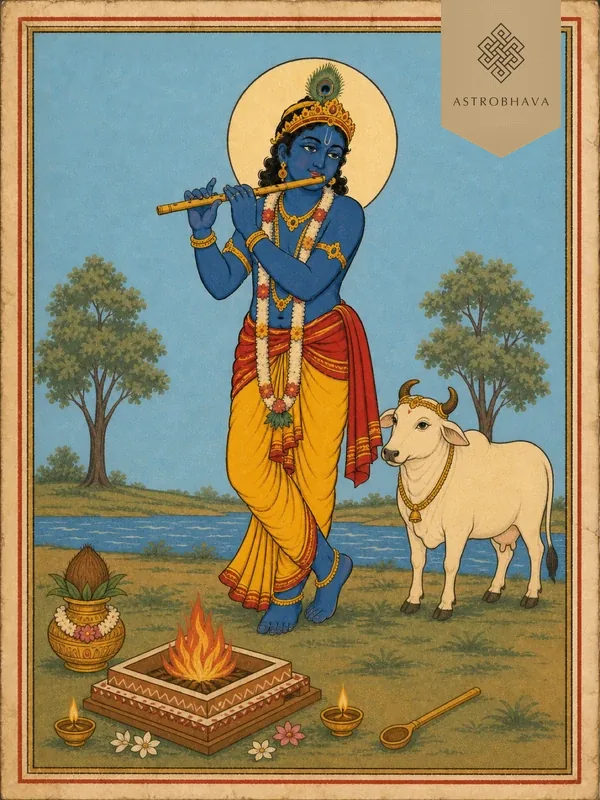
Sammohana Gopala Homa
Booked by couples praying for conception, a safe pregnancy and the blessing of children. ✓ Free energised Sammohana Gopala Yantra, sealed in a silver amulet From$177View ritual → ॐ
Standard
ॐ
Standard
Santana Gopala Homa
Booked by couples praying for a child, a safe pregnancy and healthy progeny. ✓ Free energised Santana Gopala Krishna Yantra, sealed in a silver amulet From$177View ritual →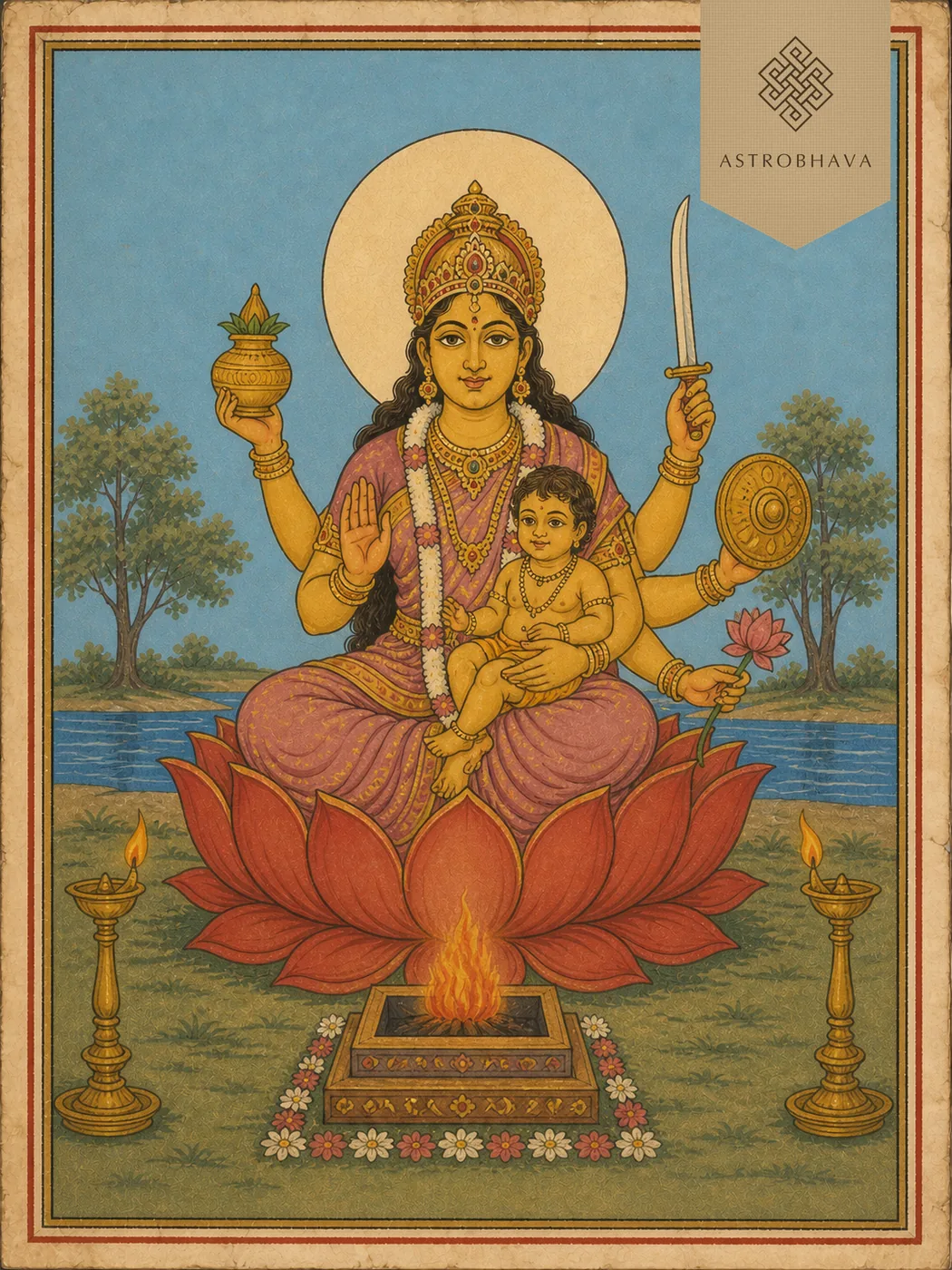 ॐ
Standard
ॐ
Standard
Santhana Lakshmi Homa
For couples praying for a child, a safe pregnancy and blessings on their lineage. ✓ Free energised Santhana Lakshmi Yantra, sealed in a silver amulet From$177View ritual →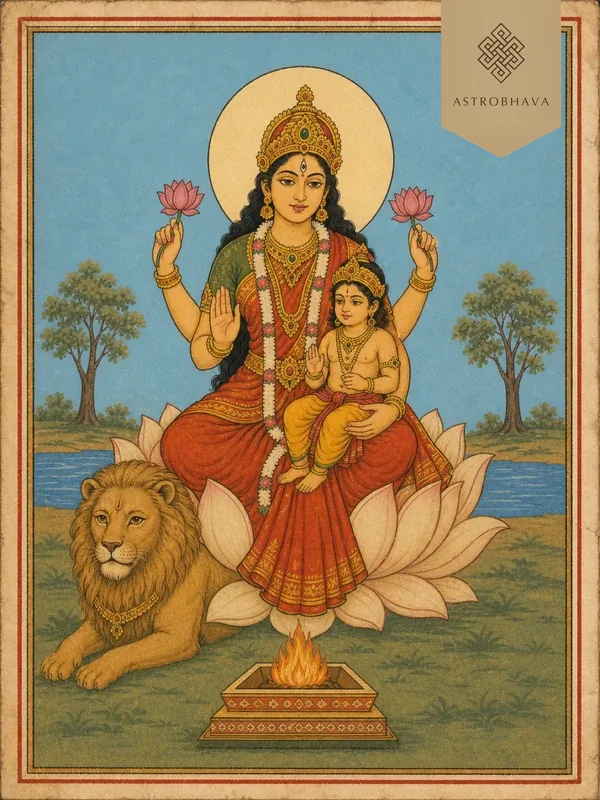 ॐ
Standard
ॐ
Standard
Skandamata Homa
For couples praying to conceive, for a safe pregnancy, and for blessings of healthy progeny. ✓ Free energised Skandamata Yantra, sealed in a silver amulet From$177View ritual →Maha Homas
 ॐ
Maha Homa
ॐ
Maha Homa
Garbarakshambigai Homa
For conceiving a child, a protected pregnancy and the blessing of healthy progeny. ✓ Free energised Garbarakshambigai Yantra, sealed in a silver amulet From$737View ritual → ॐ
Maha Homa
ॐ
Maha Homa
Naga Dosha Nivaran Homa
Booked to pacify Naga Dosha, Rahu-Ketu affliction and restore balance in the chart. ✓ Free energised Naga Dosha Nivaran Yantra, sealed in a silver amulet From$737View ritual → ॐ
Maha Homa
ॐ
Maha Homa
Purusha Suktha Homa
Booked for deepening devotion, inner peace and the grace of the Cosmic Being, Purusha. ✓ Free energised Purusha Suktha Yantra, sealed in a silver amulet From$737View ritual →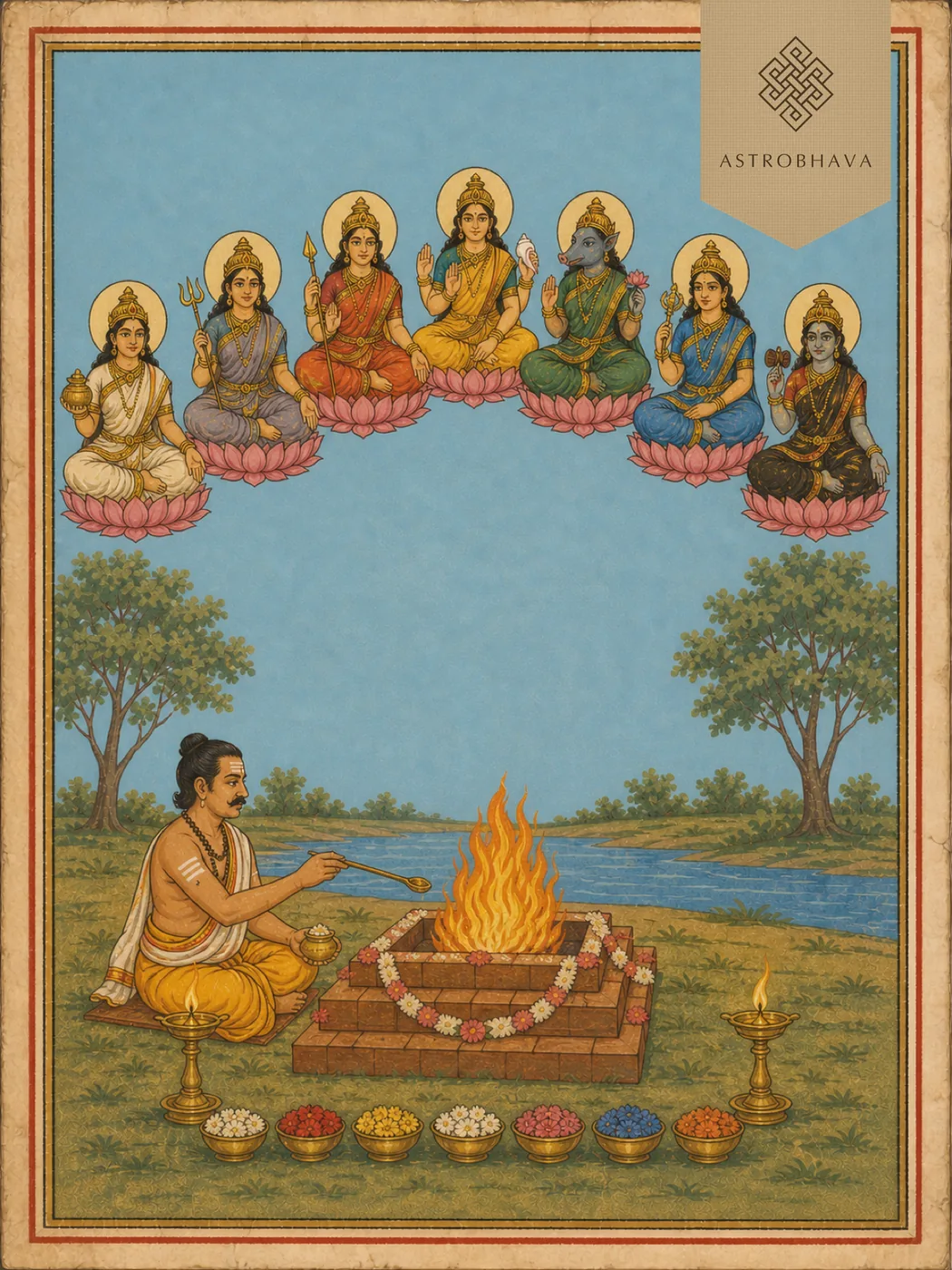 ॐ
Maha Homa
ॐ
Maha Homa
Saptamatrika Homa
Invoked for protection from evil eye, black magic, psychic harm and hostile influences ✓ Free energised Saptamatrikas Yantra, sealed in a silver amulet From$737View ritual →Which progeny homa is which
These four are the ones most often weighed against each other. They are not interchangeable — each addresses a different part of the same difficulty.
| Ritual | Invoked for | Most often booked by | From | |
|---|---|---|---|---|
| Santana Gopala Homa | A child, safe pregnancy and healthy progeny | Couples praying to Santana Gopala Krishna | $177 | View → |
| Sammohana Gopala Homa | Conception, safe pregnancy and blessing of children | Couples who favour the Bala Gopala form | $177 | View → |
| Santhana Lakshmi Homa | A child, safe pregnancy and blessings on the lineage | Couples who approach the prayer through Santhana Lakshmi | $177 | View → |
| Skandamata Homa | Conception, safe pregnancy and healthy progeny | Devotees who turn to Skandamata, mother of Skanda | $177 | View → |
Booking more than one is customary, not excessive. Couples often begin with Santana Gopala or Santhana Lakshmi while the prayer is for conception, and book Garbarakshambigai once a pregnancy is underway. Sammohana Gopala is near-identical in purpose to Santana Gopala; a devotee ordinarily chooses one of the two rather than both. Skandamata may stand in place of the Gopala rites when the ishta is Devi.
The most auspicious days for progeny rituals
Certain days are held especially potent for the deities traditionally invoked for children and the womb.
This ekadashi is long observed by those whose sankalpa is for a child. The day belongs to the prayer for progeny in particular.
Friday is sacred to Lakshmi. Santhana Lakshmi homas are often preferred on this weekday.
The sixth lunar day is associated with Skanda. Skandamata, as his mother, is remembered on Shashti.
Rohini is the nakshatra of Krishna's birth and is held favourable for growth and nourishment. Gopala rites are often aligned to it.
On the birth tithi of Krishna, the Gopala forms — Santana Gopala and Bala Gopala — are especially remembered.
None of these days is required. The muhurta for every homa is calculated from the devotee's own birth chart, so the rite may be booked whenever the sankalpa is ready.
About progeny homas
Not sure which of these to choose?
If you are unsure which rite fits the sankalpa, begin with the free ritual guide; it sets out the distinctions without assuming prior knowledge. For a reading of the chart beside the choice, the house also offers a live consultation with its priests and astrologers.
Why a homa is performed for conception, pregnancy and progeny
A homa for progeny is the offering of a clear sankalpa into consecrated fire, in the name of a deity long associated with that prayer. The house does not treat the rite as a substitute for medical care. It is performed for the intention the devotee names — conception, protection during pregnancy, or the wellbeing of children — and left there.
Several forms serve what is essentially one household concern. Santana Gopala and Sammohana Gopala approach it through Krishna as child and giver of children; the two are near-identical in purpose and differ chiefly in the form invoked. Santhana Lakshmi approaches it through Lakshmi as mother of lineage. Skandamata is the mother of Skanda, approached for the same blessing. Garbarakshambigai is invoked especially where the prayer turns toward the garbha itself.
Naga Dosha Nivaran is sometimes booked alongside these when the chart shows Naga or Rahu-Ketu affliction touching children. It is not itself a progeny homa; it is a pacification that some families place before or beside the rites above.