Have you ever felt like no matter how hard you try, something invisible keeps blocking your path? Career struggles, financial setbacks, relationship challenges — sometimes it feels like life is conspiring against you. In the Vedic tradition, we understand this as the presence of Vighnas (obstacles), and there is one supremely powerful day each month when the universe becomes uniquely receptive to your prayers for their removal — Varada Chaturthi.
If you are a spiritual seeker living in the USA, UK, Canada, Australia, or anywhere across the world, and you want to invoke the blessings of Lord Ganesha in His most benevolent, boon-granting form, this complete guide to Varada Chaturthi 2026 is exactly what you need. Let’s dive deep into the date, significance, rituals, mantras, fasting rules, and everything else you should know.
What is Varada Chaturthi? Understanding the Meaning
The word “Varada” in Sanskrit means “the granter of boons” or “one who bestows wishes.” Chaturthi refers to the fourth day (Tithi) of the lunar fortnight. Put them together, and Varada Chaturthi is literally the sacred fourth-day observance when Lord Ganesha, worshipped in His Varada Ganapati form, is at His most generous — ready to shower devotees with boons, blessings, and divine grace.
This is not the same as the grand annual Ganesh Chaturthi celebrated in Bhadrapada. Varada Chaturthi falls every month on the Shukla Paksha Chaturthi — the fourth day of the waxing (brightening) moon phase — and each month carries its own unique name and energy. The Jyeshtha month occurrence, which is the one falling in May 2026, is considered especially powerful because of its alignment during the holy Adhika Maas (extra lunar month), a period of heightened spiritual merit when all worship yields multiplied results.
Varada Chaturthi 2026 Date and Timings — Mark Your Calendar
Varada Chaturthi 2026 Date: Tuesday, May 19, 2026
Here are the key timings you need to know:
Chaturthi Tithi Begins: 2:18 PM, May 19, 2026 Chaturthi Tithi Ends: 11:06 AM, May 20, 2026 Madhyahna Puja Muhurat (Most Auspicious Window): 10:56 AM – 11:06 AM on May 20, 2026
This is a particularly tight Madhyahna window, making it essential that you begin your puja preparations the evening before and be ready to perform the main ritual right at the midday junction. For devotees in the USA and UK, please convert to your local time zone accordingly.
Why is the Madhyahna Muhurat so important? According to Vedic scripture, the Madhyahna period — the midday segment when the sun is at its zenith — is considered the most potent time for Ganesha worship. It is during this solar peak that divine energy is most concentrated, and offerings made during this window are said to reach Lord Ganesha directly.
The Spiritual Significance of Varada Chaturthi
Why do millions of Hindus across the globe observe this vrat month after month? The answer goes beyond tradition — it is rooted in a deep spiritual science.
Lord Ganesha as Varada Ganapati
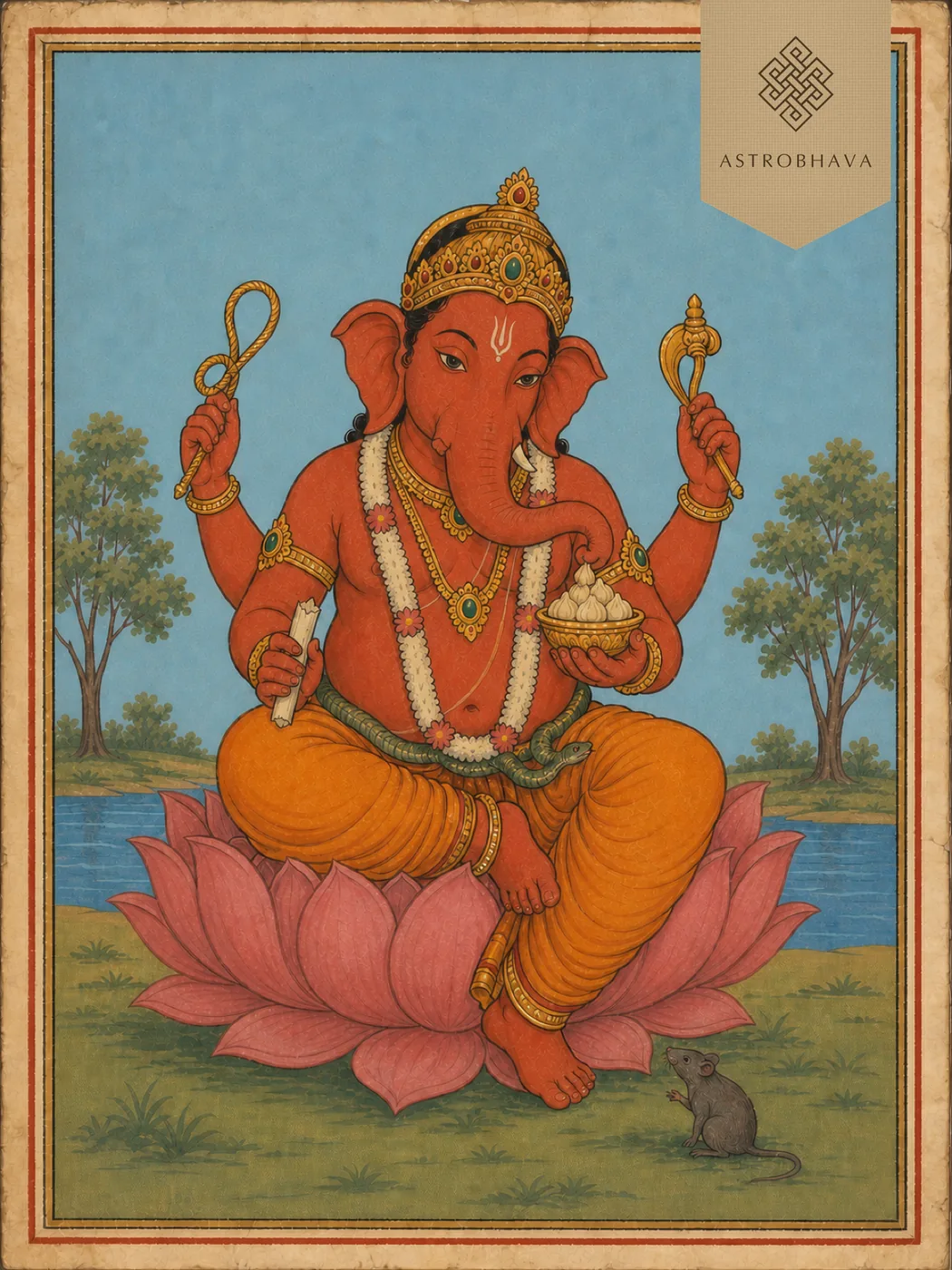
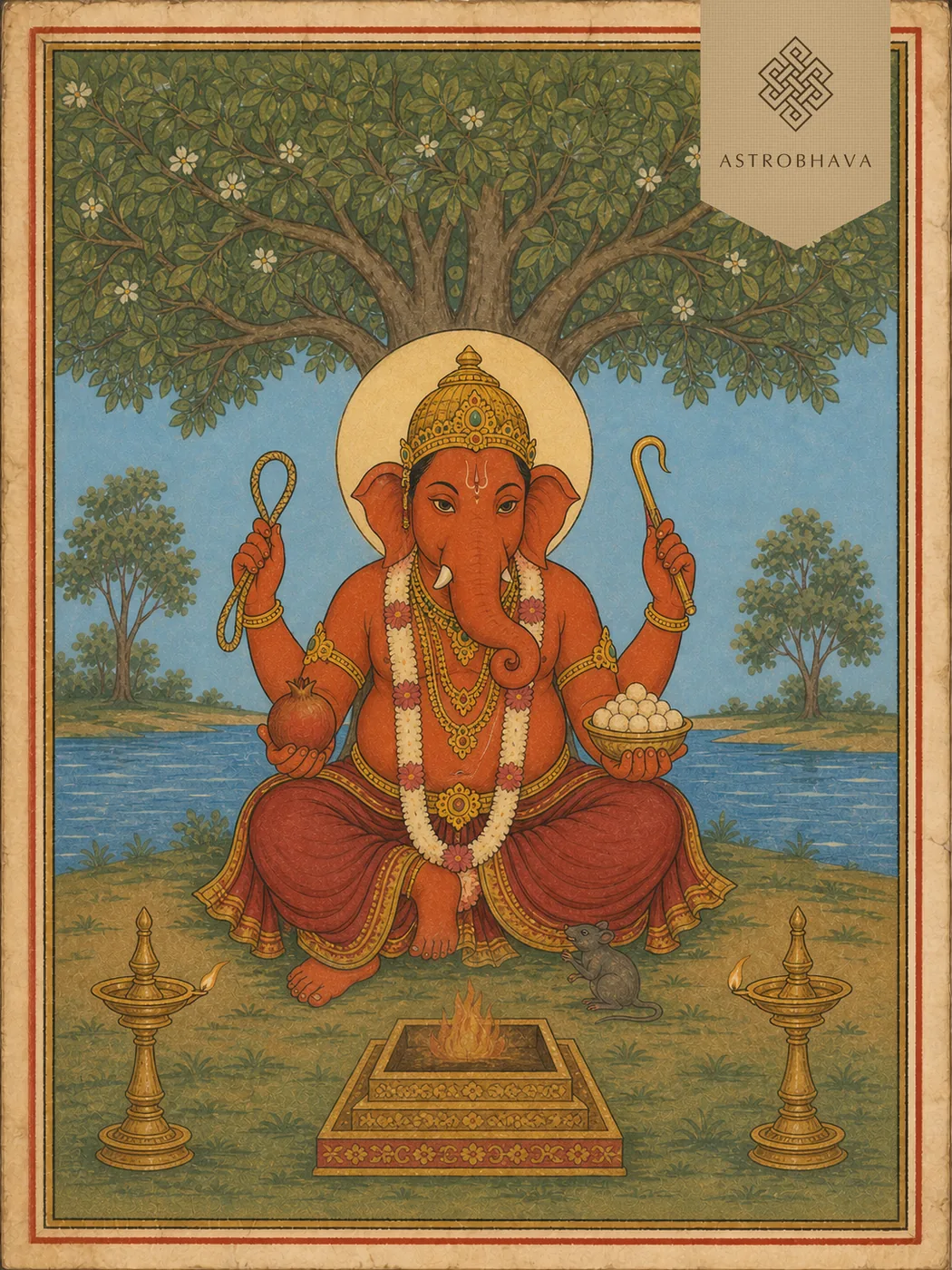
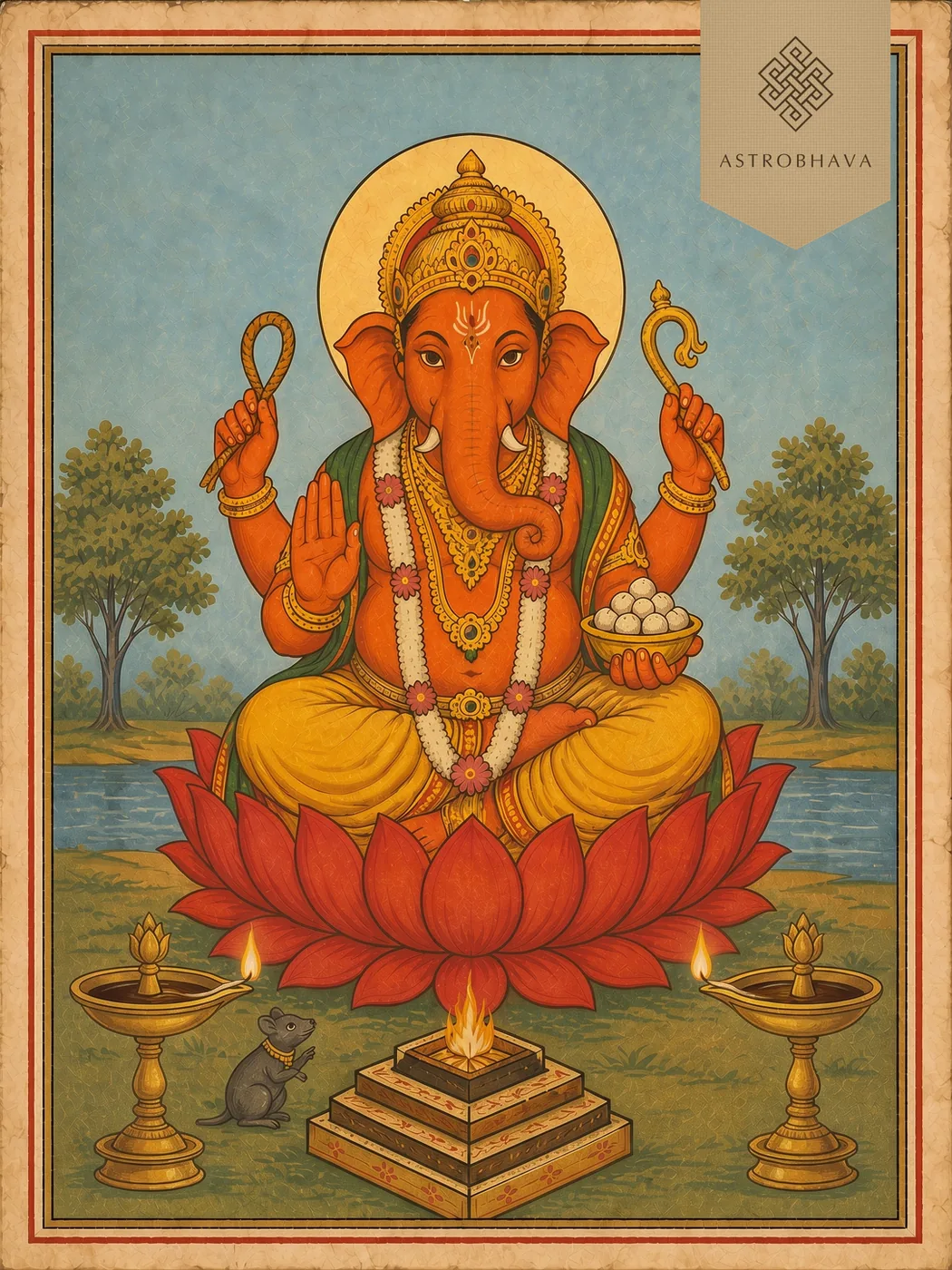
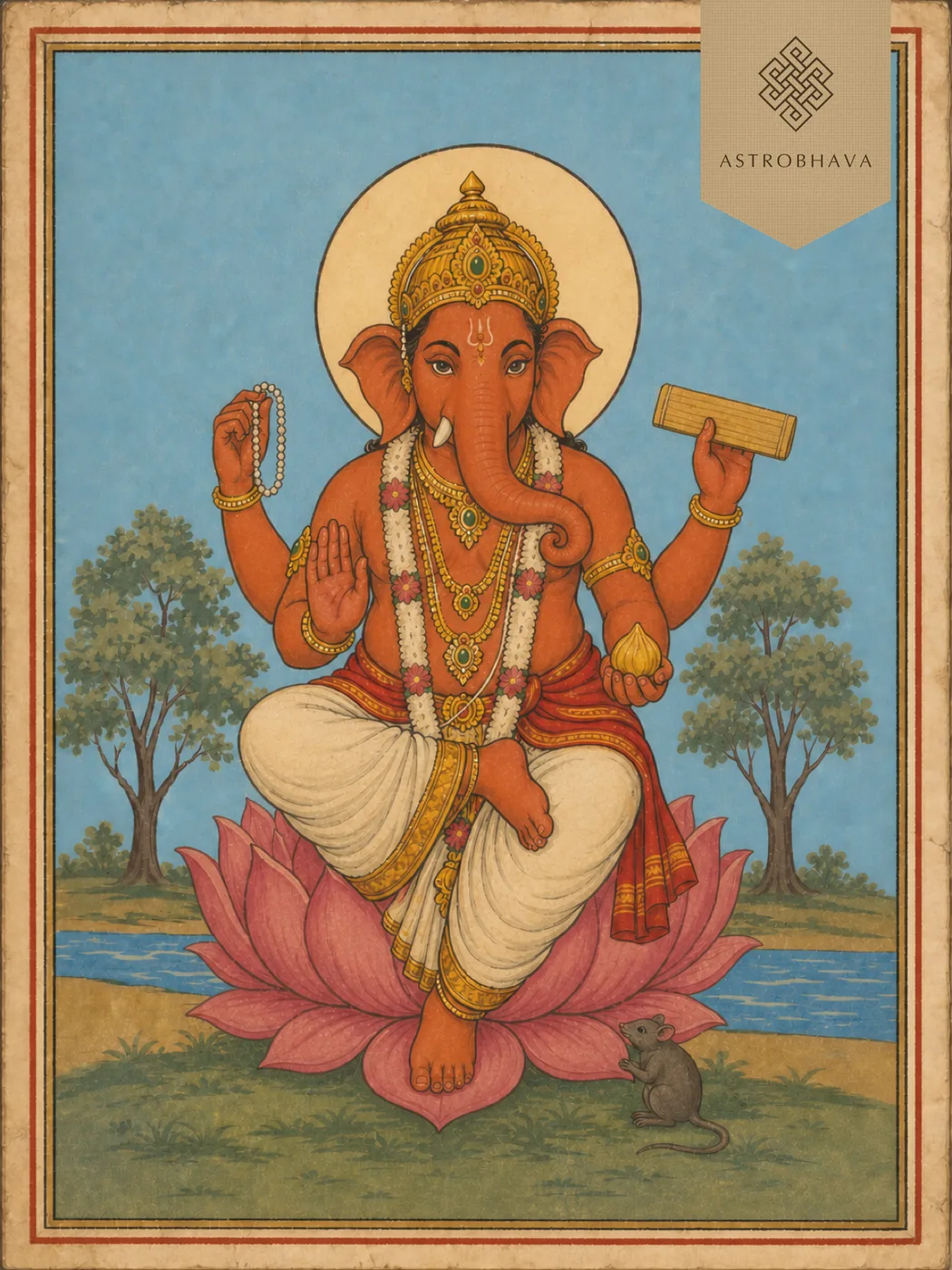
In the classical Vedic tradition, Lord Ganesha is described in 32 distinct forms, each representing a different aspect of His divine power. Varada Ganapati is one of these 32 forms — depicted with His trunk turned to the left (a sign of accessibility and grace to devotees), holding a pot overflowing with jewels in one hand, and bestowing the Varada Mudra (boon-granting gesture) with the other. His very posture communicates abundance and willingness to fulfill the righteous wishes of His devotees.
The Mudgala Purana, one of the primary sacred texts dedicated to Ganesha, describes eight primary avatars of Lord Ganesha, with Varada Ganapati specifically associated with the energy of this Chaturthi. The Bhavishya Purana also elaborates on the importance of Varada Chaturthi as a Vrata (sacred vow) that dissolves past karmas and opens the gateway to blessings.
Why Chaturthi Belongs to Ganesha
In Vedic cosmology, every Tithi is presided over by a specific deity. The fourth lunar day — Chaturthi — belongs to Lord Ganesha. This is why all Chaturthi observances across the year are connected to Ganesha worship. The Shukla Paksha Chaturthi (Varada/Vinayaka Chaturthi) is for seeking boons and divine favor, while the Krishna Paksha Chaturthi (Sankashti Chaturthi) is for relief from hardships. Together they represent the full cycle of Ganesha’s grace — removing obstacles and granting blessings.
The Extra Power of Adhika Maas 2026
May 2026 is extraordinarily special because the Varada Chaturthi of this year falls within the Adhika Maas (the intercalary leap month that occurs roughly once every 32.5 months). The ancient Puranas unanimously declare that any act of devotion, charity, fasting, or puja performed during Adhika Maas yields spiritual merit that is many times greater than during an ordinary month. This means your Varada Chaturthi 2026 observance carries the accumulated blessings of multiple months of worship.
Who Should Observe Varada Chaturthi?
Anyone seeking Ganesha’s blessings can observe this vrat. However, it is especially recommended for:
Those facing repeated obstacles in career, business, or finances. Anyone seeking success in new ventures, job changes, or entrepreneurial efforts. Students preparing for competitive exams who seek clarity and sharp intellect. Couples seeking harmony in their relationships or wishing to conceive. Devotees dealing with prolonged legal disputes or health challenges. Spiritual seekers who want to accelerate their Sadhana (spiritual practice). NRIs and those living abroad who wish to stay connected to their Vedic roots with a powerful monthly ritual.
The beauty of Varada Chaturthi is that unlike many elaborate rituals that require a physical temple, a proper home puja performed with devotion is entirely sufficient. Lord Ganesha, as the most accessible and child-like of all deities, accepts even a simple offering made with a pure heart.
Varada Chaturthi 2026 Puja Vidhi — Step by Step
Here is the complete, authentic puja procedure as prescribed in the Vedic tradition:
The Night Before (May 19, 2026)
Begin your preparation with a pure mindset. Clean your home, especially the puja space. Keep aside all the items you will need for the puja the following morning. Avoid non-vegetarian food, alcohol, and tamasic substances the evening before. Go to sleep with a resolve (Sankalpa) to observe the vrat.
Morning of Varada Chaturthi (May 20, 2026)
Step 1 — Shuddhi (Purification): Wake up before sunrise. Take a thorough bath, preferably using water mixed with sesame seeds or holy Gangajal if available. Wear clean, freshly washed clothes — traditionally yellow or red, both sacred to Lord Ganesha.
Step 2 — Sankalpa (Sacred Vow): Before beginning the puja, sit facing east and take your Sankalpa — a sincere inner declaration of intent. State clearly (mentally or aloud) your name, the current date, and the purpose of your worship. This aligns your energy with the cosmic purpose of the ritual.
Step 3 — Puja Sthala Preparation (Altar Setup): Clean your altar with water. Spread a red or yellow cloth on the puja platform. Place the idol or image of Lord Ganesha — preferably Varada Ganapati — on the altar, facing north or east.
Step 4 — Invocation (Avahana): Light a ghee diya (lamp) and incense. Ring the puja bell to announce your worship to the divine. Chant the Ganapati Dhyana Shloka to invoke the presence of Lord Ganesha:
“Shuklambaradharam Vishnum Shashivarnam Chaturbhujam, Prasannavadanam Dhyayet Sarva Vighnopashantaye.”
Step 5 — Shodashopachara Puja (16-Step Worship): The Shodashopachara is the fullest expression of worship and includes:
Padya — offering water to wash the Lord’s feet.
Arghya — offering water to His hands.
Achamana — offering water for sipping.
Madhuparka — offering a mixture of honey, ghee, and curd.
Snanam (Abhishekam) — bathing the idol with Panchamrit (milk, curd, honey, ghee, and sugar water), followed by pure water.
Vastra — offering a symbolic red or yellow cloth or thread. Yajnopavita — offering the sacred thread.
Gandha — applying sandalwood paste to the idol. Pushpa — offering fresh flowers, especially red hibiscus (Japa flower), marigold, and lotus if available.
Dhupa — waving incense sticks.
Dipa — waving the lit ghee lamp.
Naivedya — offering 21 modaks (steamed coconut-jaggery dumplings, Lord Ganesha’s most beloved sweet), along with fruits and coconut.
Tambula — offering betel leaves and betel nut.
Dakshina — offering coins or a token gift as symbolic remuneration.
Pradakshina — circumambulating the idol 3 times clockwise.
Pushpanjali — offering a handful of flowers while chanting the Lord’s names.
Step 6 — Durva Grass Offering: Offer 21 blades of Durva grass (Doob grass) — one of Lord Ganesha’s most beloved offerings. Present each blade while chanting one of His 21 names. This ritual is said to be extraordinarily potent for removing obstacles and fulfilling wishes.
Step 7 — Mantra Chanting: Chant the following mantras during the puja:
Mool Mantra (108 times): “Om Gan Ganapataye Namah”
Vakratunda Mantra: “Vakratunda Mahakaya Suryakoti Samaprabha, Nirvighnam Kuru Me Deva Sarva Karyeshu Sarvada.”
Varada Ganapati Mantra: “Om Varada Ganapati Namah” — chant this specifically on Varada Chaturthi as it directly invokes the boon-granting form.
Step 8 — Ganesh Chalisa and Aarti: Recite the Ganesh Chalisa in full. Follow it with the Ganesh Aarti — “Jai Ganesh, Jai Ganesh, Jai Ganesh Deva.” The Aarti should be performed by waving a camphor lamp in a circular motion before the deity.
Step 9 — Vrat Katha (Sacred Story): Read or listen to the Varada Chaturthi Vrat Katha — the sacred narrative associated with this observance. This is an essential part of the vrat that activates the full blessings of the ritual.
Step 10 — Prasad Distribution: Distribute the modaks and other offered sweets as prasad to family members and neighbors. Sharing prasad amplifies the blessings of the vrat.
Fasting Rules for Varada Chaturthi 2026
Observing a fast (Upavasa) on Varada Chaturthi is considered highly meritorious. Here is what you need to know:
What you can consume: Fruits, milk, curd, nuts (especially peanuts), sabudana (tapioca), potatoes, sweet potatoes, and water. Modaks and laddoos made without grain flour are also permitted.
What to avoid: All grains and cereals, non-vegetarian food, onion, garlic, alcohol, and tamasic foods. Avoid anger, harsh speech, gossip, and negative thoughts throughout the day — because fasting the mind is as important as fasting the body.
Breaking the fast: The Varada Chaturthi fast is typically concluded after the main puja and aarti in the morning-to-midday window. Unlike Sankashti Chaturthi (which requires moonrise), Varada Chaturthi being a Shukla Paksha observance allows devotees to break the fast after the Naivedya offering and Aarti during the Madhyahna muhurat.
Powerful Ganesha Mantras for Varada Chaturthi
Beyond the puja, continuous mantra chanting throughout the day multiplies the spiritual effect of Varada Chaturthi. Here are the most effective mantras:
For Removing Obstacles: “Om Vighnanashaya Namah”
For Prosperity and Abundance: “Om Riddhi Siddhi Ganapataye Namah”
For Wisdom and Clarity: “Om Gam Ganapataye Namah”
For Boon Fulfillment (specific to Varada Chaturthi): “Om Varada Ganapati Namah”
The Ashtottara (108 Names of Ganesha): Reciting all 108 names of Ganesha on this day is one of the highest forms of worship and is said to fulfill any genuine, righteous wish.
Which Is the Best Day for Ganapathi Homam? Find here
What Special Offerings Does Lord Ganesha Love on Varada Chaturthi?
Knowing your deity’s preferences is the mark of a true devotee. Lord Ganesha has specific favorite offerings that are especially effective on Varada Chaturthi:
21 Modaks: The modak is Ganesha’s most beloved sweet. The number 21 is sacred — it represents the 21 boons that Ganesha grants to sincere devotees. If you cannot make traditional steamed modaks at home, store-bought coconut modaks are acceptable.
Durva Grass: This three-bladed grass is uniquely sacred to Ganesha and not generally offered to other deities. Offering Durva is said to cool the anger of obstacles and bring peace and prosperity.
Red Hibiscus (Japa Pushpa): This flower is especially dear to Ganesha in his Varada form. Offering 21 red hibiscus flowers while chanting His names is a highly potent practice.
Coconut: The coconut represents the human ego that must be offered and surrendered to the divine. Breaking a coconut as part of the puja is deeply symbolic.
Til (Sesame Seeds) and Jaggery: Offering sesame seeds mixed with jaggery represents the sweetness that comes after the bitterness of obstacles is removed.
Yellow and Red Flowers: Marigold, champak, and lotus are all sacred to Ganesha and bring auspiciousness to the worship.
Varada Chaturthi vs. Sankashti Chaturthi — What’s the Difference?
This is one of the most commonly asked questions, and understanding the difference helps you make the most of both observances.
Varada Chaturthi falls on the Shukla Paksha Chaturthi — the 4th day of the waxing moon. The energy here is expansive, growing, and generative. This is the time to ask for boons, start new projects, and invite abundance.
Sankashti Chaturthi falls on the Krishna Paksha Chaturthi — the 4th day of the waning moon. The energy is releasing, purifying, and healing. This is the time for relief from suffering, removal of hardships, and overcoming long-standing crises.
Think of it this way: if Varada Chaturthi is about building your blessings, Sankashti Chaturthi is about clearing the blocks that prevent those blessings from arriving. Both are essential, and devoted Ganesha worshippers observe both every single month.
How to Observe Varada Chaturthi as an NRI or Devotee Abroad
Living outside India doesn’t diminish the power of your worship — in fact, Vedic tradition has always maintained that sincere devotion transcends geography. Here is how you can fully observe Varada Chaturthi 2026 wherever you are in the world:
Set your own local Madhyahna time. Calculate your local midday (halfway between sunrise and sunset on Tuesday, May 19, 2026) and perform the puja during that window.
Create a sacred space. Even a small, clean corner of your home with a Ganesha idol, a diya, and some incense is a fully valid puja space. The divine presence is activated by your intention and devotion.
Source your materials. Indian grocery stores in most major cities in the USA, UK, Canada, and Australia stock modak ingredients, incense, camphor, red hibiscus, and Durva grass. Many are also available online.
Connect to a live pandit. If you wish to have a proper Shodashopachara puja performed with Vedic mantras but cannot do it yourself, Astrobhava’s expert priests can perform the ritual on your behalf from sacred temples in India, with video participation available for you wherever you are.
Observe the fast in spirit. Even a partial fast — just avoiding grains for the day and eating sattvic foods — is deeply honoring of the tradition when physical conditions don’t permit a full fast.
Benefits of Observing Varada Chaturthi Vrat
The Vedic texts enumerate many blessings that flow to sincere observers of this vrat:
All obstacles blocking career growth, business success, and financial prosperity are progressively dissolved. Wisdom, intelligence, and sharp decision-making ability are enhanced — making this especially beneficial for students and professionals. Stagnant projects, stuck court cases, and long-delayed wishes begin to move again. Harmony is restored in family relationships and marital life.
The mind becomes calm, clear, and spiritually awakened. Devotees report a palpable feeling of divine protection in their daily lives. Accumulated karmic debts that are blocking one’s path are gradually neutralized. The Adhika Maas factor in 2026 makes all these benefits available at an accelerated rate.
Conclusion
Varada Chaturthi 2026: Dates, Rituals and Significance — everything points to one truth: this is a day of immense divine opportunity. Whether you are sitting in London, New York, Dubai, or Sydney, the grace of Lord Varada Ganapati recognizes no borders. All He asks is a clean heart, a sincere intention, and the willingness to show up in devotion.
This year, with the rare blessing of Adhika Maas amplifying every act of worship, Varada Chaturthi 2026 on Wednesday, May 20 is a spiritually golden day. Perform the puja with care, observe the fast with resolve, chant the mantras with love, and offer those 21 modaks with a smile — because the Vighnaharta, the remover of all obstacles, is waiting to grant your boons.
Ganpati Bappa Morya! 🙏
Want expert Vedic priests to perform these powerful rituals on your behalf? Explore Astrobhava’s complete range of Ganesha services — Sankat Hara Homa, Varada Chaturthi Puja, Ganesha Yantra, and Japa — and let the divine grace of Lord Ganesha transform your life.
Frequently Asked Questions (FAQs)
Q1. When is Varada Chaturthi in 2026?
Varada Chaturthi 2026 falls on Tuesday, May 19, 2026. The Chaturthi Tithi begins at 2:18 PM on May 19 and ends at 11:06 AM on May 20, making May 20 the primary day of observance.
Q2. What is the Madhyahna Muhurat for Varada Chaturthi 2026?
The Madhyahna (midday) puja window on May 20, 2026 is approximately 10:56 AM to 11:06 AM IST. Devotees outside India should calculate the local midday (halfway between local sunrise and sunset) for the most auspicious time.
Q3. What is the difference between Varada Chaturthi and Sankashti Chaturthi?
Varada Chaturthi falls on the Shukla Paksha (waxing moon) fourth day and is observed for receiving boons and blessings. Sankashti Chaturthi falls on the Krishna Paksha (waning moon) fourth day and is observed for removal of hardships. Both are dedicated to Lord Ganesha.
Q4. What is Varada Ganapati?
Varada Ganapati is one of the 32 classical forms of Lord Ganesha, specifically the boon-granting form. He is depicted with His trunk turned left, holding a pot of jewels, and displaying the Varada Mudra (gesture of granting wishes). This is the form worshipped specifically on Varada Chaturthi.
Q5. Can I observe Varada Chaturthi if I live in the USA, UK, or abroad?
Absolutely. Vedic worship transcends geographical boundaries. Calculate your local midday on May 20, 2026, set up a clean puja space, and perform the rituals with devotion. You can also connect with Astrobhava’s priests to have the puja performed professionally on your behalf.
Q6. What is the significance of offering 21 modaks on Varada Chaturthi?
The number 21 is sacred to Lord Ganesha. Offering 21 modaks represents the 21 divine boons that Ganesha grants to sincere devotees. The modak itself, shaped like a wish-drop, symbolizes the sweetness of inner wisdom and the fulfillment of desires.
Q7. Why is Varada Chaturthi in 2026 especially powerful?
The 2026 Varada Chaturthi falls during Adhika Maas (intercalary/leap month), a rare phenomenon that occurs once every 32.5 months. Ancient scriptures state that all religious acts performed during Adhika Maas yield many times greater merit than in an ordinary month, making this year’s Varada Chaturthi exceptionally potent.
Q8. Can women observe Varada Chaturthi vrat?
Yes, absolutely. Varada Chaturthi is observed by both men and women. Women traditionally observe this vrat for the wellbeing of the family, prosperity, and fulfillment of heartfelt desires. The ritual procedures are the same for all devotees.
Q9. What should I avoid on Varada Chaturthi?
Avoid all grains, non-vegetarian food, onion, garlic, alcohol, and tamasic substances. Also avoid anger, harsh speech, and negative thoughts. The purity of mind is as important as the purity of food on this sacred day.
Q10. How can Astrobhava help me observe Varada Chaturthi if I cannot perform the puja myself?
Astrobhava offers a comprehensive range of Ganesha ritual services including the Varada Chaturthi Puja, Sankat Hara Ganesha Homa, energized Ganesha Yantra, and mantra Japa — all performed by qualified Vedic priests on your behalf. Prasad and blessings are shared with you digitally and by post.