Have you ever wondered why Hindus worship so many goddesses — and yet speak of them as one? Why is the same divine Mother called Durga in one prayer, Kali in another, and Saraswati in a third? The answer lies in one of the most profound concepts in all of Indian philosophy: Shakti.
The word Shakti comes from the Sanskrit root shak, meaning “to have potential” or “to be able.” At its core, Shakti is the universal life-force — the energy that creates, sustains, and eventually dissolves everything in existence. And crucially, this energy is understood as inherently feminine in nature. Without Shakti, even Shiva — the supreme masculine principle — remains still, like a statue. It is she who stirs him into action.
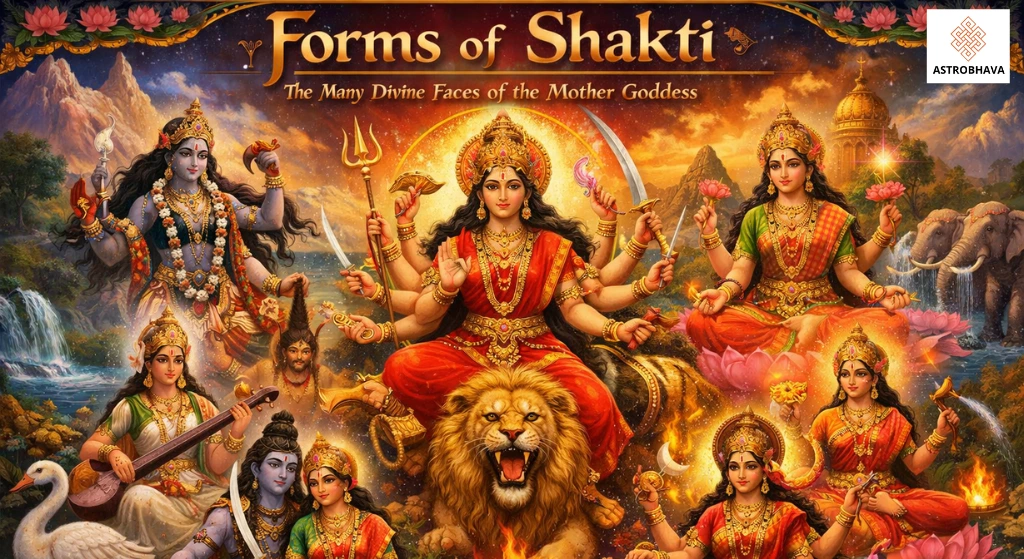
In Shaktism, one of the largest branches of Hinduism, all goddesses are seen as different expressions of the one supreme Shakti — also called Adi Parashakti or Mahadevi, the Great Goddess. Each form she takes is not a separate deity, but a different aspect of the same limitless divine power, manifesting to meet the needs of her devotees and the universe.
In this post, we’re going to take you through the most important forms of Shakti — their stories, their energies, their symbolism, and how you can connect with each one through devotion and authentic Vedic ritual.
 1. Durga — The Invincible Warrior
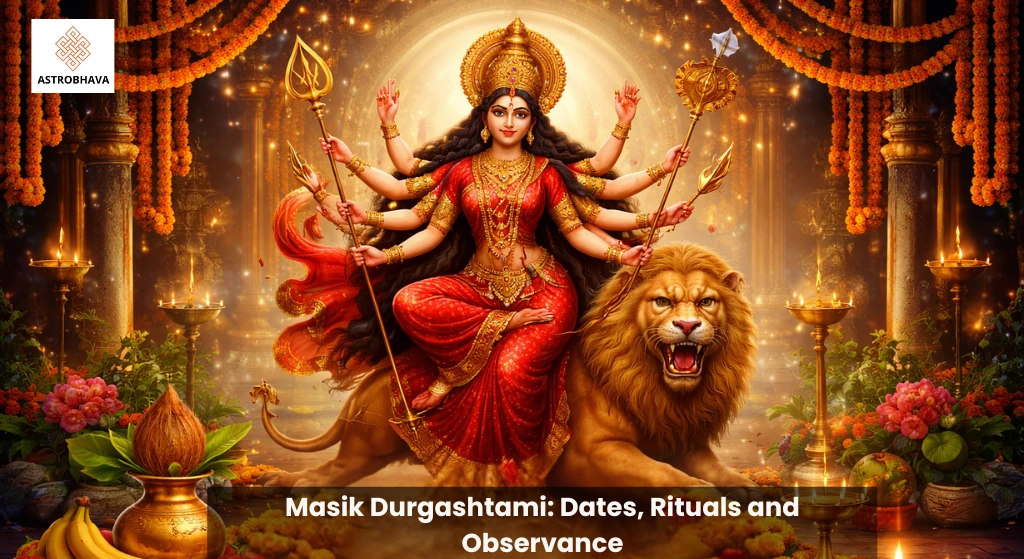
If you were to introduce someone to the forms of Shakti with just one goddess, it would have to be Durga. Her name literally means “the one who is difficult to approach” — or more evocatively, “the fortress.” She is the embodiment of protective, warrior energy, and her origin story is one of the most powerful in all of Hindu mythology.
When the universe was threatened by the buffalo demon Mahishasura — a force that even Brahma, Vishnu, and Shiva could not defeat — all the male deities combined their energies and created Durga. She alone could vanquish what no god could. This isn’t just a battle story. It’s a reminder that when the forces of righteousness seem overwhelmed, the cosmos itself responds by birthing a new, fiercer power.
Durga is typically depicted riding a lion or tiger, with eight or eighteen arms each wielding a different weapon. Those weapons — the trident, sword, bow, discus, and more — are not symbols of aggression but of dharma in action. She uses each one to destroy different forms of evil: arrogance, ignorance, ego, and fear.
The nine nights of Navratri are the most celebrated time to worship Durga, and the festival is observed with fasting, puja, and communal joy across India and wherever Hindus live in the world.
Durga blesses her devotees with: Protection from enemies and negative forces, removal of obstacles, planetary protection, stability in life, and fearless energy.
🙏 Honour Durga with an Authentic Puja
AstroBhava performs personalised Durga Pooja in a consecrated Vedic temple, conducted by experienced priests in your Name, Nakshatra & Raasi. Packages range from 1-day to 48-day rituals, with live telecast and prasad delivery to your door.
👉 Book Durga Pooja at AstroBhava →
2. Kali — The Transformer Beyond Time
If Durga can seem approachable and regal, Kali is deliberately terrifying — and that terror is the whole point. Kali represents the raw, unfiltered face of reality: time, death, and radical transformation. Her name literally means “she who is time” or “the black one,” and she is depicted with dark blue or black skin, a garland of skulls, a sword in one hand and a severed head in another — and yet her other two hands offer fearlessness and blessings to her devotees.
The most famous image of Kali shows her standing or dancing on Shiva‘s chest. The legend goes that when Kali was in the midst of a cosmic battle, destroying demons in a frenzy, Shiva lay down under her feet to calm her frenzy. When she realised she had stepped on her own husband, she stopped — and stuck out her tongue in shock. That image has become one of the most iconic in all of Hindu art.
Here’s the deeper truth about Kali: she destroys the ego. She clears away illusion. She demands that you face what is real, however uncomfortable that may be. And on the other side of that destruction? Liberation.
Millions of Bengalis, Tantric practitioners, and spiritual seekers around the world adore Kali precisely because she doesn’t sugarcoat reality. She asks only for your honesty — and in return, she gives you freedom.
Kali blesses her devotees with: Transformation and self-empowerment, removal of past karma, spiritual liberation, protection from dark forces, and deep inner courage.
🙏 Invoke Kali’s Transformative Power
AstroBhava’s Kali Puja is performed with deep devotion and sacred mantra chanting in a specially energised ritual space. Choose from 1-day, 11-day, 21-day, or 48-day packages. The 48-day puja includes a free energised Kali Yantra and sacred Kum-Kum prasadam sent directly to your home.
👉 Book Kali Puja at AstroBhava →
3. Lakshmi — The Goddess of Abundant Grace
Lakshmi is the Shakti of Vishnu — the preserver of the universe — and she embodies everything her role suggests: gentle, radiant, nurturing, and abundantly generous. She is the goddess of wealth, prosperity, beauty, and good fortune. But her concept of “wealth” goes far beyond just money.
Lakshmi represents all four aims of life — Dharma (righteous living), Artha (material prosperity), Kama (love and fulfillment), and Moksha (spiritual liberation). True abundance, in her understanding, is holistic.
She is depicted seated on a lotus, dressed in red and gold, with coins flowing from one of her four hands. The lotus she sits upon grows in muddy water yet blooms pristinely above it — a reminder that true abundance arises from a pure heart, even in the midst of worldly chaos.
Within the broader Shakti tradition, Lakshmi is worshipped in eight distinct forms known as the Ashtalakshmi — each representing a different kind of wealth: courage (Dhairya Lakshmi), nourishment (Dhanya Lakshmi), offspring (Santana Lakshmi), learning (Vidya Lakshmi), and more. Together, these eight forms cover every dimension of a flourishing human life.
Lakshmi blesses her devotees with: Financial stability, career growth, business success, family harmony, and abundance in all its forms.
“Lakshmi does not favour those who are idle. She is drawn to those who are righteous, hardworking, and who keep their homes and hearts clean.” — Traditional teaching from the Vishnu Purana tradition
🙏 Invite Prosperity Into Your Life
AstroBhava offers multiple Lakshmi Puja options — including the powerful Lakshmi Kubera Puja for financial liberation, and the Dhairya Lakshmi Puja for courage and stability. All rituals are conducted by experienced Vedic priests with live telecast and worldwide prasad delivery.
👉 Book Lakshmi Puja at AstroBhava →
4. Saraswati — The Goddess of Wisdom and Expression
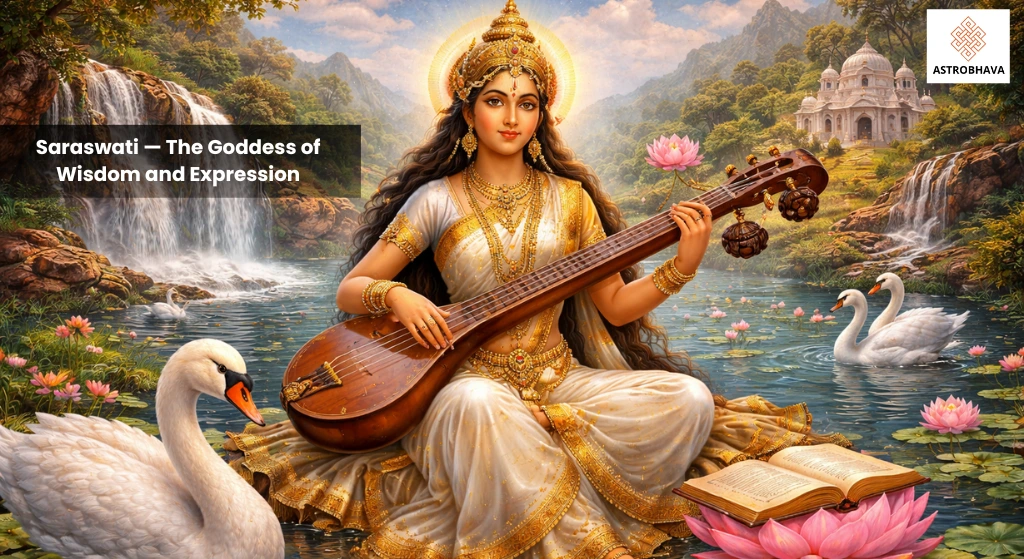
Saraswati is the Shakti of Brahma — the creator — and she represents the creative intelligence that makes creation itself possible. Think about it: without knowledge, without the capacity for language, art, and music, what could Brahma actually create? Saraswati is the reason he creates beautifully.
She is depicted in pristine white, seated on a white swan or a lotus, playing the veena — a classical Indian string instrument. Every element carries symbolic weight: white for purity of knowledge, the swan for the ability to discriminate between what is real and what is illusion (since swans are said to be able to separate milk from water), and the veena for the harmony between intellect and creativity.
Saraswati’s presence is invoked at the beginning of education, during examinations, before artistic performances, and at the start of any new creative endeavour. She is the patron goddess of students, teachers, musicians, poets, writers, and anyone who works with the power of the mind.
Saraswati blesses her devotees with: Academic success, eloquence and communication, artistic inspiration, clarity of thought, and wisdom in decision-making.
Seek the divine blessings of Maa Saraswati for academic success
5. Parvati — The Gentle Yet Boundless Mother
Parvati is perhaps the most complete and intimate expression of Shakti as cosmic mother and devoted companion. Her name means “daughter of the mountain,” and she is the reincarnation of Sati — Shiva’s first wife who immolated herself after being insulted by her own father. Where Sati was passionate and impulsive, Parvati is patient, deeply devoted, and immovably resolute.
The story of how Parvati won Shiva’s heart is one of the great love stories of Hindu mythology. After Sati’s death, Shiva had withdrawn into deep, unending meditation and wanted nothing to do with the world. Parvati performed intense austerities — tapas — for thousands of years to win his attention. Her devotion ultimately melted the Lord of Yogis. Together, they represent the perfect union of consciousness (Shiva) and energy (Shakti) — stillness and motion, formless and form.
Parvati is also the divine mother of Ganesha and Kartikeya, making her the nurturing, protective energy at the heart of the divine family. Significantly, both Durga and Kali are often described as being forms of Parvati — meaning she contains within her the full spectrum of the divine feminine, from serene love to fierce destruction.
Parvati blesses her devotees with: Love, marital harmony, fertility, devotion, patience, and the power of unwavering inner resolve.
6. Tripura Sundari — The Supreme Beauty of All Three Worlds
Tripura Sundari — also known as Lalita, Rajarajeshwari, or Shodashi — is the goddess of the three worlds (Tripura = three realms) and represents divine beauty, grace, and cosmic bliss. In the Tantric tradition, she is considered one of the ten Mahavidyas (Great Wisdom Goddesses) and is often regarded as the highest, most complete expression of Shakti.
Where Kali destroys and Durga protects, Tripura Sundari enraptures. She is the goddess who reveals that the universe is not merely a battlefield or a test — it is also an act of divine play, or lila. The Sri Chakra (or Sri Yantra) — one of the most complex and revered geometric symbols in Hinduism — is considered her very form in symbolic geometry. Meditating on the Sri Yantra is considered a direct meditation on Tripura Sundari herself.
Tripura Sundari blesses her devotees with: Grace, liberation, bliss, mastery over all three realms, and deep spiritual realisation.
Book Tripura Sundari Homa for her divine blessings
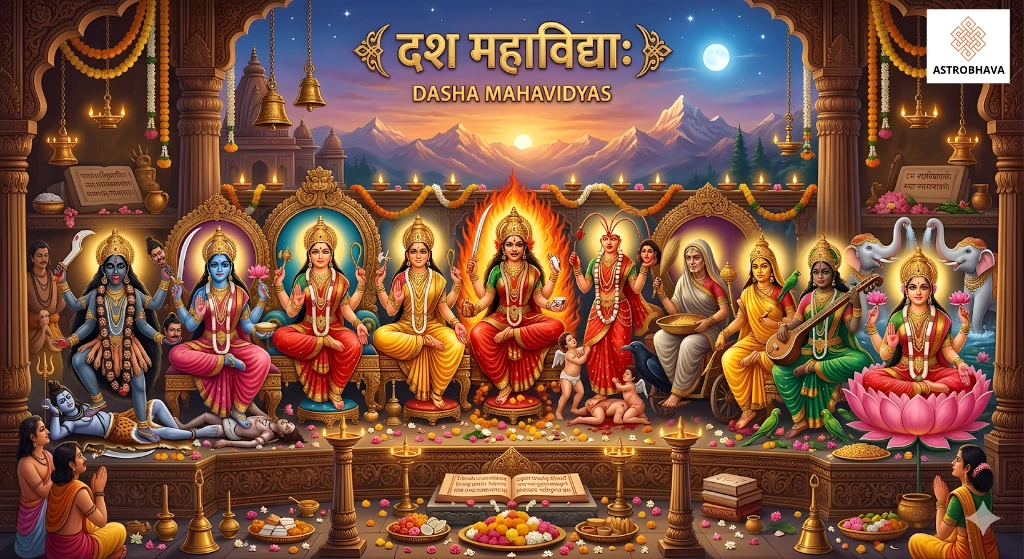
7. The Ten Mahavidyas — Wisdom in Her Wildest Forms
 7. The Ten Mahavidyas — Wisdom in Her Wildest Forms
Beyond the more widely recognised goddesses, the Tantric tradition honours ten supreme forms of Shakti known as the Dasha Mahavidyas — the Ten Great Wisdom Goddesses. Each represents a radically different facet of enlightenment.
The ten Mahavidyas are: Kali, Tara, Tripura Sundari, Bhuvaneshvari, Bhairavi, Chhinnamasta, Dhumavati, Bagalamukhi, Matangi, and Kamala. Together, they map the entire range of human and spiritual experience — from creativity and abundance (Kamala/Lakshmi) to the mystery of death and dissolution (Dhumavati, the widow goddess who teaches the wisdom of loss), to radical self-sacrifice (Chhinnamasta, who cuts off her own head to nourish others).
These forms are not for the faint-hearted — they push us into the deepest questions about life, death, ego, and ultimate reality. But for sincere spiritual seekers, each Mahavidya is a doorway to profound and lasting transformation.
🙏 Explore the Full Range of Shakti Rituals
Whether you seek Durga’s protection, Kali’s transformation, Lakshmi’s abundance, or Saraswati’s wisdom — AstroBhava’s experienced Vedic priests perform authentic, personalised rituals in a consecrated temple and Yagna Ashram. Live telecast, worldwide prasad delivery, and free Yantras on select packages.
👉 Explore All Shakti Pujas at AstroBhava →
Why Do the Forms of Shakti Matter in Daily Life?
You might be reading this and wondering — these are ancient myths, so why do they matter in modern daily life? The answer is that the forms of Shakti are not just religious iconography. They are maps of inner experience.
When you are facing injustice and need strength, you invoke Durga. When you want to clear illusions and begin fresh, you turn to Kali. When you are building a business or a home and need abundance to flow, you pray to Lakshmi. When you sit down to write, teach, or create, you invite Saraswati. When you want love and harmony in your relationships, you honour Parvati.
In this way, Shakti worship is profoundly practical — it connects different dimensions of life with specific energies of the divine feminine. The entire system rests on a deeply optimistic cosmology: that the universe is not indifferent, but alive with intelligent, loving, feminine power. And that power is available to you — through devotion, ritual, and sincere intention.
Frequently Asked Questions About the Forms of Shakti
Q1. What is the difference between Shakti, Devi, and Parvati?
Shakti is the universal concept — the divine feminine energy underlying all of existence. Devi is a general Sanskrit term meaning “goddess” and is often used interchangeably with Shakti. Parvati is a specific, personal form of that energy — she is Shiva’s consort and the divine mother. In the Shakta tradition, Parvati, Kali, Durga, and all other goddesses are ultimately considered forms of the one supreme Shakti.
Q2. How many forms of Shakti are there?
Scripturally, Shakti is said to have unlimited forms. However, the tradition identifies key groups: the ten Mahavidyas (Great Wisdom Goddesses), the Navadurga (nine forms of Durga worshipped during Navratri), the Ashtalakshmi (eight forms of Lakshmi), and countless regional goddess forms. Every female deity in Hinduism is ultimately a manifestation of Shakti.
Q3. Is Kali a dangerous goddess to worship?
Not at all. Kali is fierce, but she is not dangerous to sincere devotees. She is terrifying to evil and ego — not to her worshippers, to whom she gives fearlessness and protection. The skull garland and severed head she carries symbolise the destruction of ignorance and the ego, not physical harm. Millions of Bengalis and Tantric practitioners worship Kali with deep love and trust her as a protective, liberating mother.
Q4. What is the best way to worship Shakti at home?
Simple daily practices include lighting a diya (lamp) before the goddess’s image, offering fresh flowers and incense, chanting her mantra or 108 names, and reading from the Devi Mahatmya (Durga Saptashati). For more powerful, personalised rituals, you can commission an expert Vedic puja — such as those offered by AstroBhava — performed in your name with proper Vedic procedures.
Q5. Which form of Shakti should I pray to for financial problems?
Lakshmi is the primary goddess for wealth and financial wellbeing. For severe financial difficulties or debts, the Lakshmi Kubera Puja — which invokes both Goddess Lakshmi and Lord Kubera, the divine treasurer — is considered particularly powerful. AstroBhava offers this as a dedicated ritual you can book online with worldwide prasad delivery.
Q6. What is the significance of Navratri in Shakti worship?
Navratri (meaning “nine nights”) is the most important festival dedicated to the forms of Shakti. Each of the nine nights honours one of the Navadurga — the nine aspects of Durga. The festival culminates on Vijayadasami (Dussehra), celebrating Durga’s victory over the demon Mahishasura. It is observed twice a year — in spring (Chaitra Navratri) and autumn (Sharad Navratri) — with fasting, devotional singing, and elaborate puja rituals.
Q7. Can people outside India or non-Hindus connect with Shakti?
Absolutely. Shakti is a universal energy — not limited by geography, nationality, or religious background. The Shakta tradition is remarkably inclusive and open. AstroBhava provides live online puja and homa services for devotees worldwide, including in the USA, UK, Canada, Singapore, and Australia, making it easier than ever to participate in these ancient practices from anywhere.
Q8. What is a Yantra and how does it relate to Shakti worship?
A Yantra is a sacred geometric diagram representing the energy of a specific deity — it is essentially the goddess in symbolic form. The Sri Yantra, for instance, represents Tripura Sundari / Lakshmi and is one of the most revered spiritual symbols in existence. Yantras are energised through rituals and used as a focus for meditation and worship. AstroBhava provides energised Yantras as part of their extended puja packages.
Looking to deepen your connection with the Divine Mother? AstroBhava offers authentic, live Vedic puja, homa, and japa services — personalised to your name, nakshatra, and intention — performed in a sacred Vedic temple by expert priests. Explore all services at AstroBhava →