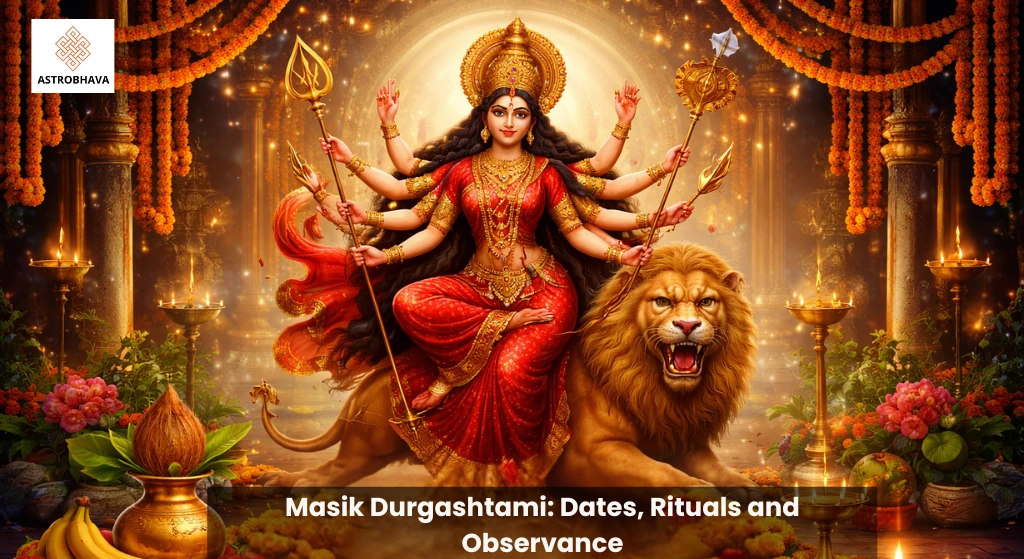
There’s something truly magical about Navratri. The air feels different — charged with a kind of divine electricity that you can almost feel on your skin. Incense fills the home, diyas flicker in every corner, and somewhere nearby a devotional chant is already playing. If you’ve ever wondered how to make the most of these nine sacred nights, the answer — at least a big part of it — lies in the Maa Durga mantras you choose to chant.
In Hindu tradition, mantras are not just words. They are vibrational formulas — ancient sounds carefully encoded by the rishis (sages) to invoke specific divine energies. When you chant a Durga mantra with sincerity and correct pronunciation, you’re not merely reciting a prayer. You’re aligning your inner frequency with the energy of the Divine Mother herself. And during Navratri, when the cosmic energies are naturally elevated in her honour, the power of these mantras intensifies manifold.
Whether you’re a seasoned devotee or someone exploring Durga worship for the first time, this guide is for you. We’re going to walk you through the most powerful Maa Durga mantras to chant during Navratri — their Sanskrit text, their meanings, the right way to chant them, and the blessings each one carries.
Why Navratri Is the Best Time to Chant Durga Mantras
Before we get into the mantras themselves, let’s understand why Navratri is such a spiritually charged time to chant them.
Navratri — meaning “nine nights” — is observed twice a year: once in spring (Chaitra Navratri) and once in autumn (Sharad Navratri). The autumn celebration is the more widely observed of the two, and it’s considered especially powerful for Shakti worship. According to Vedic astrology and tradition, during these nine nights, the cosmic energy of the Divine Mother is said to be uniquely accessible and responsive to sincere devotion.
Our scriptures recommend that we tap into this heightened power through bhajans, mantras, and devotional music that elevate our consciousness and awaken Bhakti — divine love — within.
Each of the nine days is also dedicated to one of the nine forms of Durga known as the Navadurga — Shailputri, Brahmacharini, Chandraghanta, Kushmanda, Skandamata, Katyayani, Kaalratri, Mahagauri, and Siddhidatri. Chanting the mantra specific to that day’s form amplifies your connection even further.
Now, let’s get to the mantras.
 1. The Durga Beej Mantra — The Seed of Her Energy
 1. The Durga Beej Mantra — The Seed of Her Energy
Sanskrit:
ॐ दुं दुर्गायै नमः
Om Dum Durgayai Namah
Meaning: “I bow to Goddess Durga.”
This is the most essential Durga mantra and the perfect one to start with, especially if you are new to mantra practice. The syllable Dum (pronounced “doom”) is the beej or seed mantra of Goddess Durga — it carries her core vibrational energy in its most concentrated form. Think of it like a password that directly connects your consciousness to hers.
The effectiveness of Durga mantras is said to depend on the mental discipline involved and their correct recitation. With the Beej mantra, even a few minutes of focused chanting can create a palpable shift in energy around you.
When to chant: Every day of Navratri, ideally 108 times in the morning using a rudraksha mala.
Blessings: Protection from negative energies, inner strength, and a direct connection with the Divine Mother.
2. The Durga Dhyan Mantra — For Focus and Concentration
Sanskrit:
जटा जूट समायुक्तमर्धेन्दु कृत लक्षणाम्। लोचनत्रय संयुक्तां पद्मेन्दु सद्यशाननाम्॥
Om Jataa Jut Samaayuktam Ardhendu Krit Lakshanam Lochanatraya Sanyuktam Padmendu Sadyashaanaam
Meaning: This mantra describes the form of Goddess Durga — adorned with matted locks, wearing a crescent moon, with three radiant eyes, and a face as luminous as the lotus and moon.
Chanting this mantra before other Durga mantras helps to improve concentration, increase meditation, and create a mindset for spiritual practice. It is especially beneficial for students and those seeking focus in their work.
This is ideally chanted at the very beginning of your Navratri puja, before you begin any other mantra. It helps settle the mind, invoke the visual form of the Goddess, and create the right mental space for the worship that follows.
When to chant: Before beginning your daily Navratri puja session.
Blessings: Mental clarity, concentration, spiritual focus, and academic success.
🙏 Struggling with focus, obstacles, or a scattered mind?
AstroBhava’s Durga Pooja is performed personally for you — in your Name, Nakshatra & Raasi — by expert Vedic priests in a consecrated temple. Packages from 1 day to 48 days, with free worldwide prasad delivery and a complimentary energised Yantra on select packages.
👉 Book Durga Pooja at AstroBhava →
3. The Sarva Mangala Mantra — For Auspiciousness in All Things
Sanskrit:
सर्वमङ्गलमाङ्गल्ये शिवे सर्वार्थसाधिके। शरण्ये त्र्यम्बके गौरी नारायणि नमोऽस्तु ते॥
Sarva Mangala Maangalye Shive Sarvaartha Saadhike Sharanye Tryambake Gauri Narayani Namo’stu Te
Meaning: “O Narayani — you who are the most auspicious of all auspicious things, you who are Shiva herself, you who fulfil all the aims of life — O three-eyed Gauri, we take refuge in you and offer you our salutations.”
This is one of the most beloved and widely chanted of all Durga mantras, and it comes directly from the Devi Mahatmya (also known as the Durga Saptashati) — the primary scripture of Shakti worship. The regular chanting of this mantra gives wisdom, strength, and a prosperous life. It is recited during all celebrations, rituals, and events.
You’ll hear this mantra at the beginning and end of most Navratri rituals. It’s the mantra that signals: “We are now in the presence of the Divine Mother.” If you only learn one Durga mantra this Navratri, make it this one.
When to chant: Every morning and evening during Navratri. Also chant it at the beginning of any important task or event.
Blessings: All-round auspiciousness, fulfilment of life’s goals, wisdom, and divine protection.
4. The Navarna Mantra — The Nine-Syllable Power Mantra
Sanskrit:
ॐ ऐं ह्रीं क्लीं चामुण्डायै विच्चे
Om Aim Hreem Kleem Chamundayai Vichche
Meaning: This nine-syllable (Navarna) mantra is an invocation of Chamunda — the fierce combined form of Chanda and Munda, both aspects of Goddess Durga. Each syllable (Aim, Hreem, Kleem) is a seed mantra representing Saraswati, Lakshmi, and Kali respectively — making this one of the most complete and energetically dense mantras in the entire Shakta tradition.
Chanting the Navarna Mantra 108 times daily with full focus and surrender is among the most powerful Navratri practices. This is the mantra that advanced practitioners chant during the Durga Saptashati recitation, and it’s considered the master key to unlocking the full blessings of Navratri.
A word of caution: this mantra is potent. Approach it with reverence, with a clean body and a pure intention. Sit facing east or north, light a lamp, and chant with focused awareness.
When to chant: Each of the nine nights of Navratri — ideally 108 times after sunset.
Blessings: Invokes the combined power of all three great goddesses, removes deep-seated obstacles, grants spiritual empowerment, and accelerates inner transformation.
🔥 Amplify the power of the Navarna Mantra with a Sacred Fire Ritual
AstroBhava’s Durga Homa brings together expert Vedic priests, sacred fire, and the powerful moola mantra of Goddess Durga — performed individually for you with live telecast. Devotees worldwide report feeling deeply connected to the ritual even through the screen, with tangible spiritual energy experienced during the live telecast.
👉 Book Durga Homa at AstroBhava →
5. The Durga Shatru Nashak Mantra — For Protection from Enemies
Sanskrit:
रिपवः संक्षयं यान्ति कल्याणं चोपपद्यते। नन्दते च कुलं पुंसां माहात्म्यं मम श्रृणुयान्मम॥
Ripavah Sankshayam Yaanti Kalyaanam Chop Padyate Nandate Cha Kulam Punsaam Maahaatmyam Mam Srinu Yaanmam
Meaning: “May enemies be destroyed. May welfare and auspiciousness be attained. May the family of this devotee flourish. Hear the greatness of the Mother.”
This is a mantra of Goddess Durga that helps seek protection against all negativity, enemies, and adversaries. It protects devotees and sends away those who are jealous or harbour ill-will. It is believed this mantra has the power to neutralise enemies and bring balance, prosperity, bliss, and peace into life.
If you have been going through a period of conflict — in your workplace, in your relationships, or with hidden enemies — this mantra is specifically meant for you. Chant it during the evening aarti of Navratri with a red flower offered to the Goddess.
When to chant: Especially on Day 6 (Maa Katyayani’s day) and Day 7 (Maa Kaalratri’s day) of Navratri.
Blessings: Protection from enemies and jealous individuals, peace, family wellbeing, and divine favour.
6. The Durga Sarvabaadhaa Mantra — For Liberation from All Troubles
Sanskrit:
सर्वाबाधाविनिर्मुक्तो धनधान्यसुतान्वितः। मनुष्यो मत्प्रसादेन भविष्यति न संशयः॥
Sarvaa Baadhaa Vinirmukto Dhan Dhaanya Sutaanvitah Manushyo Matprasaaden Bhavishyati Na Sanshayah
Meaning: “By the grace of the Mother, a person becomes free from all troubles and is blessed with wealth, grain, and children — of this there is no doubt.”
By the grace of Maa Durga, a person becomes free from all troubles and is blessed with wealth, prosperity, and children. Reciting this mantra helps eliminate problems and misery while attracting wealth and prosperity.
This mantra is for anyone going through financial hardship, illness, family problems, or a general feeling of being stuck. The phrase “na sanshayah” — “there is no doubt” — is itself a statement of complete divine assurance. When you chant this, you are not just hoping for Maa Durga’s grace — you are accepting it as a certainty.
When to chant: Daily throughout Navratri, ideally 21 or 108 times in the morning.
Blessings: Financial relief, family harmony, good health, removal of misery, and abundant grace.
7. The Shanti Durga Mantra — For Peace and Planetary Relief
Sanskrit:
शान्तिकर्मणि सर्वत्र तथा दुःस्वप्नदर्शने। ग्रहपीडासु चोग्रासु माहात्म्यं श्रृणुयान्मम॥
Shanti Karmani Sarvatra Tatha Duh Swapna Darshane Grah Pidaasu Chograsu Maahaatmyam Srinu Yaanmam
Meaning: “In all peace-seeking activities, in relief from bad dreams, and in the mitigation of severe planetary afflictions — hear the glory of the Divine Mother.”
This mantra helps eliminate nightmares and bad omens and can be chanted to achieve peace during difficult phases and rough patches in life. It has the power to nullify the malefic effects of bad planetary movements.
If you or someone in your family has been suffering from repeated bad dreams, restless sleep, or is going through a period of Sade Sati (Saturn’s 7.5-year transit) or other difficult planetary transits, this is the mantra to prioritise this Navratri.
When to chant: Before sleep each night during Navratri. Also powerful during morning puja.
Blessings: Deep peace, restful sleep, relief from nightmares, and protection from malefic planetary influences.
🌙 Are Difficult Planetary Transits Affecting Your Life?
AstroBhava’s Drishti Durga Homa is specifically designed to remove the effects of planetary afflictions, evil eye, and negative energies. Drishti Durga Homa removes the effects of bad eyes, negative forces in the atmosphere, and obstacles in all aspects of life. Performed live with individual sankalpa, with free energised Yantra.
👉 Book Drishti Durga Homa at AstroBhava →
8. The Vana Durga Mantra — For All-Round Protection
Sanskrit:
ॐ ह्रीं श्रीं दुं दुर्गायै नमः
Om Hreem Shreem Dum Durgayai Namah
Meaning: This mantra combines the seed syllables of Lakshmi (Shreem), Durga (Dum), and Mahamaya (Hreem) in a single invocation — making it an extremely potent all-purpose protection mantra.
Worshipping Goddess Vana Durga removes jealousy, evil eyes, and negativity. This supreme deity gives all-round protection and a peaceful life, and can be invoked by individuals, families, and businesses alike.
This mantra is particularly powerful if you feel that your progress — in career, health, or relationships — is being blocked by external forces: jealousy, ill-will, or simply a run of unexplained bad luck. Chant it with complete trust and surrender.
When to chant: Throughout Navratri, especially during the first three days dedicated to Maa Shailputri, Brahmacharini, and Chandraghanta.
Blessings: All-round protection, removal of evil eye and jealousy, peaceful family life, and business success.
How to Chant Durga Mantras Correctly During Navratri
Knowing the mantras is half the journey. The other half is knowing how to chant them so that the full vibrational benefit reaches you.
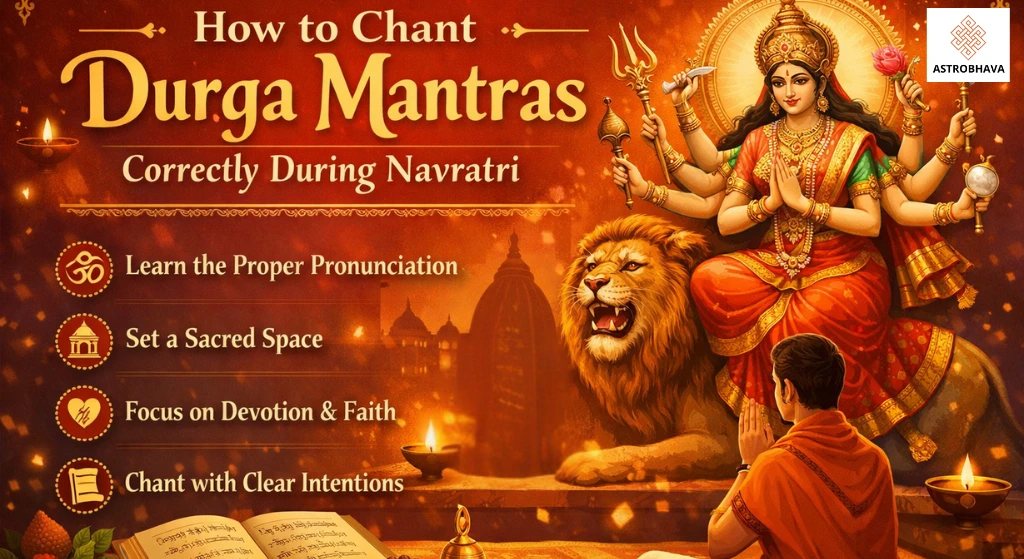
Prepare yourself first. Before invoking Goddess Durga, one should take a bath early in the morning and wear clean clothes. Then, the idol or photo of the deity should be placed on a clean platform where one wants to worship her.
Choose the right time. The Brahma Muhurta (approximately 4 AM to 6 AM) is considered the most powerful time for mantra chanting. Evening twilight (Pradosh kaal) is the second-best window. During Navratri, the energy at both these times is especially amplified.
Use a mala. A rudraksha mala (108 beads) is ideal for Durga mantras. Keep one bead for each repetition. If you’re chanting 108 times, one full round of the mala equals one mala japa.
Maintain a consistent spot. Set up a small altar with Maa Durga’s image or idol, a diya, red flowers (especially hibiscus), and incense. Return to the same spot every day — the energy builds over nine nights.
Chant with intention, not just repetition. Before you begin, take a moment to clearly state your sankalpa — your intention. What are you seeking from Maa Durga this Navratri? Be specific, be sincere, and then surrender the outcome to her.
A Quick-Reference Guide: Which Mantra for Which Day of Navratri
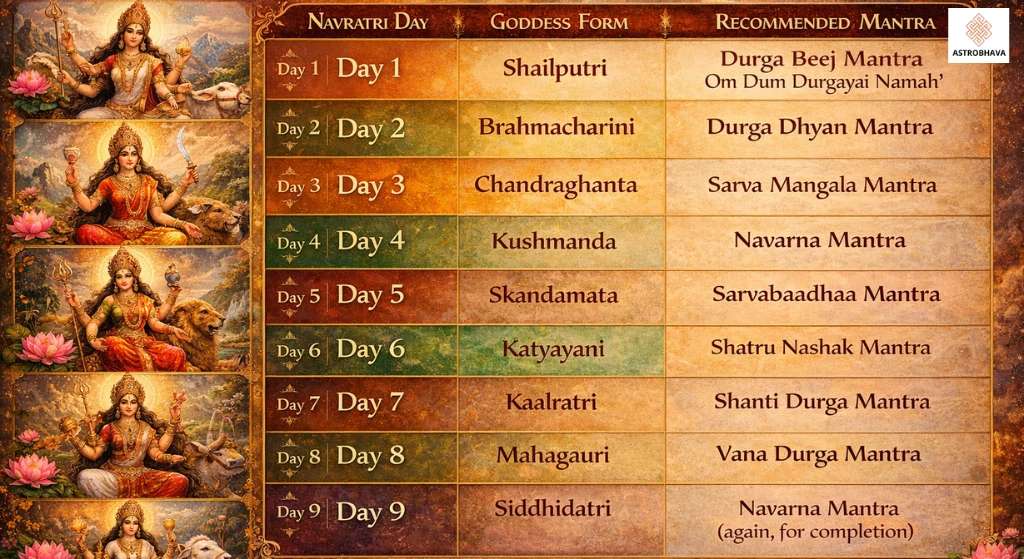
| Navratri Day | Goddess Form | Recommended Mantra |
| Day 1 | Shailputri | Durga Beej Mantra (Om Dum Durgayai Namah) |
| Day 2 | Brahmacharini | Durga Dhyan Mantra |
| Day 3 | Chandraghanta | Sarva Mangala Mantra |
| Day 4 | Kushmanda | Navarna Mantra |
| Day 5 | Skandamata | Sarvabaadhaa Mantra |
| Day 6 | Katyayani | Shatru Nashak Mantra |
| Day 7 | Kaalratri | Shanti Durga Mantra |
| Day 8 | Mahagauri | Vana Durga Mantra |
| Day 9 | Siddhidatri | Navarna Mantra (again, for completion) |
Frequently Asked Questions
Q1. How many times should I chant a Durga mantra during Navratri?
The traditional count is 108 times per session, which corresponds to one full mala round. If 108 feels too much when starting out, even 11 or 21 repetitions done with sincerity are considered beneficial. The key is consistency — chanting daily throughout all nine nights is more powerful than chanting a large number only once or twice.
Q2. Can women chant Durga mantras during menstruation?
Traditional Vedic practice recommends resting from formal puja rituals during menstruation. However, mental chanting (manasik japa) — silently repeating the mantra in the mind — is universally permitted and considered equally valid. The Divine Mother, being the source of all life, is never truly inaccessible.
Q3. Do I need to fast while chanting Durga mantras during Navratri?
Fasting is a traditional practice during Navratri and is believed to purify the body and sharpen the mind for mantra practice — but it is not strictly mandatory for the mantras to work. What matters more is mental purity, sincerity of intention, and regularity of practice. Even if you observe a partial fast (avoiding non-vegetarian food, alcohol, and onion/garlic), that is considered sufficient.
Q4. Which is the most powerful Durga mantra for Navratri?
While all mantras have their unique power, the Navarna Mantra (Om Aim Hreem Kleem Chamundayai Vichche) is widely regarded as the most complete and energetically powerful Durga mantra for Navratri. It combines the energies of Saraswati, Lakshmi, and Kali into one invocation and is the seed mantra of the entire Durga Saptashati scripture.
Q5. Can I chant Durga mantras at night?
Yes — evening and night-time chanting during Navratri is not just permitted but encouraged, as the festival itself is called “nine nights.” The period just after sunset (Pradosh kaal) is especially powerful. The Navarna Mantra in particular is traditionally chanted after sunset during Navratri.
Q6. What is the difference between a Durga mantra and a Durga Homa?
A mantra is a personal devotional practice — you chant the sacred sound yourself, in your own space, building your own connection with the Goddess. A Homa (or Yagna) is a collective fire ritual performed by trained Vedic priests on your behalf, where the mantra is chanted thousands of times into a sacred fire, amplifying the energy many times over. Both are valuable — personal chanting builds daily connection, while a Homa delivers a more concentrated burst of ritual energy for specific intentions and life challenges.
Q7. Can I ask someone to perform a Durga Homa or Puja on my behalf if I can’t do it myself?
Absolutely — this is a well-established and deeply respected Vedic tradition. Having a priest perform rituals on your behalf (sankalpa puja) is considered just as meritorious as performing them yourself, provided the ritual is done with your name, nakshatra, and specific intention declared. AstroBhava specialises in exactly this service — personalised Vedic rituals performed by expert priests, with live telecast and worldwide prasad delivery.
Q8. What should I do if I mispronounce a Durga mantra?
Don’t let fear of imperfect pronunciation stop you from chanting. The genuine devotion behind your chanting matters far more than flawless Sanskrit. Maa Durga is described in the scriptures as Karuna Mayi — the embodiment of compassion. She responds to the sincere call of her children, regardless of accent or dialect. That said, listening to audio recordings of correct pronunciation before you begin is always a helpful starting point.
Ready to take your Navratri devotion deeper? AstroBhava offers live Vedic Puja, Homa, and Japa services — performed personally in your name by expert priests in a consecrated sacred temple. With 17+ years of experience and 250,000+ rituals performed, AstroBhava makes authentic Vedic worship accessible to devotees worldwide.
👉 Explore All Durga Services at AstroBhava →
Jai Maa Durga 🙏