There’s something magical about watching colors explode across the sky, transforming ordinary streets into kaleidoscopic wonderlands. Ranga Panchami 2026 date and celebrations mark one of India’s most joyous festivals, yet it remains surprisingly misunderstood by many. While Holi grabs global headlines, Ranga Panchami quietly carries forward centuries of spiritual tradition, offering devotees a deeper, more contemplative celebration of color and community. This year, as March approaches, millions across the world are preparing for this sacred occasion that blends devotion with pure, unbridled joy.
 Introduction to Ranga Panchami 2026: A Vibrant Festival of Colors
What is Ranga Panchami and Its Cultural Significance
Ranga Panchami represents the grand finale of the Holi festival season, celebrated with fervor primarily in Maharashtra and parts of Madhya Pradesh. Unlike the spontaneous color-throwing of Holi, the Ranga Panchami festival carries deeper ritualistic significance rooted in ancient Vedic traditions. The word “Ranga” translates to color, while “Panchami” refers to the fifth day of the lunar fortnight. This festival specifically honors the triumph of good over evil, commemorating the destruction of demoness Holika and celebrating the eternal victory of devotion.
What makes this festival culturally unique is its emphasis on community bonding and spiritual cleansing. Families gather not just to play with colors but to participate in elaborate pujas, share traditional meals, and strengthen social ties. According to the Maharashtra Tourism Board (2024), approximately 12 million people participate in Ranga Panchami celebrations across the state annually, making it one of the largest regional festivals in India.
Ranga Panchami 2026 Date and Auspicious Timing
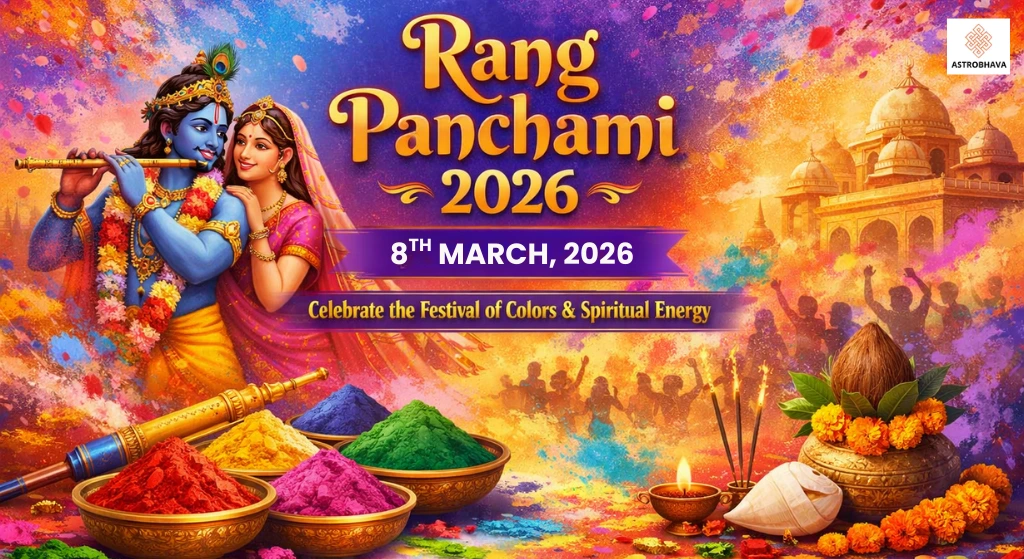
The Rang Panchami 2026 date falls on Sunday, March 8, 2026.
Panchami Tithi Begins – 07:17 PM on Mar 07, 2026
Panchami Tithi Ends – 09:10 PM on Mar 08, 2026
However, color playing typically continues throughout the day and sometimes into the evening hours. The Ranga Panchami 2026 celebrations coincide with a favorable planetary alignment — Jupiter’s position in Taurus and Venus in Pisces creates what astrologers call “Shubh Yoga,” considered highly auspicious for new beginnings and spiritual practices (Astrobhava Panchang Analysis, 2026).
The Connection Between Holi and Ranga Panchami
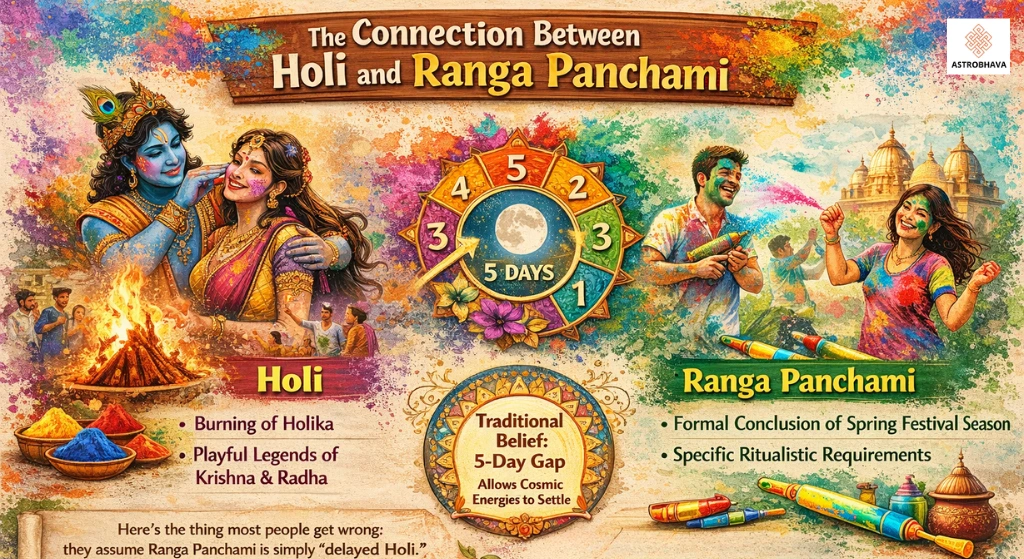
Here’s the thing most people get wrong: they assume Ranga Panchami is simply “delayed Holi.” That’s a fundamental misunderstanding. While both festivals involve colors, their spiritual purposes differ significantly. Holi celebrates the burning of Holika and the playful legends of Krishna and Radha. Ranga Panchami, however, marks the formal conclusion of the spring festival season and carries specific ritualistic requirements that Holi doesn’t demand.
The five-day gap between Holi and Ranga Panchami isn’t arbitrary. Traditional beliefs suggest this period allows the cosmic energies released during Holika Dahan to settle, creating optimal conditions for spiritual celebration. In Maharashtra, many families actually reserve their most elaborate color celebrations for Ranga Panchami rather than Holi itself, treating it as the “main event” of the festival season.
Ranga Panchami Importance: Spiritual and Religious Significance
 Ranga Panchami Importance: Spiritual and Religious Significance
Mythological Stories Behind Ranga Panchami Festival
The Ranga Panchami importance stems from multiple mythological narratives that have been passed down through generations. The primary legend connects to Prahlad and Holika, but there’s a lesser-known story that specifically explains why colors are played on the fifth day. According to the Bhavishya Purana, Lord Vishnu appeared in his Narasimha avatar on Panchami tithi to destroy the demon king Hiranyakashipu. The colors represent the cosmic dust scattered during this divine battle.
Another fascinating narrative involves Lord Krishna and the gopis of Vrindavan. While Holi celebrates their playful color games, Ranga Panchami commemorates the day when Krishna finally revealed his divine form to the gopis, showering them with celestial colors that represented different aspects of divine love. This story explains why devotees consider Ranga Panchami particularly auspicious for Krishna worship.
Ranga Panchami 2026 Meaning in Hindu Traditions
Understanding Ranga Panchami 2026 meaning requires looking beyond the surface-level color celebrations. In Hindu philosophy, colors represent the five elements (Pancha Mahabhutas) and their corresponding cosmic energies. Red symbolizes fire and passion, yellow represents earth and stability, green embodies water and growth, blue signifies sky and infinity, while white represents space and purity. Playing with these colors isn’t mere entertainment—it’s a symbolic ritual of balancing elemental energies within oneself.
The timing of Ranga Panchami also holds deep significance. Occurring during the transition from winter to spring, it marks nature’s own color transformation. Trees bloom, flowers blossom, and the entire landscape transforms from muted winter tones to vibrant spring hues. The festival essentially celebrates humanity’s participation in this cosmic color transformation.
Join the Live telecast of Lakshmi Narasimha Homa to bless yourself with the divine energies.
Ranga Panchami Rituals: Traditional Practices and Customs
Morning Prayers and Puja Vidhi for Rang Panchami 2026
The Rang Panchami 2026 rituals begin well before sunrise with the head of the household performing Brahma Muhurat prayers. Traditional practice requires waking at 4:30 AM, taking a ritual bath with water infused with turmeric and neem leaves, and offering prayers to Lord Vishnu. The puja thali should include kumkum, haldi, akshat (unbroken rice), fresh flowers, and specially prepared prasad.
The formal puja sequence involves lighting a ghee lamp, offering incense, and reciting specific mantras dedicated to Lord Krishna. The “Om Namo Bhagavate Vasudevaya” mantra is chanted 108 times using a tulsi mala. Following this, family members apply tilak to each other and seek blessings from elders before the color celebrations begin. This ritualistic foundation transforms the subsequent color play from mere entertainment into a sacred practice.
The Sacred Significance of Playing with Colors
Understanding Ranga Panchami rituals requires appreciating why colors themselves are considered sacred. Traditional practice mandates using only natural, organic colors derived from flowers, herbs, and minerals. Gulal (red powder) comes from dried red sandalwood, yellow from turmeric, green from dried neem leaves, and blue from indigo plants. These natural colors carry healing properties and are believed to balance the body’s doshas according to Ayurvedic principles.
The act of applying color to another person is considered an act of blessing. When you smear gulal on someone’s face, you’re symbolically transferring positive energy and good wishes. This explains why even strangers participate in color celebrations—the festival temporarily dissolves social barriers, creating a community united in joyful blessing-giving.
How to Celebrate Ranga Panchami 2026: Step-by-Step Guide
Preparing Your Home and Family for the Celebrations
Proper preparation ensures your Ranga Panchami 2026 date and celebrations are both enjoyable and spiritually meaningful. Begin preparations at least three days before the festival. Clean your home thoroughly, paying special attention to the puja room. Decorate entrances with fresh mango leaves and marigold flowers. Stock up on organic colors—avoid synthetic colors that can cause skin irritation and environmental damage.
Prepare old clothes for family members specifically for color play. Apply coconut oil generously to hair and exposed skin before celebrations—this creates a protective barrier that makes color removal easier afterward. Ensure you have adequate water supply for post-celebration cleanup. Many families also prepare protective coverings for furniture and electronics to prevent color damage.
Rang Panchami 2026 Rituals: A Complete Celebration Guide
Here’s a step-by-step guide to observing Rang Panchami 2026 rituals authentically:
- Pre-dawn preparation: Wake early, perform ritual bathing, and prepare the puja space
- Morning puja (6:00 AM – 7:30 AM): Complete formal worship with mantras and offerings
- Family blessing ceremony: Exchange tilaks and seek elder blessings
- Color celebrations (10:00 AM – 2:00 PM): Participate in community color play during auspicious muhurat
- Afternoon feast: Share traditional foods with family and neighbors
- Evening prayers: Conclude with gratitude prayers and aarti
Celebration with Astrobhava’s Online Rituals
For those unable to perform traditional rituals at home, Astrobhava offers comprehensive online puja services. Our experienced pandits conduct authentic Vedic ceremonies via live video, allowing devotees worldwide to participate in traditional worship. The online puja includes personalized mantra chanting based on your birth chart, ensuring maximum spiritual benefit.
Astrobhava’s Ranga Panchami special package includes virtual participation in the puja, personalized prasad delivery to your doorstep, and a detailed guide to performing supplementary rituals at home. Our services have helped over 50,000 families maintain their spiritual traditions despite geographical constraints. The convenience of online rituals doesn’t diminish their spiritual efficacy—our pandits perform ceremonies with the same dedication and authenticity as in-person worship.
Astrological Recommendations from Astrobhava for 2026
Based on planetary positions during Ranga Panchami 2026 date and celebrations, Astrobhava’s astrologers recommend specific practices for different zodiac signs. Aries and Leo natives should wear red during celebrations for enhanced prosperity. Taurus and Virgo individuals benefit from yellow colors that strengthen their planetary positions. Water signs (Cancer, Scorpio, Pisces) should incorporate blue and green colors for emotional balance.
The Jupiter-Venus conjunction during this period creates exceptional opportunities for relationship healing. Couples experiencing difficulties should participate in color play together—the shared joy can help dissolve accumulated negativity. Astrobhava offers personalized Ranga Panchami horoscope readings that provide specific recommendations based on your individual birth chart.
10 Key Benefits of Celebrating Ranga Panchami
 10 Key Benefits of Celebrating Ranga Panchami
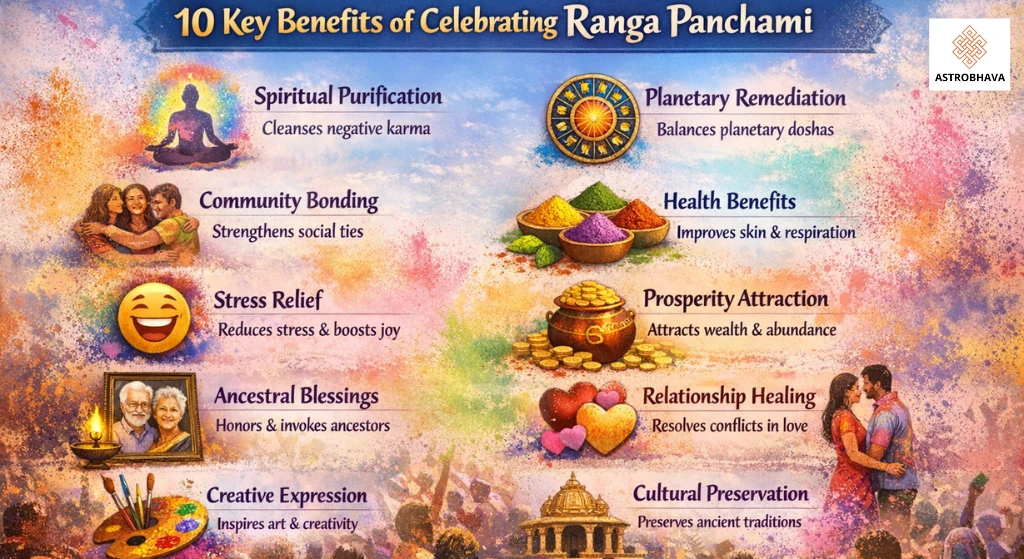
The benefits of observing Ranga Panchami extend far beyond mere entertainment. Understanding these advantages helps devotees approach the festival with appropriate reverence and intention.
- Spiritual Purification: The colors and rituals cleanse accumulated negative karma, preparing the soul for the new year
- Community Bonding: Shared celebrations strengthen social ties and create lasting memories with loved ones
- Stress Relief: The uninhibited joy of color play releases endorphins and reduces cortisol levels significantly
- Ancestral Blessings: Traditional observance honors ancestors and invites their protective blessings
- Planetary Remediation: Specific colors can balance malefic planetary influences in your horoscope
- Health Benefits: Natural colors contain medicinal properties that benefit skin and respiratory health
- Prosperity Attraction: Proper rituals during auspicious muhurat attract wealth and abundance
- Relationship Healing: The festival’s joyful energy helps resolve conflicts and strengthen bonds
- Creative Expression: Color play stimulates creativity and artistic sensibilities
- Cultural Preservation: Participation ensures ancient traditions survive for future generations
Common Mistakes to Avoid During Ranga Panchami Celebrations
Misconceptions About Ranga Panchami Rituals
Many families unknowingly compromise their celebrations through common misconceptions about Ranga Panchami rituals. The biggest mistake is treating the festival as purely recreational, skipping morning pujas entirely. Without the spiritual foundation, color play becomes mere entertainment rather than sacred celebration. Another frequent error involves using synthetic colors that lack the spiritual properties of traditional organic alternatives.
Some people mistakenly believe that Ranga Panchami can be celebrated on any convenient day near the actual date. This is incorrect—the specific planetary alignments on Panchami tithi create unique spiritual conditions that cannot be replicated on other days. Similarly, performing rituals after sunset diminishes their efficacy, as the auspicious muhurat specifically falls during daylight hours.
Respecting Religious Sentiments and Traditions
The joyful nature of Ranga Panchami sometimes leads to boundary violations that disrespect religious sentiments. Never force colors on unwilling participants—consent is essential even during festive celebrations. Avoid applying colors to religious idols, temples, or sacred spaces. Some communities observe mourning periods during which color celebrations are inappropriate; be aware of neighbors’ circumstances before initiating celebrations.
Alcohol consumption during Ranga Panchami, though common in some circles, contradicts the festival’s spiritual purpose. Traditional celebrations emphasize clarity and devotion, not intoxication. Similarly, playing loud music during puja times in neighboring homes shows disrespect for those observing traditional rituals. Balance your celebrations with consideration for community members who may observe the festival differently.
Conclusion: Embracing the Joy of Ranga Panchami 2026 with Astrobhava
Key Takeaways for a Meaningful Celebration
As we approach Ranga Panchami 2026 date and celebrations on March 8th, remember that this festival offers far more than colorful entertainment. It’s an opportunity for spiritual renewal, community bonding, and cultural preservation. The rituals, when performed with understanding and devotion, create lasting positive impacts on personal and family well-being. Whether you celebrate traditionally or adapt practices to modern circumstances, maintaining the festival’s spiritual essence ensures meaningful participation.
The key to authentic celebration lies in balance—honoring traditional practices while adapting sensibly to contemporary realities. Use organic colors, perform morning rituals, share traditional foods, and most importantly, approach the celebration with genuine joy and gratitude. These elements, combined with community participation, create the transformative experience that Ranga Panchami has offered devotees for millennia.
How Astrobhava Can Guide Your Festival Experience
Astrobhava remains committed to helping devotees worldwide experience authentic Ranga Panchami festival celebrations regardless of geographical location. Our comprehensive services include personalized horoscope analysis identifying optimal celebration practices for your zodiac sign, live online puja participation with experienced Vedic pandits, and detailed ritual guides ensuring traditional authenticity.
Whether you’re seeking guidance on auspicious timing, color recommendations based on your birth chart, or complete online puja services, Astrobhava provides trusted support for your spiritual journey. Contact us today to make your Ranga Panchami 2026 celebration truly transformative and spiritually enriching.
Frequently Asked Questions About Ranga Panchami 2026
Are Holi and Rang Panchami the Same?
No, Are Holi and Rang Panchami the same? is one of the most common questions we receive, and the answer is definitively no. While both festivals involve playing with colors, they are distinct celebrations with different dates, rituals, and spiritual significance. Holi occurs on Purnima (full moon) of Phalguna month and celebrates the burning of Holika and Krishna’s playful legends. Ranga Panchami falls five days later on Krishna Paksha Panchami and marks the formal conclusion of the spring festival season with specific regional traditions, particularly in Maharashtra.
The ritual requirements also differ significantly. Holi celebrations typically begin with Holika Dahan bonfire rituals, while Ranga Panchami emphasizes morning pujas and community gatherings. Many Maharashtrian families consider Ranga Panchami their primary color festival, reserving elaborate celebrations for this day rather than Holi itself.
What is the Exact Rang Panchami 2026 Date and Time?
The Rang Panchami 2026 date falls on Sunday, March 8th, 2026. The Panchami tithi begins at 07:17 PM on Mar 07, 2026 and Tithi Ends at 09:10 PM on Mar 08, 2026. For those following strict traditional practices, the Brahma Muhurat period (4:00 AM – 5:30 AM) on March 8th is considered ideal for beginning spiritual preparations. Color celebrations can continue throughout the day, but the spiritual potency is highest during the designated muhurat hours.
What Are the Most Important Ranga Panchami Rituals to Follow?
The essential Ranga Panchami rituals include performing puja to Lord Vishnu or Krishna, exchanging tilaks with family members, and participating in community color celebrations. The puja should include offerings of fresh flowers, kumkum, akshat, and specially prepared prasad. Chanting “Om Namo Bhagavate Vasudevaya” 108 times is traditional practice.
Why is Ranga Panchami Celebrated Five Days After Holi?
The five-day gap between Holi and Ranga Panchami has both astronomical and spiritual significance. According to Vedic traditions, the cosmic energies released during Holika Dahan require five days to settle and stabilize. The Panchami tithi (fifth day) is associated with the planet Mercury, which governs communication and community—appropriate for a festival emphasizing social bonding.
Additionally, the five-day period allows families to complete Holi celebrations, rest, and prepare properly for Ranga Panchami’s more elaborate rituals. This spacing ensures both festivals receive appropriate attention rather than being rushed into a single celebration period.