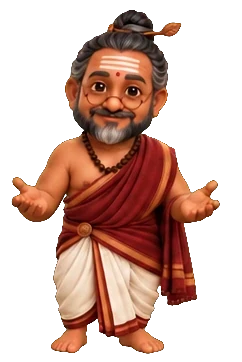
Chitra is the fourteenth nakshatra, spanning 23°20′ Virgo to 6°40′ Libra. Its symbol is a bright jewel or pearl, its planetary ruler is Mars, and classical texts assign it the shakti called Punya Chayani—the power of accumulating merit. The deity associated with the star is Vishwakarma, also known in the Vedas as Tvashtar, the divine craftsman who fashions form from the formless.
The Chitra Nakshatra Mantra is the traditional means of addressing that deity. It is recited by those born with the Moon, lagna or a key graha in Chitra, by people whose work turns on design and precision, and by anyone observing Chitra transit or Chitra Shanti. The house preserves the beej form and the longer Gayatri form exactly as they have been handed down.
Before beginning any sustained japa, many devotees first confirm the birth star and pada with a free chart tool such as the nakshatra finder, then choose an auspicious window from the day’s panchang.
The Beej and Gayatri Forms
Two forms are current in the tradition. The short beej mantra is the one most often used for daily japa:
The longer Gayatri-style verse invokes Tvashtar together with Indra and Agni and is recited when a fuller sankalpa is taken:
Both are offered in Sanskrit. Regional scripts (Tamil, Malayalam, Telugu, Kannada) are used only as pronunciation aids; the vibration remains the Sanskrit original. For correct sound and breath, see the house guide on how to chant a mantra.
Meaning of the Mantra
“Om” is the primordial syllable that opens the mind to the rite. “Vishwakarmane” is the dative of Vishwakarma, the name under which the Rigveda and later Puranas praise the architect of the gods’ cities, weapons and chariots. “Namah” is the act of bowing—surrender of personal will to the cosmic order (rtam) that the deity embodies.
The longer verse addresses Tvashtar as the wondrous creator who fosters growth and who establishes harmony among living beings. Tradition reads the whole as a petition for clarity of design, orderly execution and the merit that accrues when work is aligned with that order. It does not claim to manufacture results; it places the chanter inside the blueprint the texts describe.
astrobhava.com
Chitra Nakshatra Mantra
The sacred Vedic invocation linked to Chitra, the fourteenth lunar mansion
Side by side
| Aspect | Traditional practice |
|---|---|
| Time | Brahma muhurta, or any clean hour on a Chitra day or Tuesday |
| Direction | East or north |
| Posture | Padmasana or Sukhasana |
| Count | 108 repetitions as the daily minimum |
| Duration | A sankalpa of forty continuous days is classical |
When a full fire offering is desired
Mantra, Homam and Daily Discipline
sankalpa · vidhi · agni
ASTROBHAVA.COMVedic rituals, never a group ceremony, telecast live
Scriptural and Classical Basis
Rigveda hymns 10.81 and 10.82 praise Vishwakarma as the one who measured heaven and earth and who “knows all forms.” The Taittiriya Brahmana links the brilliance of Chitra to rtam—truth operating from above and below. Puranic accounts (Matsya Purana, Bhagavata Purana) present Vishwakarma as a mind-born son of Brahma and the builder of the residences and implements of the devas.
Later Jyotisha and Nakshatra literature prescribe the mantra for Chitra-born natives and for Chitra Shanti when Mars is afflicted or when creative and construction undertakings stall. Temple practice—especially at shrines associated with Vishwakarma—has kept the recitation alive through festival and home rites. The lineage is therefore Vedic in origin and continuously attested in the ritual manuals of Tamil Nadu and Kerala.
How Tradition Prescribes the Chant
The method is simple and strict. Bathe, wear clean light-coloured cloth, and sit facing east or north on a wool or silk asana. A small image or yantra of Vishwakarma, a ghee lamp, incense and fresh flowers are customary. A rudraksha or sphatik mala of 108 beads is used for counting.
| Aspect | Traditional practice |
|---|---|
| Time | Brahma muhurta, or any clean hour on a Chitra day or Tuesday |
| Direction | East or north |
| Posture | Padmasana or Sukhasana |
| Count | 108 repetitions as the daily minimum |
| Duration | A sankalpa of forty continuous days is classical |
| Offerings | Ghee lamp, flowers, fruit, sandal paste |
Chant aloud on the first day to fix the vibration, then move to mental japa. Keep the mala dedicated to this mantra alone. Avoid recitation when the mind is agitated, during an eclipse, or on days the panchang marks as inauspicious for new sankalpas. After the round, offer the merit back to the deity rather than claiming it for personal ends.
Who Traditionally Recites It
The texts single out natives of Chitra nakshatra and those with important grahas placed in it. Because the star straddles the Virgo–Libra cusp and is ruled by Mars, it is also prescribed when design, architecture, engineering, jewellery, garment work or any craft that joins precision to beauty is the livelihood. Construction delays, creative obstruction and Mars-related friction in the chart are further classical occasions for the japa or for the corresponding nakshatra homam.
Even when the birth Moon is elsewhere, the mantra is used on the day the Moon transits Chitra, on Tuesdays, or when a muhurta for a building or artistic undertaking falls under the star. A full birth chart from the free kundli tool helps locate whether Chitra is active in the horoscope before a long vow is taken. For wider planetary balance the house also maintains the Navagraha Homam among its regular rites.
Mantra, Homam and Daily Discipline
Japa alone is the householder’s daily discipline. When a stronger sankalpa is required—Chitra Shanti, commencement of a major construction, or pacification of an afflicted Mars—the same verses are employed inside a homam. Priests at the Yagna Ashram in Pollachi, Coimbatore District perform the rite with sesame, ghee and the prescribed samagri, and the ceremony is telecast live so the devotee may keep sankalpa from any country.
The house does not present the mantra or the homam as producing any fixed result. Tradition simply holds that the recitation aligns the chanter with the creative order Vishwakarma represents, and that the fire offering carries the same intention with greater solemnity. Consistency, purity and correct pronunciation remain the measure of the practice.
Questions devotees ask
The AstroBhava Editorial Desk chooses the topics for this blog and decides what is published.