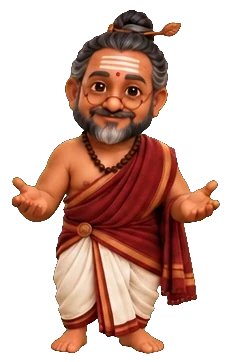
Gayatri Jayanti 2026 falls on Thursday, 25 June 2026. For devotees across India and the diaspora, it is not only a date on the Panchang but the sacred anniversary of the manifestation of Maa Gayatri — Veda Mata, the source from whom Vedic wisdom is said to flow. The day invites a return to the Gayatri Mantra and to the discipline of japa, homam and study associated with her name.
This guide sets out the verified date and tithi for Gayatri Jayanti 2026, the classical identity of the Goddess, the principal legends behind the observance, the mantra with word-by-word meaning, and the practical vidhi traditionally followed at home. South Indian sampradayas also mark a related observance on Shravana Purnima; both are noted below so that families can follow the calendar of their own tradition.
Whether you light a lamp at dawn in Chennai or New Jersey, the day is observed through sincerity of sankalpa, purity of diet, and steady repetition of the twenty-four syllables. Tradition holds that sadhana begun on this tithi carries special weight for the year ahead.
When is Gayatri Jayanti 2026? Date and tithi
Gayatri Jayanti is observed on Jyeshtha Shukla Ekadashi — the eleventh day of the waxing moon in the lunar month of Jyeshtha. It falls one day after Ganga Dussehra. This is the primary date across North India and among most diaspora communities.
| Detail | Timing (IST) |
|---|---|
| Jyeshtha Shukla Ekadashi begins | 24 June 2026, 6:12 PM |
| Jyeshtha Shukla Ekadashi ends | 25 June 2026, 8:09 PM |
| Observance date (North India) | Thursday, 25 June 2026 |
| South Indian related date (Shravana Purnima / Upakarma) | Friday, 28 August 2026 |
South Indian traditions that follow the Yajurveda and Rigveda Upakarma cycle observe Gayatri Jayanti in connection with Shravana Purnima, which in 2026 falls on 28 August and coincides with the annual renewal of the sacred thread and Vedic study. Both dates honour the same Goddess; the difference is regional and sampradaya-based.
In 2026 the Jyeshtha observance falls on a Thursday — Brihaspati Vaar, the weekday of Jupiter, classically linked with wisdom and dharma. For readers abroad, the Ekadashi tithi begins on the evening of 24 June IST, so japa begun after local sunset on the 24th (in many Western time zones) still falls within the tithi. Confirm the exact windows for your city on the daily panchang and the wider festival calendar.
Who is Goddess Gayatri — Veda Mata
Maa Gayatri is traditionally called Veda Mata — the mother from whom the four Vedas are said to have emerged — and is also addressed as Dev Mata and Vishwa Mata. Scriptural and later Puranic descriptions present her as the combined energy of three supreme Goddesses: Saraswati (jnana and vak), Lakshmi (shri and auspiciousness), and Parvati (shakti).
She is described as Panchamukhi — five-faced — with each face linked to one of the five pranas and one of the five cosmic elements. She is seated on a white lotus. Her ten hands carry the conch, lotus, chakra, trident, noose, goad, and the varada and abhaya mudras, signifying protection and the granting of boons. Shaiva texts associate her with Parashiva in his solar form; Brahmanical and Skanda Purana tradition name her as the divine consort of Brahma. She is also spoken of as the living form of the Gayatri Mantra itself — to chant the mantra is to invoke her presence.
astrobhava.com
Gayatri Jayanti 2026
Gayatri Jayanti 2026 falls on Thursday, 25 June 2026
- 6:12 PMJyeshtha Shukla Ekadashi begins
- 8:09 PMJyeshtha Shukla Ekadashi ends
Side by side
| Detail | Timing (IST) |
|---|---|
| Jyeshtha Shukla Ekadashi begins | 24 June 2026, 6:12 PM |
| Jyeshtha Shukla Ekadashi ends | 25 June 2026, 8:09 PM |
| Observance date (North India) | Thursday, 25 June 2026 |
| South Indian related date (Shravana Purnima / Upakarma) | Friday, 28 August 2026 |
When a full home homam is not practical, tradition still values a clean altar
Why this tithi is held sacred
sankalpa · vidhi · agni
ASTROBHAVA.COMVedic rituals, never a group ceremony, telecast live
The legends behind Gayatri Jayanti
The principal legend, drawn from the Padma Purana, centres on a yagna at Pushkar. Lord Brahma was preparing a cosmic sacrifice that required the presence of his consort at an exact muhurta. When Goddess Saraswati did not arrive in time, the sages invoked a radiant goddess of light and wisdom to complete the rite. That luminous form, born of the sages’ tapas and the will of the divine, was Maa Gayatri. Her appearance on Jyeshtha Shukla Ekadashi is celebrated as Gayatri Jayanti.
A second strand of the tradition belongs to Sage Vishwamitra. Born as the Kshatriya king Kaushika, he undertook long austerities until he was recognised as a Brahmarshi. Pleased by the purity of his penance, Maa Gayatri is said to have revealed to him the twenty-four-syllable prayer that stands in the Rigveda (Mandala 3.62.10) as the Savitri mantra. Vishwamitra then offered this mantra to humanity as a path of wisdom and liberation. Gayatri Jayanti is therefore also a day to honour that lineage and to renew one’s own commitment to mantra sadhana.
The Gayatri Mantra — text and meaning
The Gayatri Mantra is the heart of the day’s observance. Every syllable is treated in the tradition as carrying a distinct force.
Word by word: Om — the primordial sound; Bhūr — the earthly plane; Bhuvaḥ — the vital or astral plane; Svaḥ — the celestial plane; Tat — that ultimate divine; Savitur — the Creator, the Sun principle; Vareṇyam — worthy of worship; Bhargo — the radiance that burns away darkness; Devasya — of the divine being; Dhīmahi — we meditate upon; Dhiyo — intellects; Yo — who; Naḥ — our; Prachodayāt — may inspire and illuminate.
Complete sense: we meditate upon the divine radiance of the Creator — that supreme light of the Sun, worthy of worship, which dispels darkness. May that effulgence illuminate our intellect and guide it toward truth and righteousness. The mantra has twenty-four syllables, traditionally linked with the hours of the day and with the shakti-bījas of Maa Gayatri. For pronunciation and method, see the house guides on mantra and how to chant correctly.
How the day is observed — vidhi and timing
Gayatri Jayanti is kept as a day of inner discipline rather than outer display. Classical practice favours the three sandhyas — dawn, midday and sunset — with Brahma Muhurta (roughly ninety minutes before sunrise) held as the most potent window, because the mantra’s Savitur principle resonates with the rising sun.
A simple home observance includes: rising early and bathing; lighting a diya before an image or yantra of Maa Gayatri; offering flowers, unbroken rice and a sattvic naivedya; declaring a sankalpa in one’s own name and gotra; and chanting the Gayatri Mantra. The customary minimum is 108 repetitions per sandhya (324 across the day). On the Jayanti itself, many aspirants aim for 1,008 repetitions in a single sitting. The day coincides with an Ekadashi; strict observers keep a Nirjala or phalahar vrat, avoid grains, meat, onion, garlic and alcohol, and break the fast the following morning in the prescribed parana window.
Families who wish the fire rite performed with Vedic procedure may commission a Gayatri Homam at the ashram, conducted by named priests and telecast live. Related planetary and wisdom-oriented rites are grouped under spiritual growth homas and the wider homam catalogue. For choosing a fitting observance, the free ritual guidance tool can help narrow the options.
Why this tithi is held sacred
In Vedic reckoning, a festival dedicated to a Goddess is a day when her energies are described as especially accessible. Jyeshtha Shukla Ekadashi is classed among the more sattvic tithis — the eleventh lunar day of the waxing moon, when the mind is said to rise toward subtlety. The coincidence with Thursday strengthens the jnana frequency associated with the mantra. The solar principle (Savitur) also aligns with the June period of Uttarayana, when solar prana is traditionally considered abundant for mantra practice.
What the shastras prescribe for sincere observers includes dhisiddhi — clarity of intellect invoked by the line dhiyo yo nah prachodayat — purification of karma, the cultivation of brahma-tejas through study and purity, support for students and scholars, and the longer arc of the mantra toward liberation. The house performs the rite as tradition lays it down; outcomes remain in the domain of grace and the devotee’s own effort. Those tracking dashas or birth nakshatra before beginning a sustained japa vow can use the free nakshatra finder and dasha calculator.
Questions devotees ask
The AstroBhava Editorial Desk chooses the topics for this blog and decides what is published.