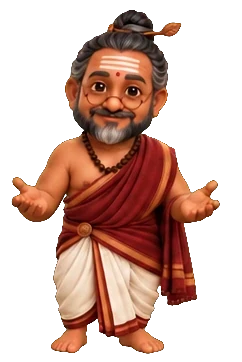
The Mrityunjaya Mantra, also called the Mahamrityunjaya Mantra, is among the most widely recited hymns of the Vedic tradition. It is an invocation to Lord Shiva in his Rudra form as Tryambaka, the three-eyed one, and appears in the Rig Veda as a prayer for release from the bonds of death and for the nectar of immortality.
Householders, temple priests and sadhakas have chanted it for centuries during illness in the family, on days sacred to Shiva, and as part of daily japa. In traditional practice it is also the heart of Rudrabhishekam and of the fire rite known as the Mrityunjaya Samputita Rudra Homam.
This article gives the text of the mantra in several scripts, its classical meaning, the scriptural and Puranic background, and the traditional method of chanting it.
The text of the mantra
The mantra is a single anuvaka of two lines. The most common form used in japa and homam is:
In Roman transliteration it is commonly written:
Aum Tryambakam yajaamahe sugandhim pushtivardhanam Urvaarukamiva bandhanaan mrityormuksheeya maamritaat
Devotees in Tamil Nadu and Kerala also keep the mantra in Tamil and Malayalam scripts for ease of daily recitation. Correct pronunciation matters more than the script; a short guide to Vedic chanting method is available in the house’s how to chant a mantra notes.
Word-by-word meaning
Every phrase carries a classical sense that the tradition unpacks layer by layer.
- Om — the primordial syllable that opens Vedic utterance.
- Tryambakam — the three-eyed Lord; the third eye stands for the wisdom that burns ignorance and unseen danger.
- Yajāmahe — “we worship” or “we offer”; an act of collective surrender.
- Sugandhim — the fragrant one, whose presence is said to perfume the life of the devotee with purity.
- Puṣṭivardhanam — the increaser of nourishment, vitality and spiritual strength.
- Urvārukam iva bandhanāt — “as a cucumber from its stalk”; the image of a ripe fruit that separates without force.
- Mṛtyor mukṣīya — free us from death (in the sense of untimely or fear-bound mortality).
- Mā amṛtāt — not from immortality; the prayer asks for release into the nectar of lasting life, not annihilation.
Taken together, the hymn is a complete prayer for protection from the noose of death while remaining rooted in the immortal. Tradition treats it as a remedy of body, mind and prana, without claiming that any single recitation overturns medical or karmic reality.
astrobhava.com
Mrityunjaya Mantra
The Mahamrityunjaya Mantra is the Rig Vedic hymn to Tryambaka Rudra
Word-by-word meaning
- Om — the primordial syllable that opens Vedic utterance
- Tryambakam — the three-eyed Lord
- Yajāmahe — “we worship” or “we offer”; an act of collective surrender
- Sugandhim — the fragrant one
- Puṣṭivardhanam — the increaser of nourishment, vitality and spiritual strength
Side by side
| Aspect | Traditional recommendation |
|---|---|
| Time | Brahma muhurta, Pradosha twilight, or any clean period after bathing |
| Count | 108 daily as a minimum; 1,008 or a longer purascharana under sankalpa |
| Direction | Face east or north |
| Seat | Wool or silk asana; spine erect in sukhasana or padmasana |
| Mala | Rudraksha of 108 beads, commonly five-mukhi |
Keep the count honest. One mala of clear japa is preferred to several malas of hurried sound
Related observances and further reading
sankalpa · vidhi · agni
ASTROBHAVA.COMVedic rituals, never a group ceremony, telecast live
Origin and the Markandeya legend
The mantra stands in the Rig Veda, Mandala 7, Hymn 59, Verse 12. It belongs to the family of hymns revealed to the rishi Vasiṣṭha and is counted among the Rudra suktas addressed to Shiva as the remover of sorrow.
The Puranas, especially the Shiva Purana and the Markandeya Purana, link the hymn to the boy-sage Markandeya. Born under a decree that he would live only sixteen years, Markandeya clung to the Shiva linga on the appointed day and recited this mantra with single-pointed devotion. Yama’s noose could not bind him; Shiva is said to have appeared, struck away the noose, and granted the sage continued life. The story is told not as a modern case study but as the classical illustration of why the tradition calls the hymn Mahā-mṛtyuñjaya — the great conqueror of death.
Temple lineages in Kashi, Rameswaram, Chidambaram and the older Shiva temples of Kerala and Tamil Nadu still prescribe collective chanting of the mantra on Maha Shivaratri, Pradosha and during eclipse periods. In jyotisha it is listed among the remedial measures for charts that show affliction to longevity factors — the 8th house, Mrityu bhaga periods, or heavy influence of Saturn, Rahu or Ketu. A free check of such patterns can be run on the dosha check tool before any sankalpa is taken.
How to chant the Mrityunjaya Mantra
Classical manuals give a simple, repeatable discipline rather than elaborate ritual. The table below summarises the usual householder practice.
| Aspect | Traditional recommendation |
|---|---|
| Time | Brahma muhurta, Pradosha twilight, or any clean period after bathing |
| Count | 108 daily as a minimum; 1,008 or a longer purascharana under sankalpa |
| Direction | Face east or north |
| Seat | Wool or silk asana; spine erect in sukhasana or padmasana |
| Mala | Rudraksha of 108 beads, commonly five-mukhi |
| Sankalpa | Name, gotra and the purpose of the japa stated once at the start |
| Pace | Slow, clear syllables; no race through the line |
Many practitioners open with three rounds of Om Namah Shivaya, then chant the Mrityunjaya once aloud, once in a whisper and once mentally. A small linga or a simple lamp may be kept in front. Women chant freely at every stage of life; the tradition places no bar during pregnancy or the monthly cycle. For choosing an auspicious window, the day’s panchang (tithi, nakshatra and rahukalam) is the usual reference.
When the tradition prescribes the mantra
The hymn is used in three broad settings. First, as daily nitya japa for general well-being and the quieting of fear. Second, during periods of illness, recovery after surgery, or when elderly members of the family are frail — always alongside, never instead of, medical care. Third, as the central mantra of fire rites and abhisheka: Rudrabhishekam in the temple, and the Mrityunjaya Samputita Rudra Homam or related health homas performed by priests with full Vedic procedure.
Astrologers often suggest the mantra when the chart shows pressure on longevity houses or when heavy dashas of Saturn, Rahu or Ketu are running. The mantra is not presented as a substitute for medical treatment, legal action or practical effort; it is the traditional spiritual companion to those efforts. Families across Tamil Nadu and Kerala still include it in the evening puja when someone is in hospital or when a difficult planetary transit is under way.
Related observances and further reading
On Maha Shivaratri and the monthly Pradosha, many households raise the daily count or join a collective chant. Some wear a suitable rudraksha and keep a short record of the japa. Those who wish to place the mantra inside a full fire rite may look at the wider catalogue of homas grouped by purpose, or at the Rudra family of offerings. For pronunciation, metre and the general discipline of mantra, the house’s mantra guides collect the essential points without commercial overlay.
The Mrityunjaya Mantra remains what the Veda first made it: a clear, two-line prayer to the three-eyed Lord for nourishment, protection from untimely death, and a share in the immortal. Chanted with attention, it is complete in itself.
Questions devotees ask
The AstroBhava Editorial Desk chooses the topics for this blog and decides what is published.