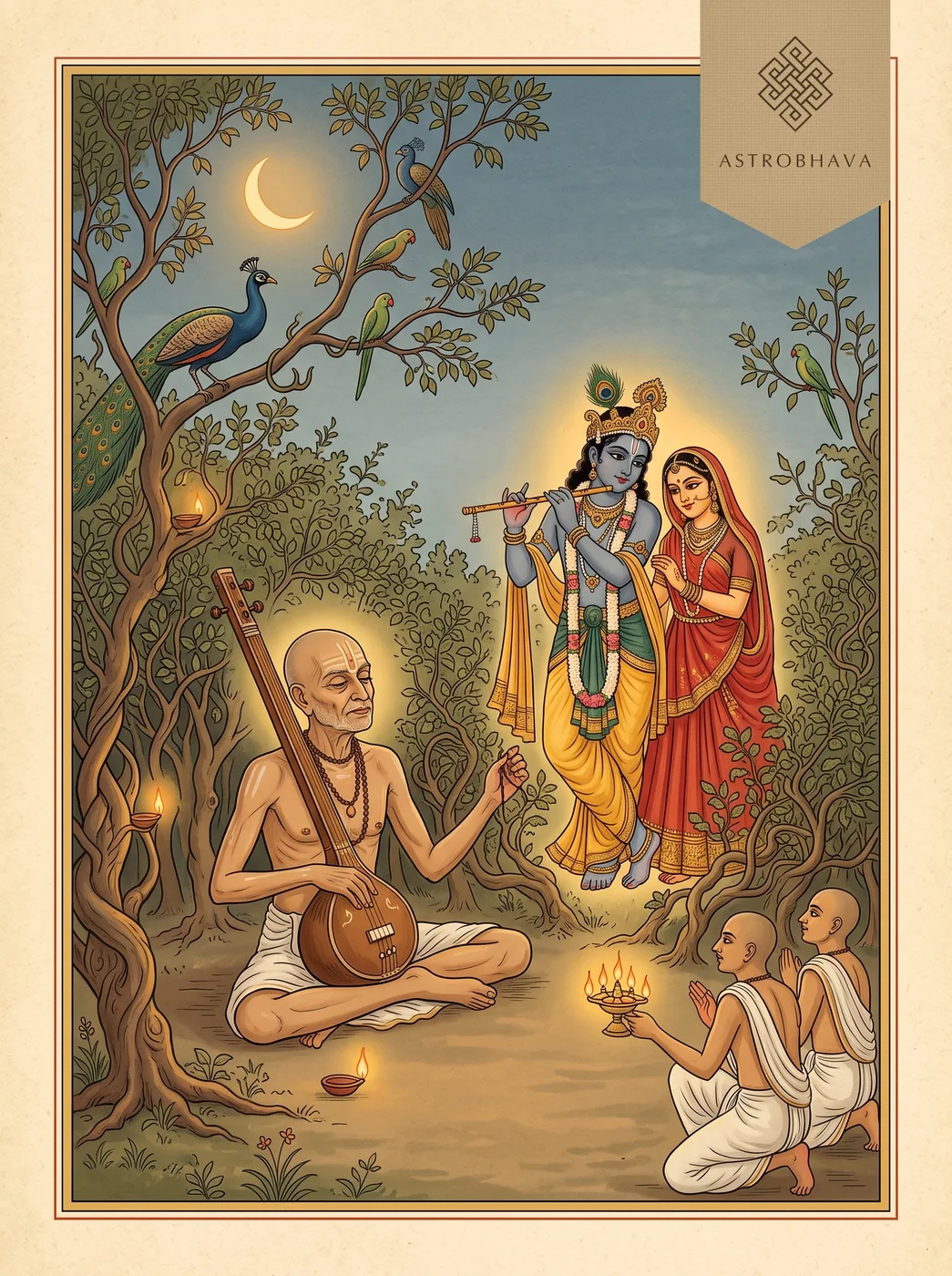
Aarti Kunj Bihari Ki
आरती कुंजबिहारीकी । श्रीगिरधर कृष्नमुरारीकी ॥Also known as Shri Krishna Aarti
In Devanagari, Tamil, Telugu, Kannada, Malayalam and English — with the meaning of every word, and the one syllable most people pronounce wrongly.
What the Aarti Kunj Bihari Ki is
Aarti Kunj Bihari Ki, the lamp-waving song to Krishna as Kunj Bihari, 'the one who roams the groves' of Vrindavan, is a folk aarti in Braj bhasha, the village speech of the Mathura country. It carries no poet's signature line, and the standard aarti collection prints it without a name, even though the aartis beside it on the same pages are credited to Chaturbhujdas and Paramananda Das. The refrain joins three titles: Kunj Bihari, Giridhar, the lifter of Govardhan, and Murari, the slayer of the demon Mura. The five stanzas then move like a lamp passed slowly over an image: the Vaijayanti garland and earrings, the sky-dark body beside a shining Radha, the peacock crown with gods longing to see it, the feet from which the Ganga flows, and finally the moonlit riverbank, where the singer turns from describing to asking: hear the cry of the suffering one.
From Nidhivan grove to the household lamp
The aarti carries no composer's name; it belongs to the Braj tradition of anonymous songs passed from temple to courtyard. Its title name, though, has a history in Vrindavan. According to temple tradition, the musician-saint Swami Haridas worshipped an image of Krishna in the grove of Nidhivan and called it Kunj Bihari, the enjoyer of the groves. His followers later named the same image Banke Bihari, 'bent in three places', after its tribhanga pose, and it was moved to the present Banke Bihari temple, built around 1862 to 1864. That temple keeps an unusual custom: no early-morning aarti is offered there on ordinary days, and the mangala aarti is performed only once a year, on Janmashtami. Whether the song was made for that image is not recorded, so the link is one of name rather than proven origin. The stanzas themselves draw on the Bhagavata Purana. The title Murari recalls the tenth book, where Krishna cuts off the five heads of Mura, the guardian of Narakasura's moat, with his discus. The fourth stanza follows the ninth book, which says the Ganga emanates from the toes of Vishnu and that Shiva, at King Bhagiratha's request, received her falling stream on his head.
The mantra, in six scripts
- आरती
- āratī — lamp-waving worship
- कुंजबिहारीकी
- kuṃjabihārīkī — of the one who roams the groves
- श्रीगिरधर
- śrīgiradhara — revered holder of the hill
- कृष्नमुरारीकी
- kṛṣnamurārīkī — of Krishna, foe of Mura
Aarti Kunj Bihari Ki lyrics in full
A refrain and five stanzas in the older Braj spelling of the standard printed edition, with the refrain sung again at the close.
All 7 verses, in Hindi, Tamil, Telugu, Kannada, Malayalam and English, each with its meaning. Choose a script:
Download the Aarti Kunj Bihari Ki PDFAll 7 verses with their meanings, in Hindi. Free to print and keep.
आरती कुंजबिहारीकी ।
श्रीगिरधर कृष्नमुरारीकी ॥
ஆரதீ கும்ஜபிஹாரீகீ ।
ஶ்ரீகிரதர க்ருஷ்நமுராரீகீ ॥
ఆరతీ కుంజబిహారీకీ ।
శ్రీగిరధర కృష్నమురారీకీ ॥
ಆರತೀ ಕುಂಜಬಿಹಾರೀಕೀ ।
ಶ್ರೀಗಿರಧರ ಕೃಷ್ನಮುರಾರೀಕೀ ॥
ആരതീ കുംജബിഹാരീകീ ।
ശ്രീഗിരധര കൃഷ്നമുരാരീകീ ॥
āratī kuṃjabihārīkī |
śrīgiradhara kṛṣnamurārīkī ||
The aarti (lamp-waving worship) of Kunj Bihari, the one who roams the groves of Vrindavan; of Shri Giridhar, who held up the Govardhan hill, Krishna, the slayer of the demon Mura.
गलेमें बैजंतीमाला, बजावै मुरलि मधुर बाला ।
श्रवनमें कुण्डल झलकाला, नंदके आनँद नँदलाला ॥ श्रीगिरधर कृष्नमुरारीकी ॥
கலேமேம் பைஜம்தீமாலா, பஜாவை முரலி மதுர பாலா ।
ஶ்ரவநமேம் குண்டல சலகாலா, நம்தகே ஆநம்த நம்தலாலா ॥ ஶ்ரீகிரதர க்ருஷ்நமுராரீகீ ॥
గలేమేం బైజంతీమాలా, బజావై మురలి మధుర బాలా ।
శ్రవనమేం కుణ్డల ఝలకాలా, నందకే ఆనఁద నఁదలాలా ॥ శ్రీగిరధర కృష్నమురారీకీ ॥
ಗಲೇಮೇಂ ಬೈಜಂತೀಮಾಲಾ, ಬಜಾವೈ ಮುರಲಿ ಮಧುರ ಬಾಲಾ ।
ಶ್ರವನಮೇಂ ಕುಣ್ಡಲ ಝಲಕಾಲಾ, ನಂದಕೇ ಆನಁದ ನಁದಲಾಲಾ ॥ ಶ್ರೀಗಿರಧರ ಕೃಷ್ನಮುರಾರೀಕೀ ॥
ഗലേമേം ബൈജംതീമാലാ, ബജാവൈ മുരലി മധുര ബാലാ ।
ശ്രവനമേം കുണ്ഡല ഝലകാലാ, നംദകേ ആനഁദ നഁദലാലാ ॥ ശ്രീഗിരധര കൃഷ്നമുരാരീകീ ॥
galemeṃ baijaṃtīmālā, bajāvai murali madhura bālā |
śravanameṃ kuṇḍala jhalakālā, naṃdake ānaṃda naṃdalālā || śrīgiradhara kṛṣnamurārīkī ||
The Vaijayanti garland hangs at his neck, and the boy plays sweet music on his flute. Earrings sparkle in his ears; he is Nandalala, the joy of Nanda. This is the aarti of Shri Giridhar Krishna Murari.
गगन सम अंग कांति काली, राधिका चमक रही आली,
लतनमें ठाढ़े बनमाली,
भ्रमर-सी अलक, कस्तूरी-तिलक, चंद्र-सी झलक,
ललित छबि स्यामा प्यारीकी । श्रीगिरधर कृष्नमुरारीकी ॥
ககந ஸம அம்க காம்தி காலீ, ராதிகா சமக ரஹீ ஆலீ,
லதநமேம் டாடே பநமாலீ,
ப்ரமர-ஸீ அலக, கஸ்தூரீ-திலக, சம்த்ர-ஸீ சலக,
லலித சபி ஸ்யாமா ப்யாரீகீ । ஶ்ரீகிரதர க்ருஷ்நமுராரீகீ ॥
గగన సమ అంగ కాంతి కాలీ, రాధికా చమక రహీ ఆలీ,
లతనమేం ఠాఢే బనమాలీ,
భ్రమర-సీ అలక, కస్తూరీ-తిలక, చంద్ర-సీ ఝలక,
లలిత ఛబి స్యామా ప్యారీకీ । శ్రీగిరధర కృష్నమురారీకీ ॥
ಗಗನ ಸಮ ಅಂಗ ಕಾಂತಿ ಕಾಲೀ, ರಾಧಿಕಾ ಚಮಕ ರಹೀ ಆಲೀ,
ಲತನಮೇಂ ಠಾಢೇ ಬನಮಾಲೀ,
ಭ್ರಮರ-ಸೀ ಅಲಕ, ಕಸ್ತೂರೀ-ತಿಲಕ, ಚಂದ್ರ-ಸೀ ಝಲಕ,
ಲಲಿತ ಛಬಿ ಸ್ಯಾಮಾ ಪ್ಯಾರೀಕೀ । ಶ್ರೀಗಿರಧರ ಕೃಷ್ನಮುರಾರೀಕೀ ॥
ഗഗന സമ അംഗ കാംതി കാലീ, രാധികാ ചമക രഹീ ആലീ,
ലതനമേം ഠാഢേ ബനമാലീ,
ഭ്രമര-സീ അലക, കസ്തൂരീ-തിലക, ചംദ്ര-സീ ഝലക,
ലലിത ഛബി സ്യാമാ പ്യാരീകീ । ശ്രീഗിരധര കൃഷ്നമുരാരീകീ ॥
gagana sama aṃga kāṃti kālī, rādhikā camaka rahī ālī,
latanameṃ ṭhāṛhe banamālī,
bhramara-sī alaka, kastūrī-tilaka, caṃdra-sī jhalaka,
lalita chabi syāmā pyārīkī | śrīgiradhara kṛṣnamurārīkī ||
His body has a dark glow like the sky, and beside him, friend, Radhika shines. The wearer of the forest garland stands among the creepers, with curls dark as bees, a musk mark on his brow and a radiance like the moon. Lovely is the beauty of the Dark One and his beloved; this is the aarti of Shri Giridhar Krishna Murari.
कनकमय मोर-मुकुट बिलसै, देवता दरसनकों तरसै,
गगन सों सुमन रासि बरसै,
बजे मुरचंग, मधुर मिरदंग, ग्वालिनी संग,
अतुल रति गोपकुमारीकी । श्रीगिरधर कृष्नमुरारीकी ॥
கநகமய மோர-முகுட பிலஸை, தேவதா தரஸநகோம் தரஸை,
ககந ஸோம் ஸுமந ராஸி பரஸை,
பஜே முரசம்க, மதுர மிரதம்க, க்வாலிநீ ஸம்க,
அதுல ரதி கோபகுமாரீகீ । ஶ்ரீகிரதர க்ருஷ்நமுராரீகீ ॥
కనకమయ మోర-ముకుట బిలసై, దేవతా దరసనకోం తరసై,
గగన సోం సుమన రాసి బరసై,
బజే మురచంగ, మధుర మిరదంగ, గ్వాలినీ సంగ,
అతుల రతి గోపకుమారీకీ । శ్రీగిరధర కృష్నమురారీకీ ॥
ಕನಕಮಯ ಮೋರ-ಮುಕುಟ ಬಿಲಸೈ, ದೇವತಾ ದರಸನಕೋಂ ತರಸೈ,
ಗಗನ ಸೋಂ ಸುಮನ ರಾಸಿ ಬರಸೈ,
ಬಜೇ ಮುರಚಂಗ, ಮಧುರ ಮಿರದಂಗ, ಗ್ವಾಲಿನೀ ಸಂಗ,
ಅತುಲ ರತಿ ಗೋಪಕುಮಾರೀಕೀ । ಶ್ರೀಗಿರಧರ ಕೃಷ್ನಮುರಾರೀಕೀ ॥
കനകമയ മോര-മുകുട ബിലസൈ, ദേവതാ ദരസനകോം തരസൈ,
ഗഗന സോം സുമന രാസി ബരസൈ,
ബജേ മുരചംഗ, മധുര മിരദംഗ, ഗ്വാലിനീ സംഗ,
അതുല രതി ഗോപകുമാരീകീ । ശ്രീഗിരധര കൃഷ്നമുരാരീകീ ॥
kanakamaya mora-mukuṭa bilasai, devatā darasanakoṃ tarasai,
gagana soṃ sumana rāsi barasai,
baje muracaṃga, madhura miradaṃga, gvālinī saṃga,
atula rati gopakumārīkī | śrīgiradhara kṛṣnamurārīkī ||
His golden crown of peacock feathers gleams, and the gods long for a sight of him; heaps of flowers rain down from the sky. The jaw harp and the sweet mridanga sound, with the cowherd girls beside him; matchless is the love of the cowherd maidens. This is the aarti of Shri Giridhar Krishna Murari.
जहाँ ते प्रगट भई गंगा, सकल-मल-हारिणि श्रीगंगा,
स्मरन ते होत मोह-भंगा,
बसी सिव सीस, जटाके बीच, हरै अघ कीच,
चरन छबि श्रीबनवारीकी । श्रीगिरधर कृष्नमुरारीकी ॥
ஜஹாம் தே ப்ரகட பஈ கம்கா, ஸகல-மல-ஹாரிணி ஶ்ரீகம்கா,
ஸ்மரந தே ஹோத மோஹ-பம்கா,
பஸீ ஸிவ ஸீஸ, ஜடாகே பீச, ஹரை அக கீச,
சரந சபி ஶ்ரீபநவாரீகீ । ஶ்ரீகிரதர க்ருஷ்நமுராரீகீ ॥
జహాఁ తే ప్రగట భఈ గంగా, సకల-మల-హారిణి శ్రీగంగా,
స్మరన తే హోత మోహ-భంగా,
బసీ సివ సీస, జటాకే బీచ, హరై అఘ కీచ,
చరన ఛబి శ్రీబనవారీకీ । శ్రీగిరధర కృష్నమురారీకీ ॥
ಜಹಾಁ ತೇ ಪ್ರಗಟ ಭಈ ಗಂಗಾ, ಸಕಲ-ಮಲ-ಹಾರಿಣಿ ಶ್ರೀಗಂಗಾ,
ಸ್ಮರನ ತೇ ಹೋತ ಮೋಹ-ಭಂಗಾ,
ಬಸೀ ಸಿವ ಸೀಸ, ಜಟಾಕೇ ಬೀಚ, ಹರೈ ಅಘ ಕೀಚ,
ಚರನ ಛಬಿ ಶ್ರೀಬನವಾರೀಕೀ । ಶ್ರೀಗಿರಧರ ಕೃಷ್ನಮುರಾರೀಕೀ ॥
ജഹാഁ തേ പ്രഗട ഭഈ ഗംഗാ, സകല-മല-ഹാരിണി ശ്രീഗംഗാ,
സ്മരന തേ ഹോത മോഹ-ഭംഗാ,
ബസീ സിവ സീസ, ജടാകേ ബീച, ഹരൈ അഘ കീച,
ചരന ഛബി ശ്രീബനവാരീകീ । ശ്രീഗിരധര കൃഷ്നമുരാരീകീ ॥
jahāṃ te pragaṭa bhaī gaṃgā, sakala-mala-hāriṇi śrīgaṃgā,
smarana te hota moha-bhaṃgā,
basī siva sīsa, jaṭāke bīca, harai agha kīca,
carana chabi śrībanavārīkī | śrīgiradhara kṛṣnamurārīkī ||
From his feet the Ganga came forth, holy Ganga who removes every impurity; the verse says that remembering her breaks delusion. She dwells on Shiva's head within his matted locks and washes away the mire of sin. Such is the beauty of the feet of Shri Banwari, the wearer of the forest garland; this is the aarti of Shri Giridhar Krishna Murari.
चमकती उज्ज्वल तट रेनू, बज रही बृन्दाबन बेनू,
चहूँ दिसि गोपि ग्वाल धेनू,
हँसत मृदु मंद, चाँदनी चंद, कटत भव-फंद,
टेर सुनु दीन दुखारीकी । श्रीगिरधर कृष्नमुरारीकी ॥
சமகதீ உஜ்ஜ்வல தட ரேநூ, பஜ ரஹீ ப்ருந்தாபந பேநூ,
சஹூம் திஸி கோபி க்வால தேநூ,
ஹம்ஸத ம்ருது மம்த, சாம்தநீ சம்த, கடத பவ-பம்த,
டேர ஸுநு தீந துகாரீகீ । ஶ்ரீகிரதர க்ருஷ்நமுராரீகீ ॥
చమకతీ ఉజ్జ్వల తట రేనూ, బజ రహీ బృన్దాబన బేనూ,
చహూఁ దిసి గోపి గ్వాల ధేనూ,
హఁసత మృదు మంద, చాఁదనీ చంద, కటత భవ-ఫంద,
టేర సును దీన దుఖారీకీ । శ్రీగిరధర కృష్నమురారీకీ ॥
ಚಮಕತೀ ಉಜ್ಜ್ವಲ ತಟ ರೇನೂ, ಬಜ ರಹೀ ಬೃನ್ದಾಬನ ಬೇನೂ,
ಚಹೂಁ ದಿಸಿ ಗೋಪಿ ಗ್ವಾಲ ಧೇನೂ,
ಹಁಸತ ಮೃದು ಮಂದ, ಚಾಁದನೀ ಚಂದ, ಕಟತ ಭವ-ಫಂದ,
ಟೇರ ಸುನು ದೀನ ದುಖಾರೀಕೀ । ಶ್ರೀಗಿರಧರ ಕೃಷ್ನಮುರಾರೀಕೀ ॥
ചമകതീ ഉജ്ജ്വല തട രേനൂ, ബജ രഹീ ബൃന്ദാബന ബേനൂ,
ചഹൂഁ ദിസി ഗോപി ഗ്വാല ധേനൂ,
ഹഁസത മൃദു മംദ, ചാഁദനീ ചംദ, കടത ഭവ-ഫംദ,
ടേര സുനു ദീന ദുഖാരീകീ । ശ്രീഗിരധര കൃഷ്നമുരാരീകീ ॥
camakatī ujjvala taṭa renū, baja rahī bṛndābana benū,
cahūṃ disi gopi gvāla dhenū,
haṃsata mṛdu maṃda, cāṃdanī caṃda, kaṭata bhava-phaṃda,
ṭera sunu dīna dukhārīkī | śrīgiradhara kṛṣnamurārīkī ||
The bright sand of the riverbank sparkles, and the flute is sounding in Vrindavan, with cowherd girls, cowherd boys and cows on every side. He smiles a soft, gentle smile like the moonlight, and the verse says the snare of worldly existence is cut. O Lord, hear the cry of this poor, suffering one; (the aarti is) of Shri Giridhar, Krishna Murari.
आरती कुंजबिहारीकी ।
श्रीगिरधर कृष्नमुरारीकी ॥
ஆரதீ கும்ஜபிஹாரீகீ ।
ஶ்ரீகிரதர க்ருஷ்நமுராரீகீ ॥
ఆరతీ కుంజబిహారీకీ ।
శ్రీగిరధర కృష్నమురారీకీ ॥
ಆರತೀ ಕುಂಜಬಿಹಾರೀಕೀ ।
ಶ್ರೀಗಿರಧರ ಕೃಷ್ನಮುರಾರೀಕೀ ॥
ആരതീ കുംജബിഹാരീകീ ।
ശ്രീഗിരധര കൃഷ്നമുരാരീകീ ॥
āratī kuṃjabihārīkī |
śrīgiradhara kṛṣnamurārīkī ||
The aarti of Kunj Bihari; of Shri Giridhar, Krishna Murari (the refrain is sung again to close).
The syllable people get wrong
In the second stanza, ठाढ़े (ṭhāṛhe, 'standing') is often said with a soft dental 'th' and a plain 'd', as 'thade'. The first sound is a hard retroflex ṭh with the tongue curled back, and ढ़ is a flapped, breathy ṛh: the tongue flicks forward off the roof of the mouth, roughly 'THAA-rhe'.
When the Aarti Kunj Bihari Ki is chanted
Weekday. Thursday
Festival. Krishna Janmashtami
Questions
Have your chart read before you decide
Chanting is yours to do, and free. But which deity your situation calls for — and whether a mantra alone is the right response — depends on your chart. Sometimes it is; sometimes it is not.
- Over 30 years in the Guru–Sishya Parampara, from the age of five
- He reads every chart himself — 60 minutes, one to one, never delegated
- Charts are read only between sunrise and sunset, following tradition