Bhagya Suktam
प्रातरग्निं प्रातरिन्द्रं हवामहे प्रातर्मित्रावरुणा प्रातरश्विना । प्रातर्भगं पूषणं ब्रह्मणस्पतिं प्रातः सोममुत रुद्रं हुवेम ॥Also known as Pratah Suktam
In Devanagari, Tamil, Telugu, Kannada, Malayalam and English — with the meaning of every word, and the one syllable most people pronounce wrongly.
 The Bhagya Suktha Homam, performed for youBook →
What the Bhagya Suktam is
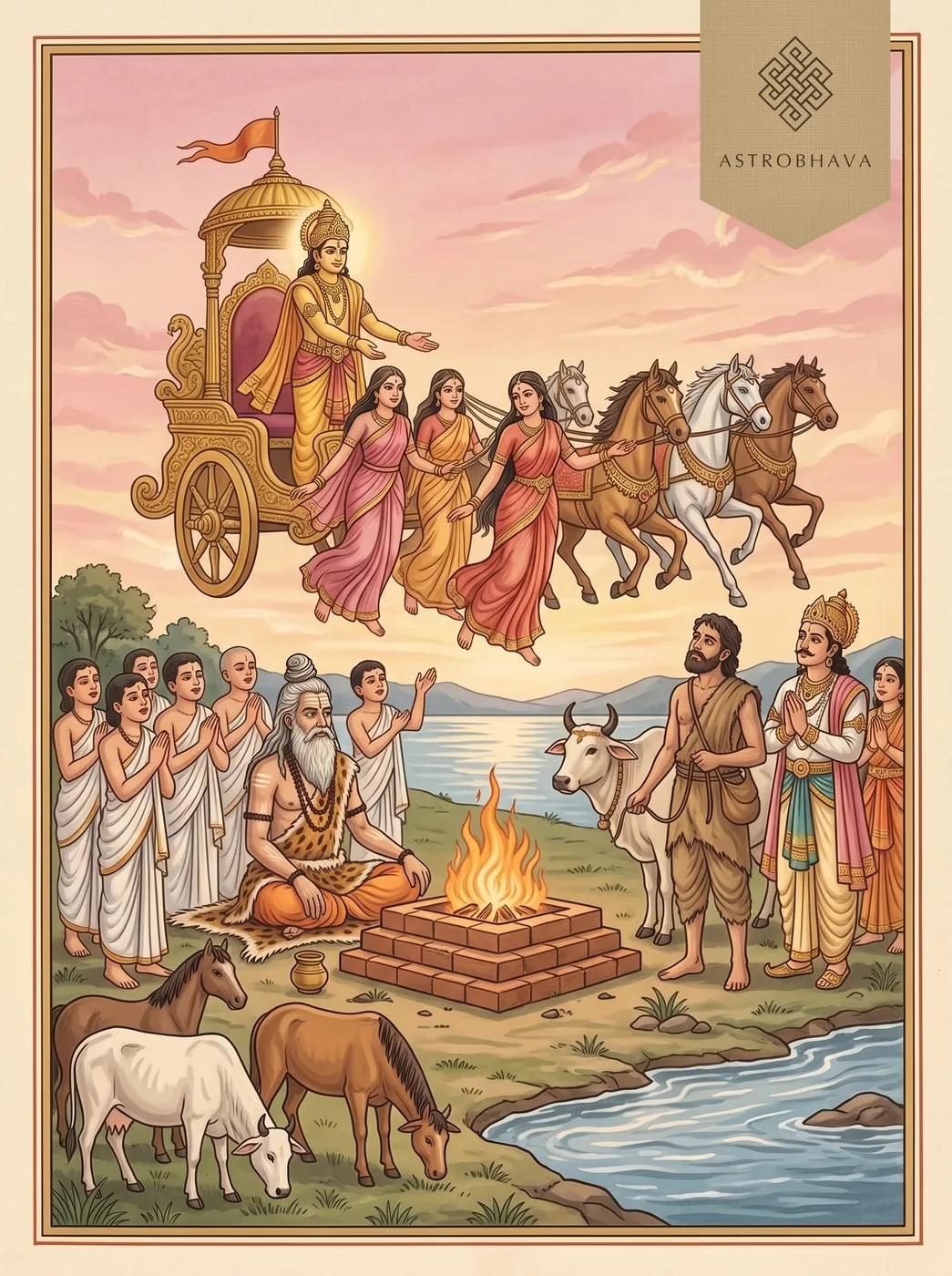
The Bhagya Suktam, also known as the Pratah Suktam from its opening word pratar, 'at dawn', is hymn 41 of the seventh book of the Rigveda, ascribed to the seer Vasishtha Maitravaruni. Its first verse is a roll-call: at dawn the singers summon Agni, Indra, Mitra and Varuna, the two Ashvins, Bhaga, Pushan, Brahmanaspati, Soma and Rudra. From the second verse the hymn narrows to Bhaga alone, son of Aditi, calling him guide, true giver and leader, and asking for good fortune at daybreak, at noon and at sunset. The seventh verse turns to the Dawns themselves. The traditional index gives the first verse in jagati metre and the other six in trishtubh. The same seven verses stand in the Taittiriya Brahmana (2.8.9), and a close parallel of seven stanzas forms hymn 3.16 of the Atharvaveda. In common recitation an eighth verse to Agni, 'yo ma'gne bhaginam', is chanted at the close.
A morning litany from Vasishtha's book
The seventh book of the Rigveda belongs to the family of Vasishtha, and many of its hymns end on the same closing line, 'yuyam pata svastibhih sada nah', 'protect us always with blessings, O gods'. The Bhagya Suktam ends on that family refrain too, which marks it as a song of the Vasishtha singers rather than a later addition. Its setting is the morning rite: the hymn opens by naming the hour, and its fourth verse follows the day through, asking for good fortune when the day comes on, at midday and when the sun goes down. The second verse holds the image people remember. Sayana, the medieval commentator, reads its two words for the people who seek Bhaga as the poor worshipper and the one who already has wealth; both think of Bhaga, and even a king says 'let me have my share'. Verse six pictures the Dawns bowing toward the sacrifice and drawing Bhaga near, as horses draw a chariot, with the divine steed Dadhikravan as the comparison. The Atharvaveda keeps the same seven stanzas as a morning prayer of the seer. Sayana also cites an older rule that one who wishes to settle in a new home should recite the hymn to Bhaga.
The mantra, in six scripts
- प्रातरग्निं
- prātaragniṃ — at dawn, Agni
- प्रातरिन्द्रं
- prātarindraṃ — at dawn, Indra
- हवामहे
- havāmahe — we call
- प्रातर्मित्रावरुणा
- prātarmitrāvaruṇā — at dawn, Mitra and Varuna
- प्रातरश्विना
- prātaraśvinā — at dawn, the two Ashvins
- प्रातर्भगं
- prātarbhagaṃ — at dawn, Bhaga
- पूषणं
- pūṣaṇaṃ — Pushan
- ब्रह्मणस्पतिं
- brahmaṇaspatiṃ — Brahmanaspati, lord of prayer
- प्रातः
- prātaḥ — at dawn
- सोममुत
- somamuta — Soma and also
- रुद्रं
- rudraṃ — Rudra
- हुवेम
- huvema — may we invoke
Bhagya Suktam lyrics in full
The seven verses of Rigveda 7.41, followed by the closing verse to Agni that is customarily chanted with them.
All 8 verses, in Sanskrit, Tamil, Telugu, Kannada, Malayalam and English, each with its meaning. Choose a script:
Download the Bhagya Suktam PDFAll 8 verses with their meanings, in Sanskrit. Free to print and keep.
प्रातरग्निं प्रातरिन्द्रं हवामहे प्रातर्मित्रावरुणा प्रातरश्विना ।
प्रातर्भगं पूषणं ब्रह्मणस्पतिं प्रातः सोममुत रुद्रं हुवेम ॥
ப்ராதரக்நிம் ப்ராதரிந்த்ரம் ஹவாமஹே ப்ராதர்மித்ராவருணா ப்ராதரஶ்விநா ।
ப்ராதர்பகம் பூஷணம் ப்ரஹ்மணஸ்பதிம் ப்ராதஃ ஸோமமுத ருத்ரம் ஹுவேம ॥
ప్రాతరగ్నిం ప్రాతరిన్ద్రం హవామహే ప్రాతర్మిత్రావరుణా ప్రాతరశ్వినా ।
ప్రాతర్భగం పూషణం బ్రహ్మణస్పతిం ప్రాతః సోమముత రుద్రం హువేమ ॥
ಪ್ರಾತರಗ್ನಿಂ ಪ್ರಾತರಿನ್ದ್ರಂ ಹವಾಮಹೇ ಪ್ರಾತರ್ಮಿತ್ರಾವರುಣಾ ಪ್ರಾತರಶ್ವಿನಾ ।
ಪ್ರಾತರ್ಭಗಂ ಪೂಷಣಂ ಬ್ರಹ್ಮಣಸ್ಪತಿಂ ಪ್ರಾತಃ ಸೋಮಮುತ ರುದ್ರಂ ಹುವೇಮ ॥
പ്രാതരഗ്നിം പ്രാതരിന്ദ്രം ഹവാമഹേ പ്രാതര്മിത്രാവരുണാ പ്രാതരശ്വിനാ ।
പ്രാതര്ഭഗം പൂഷണം ബ്രഹ്മണസ്പതിം പ്രാതഃ സോമമുത രുദ്രം ഹുവേമ ॥
prātaragniṃ prātarindraṃ havāmahe prātarmitrāvaruṇā prātaraśvinā |
prātarbhagaṃ pūṣaṇaṃ brahmaṇaspatiṃ prātaḥ somamuta rudraṃ huvema ||
At dawn we call on Agni, at dawn on Indra; at dawn on Mitra and Varuna, at dawn on the two Ashvins. At dawn we call on Bhaga, Pushan and Brahmanaspati; at dawn on Soma and on Rudra.
प्रातर्जितं भगमुग्रं हुवेम वयं पुत्रमदितेर्यो विधर्ता ।
आध्रश्चिद्यं मन्यमानस्तुरश्चिद्राजा चिद्यं भगं भक्षीत्याह ॥
ப்ராதர்ஜிதம் பகமுக்ரம் ஹுவேம வயம் புத்ரமதிதேர்யோ விதர்தா ।
ஆத்ரஶ்சித்யம் மந்யமாநஸ்துரஶ்சித்ராஜா சித்யம் பகம் பக்ஷீத்யாஹ ॥
ప్రాతర్జితం భగముగ్రం హువేమ వయం పుత్రమదితేర్యో విధర్తా ।
ఆధ్రశ్చిద్యం మన్యమానస్తురశ్చిద్రాజా చిద్యం భగం భక్షీత్యాహ ॥
ಪ್ರಾತರ್ಜಿತಂ ಭಗಮುಗ್ರಂ ಹುವೇಮ ವಯಂ ಪುತ್ರಮದಿತೇರ್ಯೋ ವಿಧರ್ತಾ ।
ಆಧ್ರಶ್ಚಿದ್ಯಂ ಮನ್ಯಮಾನಸ್ತುರಶ್ಚಿದ್ರಾಜಾ ಚಿದ್ಯಂ ಭಗಂ ಭಕ್ಷೀತ್ಯಾಹ ॥
പ്രാതര്ജിതം ഭഗമുഗ്രം ഹുവേമ വയം പുത്രമദിതേര്യോ വിധര്താ ।
ആധ്രശ്ചിദ്യം മന്യമാനസ്തുരശ്ചിദ്രാജാ ചിദ്യം ഭഗം ഭക്ഷീത്യാഹ ॥
prātarjitaṃ bhagamugraṃ huvema vayaṃ putramaditeryo vidhartā |
ādhraścidyaṃ manyamānasturaścidrājā cidyaṃ bhagaṃ bhakṣītyāha ||
We call at dawn on Bhaga, the mighty winner of the morning, the son of Aditi, who upholds all things. The weak man and the strong man alike think of him, and even the king says: let me have my share of Bhaga.
भग प्रणेतर्भग सत्यराधो भगेमां धियमुदवा ददन्नः ।
भग प्र णो जनय गोभिरश्वैर्भग प्र नृभिर्नृवन्तः स्याम ॥
பக ப்ரணேதர்பக ஸத்யராதோ பகேமாம் தியமுதவா ததந்நஃ ।
பக ப்ர ணோ ஜநய கோபிரஶ்வைர்பக ப்ர ந்ருபிர்ந்ருவந்தஃ ஸ்யாம ॥
భగ ప్రణేతర్భగ సత్యరాధో భగేమాం ధియముదవా దదన్నః ।
భగ ప్ర ణో జనయ గోభిరశ్వైర్భగ ప్ర నృభిర్నృవన్తః స్యామ ॥
ಭಗ ಪ್ರಣೇತರ್ಭಗ ಸತ್ಯರಾಧೋ ಭಗೇಮಾಂ ಧಿಯಮುದವಾ ದದನ್ನಃ ।
ಭಗ ಪ್ರ ಣೋ ಜನಯ ಗೋಭಿರಶ್ವೈರ್ಭಗ ಪ್ರ ನೃಭಿರ್ನೃವನ್ತಃ ಸ್ಯಾಮ ॥
ഭഗ പ്രണേതര്ഭഗ സത്യരാധോ ഭഗേമാം ധിയമുദവാ ദദന്നഃ ।
ഭഗ പ്ര ണോ ജനയ ഗോഭിരശ്വൈര്ഭഗ പ്ര നൃഭിര്നൃവന്തഃ സ്യാമ ॥
bhaga praṇetarbhaga satyarādho bhagemāṃ dhiyamudavā dadannaḥ |
bhaga pra ṇo janaya gobhiraśvairbhaga pra nṛbhirnṛvantaḥ syāma ||
O Bhaga, our guide; O Bhaga, whose gifts are true; O Bhaga, favour this prayer of ours and give to us. O Bhaga, increase us with cows and horses; O Bhaga, may we be rich in people.
उतेदानीं भगवन्तः स्यामोत प्रपित्व उत मध्ये अह्नाम् ।
उतोदिता मघवन्सूर्यस्य वयं देवानां सुमतौ स्याम ॥
உதேதாநீம் பகவந்தஃ ஸ்யாமோத ப்ரபித்வ உத மத்யே அஹ்நாம் ।
உதோதிதா மகவந்ஸூர்யஸ்ய வயம் தேவாநாம் ஸுமதௌ ஸ்யாம ॥
ఉతేదానీం భగవన్తః స్యామోత ప్రపిత్వ ఉత మధ్యే అహ్నామ్ ।
ఉతోదితా మఘవన్సూర్యస్య వయం దేవానాం సుమతౌ స్యామ ॥
ಉತೇದಾನೀಂ ಭಗವನ್ತಃ ಸ್ಯಾಮೋತ ಪ್ರಪಿತ್ವ ಉತ ಮಧ್ಯೇ ಅಹ್ನಾಮ್ ।
ಉತೋದಿತಾ ಮಘವನ್ಸೂರ್ಯಸ್ಯ ವಯಂ ದೇವಾನಾಂ ಸುಮತೌ ಸ್ಯಾಮ ॥
ഉതേദാനീം ഭഗവന്തഃ സ്യാമോത പ്രപിത്വ ഉത മധ്യേ അഹ്നാമ് ।
ഉതോദിതാ മഘവന്സൂര്യസ്യ വയം ദേവാനാം സുമതൌ സ്യാമ ॥
utedānīṃ bhagavantaḥ syāmota prapitva uta madhye ahnām |
utoditā maghavansūryasya vayaṃ devānāṃ sumatau syāma ||
May we be blessed with good fortune now, and at the coming of the day, and at midday. And at the setting of the sun, O bountiful one, may we stand in the kind favour of the gods.
भग एव भगवाँ अस्तु देवास्तेन वयं भगवन्तः स्याम ।
तं त्वा भग सर्व इज्जोहवीति स नो भग पुरएता भवेह ॥
பக ஏவ பகவாம் அஸ்து தேவாஸ்தேந வயம் பகவந்தஃ ஸ்யாம ।
தம் த்வா பக ஸர்வ இஜ்ஜோஹவீதி ஸ நோ பக புரஏதா பவேஹ ॥
భగ ఏవ భగవాఁ అస్తు దేవాస్తేన వయం భగవన్తః స్యామ ।
తం త్వా భగ సర్వ ఇజ్జోహవీతి స నో భగ పురఏతా భవేహ ॥
ಭಗ ಏವ ಭಗವಾಁ ಅಸ್ತು ದೇವಾಸ್ತೇನ ವಯಂ ಭಗವನ್ತಃ ಸ್ಯಾಮ ।
ತಂ ತ್ವಾ ಭಗ ಸರ್ವ ಇಜ್ಜೋಹವೀತಿ ಸ ನೋ ಭಗ ಪುರಏತಾ ಭವೇಹ ॥
ഭഗ ഏവ ഭഗവാഁ അസ്തു ദേവാസ്തേന വയം ഭഗവന്തഃ സ്യാമ ।
തം ത്വാ ഭഗ സര്വ ഇജ്ജോഹവീതി സ നോ ഭഗ പുരഏതാ ഭവേഹ ॥
bhaga eva bhagavāṃ astu devāstena vayaṃ bhagavantaḥ syāma |
taṃ tvā bhaga sarva ijjohavīti sa no bhaga puraetā bhaveha ||
O gods, may Bhaga himself be the giver of fortune, and through him may we be fortunate. O Bhaga, everyone calls on you again and again; O Bhaga, be our leader here.
समध्वरायोषसो नमन्त दधिक्रावेव शुचये पदाय ।
अर्वाचीनं वसुविदं भगं नो रथमिवाश्वा वाजिन आ वहन्तु ॥
ஸமத்வராயோஷஸோ நமந்த ததிக்ராவேவ ஶுசயே பதாய ।
அர்வாசீநம் வஸுவிதம் பகம் நோ ரதமிவாஶ்வா வாஜிந ஆ வஹந்து ॥
సమధ్వరాయోషసో నమన్త దధిక్రావేవ శుచయే పదాయ ।
అర్వాచీనం వసువిదం భగం నో రథమివాశ్వా వాజిన ఆ వహన్తు ॥
ಸಮಧ್ವರಾಯೋಷಸೋ ನಮನ್ತ ದಧಿಕ್ರಾವೇವ ಶುಚಯೇ ಪದಾಯ ।
ಅರ್ವಾಚೀನಂ ವಸುವಿದಂ ಭಗಂ ನೋ ರಥಮಿವಾಶ್ವಾ ವಾಜಿನ ಆ ವಹನ್ತು ॥
സമധ്വരായോഷസോ നമന്ത ദധിക്രാവേവ ശുചയേ പദായ ।
അര്വാചീനം വസുവിദം ഭഗം നോ രഥമിവാശ്വാ വാജിന ആ വഹന്തു ॥
samadhvarāyoṣaso namanta dadhikrāveva śucaye padāya |
arvācīnaṃ vasuvidaṃ bhagaṃ no rathamivāśvā vājina ā vahantu ||
May the dawns bow toward this rite, as the horse Dadhikravan comes to the pure place. As swift horses draw a chariot, may they bring Bhaga, the finder of wealth, toward us.
अश्वावतीर्गोमतीर्न उषासो वीरवतीः सदमुच्छन्तु भद्राः ।
घृतं दुहाना विश्वतः प्रपीता यूयं पात स्वस्तिभिः सदा नः ॥
அஶ்வாவதீர்கோமதீர்ந உஷாஸோ வீரவதீஃ ஸதமுச்சந்து பத்ராஃ ।
க்ருதம் துஹாநா விஶ்வதஃ ப்ரபீதா யூயம் பாத ஸ்வஸ்திபிஃ ஸதா நஃ ॥
అశ్వావతీర్గోమతీర్న ఉషాసో వీరవతీః సదముచ్ఛన్తు భద్రాః ।
ఘృతం దుహానా విశ్వతః ప్రపీతా యూయం పాత స్వస్తిభిః సదా నః ॥
ಅಶ್ವಾವತೀರ್ಗೋಮತೀರ್ನ ಉಷಾಸೋ ವೀರವತೀಃ ಸದಮುಚ್ಛನ್ತು ಭದ್ರಾಃ ।
ಘೃತಂ ದುಹಾನಾ ವಿಶ್ವತಃ ಪ್ರಪೀತಾ ಯೂಯಂ ಪಾತ ಸ್ವಸ್ತಿಭಿಃ ಸದಾ ನಃ ॥
അശ്വാവതീര്ഗോമതീര്ന ഉഷാസോ വീരവതീഃ സദമുച്ഛന്തു ഭദ്രാഃ ।
ഘൃതം ദുഹാനാ വിശ്വതഃ പ്രപീതാ യൂയം പാത സ്വസ്തിഭിഃ സദാ നഃ ॥
aśvāvatīrgomatīrna uṣāso vīravatīḥ sadamucchantu bhadrāḥ |
ghṛtaṃ duhānā viśvataḥ prapītā yūyaṃ pāta svastibhiḥ sadā naḥ ||
May the auspicious dawns, rich in horses, cows and brave sons, shine on us always, pouring out ghee and full of plenty on every side. O gods, protect us always with blessings.
यो माऽग्ने भागिनं सन्तमथाभागं चिकीर्षति ।
अभागमग्ने तं कुरु मामग्ने भागिनं कुरु ॥
யோ மாக்நே பாகிநம் ஸந்தமதாபாகம் சிகீர்ஷதி ।
அபாகமக்நே தம் குரு மாமக்நே பாகிநம் குரு ॥
యో మాఽగ్నే భాగినం సన్తమథాభాగం చికీర్షతి ।
అభాగమగ్నే తం కురు మామగ్నే భాగినం కురు ॥
ಯೋ ಮಾಽಗ್ನೇ ಭಾಗಿನಂ ಸನ್ತಮಥಾಭಾಗಂ ಚಿಕೀರ್ಷತಿ ।
ಅಭಾಗಮಗ್ನೇ ತಂ ಕುರು ಮಾಮಗ್ನೇ ಭಾಗಿನಂ ಕುರು ॥
യോ മാഽഗ്നേ ഭാഗിനം സന്തമഥാഭാഗം ചികീര്ഷതി ।
അഭാഗമഗ്നേ തം കുരു മാമഗ്നേ ഭാഗിനം കുരു ॥
yo mā'gne bhāginaṃ santamathābhāgaṃ cikīrṣati |
abhāgamagne taṃ kuru māmagne bhāginaṃ kuru ||
O Agni, whoever seeks to make me, who have a share, into one without a share - O Agni, make him without a share, and make me, O Agni, one who has a share.
The syllable people get wrong
In verse 5, ijjohavīti (ij-jo-ha-VEE-ti) joins it and johavīti, so the t becomes j and the j is held for two beats; saying 'i-jo-ha-vi-ti' with one short j drops a sound, and the ī before ti is long.
Questions
Have your chart read before you decide
Chanting is yours to do, and free. But which deity your situation calls for — and whether a mantra alone is the right response — depends on your chart. Sometimes it is; sometimes it is not.
- Over 30 years in the Guru–Sishya Parampara, from the age of five
- He reads every chart himself — 60 minutes, one to one, never delegated
- Charts are read only between sunrise and sunset, following tradition
