Bhaja Govindam
भज गोविन्दं भज गोविन्दं गोविन्दं भज मूढमते । सम्प्राप्ते सन्निहिते काले न हि न हि रक्षति डुकृञ्करणे ॥Also known as Moha Mudgaram
In Devanagari, Tamil, Telugu, Kannada, Malayalam and English — with the meaning of every word, and the one syllable most people pronounce wrongly.
What the Bhaja Govindam is
Bhaja Govindam is spoken to the reciter's own mind. Its refrain addresses the listener as mudhamate, 'O deluded mind', and tells it to worship Govinda, a name of Vishnu as Krishna; the later verses also call on Murari, Vishnu and Shripati, Lakshmi's lord. Tradition gives the refrain and the next twelve verses, the Dvadasha Manjarika or 'cluster of twelve blossoms', to Adi Shankaracharya, and fourteen more, the Chaturdasha Manjarika, to his disciples; four closing verses complete the 31. The lines are rhymed couplets in a moraic metre of sixteen beats to a quarter, which is why they sing so readily. The sequence strips away what the mind leans on: wealth (verse 2), the body (3), a life as unsteady as water on a lotus leaf (4), a family whose affection lasts only while one earns (5 and 6). Verse 9 then sets out a ladder from good company to liberation while living, and verse 31 ends at the Guru's feet and the God in one's own heart.
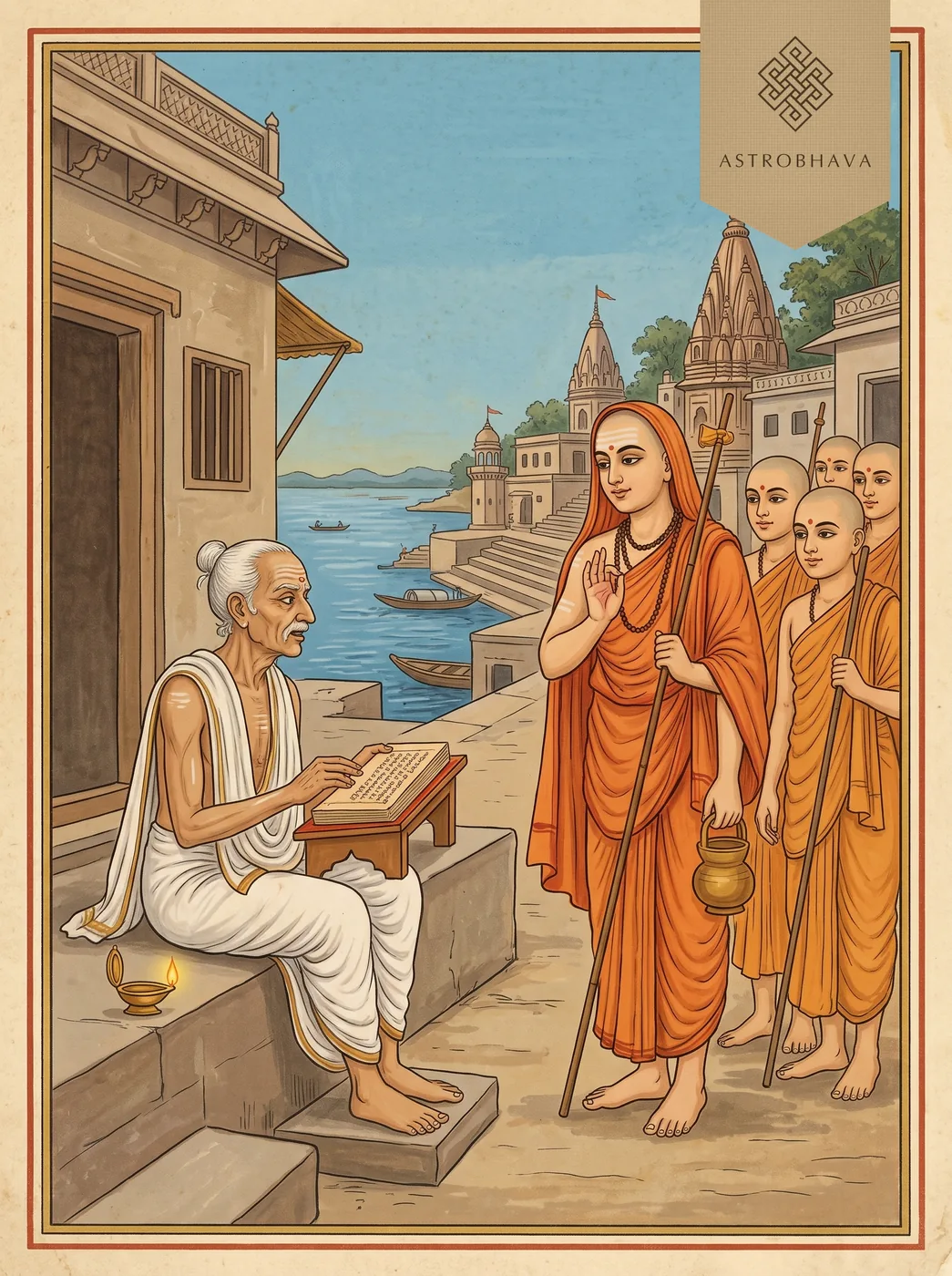
An old man reciting grammar in Kashi
According to tradition, Shankara was walking through a street in Kashi with his disciples when he heard an aged scholar repeating, over and over, rules from Panini's grammar. One phrase he kept drilling was dukrin karane, the entry in Panini's list of verb roots for kri, 'to do'. Moved by the sight of a man near the end of his life spending his breath on a schoolroom formula, Shankara is said to have sung the refrain on the spot: grammar will not protect anyone when death arrives, so worship Govinda. Twelve verses followed, the Dvadasha Manjarika, and many printings close that section with a colophon saying that the grammarian was instructed by this cluster of twelve. The disciples who were present are then said to have added a verse each, fourteen in all, and Shankara to have closed the work with four more. Older printings, and the Sringeri Sharada Peetham, title the hymn Mohamudgara, 'the hammer that breaks delusion', and place it among the hymns to Vishnu. In the twentieth century C. Rajagopalachari wrote a book on it in Tamil, later published in English by the Bharatiya Vidya Bhavan, and M.S. Subbulakshmi's recording, which sets ten of the verses to music, made the sung form widely known.
The mantra, in six scripts
- भज
- bhaja — worship
- गोविन्दं
- govindaṃ — Govinda
- भज
- bhaja — worship
- गोविन्दं
- govindaṃ — Govinda
- गोविन्दं
- govindaṃ — Govinda
- भज
- bhaja — worship
- मूढमते
- mūḍhamate — O foolish mind
- सम्प्राप्ते
- samprāpte — when it has arrived
- सन्निहिते
- sannihite — near at hand
- काले
- kāle — the time (of death)
- न
- na — not
- हि
- hi — indeed
- न
- na — not
- हि
- hi — indeed
- रक्षति
- rakṣati — saves
- डुकृञ्करणे
- ḍukṛñkaraṇe — 'dukrin karane' (a grammar rule)
Bhaja Govindam lyrics in full
The 31 verses as commonly sung: the refrain, Shankara's twelve, the disciples' fourteen and four closing verses.
All 31 verses, in Sanskrit, Tamil, Telugu, Kannada, Malayalam and English, each with its meaning. Choose a script:
Download the Bhaja Govindam PDFAll 31 verses with their meanings, in Sanskrit. Free to print and keep.
भज गोविन्दं भज गोविन्दं गोविन्दं भज मूढमते ।
सम्प्राप्ते सन्निहिते काले न हि न हि रक्षति डुकृञ्करणे ॥
பஜ கோவிந்தம் பஜ கோவிந்தம் கோவிந்தம் பஜ மூடமதே ।
ஸம்ப்ராப்தே ஸந்நிஹிதே காலே ந ஹி ந ஹி ரக்ஷதி டுக்ருஞ்கரணே ॥
భజ గోవిన్దం భజ గోవిన్దం గోవిన్దం భజ మూఢమతే ।
సమ్ప్రాప్తే సన్నిహితే కాలే న హి న హి రక్షతి డుకృఞ్కరణే ॥
ಭಜ ಗೋವಿನ್ದಂ ಭಜ ಗೋವಿನ್ದಂ ಗೋವಿನ್ದಂ ಭಜ ಮೂಢಮತೇ ।
ಸಮ್ಪ್ರಾಪ್ತೇ ಸನ್ನಿಹಿತೇ ಕಾಲೇ ನ ಹಿ ನ ಹಿ ರಕ್ಷತಿ ಡುಕೃಞ್ಕರಣೇ ॥
ഭജ ഗോവിന്ദം ഭജ ഗോവിന്ദം ഗോവിന്ദം ഭജ മൂഢമതേ ।
സമ്പ്രാപ്തേ സന്നിഹിതേ കാലേ ന ഹി ന ഹി രക്ഷതി ഡുകൃഞ്കരണേ ॥
bhaja govindaṃ bhaja govindaṃ govindaṃ bhaja mūḍhamate |
samprāpte sannihite kāle na hi na hi rakṣati ḍukṛñkaraṇe ||
Worship Govinda, worship Govinda, worship Govinda, O foolish mind. When the appointed time of death draws near, reciting grammar rules like "dukrin karane" will never save you.
मूढ जहीहि धनागमतृष्णां कुरु सद्बुद्धिं मनसि वितृष्णाम् ।
यल्लभसे निजकर्मोपात्तं वित्तं तेन विनोदय चित्तम् ॥
மூட ஜஹீஹி தநாகமத்ருஷ்ணாம் குரு ஸத்புத்திம் மநஸி வித்ருஷ்ணாம் ।
யல்லபஸே நிஜகர்மோபாத்தம் வித்தம் தேந விநோதய சித்தம் ॥
మూఢ జహీహి ధనాగమతృష్ణాం కురు సద్బుద్ధిం మనసి వితృష్ణామ్ ।
యల్లభసే నిజకర్మోపాత్తం విత్తం తేన వినోదయ చిత్తమ్ ॥
ಮೂಢ ಜಹೀಹಿ ಧನಾಗಮತೃಷ್ಣಾಂ ಕುರು ಸದ್ಬುದ್ಧಿಂ ಮನಸಿ ವಿತೃಷ್ಣಾಮ್ ।
ಯಲ್ಲಭಸೇ ನಿಜಕರ್ಮೋಪಾತ್ತಂ ವಿತ್ತಂ ತೇನ ವಿನೋದಯ ಚಿತ್ತಮ್ ॥
മൂഢ ജഹീഹി ധനാഗമതൃഷ്ണാം കുരു സദ്ബുദ്ധിം മനസി വിതൃഷ്ണാമ് ।
യല്ലഭസേ നിജകര്മോപാത്തം വിത്തം തേന വിനോദയ ചിത്തമ് ॥
mūḍha jahīhi dhanāgamatṛṣṇāṃ kuru sadbuddhiṃ manasi vitṛṣṇām |
yallabhase nijakarmopāttaṃ vittaṃ tena vinodaya cittam ||
O fool, give up the thirst for gathering wealth; turn the mind to right thinking and freedom from craving. Whatever you gain through your own work, be content with that wealth.
नारीस्तनभरनाभीदेशं दृष्ट्वा मा गा मोहावेशम् ।
एतन्मांसवसादिविकारं मनसि विचिन्तय वारं वारम् ॥
நாரீஸ்தநபரநாபீதேஶம் த்ருஷ்ட்வா மா கா மோஹாவேஶம் ।
ஏதந்மாம்ஸவஸாதிவிகாரம் மநஸி விசிந்தய வாரம் வாரம் ॥
నారీస్తనభరనాభీదేశం దృష్ట్వా మా గా మోహావేశమ్ ।
ఏతన్మాంసవసాదివికారం మనసి విచిన్తయ వారం వారమ్ ॥
ನಾರೀಸ್ತನಭರನಾಭೀದೇಶಂ ದೃಷ್ಟ್ವಾ ಮಾ ಗಾ ಮೋಹಾವೇಶಮ್ ।
ಏತನ್ಮಾಂಸವಸಾದಿವಿಕಾರಂ ಮನಸಿ ವಿಚಿನ್ತಯ ವಾರಂ ವಾರಮ್ ॥
നാരീസ്തനഭരനാഭീദേശം ദൃഷ്ട്വാ മാ ഗാ മോഹാവേശമ് ।
ഏതന്മാംസവസാദിവികാരം മനസി വിചിന്തയ വാരം വാരമ് ॥
nārīstanabharanābhīdeśaṃ dṛṣṭvā mā gā mohāveśam |
etanmāṃsavasādivikāraṃ manasi vicintaya vāraṃ vāram ||
Seeing the curves of a woman's body, do not fall into infatuation. Reflect again and again in your mind that this is only a form of flesh, fat and the like.
नलिनीदलगतजलमतितरलं तद्वज्जीवितमतिशयचपलम् ।
विद्धि व्याध्यभिमानग्रस्तं लोकं शोकहतं च समस्तम् ॥
நலிநீதலகதஜலமதிதரலம் தத்வஜ்ஜீவிதமதிஶயசபலம் ।
வித்தி வ்யாத்யபிமாநக்ரஸ்தம் லோகம் ஶோகஹதம் ச ஸமஸ்தம் ॥
నలినీదలగతజలమతితరలం తద్వజ్జీవితమతిశయచపలమ్ ।
విద్ధి వ్యాధ్యభిమానగ్రస్తం లోకం శోకహతం చ సమస్తమ్ ॥
ನಲಿನೀದಲಗತಜಲಮತಿತರಲಂ ತದ್ವಜ್ಜೀವಿತಮತಿಶಯಚಪಲಮ್ ।
ವಿದ್ಧಿ ವ್ಯಾಧ್ಯಭಿಮಾನಗ್ರಸ್ತಂ ಲೋಕಂ ಶೋಕಹತಂ ಚ ಸಮಸ್ತಮ್ ॥
നലിനീദലഗതജലമതിതരലം തദ്വജ്ജീവിതമതിശയചപലമ് ।
വിദ്ധി വ്യാധ്യഭിമാനഗ്രസ്തം ലോകം ശോകഹതം ച സമസ്തമ് ॥
nalinīdalagatajalamatitaralaṃ tadvajjīvitamatiśayacapalam |
viddhi vyādhyabhimānagrastaṃ lokaṃ śokahataṃ ca samastam ||
Life is as unsteady as a drop of water trembling on a lotus leaf. Know that the whole world is gripped by disease and pride and struck down by sorrow.
यावद्वित्तोपार्जनसक्तस्तावन्निजपरिवारो रक्तः ।
पश्चाज्जीवति जर्जरदेहे वार्तां कोऽपि न पृच्छति गेहे ॥
யாவத்வித்தோபார்ஜநஸக்தஸ்தாவந்நிஜபரிவாரோ ரக்தஃ ।
பஶ்சாஜ்ஜீவதி ஜர்ஜரதேஹே வார்தாம் கோபி ந ப்ருச்சதி கேஹே ॥
యావద్విత్తోపార్జనసక్తస్తావన్నిజపరివారో రక్తః ।
పశ్చాజ్జీవతి జర్జరదేహే వార్తాం కోఽపి న పృచ్ఛతి గేహే ॥
ಯಾವದ್ವಿತ್ತೋಪಾರ್ಜನಸಕ್ತಸ್ತಾವನ್ನಿಜಪರಿವಾರೋ ರಕ್ತಃ ।
ಪಶ್ಚಾಜ್ಜೀವತಿ ಜರ್ಜರದೇಹೇ ವಾರ್ತಾಂ ಕೋಽಪಿ ನ ಪೃಚ್ಛತಿ ಗೇಹೇ ॥
യാവദ്വിത്തോപാര്ജനസക്തസ്താവന്നിജപരിവാരോ രക്തഃ ।
പശ്ചാജ്ജീവതി ജര്ജരദേഹേ വാര്താം കോഽപി ന പൃച്ഛതി ഗേഹേ ॥
yāvadvittopārjanasaktastāvannijaparivāro raktaḥ |
paścājjīvati jarjaradehe vārtāṃ ko'pi na pṛcchati gehe ||
As long as a man is able to earn money, his family stays fond of him. Later, when he lives on in a worn-out body, no one at home even asks after him.
यावत्पवनो निवसति देहे तावत्पृच्छति कुशलं गेहे ।
गतवति वायौ देहापाये भार्या बिभ्यति तस्मिन्काये ॥
யாவத்பவநோ நிவஸதி தேஹே தாவத்ப்ருச்சதி குஶலம் கேஹே ।
கதவதி வாயௌ தேஹாபாயே பார்யா பிப்யதி தஸ்மிந்காயே ॥
యావత్పవనో నివసతి దేహే తావత్పృచ్ఛతి కుశలం గేహే ।
గతవతి వాయౌ దేహాపాయే భార్యా బిభ్యతి తస్మిన్కాయే ॥
ಯಾವತ್ಪವನೋ ನಿವಸತಿ ದೇಹೇ ತಾವತ್ಪೃಚ್ಛತಿ ಕುಶಲಂ ಗೇಹೇ ।
ಗತವತಿ ವಾಯೌ ದೇಹಾಪಾಯೇ ಭಾರ್ಯಾ ಬಿಭ್ಯತಿ ತಸ್ಮಿನ್ಕಾಯೇ ॥
യാവത്പവനോ നിവസതി ദേഹേ താവത്പൃച്ഛതി കുശലം ഗേഹേ ।
ഗതവതി വായൌ ദേഹാപായേ ഭാര്യാ ബിഭ്യതി തസ്മിന്കായേ ॥
yāvatpavano nivasati dehe tāvatpṛcchati kuśalaṃ gehe |
gatavati vāyau dehāpāye bhāryā bibhyati tasminkāye ||
As long as breath dwells in the body, the people at home ask after his welfare. When the breath has gone and the body has fallen, even his wife is afraid of that same body.
बालस्तावत्क्रीडासक्तस्तरुणस्तावत्तरुणीसक्तः ।
वृद्धस्तावच्चिन्तासक्तः परमे ब्रह्मणि कोऽपि न सक्तः ॥
பாலஸ்தாவத்க்ரீடாஸக்தஸ்தருணஸ்தாவத்தருணீஸக்தஃ ।
வ்ருத்தஸ்தாவச்சிந்தாஸக்தஃ பரமே ப்ரஹ்மணி கோபி ந ஸக்தஃ ॥
బాలస్తావత్క్రీడాసక్తస్తరుణస్తావత్తరుణీసక్తః ।
వృద్ధస్తావచ్చిన్తాసక్తః పరమే బ్రహ్మణి కోఽపి న సక్తః ॥
ಬಾಲಸ್ತಾವತ್ಕ್ರೀಡಾಸಕ್ತಸ್ತರುಣಸ್ತಾವತ್ತರುಣೀಸಕ್ತಃ ।
ವೃದ್ಧಸ್ತಾವಚ್ಚಿನ್ತಾಸಕ್ತಃ ಪರಮೇ ಬ್ರಹ್ಮಣಿ ಕೋಽಪಿ ನ ಸಕ್ತಃ ॥
ബാലസ്താവത്ക്രീഡാസക്തസ്തരുണസ്താവത്തരുണീസക്തഃ ।
വൃദ്ധസ്താവച്ചിന്താസക്തഃ പരമേ ബ്രഹ്മണി കോഽപി ന സക്തഃ ॥
bālastāvatkrīḍāsaktastaruṇastāvattaruṇīsaktaḥ |
vṛddhastāvaccintāsaktaḥ parame brahmaṇi ko'pi na saktaḥ ||
The child is absorbed in play, the youth in young women, the old man in worries. No one is absorbed in the Supreme Brahman.
का ते कान्ता कस्ते पुत्रः संसारोऽयमतीव विचित्रः ।
कस्य त्वं कः कुत आयातस्तत्त्वं चिन्तय तदिह भ्रातः ॥
கா தே காந்தா கஸ்தே புத்ரஃ ஸம்ஸாரோயமதீவ விசித்ரஃ ।
கஸ்ய த்வம் கஃ குத ஆயாதஸ்தத்த்வம் சிந்தய ததிஹ ப்ராதஃ ॥
కా తే కాన్తా కస్తే పుత్రః సంసారోఽయమతీవ విచిత్రః ।
కస్య త్వం కః కుత ఆయాతస్తత్త్వం చిన్తయ తదిహ భ్రాతః ॥
ಕಾ ತೇ ಕಾನ್ತಾ ಕಸ್ತೇ ಪುತ್ರಃ ಸಂಸಾರೋಽಯಮತೀವ ವಿಚಿತ್ರಃ ।
ಕಸ್ಯ ತ್ವಂ ಕಃ ಕುತ ಆಯಾತಸ್ತತ್ತ್ವಂ ಚಿನ್ತಯ ತದಿಹ ಭ್ರಾತಃ ॥
കാ തേ കാന്താ കസ്തേ പുത്രഃ സംസാരോഽയമതീവ വിചിത്രഃ ।
കസ്യ ത്വം കഃ കുത ആയാതസ്തത്ത്വം ചിന്തയ തദിഹ ഭ്രാതഃ ॥
kā te kāntā kaste putraḥ saṃsāro'yamatīva vicitraḥ |
kasya tvaṃ kaḥ kuta āyātastattvaṃ cintaya tadiha bhrātaḥ ||
Who is your wife, who is your son? This worldly life is very strange. Whose are you, who are you, where have you come from? Reflect on that truth here, brother.
सत्सङ्गत्वे निःसङ्गत्वं निःसङ्गत्वे निर्मोहत्वम् ।
निर्मोहत्वे निश्चलतत्त्वं निश्चलतत्त्वे जीवन्मुक्तिः ॥
ஸத்ஸங்கத்வே நிஃஸங்கத்வம் நிஃஸங்கத்வே நிர்மோஹத்வம் ।
நிர்மோஹத்வே நிஶ்சலதத்த்வம் நிஶ்சலதத்த்வே ஜீவந்முக்திஃ ॥
సత్సఙ్గత్వే నిఃసఙ్గత్వం నిఃసఙ్గత్వే నిర్మోహత్వమ్ ।
నిర్మోహత్వే నిశ్చలతత్త్వం నిశ్చలతత్త్వే జీవన్ముక్తిః ॥
ಸತ್ಸಙ್ಗತ್ವೇ ನಿಃಸಙ್ಗತ್ವಂ ನಿಃಸಙ್ಗತ್ವೇ ನಿರ್ಮೋಹತ್ವಮ್ ।
ನಿರ್ಮೋಹತ್ವೇ ನಿಶ್ಚಲತತ್ತ್ವಂ ನಿಶ್ಚಲತತ್ತ್ವೇ ಜೀವನ್ಮುಕ್ತಿಃ ॥
സത്സങ്ഗത്വേ നിഃസങ്ഗത്വം നിഃസങ്ഗത്വേ നിര്മോഹത്വമ് ।
നിര്മോഹത്വേ നിശ്ചലതത്ത്വം നിശ്ചലതത്ത്വേ ജീവന്മുക്തിഃ ॥
satsaṅgatve niḥsaṅgatvaṃ niḥsaṅgatve nirmohatvam |
nirmohatve niścalatattvaṃ niścalatattve jīvanmuktiḥ ||
From the company of the good comes freedom from attachment; from non-attachment comes freedom from delusion. From freedom from delusion comes steadiness in the truth, and from that steadiness comes liberation while still alive.
वयसि गते कः कामविकारः शुष्के नीरे कः कासारः ।
क्षीणे वित्ते कः परिवारो ज्ञाते तत्त्वे कः संसारः ॥
வயஸி கதே கஃ காமவிகாரஃ ஶுஷ்கே நீரே கஃ காஸாரஃ ।
க்ஷீணே வித்தே கஃ பரிவாரோ ஜ்ஞாதே தத்த்வே கஃ ஸம்ஸாரஃ ॥
వయసి గతే కః కామవికారః శుష్కే నీరే కః కాసారః ।
క్షీణే విత్తే కః పరివారో జ్ఞాతే తత్త్వే కః సంసారః ॥
ವಯಸಿ ಗತೇ ಕಃ ಕಾಮವಿಕಾರಃ ಶುಷ್ಕೇ ನೀರೇ ಕಃ ಕಾಸಾರಃ ।
ಕ್ಷೀಣೇ ವಿತ್ತೇ ಕಃ ಪರಿವಾರೋ ಜ್ಞಾತೇ ತತ್ತ್ವೇ ಕಃ ಸಂಸಾರಃ ॥
വയസി ഗതേ കഃ കാമവികാരഃ ശുഷ്കേ നീരേ കഃ കാസാരഃ ।
ക്ഷീണേ വിത്തേ കഃ പരിവാരോ ജ്ഞാതേ തത്ത്വേ കഃ സംസാരഃ ॥
vayasi gate kaḥ kāmavikāraḥ śuṣke nīre kaḥ kāsāraḥ |
kṣīṇe vitte kaḥ parivāro jñāte tattve kaḥ saṃsāraḥ ||
When youth has gone, what is left of desire? When the water has dried up, what is left of the lake? When wealth is spent, where is the family? When the truth is known, where is worldly bondage?
मा कुरु धनजनयौवनगर्वं हरति निमेषात्कालः सर्वम् ।
मायामयमिदमखिलं हित्वा ब्रह्मपदं त्वं प्रविश विदित्वा ॥
மா குரு தநஜநயௌவநகர்வம் ஹரதி நிமேஷாத்காலஃ ஸர்வம் ।
மாயாமயமிதமகிலம் ஹித்வா ப்ரஹ்மபதம் த்வம் ப்ரவிஶ விதித்வா ॥
మా కురు ధనజనయౌవనగర్వం హరతి నిమేషాత్కాలః సర్వమ్ ।
మాయామయమిదమఖిలం హిత్వా బ్రహ్మపదం త్వం ప్రవిశ విదిత్వా ॥
ಮಾ ಕುರು ಧನಜನಯೌವನಗರ್ವಂ ಹರತಿ ನಿಮೇಷಾತ್ಕಾಲಃ ಸರ್ವಮ್ ।
ಮಾಯಾಮಯಮಿದಮಖಿಲಂ ಹಿತ್ವಾ ಬ್ರಹ್ಮಪದಂ ತ್ವಂ ಪ್ರವಿಶ ವಿದಿತ್ವಾ ॥
മാ കുരു ധനജനയൌവനഗര്വം ഹരതി നിമേഷാത്കാലഃ സര്വമ് ।
മായാമയമിദമഖിലം ഹിത്വാ ബ്രഹ്മപദം ത്വം പ്രവിശ വിദിത്വാ ॥
mā kuru dhanajanayauvanagarvaṃ harati nimeṣātkālaḥ sarvam |
māyāmayamidamakhilaṃ hitvā brahmapadaṃ tvaṃ praviśa viditvā ||
Do not be proud of wealth, people or youth; time takes away all of it in the blink of an eye. Leave behind this whole world made of illusion, know the state of Brahman and enter it.
दिनयामिन्यौ सायं प्रातः शिशिरवसन्तौ पुनरायातः ।
कालः क्रीडति गच्छत्यायुस्तदपि न मुञ्चत्याशावायुः ॥
திநயாமிந்யௌ ஸாயம் ப்ராதஃ ஶிஶிரவஸந்தௌ புநராயாதஃ ।
காலஃ க்ரீடதி கச்சத்யாயுஸ்ததபி ந முஞ்சத்யாஶாவாயுஃ ॥
దినయామిన్యౌ సాయం ప్రాతః శిశిరవసన్తౌ పునరాయాతః ।
కాలః క్రీడతి గచ్ఛత్యాయుస్తదపి న ముఞ్చత్యాశావాయుః ॥
ದಿನಯಾಮಿನ್ಯೌ ಸಾಯಂ ಪ್ರಾತಃ ಶಿಶಿರವಸನ್ತೌ ಪುನರಾಯಾತಃ ।
ಕಾಲಃ ಕ್ರೀಡತಿ ಗಚ್ಛತ್ಯಾಯುಸ್ತದಪಿ ನ ಮುಞ್ಚತ್ಯಾಶಾವಾಯುಃ ॥
ദിനയാമിന്യൌ സായം പ്രാതഃ ശിശിരവസന്തൌ പുനരായാതഃ ।
കാലഃ ക്രീഡതി ഗച്ഛത്യായുസ്തദപി ന മുഞ്ചത്യാശാവായുഃ ॥
dinayāminyau sāyaṃ prātaḥ śiśiravasantau punarāyātaḥ |
kālaḥ krīḍati gacchatyāyustadapi na muñcatyāśāvāyuḥ ||
Day and night, evening and morning, winter and spring come again and again. Time plays and life runs out, yet the wind of desire never lets go.
का ते कान्ताधनगतचिन्ता वातुल किं तव नास्ति नियन्ता ।
त्रिजगति सज्जनसङ्गतिरेका भवति भवार्णवतरणे नौका ॥
கா தே காந்தாதநகதசிந்தா வாதுல கிம் தவ நாஸ்தி நியந்தா ।
த்ரிஜகதி ஸஜ்ஜநஸங்கதிரேகா பவதி பவார்ணவதரணே நௌகா ॥
కా తే కాన్తాధనగతచిన్తా వాతుల కిం తవ నాస్తి నియన్తా ।
త్రిజగతి సజ్జనసఙ్గతిరేకా భవతి భవార్ణవతరణే నౌకా ॥
ಕಾ ತೇ ಕಾನ್ತಾಧನಗತಚಿನ್ತಾ ವಾತುಲ ಕಿಂ ತವ ನಾಸ್ತಿ ನಿಯನ್ತಾ ।
ತ್ರಿಜಗತಿ ಸಜ್ಜನಸಙ್ಗತಿರೇಕಾ ಭವತಿ ಭವಾರ್ಣವತರಣೇ ನೌಕಾ ॥
കാ തേ കാന്താധനഗതചിന്താ വാതുല കിം തവ നാസ്തി നിയന്താ ।
ത്രിജഗതി സജ്ജനസങ്ഗതിരേകാ ഭവതി ഭവാര്ണവതരണേ നൌകാ ॥
kā te kāntādhanagatacintā vātula kiṃ tava nāsti niyantā |
trijagati sajjanasaṅgatirekā bhavati bhavārṇavataraṇe naukā ||
Why worry over wife and wealth, O crazed one? Is there no one to guide you? In all three worlds, only the company of good people is the boat for crossing the ocean of birth and death.
जटिलो मुण्डी लुञ्छितकेशः काषायाम्बरबहुकृतवेषः ।
पश्यन्नपि च न पश्यति मूढो ह्युदरनिमित्तं बहुकृतवेषः ॥
ஜடிலோ முண்டீ லுஞ்சிதகேஶஃ காஷாயாம்பரபஹுக்ருதவேஷஃ ।
பஶ்யந்நபி ச ந பஶ்யதி மூடோ ஹ்யுதரநிமித்தம் பஹுக்ருதவேஷஃ ॥
జటిలో ముణ్డీ లుఞ్ఛితకేశః కాషాయామ్బరబహుకృతవేషః ।
పశ్యన్నపి చ న పశ్యతి మూఢో హ్యుదరనిమిత్తం బహుకృతవేషః ॥
ಜಟಿಲೋ ಮುಣ್ಡೀ ಲುಞ್ಛಿತಕೇಶಃ ಕಾಷಾಯಾಮ್ಬರಬಹುಕೃತವೇಷಃ ।
ಪಶ್ಯನ್ನಪಿ ಚ ನ ಪಶ್ಯತಿ ಮೂಢೋ ಹ್ಯುದರನಿಮಿತ್ತಂ ಬಹುಕೃತವೇಷಃ ॥
ജടിലോ മുണ്ഡീ ലുഞ്ഛിതകേശഃ കാഷായാമ്ബരബഹുകൃതവേഷഃ ।
പശ്യന്നപി ച ന പശ്യതി മൂഢോ ഹ്യുദരനിമിത്തം ബഹുകൃതവേഷഃ ॥
jaṭilo muṇḍī luñchitakeśaḥ kāṣāyāmbarabahukṛtaveṣaḥ |
paśyannapi ca na paśyati mūḍho hyudaranimittaṃ bahukṛtaveṣaḥ ||
One man has matted hair, another a shaven head, another has his hair pulled out; another goes about in ochre robes and many other guises. The fool sees yet does not see; all these costumes are only for the sake of filling the belly.
अङ्गं गलितं पलितं मुण्डं दशनविहीनं जातं तुण्डम् ।
वृद्धो याति गृहीत्वा दण्डं तदपि न मुञ्चत्याशापिण्डम् ॥
அங்கம் கலிதம் பலிதம் முண்டம் தஶநவிஹீநம் ஜாதம் துண்டம் ।
வ்ருத்தோ யாதி க்ருஹீத்வா தண்டம் ததபி ந முஞ்சத்யாஶாபிண்டம் ॥
అఙ్గం గలితం పలితం ముణ్డం దశనవిహీనం జాతం తుణ్డమ్ ।
వృద్ధో యాతి గృహీత్వా దణ్డం తదపి న ముఞ్చత్యాశాపిణ్డమ్ ॥
ಅಙ್ಗಂ ಗಲಿತಂ ಪಲಿತಂ ಮುಣ್ಡಂ ದಶನವಿಹೀನಂ ಜಾತಂ ತುಣ್ಡಮ್ ।
ವೃದ್ಧೋ ಯಾತಿ ಗೃಹೀತ್ವಾ ದಣ್ಡಂ ತದಪಿ ನ ಮುಞ್ಚತ್ಯಾಶಾಪಿಣ್ಡಮ್ ॥
അങ്ഗം ഗലിതം പലിതം മുണ്ഡം ദശനവിഹീനം ജാതം തുണ്ഡമ് ।
വൃദ്ധോ യാതി ഗൃഹീത്വാ ദണ്ഡം തദപി ന മുഞ്ചത്യാശാപിണ്ഡമ് ॥
aṅgaṃ galitaṃ palitaṃ muṇḍaṃ daśanavihīnaṃ jātaṃ tuṇḍam |
vṛddho yāti gṛhītvā daṇḍaṃ tadapi na muñcatyāśāpiṇḍam ||
The limbs have grown weak, the head has turned grey, the mouth has lost its teeth. The old man walks leaning on a stick, and still he does not let go of the bundle of desires.
अग्रे वह्निः पृष्ठे भानू रात्रौ चुबुकसमर्पितजानुः ।
करतलभिक्षस्तरुतलवासस्तदपि न मुञ्चत्याशापाशः ॥
அக்ரே வஹ்நிஃ ப்ருஷ்டே பாநூ ராத்ரௌ சுபுகஸமர்பிதஜாநுஃ ।
கரதலபிக்ஷஸ்தருதலவாஸஸ்ததபி ந முஞ்சத்யாஶாபாஶஃ ॥
అగ్రే వహ్నిః పృష్ఠే భానూ రాత్రౌ చుబుకసమర్పితజానుః ।
కరతలభిక్షస్తరుతలవాసస్తదపి న ముఞ్చత్యాశాపాశః ॥
ಅಗ್ರೇ ವಹ್ನಿಃ ಪೃಷ್ಠೇ ಭಾನೂ ರಾತ್ರೌ ಚುಬುಕಸಮರ್ಪಿತಜಾನುಃ ।
ಕರತಲಭಿಕ್ಷಸ್ತರುತಲವಾಸಸ್ತದಪಿ ನ ಮುಞ್ಚತ್ಯಾಶಾಪಾಶಃ ॥
അഗ്രേ വഹ്നിഃ പൃഷ്ഠേ ഭാനൂ രാത്രൌ ചുബുകസമര്പിതജാനുഃ ।
കരതലഭിക്ഷസ്തരുതലവാസസ്തദപി ന മുഞ്ചത്യാശാപാശഃ ॥
agre vahniḥ pṛṣṭhe bhānū rātrau cubukasamarpitajānuḥ |
karatalabhikṣastarutalavāsastadapi na muñcatyāśāpāśaḥ ||
He warms himself with a fire in front and the sun at his back; at night he sits with his chin pressed on his knees. He takes alms in his palms and lives under a tree, and still the noose of desire does not let him go.
कुरुते गङ्गासागरगमनं व्रतपरिपालनमथवा दानम् ।
ज्ञानविहीनः सर्वमतेन मुक्तिं न भजति जन्मशतेन ॥
குருதே கங்காஸாகரகமநம் வ்ரதபரிபாலநமதவா தாநம் ।
ஜ்ஞாநவிஹீநஃ ஸர்வமதேந முக்திம் ந பஜதி ஜந்மஶதேந ॥
కురుతే గఙ్గాసాగరగమనం వ్రతపరిపాలనమథవా దానమ్ ।
జ్ఞానవిహీనః సర్వమతేన ముక్తిం న భజతి జన్మశతేన ॥
ಕುರುತೇ ಗಙ್ಗಾಸಾಗರಗಮನಂ ವ್ರತಪರಿಪಾಲನಮಥವಾ ದಾನಮ್ ।
ಜ್ಞಾನವಿಹೀನಃ ಸರ್ವಮತೇನ ಮುಕ್ತಿಂ ನ ಭಜತಿ ಜನ್ಮಶತೇನ ॥
കുരുതേ ഗങ്ഗാസാഗരഗമനം വ്രതപരിപാലനമഥവാ ദാനമ് ।
ജ്ഞാനവിഹീനഃ സര്വമതേന മുക്തിം ന ഭജതി ജന്മശതേന ॥
kurute gaṅgāsāgaragamanaṃ vrataparipālanamathavā dānam |
jñānavihīnaḥ sarvamatena muktiṃ na bhajati janmaśatena ||
One may go on pilgrimage to Gangasagar, keep vows or give charity. But the verse says that without knowledge, in the view of all schools, one does not gain liberation even in a hundred births.
सुरमन्दिरतरुमूलनिवासः शय्या भूतलमजिनं वासः ।
सर्वपरिग्रहभोगत्यागः कस्य सुखं न करोति विरागः ॥
ஸுரமந்திரதருமூலநிவாஸஃ ஶய்யா பூதலமஜிநம் வாஸஃ ।
ஸர்வபரிக்ரஹபோகத்யாகஃ கஸ்ய ஸுகம் ந கரோதி விராகஃ ॥
సురమన్దిరతరుమూలనివాసః శయ్యా భూతలమజినం వాసః ।
సర్వపరిగ్రహభోగత్యాగః కస్య సుఖం న కరోతి విరాగః ॥
ಸುರಮನ್ದಿರತರುಮೂಲನಿವಾಸಃ ಶಯ್ಯಾ ಭೂತಲಮಜಿನಂ ವಾಸಃ ।
ಸರ್ವಪರಿಗ್ರಹಭೋಗತ್ಯಾಗಃ ಕಸ್ಯ ಸುಖಂ ನ ಕರೋತಿ ವಿರಾಗಃ ॥
സുരമന്ദിരതരുമൂലനിവാസഃ ശയ്യാ ഭൂതലമജിനം വാസഃ ।
സര്വപരിഗ്രഹഭോഗത്യാഗഃ കസ്യ സുഖം ന കരോതി വിരാഗഃ ॥
suramandiratarumūlanivāsaḥ śayyā bhūtalamajinaṃ vāsaḥ |
sarvaparigrahabhogatyāgaḥ kasya sukhaṃ na karoti virāgaḥ ||
Living in a temple or at the foot of a tree, sleeping on the bare ground, wearing a deerskin, giving up every possession and enjoyment: whom would such dispassion not make happy?
योगरतो वा भोगरतो वा सङ्गरतो वा सङ्गविहीनः ।
यस्य ब्रह्मणि रमते चित्तं नन्दति नन्दति नन्दत्येव ॥
யோகரதோ வா போகரதோ வா ஸங்கரதோ வா ஸங்கவிஹீநஃ ।
யஸ்ய ப்ரஹ்மணி ரமதே சித்தம் நந்ததி நந்ததி நந்தத்யேவ ॥
యోగరతో వా భోగరతో వా సఙ్గరతో వా సఙ్గవిహీనః ।
యస్య బ్రహ్మణి రమతే చిత్తం నన్దతి నన్దతి నన్దత్యేవ ॥
ಯೋಗರತೋ ವಾ ಭೋಗರತೋ ವಾ ಸಙ್ಗರತೋ ವಾ ಸಙ್ಗವಿಹೀನಃ ।
ಯಸ್ಯ ಬ್ರಹ್ಮಣಿ ರಮತೇ ಚಿತ್ತಂ ನನ್ದತಿ ನನ್ದತಿ ನನ್ದತ್ಯೇವ ॥
യോഗരതോ വാ ഭോഗരതോ വാ സങ്ഗരതോ വാ സങ്ഗവിഹീനഃ ।
യസ്യ ബ്രഹ്മണി രമതേ ചിത്തം നന്ദതി നന്ദതി നന്ദത്യേവ ॥
yogarato vā bhogarato vā saṅgarato vā saṅgavihīnaḥ |
yasya brahmaṇi ramate cittaṃ nandati nandati nandatyeva ||
Whether one delights in yoga or in pleasures, whether one keeps company or keeps apart, the one whose mind delights in Brahman rejoices, rejoices, truly rejoices.
भगवद्गीता किञ्चिदधीता गङ्गाजललवकणिका पीता ।
सकृदपि येन मुरारिसमर्चा क्रियते तस्य यमेन न चर्चा ॥
பகவத்கீதா கிஞ்சிததீதா கங்காஜலலவகணிகா பீதா ।
ஸக்ருதபி யேந முராரிஸமர்சா க்ரியதே தஸ்ய யமேந ந சர்சா ॥
భగవద్గీతా కిఞ్చిదధీతా గఙ్గాజలలవకణికా పీతా ।
సకృదపి యేన మురారిసమర్చా క్రియతే తస్య యమేన న చర్చా ॥
ಭಗವದ್ಗೀತಾ ಕಿಞ್ಚಿದಧೀತಾ ಗಙ್ಗಾಜಲಲವಕಣಿಕಾ ಪೀತಾ ।
ಸಕೃದಪಿ ಯೇನ ಮುರಾರಿಸಮರ್ಚಾ ಕ್ರಿಯತೇ ತಸ್ಯ ಯಮೇನ ನ ಚರ್ಚಾ ॥
ഭഗവദ്ഗീതാ കിഞ്ചിദധീതാ ഗങ്ഗാജലലവകണികാ പീതാ ।
സകൃദപി യേന മുരാരിസമര്ചാ ക്രിയതേ തസ്യ യമേന ന ചര്ചാ ॥
bhagavadgītā kiñcidadhītā gaṅgājalalavakaṇikā pītā |
sakṛdapi yena murārisamarcā kriyate tasya yamena na carcā ||
Whoever has studied even a little of the Bhagavad Gita, drunk even a drop of Ganga water, and worshipped Murari even once, the verse says, has no dispute to face with Yama.
पुनरपि जननं पुनरपि मरणं पुनरपि जननीजठरे शयनम् ।
इह संसारे बहुदुस्तारे कृपयापारे पाहि मुरारे ॥
புநரபி ஜநநம் புநரபி மரணம் புநரபி ஜநநீஜடரே ஶயநம் ।
இஹ ஸம்ஸாரே பஹுதுஸ்தாரே க்ருபயாபாரே பாஹி முராரே ॥
పునరపి జననం పునరపి మరణం పునరపి జననీజఠరే శయనమ్ ।
ఇహ సంసారే బహుదుస్తారే కృపయాపారే పాహి మురారే ॥
ಪುನರಪಿ ಜನನಂ ಪುನರಪಿ ಮರಣಂ ಪುನರಪಿ ಜನನೀಜಠರೇ ಶಯನಮ್ ।
ಇಹ ಸಂಸಾರೇ ಬಹುದುಸ್ತಾರೇ ಕೃಪಯಾಪಾರೇ ಪಾಹಿ ಮುರಾರೇ ॥
പുനരപി ജനനം പുനരപി മരണം പുനരപി ജനനീജഠരേ ശയനമ് ।
ഇഹ സംസാരേ ബഹുദുസ്താരേ കൃപയാപാരേ പാഹി മുരാരേ ॥
punarapi jananaṃ punarapi maraṇaṃ punarapi jananījaṭhare śayanam |
iha saṃsāre bahudustāre kṛpayāpāre pāhi murāre ||
Born again, dying again, lying again in a mother's womb: this worldly cycle is very hard to cross. O Murari, in your boundless mercy, protect me.
रथ्याचर्पटविरचितकन्थः पुण्यापुण्यविवर्जितपन्थः ।
योगी योगनियोजितचित्तो रमते बालोन्मत्तवदेव ॥
ரத்யாசர்படவிரசிதகந்தஃ புண்யாபுண்யவிவர்ஜிதபந்தஃ ।
யோகீ யோகநியோஜிதசித்தோ ரமதே பாலோந்மத்தவதேவ ॥
రథ్యాచర్పటవిరచితకన్థః పుణ్యాపుణ్యవివర్జితపన్థః ।
యోగీ యోగనియోజితచిత్తో రమతే బాలోన్మత్తవదేవ ॥
ರಥ್ಯಾಚರ್ಪಟವಿರಚಿತಕನ್ಥಃ ಪುಣ್ಯಾಪುಣ್ಯವಿವರ್ಜಿತಪನ್ಥಃ ।
ಯೋಗೀ ಯೋಗನಿಯೋಜಿತಚಿತ್ತೋ ರಮತೇ ಬಾಲೋನ್ಮತ್ತವದೇವ ॥
രഥ്യാചര്പടവിരചിതകന്ഥഃ പുണ്യാപുണ്യവിവര്ജിതപന്ഥഃ ।
യോഗീ യോഗനിയോജിതചിത്തോ രമതേ ബാലോന്മത്തവദേവ ॥
rathyācarpaṭaviracitakanthaḥ puṇyāpuṇyavivarjitapanthaḥ |
yogī yoganiyojitacitto ramate bālonmattavadeva ||
His patched cloak is made of rags picked from the street, his path is beyond merit and sin. The yogi whose mind is joined in yoga delights like a child or a man lost to the world.
कस्त्वं कोऽहं कुत आयातः का मे जननी को मे तातः ।
इति परिभावय सर्वमसारं विश्वं त्यक्त्वा स्वप्नविचारम् ॥
கஸ்த்வம் கோஹம் குத ஆயாதஃ கா மே ஜநநீ கோ மே தாதஃ ।
இதி பரிபாவய ஸர்வமஸாரம் விஶ்வம் த்யக்த்வா ஸ்வப்நவிசாரம் ॥
కస్త్వం కోఽహం కుత ఆయాతః కా మే జననీ కో మే తాతః ।
ఇతి పరిభావయ సర్వమసారం విశ్వం త్యక్త్వా స్వప్నవిచారమ్ ॥
ಕಸ್ತ್ವಂ ಕೋಽಹಂ ಕುತ ಆಯಾತಃ ಕಾ ಮೇ ಜನನೀ ಕೋ ಮೇ ತಾತಃ ।
ಇತಿ ಪರಿಭಾವಯ ಸರ್ವಮಸಾರಂ ವಿಶ್ವಂ ತ್ಯಕ್ತ್ವಾ ಸ್ವಪ್ನವಿಚಾರಮ್ ॥
കസ്ത്വം കോഽഹം കുത ആയാതഃ കാ മേ ജനനീ കോ മേ താതഃ ।
ഇതി പരിഭാവയ സര്വമസാരം വിശ്വം ത്യക്ത്വാ സ്വപ്നവിചാരമ് ॥
kastvaṃ ko'haṃ kuta āyātaḥ kā me jananī ko me tātaḥ |
iti paribhāvaya sarvamasāraṃ viśvaṃ tyaktvā svapnavicāram ||
Who are you, who am I, where have I come from? Who is my mother, who is my father? Reflect in this way, see it all as without substance, and leave the world behind as a dream.
त्वयि मयि चान्यत्रैको विष्णुर्व्यर्थं कुप्यसि मय्यसहिष्णुः ।
भव समचित्तः सर्वत्र त्वं वाञ्छस्यचिराद्यदि विष्णुत्वम् ॥
த்வயி மயி சாந்யத்ரைகோ விஷ்ணுர்வ்யர்தம் குப்யஸி மய்யஸஹிஷ்ணுஃ ।
பவ ஸமசித்தஃ ஸர்வத்ர த்வம் வாஞ்சஸ்யசிராத்யதி விஷ்ணுத்வம் ॥
త్వయి మయి చాన్యత్రైకో విష్ణుర్వ్యర్థం కుప్యసి మయ్యసహిష్ణుః ।
భవ సమచిత్తః సర్వత్ర త్వం వాఞ్ఛస్యచిరాద్యది విష్ణుత్వమ్ ॥
ತ್ವಯಿ ಮಯಿ ಚಾನ್ಯತ್ರೈಕೋ ವಿಷ್ಣುರ್ವ್ಯರ್ಥಂ ಕುಪ್ಯಸಿ ಮಯ್ಯಸಹಿಷ್ಣುಃ ।
ಭವ ಸಮಚಿತ್ತಃ ಸರ್ವತ್ರ ತ್ವಂ ವಾಞ್ಛಸ್ಯಚಿರಾದ್ಯದಿ ವಿಷ್ಣುತ್ವಮ್ ॥
ത്വയി മയി ചാന്യത്രൈകോ വിഷ്ണുര്വ്യര്ഥം കുപ്യസി മയ്യസഹിഷ്ണുഃ ।
ഭവ സമചിത്തഃ സര്വത്ര ത്വം വാഞ്ഛസ്യചിരാദ്യദി വിഷ്ണുത്വമ് ॥
tvayi mayi cānyatraiko viṣṇurvyarthaṃ kupyasi mayyasahiṣṇuḥ |
bhava samacittaḥ sarvatra tvaṃ vāñchasyacirādyadi viṣṇutvam ||
In you, in me and everywhere else there is only one Vishnu; your anger and impatience with me are pointless. If you wish soon to attain the state of Vishnu, be even-minded everywhere.
शत्रौ मित्रे पुत्रे बन्धौ मा कुरु यत्नं विग्रहसन्धौ ।
सर्वस्मिन्नपि पश्यात्मानं सर्वत्रोत्सृज भेदाज्ञानम् ॥
ஶத்ரௌ மித்ரே புத்ரே பந்தௌ மா குரு யத்நம் விக்ரஹஸந்தௌ ।
ஸர்வஸ்மிந்நபி பஶ்யாத்மாநம் ஸர்வத்ரோத்ஸ்ருஜ பேதாஜ்ஞாநம் ॥
శత్రౌ మిత్రే పుత్రే బన్ధౌ మా కురు యత్నం విగ్రహసన్ధౌ ।
సర్వస్మిన్నపి పశ్యాత్మానం సర్వత్రోత్సృజ భేదాజ్ఞానమ్ ॥
ಶತ್ರೌ ಮಿತ್ರೇ ಪುತ್ರೇ ಬನ್ಧೌ ಮಾ ಕುರು ಯತ್ನಂ ವಿಗ್ರಹಸನ್ಧೌ ।
ಸರ್ವಸ್ಮಿನ್ನಪಿ ಪಶ್ಯಾತ್ಮಾನಂ ಸರ್ವತ್ರೋತ್ಸೃಜ ಭೇದಾಜ್ಞಾನಮ್ ॥
ശത്രൌ മിത്രേ പുത്രേ ബന്ധൌ മാ കുരു യത്നം വിഗ്രഹസന്ധൌ ।
സര്വസ്മിന്നപി പശ്യാത്മാനം സര്വത്രോത്സൃജ ഭേദാജ്ഞാനമ് ॥
śatrau mitre putre bandhau mā kuru yatnaṃ vigrahasandhau |
sarvasminnapi paśyātmānaṃ sarvatrotsṛja bhedājñānam ||
Towards enemy, friend, son or kinsman, do not strive for quarrel or alliance. See your own Self in everyone, and give up everywhere the ignorance that sees difference.
कामं क्रोधं लोभं मोहं त्यक्त्वात्मानं भावय कोऽहम् ।
आत्मज्ञानविहीना मूढास्ते पच्यन्ते नरकनिगूढाः ॥
காமம் க்ரோதம் லோபம் மோஹம் த்யக்த்வாத்மாநம் பாவய கோஹம் ।
ஆத்மஜ்ஞாநவிஹீநா மூடாஸ்தே பச்யந்தே நரகநிகூடாஃ ॥
కామం క్రోధం లోభం మోహం త్యక్త్వాత్మానం భావయ కోఽహమ్ ।
ఆత్మజ్ఞానవిహీనా మూఢాస్తే పచ్యన్తే నరకనిగూఢాః ॥
ಕಾಮಂ ಕ್ರೋಧಂ ಲೋಭಂ ಮೋಹಂ ತ್ಯಕ್ತ್ವಾತ್ಮಾನಂ ಭಾವಯ ಕೋಽಹಮ್ ।
ಆತ್ಮಜ್ಞಾನವಿಹೀನಾ ಮೂಢಾಸ್ತೇ ಪಚ್ಯನ್ತೇ ನರಕನಿಗೂಢಾಃ ॥
കാമം ക്രോധം ലോഭം മോഹം ത്യക്ത്വാത്മാനം ഭാവയ കോഽഹമ് ।
ആത്മജ്ഞാനവിഹീനാ മൂഢാസ്തേ പച്യന്തേ നരകനിഗൂഢാഃ ॥
kāmaṃ krodhaṃ lobhaṃ mohaṃ tyaktvātmānaṃ bhāvaya ko'ham |
ātmajñānavihīnā mūḍhāste pacyante narakanigūḍhāḥ ||
Give up desire, anger, greed and delusion, and reflect on the Self: 'Who am I?' Fools who lack knowledge of the Self are cooked in hell, hidden away there.
गेयं गीतानामसहस्रं ध्येयं श्रीपतिरूपमजस्रम् ।
नेयं सज्जनसङ्गे चित्तं देयं दीनजनाय च वित्तम् ॥
கேயம் கீதாநாமஸஹஸ்ரம் த்யேயம் ஶ்ரீபதிரூபமஜஸ்ரம் ।
நேயம் ஸஜ்ஜநஸங்கே சித்தம் தேயம் தீநஜநாய ச வித்தம் ॥
గేయం గీతానామసహస్రం ధ్యేయం శ్రీపతిరూపమజస్రమ్ ।
నేయం సజ్జనసఙ్గే చిత్తం దేయం దీనజనాయ చ విత్తమ్ ॥
ಗೇಯಂ ಗೀತಾನಾಮಸಹಸ್ರಂ ಧ್ಯೇಯಂ ಶ್ರೀಪತಿರೂಪಮಜಸ್ರಮ್ ।
ನೇಯಂ ಸಜ್ಜನಸಙ್ಗೇ ಚಿತ್ತಂ ದೇಯಂ ದೀನಜನಾಯ ಚ ವಿತ್ತಮ್ ॥
ഗേയം ഗീതാനാമസഹസ്രം ധ്യേയം ശ്രീപതിരൂപമജസ്രമ് ।
നേയം സജ്ജനസങ്ഗേ ചിത്തം ദേയം ദീനജനായ ച വിത്തമ് ॥
geyaṃ gītānāmasahasraṃ dhyeyaṃ śrīpatirūpamajasram |
neyaṃ sajjanasaṅge cittaṃ deyaṃ dīnajanāya ca vittam ||
Sing the Gita and the thousand names; meditate always on the form of Lakshmi's Lord. Lead the mind to the company of good people, and give wealth to the needy.
सुखतः क्रियते रामाभोगः पश्चाद्धन्त शरीरे रोगः ।
यद्यपि लोके मरणं शरणं तदपि न मुञ्चति पापाचरणम् ॥
ஸுகதஃ க்ரியதே ராமாபோகஃ பஶ்சாத்தந்த ஶரீரே ரோகஃ ।
யத்யபி லோகே மரணம் ஶரணம் ததபி ந முஞ்சதி பாபாசரணம் ॥
సుఖతః క్రియతే రామాభోగః పశ్చాద్ధన్త శరీరే రోగః ।
యద్యపి లోకే మరణం శరణం తదపి న ముఞ్చతి పాపాచరణమ్ ॥
ಸುಖತಃ ಕ್ರಿಯತೇ ರಾಮಾಭೋಗಃ ಪಶ್ಚಾದ್ಧನ್ತ ಶರೀರೇ ರೋಗಃ ।
ಯದ್ಯಪಿ ಲೋಕೇ ಮರಣಂ ಶರಣಂ ತದಪಿ ನ ಮುಞ್ಚತಿ ಪಾಪಾಚರಣಮ್ ॥
സുഖതഃ ക്രിയതേ രാമാഭോഗഃ പശ്ചാദ്ധന്ത ശരീരേ രോഗഃ ।
യദ്യപി ലോകേ മരണം ശരണം തദപി ന മുഞ്ചതി പാപാചരണമ് ॥
sukhataḥ kriyate rāmābhogaḥ paścāddhanta śarīre rogaḥ |
yadyapi loke maraṇaṃ śaraṇaṃ tadapi na muñcati pāpācaraṇam ||
A man readily indulges in sensual pleasure, but afterwards, alas, disease comes to the body. Though death is the final end in this world, still he does not give up sinful ways.
अर्थमनर्थं भावय नित्यं नास्ति ततः सुखलेशः सत्यम् ।
पुत्रादपि धनभाजां भीतिः सर्वत्रैषा विहिता रीतिः ॥
அர்தமநர்தம் பாவய நித்யம் நாஸ்தி ததஃ ஸுகலேஶஃ ஸத்யம் ।
புத்ராதபி தநபாஜாம் பீதிஃ ஸர்வத்ரைஷா விஹிதா ரீதிஃ ॥
అర్థమనర్థం భావయ నిత్యం నాస్తి తతః సుఖలేశః సత్యమ్ ।
పుత్రాదపి ధనభాజాం భీతిః సర్వత్రైషా విహితా రీతిః ॥
ಅರ್ಥಮನರ್ಥಂ ಭಾವಯ ನಿತ್ಯಂ ನಾಸ್ತಿ ತತಃ ಸುಖಲೇಶಃ ಸತ್ಯಮ್ ।
ಪುತ್ರಾದಪಿ ಧನಭಾಜಾಂ ಭೀತಿಃ ಸರ್ವತ್ರೈಷಾ ವಿಹಿತಾ ರೀತಿಃ ॥
അര്ഥമനര്ഥം ഭാവയ നിത്യം നാസ്തി തതഃ സുഖലേശഃ സത്യമ് ।
പുത്രാദപി ധനഭാജാം ഭീതിഃ സര്വത്രൈഷാ വിഹിതാ രീതിഃ ॥
arthamanarthaṃ bhāvaya nityaṃ nāsti tataḥ sukhaleśaḥ satyam |
putrādapi dhanabhājāṃ bhītiḥ sarvatraiṣā vihitā rītiḥ ||
Always reflect that wealth brings harm; truly there is not a trace of happiness in it. The rich fear even their own sons; this is the way it is everywhere.
प्राणायामं प्रत्याहारं नित्यानित्यविवेकविचारम् ।
जाप्यसमेतसमाधिविधानं कुर्ववधानं महदवधानम् ॥
ப்ராணாயாமம் ப்ரத்யாஹாரம் நித்யாநித்யவிவேகவிசாரம் ।
ஜாப்யஸமேதஸமாதிவிதாநம் குர்வவதாநம் மஹதவதாநம் ॥
ప్రాణాయామం ప్రత్యాహారం నిత్యానిత్యవివేకవిచారమ్ ।
జాప్యసమేతసమాధివిధానం కుర్వవధానం మహదవధానమ్ ॥
ಪ್ರಾಣಾಯಾಮಂ ಪ್ರತ್ಯಾಹಾರಂ ನಿತ್ಯಾನಿತ್ಯವಿವೇಕವಿಚಾರಮ್ ।
ಜಾಪ್ಯಸಮೇತಸಮಾಧಿವಿಧಾನಂ ಕುರ್ವವಧಾನಂ ಮಹದವಧಾನಮ್ ॥
പ്രാണായാമം പ്രത്യാഹാരം നിത്യാനിത്യവിവേകവിചാരമ് ।
ജാപ്യസമേതസമാധിവിധാനം കുര്വവധാനം മഹദവധാനമ് ॥
prāṇāyāmaṃ pratyāhāraṃ nityānityavivekavicāram |
jāpyasametasamādhividhānaṃ kurvavadhānaṃ mahadavadhānam ||
Control of the breath, withdrawal of the senses, discerning the eternal from the passing, and meditation joined with repetition of the Name: practise these with care, with great care.
गुरुचरणाम्बुजनिर्भरभक्तः संसारादचिराद्भव मुक्तः ।
सेन्द्रियमानसनियमादेवं द्रक्ष्यसि निजहृदयस्थं देवम् ॥
குருசரணாம்புஜநிர்பரபக்தஃ ஸம்ஸாராதசிராத்பவ முக்தஃ ।
ஸேந்த்ரியமாநஸநியமாதேவம் த்ரக்ஷ்யஸி நிஜஹ்ருதயஸ்தம் தேவம் ॥
గురుచరణామ్బుజనిర్భరభక్తః సంసారాదచిరాద్భవ ముక్తః ।
సేన్ద్రియమానసనియమాదేవం ద్రక్ష్యసి నిజహృదయస్థం దేవమ్ ॥
ಗುರುಚರಣಾಮ್ಬುಜನಿರ್ಭರಭಕ್ತಃ ಸಂಸಾರಾದಚಿರಾದ್ಭವ ಮುಕ್ತಃ ।
ಸೇನ್ದ್ರಿಯಮಾನಸನಿಯಮಾದೇವಂ ದ್ರಕ್ಷ್ಯಸಿ ನಿಜಹೃದಯಸ್ಥಂ ದೇವಮ್ ॥
ഗുരുചരണാമ്ബുജനിര്ഭരഭക്തഃ സംസാരാദചിരാദ്ഭവ മുക്തഃ ।
സേന്ദ്രിയമാനസനിയമാദേവം ദ്രക്ഷ്യസി നിജഹൃദയസ്ഥം ദേവമ് ॥
gurucaraṇāmbujanirbharabhaktaḥ saṃsārādacirādbhava muktaḥ |
sendriyamānasaniyamādevaṃ drakṣyasi nijahṛdayasthaṃ devam ||
Devotee wholly given to the lotus feet of the Guru, become free from worldly life soon. Through restraint of the senses and the mind in this way, you will see the God who dwells in your own heart.
The syllable people get wrong
The last word of verse 1, ḍukṛñkaraṇe, is a grammar citation and is often flattened to 'dukrin karane'. Say ḍu with the tongue curled back, kṛ with the vowel ṛ (a short 'ri' sound, not 'kra' or 'kru'), ñ as a soft palatal n before the k, and ṇe again with a retroflex n: DU-krin-ka-ra-NAY.
When the Bhaja Govindam is chanted
Weekday. Thursday
Questions
Have your chart read before you decide
Chanting is yours to do, and free. But which deity your situation calls for — and whether a mantra alone is the right response — depends on your chart. Sometimes it is; sometimes it is not.
- Over 30 years in the Guru–Sishya Parampara, from the age of five
- He reads every chart himself — 60 minutes, one to one, never delegated
- Charts are read only between sunrise and sunset, following tradition