Bhu Suktam
भूमिर्भूम्ना द्यौर्वरिणाऽन्तरिक्षं महित्वा । उपस्थे ते देव्यदितेऽग्निमन्नादमन्नाद्यायाऽऽदधे ॥Also known as Bhumirbhumna
In Devanagari, Tamil, Telugu, Kannada, Malayalam and English — with the meaning of every word, and the one syllable most people pronounce wrongly.
 The Bhu Sukta Homam, performed for youBook →
What the Bhu Suktam is
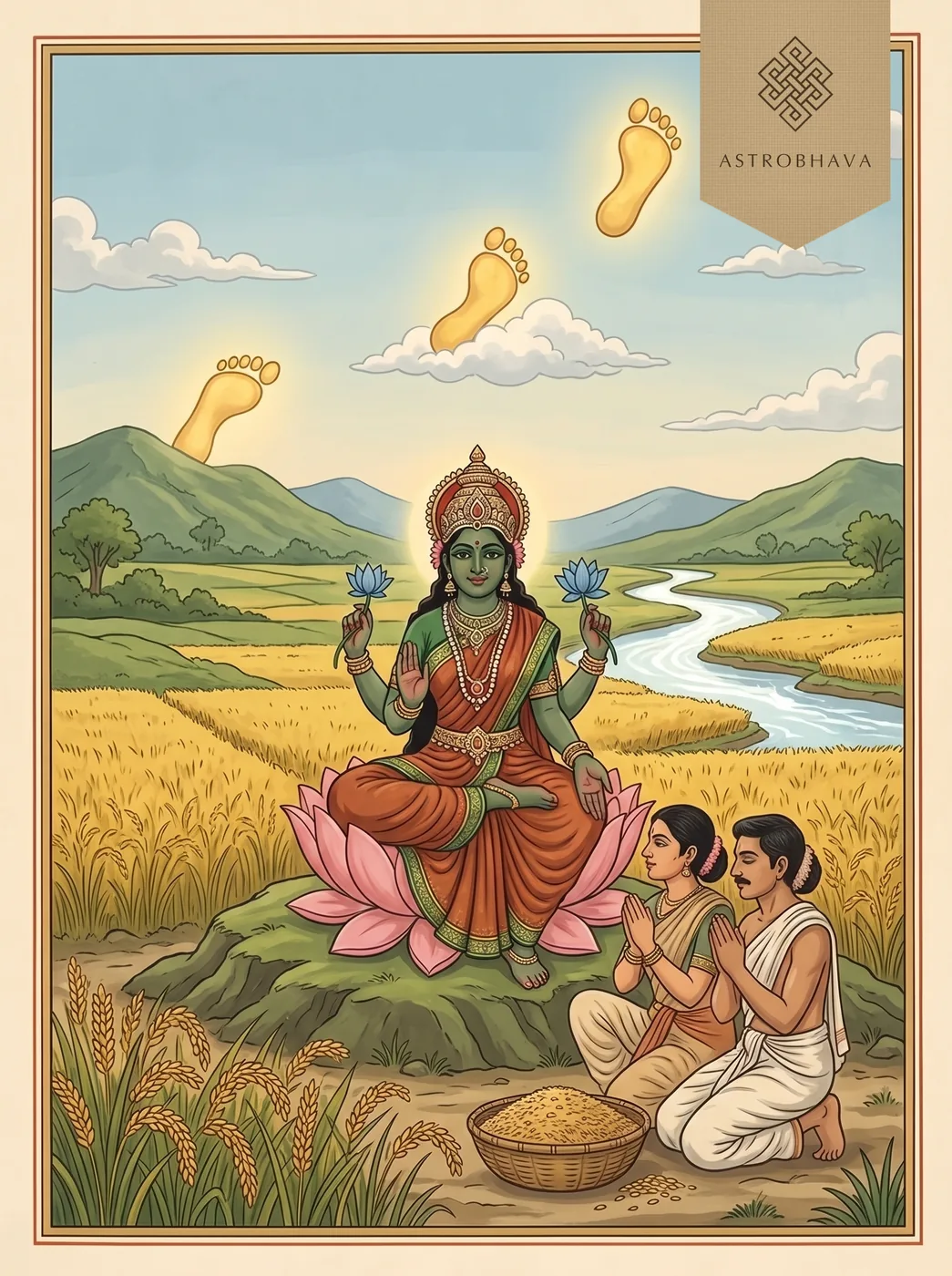
The Bhu Suktam is the Krishna Yajurveda hymn to the Earth, opening with the words Bhumirbhumna dyaurvarina, and it joins two Taittiriya passages. Verses 1 to 6 come from the Taittiriya Samhita (1.5.3) and belong to the laying down of the sacred fire a second time. Earth, heaven and the mid-region are named, and Agni is set on the lap of the goddess Aditi. Three verses on the dappled bull follow, close to Rig Veda 10.189 in different wording and order, and the last two own to a fire scattered in anger and kindle it again. Verses 7 and 8 come from the Taittiriya Brahmana (3.1.2.5-6) and praise Shrona, the great goddess and ageless wife of Vishnu, beside his three strides. Recited versions run longer and carry further verses to Medini Devi that have no located Vedic source, so they are not printed here. The text is given without accent marks; chanting it with the svaras is learned from a teacher.
Shed skins and a fire laid twice
The verses name no author and tell no tale; the Taittiriya Samhita explains them through the rite they serve. This section opens with a quarrel over riches. Before fighting the Asuras, the gods left their wealth with Agni, who made off with it. Caught and pressed, he wept, which the text gives as the origin of the name Rudra, and his tear became silver. From there it turns to the Punaradheya, in which one who has removed the household fire lays it down again. The prose at 1.5.4 then takes up these very verses. The serpents, it says, thought they were growing worn out, until Kasarnira Kadraveya saw this mantra and they struck off their old skins. So the Garhapatya fire is laid with the verses of the queen of serpents, to renew it. The same prose adds that pure food did not reach the Earth until she herself saw the mantra. The closing stanzas belong elsewhere, among the Brahmana's verses to the stars, where Shrona is the star of Vishnu. Reciters take her as Bhu Devi, consort of Vishnu. In Sri Vaishnava worship the hymn is one of five suktas recited at Tirumanjanam, the sacred bath of Vishnu, and Vedanta Desika's 33-verse Bhu Stuti echoes it.
The mantra, in six scripts
- भूमिर्
- bhūmir — earth
- भूम्ना
- bhūmnā — by her vastness
- द्यौर्
- dyaur — heaven
- वरिणा
- variṇā — by its breadth
- अन्तरिक्षं
- antarikṣaṃ — the mid-region
- महित्वा
- mahitvā — by its greatness
- उपस्थे
- upasthe — on the lap
- ते
- te — your
- देवि
- devi — O goddess
- अदिते
- adite — O Aditi
- अग्निम्
- agnim — Agni
- अन्नादम्
- annādam — the eater of food
- अन्नाद्याय
- annādyāya — so that there may be food
- आदधे
- ādadhe — I set down
Bhu Suktam lyrics in full
Eight verses: six from the Taittiriya Samhita and two from the Taittiriya Brahmana, without accent marks.
All 8 verses, in Sanskrit, Tamil, Telugu, Kannada, Malayalam and English, each with its meaning. Choose a script:
Download the Bhu Suktam PDFAll 8 verses with their meanings, in Sanskrit. Free to print and keep.
भूमिर्भूम्ना द्यौर्वरिणाऽन्तरिक्षं महित्वा ।
उपस्थे ते देव्यदितेऽग्निमन्नादमन्नाद्यायाऽऽदधे ॥
பூமிர்பூம்நா த்யௌர்வரிணாந்தரிக்ஷம் மஹித்வா ।
உபஸ்தே தே தேவ்யதிதேக்நிமந்நாதமந்நாத்யாயாததே ॥
భూమిర్భూమ్నా ద్యౌర్వరిణాఽన్తరిక్షం మహిత్వా ।
ఉపస్థే తే దేవ్యదితేఽగ్నిమన్నాదమన్నాద్యాయాఽఽదధే ॥
ಭೂಮಿರ್ಭೂಮ್ನಾ ದ್ಯೌರ್ವರಿಣಾಽನ್ತರಿಕ್ಷಂ ಮಹಿತ್ವಾ ।
ಉಪಸ್ಥೇ ತೇ ದೇವ್ಯದಿತೇಽಗ್ನಿಮನ್ನಾದಮನ್ನಾದ್ಯಾಯಾಽಽದಧೇ ॥
ഭൂമിര്ഭൂമ്നാ ദ്യൌര്വരിണാഽന്തരിക്ഷം മഹിത്വാ ।
ഉപസ്ഥേ തേ ദേവ്യദിതേഽഗ്നിമന്നാദമന്നാദ്യായാഽഽദധേ ॥
bhūmirbhūmnā dyaurvariṇā'ntarikṣaṃ mahitvā |
upasthe te devyadite'gnimannādamannādyāyā''dadhe ||
Earth by her vastness, heaven by its breadth, the mid-region by its greatness. On your lap, divine Aditi, I set down Agni, the eater of food, so that there may be food to eat.
आऽयङ्गौः पृश्निरक्रमीदसनन्मातरं पुनः ।
पितरं च प्रयन्थ्सुवः ॥
ஆயங்கௌஃ ப்ருஶ்நிரக்ரமீதஸநந்மாதரம் புநஃ ।
பிதரம் ச ப்ரயந்த்ஸுவஃ ॥
ఆఽయఙ్గౌః పృశ్నిరక్రమీదసనన్మాతరం పునః ।
పితరం చ ప్రయన్థ్సువః ॥
ಆಽಯಙ್ಗೌಃ ಪೃಶ್ನಿರಕ್ರಮೀದಸನನ್ಮಾತರಂ ಪುನಃ ।
ಪಿತರಂ ಚ ಪ್ರಯನ್ಥ್ಸುವಃ ॥
ആഽയങ്ഗൌഃ പൃശ്നിരക്രമീദസനന്മാതരം പുനഃ ।
പിതരം ച പ്രയന്ഥ്സുവഃ ॥
ā'yaṅgauḥ pṛśnirakramīdasananmātaraṃ punaḥ |
pitaraṃ ca prayanthsuvaḥ ||
This dappled bull has come forward and reached his mother again, and goes on to his father, the heavens.
त्रिग्ंशद्धाम विराजति वाक्पतङ्गाय शिश्रिये ।
प्रत्यस्य वह द्युभिः ॥
த்ரிக்ம்ஶத்தாம விராஜதி வாக்பதங்காய ஶிஶ்ரியே ।
ப்ரத்யஸ்ய வஹ த்யுபிஃ ॥
త్రిగ్ంశద్ధామ విరాజతి వాక్పతఙ్గాయ శిశ్రియే ।
ప్రత్యస్య వహ ద్యుభిః ॥
ತ್ರಿಗ್ಂಶದ್ಧಾಮ ವಿರಾಜತಿ ವಾಕ್ಪತಙ್ಗಾಯ ಶಿಶ್ರಿಯೇ ।
ಪ್ರತ್ಯಸ್ಯ ವಹ ದ್ಯುಭಿಃ ॥
ത്രിഗ്ംശദ്ധാമ വിരാജതി വാക്പതങ്ഗായ ശിശ്രിയേ ।
പ്രത്യസ്യ വഹ ദ്യുഭിഃ ॥
trigṃśaddhāma virājati vākpataṅgāya śiśriye |
pratyasya vaha dyubhiḥ ||
Speech shines over thirty stations and has given herself to the winged one, the Sun. Bear towards him with the light of the days.
अस्य प्राणादपानत्यन्तश्चरति रोचना ।
व्यख्यन्महिषः सुवः ॥
அஸ்ய ப்ராணாதபாநத்யந்தஶ்சரதி ரோசநா ।
வ்யக்யந்மஹிஷஃ ஸுவஃ ॥
అస్య ప్రాణాదపానత్యన్తశ్చరతి రోచనా ।
వ్యఖ్యన్మహిషః సువః ॥
ಅಸ್ಯ ಪ್ರಾಣಾದಪಾನತ್ಯನ್ತಶ್ಚರತಿ ರೋಚನಾ ।
ವ್ಯಖ್ಯನ್ಮಹಿಷಃ ಸುವಃ ॥
അസ്യ പ്രാണാദപാനത്യന്തശ്ചരതി രോചനാ ।
വ്യഖ്യന്മഹിഷഃ സുവഃ ॥
asya prāṇādapānatyantaścarati rocanā |
vyakhyanmahiṣaḥ suvaḥ ||
From his in-breath he breathes out; a radiance moves between the worlds. The mighty one has looked out over the heavens.
यत्त्वा क्रुद्धः परोवप मन्युना यदवर्त्या ।
सुकल्पमग्ने तत्तव पुनस्त्वोद्दीपयामसि ॥
யத்த்வா க்ருத்தஃ பரோவப மந்யுநா யதவர்த்யா ।
ஸுகல்பமக்நே தத்தவ புநஸ்த்வோத்தீபயாமஸி ॥
యత్త్వా క్రుద్ధః పరోవప మన్యునా యదవర్త్యా ।
సుకల్పమగ్నే తత్తవ పునస్త్వోద్దీపయామసి ॥
ಯತ್ತ್ವಾ ಕ್ರುದ್ಧಃ ಪರೋವಪ ಮನ್ಯುನಾ ಯದವರ್ತ್ಯಾ ।
ಸುಕಲ್ಪಮಗ್ನೇ ತತ್ತವ ಪುನಸ್ತ್ವೋದ್ದೀಪಯಾಮಸಿ ॥
യത്ത്വാ ക്രുദ്ധഃ പരോവപ മന്യുനാ യദവര്ത്യാ ।
സുകല്പമഗ്നേ തത്തവ പുനസ്ത്വോദ്ദീപയാമസി ॥
yattvā kruddhaḥ parovapa manyunā yadavartyā |
sukalpamagne tattava punastvoddīpayāmasi ||
If in anger I scattered you away, in wrath or through mishap, O Agni, that is easily put right for you: we kindle you again.
यत्ते मन्युपरोप्तस्य पृथिवीमनु दध्वसे ।
आदित्या विश्वे तद्देवा वसवश्च समाभरन् ॥
யத்தே மந்யுபரோப்தஸ்ய ப்ருதிவீமநு தத்வஸே ।
ஆதித்யா விஶ்வே தத்தேவா வஸவஶ்ச ஸமாபரந் ॥
యత్తే మన్యుపరోప్తస్య పృథివీమను దధ్వసే ।
ఆదిత్యా విశ్వే తద్దేవా వసవశ్చ సమాభరన్ ॥
ಯತ್ತೇ ಮನ್ಯುಪರೋಪ್ತಸ್ಯ ಪೃಥಿವೀಮನು ದಧ್ವಸೇ ।
ಆದಿತ್ಯಾ ವಿಶ್ವೇ ತದ್ದೇವಾ ವಸವಶ್ಚ ಸಮಾಭರನ್ ॥
യത്തേ മന്യുപരോപ്തസ്യ പൃഥിവീമനു ദധ്വസേ ।
ആദിത്യാ വിശ്വേ തദ്ദേവാ വസവശ്ച സമാഭരന് ॥
yatte manyuparoptasya pṛthivīmanu dadhvase |
ādityā viśve taddevā vasavaśca samābharan ||
That part of you, scattered in wrath, which fell away over the earth, the Adityas, all the gods and the Vasus gathered up together.
शृण्वन्ति श्रोणाममृतस्य गोपाम् ।
पुण्यामस्या उपशृणोमि वाचम् ।
महीं देवीं विष्णुपत्नीमजूर्याम् ।
प्रतीचीमेनाग्ं हविषा यजामः ॥
ஶ்ருண்வந்தி ஶ்ரோணாமம்ருதஸ்ய கோபாம் ।
புண்யாமஸ்யா உபஶ்ருணோமி வாசம் ।
மஹீம் தேவீம் விஷ்ணுபத்நீமஜூர்யாம் ।
ப்ரதீசீமேநாக்ம் ஹவிஷா யஜாமஃ ॥
శృణ్వన్తి శ్రోణామమృతస్య గోపామ్ ।
పుణ్యామస్యా ఉపశృణోమి వాచమ్ ।
మహీం దేవీం విష్ణుపత్నీమజూర్యామ్ ।
ప్రతీచీమేనాగ్ం హవిషా యజామః ॥
ಶೃಣ್ವನ್ತಿ ಶ್ರೋಣಾಮಮೃತಸ್ಯ ಗೋಪಾಮ್ ।
ಪುಣ್ಯಾಮಸ್ಯಾ ಉಪಶೃಣೋಮಿ ವಾಚಮ್ ।
ಮಹೀಂ ದೇವೀಂ ವಿಷ್ಣುಪತ್ನೀಮಜೂರ್ಯಾಮ್ ।
ಪ್ರತೀಚೀಮೇನಾಗ್ಂ ಹವಿಷಾ ಯಜಾಮಃ ॥
ശൃണ്വന്തി ശ്രോണാമമൃതസ്യ ഗോപാമ് ।
പുണ്യാമസ്യാ ഉപശൃണോമി വാചമ് ।
മഹീം ദേവീം വിഷ്ണുപത്നീമജൂര്യാമ് ।
പ്രതീചീമേനാഗ്ം ഹവിഷാ യജാമഃ ॥
śṛṇvanti śroṇāmamṛtasya gopām |
puṇyāmasyā upaśṛṇomi vācam |
mahīṃ devīṃ viṣṇupatnīmajūryām |
pratīcīmenāgṃ haviṣā yajāmaḥ ||
They hear of Shrona, guardian of immortality; I listen to her holy voice. With this offering we worship her, the great goddess, the ageless wife of Vishnu, who turns towards us.
त्रेधा विष्णुरुरुगायो विचक्रमे ।
महीं दिवं पृथिवीमन्तरिक्षम् ।
तच्छ्रोणैति श्रव इच्छमाना ।
पुण्यग्ग् श्लोकं यजमानाय कृण्वती ॥
த்ரேதா விஷ்ணுருருகாயோ விசக்ரமே ।
மஹீம் திவம் ப்ருதிவீமந்தரிக்ஷம் ।
தச்ச்ரோணைதி ஶ்ரவ இச்சமாநா ।
புண்யக்க் ஶ்லோகம் யஜமாநாய க்ருண்வதீ ॥
త్రేధా విష్ణురురుగాయో విచక్రమే ।
మహీం దివం పృథివీమన్తరిక్షమ్ ।
తచ్ఛ్రోణైతి శ్రవ ఇచ్ఛమానా ।
పుణ్యగ్గ్ శ్లోకం యజమానాయ కృణ్వతీ ॥
ತ್ರೇಧಾ ವಿಷ್ಣುರುರುಗಾಯೋ ವಿಚಕ್ರಮೇ ।
ಮಹೀಂ ದಿವಂ ಪೃಥಿವೀಮನ್ತರಿಕ್ಷಮ್ ।
ತಚ್ಛ್ರೋಣೈತಿ ಶ್ರವ ಇಚ್ಛಮಾನಾ ।
ಪುಣ್ಯಗ್ಗ್ ಶ್ಲೋಕಂ ಯಜಮಾನಾಯ ಕೃಣ್ವತೀ ॥
ത്രേധാ വിഷ്ണുരുരുഗായോ വിചക്രമേ ।
മഹീം ദിവം പൃഥിവീമന്തരിക്ഷമ് ।
തച്ഛ്രോണൈതി ശ്രവ ഇച്ഛമാനാ ।
പുണ്യഗ്ഗ് ശ്ലോകം യജമാനായ കൃണ്വതീ ॥
tredhā viṣṇururugāyo vicakrame |
mahīṃ divaṃ pṛthivīmantarikṣam |
tacchroṇaiti śrava icchamānā |
puṇyagg ślokaṃ yajamānāya kṛṇvatī ||
Wide-striding Vishnu took three steps across the great heaven, the earth and the mid-region. Shrona goes there seeking renown, making holy fame for the one who offers the sacrifice.
The syllable people get wrong
In trigṃśaddhāma (Verse 3) the sign ग्ं marks the Taittiriya chant sound, so say tri-gum-shad-dhaa-ma with a light gum, not the everyday trimshad. The Rig Veda parallel spells it trimshad.
When the Bhu Suktam is chanted
Weekday. Thursday
Festival. Tirumanjanam, the sacred bath of Vishnu in temple worship
Questions
Have your chart read before you decide
Chanting is yours to do, and free. But which deity your situation calls for — and whether a mantra alone is the right response — depends on your chart. Sometimes it is; sometimes it is not.
- Over 30 years in the Guru–Sishya Parampara, from the age of five
- He reads every chart himself — 60 minutes, one to one, never delegated
- Charts are read only between sunrise and sunset, following tradition
