Maa Brahmacharini Mantra
ॐ देवी ब्रह्मचारिण्यै नमः ॥Also known as Om Devi Brahmacharinyai Namah
In Devanagari, Tamil, Telugu, Kannada, Malayalam and English — with the meaning of every word, and the one syllable most people pronounce wrongly.
 The Brahmacharini Homam, performed for youBook →
What the Maa Brahmacharini Mantra is
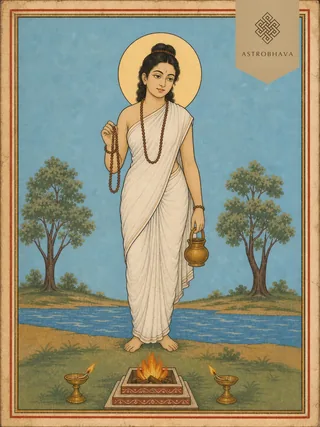
The Maa Brahmacharini Mantra is the group of three short texts recited to Brahmacharini, the second of the nine Durgas, on the second day of Navaratri. Her name joins brahma, sacred knowledge and the Absolute, to charini, 'she who practises', and it names Parvati in the years she spent in austerity before her marriage to Shiva. No author is known for any of the three. The name mantra, Om Devi Brahmacharinyai Namah, offers salutation to her by that title alone. The dhyana shloka, a single anushtubh couplet that is also the second verse of the nine-verse Navadurga meditation set, draws her with two lotus hands holding an akshamala, the rosary of beads, and a kamandalu, the ascetic's water pot, calls her anuttama, 'with none above her', and asks her to be gracious. The stuti takes the 'ya devi sarvabhuteshu' frame of the Devi Mahatmya and sets her name in it, so that the Goddess who dwells in all beings is saluted in this one form.
The vow on Gaurishikhara and a visitor
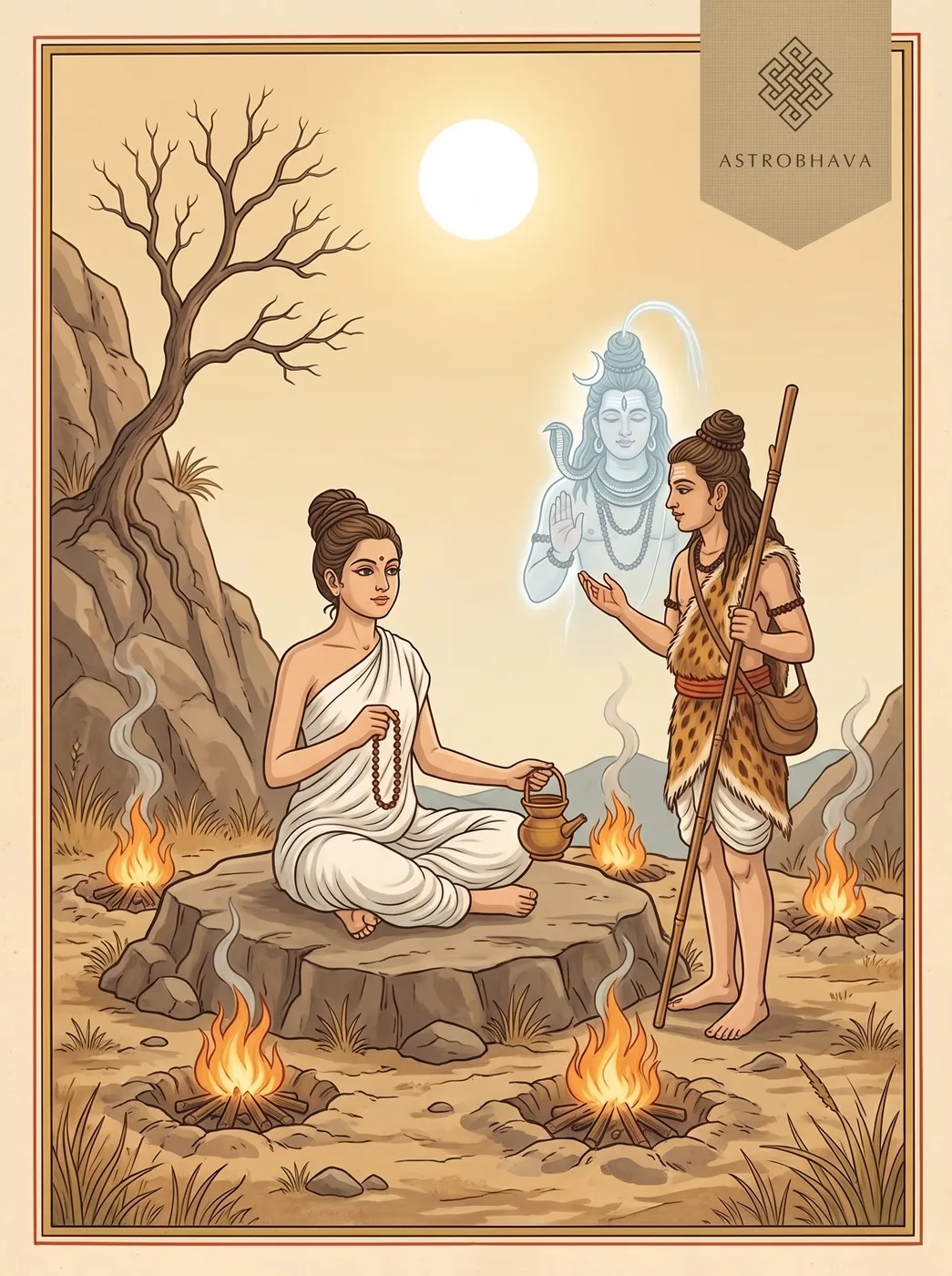
The fullest classical telling of the austerity behind her name is the fifth canto of Kalidasa's Kumarasambhava. Parvati took her parents' leave and climbed a Himalayan peak, which the poem says was afterwards called Gaurishikhara. There she sat in summer within four fires with the sun as the fifth, stayed out in the rains without shelter, and at last stopped eating even the leaves that fell from the trees by themselves; for that, the canto says, she was called Aparna, 'without even a leaf'. Then a young brahmachari came to her grove, matted, in a deerskin, with a staff of palasha wood. He asked why she wanted a groom who wore an elephant hide, lived in the cremation ground, rode an old bull and had three eyes and no known family. Parvati answered that small minds cannot measure the great, and rose to leave rather than hear more. The visitor took his own form: it was Shiva, who told her he was her servant from that day, bought by her tapas. In Kashi her shrine stands in the lanes near Durga Ghat and Brahma Ghat, and temple tradition holds her annakoot festival on Kartik Purnima.
The mantra, in six scripts
- ॐ
- oṃ — Om, the sacred syllable
- देवी
- devī — Goddess
- ब्रह्मचारिण्यै
- brahmacāriṇyai — to Brahmacharini, she who practises austerity
- नमः
- namaḥ — salutation
Maa Brahmacharini Mantra lyrics in full
Three short texts for the second day of Navaratri: her name mantra, the rosary-and-water-pot dhyana shloka, and the stuti line with her name set in the Devi Mahatmya frame.
All 3 verses, in Sanskrit, Tamil, Telugu, Kannada, Malayalam and English, each with its meaning. Choose a script:
Download the Maa Brahmacharini Mantra PDFAll 3 verses with their meanings, in Sanskrit. Free to print and keep.
ॐ देवी ब्रह्मचारिण्यै नमः ॥
ௐ தேவீ ப்ரஹ்மசாரிண்யை நமஃ ॥
ఓం దేవీ బ్రహ్మచారిణ్యై నమః ॥
ಓಂ ದೇವೀ ಬ್ರಹ್ಮಚಾರಿಣ್ಯೈ ನಮಃ ॥
ഓം ദേവീ ബ്രഹ്മചാരിണ്യൈ നമഃ ॥
oṃ devī brahmacāriṇyai namaḥ ||
Om, salutations to the Goddess Brahmacharini.
दधाना करपद्माभ्यामक्षमालाकमण्डलू ।
देवी प्रसीदतु मयि ब्रह्मचारिण्यनुत्तमा ॥
ததாநா கரபத்மாப்யாமக்ஷமாலாகமண்டலூ ।
தேவீ ப்ரஸீதது மயி ப்ரஹ்மசாரிண்யநுத்தமா ॥
దధానా కరపద్మాభ్యామక్షమాలాకమణ్డలూ ।
దేవీ ప్రసీదతు మయి బ్రహ్మచారిణ్యనుత్తమా ॥
ದಧಾನಾ ಕರಪದ್ಮಾಭ್ಯಾಮಕ್ಷಮಾಲಾಕಮಣ್ಡಲೂ ।
ದೇವೀ ಪ್ರಸೀದತು ಮಯಿ ಬ್ರಹ್ಮಚಾರಿಣ್ಯನುತ್ತಮಾ ॥
ദധാനാ കരപദ്മാഭ്യാമക്ഷമാലാകമണ്ഡലൂ ।
ദേവീ പ്രസീദതു മയി ബ്രഹ്മചാരിണ്യനുത്തമാ ॥
dadhānā karapadmābhyāmakṣamālākamaṇḍalū |
devī prasīdatu mayi brahmacāriṇyanuttamā ||
Holding a rosary and a water pot in her two lotus hands, may the Goddess Brahmacharini, the highest of all, be gracious to me.
या देवी सर्वभूतेषु माँ ब्रह्मचारिणी रूपेण संस्थिता ।
नमस्तस्यै नमस्तस्यै नमस्तस्यै नमो नमः ॥
யா தேவீ ஸர்வபூதேஷு மாம் ப்ரஹ்மசாரிணீ ரூபேண ஸம்ஸ்திதா ।
நமஸ்தஸ்யை நமஸ்தஸ்யை நமஸ்தஸ்யை நமோ நமஃ ॥
యా దేవీ సర్వభూతేషు మాఁ బ్రహ్మచారిణీ రూపేణ సంస్థితా ।
నమస్తస్యై నమస్తస్యై నమస్తస్యై నమో నమః ॥
ಯಾ ದೇವೀ ಸರ್ವಭೂತೇಷು ಮಾಁ ಬ್ರಹ್ಮಚಾರಿಣೀ ರೂಪೇಣ ಸಂಸ್ಥಿತಾ ।
ನಮಸ್ತಸ್ಯೈ ನಮಸ್ತಸ್ಯೈ ನಮಸ್ತಸ್ಯೈ ನಮೋ ನಮಃ ॥
യാ ദേവീ സര്വഭൂതേഷു മാഁ ബ്രഹ്മചാരിണീ രൂപേണ സംസ്ഥിതാ ।
നമസ്തസ്യൈ നമസ്തസ്യൈ നമസ്തസ്യൈ നമോ നമഃ ॥
yā devī sarvabhūteṣu māṃ brahmacāriṇī rūpeṇa saṃsthitā |
namastasyai namastasyai namastasyai namo namaḥ ||
To the Goddess, the Mother, who dwells in all beings in the form of Brahmacharini: salutations to her, salutations to her, salutations to her, again and again salutations.
The syllable people get wrong
Akshamala (akṣamālā) in the dhyana shloka opens with the cluster kṣ, a k followed at once by sh, so it is ak-sha-MAA-laa with both a's of mālā long; reading it as 'aksa-mala' or 'achha-mala' loses the k-sh sound that gives the word its meaning, 'a garland of akshas', the beads.
When the Maa Brahmacharini Mantra is chanted
Weekday. Friday
Festival. Navaratri, second day (Dwitiya)
Questions
Have your chart read before you decide
Chanting is yours to do, and free. But which deity your situation calls for — and whether a mantra alone is the right response — depends on your chart. Sometimes it is; sometimes it is not.
- Over 30 years in the Guru–Sishya Parampara, from the age of five
- He reads every chart himself — 60 minutes, one to one, never delegated
- Charts are read only between sunrise and sunset, following tradition
