Chitragupta Mantra
मसिभाजनसंयुक्तं ध्यायेत्तं च महाबलम् । लेखिनीपट्टिकाहस्तं चित्रगुप्तं नमाम्यहम् ॥Also known as Masibhajana Samyuktam
In Devanagari, Tamil, Telugu, Kannada, Malayalam and English — with the meaning of every word, and the one syllable most people pronounce wrongly.
 The Chitragupta Homam, performed for youBook →
What the Chitragupta Mantra is
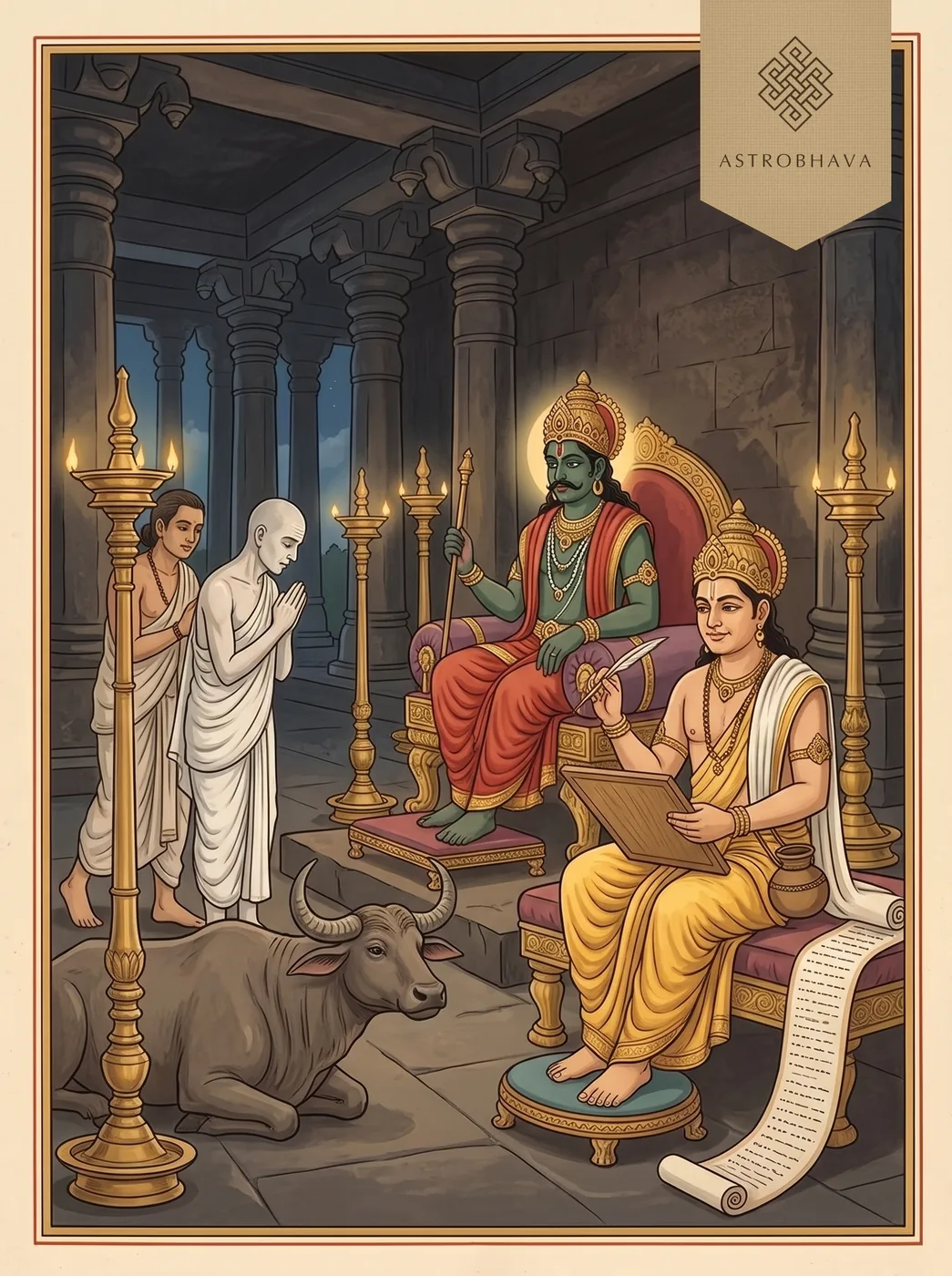
The Chitragupta mantra most people look for is the short name mantra Om Shri Chitraguptaya Namah, and puja manuals print it together with three Sanskrit shlokas addressed to Chitragupta, the scribe who keeps the record of every being's deeds for Yama. None of these verses carries an author's name or a Purana reference; they belong to the household puja kept on Yama Dwitiya, the bright second day of Kartika. The set opens with a dhyana shloka, Masibhajana Samyuktam, which asks the worshipper to picture Chitragupta joined to his inkpot, holding a pen and a writing tablet, and then bows to him in the first person. Two namaskara shlokas follow. The first addresses him as one who moves over the earth with ink, pen and writing chalk; the second calls him the giver of letters to those who write and names the Kayastha line as his own. The name mantra closes the set.
Why the pen rests on Yama Dwitiya
The Padma Purana relates that Yama could not keep count of the acts of countless beings alone, and that the record keeper Brahma gave him was placed beside Yama to register every deed. Because he came forth from Brahma's kaya, the body, he was called Kayastha, a name the Bhavishya Purana also records. The Garuda Purana gives him a seat in Yama's court, where the register is read out as each soul arrives. Temple tradition at Kanchipuram tells a different origin: Shiva drew a figure on a golden plate, it came to life, and it was named for the picture (chitra) and the secret (gupta). That shrine, dated by its inscriptions to the Chola period of the ninth century, keeps Chitra Pournami in April as its chief festival. In the north a popular tale explains the autumn observance. According to tradition, Chitragupta was left off the invitations to Rama's coronation and stopped writing in protest, so the accounts of the world stood still until Rama persuaded him to take up the pen again. Kayastha families remember this on Kartika Shukla Dwitiya, the same day as Bhai Dooj, by setting their own pens aside for the day and worshipping pen and inkpot instead, with the name mantra written out on a white sheet beside the shrine.
The mantra, in six scripts
- मसिभाजनसंयुक्तं
- masibhājanasaṃyuktaṃ — joined with the inkpot
- ध्यायेत्तं
- dhyāyettaṃ — one should meditate on him
- च
- ca — and
- महाबलम्
- mahābalam — the mighty one
- लेखिनीपट्टिकाहस्तं
- lekhinīpaṭṭikāhastaṃ — pen and tablet in hand
- चित्रगुप्तं
- citraguptaṃ — to Chitragupta
- नमाम्यहम्
- namāmyaham — I bow
Chitragupta Mantra lyrics in full
A dhyana shloka, a pair of namaskara shlokas and the short name mantra, as printed for Chitragupta puja.
All 4 verses, in Sanskrit, Tamil, Telugu, Kannada, Malayalam and English, each with its meaning. Choose a script:
Download the Chitragupta Mantra PDFAll 4 verses with their meanings, in Sanskrit. Free to print and keep.
मसिभाजनसंयुक्तं ध्यायेत्तं च महाबलम् ।
लेखिनीपट्टिकाहस्तं चित्रगुप्तं नमाम्यहम् ॥
மஸிபாஜநஸம்யுக்தம் த்யாயேத்தம் ச மஹாபலம் ।
லேகிநீபட்டிகாஹஸ்தம் சித்ரகுப்தம் நமாம்யஹம் ॥
మసిభాజనసంయుక్తం ధ్యాయేత్తం చ మహాబలమ్ ।
లేఖినీపట్టికాహస్తం చిత్రగుప్తం నమామ్యహమ్ ॥
ಮಸಿಭಾಜನಸಂಯುಕ್ತಂ ಧ್ಯಾಯೇತ್ತಂ ಚ ಮಹಾಬಲಮ್ ।
ಲೇಖಿನೀಪಟ್ಟಿಕಾಹಸ್ತಂ ಚಿತ್ರಗುಪ್ತಂ ನಮಾಮ್ಯಹಮ್ ॥
മസിഭാജനസംയുക്തം ധ്യായേത്തം ച മഹാബലമ് ।
ലേഖിനീപട്ടികാഹസ്തം ചിത്രഗുപ്തം നമാമ്യഹമ് ॥
masibhājanasaṃyuktaṃ dhyāyettaṃ ca mahābalam |
lekhinīpaṭṭikāhastaṃ citraguptaṃ namāmyaham ||
One should meditate on the mighty Chitragupta, who is joined with his inkpot. I bow to Chitragupta, who holds the pen and the writing tablet in his hands.
मसीभाजनसंयुक्तश्चरसि त्वं महीतले ।
लेखनीकटिनीहस्त चित्रगुप्त नमोऽस्तुते ॥
மஸீபாஜநஸம்யுக்தஶ்சரஸி த்வம் மஹீதலே ।
லேகநீகடிநீஹஸ்த சித்ரகுப்த நமோஸ்துதே ॥
మసీభాజనసంయుక్తశ్చరసి త్వం మహీతలే ।
లేఖనీకటినీహస్త చిత్రగుప్త నమోఽస్తుతే ॥
ಮಸೀಭಾಜನಸಂಯುಕ್ತಶ್ಚರಸಿ ತ್ವಂ ಮಹೀತಲೇ ।
ಲೇಖನೀಕಟಿನೀಹಸ್ತ ಚಿತ್ರಗುಪ್ತ ನಮೋಽಸ್ತುತೇ ॥
മസീഭാജനസംയുക്തശ്ചരസി ത്വം മഹീതലേ ।
ലേഖനീകടിനീഹസ്ത ചിത്രഗുപ്ത നമോഽസ്തുതേ ॥
masībhājanasaṃyuktaścarasi tvaṃ mahītale |
lekhanīkaṭinīhasta citragupta namo'stute ||
Carrying your inkpot, you move about upon the earth. O Chitragupta, with pen and writing chalk in hand, salutations to you.
चित्रगुप्त नमस्तुभ्यं लेखकाक्षरदायकम् ।
कायस्थजातिमासाद्य चित्रगुप्त नमोऽस्तुते ॥
சித்ரகுப்த நமஸ்துப்யம் லேககாக்ஷரதாயகம் ।
காயஸ்தஜாதிமாஸாத்ய சித்ரகுப்த நமோஸ்துதே ॥
చిత్రగుప్త నమస్తుభ్యం లేఖకాక్షరదాయకమ్ ।
కాయస్థజాతిమాసాద్య చిత్రగుప్త నమోఽస్తుతే ॥
ಚಿತ್ರಗುಪ್ತ ನಮಸ್ತುಭ್ಯಂ ಲೇಖಕಾಕ್ಷರದಾಯಕಮ್ ।
ಕಾಯಸ್ಥಜಾತಿಮಾಸಾದ್ಯ ಚಿತ್ರಗುಪ್ತ ನಮೋಽಸ್ತುತೇ ॥
ചിത്രഗുപ്ത നമസ്തുഭ്യം ലേഖകാക്ഷരദായകമ് ।
കായസ്ഥജാതിമാസാദ്യ ചിത്രഗുപ്ത നമോഽസ്തുതേ ॥
citragupta namastubhyaṃ lekhakākṣaradāyakam |
kāyasthajātimāsādya citragupta namo'stute ||
O Chitragupta, salutations to you, giver of letters to those who write. O Chitragupta, who took birth as the Kayastha line, salutations to you.
ॐ श्री चित्रगुप्ताय नमः ॥
ௐ ஶ்ரீ சித்ரகுப்தாய நமஃ ॥
ఓం శ్రీ చిత్రగుప్తాయ నమః ॥
ಓಂ ಶ್ರೀ ಚಿತ್ರಗುಪ್ತಾಯ ನಮಃ ॥
ഓം ശ്രീ ചിത്രഗുപ്തായ നമഃ ॥
oṃ śrī citraguptāya namaḥ ||
Om, salutations to Sri Chitragupta. It is the short japa mantra of Chitragupta puja, often repeated 108 times.
The syllable people get wrong
In lekhinīpaṭṭikāhastaṃ the word paṭṭikā (writing tablet) has a doubled retroflex ṭṭ: curl the tongue back and hold the stop briefly, PUT-tee-kaa, rather than a soft dental 'patika'.
When the Chitragupta Mantra is chanted
Festival. Chitragupta Puja on Yama Dwitiya (Kartika Shukla Dwitiya)
Questions
Have your chart read before you decide
Chanting is yours to do, and free. But which deity your situation calls for — and whether a mantra alone is the right response — depends on your chart. Sometimes it is; sometimes it is not.
- Over 30 years in the Guru–Sishya Parampara, from the age of five
- He reads every chart himself — 60 minutes, one to one, never delegated
- Charts are read only between sunrise and sunset, following tradition
